English

Kissing spine is a skeletal abnormality in horses in which bony projections on the vertebrae of the spine touch or “kiss”. These projections are called dorsal spinous processes.
This condition is caused by multiple factors including conformation issues, genetic predispositions, poor posture, improper conditioning, and training under saddle at a very young age.
Horses with kissing spine do not always develop symptoms, but many horses with this condition experience back pain. Afflicted horses may exhibit extreme back tightness, bucking, pain on palpation and an inability to stretch and raise the back while under saddle.
Most horse owners dread having their horse diagnosed with kissing spine. For a long time, it was thought that horses with symptomatic kissing spine could no longer be ridden and had to be retired.
However, surgical advances and modern rehabilitation techniques give new hope to owners of horses with kissing spine. There are many therapies available to keep your horse comfortable and to re-establish mobility.
Have your veterinarian examine your horse if you think they are experiencing back pain. If left untreated, horses with kissing spine can act out under saddle, putting themselves and their riders at risk.
What is Kissing Spine in Horses?
Kissing spine is sometimes referred to as dorsal spinous process impingement syndrome.
Kissing spine commonly affects multiple vertebrae of the thoracic spine, in particular T14- T18. This is the area around the anticlinal vertebrae or the area of the spine where the dorsal spinal process change orientation. This is also the area under the saddle and the rider. However, it can occur along the entire length of a horse’s back. [14]
This condition is diagnosed by a veterinarian upon radiographic detection of overriding dorsal spinous processes (ORDSP). Kissing spine diagnosis has increased significantly in recent years due to the increased use of portable X-ray systems, making radiographs easy to do on the farm. [2]
Your veterinarian will perform X-rays along the spine to determine whether the vertebrae in the spine are too close or touching. When examining an X-ray of the back, veterinarians are looking for narrowing of the space between dorsal spinous processes, as well as evidence of bony changes.
In cases of kissing spine, bony remodeling can be seen in the areas where the bones touch. Bone-on-bone contact is painful, so the body attempts to remodel the affected areas in an effort to protect itself.

Ultrasound imaging can also be used to assist with diagnosis. It can be combined with the information in the X-rays to give information about changes to the dorsal spinous process surface, supraspinous ligament damage, multifidus muscle changes and facet joint involvement.
Your veterinarian may also suggest a bone scan (Nuclear Scintigraphy), which involves injecting your horse with a radioisotope and using a bone scan camera. The camera is positioned over your horse’s back to detect hot spots – areas where radiation is absorbed into the bone. These hot spots indicate areas of increased metabolic activity in the bone, such as during periods of rapid bony remodeling. [1]
Bone scans are considered more accurate in differentiating clinical versus non-clinical cases of kissing spines. These scans are only conducted at referral practices.
Some veterinarians will use local anesthesia (freezing) to test if blocking the pain helps alleviate symptoms of kissing spines.
Back Pain in Horses
Kissing spine does not always cause pain in horses. In fact, some cases of kissing spine are found accidentally while investigating other issues in asymptomatic horses. In one study 39% of horses that were radiographed despite lack of back pain still had radiographic changes suggestive of kissing spines. [15]
However, in the same study, 68% of horses that did present for back pain were diagnosed with kissing spine. This suggests that this condition is a major contributor to equine back pain.
When kissing spine does cause pain it can be quite severe. Horses with this condition can experience pain for the following reasons:
- The bony dorsal spinous processes grinding against each other
- Injury or inflammation of the ligaments between the processes
- Reduced range of motion in affected vertebral segments, resulting in muscle tightness
- Impingement of the nerves exiting the spinal cord through the foramen of the affected vertebral segments
What's your top priority with your horse's health?

Enter your email to receive your store credit
Causes of Kissing Spine
Although research is ongoing, scientists have determined that kissing spine is a result of multiple factors.
Predisposed Breeds
Research suggests Warmbloods, Thoroughbreds, and Quarter Horses are more likely to develop kissing spine than other breeds.
This may be a consequence of genetic factors as many horses of these breeds trace back to the same sires. It may also be because these breeds tend to be ridden at younger ages, prior to reaching skeletal maturity. [2][3]
Conformation
Horses with shorter than average backs are more likely to develop kissing spine. These horses have the same number of vertebrae in a smaller area, resulting in decreased space between the vertebrae. [4]
Genetic Component
Researchers have identified a strong genetic link to kissing spine. Recent research has identified specific chromosomes that increase the risk of kissing spines [16]
Unpublished data from Etalon Diagnostics indicates that horses born from parents with kissing spine are more likely to develop the condition later in life. [5] Continued research can help with the selection of mares and stallions to prevent the genetic predisposition to kissing spine.
Improper Conditioning
Horses that are ridden with a high head and hollow back or trained under saddle too young are more likely to develop kissing spine. [4]
If the horse’s topline and back are weak and unable to carry a rider properly, the dorsal spinous processes are not able to lift and spread apart, leaving ample space between them.
This can continue until the bones rub together or fuse, resulting in extreme pain and limited range of motion. [6]
Negative Plantar Angle of the Hind Feet
Negative plantar angle refers to a collapsing of the heels or tipping up of the coffin bone. The toe of the coffin bone is slightly higher than the heel, resulting in uneven pressure on the hoof wall and sole.
When the coffin bone rotates upward in the hind feet, the horse must move its hind limbs in a way that stiffens the back in a hollow posture. [7] Consistent movement in this posture will bring the dorsal spinous processes closer together, resulting in kissing spine. [8]

Accompanying Conditions
Horses with kissing spine often have hock and sacro-iliac arthritis [8]. When horses move incorrectly in their back, they will often move incorrectly in their hind end as well. Conversely, back pain can also cause hock, stifle and sacro-iliac pain as well.
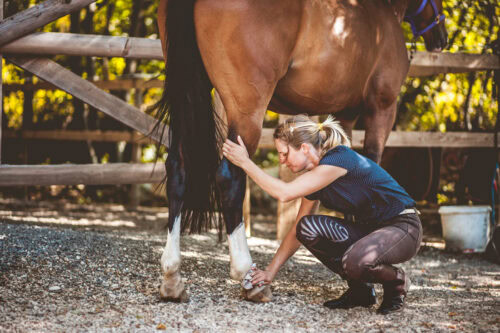
Horses diagnosed with kissing spines may need additional supportive care for arthritis associated with the hock, stifles, and sacro-iliac joints. Alternative therapies, such as chiropractic and acupuncture treatments, can help with compensatory pain and improve mobility as well.
Signs & Symptoms
Although kissing spine is not always symptomatic, horses who do experience pain can display a wide variety of signs such as:
- Bucking under saddle
- Reluctance to stretch the neck and round the back
- Hind end lameness
- Discomfort when saddling or doing up the girth
- Weight loss
- Cross cantering or difficulty maintaining a canter
- Pain when palpating or brushing the back
- General irritability when moving
Since these symptoms are also associated with other conditions, it is important to discuss diagnosis with your veterinarian to rule out other health problems, particularly gastric ulcers.
Treatment
In the past, a diagnosis of kissing spine would be a career-ender for performance horses.
Fortunately, there have been significant improvements in surgical, pharmaceutical, and rehabilitative interventions that give hope to many kissing spine horse owners.
The prognosis for horses with this condition is much better today. The majority of horses with kissing spine can return to work after following a veterinarian-recommended treatment plan. [12]
Treatments in use today include surgery, joint injections and non-invasive rehabilitation.
Interspinous Ligament Desmotomy
Pioneered by Dr. Richard Coomer in 2009, the interspinous ligament desmotomy (ISLD) is colloquially referred to as the ligament snip.
This procedure aims to cut the ligament between the spinous processes of the affected vertebrae, removing the source of pain and re-establishing mobility. [9]
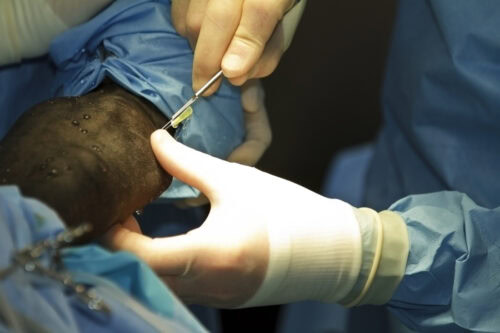
While your horse is under standing sedation and local anesthesia, the surgeon will make small incisions above the areas of kissing spine. The surgeon uses a very small chisel to divide the interspinous ligament in half.
Following ISLD, your horse will be on stall rest and a rehabilitation protocol as directed by your veterinarian.
This surgery comes with minimal complications and a high long-term success rate (90%). However, it does have its limitations. [9] Horses with greater than five lesions or extremely close spinous processes are not good candidates for ISLD.
ISLD does not cure kissing spine, but it does minimize symptoms and allow the back to move comfortably during rehabilitation.
If not rehabbed properly, some horses experience recurrence of kissing spine or develop kissing spine in other areas.
Cranial Wedge Ostectomy
The standing wedge ostectomy (or bone shave) is a much more invasive procedure, but it removes the kissing spines completely.
This surgery can be performed with your horse under standing sedation or general anesthesia. The surgeon will make a large incision down the length of your horse’s back over the areas affected by kissing spine.
The surgeon will then cut through the supraspinous ligament, which is the large band of fibrous tissue that runs along the top of the spinous processes.
Using a bone saw, the surgeon will then remove small sections of the overlapping spinal processes, curing the kissing spine. With the supraspinous ligament re-attached, your horse is now ready for stall rest and rehab. [10]
This surgery has an increased risk of infection and complications. After the surgery, remaining parts of the spinous processes can become sharp and irritated.
Without proper rehab protocols, kissing spine can recur in other areas of your horse’s back. [10]
Surgeons may opt to do a combination of ISLD and the cranial wedge ostectomy depending on their findings.
Steroid Injections
Similar to joint injections used to manage arthritis and inflammation in other joints, injections between the spinous processes can temporarily improve comfort and mobility.
Your horse is sedated and a needle is inserted, using aseptic techniques, into the spaces between the kissing processes to administer corticosteroid medications.
These drugs have an anti-inflammatory effect that reduces pain and stiffness between the dorsal spinous processes, allowing you to exercise your horse and help them build topline. [3]
Your horse may not be a good candidate for steroid injections if the spinous processes are too close together or are fused. Injections are temporary; your horse may need repeated injections in order to remain pain-free.
Steroid injections are more successful when a good exercise program is initiated to build abdominal strength and topline muscles.
Mesotherapy
Steroid injections may be accompanied by mesotherapy. When performing mesotherapy, a veterinarian uses very small needles in multiple locations to inject medication into the mesoderm – the deep layers of the skin.
A combination of medications used together helps reduce inflammation and blocks the pain sensors in the back in an attempt to relieve some symptoms of kissing spine.
Mesotherapy combined with shockwave therapy resulted in positive results in 86% of horses. [15]
Non-Invasive Techniques
If your horse is not a candidate for the invasive therapies listed above, there are non-invasive treatments that can prove very successful. Non-invasive techniques can be incorporated to help improve success rates as well.
Non-invasive approaches to rehabilitation involve:
- Conditioning exercises that strengthen the abdominal muscles and topline
- Pain medication such as NSAIDs, acetaminophen, or gabapentin
- Robaxin (methocarbamol), a muscle relaxant that is given to ease tension in the back muscles
- Corrective farriery
- Shockwave therapy
- Chiropractic care
- Acupuncture
- Diets that are low in sugar and starch to limit inflammation [14]
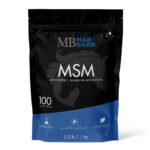
- Supplements that support joint health (i.e. MSM, Jiaogulan)
- Correct saddle fit
Any treatment plan for kissing spine must include conditioning to strengthen the topline and abdominal muscles to produce a positive long-term result [11]. If your horse has a weak topline the spine will collapse on itself, bringing the spinous processes closer together.
Frequently Asked Questions
Here are some frequently asked questions about kissing spine in horses:
Kissing spine affects horses by causing pain when the dorsal spinous processes (bony projections on the spine) touch or "kiss." This can lead to inflammation, muscle tightness, and difficulty moving, particularly under saddle. The condition may also cause discomfort during activities like saddling or when the back is palpated.
Kissing spine is caused by a combination of factors. Genetic predispositions, conformation issues, and improper conditioning can all contribute. Horses ridden too young, with weak toplines or poor posture, are more at risk. Additionally, horses with shorter backs, where the vertebrae are closer together, are more prone to this condition.
Horses with kissing spine may show various symptoms, including bucking under saddle, reluctance to stretch their neck or round their back, hind-end lameness, and discomfort when saddling. They might also experience weight loss, cross cantering, pain when the back is touched, and irritability during movement.
Managing kissing spine involves a combination of treatments. Working with a veterinarian to develop a comprehensive plan is essential. This may include surgery, joint injections, and rehabilitation exercises. Non-invasive treatments like chiropractic care, acupuncture, and strengthening the horse’s abdominal and topline muscles can also help improve mobility and reduce pain. A proper diet, low in sugar and starch, may assist in reducing inflammation.
Summary
Back pain and kissing spine can significantly affect a horse’s comfort, performance, and long-term soundness, making early evaluation and a coordinated management plan essential.
- If you suspect your horse has back pain or kissing spine, consult with your veterinarian to obtain an accurate diagnosis and assess the severity of the condition.
- Your veterinarian can outline which treatment options are available, ranging from medical management to targeted therapies depending on how advanced the condition is.
- Working with a qualified rehabilitation specialist experienced in treating horses with kissing spine may help support recovery through non-invasive therapies and controlled exercise.
- In addition to veterinary and rehabilitation care, appropriate management and conditioning play an important role in supporting comfort and long-term outcomes.
- You can also submit your horse’s diet online, and our nutritionists can help design a feeding plan to reduce inflammation and support topline muscle development.
References
- Ericshen, C. et al. Relationship between scintigraphic and radiographic evaluations of spinous processes in the thoracolumbar spine in riding horses without clinical signs of back problems. Equine Vet J. 2010. View Summary
- Musu Mayaki, A. et al. Clinical investigation of back disorders in horses: A retrospective study (2002–2017). Vet World. 2019. View Summary
- Sinding, F. and Berg, L. Distances between thoracic spinous processes in Warmblood foals: A radiographic study. Equine Vet J. 2010. View Summary
- Jeffcott, L. Disorders of the thoracolumbar spine of the horse — a survey of 443 cases. Equine Vet J. 1980. View Summary
- Etalon Diagnostics. Identification of Genomic Loci Associated with Performance-Limiting Kissing Spines in Quarter Horses and Warmbloods. Am Assoc of Equine Prac. 2020.
- De Cocq, P. et al. Effects of girth, saddle and weight on movements of the horse. Equine Vet J. 2010. View Summary
- Clements, P. et al. An investigation into the association between plantar distal phalanx angle and hindlimb lameness in a UK population of horses. Equine Vet Edu. 2019.
- Bromiley, M. The foot and shoe as a possible cause of injury. Equine Injury, Therapy, and Rehab. 2007.
- Sayers, E. et al. An exploration of clinical reasoning and practices used by physiotherapists in the rehabilitation of horses following interspinous ligament desmotomy surgery. Physio Theory and Practice. 2020. View Summary
- Jacklin, B. et al. A new technique for subtotal (cranial wedge) ostectomy in the treatment of impinging/overriding spinous processes: Description of technique and outcome of 25 cases. Equine Vet J. 2013. View Summary
- Forney, B. Methocarbamol for Veterinary Use. Wedgewood Pharm. 2021.
- Prisk, A.J. and Garcia-Lopez, J.M. Long-term prognosis for return to athletic function after interspinous ligament desmotomy for treatment of impinging and overriding dorsal spinous processes in horses: 71 cases (2012–2017). Vet Surg. 2019. View Summary
- Suagee, J.K. et al. Effects of High-Sugar and High-Starch Diets on Postprandial Inflammatory Protein Concentrations in Horses. J Equine Vet Sci. 2015.
- Young, A. Kissing Spines. UC Davis Vet Med: Center for Equine Health. 2019.
- Turner, T.A. Overriding Spinous Processes (Kissing Spines) In Horses: Diagnosis, Treatment, and Outcome in 212 Cases. AAEP Proceedings 2011. Vol 57.
- Patterson Rosa, L. et al. Genomic loci associated with performance limiting equine overriding spinous processes (kissing spines). Research in Veterinary Science. 2022. View Summary