English





In elite equestrian sports, performance optimization is critical to success. Whether your horse is racing, eventing, competing in endurance trials or show jumping, every rider wants to unlock their horse’s full athletic potential while protecting them from overexertion or injury.
Like human athletes, understanding and monitoring the physiological aspects of a horse’s performance is key to effective conditioning. This enables horses to perform at their best in every training session and competition.
An emerging tool in assessing a horse’s fitness is lactate testing. This technique involves measuring lactate levels in the horse’s blood after exercise, providing useful insight into their aerobic capacity and training effectiveness.
Understanding the complex relationship between lactate and equine exercise performance is a key focus of Mad Barn’s Performance Science Team, which works with elite equestrian across various disciplines. Continue reading to learn how to incorporate lactate testing into your horse’s conditioning program to maximize their potential.
Lactate Testing in Horses
Lactate testing in horses is a diagnostic tool used to assess and optimize their athletic performance. This method involves measuring the concentration of lactate in the horse’s blood.
Lactate is a byproduct of anaerobic metabolism, which generates energy when muscles are exercised vigorously. During anaerobic metabolism, glucose (sugar) is broken down to make energy, producing lactate as a waste product.
By measuring lactate concentrations before and after exercise, you can gain insights into a horse’s exercise capacity, including:
- Assessing Fitness Levels: High levels of lactate can indicate that a horse is working at or near its maximum capacity. Conversely, a horse with better fitness will generate less lactate when working below maximum output levels, indicating a higher tolerance to intense exercise and a better aerobic capacity.
- Monitoring Training Effectiveness: Regular lactate testing can help trainers understand how well a horse is responding to its current training regimen. Adjustments can then be made to ensure the horse is training at the optimal intensity without overtraining.
- Determining Recovery Status: By measuring how quickly lactate levels return to normal after exercise, trainers can assess how well a horse is recovering from exertion. Faster recovery times are typically a sign of better fitness.
Energy Metabolism in Performance Horses
Understanding the science behind lactate testing requires knowledge of cellular energy metabolism in horses.
Metabolism describes how the body breaks down molecules to obtain energy for various biological functions. This complex biochemical process takes place continuously in all living cells.
In horses and other mammals, energy metabolism typically begins with glucose, which is either accessed directly from circulating blood sugar or indirectly from glycogen stores in the liver and muscle.
Glucose is broken down into energy through a process known as glycolysis. As cells break down glucose for fuel, they generate byproduct molecules called metabolites, such as lactate.
Aerobic vs. Anaerobic Metabolism
During exercise, horses rely on aerobic and anaerobic metabolic pathways to meet their energy demands.
Aerobic Metabolism
Aerobic metabolism refers to the process where cells use oxygen to break down glucose, fats, and proteins to produce energy. This highly efficient pathway supports sustained, low-intensity activities by providing a steady energy supply.
Aerobic metabolism takes place in the mitochondria, the “powerhouses” of the cell, and generates a large amount of energy in the form of ATP (adenosine triphosphate). This process yields about 36 ATP molecules per glucose molecule.
Effective training increases blood flow to the muscle and production of new mitochondria, facilitating more efficient energy production as fitness improves.
Anaerobic Metabolism
At higher intensity levels, when energy demands exceed the available oxygen supply, horses switch to anaerobic metabolism. This pathway breaks down glucose without oxygen, generating ATP quickly but less efficiently than aerobic metabolism. It yields only about 2 ATP molecules per glucose molecule.
Anaerobic metabolism takes place in the cytoplasm of the cell, not in the mitochondria. This process also results in the formation of lactate as a byproduct.
While “lactate” and “lactic acid” are often used interchangeably, they are structurally different: lactic acid is not the direct byproduct of metabolism, lactate is. Lactate binds with hydrogen ions after metabolism to become lactic acid.
The release of hydrogen ions lowers the pH (increases the acidity) within the muscle tissue, contributing to the sensation of fatigue and muscle burn commonly experienced during intense physical exertion.
Increased acidity in the muscle tissue associated with fatigue is related to accumulation of hydrogen ions, not the accumulation of lactic acid, which actually buffers the free ions by binding them to lactate, reducing their overall contribution to fatigue.
Importantly, circulating lactate is not merely a waste product, but can serve as an energy source for cells. It can be converted back to pyruvate, an intermediate molecule, for further energy production. [1]
Table 1: Comparison of aerobic and anaerobic metabolic pathways
| Aerobic Metabolism | Anaerobic Metabolism | |
|---|---|---|
| ATP Yield | High | Low |
| Metabolic Rate | Moderate | Fast |
| Requires Oxygen | Yes | No |
| Mitochondria Involvement | Yes | No |
| Lactate Production | Low | High |
Figure 1: Production of energy (ATP) and lactate from aerobic versus anaerobic metabolism
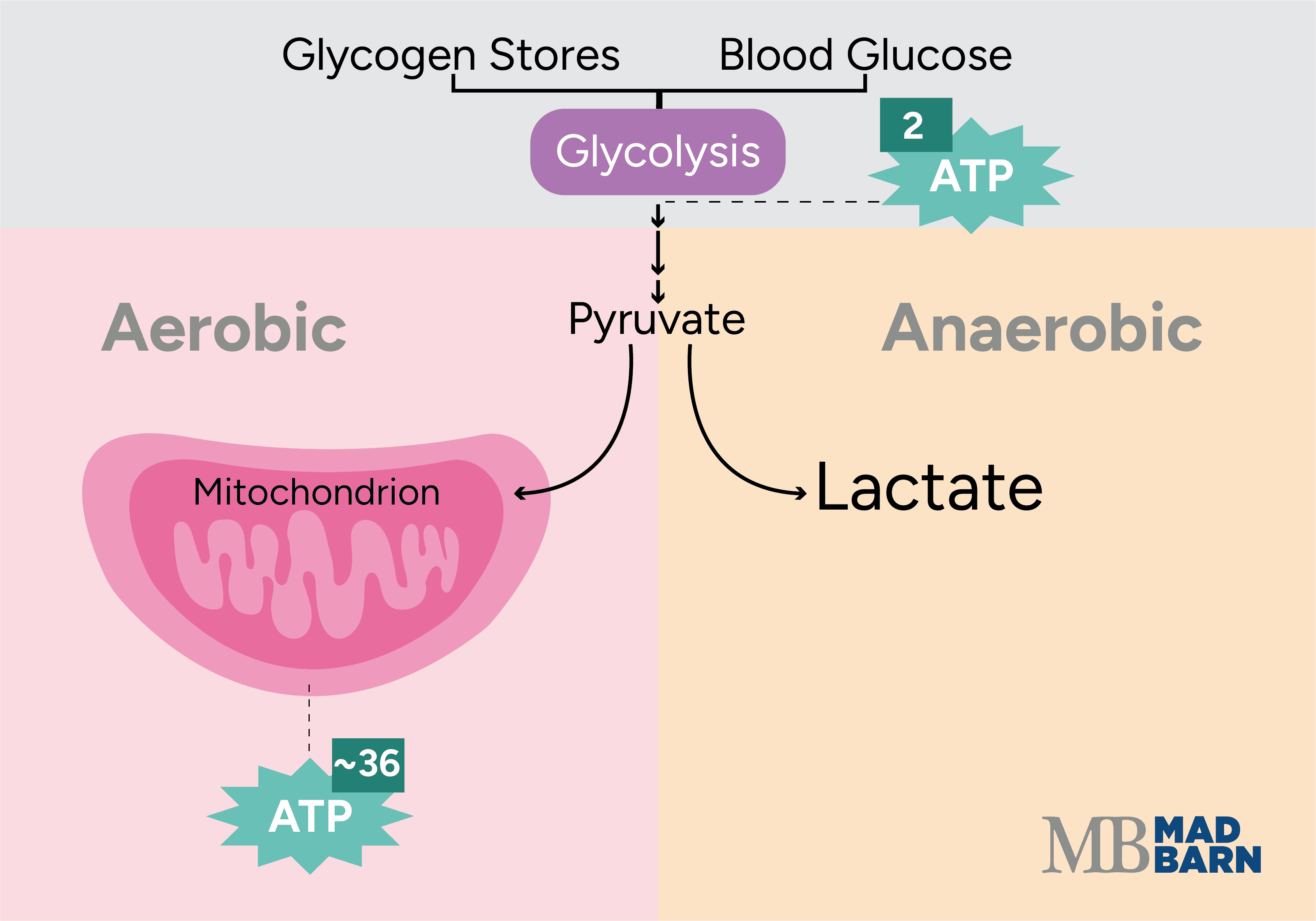 Illustration: Dr. Ana Mesa, PhD
 Lactate Production During Exercise
Researchers and sports scientists used to consider lactate a waste product and believed that it needed to be eliminated from the body in order to reduce muscle fatigue. However, more recent research shows that it plays a vital role in energy metabolism.
The accumulation of lactate in muscles during exercise is not solely an indicator of fitness conditioning, but is a normal and necessary aspect of equine physiology.
Lactate serves as a valuable energy source, particularly during prolonged or intense exercise. Lactate can diffuse from muscle cells into the bloodstream and be transported to other tissues, including the liver, heart, and even other muscles.
In the liver, lactate can be converted back into glucose through a process called gluconeogenesis. This glucose can then be released into the bloodstream and used again by muscles as a fuel source.
This cycle, known as the Cori cycle, is critical during endurance exercise, as it helps to maintain blood glucose levels and improves time to fatigue.
Lactate also buffers hydrogen ions produced every time an ATP molecule is broken down. This delays the onset of acidosis and fatigue.
Lactate production in horses is greatest in the anaerobic zone, such as during high-intensity, short-duration exercise like sprinting or jumping. [1]
Resting vs. Exercising Lactate Levels
Understanding the difference between resting and exercising lactate levels is crucial for evaluating fitness and designing effective training programs.
Resting lactate levels refer to the normal concentration of lactate present in the blood when the horse is at rest and not undergoing any physical exertion. In resting horses, lactate concentration in the blood typically ranges from 0.5 to 1.5 mmol/L. [2][3]
Exercising lactate levels, on the other hand, refer to the lactate concentration in the blood during or immediately after physical activity. These levels can vary widely based on the intensity and duration of the exercise and fitness of the horse.
Lactate Threshold
The lactate threshold in horses, defined as when the blood lactate concentration reaches 4 mmol/L, serves as a key measure of exercise intensity and horse performance.
This threshold signifies the transition from aerobic to anaerobic metabolism during exercise and marks the intensity level at which lactate begins to accumulate in the bloodstream faster than it can be removed. [4]
Studies show that the rate at which a horse reaches the lactate threshold, known as the V4 value, is a reliable indicator of fitness. [5][6]
A horse that achieves its lactate threshold at a higher workload or faster pace is considered more fit because it can sustain higher levels of aerobic activity before switching to less efficient anaerobic energy production. These horses have superior cardiovascular fitness and better conditioned muscles, enabling them to utilize oxygen more effectively during intense exercise.
Factors Influencing Lactate Levels in Horses
In general, horses at rest maintain low and stable lactate levels in their bloodstream despite continuous lactate production. This is because under normal circumstances, they can efficiently eliminate lactate from their system as quickly as they produce it. [7]
During exercise, lactate concentration increases significantly because it is produced faster than it can be eliminated.
For example, horses competing in the cross-country phase of 3-day eventing have lactate concentrations around 18.4 ± 5 mmol/L immediately post-exercise, declining to approximately 15 ± 6.8 mmol/L after 10 minutes. [8]
The rate of lactate production and subsequent accumulation in the tissues is influenced by:
- Fitness level of the horse
- Intensity and duration of exercise
- Nutrition and diet
- Lactate clearance
In the following section, we will further explore these factors to better understand their influence on blood lactate levels in horses.
Overall Fitness
The horse’s fitness level significantly influences lactate production and clearance. Research indicates that trained horses exhibit more efficient lactate metabolism compared to untrained horses, resulting in lower blood lactate concentrations during exercise. [9]
Additionally, well-conditioned horses possess higher aerobic capacity, which allows them to delay the switch to anaerobic metabolism and the subsequent onset of blood lactate accumulation during exercise. [10]
Research suggests that aerobic training enhances lactate clearance by improving the skeletal muscle’s capacity to remove lactate from the blood. [9][10] Additionally, there is evidence that exercise training increases the oxidative capacity of skeletal muscle, leading to better lactate management in horses. [11]
Exercise Intensity
The intensity and duration of exercise significantly impact lactate production in horses. High-intensity activities such as galloping or jumping require horses to rely more on anaerobic metabolism, which leads to increased lactate production.
Research also reveals a positive correlation between the running speed of horses and peak plasma lactate levels. Horses running at a faster speed experience a rapid increase in plasma lactate concentrations and reach higher lactate levels compared to slower horses. [12]
The duration of exercise also influences the balance between lactate production and clearance. During prolonged exercises like endurance riding, there is a gradual increase in blood lactate levels due to ongoing anaerobic metabolism. [9] The longer the exercise lasts, the more lactate builds up in the blood.
Nutrition and Diet
Lactate concentrations can also be influenced by factors such as the horse’s diet composition. Research shows that horses fed a high-fat diet have significantly less plasma lactate accumulation during exercise than those on a low-fat diet. [36]
In one study, Standardbred horses were fed diets containing either 11.8% fat or 1.5% fat on a dry matter basis. The horses on the higher fat diet showed significantly lower plasma lactate levels during exercise. [36]
This suggests that feeding fat may improve performance in horses by delaying lactate accumulation, potentially extending time to fatigue. [36]
The caveat here is that fat is only a suitable substrate for exercise below the anaerobic threshold. When speed is required, only glycogen can be broken down and burned quickly enough. Horses on high fat diets also have lower glycogen reserves, which threatens endurance performance.
What's your top priority with your horse's health?

What's your top priority with your horse's health?
Using Lactate Testing for Training
Monitoring lactate levels during exercise is an effective tool for customizing equine training programs. This data enables trainers and elite athletes to better measure their horse’s fitness, adjusting their training intensity and duration to target specific fitness goals.
The first step to using lactate testing in your horse’s fitness program is to establish baseline values. This involves conducting tests before and after exercise to determine typical blood lactate levels for each horse.
This initial assessment provides insights into how each horse’s lactate concentrations respond to changes in exercise level over time. Heart rate monitoring can be conducted at the same time for additional insight into cardiovascular fitness.
The next step involves conducting standardized field tests, where lactate levels are measured as horses perform a consistent workload at regular intervals throughout the training season. During these workouts, the horse’s speed and distance should be kept the same.
This method enables trainers to accurately compare performance metrics over time and effectively monitor the horse’s long-term adaptation to training. [14]
Based on lactate threshold values established during testing, training intensity and duration can be adjusted to improve performance. Both endurance training and high-intensity interval training (HIIT) sessions should be incorporated to enhance aerobic and anaerobic capacity.
How to Measure Lactate Levels
Lactate levels are conventionally measured by submitting a blood sample to a medical laboratory, but this is impractical for ongoing monitoring of exercise fitness. Instead, riders and trainers use portable lactate analyzers to enable real-time monitoring of lactate levels during training or competition.
These devices are effective, but have some limitations, such as measurement variability and the need for accurate calibration. [15]
To accurately measure your horse’s lactate levels with a portable analyzer, you will need a small blood sample from your horse. The process is straightforward and can typically be performed wherever you are exercising your horse: [37]
- Prepare Your Equipment: Ensure your portable lactate analyzer is calibrated according to the manufacturer’s instructions. Have test strips ready.
- Prepare the Horse: Keep the horse calm. Shave a small area of about 1cm² in the central region of the left neck where you intend to draw blood. Disinfect the area using a solution of 50% ethanol in water and wash to thoroughly remove any dirt.
- Collect the Blood Sample: Once the horse has finished exercising, use distilled water to clean off any sweat. Carefully wipe away the first drop of blood with a dry wipe and collect the second drop on the lactate test strip.
- Analyze the Sample: Insert the test strip into the lactate analyzer. The device will calculate the lactate concentration and display the results within a few seconds.
- Conduct Exercise Testing (if applicable): To assess how the horse’s lactate levels respond to exercise, collect additional samples during and after exercise, as well as during recovery.
- Record and Compare Results: Document the lactate values along with the time and context of each test (e.g., resting, post-exercise). Over time, this data can reveal trends and patterns in the horse’s response to exercise, allowing for more tailored training strategies.
If you are interested in learning more about performing equine lactate testing yourself, contact the Mad Barn Performance Science team for more information.
Lactate Monitoring in Medicine
Lactate monitoring is also a useful tool in veterinary medicine. Abnormal lactate production in horses can indicate various conditions, including:
- Intestinal ischemia
- Colonic diseases
- Other gastrointestinal disorders
Elevated lactate levels, particularly in peritoneal fluid, are associated with severe colic, intestinal obstructions, and postoperative complications in horses. [16][17][18]
Elevated D-lactate concentrations in peritoneal fluid have been linked to these severe pathologies, highlighting the role of lactate as a marker for identifying critical conditions in equine patients. [19]
D-lactate is produced by bacteria in the intestines. A detectable increase means there is significant damage to the intestinal barrier.
Given this, there is evidence showing that abnormally high lactate concentration at rest can serve as a predictive marker for assessing the severity of colic and potential outcomes in affected horses. [20][21]
Lactate measurements can also help evaluate postoperative complications in horses undergoing gastrointestinal surgery. Changes in serial venous lactate measurements correlate with postoperative complications, underscoring the value of lactate monitoring in assessing recovery and outcomes. [19]
Limitations of Portable Lactate Analyzers
Several studies have identified challenges associated with portable lactate analyzers, emphasizing the need for rigorous evaluation before implementation, particularly in athletic and clinical settings: [22][23][24]
- The Lactate Pro® analyzer was shown to need consistent calibration to establish reliability and validity of data output, especially for identifying the lactate threshold in athletes
- The Lactate Plus® analyzer demonstrated strong reliability but revealed a slight bias in results, which could affect interpretation
- A further evaluation of three different portable blood lactate analyzers identified measurement discrepancies compared to laboratory-based methods
While these devices offer the convenience of quick lactate measurements directly in the field, the results may not be as precise as laboratory values and should not be relied on for clinical purposes.
How to Train for Optimal Performance
Monitoring your horse’s lactate levels can help you determine if their training regimen is optimized to meet your fitness and competition goals.
Anaerobic Training
Measuring lactate values immediately after exercise will indicate if the horse is training above the lactate threshold or if their workload needs to be increased. [26] High-intensity conditioning above the lactate threshold is important to improve a horse’s anaerobic capacity and overall performance. [26]
But anaerobic exercise is just one part of a balanced training program. A key principle in training performance horses is dynamic conditioning, which involves a mix of aerobic and anaerobic training techniques to optimize overall performance.
Endurance Training
Including longer, lower-intensity endurance exercises can enhance the horse’s aerobic capacity so they can use oxygen efficiently. This reduces reliance on anaerobic metabolism and delays the increase in lactate production during intense exercise.
Moreover, trained horses have faster lactate clearance rates after exercise, contributing to faster recovery times and improved competition readiness. [9][25]
Endurance training in performance horses has also been shown to: [9][10]
- Improve lactate elimination at rest
- Enhance recycling of lactate back into glucose
- Boost post-workout lactate clearance
High-Intensity Interval Training (HIIT)
Another important component of dynamic conditioning is high-intensity interval training (HIIT). HIIT involves alternating between short bursts of intense exercise and periods of lower intensity or rest.
During high-intensity intervals, the horse’s muscles are pushed to work at maximum capacity, resulting in more lactic acid production.
HIIT intervals train the horse’s body to better buffer hydrogen ions. This means that over time, the horse’s muscles become more adept at preventing acidosis, which can delay the onset of fatigue during high-intensity activities.
This training method is effective for improving both anaerobic and aerobic capacities in horses.
Lactate and Heart Rate
Directly testing a horse’s blood lactate levels requires specialized equipment that may not be feasible for most horse owners. In such cases, using a heart rate monitor can be a practical alternative to determine if a horse has reached the anaerobic exercise zone during training.
The relationship between heart rate and lactate values has been extensively studied in sports medicine. Significant correlations have been observed between post-exercise blood lactate concentrations, peak heart rate, and ratings of perceived exertion in horses. [35]
Research shows that horses reach their anaerobic or lactate threshold when their heart rate is around 160 beats per minute (bpm). [35] When exercising your horse, if their heart rate reaches at least 160 bpm, they are likely in the anaerobic exercise zone.
Feeding Strategies for Improved Lactate Metabolism
Your horse’s nutrition program also plays a key role in supporting optimal lactate metabolism and muscle recovery when training.
To effectively address the increased demands of exercise, a comprehensive nutrition plan must focus on:
- Carbohydrate availability
- Electrolyte balance
- Hydration status
Carbohydrate Availability
Glycogen is the primary energy source for muscles during exercise. Horses make glycogen from carbohydrates consumed in their diet. Glycogen is then stored in the horse’s muscles and liver where it can be broken down into glucose to provide a quick and efficient energy supply.
Studies also show that substantial depletion of muscle glycogen can decrease anaerobic capacity during high-speed exercise tests. [27] This is demonstrated by lower blood lactate concentrations at the end of exercise, indicating less anaerobic energy production. [28]
Ensuring adequate carbohydrate availability after exercise can help replenish glycogen stores to keep the horse ready to perform in future training sessions. [30]
Keep in mind that restoring depleted muscle glycogen stores in horses can take 48 – 72 hours, even with immediate feeding of highly digestible carbohydrates after exercise. [29] Muscle glycogen synthesis in horses appears to be slower compared to humans and other animal species, even with a diet high in hydrolyzable carbohydrates. [29]
Free-choice forage is sufficient to meet the carbohydrate needs of most horses, but those in heavy work or high performance training may benefit from selective addition of highly digestible grain. Work with an equine nutritionist before adding grain to your horse’s diet to ensure their feeding program is appropriately balanced for their training needs.
Electrolyte Balance
Electrolyte imbalances can significantly impact lactate production in horses, affecting their athletic performance and overall health. Electrolytes are minerals, such as sodium, chloride, potassium, calcium, and magnesium, that carry an electric charge and are essential for various bodily functions.
Electrolytes are important for maintaining fluid balance, nerve function, muscle contractions, and acid-base balance. Research also shows that electrolyte imbalance is associated with increased blood lactate levels during repeated bouts of maximal exercise. [31][34]
Horses lose large amounts of electrolytes through sweat during exercise, putting them at risk of imbalances that can contribute to fatigue and diminished performance. It’s crucial to replenish these minerals in the diet to maintain balanced electrolyte levels. [32]
Horses in all types of work require salt supplementation to meet sodium requirements and replenish sweat losses. Feeding loose table salt also encourages thirst to maintain hydration status.
In addition to salt, performance horses should be provided with a balanced electrolyte supplement before and after training sessions.
Mad Barn’s Performance XL is an electrolyte designed to meet the needs of high performance horses. Performance XL is scientifically formulated to replace the electrolytes lost in sweat and contains added Vitamin E and Vitamin C to support post-workout care.
Hydration Status
Adequate hydration is important for all horses and especially exercising horses. Horses in heavy work have a higher risk of dehydration, which can impair muscle function, performance and exercise recovery.
During intense exercise, especially in hot weather, horses lose a substantial amount of water through sweat. This sweating is crucial for thermoregulation, as it helps cool their bodies and prevents overheating.
To prevent dehydration, ensure your horse has constant access to fresh, clean water before and after exercise. Stay vigilant for signs of dehydration in your horse and take frequent rest breaks when exercising.
Maintaining proper hydration status is also essential for accurate lactate testing interpretation in horses. Dehydration can elevate lactate levels, affecting the assessment of fitness, recovery, and overall health. [33]

Case Study: Lactate Testing and Performance Assessment
This field study conducted by Mad Barn’s Performance Science Team used lactate testing to evaluate the fitness and competition-readiness of two high-performance Eventing horses.
The fitness test was conducted on a 2.6 km (1.6 mi) loop with a 7% hill incline. The test consisted of:
- 10-minute warm-up trot loop: to prepare the horses physically and mentally to run the course
- Two gallop loops: designed to achieve intermediate cross-country speeds of 550 mpm (meters per minute)
- 10-minute cool-down walk: to allow the horses’ heart rate and body temperature to return to baseline levels
Throughout the test, a heart rate monitor also tracked the horses’ heart rate and recovery.
Table 2: Horse Field Test Data
| Test Metric | Horse 1 | Horse 2 |
|---|---|---|
| Lactate (before exercise) | 0.7 mmol/L | 0.4 mmol/L |
| Trot Speed | 14 km/h | 13.6 km/h |
| Gallop Speed (lap 1) | 29.1 km/h | 31 km/h |
| Gallop Speed (lap 2) | 37.7 km/h | 30.6 km/h |
| Lactate (after exercise) | 5.2 mmol/L | 6.7 mmol/L |
Discussion of Results
In this field test, Horse 1 experienced a significant increase in lactate levels after exercise, achieving a modest breakthrough of the lactate threshold (4 mmol/L). This indicates that the fitness test pushed the horse into the anaerobic exercise zone.
The horse showed a broader range of speeds across different gaits, suggesting that its body is adapting to the increased challenge as the test progressed.
Horse 2 also experienced elevated lactate levels, indicating anaerobic energy production during the gallop phases. Horse 2 maintained a more consistent pace across gaits but showed a higher post-exercise lactate response.
Key Observations
This data serves as a valuable starting point for individual fitness assessment of these elite competition horses.
Both horses relied partially on anaerobic energy production during the gallops, highlighting potential for improvement in their aerobic fitness. Improving aerobic capacity is critical for sustained performance in Eventing competition.
Repeating the test protocol at different stages of the training season could provide further insights into the effectiveness of the training program for enhancing aerobic and anaerobic capacity.
Frequently Asked Questions
Here are some frequently asked questions about lactate in horses:
Lactate in horses is a natural substance produced when a horse’s muscles break down glucose for energy during exercise. Instead of being only waste, equine lactate can be recycled into fuel through the Cori cycle and also helps buffer hydrogen ions, supporting muscle function during intense work.
Lactate is not always a bad thing for performance in horses because it helps buffer acids in equine muscles and can serve as an extra energy source. Problems occur when hydrogen ions accumulate faster than lactate can control, which leads to fatigue and reduces a horse’s ability to perform at high intensity.
You do need special equipment to measure your horse’s lactate levels, usually a portable lactate analyzer with test strips. These devices quickly measure lactate from a small blood sample taken from the horse’s neck, and proper calibration is needed for accuracy. The article notes that the second drop of blood should be collected for the test. When an analyzer is not available, a heart rate monitor is a practical alternative, since horses typically reach the lactate threshold around 160 beats per minute.
Lactate testing can really improve my horse’s performance in competition by showing how the horse’s body responds to exercise. Tracking changes in lactate levels over time makes it possible to balance endurance training with high-intensity work, leading to better conditioning and stronger results in competitive events.
Summary
Lactate testing is an emerging technology horse trainers can use to monitor the overall effectiveness of training to optimize performance outcomes.
- Lactate is a natural byproduct of metabolism that significantly increases in the tissues when horses are working in the anaerobic exercise zone
- By monitoring lactate levels before and after exercise, trainers and athletes can assess how effective training programs are and make adjustments
- Dynamic conditioning can improve a horse's aerobic and anaerobic capacity while also training the horse's muscles to better buffer and clear lactic acid
- Balanced nutrition and proper training are fundamental to improving performance in competitive horses
References
- Cunha, T. F. et al. Lactate Modulates Cardiac Gene Expression in Mice During Acute Physical Exercise. Braz. J. Med. Biol. Res. 2022.
- Gomes, C. L. N. et al. Exercise Training Session-Induced Metabolic Acidosis in Barrel Racing Horses. Ciênc. Rural. 2020.
- Čebulj-Kadunc, N. et al. Fluctuations of Physiological Variables During Conditioning of Lipizzan Fillies Before Starting Under Saddle. Animals. 2022.
- Svedahl, K. and MacIntosh, B. R. Anaerobic Threshold: The Concept and Methods of Measurement. Can. J. Appl. Physiol. 2003.
- Lindner, A. et al. Effect of Blood Lactate-Guided Conditioning of Horses With Exercises of Differing Durations and Intensities on Heart Rate and Biochemical Blood Variables. J. Anim. Sci. 2009.
- Trilk, J. L. et al. A Lactate‐guided Conditioning Programme to Improve Endurance Performance. Equine Vet. J. 2002.
- Moxnes, J. F., and Sandbakk, O. The kinetics of lactate production and removal during whole-body exercise. Theor. Biol. Med. Model. 2012.
- White, S. L. et al. Heart Rate Response and Plasma Lactate Concentrations of Horses Competing in the Speed and Endurance Phase of 3‐day Combined Training Events. Equine Vet. J. 1995.
- Stallknecht, B. et al. Lactate Production and Clearance in Exercise. Effects of Training. A Mini‐review. Scand. J. Med. Sci. Sports. 1998.
- Scariot, P. P. M. et al. Continuous Aerobic Training in Individualized Intensity Avoids Spontaneous Physical Activity Decline and Improves McT1 Expression in Oxidative Muscle of Swimming Rats. Front. Physiol. 2016.
- Kim, J. et al. Exercise Training Increases Oxidative Capacity and Attenuates Exercise-Induced Ultrastructural Damage in Skeletal Muscle of Aged Horses. J. Appl. Physiol. 2005.
- Harkins, J. D. et al. The Correlation of Running Ability and Physiological Variables in Thoroughbred Racehorses. Equine Vet. J. 1993.
- Oldruitenborgh-Oosterbaan, M. M. S. v. et al. Evaluation of the Usefulness of the Portable Device Lactate Pro for Measurement of Lactate Concentrations in Equine Whole Blood. J. Vet. Diagn. Invest. 2008.
- Kirsch, K., et al. Monitoring Performance in Show Jumping Horses: Validity of Non-specific and Discipline-specific Field Exercise Tests for a Practicable Assessment of Aerobic Performance. Front. Physiol. 2022.
- Siegers, E. W. et al. Evaluation of Three Portable Lactate-Measurement Devices in Exercising Horses. Pferdeheilkunde Equine Med. 2018.
- Latson, K. M. et al. Evaluation of Peritoneal Fluid Lactate as a Marker of Intestinal Ischaemia in Equine Colic. Equine Vet. J. 2010.
- Johnston, K. et al. Plasma Lactate as a Predictor of Colonic Viability and Survival After 360° Volvulus of the Ascending Colon in Horses. Vet. Surg. 2007.
- Smanik, L. E. et al. Serial Venous Lactate Measurement Following Gastrointestinal Surgery in Horses. J. Vet. Sci. 2022.
- Crotty, N. M. et al. Reliability and Validity of the Lactate Pro 2 Analyzer. Meas. Phys. Educ. Exerc. Sci. 2021.
- Robinson, C. S. et al. Are Serum Amyloid a or D‐lactate Useful to Diagnose Synovial Contamination or Sepsis in Horses?. Vet. Rec. 2017.
- Kilcoyne, I. et al. Predictive Value of Plasma and Peritoneal Creatine Kinase in Horses With Strangulating Intestinal Lesions. Vet. Surg. 2018.
- Boom, R. v. d. et al. The Usability of Peritoneal Lactate Concentration as a Prognostic Marker in Horses With Severe Colic Admitted to a Veterinary Teaching Hospital. Equine Vet. Educ. 2010.
- Hart, S. et al. A Method-Comparison Study Regarding the Validity and Reliability of the Lactate Plus Analyzer. BMJ Open. 2013.
- Tanner, R. K. et al. Evaluation of Three Portable Blood Lactate Analysers: Lactate Pro, Lactate Scout and Lactate Plus. Eur. J. Appl. Physiol. 2010.
- Kitaoka, Y. et al. Muscle Glycogen Breakdown and Lactate Metabolism During Intensive Exercise in Thoroughbred Horses. J. Phys. Fit. Sports Med. 2014.
- Hinchcliff, K. W. et al. High Intensity Exercise Conditioning Increases Accumulated Oxygen Deficit of Horses. Equine Vet. J. 2002.
- Lacombe, V. A. et al. Interactions of Substrate Availability, Exercise Performance, and Nutrition With Muscle Glycogen Metabolism in Horses. J. Am. Vet. Med. Assoc. 2003.
- Lacombe, V. A. et al. Exercise That Induces Substantial Muscle Glycogen Depletion Impairs Subsequent Anaerobic Capacity. Equine Vet. J. 1999.
- Waller, A. P. and Lindinger, M. I. Nutritional Aspects of Post Exercise Skeletal Muscle Glycogen Synthesis in Horses: A Comparative Review. Equine Vet. J. 2010.
- Waller, A. P. et al. Oral Acetate Supplementation after Prolonged Moderate Intensity Exercise Enhances Early Muscle Glycogen Resynthesis in Horses. Exp. Physiol. 2009.
- Assenza, A. et al. Evaluation of Serum Electrolytes and Blood Lactate Concentration During Repeated Maximal Exercise in Horse. J. Equine Vet. Sci. 2014.
- Viu, J. et al. Acid‐base Imbalances During a 120 Km Endurance Race Compared by Traditional and Simplified Strong Ion Difference Methods. Equine Vet. J. 2010.
- Nyman, S. et al. Water intake and fluid shifts in horses: effects of hydration status during two exercise tests. Equine Vet. J. 2002.
- Muñoz, A. et al. Dehydration, Electrolyte Imbalances and Renin‐angiotensin‐aldosterone‐vasopressin Axis in Successful and Unsuccessful Endurance Horses. Equine Vet. J. 2010.
- Piero, D. W. et al. Effects of Work-Interval Duration and Sport Specificity on Blood Lactate Concentration, Heart Rate and Perceptual Responses During High Intensity Interval Training. Plos One. 2018.
- Sloet van Oldruitenborgh-Oosterbaan, MM. et al. Exercise- and metabolism-associated blood variables in Standardbreds fed either a low- or a high-fat diet. Equine Vet J Suppl. 2002.
- Kobayashi, M. Simple Lactate Measurement in Horses Using a Portable Lactate Analyzer with Lancet Skin Punctures under Field Conditions. Journal of Equine Science. 2007.