English








Lens luxation, also referred to as a dislocated lens, is an uncommon but serious eye condition in horses. It occurs when the lens, the clear, flexible structure inside the eye that helps focus light, slips out of its normal position. This displacement can cause pain, cloudiness in the eye, and in some cases, permanent vision loss. [1]
Although lens luxation is rare in horses compared to other animals, it most often develops as a complication of other eye problems such as equine recurrent uveitis (also called “moon blindness”), cataracts, glaucoma, or trauma. [2]
Equine eye conditions can worsen quickly, so recognizing the early signs and seeking prompt veterinary care is essential to keeping your horse comfortable and protecting vision.
Keep reading to learn how the equine lens functions, the causes of lens luxation, and warning signs every horse owner should watch for. By understanding the diagnosis, treatment options, prevention strategies, and long-term care tips for lens luxation, you can make informed decisions and safeguard your horse’s eyesight.
Dislocated Lens in Horses
Lens luxation, or dislocation, occurs when the lens shifts out of its normal position within the eye. Unlike certain dog breeds, primary (hereditary) lens luxation is extremely rare in horses. [2][3]
In horses, this condition almost always occurs secondary to another eye problem, such as: [2]
- Chronic inflammation (equine recurrent uveitis)
- Cataracts
- Glaucoma
- Trauma
Lens luxation in horses is categorized by severity as follows: [2]
- Subluxation: A partial displacement. Vision may be affected, but the eye is not in immediate danger. Early veterinary treatment can sometimes prevent further problems in these cases.
- Luxation: The lens fully slips from its normal position, either forward into the front of the eye (anterior luxation) or backward into the main body of the eye (posterior luxation). Both types are serious and can cause pain, vision loss, and secondary complications like glaucoma.
Anatomy
The lens is a transparent, flexible structure inside the horse’s eye that focuses light onto the retina, allowing clear vision.
Much like the lens in a camera, the lens of an eye adjusts its size and shape to keep images sharp and in focus.
 Illustration: Dr. Ana Mesa, PhD
 The lens has several unique characteristics that support its structure and function, including: [1][2][4][5][6]
- Transparency: Complete clarity of the lens is fundamental to clear vision, allowing light to pass to the retina freely.
- Avascular: The lens doesn’t have its own blood or lymph vessels, relying instead on surrounding fluids for nutrients.
- Aneural: The lens also doesn’t contain any nerves, so horses are unable to perceive pain originating from the lens. However, luxation can still stimulate nerve endings in other areas of the eye, leading to discomfort.
- Continuous growth: The lens adds layers throughout life, which means senior horses have more density in the lens.
The lens is held in place by tiny, strong fibers called zonules, which attach it to the ciliary body — the structure responsible for producing fluid inside the eye. These fibers act like suspension cables, keeping the lens centered and stable.
When this system functions normally, the horse can focus on both near and distant objects as the lens makes subtle adjustments in shape to bring images into focus. [7]
Although the lens is well protected within the eye, the supporting structures are delicate. If the zonules weaken or rupture due to trauma, chronic inflammation, or other ocular disease, the lens may become displaced.
What's your top priority with your horse's health?

Enter your email to receive your store credit
Symptoms
Lens luxation in horses usually occurs secondary to another eye condition. As a result, the signs tend to be found incidentally during an ophthalmic examination, rather than recognized directly by owners or caretakers.
During ophthalmic examination, a luxated lens appears as: [2][8]
- Changes in the anterior chamber
- Abnormal movement of the iris
- Abnormal movement and position of the lens
Symptoms of Associated Conditions
Owners are more likely to notice signs of primary eye conditions that may lead to lens luxation if left untreated.
General signs of eye disease in horses include: [1][2][8]
- Excessive eye discharge
- Discolored eye discharge
- Purulent (pus-like) eye discharge
- Bloodshot eyes
- Changes in vision
- Cloudy cornea (eye surface)
- Signs of eye injury
- Pawing or rubbing at the eye
- Holding one eye closed
- Resistance to touch or handling around the face
- Behavior changes
- Signs of pain
- Unresponsiveness
Causes
Lens luxation in horses usually occurs secondary to other eye problems or injuries that weaken the structures holding the lens in place.

“Any sudden corneal cloudiness or change in a horse's eye should be treated as an emergency. Lens luxation can progress quickly and threaten vision, so early veterinary care is critica”
— Dr. Jennifer Skaggs, DVMEquine Veterinarian
Common causes include: [2][6][9][10][11]
- Equine Recurrent Uveitis (ERU): Also called “moon blindness,” this chronic eye inflammation is the most common reason horses develop lens luxation. Repeated inflammation weakens the fibers (zonules) that hold the lens.
- Cataracts: Over time, changes in the lens itself can make it more likely to shift or slip.
- Glaucoma: Increased pressure inside the eye can push the lens out of its normal position.
- Trauma: Any injury to the eye, such as a kick, a fall, or a scratch, can damage the zonules and cause the lens to move.
- Congenital or inherited weakness: Rarely, some horses are born with weaker zonules that make lens luxation more likely.
Risk Factors
Certain horses are more likely to develop lens luxation. Risk factors for lens luxation include: [2][6][9][11]
- History of eye disease: Horses with a history of equine recurrent uveitis (ERU), cataracts, or glaucoma are at risk because these conditions can weaken the fibers (zonules) that hold the lens in place.
- Eye trauma: Horses who have experienced injuries such as kicks, falls, or scratches from branches may have damaged lens structures.
- Age-related changes: Older horses may naturally have weaker zonules, making lens displacement more likely.
Diagnosis
Detecting lens luxation early is important for protecting your horse’s vision and comfort.
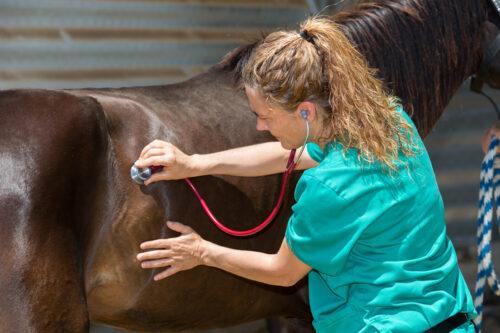
In cases of eye conditions, the treating veterinarian performs a thorough eye examination, which may include: [1][2][12][13][14][15][16]
- Visual inspection: Looking for changes in lens position, cloudiness, or a mis-shaped edge of the lens.
- Ophthalmoscope or slit-lamp exam: These tools allow the vet to examine the lens, iris, and other internal eye structures more closely.
- Tonometry: Measuring intra-ocular pressure is the main test for glaucoma, which can occur if the lens blocks fluid drainage.
- Ultrasound: Used if the cornea is too cloudy to see inside the eye. This helps the vet confirm the position of the lens.
Depending on the findings of the eye examination, referral to an eye specialist may be required.
Treatment
Treating lens luxation requires prompt veterinary evaluation. The treatment plan depends on the severity of the displacement, the horse’s comfort, and any related complications. Early veterinary attention is important to protect vision and prevent further damage. [2]
Initial management focuses on stabilizing the eye and addressing immediate issues. The primary cause should be identified and treated, and any secondary glaucoma, if present, must be controlled. [8]
Surgical intervention may be necessary if the lens luxation is causing pain or occluding the drainage angle. [2][6]
Surgical options for treating lens luxation in horses include: [2][6]
- Lens removal (lensectomy): Removes the displaced lens to relieve pain and prevent further complications. Requires a specialist veterinarian and careful post-operative care.
- Enucleation (eye removal): Considered if the eye is blind, very painful, or at risk of permanent damage to maintain the horse’s quality of life.
- Medical management: Medical management can be attempted if the lens is luxated posteriorly, or if the lens is manually pushed into the posterior chamber. Medications are used to constrict the pupil to try and keep the lens from luxating into the anterior chamber.
Ongoing Management
After treatment, ongoing care helps protect the eye and prevent further problems.
Managing horses recovering from eye treatment usually requires: [2]
- Regular veterinary check-ups to monitor lens position, eye pressure, and inflammation
- Observing for changes in vision, behavior, or signs of discomfort
- Managing underlying conditions like uveitis or glaucoma to reduce the risk of further problems
Every horse and situation is unique. Your veterinarian will create a treatment plan tailored to your horse’s condition, age, overall health, and level of vision. Prompt, professional intervention is the best way to protect your horse’s vision, comfort, and long-term eye health.
Prognosis
The outlook for a horse with lens luxation depends on severity and how quickly it is treated. Early detection improves comfort and may preserve vision. Advanced luxation or complications like glaucoma can lead to permanent vision loss. [2]
Surgery, including lens or eye removal, may be needed in severe cases. [2] Horses can usually adapt to life with one eye, but those with chronic eye issues may require ongoing care. [8]

Prevention
While lens luxation cannot always be prevented, especially when caused by trauma or congenital issues, careful eye care and management of underlying conditions can lower the risks. Early attention to any eye abnormality is the best way to protect your horse’s vision.
Steps to reduce risk of eye issues in horses include:
- Stay up-to-date with routine veterinary exams
- Treat eye injuries and inflammation (such as uveitis) promptly to prevent long-term damage
- Monitor horses with cataracts or glaucoma closely, as these conditions can weaken lens support
- Protect your horse’s eyes from trauma, especially in high-risk environments
- Watch for early changes in eye appearance, corneal cloudiness, or behavior that may signal discomfort
In addition, performing regular basic health checks at home greatly increases the chance of detecting health issues early.
Follow these basic steps to complete an at-home eye check on your horse: [17]
- General appearance: Observe for squinting, eyelid swelling, or changes in eye color or clarity. Note any alterations in the shape or size of the globe (eyeball).
- Ocular secretions: Check for eye discharge and assess its color, amount, and consistency if present.
- Vision assessment: Conduct a menace response test by moving your hand toward the horse’s eye—without creating airflow or touching the lashes—to confirm a blink or squint response.
| Urgency | Observation |
|---|---|
| Safe Healthy Horse |
|
| Caution Seek Veterinary Care ASAP |
|
| Urgent Seek Emergency Veterinary Care |
|
Frequently Asked Questions
Here are some frequently asked questions about lens luxation in horses:
Yes, lens luxation often causes pain in affected horses. Pain is most common when the lens moves forward into the front chamber of the eye, which can also increase eye pressure (secondary glaucoma). Horses may show squinting, tearing, or rubbing the eye. Posterior luxations (where the lens shifts backward) are usually less painful but still require monitoring. [2]
Yes, if untreated, lens luxation in horses can lead to permanent vision loss due to glaucoma, retinal detachment, or chronic inflammation. In some cases, the affected eye becomes blind even with treatment, which is why early veterinary care is so important.
Treatment of lens luxation in horses may involve medication to control pain and eye pressure, or surgery to remove the displaced lens. In severe cases, eye removal (enucleation) may be needed if the eye is blind and painful.
Lens luxation means the lens has completely moved out of position, while subluxation is only a partial displacement. Subluxation can progress to full luxation if not treated.
Summary
Lens luxation or dislocation is a rare but serious condition in horses that usually develops as a complication of other eye diseases.
- There are two forms of lens displacement in horses: subluxation, which is partial, and luxation, which is complete.
- Common causes of lens luxation in horses include equine recurrent uveitis, cataracts, glaucoma, and trauma to the eye.
- Warning signs may include cloudiness, a trembling iris, changes in the depth of the eye chambers, pain, or bulging of the eye.
- Treatment depends on the severity of the condition and may range from medical management to removal of the lens or, in severe cases, removal of the eye.
- Any signs of eye disease or pain in a horse should prompt immediate veterinary assessment.
References
- Gilger. B. C. Ed. Equine Ophthalmology. Wiley & Sons. 2022.
- Munroe. G. Lens: Subluxation/Luxation in Horses (Equis). Vetlexicon.
- Curtis. R. Lens Luxation in the Dog and Cat. Veterinary Clinics of North America: Small Animal Practice. 1990.
- Hamor. R. E. The Lens in Animals. Merck Veterinary Manual. 2024.
- Hamor. R. E. Ocular Neoplasia in Horses. Merck Veterinary Manual. 2024.
- Brooks. D. E. et al. Surgical Correction of Lens Luxation in the Horse: Visual Outcomes. Veterinary Medicine and Animal Sciences. 2014.
- Colitz. C. M. H. Equine Ophthalmology. Suanders. 2011.
- Sandmeyer. L. S. et al. Diagnostic Ophthalmology. The Canadian Veterinary Journal. 2011.
- Bauer. B. S. Ocular Pathology. Veterinary Clinics of North America: Equine Practice. 2015. View Summary
- Gelatt. K. N. Eye Structure and Function in Horses. Merck Veterinary Manual. 2025.
- Gelatt. K. N. Disorders of the Lens in Horses. Merck Veterinary Manual. 2025.
- Ing. S. T. et al. A Retrospective Survey of Equine Ocular Diseases Evaluated at a Referral Hospital in Ontario (2011 to 2021). The Canadian Veterinary Journal. 2025.
- Brooks. D. et al. Eyeball: Tonometry in Horses (Equis). Vetlexicon.
- Clode. A. et al. Eye: Glaucoma in Horses (Equis). Vetlexicon.
- Scotty. N. C. et al. Diagnostic Ultrasonography of Equine Lens and Posterior Segment Abnormalities. Veterinary Ophthalmology. 2004. View Summary
- Valentini. S. et al. Ultrasonographic Evaluation of Equine Ocular Diseases: A Retrospective Study of 38 Eyes. Journal of Equine Veterinary Science. 2010.
- Costa. L. R. R. and Paradis. M. R. Manual of Clinical Procedures in the Horse. Wiley Blackwell, Hoboken. 2018.