English



Mesenteric and omental rents are rare but potentially serious equine abdominal conditions. Rents are tears or openings in the mesentery or omentum, two structures involved in maintaining structural and physiological support for the horse’s lower digestive tract.
While these tears often go unnoticed, they can lead to life-threatening situations if another part of the horse’s anatomy, particularly the intestines, becomes trapped within them. Entrapment can block blood flow causing tissue death, or obstruct digestion leading to severe colic.
Pregnant mares and those that have had previous pregnancies are at a higher risk of tissue tears (rents) due to the increased strain on their body structures during pregnancy and delivery.
Diagnosis typically involves exploratory surgery, and treatment ranges from manually freeing the trapped structure to more complex surgical interventions depending on the severity of the entrapment.
Arising from trauma, surgical procedures, or unknown causes, mesenteric and omental rents require immediate veterinary attention. Understanding the causes, symptoms, and treatment options for these conditions is essential for horse owners to ensure timely intervention and the best possible outcomes for their equine companions.
Mesenteric & Omental Rents
Mesenteric rents are tears or openings in the mesentery, the fan-shaped organ that holds the horse’s intestines in place and supplies blood and nerves to the gastrointestinal tract. [1][2]
Omental rents are tears in the larger part of the omentum known as the greater omentum. The omentum is the fatty membrane that covers and protects the internal organs. [3] These types of rents are very rare, and have not been closely studied. [4]
Rents are sometimes reported as an incidental finding on post-mortem examination (necropsy), or during abdominal surgery for other reasons. [4] This suggests that rents can exist in the horse’s abdomen without causing any symptoms or medical concerns as long as other abdominal structures aren’t involved.
However, if the horse experiences intestinal displacement when a rent is present, the intestines can become trapped and strangulated by the tears, leading to: [4]
- Restricted blood supply
- Tissue death
- Obstruction
- Colic
Tissue death and obstruction are serious, life-threatening complications of entrapment and strangulation. [1][2][3]
Anatomy
To better understand mesenteric rents, it is helpful for owners and caretakers to familiarize themselves with the related structures of equine anatomy.
The mesentery is a fan-shaped structure composed of a double layer of tissue. It connects the horse’s intestines to the abdominal wall. The mesentery has several functions: [1][5]
- Holds the intestines loosely in place
- Provides the blood supply to the intestines
- Removes waste products from the intestines
- Holds the nerves that coordinate intestinal motility and regulate digestive function
The omentum is a large, apron-like, double-layered tissue, similar to the mesentery. It is divided into two parts: the greater omentum and the lesser omentum. [1][3]
The greater omentum is the larger portion of the organ that starts at the stomach and extends down to cover much of the intestines. This is the region where omental rents usually occur. [1][5]
The lesser omentum is also known as the gastrosplenic ligament, and describes the smaller portion that starts on the other side of the stomach and extends to the liver and spleen. This part of the omentum is involved in another type of entrapment known as a gastrosplenic ligament entrapment. [3]
The omentum has several functions: [1]
- Stores fat as an energy reserve
- Plays a role in protecting against infections
- Provides a smooth, lubricated surface that allows the intestines and other abdominal organs to move freely against each other during digestion and locomotion
- Assists healing by migrating and adhering to damaged areas, in effect providing an internal bandage
Symptoms
Mesenteric and omental rents are usually asymptomatic. Symptoms occur when another structure gets trapped in the tears. These are known as omental or mesenteric rent entrapments. These terms are specific forms of displacement colic.
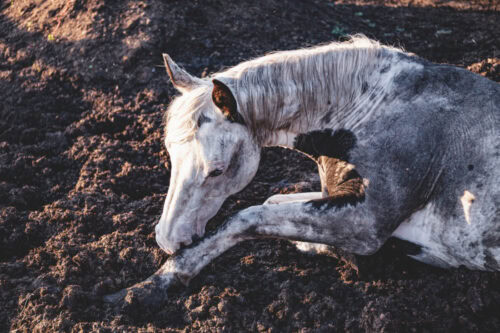
The main symptom of both types of rent entrapments is colic (abdominal pain). Signs of colic include: [1][6][7]
- Lethargy
- Grinding the teeth
- Watching the flank
- Curling the upper lip (flehmen response)
- Unusual postures such as crouching, dog sitting, standing stretched out
- Tensing the abdomen
- Kicking the abdomen
- Lying down
- Pawing at the ground
- Rolling
Along with these behaviors, the horse may show physical symptoms of colic that horse owners can identify if they are familiar with basic horse health examination. These include: [1][8][9][10]
- Decreased gut sounds
- Increased breathing rate
- Sweating
- Elevated heart rate
- Changes in gum color
- Bloating
During mesenteric and omental rent entrapment, colic symptoms can range from mild to severe. [3][11]
What's your top priority with your horse's health?

Enter your email to receive your store credit
Risk Factors
Omental rents are a very rare condition in horses, and there is limited research related to their probable cause. [3] As such, specific risk factors have not currently been defined.
Mesenteric rents are a relatively uncommon cause of colic. Only a small proportion of tears result in entrapment of other structures, and only some of these cases result in strangulation. [1][2]
Horses of all ages and breeds are equally susceptible to these conditions. [1]
Mares are more likely to develop mesenteric rent entrapment. This may be because pregnant mares, especially those in the last quarter of gestation, have a high incidence of tears in the mesentery due to movement of the foal. [1]
In addition, during pregnancy the uterus grows to fill the lower abdomen, pushing the digestive system higher up in the abdominal cavity where there is less space. This increases the chances of interaction between the abdominal structures. [1]
Mares that have previously been pregnant are also at increased risk since tears may have occurred during earlier pregnancies without detection. In these cases structures may move through existing rents after foaling, or during subsequent pregnancies. [1]
Causes
Mesenteric rents can be congenital, or they can develop due to trauma within the abdomen. [1] Factors associated with the traumatic formation of these tears include: [1][2][4]
- Blockage of the intestines due to parasites such as ascarids
- Blockage of the intestine by ingesta (impaction)
- Mesodiverticular bands (a fibrous band that extends from the diverticulum to the mesentery)
- Teratoma (a tumor that contains various types of tissue such as teeth, hair, or muscle)
- Pregnancy or foaling
- Previous surgery
- Penetrating wounds
- Injury from invasive medical procedures
- Volvulus nodosus (a knot-like tangle in the small intestine)
- Underlying disease in the small intestine
The causes of mesenteric and omental rent entrapment are not fully understood at this time. In general, intestinal displacements are associated with different factors depending on their location. [1] Excessive gas build-up in the bowel and abnormal movement of the pelvic flexure are the major contributing factors that have been identified to date. [1]
Severity
The severity of a mesenteric or omental rent in horses depends on whether other organs or tissues become trapped within the tear.
Counterintuitively, a larger tear does not necessarily mean a more severe case. Larger tears provide more space for entangled structures to move or free themselves. Conversely, smaller tears can be more dangerous as structures that move into the space can easily become trapped and strangulated. [1]
Several parts of the intestine and several different areas of the mesentery can be involved in mesenteric rent entrapments. [2]
Broodmares that have been pregnant more than once may have several or many tears in their mesentery from previous pregnancies. This may create more opportunity for structures to become trapped, but the incidence of severe colic does not appear to increase accordingly. [2]
This may be because the tears are big enough to allow movement of any trapped structures. [2]
Diagnosis
In general, mesenteric and omental rent entrapments require exploratory surgery to diagnose. This is because colic is a non-specific symptom with many different possible causes. [1][3]
Before a veterinarian decides that surgery is necessary, diagnostic strategies are used to rule out other conditions. These strategies include: [1][3][11]
- Rectal palpation
- Nasogastric intubation
- Blood work
- Ultrasound
Treatment
Treatment for mesenteric and omental rents is not usually necessary unless other structures have become trapped in the tears. [1]
Treatment for symptomatic cases, specifically when entrapments have occurred, is surgical. [1][2] Abdominal surgery in horses is performed under general anesthesia.
In mild cases of entrapment, manual removal of the trapped structure from the tear is sufficient. [1] In cases where the trapped structure has lost blood flow, it may be necessary to remove part of the tissue or in severe cases, remove a portion of the intestine and then reconnect the open sections. [1]
During surgery to resolve a mesenteric rent entrapment (or if a rent is detected during other surgeries), it is usually difficult or impossible to repair the tear itself because of the typical location of the abdominal incision. [1][4]
It is possible to repair the tear later using a separate incision in a different location with the horse under standing sedation. [1] Closing the tears when and where possible is generally considered the best practice. [2]
In the case of mesenteric rent entrapment in pregnant mares, the blood flow to the intestine usually remains intact, so manual removal of the trapped structure is often possible during surgery. [1]
The surgery for pregnant mares is naturally more complex because of the size of the uterus and the need to protect the foal. [1] Leaving the tear open once the trapped structure has been freed is often preferable instead of closing or partially closing it, especially considering that a large tear is less likely to trap other structures than a small tear. [1]
It is sometimes necessary to abort or deliver the foal to resolve the entrapment and save the mare’s life. [1]
New techniques are being developed to repair mesenteric rents laparoscopically (using a small incision and scope to make surgical repairs) to prevent entrapments. [4]

Prognosis
The prognosis for horses with mesenteric rents is variable. The prognosis depends on: [1]
- Whether a structure has become trapped in the tear
- Which structure is trapped
- How much of the trapped structure is involved
- Whether the blood supply has been interrupted
In some cases where a large portion of the intestine has been strangulated or when there is a severe hemorrhage during surgery, humane euthanasia may be necessary. [1]
It appears that broodmares with rents have a better outcome than other horses. [2] Mares that have undergone surgery for this condition have a high success rate in foaling the following spring. [2]
The prognosis for horses with omental rents is variable. Horses that have asymptomatic tears have an excellent prognosis. Horses with omental rent entrapments have a more guarded prognosis depending on which and how much of the structure is trapped, and whether the blood flow to the tissues is interrupted. [3]
Prevention
Preventative measures for mesenteric and omental rents have yet to be described. However, feeding a forage-based diet and making gradual dietary adjustments can help regulate gas production in the hindgut, potentially reducing the risk of displacement.
If you’re uncertain whether your horse’s diet is meeting all their nutritional needs, consider consulting with a qualified equine nutritionist. They can evaluate your horse’s current diet and provide personalized recommendations tailored to your horse’s specific requirements.
Frequently Asked Questions
When parts of the intestine or other abdominal structures slip into a mesenteric or omental rent, they can become strangulated. This blocks blood flow and digestion, leading to tissue death and severe colic. Without immediate veterinary treatment, these complications are often life-threatening. [1][2]
Pregnant and brood mares are more prone to mesenteric rents due to the physical strain of pregnancy and foaling. The weight and shifting of the uterus can stretch or tear the mesentery, and tears from earlier pregnancies may go unnoticed until later complications occur. [1]
The main warning sign is colic, which may appear as pawing, rolling, looking at the flank, or unusual postures. Physical changes such as sweating, increased heart rate, bloating, or reduced gut sounds may also point to entrapment. These are red-flag signs requiring urgent veterinary attention. [1][6]
The prognosis depends on whether a structure is trapped, how much tissue is involved, and if blood supply is compromised. Horses with asymptomatic rents often do well, but entrapments carry a guarded prognosis. Pregnant mares tend to have better outcomes, and some successfully foal the following year after surgery. [2][3]
Summary
The mesentery and omentum are supportive structures in the horse's abdomen. Tears in these structures are referred to as "rents," and can trap and strangulate sections of the intestines, leading to displacement colic.
- The main symptom of mesenteric and omental rent entrapments is colic that ranges from mild to severe.
- These conditions are rare in horses but life-threatening, especially if blood supply to the intestines is cut off.
- Entrapments affect horses of all breeds and ages. Mares and especially pregnant or previously pregnant mares are more susceptible to mesenteric rents
- Larger tears are less dangerous than smaller ones because they allow structures to move freely in and out.
- These conditions usually require exploratory surgery to diagnose. Treatment is also surgical.
- The prognosis for mesenteric and omental rents in horses depends on whether a structure gets trapped in a tear, what structure it is, and whether blood flow or the movement of ingesta are interrupted.
References
- Blikslager. A. T. et al., Eds., The Equine Acute Abdomen. Third edition. Wiley, Blackwell, Hoboken, NJ. 2017.
- Auer. J. A., Equine Surgery. 5th edition. Elsevier, St. Louis, MO. 2018.
- Kelmer. G. et al., Small Intestinal Incarceration through an Omental Rent in a Horse. Equine Veterinary Education. 2008.
- Hendrickson. D. A., Mesenteric Rent Repair. Advances in Equine Laparoscopy. 1st ed. Wiley. 2012.
- Reed. S. M. et al., Equine Internal Medicine. 3rd ed. Saunders Elsevier, St. Louis, Mo. 2010.
- Sutton. G. A. et al., A Behaviour-Based Pain Scale for Horses with Acute Colic: Scale Construction. Veterinary Journal. 2013. View Summary
- Torcivia. C. and McDonnell. S., Equine Discomfort Ethogram. Animals. Multidisciplinary Digital Publishing Institute. 2021. View Summary
- Cook. V. L. and Hassel. D. M., Evaluation of the Colic in Horses: Decision for Referral. The Veterinary Clinics of North America. Equine Practice. 2014. View Summary
- Dukti. S. and White. N. A., Prognosticating Equine Colic. The Veterinary Clinics of North America. Equine Practice. 2009. View Summary
- Straticò. P. et al., Retrospective Study on Risk Factors and Short-Term Outcome of Horses Referred for Colic from 2016 to 2022. Veterinary Sciences. 2022. View Summary
- Dart. A. and Pascoe. J., Mesenteric Tear of the Distal Jejunum as a Periparturient Complication in a Mare. Australian Veterinary Journal. 1994. View Summary