English
Mouth corner lesions are a common yet often overlooked issue in horses, affecting horse comfort, health, performance and quality of life.
Oral lesions refer to sores, cuts, or irritation that develop typically at the corners of a horse’s mouth due to equipment or handling practices. These lesions range from mild irritation to painful wounds and can result in resistance to training and long-term sensitivity.
Mouth corner lesions may arise for multiple reasons in horses, which underscores the importance of diligent monitoring and rider responsiveness during training and work.
This article covers the various types of oral lesions that horses can develop, potential causes, and how to prevent them. By understanding the signs and causes of oral lesions, owners can take proactive measures to address these issues early on, ensuring their equine counterparts are comfortable and happy to perform.
Oral Lesions in Horses
Oral lesions in horses are sores, cuts, abnormal growths, or areas of inflammation that appear in the mouth, including the lips, cheeks, tongue, and gums. [1]
They can result from various causes, including:
- Poor dental health
- Improper use of bits and nosebands
- Infections
- Injuries
- Ingestion of toxic plants or substances
- Underlying health conditions
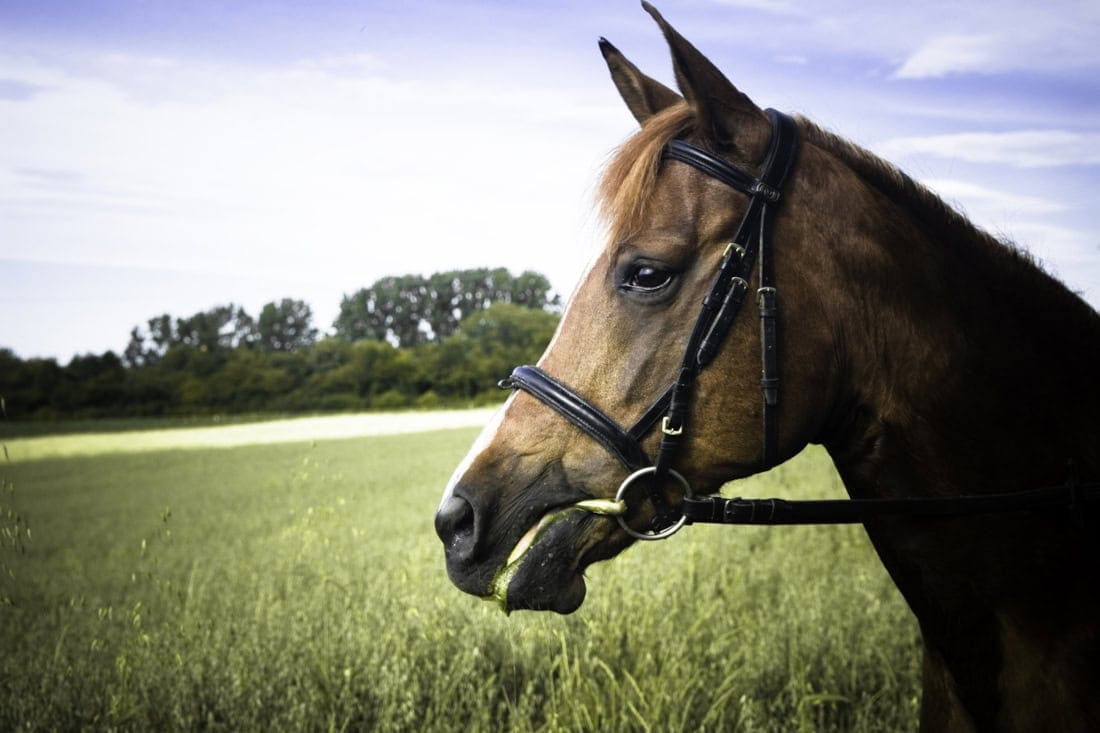
Mouth corner lesions are a specific type of oral lesion occurring at the corners of a horse’s mouth, often caused by friction or pressure from equipment.
Signs of mouth corner lesions include redness, swelling, or raw skin at the corners of the mouth and reluctance to accept the bit or head tossing during work.
Dental Issues
In domesticated horses, high intakes of concentrates, short-stem forage, and grazing on grass paddocks result in less natural wear on their teeth compared to their wild counterparts. [2][3]
Wild horses consume coarse, long-stemmed plant material that requires extensive grinding, which results in even tooth wear as the horse chews. In contrast, domesticated horses have softer, less fibrous diets that require less grinding to swallow. This means domestic horse teeth do not wear down as effectively as teeth in wild horses, which is why they require ongoing dental flotation to maintain their bite plate. [4]
Without regular dental care, horses may develop issues like hooks, dental overgrowth, or uneven wear patterns, which can contribute to oral lesions. These lesions may form due to sharp edges or abnormal dental surfaces that irritate the soft tissues of the mouth. [5]
In addition to causing discomfort, dental issues can lead to broader health impacts including:
- Weight loss
- Gastrointestinal issues
- Infections
- Abscesses
- Performance issues
- Behavioral changes
Addressing dental health proactively with regular check-ups helps prevent these issues and supports a horse’s overall welfare. Most horses benefit from dental examinations every 6 – 12 months to identify and treat any potential concerns early. [6]
What's your top priority with your horse's health?

Enter your email to receive your store credit
Bit-Induced Oral Lesions
Bits are devices placed in the interdental gap of a horse’s mouth and have been used throughout history by equestrians to control horse movement and speed. There are a wide variety of bits on the market made from different materials, with many designs that aim to improve rider control.
Bits are widely used today, which is why riders should understand their potential impact on a horse’s welfare and their ability to contribute to mouth corner lesions. The way each rider uses bits varies widely. [6] The effects of a bit also depend on its design, with some types applying more pressure or causing greater discomfort due to their mechanics and action on the horse’s mouth and face.
Bit-induced ulcers and lesions are commonly found in horses worldwide, with some studies identifying these lesions in up to 94% of horses in certain populations. [2][4][6][7]
Common locations of bit-induced ulcers include: [7]
- Buccal mucosa – the inner lining of the cheeks
- Lip commissures – corner of the mouth
- Interdental gap – upper and lower gap between the incisors and molars
- Hard palate – roof of the mouth
- Tongue
Welfare research into the prevalence of bit-induced lesions is ongoing. One study observed competition horses before and after competing, and found 36% of 424 horses had lesions before competing, most commonly found in the buccal mucosa and the lip commissures. After competing, the rate of mouth lesions increased to 60%. [1]
Behavioral Signs of Oral Discomfort
Recognizing behaviors associated with oral lesions is important because they can signal discomfort and pain, enabling timely intervention. Behaviors to watch out for include: [17]
- Resisting bridles/bits
- Persistent tongue and/or jaw movements
- Sudden evasive movements from rein pressure
- Excessive salivation or drooling
- Head shaking
- Head tilting
- Stiff neck
- Difficulty stopping
- Stiff/choppy stride
- Rushed gait
Persistent pain and delayed healing due to continuous bit pressure can negatively impact a horse’s quality of life, performance, and overall well being, which makes oral lesions a significant welfare issue.
The good news is, owners and riders can take steps to prevent oral lesions by making a few simple changes to your horse’s tack and routine.
Causes of Bit-Induced Oral Lesions
Bit materials, quality, craftsmanship and bridle fitting are important factors that impact the risk of mouth corner lesions in horses.
Research has identified several factors that contribute to the development of bit-induced oral lesions, including: [1][2][3][5][6][8]
- Bit thickness
- Type of bit
- Tack fit
- Level of competition
- Discipline
Bit Thickness
Both thin and thick bits pose a risk for moderate or severe oral lesions. Thin bits put increased pressure on a smaller area, and thick bits can cause discomfort in horses with smaller oral cavities. [5]
A qualified bit fitter can help you select an appropriate bit size that suits your individual horse’s mouth anatomy.
Type of Bit
Studies have also identified the type of bit used as a risk factor for the development of oral lesions. For example, unjointed bits are associated with a higher risk of bar lesions compared to jointed bits. Curb bits are associated with higher risk of bar lesions and are often fitted too large and/or too low, which can exacerbate discomfort. [5]
While this evidence shows the type of bit can impact the development of lesions, differences in lesion prevalence across disciplines suggest that bit use is just as relevant as bit type when discussing risk factors.
Tack Fit
A noseband is a piece of tack that fastens around a horse’s nose and is typically part of the bridle. It helps to keep the bit in place and can also be used to control the horse’s head and jaw.
Tightly fitted upper nosebands are associated with lip commissure lesions. [2] However, bridles with no upper noseband may also increase risk of lip lesions. [2]
The current recommendation for noseband fit is that there should be enough space to fit at least two fingers stacked vertically between the noseband and the front of the horse’s nose. This ensures the noseband is snug enough to stay in place but not so tight that it causes discomfort or restricts the horse’s natural movement and breathing.
Although research on the connection between poor bridle fit and oral lesions is limited, the positioning of the bridle’s cheek pieces — whether set too high or too low — can potentially contribute to the development of oral lesions in horses.
Level of Competition
Lesions and mouth ulcers are more likely to occur in horses competing at higher levels in dressage, eventing, show jumping, endurance and Icelandic competitions. [1][2][6]
Discipline
Horses competing in dressage are at a higher risk of developing oral lesions compared to those in show jumping, eventing, or endurance disciplines. [6] This may be because dressage riders commonly ride with constant contact with the mouth.
There is also evidence of oral injury in both polo ponies and racehorses, with racehorses using snaffle bits experiencing higher rates and more severe injuries than polo ponies using gag bits. [3] The snaffle bits used in racing exert more pressure on the bars and lip commissures.
Despite the potential severity of gag bits used in polo, polo ponies are trained to respond to lighter rein pressure, reducing the risk of injury. However, polo ponies are more likely to experience tongue lacerations likely due to the type of bit used. [8]
Rider Influence
Rider influence can also contribute to oral lesions in horses regardless of the type of bit that is used. The correct use of a bit requires accuracy in the timing and strength of pressure and release. Not releasing pressure or applying excessive and/or abrupt pressure with the reins can cause the bit to rub against or injure the mouth, leading to bruising and lesions. [8]
Research indicates the prevalence and severity of oral lesions vary by discipline. This suggests that rider style and technique influence the amount of pressure and irritation in the horse’s mouth. Discipline standards for bit and noseband use may also play a role in these differences. [6][17]
Advanced Riders
Advanced riders exhibit superior skill, balance, and posture, which may enable them to manage their movements more effectively while in the saddle. Synchronized movement with the horse’s motion allows for clearer communication and reduces the likelihood of excessive rein tension that could cause oral injury. [18]
Studies indicate that differences in joint angles and muscle activity between advanced and novice riders significantly impact their ability to maintain posture and stability. [19][20][21]
Ultimately, effective rider technique leads to improved performance and reduced risk of injury for both horse and rider. By understanding the connection between rider fitness and rein tension, riders can work to promote effective techniques that enhance horse welfare.
Rein Tension
Behaviors such as mouth opening and varying speeds in trotting have been associated with high rein tension. If these behaviors are observed, they may suggest the horse is experiencing discomfort or responding to excessive pressure from the bit. Identifying these signs can help riders adjust their techniques and prevent further injury or discomfort. [8]
Continued high levels of rein tension can exacerbate the intensity of pain from bit contact, particularly following trauma, and can also hinder the healing process. [17]
Another cause of excessive rein tension may be in response to “hard-mouthed” horses, who do not respond sufficiently to bit contact. Increasing rein tension on hard-mouthed horses can actually have the opposite of the intended effect, resulting in increased resistance and a lack of responsiveness to the rider’s cues.
Rather than increasing tension, it may be more effective to assess rider technique and bit type when dealing with hard-mouth behavior. Over time, excessive pressure or poor bit fit can condition these horses to ignore subtle rein cues, resulting in a cycle of increased tension and further habituation against rein cues.
Medical Causes of Oral Lesions
In addition to factors such as dental care, bit use, and rider influence, a variety of diseases, infections, and systemic conditions can also contribute to the development of oral lesions in horses.
Several medical conditions can significantly impact a horse’s oral health, causing pain, discomfort, and potentially lead to more serious health concerns. Medical causes of oral lesions include: [9][10][11][12][13][14][15][16]
- Infections and diseases: Conditions such as vesicular stomatitis (VS), habronemiasis (summer sores), and equine herpesvirus (EHV)
- Toxic plants and substances: Exposure to toxic plants, rodenticides, herbicides, or pesticides
- Cancer: Examples include squamous cell carcinoma and melanomas
- Foreign bodies: Splinters from wood or other plant materials
- Drug reactions: Adverse effects from medications such as NSAID toxicity, antibiotic side effects, or overdoses
- Autoimmune diseases: Rare conditions like pemphigus vulgaris or bullous pemphigoid, which can cause oral lesions
If your horse develops oral lesions alongside other signs of illness, consult a veterinarian for accurate diagnosis and appropriate treatment.
Risk Factors for Mouth Corner Lesions
Oral lesions in horses are found most frequently on the inner lip commissures. Snaffle bits are the most widely used style in Europe and have been associated with lesions in and around this area, as this is where they apply direct pressure. [22][23]
Ponies have been shown to have lower risk of oral lesions compared to warmbloods and coldbloods. However, ponies generally recover from oral wounds more quickly than horses, so this finding may be skewed as transient lesions might not have been observed during research. [5]
Mares have a higher risk of moderate to severe lesions compared to geldings. [5] This finding may be due to differences in rein tension from handling, education, and rider factors. Sex-based stereotypes may also impact handling of mares compared to geldings, which might contribute to this finding. [8]
Good performance is often seen as a sign of optimal welfare, implying that horses who place well in competition are not suffering from significant discomfort such as lesions. However, there has been no link found between lesion status and competition placement. [5] Thus, well-performing horses may still have pain or underlying health challenges.

Prevention
There are a few ways horse owners can prevent mouth lesions in their equine companions. Riders may use a combination of methods, including:
- Bitless riding
- Changing bit type or size
- Improving maintenance of tack and rider technique
Bit-Free Riding
Bit-free riding has recently gained popularity, accompanied by growing research comparing bitted and bitless riding. New designs of bitless bridles are emerging with the goal of eliminating pain and preventing oral lesions altogether.
While some riders may hesitate to adopt bitless bridles due to concerns about reduced control and safety, research indicates that riders using bitless bridles maintain control comparable to those using traditional bits. [24]
However, many competition rules still restrict the use of bitless bridles. For instance, FEI regulations prohibit bitless bridles in disciplines such as dressage, eventing (cross-country and dressage phases), driving, and vaulting. Bitless bridles are permitted in showjumping, endurance and the jumping phase in eventing.
Similarly, most horse racing events disallow bitless bridles, despite evidence supporting their benefits in other disciplines. Observed benefits of bit-free riding include: [22][23][24]
- Reduced hyperactive behaviors
- Increased rider satisfaction
- Enhanced rider-horse relationships
- Increased willingness from the horse
- Reduced pain-related behaviors
Although bitless bridles may not be permitted in some competitive settings, their use in everyday riding can significantly enhance equine welfare by reducing risk of pain and preventing oral lesions. With that being said, it’s important to note conscientious, responsive riding is as important to a pain-free experience as choice of tack.
Bit Choice
Using an appropriate bit for your horse can also prevent mouth lesions. Factors to consider include:
- Bit thickness
- Type of bit
- Tack fit
Bit Design
Select an appropriate bit thickness based on the horse’s oral cavity size to ensure the bit fits comfortably to minimize the risk of lesions. Studies refer to thin bits as 10–13 mm, middle-sized bits 14–17 mm, and thick bits 18–22 mm. [5]
The design, action, and fit of a bit should suit the horse’s facial anatomy, movement/way of going, and comfort. While snaffle bits are often considered the simplest option, research on their effects is mixed. [1]
A horse’s way of going and sensitivity to the bit affect their response to rein cues. While simpler bits are often more effective when used correctly, it’s essential to focus on fit and comfort. There’s no need to overcomplicate things — a well-fitting, simple bit is usually the best choice, regardless of the horse’s level of experience.
Bridle Fit
Avoid overly tight nosebands. A properly adjusted noseband should leave room for two stacked fingers between the noseband and the front of the nasal plane. Ensure the entire bridle is well-fitted to prevent unnecessary pressure or movement. Checking the fit during rein contact is essential, as some bits shift more than others, potentially causing discomfort.
Maintenance
Regular maintenance of your horse’s tack and rider technique can also help prevent mouth lesions. Factors to consider include:
- Level of competition: Regularly monitor and adjust equipment with a focus on preventing discomfort, rather than accommodating higher demands by using harsher bits. Instead, proper fit and rider technique should be prioritized as your horse increases their level of performance to maintain welfare at all levels
- Cleaning after use: After each use of a bit, it must be cleaned to remove saliva and debris that can cause friction
- Maintenance: Frequently inspect the bit, bridle, and mouth for signs of discomfort or damage. Address any issues promptly to prevent further lesions
- Rein tension: Ensure pressure and release is practiced throughout ridden sessions to prevent improper application or excessive pressure in the ring
It’s important to consult with a veterinarian to assess and address any issues related to bit-induced oral lesions. A professional bit fitter may also be able to help select a bit that ensures your horse’s comfort and well-being while meeting your needs as a rider.
Frequently Asked Questions
Here are some frequently asked questions about mouth lesions in horses:
Mouth lesions in horses can be caused by factors such as poor dental health, improper use of bits and nosebands, infections, injuries, toxic plants or substances, and underlying conditions like cancer or autoimmune disease. [5][6][10][11]
Mouth lesions in horses are treated by addressing the underlying cause, such as improving dental care, adjusting or replacing ill-fitting bits or tack, and treating infections or injuries with veterinary guidance. Regular dental check-ups and proper bit management are key to preventing further damage and promoting healing. [1][5][6][20]
Mouth lesions may indicate that your horse needs a different bit, as improper bit fit or harsh bit design can cause oral damage. Evaluating the bit's size, type, and how it fits in the horse’s mouth, along with consulting a professional bit fitter, can help prevent further lesions and improve the horse's comfort. [19]
Summary
Oral lesions in horses serve as an indicator of overall welfare, highlighting potential issues ranging from bit-induced trauma and rider influence to dental health and other underlying causes.
- The presence of mouth lesions often reflects underlying discomfort or pain, which can significantly impact a horse’s ability to eat, drink, and perform effectively.
- Improper bit use, inadequate rider handling, dental problems, and systemic diseases/conditions are all possible causes of mouth corner lesions in horses.
- Making adjustments to tack, rider technique, and staying up-to-date with routine dental and veterinary care can help prevent mouth corner lesions in horses.
References
- Björnsdóttir. S. et al., Bit-Related Lesions in Icelandic Competition Horses. Acta Veterinaria Scandinavica. 2014. View Summary
- Uldahl. M. and Clayton. H. M., Lesions Associated with the Use of Bits, Nosebands, Spurs and Whips in Danish Competition Horses. Equine Veterinary Journal. 2019. View Summary
- Mata. F. et al., A Cross-Sectional Epidemiological Study of Prevalence and Severity of Bit-Induced Oral Trauma in Polo Ponies and Race Horses. Journal of Applied Animal Welfare Science. Routledge. 2015. View Summary
- Tell. A. et al., The Prevalence of Oral Ulceration in Swedish Horses When Ridden with Bit and Bridle and When Unridden. The Veterinary Journal. 2008. View Summary
- Tuomola. K. et al., Bit-Related Lesions in Event Horses After a Cross-Country Test. Frontiers in Veterinary Science. Frontiers. 2021. View Summary
- Uldahl. M. et al., Pre-Competition Oral Findings in Danish Sport Horses and Ponies Competing at High Level. Animals. Multidisciplinary Digital Publishing Institute. 2022. View Summary
- Tuomola. K. et al., Oral Lesions in the Bit Area in Finnish Trotters After a Race: Lesion Evaluation, Scoring, and Occurrence. Frontiers in Veterinary Science. Frontiers. 2019. View Summary
- Tuomola. K. et al., Is Rein Tension Associated with Horse Behaviour and Mouth Injuries in Harness Racing Trotters? – Pilot Study. Applied Animal Behaviour Science. 2024.
- Green. S. L., Vesicular Stomatitis in the Horse. Veterinary Clinics of North America: Equine Practice. 1993. View Summary
- Verhaar. N. et al., Case Series: Periocular Habronemiasis in Five Horses in the Netherlands. Veterinary Record. 2018. View Summary
- Vengust. M. et al., Equid Herpesvirus 2-Associated Oral and Esophageal Ulceration in a Foal. Journal of Veterinary Diagnostic Investigation. SAGE Publications Inc. 2008. View Summary
- Whitwell. K. E. and Blunden. A. S., Pathological Findings in Horses Dying during an Outbreak of the Paralytic Form of Equid Herpesvirus Type 1 (EHV-1) Infection. Equine Veterinary Journal. 1992. View Summary
- Michutta, J-I. et al., Clinical Findings, Treatment and Resolution of Simplex (R) Toxicity in Three Horses. ResearchGate. 2016.
- Morrison. M. L. et al., Lingual Squamous Cell Carcinoma in Two Horses. Journal of Equine Veterinary Science. 2019. View Summary
- Flood. J. and Stewart. A. J., Non-Steroidal Anti-Inflammatory Drugs and Associated Toxicities in Horses. Animals. Multidisciplinary Digital Publishing Institute. 2022. View Summary
- Winfield. L. D. et al., Pemphigus vulgaris in a Welsh pony stallion: case report and demonstration of antidesmoglein autoantibodies. Veterinary Dermatology. 2013. View Summary
- Mellor. D. J., Mouth Pain in Horses: Physiological Foundations, Behavioural Indices, Welfare Implications, and a Suggested Solution. Animals. Multidisciplinary Digital Publishing Institute. 2020. View Summary
- Byström. A. et al., Basic Kinematics of the Saddle and Rider in High-Level Dressage Horses Trotting on a Treadmill. Equine Veterinary Journal. 2009. View Summary
- Kang. O.-D. et al., Comparative Analyses of Rider Position According to Skill Levels during Walk and Trot in Jeju Horse. Human Movement Science. 2010. View Summary
- Terada. K., Comparison of Head Movement and EMG Activity of Muscles between Advanced and Novice Horseback Riders at Different Gaits. Journal of Equine Science. 2000.
- Terada. K. et al., Stabilization of Wrist Position during Horseback Riding at Trot. Equine and Comparative Exercise Physiology. 2006.
- Cook. W. R. and Mills. D. S., Preliminary Study of Jointed Snaffle vs. Crossunder Bitless Bridles: Quantified Comparison of Behaviour in Four Horses. Equine Veterinary Journal. 2009. View Summary
- Cook. W. R. and Kibler. M., Behavioural Assessment of Pain in 66 Horses, with and without a Bit. Equine Veterinary Education. 2019.
- Luke. K. L. et al., Bit Use and Its Relevance for Rider Safety, Rider Satisfaction and Horse Welfare in Equestrian Sport. Applied Animal Behaviour Science. 2023.