English


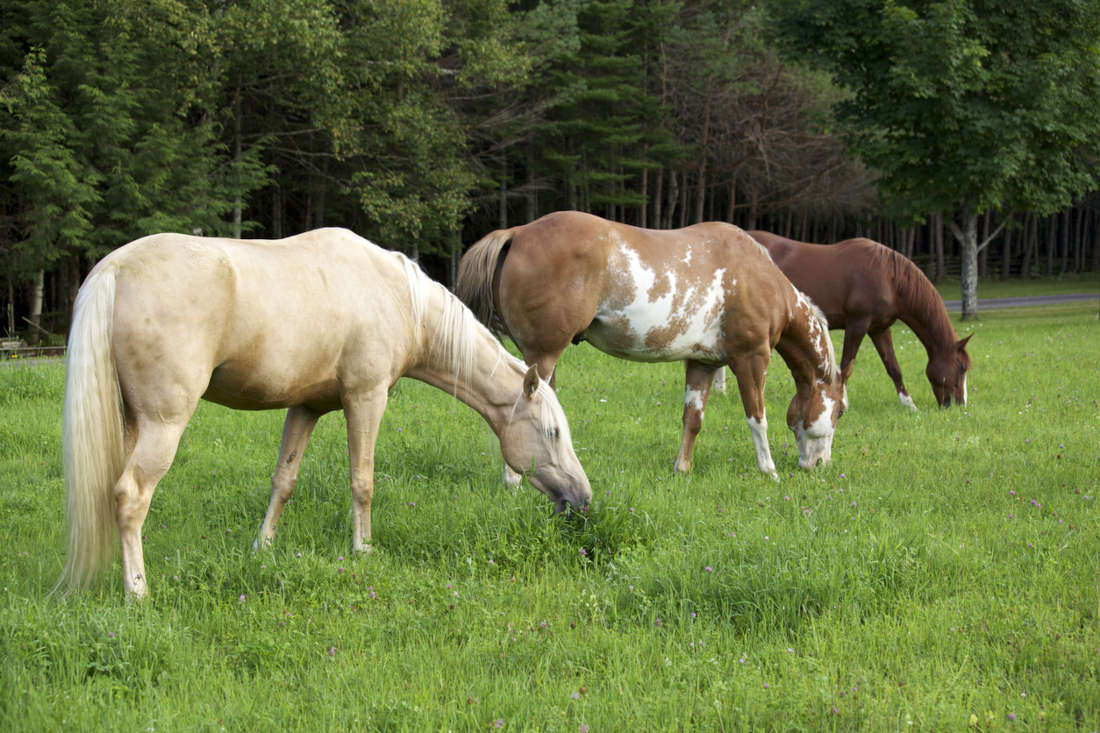
Nightshade poisoning in horses occurs when horses ingest plants from the genus Solanum, which includes several species that contain toxic compounds.
Plants such as black nightshade (Solanum nigrum), bittersweet nightshade (Solanum dulcamara), and horse nettle (Solanum carolinense) contain naturally occurring toxins that can affect the gastrointestinal tract, nervous system, and cardiovascular system.
Many nightshade species grow as weeds in agricultural environments, including pasture edges, disturbed soils, roadsides, and hay fields. Although horses often avoid these plants under normal grazing conditions, exposure can occur when toxic species contaminate hay, grow in overgrazed pastures, or become accessible through agricultural waste such as potato plants or cull potatoes.
Nightshade poisoning is relatively uncommon in horses, but ingestion of certain species can lead to digestive irritation, neurological abnormalities, and other systemic effects. Understanding which plants belong to the nightshade group, how toxicity occurs, and how to prevent exposure helps owners and caretakers recognize potential risks and respond quickly if poisoning is suspected.
Nightshade Poisoning in Horses
Several nightshade species grow widely in agricultural landscapes across North America, Europe, and other temperate regions where horses are commonly kept. The specific plants present vary by location, but many members of the genus thrive in disturbed soils, pasture margins, and crop fields where horses may encounter them.
Nightshades are generally unpalatable and many species also have physical defenses such as prickles which discourage grazing. Given this, poisoning in horses is relatively uncommon. However, exposure may occur when nightshade plants contaminate hay or when horses graze in pastures where desirable forage is limited. [1][2]
Nightshade plants may be particularly hazardous when present in hay or stored forage because the undesirable dried plant material can be difficult for horses to detect and avoid. Once incorporated into hay bales, fragments of toxic plants may be consumed unintentionally along with the surrounding forage.
Recognizing the presence of nightshade plants in pastures and feed sources is therefore an important part of preventing accidental exposure.
What are Nightshades?
Nightshades are plants belonging to the genus Solanum, which is part of the larger Solanaceae (nightshade) family. This genus is one of the largest groups of flowering plants, comprising roughly 1,500 to 2,000 species distributed across temperate and tropical regions worldwide. [1]
Many species occur naturally in disturbed environments such as croplands, roadsides, overgrazed pastures, and waste areas. Some nightshade plants are cultivated as food crops, including potatoes, tomatoes, and eggplants. Others grow as common weeds in pastures and agricultural fields. [1]
Despite their varied uses and appearance, many species produce naturally occurring toxins called steroidal glycoalkaloids that help protect the plant from insects and grazing animals. [1][3] When ingested, glycoalkaloids can disrupt cellular membranes, irritate the digestive tract, and interfere with normal physiological processes. [2][4]
The concentration of these toxins varies widely depending on the plant species, the part of the plant consumed, and environmental conditions. In many nightshade plants, the highest concentrations occur in unripe berries, sprouts, flowers, or foliage, while mature fruits may contain lower levels. [3]
Stress factors such as plant injury, exposure to light, and certain environmental conditions can also influence toxin production in individual plants. [1][3]
What's your top priority with your horse's health?

Enter your email to receive your store credit
Identifying Nightshade Plants in Horse Environments
Correct identification of toxic plants is an important part of pasture and feed management. Many nightshade species grow as weeds in agricultural landscapes, including field margins, disturbed soils, and pasture edges.
Because some species resemble harmless plants, misidentification can allow toxic plants to persist unnoticed in grazing areas.
Nightshade plants vary considerably in their growth form. Depending on the species, they may grow as annual or perennial herbs, shrubs, or small woody plants.
Their flowers are typically star-shaped with five petals and may be white, yellow, blue, or purple. The fruits are fleshy berries that often resemble small tomatoes and may ripen to black, red, yellow, or orange depending on the species. [1]
Several nightshade species occur in environments where horses are kept. The following plants are among those most commonly associated with livestock exposure.
Black Nightshade (Solanum nigrum)
Black nightshade is a widespread annual weed that grows in disturbed soils, gardens, crop fields, and pasture edges. [1]
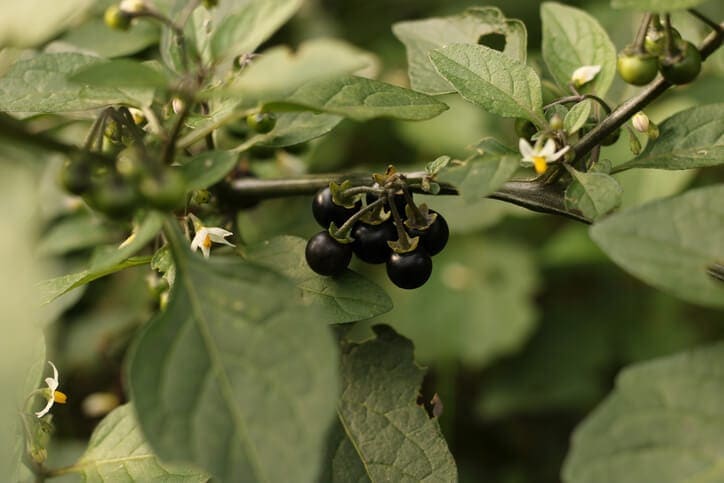
Key identification features include: [1]
- Small white star-shaped flowers
- Clusters of round berries that ripen from green to black
- Oval, slightly wavy leaves
Unripe green berries contain higher concentrations of toxic glycoalkaloids than mature fruits. [3] Horses rarely consume the plant when adequate forage is available, but ingestion may occur when plants contaminate hay or grow in overgrazed pastures.
Bittersweet Nightshade (Solanum dulcamara)
Bittersweet nightshade is a perennial climbing vine commonly found along fences, hedgerows, wetlands, and shaded pasture areas. [1]
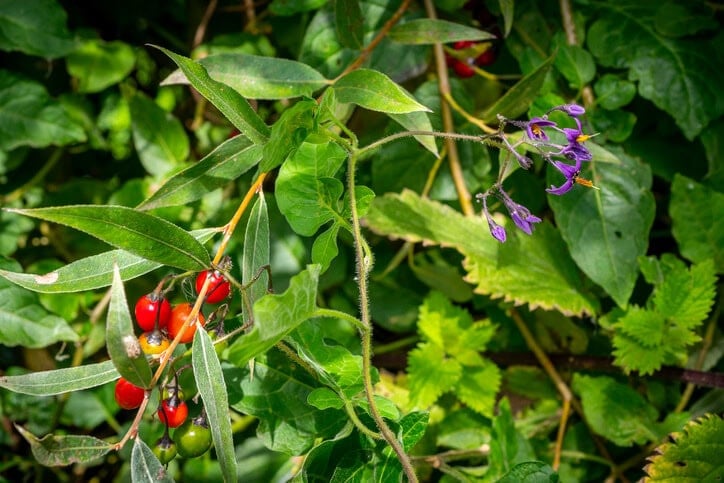
The plant produces distinctive purple flowers with backward-curving petals surrounding a bright yellow cone of stamens. Its most recognizable feature is the cluster of glossy red berries that develop after flowering. [1]
Because the plant often grows along fence lines or in hedges, horses may encounter it while browsing vegetation at pasture boundaries.
Horse Nettle (Solanum carolinense)
Horse nettle is a perennial weed commonly found in pastures, roadsides, and agricultural fields. [1]
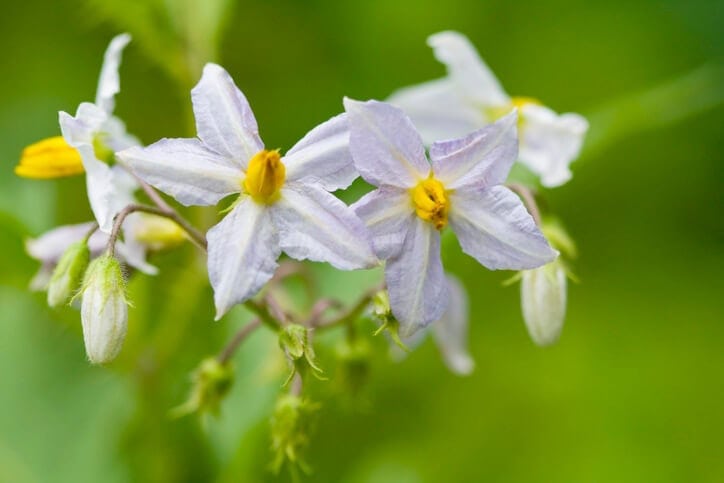
Unlike some other nightshade species, horse nettle has spiny stems and leaves, which help distinguish it from less toxic plants. The flowers are pale purple or white with a yellow center, and the plant produces small yellow berries. [1]
The presence of spines often discourages grazing, but fragments may occasionally be consumed if the plant is incorporated into hay.
Silverleaf Nightshade (Solanum elaeagnifolium)
Silverleaf nightshade is a deep-rooted perennial commonly found in dry or sandy soils. [1]
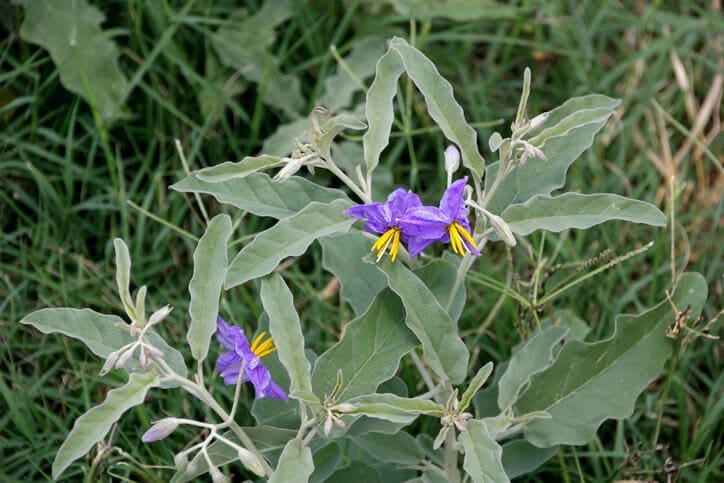
The plant is recognizable by its silvery-gray leaves covered with fine hairs and its purple flowers. It produces round yellow berries that resemble small tomatoes. [1]
Because this species spreads through underground roots as well as seeds, it can persist in pastures even after repeated mowing or grazing.
Potato Plants (Solanum tuberosum)
The cultivated potato also belongs to the Solanum genus. While the edible tuber is safe for humans when properly prepared, green potato tubers, sprouts, and foliage contain significant concentrations of glycoalkaloids. [1][3][5]
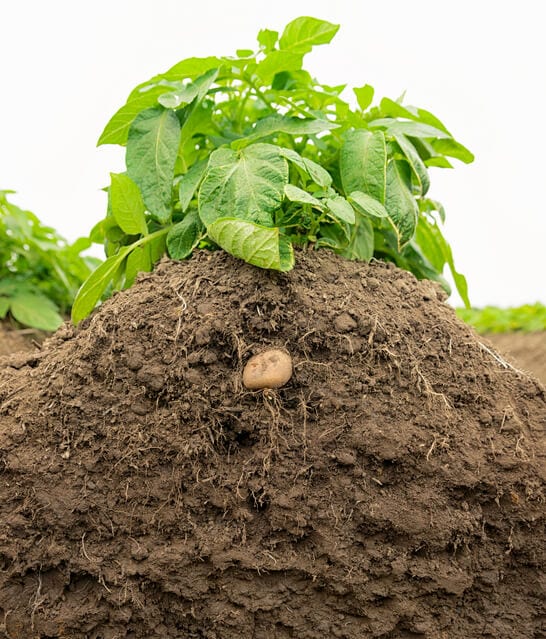
Horses may be exposed if they gain access to discarded potatoes, cull potatoes from agricultural operations, or waste from food processing. Green coloration in potatoes indicates increased solanine levels and should be considered potentially toxic to livestock. [2][5]
Table 1. Summary of key toxic nightshade species [1]
| Plant | Scientific Name | Growing Conditions | Leaf Type | Flower Type | Fruit Type |
|---|---|---|---|---|---|
| Black nightshade | Solanum nigrum |
|
|
|
|
| Bittersweet nightshade | Solanum dulcamara |
|
|
|
|
| Horse nettle | Solanum carolinense |
|
|
|
|
| Silverleaf nightshade | Solanum elaeagnifolium |
|
|
|
|
| Potato plant | Solanum tuberosum |
|
|
|
|
Toxicology: Steroidal Glycoalkaloids
The toxic effects associated with nightshade plants are primarily attributed to steroidal glycoalkaloids, a group of naturally occurring compounds widely distributed throughout the genus Solanum.
These compounds function as chemical defenses for the plant, helping protect it from insects, pathogens, and herbivores. When ingested by animals, glycoalkaloids can interfere with normal physiological processes and affect multiple body systems. [2][4]
Steroidal glycoalkaloids consist of an alkaloid backbone attached to one or more sugar molecules. These compounds occur in both glycoside forms (with attached sugars) and aglycone forms.
The specific toxin profile varies between species and even between different parts of the same plant. Concentrations are influenced by environmental conditions, plant maturity, and seasonal growth stage. [2][3][4]
At the cellular level, glycoalkaloids primarily act by disrupting cell membranes. They can bind to cholesterol and other sterols that help maintain the structural stability of animal cell membranes.
This interaction alters membrane permeability, allowing important molecules and ions to leak out of cells, interfering with normal cellular function. [2][4]
The highest toxin concentrations in nightshade plants are typically found in unripe berries and green plant tissues. In potato plants, for example, the highest glycoalkaloid concentrations occur in green or sprouted portions of the tuber and in the foliage. As fruits mature, toxin concentrations generally decline. [3][4][5]
Gastrointestinal Effects
One of the primary toxic mechanisms involves irritation of the gastrointestinal tract. Steroidal glycoalkaloids can disrupt cellular membranes within the digestive lining in a manner similar to saponins. [2][4]
This membrane-disrupting activity increases permeability of intestinal cells and damages mucosal tissue, leading to inflammation and irritation of the stomach and intestines. [2][4]
Nervous System Effects
Nightshade toxins may also influence the nervous system. Some Solanum compounds are reported to produce muscarinic or anticholinergic effects that interfere with normal neurotransmitter signaling. [2]
The proposed mechanism of glycoalkaloid effects on the nervous system is inhibiting acetylcholinesterase, an enzyme responsible for breaking down the neurotransmitter acetylcholine. When this enzyme is inhibited, nerve signals can become overstimulated, contributing to neurological signs such as weakness, tremors, or coordination problems in severe exposures.
However, this mechanism has not been clearly demonstrated in horses, and its clinical significance in equine medicine remains uncertain. [2][4]
Cardiovascular Effects
Although less commonly noted than gastrointestinal symptoms, nightshade toxins may also affect the cardiovascular system. In some cases, abnormal heart rhythms have been reported following ingestion of Solanum plants.
These effects are thought to result from disruptions in cellular membrane function and alterations in autonomic nervous system activity. [2][4]
Factors Affecting Toxicity
Not all exposures to nightshade plants result in poisoning. The development and severity of clinical illness depend on several factors, including the species of plant consumed, the amount ingested, and environmental conditions that influence toxin production.
Different members of the genus Solanum contain varying types and concentrations of steroidal glycoalkaloids, which are the primary toxic compounds responsible for poisoning. Plant maturity also plays a significant role in toxicity.
In many nightshade species, the highest glycoalkaloid concentrations occur in unripe berries and young plant tissues, with toxin levels generally declining as fruits mature. [1][3][4]
Environmental conditions can further influence toxin production. Plant stress may increase glycoalkaloid concentrations as part of the plant’s defensive response. Factors such as drought, mechanical damage, insect feeding, disease, and exposure to light can all affect toxin levels within plant tissues.
The seasonal growth stage may also influence glycoalkaloid content, with concentrations sometimes increasing during periods of active growth or reproduction. [3][4]
Because these factors vary between locations, seasons, and plant species, the toxicity of nightshade plants can be unpredictable. In many cases, poisoning occurs when horses consume unusually large amounts of plant material or when forage availability is limited, increasing the likelihood that animals will ingest plants they would normally avoid.
Risk Factors
Horses typically avoid consuming unpalatable toxic plants when adequate forage is available. Many nightshade species are unpalatable, and under normal grazing conditions horses preferentially select grasses and other desirable forage. However, several circumstances can increase the likelihood of accidental ingestion.
One possible route of exposure is contamination of hay or stored forage. Nightshade plants growing in hay fields may be harvested along with forage crops during mowing and baling.
Once dried and incorporated into hay bales, fragments of these plants can become difficult for horses to recognize and avoid. As a result, horses may ingest nightshade plant material inadvertently while consuming hay.
Pasture conditions also play an important role in exposure risk. Horses grazing in overgrazed, drought-affected, or poorly managed pastures may consume plants they would normally avoid due to limited availability of desirable forage. Disturbed soils and degraded pasture environments often favor the growth of opportunistic weeds, including several Solanum species. [1]
Access to agricultural waste products may present another source of exposure. Discarded potatoes, potato culls, or food processing waste can contain high concentrations of glycoalkaloids, particularly when potatoes are green, sprouted, or damaged. Horses with access to these materials may ingest potentially toxic quantities. [4][6]
Although nightshade poisoning has been documented in several animal species, no specific breed, age, or sex predisposition has been identified in horses. Exposure appears to depend primarily on environmental factors and management conditions rather than individual susceptibility.
Miniature horses and ponies are at a slightly higher risk, since their lower relative body weight means they require less exposure overall before the onset of symptoms.
Clinical Signs of Nightshade Poisoning in Horses
Symptoms associated with ingestion of Solanum species primarily involve the gastrointestinal, nervous, and cardiovascular systems. In horses, gastrointestinal disturbances are typically the most prominent findings, although neurological abnormalities may develop in more severe cases. [2]
The specific signs and their severity depend on the species of plant consumed, the quantity ingested, and the concentration of toxins present.
Key signs of nightshade poisoning in horses include:
- Loss of appetite
- Excessive salivation
- Colic or diarrhea
- Lethargy or weakness
- Trembling or neurological abnormalities
- Cardiac rhythm disturbances
Gastrointestinal Signs
Gastrointestinal signs are the most common indication of nightshade ingestion in horses. Steroidal glycoalkaloids can damage the gastrointestinal lining and alter intestinal motility, resulting in a range of digestive disturbances. [2]
Common gastrointestinal signs include: [2][4]
- Anorexia (decreased appetite)
- Excessive salivation
- Colic
- Diarrhea, which may occur with or without blood
These signs reflect irritation and inflammation of the gastrointestinal mucosa following ingestion of toxic plant material.
Neurological Signs
Neurological abnormalities may develop when nightshade toxins affect the central nervous system. These signs often appear as generalized lethargy or weakness and may progress in more severe intoxications.
Neurological signs include: [4]
- Lethargy
- Drowsiness
- Trembling
- Progressive weakness or paralysis
- Recumbency
- Coma
Dilated pupils (mydriasis) are also commonly reported across animal species exposed to Solanum toxins and reflect effects on autonomic nervous system function. [2]
Cardiovascular Signs
Although less frequently reported than gastrointestinal or neurological abnormalities, cardiovascular effects may occur in some cases. Documented cardiovascular signs in horses include cardiac arrhythmias. [2]
Cardiac abnormalities are believed to result from disruptions in autonomic regulation or direct effects of glycoalkaloids on cellular membrane function. [4]
When to Contact a Veterinarian
If you suspect that your horse has eaten nightshade plants or begins showing signs consistent with poisoning, contact a veterinarian immediately. Early veterinary intervention is important and can significantly improve the chances of recovery.
When speaking with your veterinarian, try to provide as much information as possible about the potential source of exposure. This may include:
- Identifying nightshade plants in the pasture
- Noting unusual weeds in hay
- Reporting access to materials such as potato waste or sprouted potatoes
Photographs of suspected plants or samples of contaminated feed can also help veterinarians assess the situation more quickly.
Diagnosis
Diagnosing nightshade poisoning in horses can be difficult because the clinical signs are not specific and may resemble many other gastrointestinal or neurological conditions.
In most cases, veterinarians rely on evidence of possible exposure to reach a diagnosis. This may involve identifying Solanum plants growing in the horse’s pasture, finding plant fragments in hay, or discovering that the horse had access to materials such as potato waste.
Sometimes plant material may be found in the stomach contents during veterinary examination or after death. Finding fragments of nightshade plants in the digestive tract can provide strong evidence that the horse consumed the plant.
Laboratory testing to detect glycoalkaloid toxins is technically possible but is rarely used in routine veterinary practice. These tests are not widely available, and diagnosis usually relies on clinical findings and environmental investigation rather than laboratory confirmation. [2][4]
Treatment
There is no specific antidote for nightshade poisoning in horses. Management focuses on eliminating further exposure and providing supportive veterinary care to address clinical signs and prevent complications. [4]
The first priority is to remove the source of the toxin from the horse. Horses suspected of ingesting nightshade plants should be taken off contaminated pasture or feed immediately to prevent additional consumption.
Treatment is primarily supportive and symptomatic, targeting the systems affected by the toxin. Horses experiencing abdominal discomfort may be treated with non-steroidal anti-inflammatory drugs such as flunixin meglumine to reduce pain and inflammation. [4]
Fluid therapy may be required in horses with dehydration, diarrhea, or reduced water intake. Intravenous fluids help restore hydration, maintain circulation, and correct electrolyte imbalances that can develop during gastrointestinal illness. [4]
If ingestion occurred recently, a veterinarian may recommend gastrointestinal decontamination. Activated charcoal may be administered orally to bind toxins within the digestive tract and limit further absorption.
In some cases, a cathartic agent may be given alongside activated charcoal to promote intestinal movement and facilitate the elimination of toxins, particularly if diarrhea is not already present. [4]
Prognosis
The prognosis for horses exposed to nightshade plants depends largely on the amount of plant material ingested, the toxicity of the species involved, and the severity of clinical signs at the time treatment begins.
When exposure is recognized early and appropriate supportive care is provided, the outlook is generally favorable. Many horses recover without long-term complications once the source of the toxin is removed and gastrointestinal irritation is managed. [4]
Cases involving more severe illness may carry a more guarded prognosis. Horses that develop significant neurological impairment, persistent gastrointestinal damage, or systemic complications may require intensive veterinary care, and recovery can be prolonged. [4]
Overall, detailed outcome data for nightshade poisoning in horses are limited because documented cases are relatively uncommon in the veterinary literature. Nevertheless, prompt veterinary attention and early removal from the source of exposure significantly improve the chances of recovery. [4]

Prevention
Preventing exposure is the most effective way to protect horses from nightshade poisoning. Most cases occur when toxic plants become accessible through contaminated forage, poor pasture conditions, or inadequate feed management. Careful barn and pasture management practices can significantly reduce this risk.
Regular inspection of grazing areas helps identify potentially toxic weeds before they become established. Removing nightshade plants from pastures, fence lines, and disturbed areas reduces the likelihood that horses will encounter them while grazing.
Feed management is equally important. Hay should be sourced from reputable suppliers and inspected for the presence of unfamiliar plants or weed contamination before feeding. Nightshade plants that are harvested along with forage crops can be difficult for horses to detect once dried and incorporated into hay bales.
Never offer horses discarded potatoes, potato waste, or agricultural by-products containing potato plants, particularly if the material includes green, sprouted, or damaged portions. These parts of the plant may contain high concentrations of glycoalkaloid toxins.
Maintaining adequate forage availability also helps reduce the risk of toxic plant ingestion. Horses grazing in overgrazed or drought-affected pastures may consume plants they would normally avoid due to limited forage options. Providing supplemental hay when pasture quality declines can help prevent this situation.
Finally, staff awareness and education play an important role in prevention. Barn staff, caretakers, and horse owners should be familiar with common toxic plants found in their region and understand how to recognize and remove them. Routine pasture monitoring and clear feeding protocols can help minimize the likelihood of accidental exposure.
Frequently Asked Questions
Here are some frequently asked questions about nightshade poisoning in horses:
Yes. Many plants in the Solanum genus contain toxic compounds called steroidal glycoalkaloids. These substances can irritate the digestive tract and may affect the nervous and cardiovascular systems if horses consume enough plant material.
Most horses avoid nightshade plants because they are generally unpalatable and may have physical defenses such as prickles. However, ingestion can occur when plants contaminate hay, grow in overgrazed pastures, or are mixed with harvested forage.
Nightshade poisoning is relatively uncommon in horses. However, several Solanum species grow in environments where horses are kept, including black nightshade (Solanum nigrum), bittersweet nightshade (Solanum dulcamara), horse nettle (Solanum carolinense), and silverleaf nightshade (Solanum elaeagnifolium). Potato plants (Solanum tuberosum) can also pose a risk if horses access green potatoes, sprouts, or foliage.
Clinical signs in horses typically involve the gastrointestinal system and may include loss of appetite, excessive salivation, colic, or diarrhea. In more severe cases, horses may develop neurological signs such as weakness, trembling, or coordination problems, along with possible heart rhythm abnormalities.
The amount of nightshade required to cause illness varies depending on the species of plant, toxin concentration, and the horse's body weight. Veterinarians often estimate that an adult horse would need to consume roughly one pound of plant material before clinical signs are likely to develop.
Remove the horse from the suspected source of exposure and contact a veterinarian immediately. Early veterinary evaluation can help identify the cause of illness and guide supportive care to improve the chances of recovery.
Summary
Nightshade poisoning occurs when horses ingest plants from the Solanum genus that contain toxic steroidal glycoalkaloids. Although horses typically avoid these plants, exposure can occur through contaminated hay, overgrazed pastures, or access to potato plant waste.
- Nightshade plants such as black nightshade, bittersweet nightshade, horse nettle, and silverleaf nightshade grow widely in agricultural environments where horses may be kept
- These plants contain steroidal glycoalkaloids that can disrupt cellular membranes and irritate the digestive tract
- Most cases of poisoning occur when nightshade plants contaminate hay or when forage is limited in overgrazed pastures
- Clinical signs primarily involve the gastrointestinal system but may also include neurological abnormalities or cardiac arrhythmias
- There is no specific antidote, so treatment focuses on removing the source of exposure and providing supportive veterinary care
- Regular pasture inspections, weed control, and careful feed management help reduce the risk of nightshade exposure
References
- Burrows. G. E. Toxic Plants of North America. 2nd ed. John Wiley & Sons, Incorporated, Somerset. 2013.
- Gupta. R. C. Ed. Veterinary Toxicology: Basic and Clinical Principles. 2nd ed. Elsevier : Academic Press, Amsterdam ; Boston. 2012.
- Sanford. L. L. et al. Glycoalkaloid Content in Foliage of Hybrid and Backcross Populations from aSolanum Tuberosum X S. Chacoense Cross. American Potato Journal. 1994.
- Hovda. L. R. and Benson. D. Blackwell's Five-Minute Veterinary Consult Clinical Companion. Wiley Blackwell.
- Barceloux. D. G. Potatoes, Tomatoes, and Solanine Toxicity (Solanum Tuberosum L. Solanum Lycopersicum L.). Disease-a-month. 2009.
- Ben Ammar. H. et al. Glycoalkaloids in Potato: A Comprehensive Overview of Accumulation, Detection and Mitigation Strategies. Potato Research. 2025.
- How Toxic Is Horse Nettle?. Equus. 2019.