English

The Norman Cob is a rare French light draft breed developed in Normandy as a practical horse for carriage work, agriculture, and everyday utility. Known for its compact strength, expressive trot, and steady temperament, this breed combines some of the substance of a draft horse with the versatility of a lighter riding and driving horse.
For horse owners, the Norman Cob can appeal as a sensible, adaptable partner that is well-suited to pleasure driving, trail riding, and other leisure uses. Its willing nature and useful build have helped the breed remain relevant even as its historic working roles have changed over time.
Read on to learn more about the Norman Cob’s history, characteristics, health considerations, and nutritional needs.
Norman Cob History
The Norman Cob’s history reflects the practical draft horse heritage of northern France. Over more than a century of selective breeding, breeders shaped a horse with both strength and agility.
Origin
The Norman Cob’s origins as a distinct type trace to the late 19th century in Normandy. Local breeders crossed Anglo-Norman mares and heavy carriage horses with lighter trotters and imported Thoroughbreds. [1]
Over time, this breeding strategy produced a horse with more bone and power than a light riding horse, but more action and elegance than a heavy draft.
That heritage remains visible in the modern Norman Cob. The breed is compact and muscular, yet active in movement, particularly at the trot. This blend of strength and animation is one of the breed’s defining features.
Historic Use
Historically, Norman Cobs were bred as practical working horses. They served in transport, carriage work, agriculture, and military roles. Even early in their development, these horses were valued for their durability, temperament, and movement. [2]
As mechanization reduced demand for working horses, the breed adapted to new roles. Norman Cobs gained popularity as pleasure driving and recreational riding horses in their native Normandy. Their transition from utility horse to versatile leisure partner is an important part of the breed’s survival story.
What's your top priority with your horse's health?

What's your top priority with your horse's health?
Breed Registry
The Norman Cob has its own studbook, which helped preserve it as a distinct breed rather than allowing it to disappear into broader French draft populations. Established in 1950, the studbook formally recognized the Norman Cob and differentiated these light draft horses from the emerging Selle Francais. [3]
Modern breeding programs focus on preserving traditional breed type so this small population of rare horses survives into the future. Owners importing or breeding Norman Cobs should confirm current registry requirements with the relevant French breed organization.
| Breed Summary | |
|---|---|
| Breed Name | Norman Cob |
| Also Known As | Cob Normand |
| Breed Type | Light draft horse |
| Origin | Normandy, France |
| Breed Registry | Norman Cob studbook (established 1950); verify current oversight with French breed authorities |
| Population Status | Rare breed with a small population |
| Average Height | 15.1 – 16.3 hh |
| Average Weight | Approximately 1,200 – 2,000 lb (~545 – 910 kg); many mature horses near ~1,600 lb |
| Common Coat Colors | Chestnut and bay, including darker bay and seal-brown type coloring; white face and leg markings permitted |
| Conformation | Compact, muscular; expressive head and neck; broad chest; short back; well-developed hindquarters; energetic trot |
| Lifespan | 20 – 25 years |
| Price Range | $4,000 – $13,000 USD |
| Common Uses | Driving and carriage work; pleasure and trail riding; police patrol; equine-assisted therapy; general leisure |
| Temperament | Calm, willing, adaptable, straightforward to handle |
| Best For | Owners who want a sensible draft-type partner for driving or riding without the size of the heaviest French drafts |
| Common Health Concerns | PSSM1 (GYS1 mutation) documented in the breed; obesity, insulin dysregulation, and laminitis risk in easy keepers; chronic progressive lymphedema (CPL) risk in draft-related types [3][7][8] |
Breed Characteristics
The Norman Cob has the substance and strength associated with draft ancestry, but retains enough activity and refinement for more versatile roles than larger French draft breeds.
Conformation
Norman Cobs are medium- to large-sized horses with a compact, muscular build. They generally stand around 15.1 – 16.3 hands and weigh 1,200 to 2,000 lb (545 to 910 kg) at maturity. [4]
They have expressive heads, strong necks, broad chests, and short backs. The hindquarters are well developed, giving the breed power for both harness and ridden work. An ideal Norman Cob should look substantial without appearing coarse. [4]
The breed’s energetic, expressive trot is one of its most distinctive traits. Limbs should have enough bone to support the body, but the overall proportions should emphasize balance rather than excessive heaviness. [4]
Colors
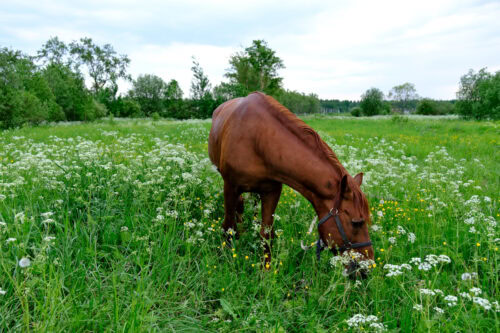
Norman Cobs are most often seen in shades of chestnut and bay, including darker bay and seal-brown type coloring. White markings on the face and legs are permitted. [4]
Temperament
Temperament is one of the breed’s strongest qualities. Norman Cobs are generally described as calm, willing, adaptable, and straightforward to handle. They often combine the steady mindset of draft-type horses with the energy and responsiveness more typical of lighter breeds.
This combination makes the Norman Cob appealing to owners who want a horse that feels sensible without being dull. Individual temperament still depends on training, handling, and management, but the breed’s reputation for trainability and work ethic contributes significantly to its versatility.
Disciplines
The Norman Cob is used in disciplines that reward steadiness, strength, and practicality.
Common roles include:
- Driving and carriage work
- Pleasure and trail riding
- Police patrol and public service roles
- Equine-assisted therapy and general leisure riding
The breed may not have the athleticism required for high-level competitive sport. Still, Norman Cobs can be an excellent all-around choice for riders and drivers who value durability and good temperament.
Norman Cob Health
Published research focused specifically on Norman Cobs is limited. Health recommendations rely on well-established principles for managing other draft and cob-type horses.
Genetic Diseases
The best-documented inherited disorder studied directly in Norman Cobs is Type 1 polysaccharide storage myopathy (PSSM-1), which is associated with the GYS1 mutation. The GYS1 mutation has been confirmed in Cob Normand horses diagnosed with PSSM, establishing its presence in the breed. [5]
At a cellular level, PSSM-1 is characterized by abnormal accumulation of muscle glycogen, along with inflammatory and mitochondrial changes in muscle tissue. [6] Research shows the GYS1 mutation occurs across many breeds with PSSM, including several draft-related populations. [7][8]
PSSM-1 in horses can lead to signs such as: [9]
- Tying up
- Stiffness
- Reluctance to move forward
- Muscle soreness
- Exercise intolerance
- Poor performance
The prevalence of PSSM-1 in draft breeds underscores the importance of genetic testing and ensuring diversity when selecting breeding stock for rare populations like the Norman Cob.
Health Problems
Like other substantial cob and draft-type horses, Norman Cobs may face management-related risks tied to body condition and lower-limb care.
Draft horses carrying excess body weight are at greater risk of laminitis, and nutrition plays a central role in prevention. [10] Norman Cobs tend to be easy keepers who gain weight easily and need careful calorie control. [11]
Owners should also be aware of chronic progressive lymphedema (CPL). [12] CPL involves swelling, skin thickening, fibrosis, skin folds, and secondary skin problems in the distal limbs. [13] Direct evidence in Norman Cobs is limited, but breeds with draft influence may have increased risk of CPL.
Care and Management
Consistent daily management can reduce the impact of many common problems in draft breeds. Norman Cobs generally do best with regular turnout, exercise suited to their job, and attentive preventive care.
Robust basic care for a Norman Cob should include:
- Veterinary exams: Schedule regular checkups to monitor body condition, metabolic risk, and soundness, especially when workload, diet, or environment changes.
- Vaccinations: Follow a vaccination schedule recommended for your region and travel plans.
- Dental care: Routine dental exams and floatation support efficient chewing on high-forage diets.
- Parasite management: Use a strategic deworming plan based on fecal egg counts and veterinary guidance.
- Hoof care: Regular farrier care helps keep broad, substantial horses comfortable under saddle and in harness.
- Exercise and turnout: Daily movement supports metabolic health, muscle function, and soundness. It is especially important in horses with confirmed or suspected PSSM-1.
Regular body condition scoring matters because excess weight can accumulate slowly in easy keepers and may be easy to overlook in heavier breeds. Inspect the pasterns and fetlocks regularly, keep the skin clean and dry, and investigate swelling, crusting, or thickening early.
Ensure saddle and harness fit suit the horse’s broad, substantial conformation.
Nutrition
Nutrition is fundamental to successful Norman Cob management. A well-balanced diet should support healthy body condition, digestive function, muscle health, and long-term soundness without oversupplying calories.
Weight Maintenance
For many Norman Cobs, weight maintenance is the most important nutritional priority. Horses with obesity or metabolic dysfunction are at increased risk of laminitis, but with preventive dietary management, at risk horses can live happy, healthy lives. [10]
Because Norman Cobs are typically easy keepers, most maintain weight on a relatively modest calorie intake. Adjust the feeding program according to body condition. Excess weight gain or loss may signal that nutrition changes are needed. Combine dietary control with regular exercise where possible. [10]
Sample Diet
The following sample diet is intended for a mature 1,600 lb (725 kg) Norman Cob with normal body condition at maintenance and not currently exercising.
| Feed | Maintenance Diet |
|---|---|
| (Amount / Day) | |
| Hay (mid quality; 8% crude protein) | 32 lb (14.5 kg) |
| Salt (plain) | 2 tbsp |
| Omneity® Pellets | 300 g |
| Diet Analysis | |
| Digestible Energy (% of Req) | 105% |
| Protein (% of Req) | 113% |
| HC (ESC + starch; % Diet) | 8.8% |
Many Norman Cobs can meet their energy needs and protein requirements on a high-quality, forage-based diet, especially when they are kept for leisure riding, driving, or light work. [14][15]
Because this breed has draft influence and some individuals are easy keepers, forage type and intake should be adjusted to the horse’s body weight, body condition, and workload to avoid excessive weight gain while still supporting muscle and condition.
Hay-only diets can provide adequate calories, but they are often low in key vitamins and minerals. [14][15]
To help correct these common gaps without adding unnecessary sugar, starch, or calories, most Norman Cobs benefit from a comprehensive vitamin and mineral supplement.
Mad Barn’s Omneity® is a complete vitamin and mineral supplement designed to balance forage-based diets. It supports hoof strength, muscle function, metabolic health, immune function, and coat quality while providing essential nutrients without added sugars or excess calories.
This makes it well suited to Norman Cobs that maintain weight easily or need a low-starch feeding program.
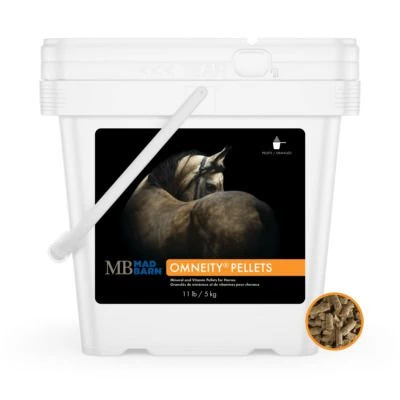
All horses require access to clean, fresh water at all times. Norman Cobs performing farm work, driving, or other sustained exercise may lose more fluids and electrolytes through sweat, particularly during heavy work, warm weather, or travel.
While a salt block can help promote hydration, most horses do not consume enough sodium from a free-choice source alone. Adding approximately 2 tablespoons of loose salt to the daily ration helps support electrolyte balance and proper hydration.
Forage
Forage should form the foundation of the Norman Cob’s diet. Most healthy adult horses consume about 1.5 – 2% of their body weight in forage on a dry matter basis each day, although intake may need to stay at the lower end of this range for easy keepers or overweight horses. For a 1,600 lb (725 kg) Norman Cob, that works out to roughly 24 – 32 lb (11 – 15 kg) of hay per day. [15]
Grass hay is often a good choice for mature Norman Cobs in light to moderate work, particularly if they are prone to weight gain. Horses in heavier work, growing horses, or individuals needing more calories may benefit from higher-quality forage or the addition of legumes such as alfalfa to support additional energy and protein needs.
If pasture is rich or the horse gains weight easily, grazing time may need to be limited with strategies such as a grazing muzzle, dry lot turnout, or slow feeders to reduce intake while preserving normal foraging behavior.
Because hay nutrient levels vary widely, a forage analysis is the most accurate way to find out if your horse’s forage is meeting all of their needs. This analysis provides valuable information about carbohydrate and mineral content, helping guide appropriate dietary adjustments.
Feeding Recommendations
A well-balanced diet supports healthy hooves, skin, joints, and digestion in Norman Cobs, helping maintain strength, soundness, and stamina across a range of driving, farm work, and recreational roles.
Many Norman Cobs do not require commercial grain when they are maintained in light to moderate work and receiving adequate forage. When extra feed is required, choose low-starch, low-sugar, fiber-based options to support steady energy intake without unnecessarily increasing metabolic risk. This is particularly important in horses with PSSM-1, metabolic dysfunction, or a history of laminitis. [16]
To limit excess calories from sugar and starch, replace grain-based feeds with a concentrated vitamin and mineral supplement where possible. When a carrier is needed for supplements or medications, soaked hay pellets or beet pulp can provide a low-starch, forage-based alternative.
Older Norman Cobs and horses with dental issues may do better with soaked fiber sources that are easier to chew than long-stem hay. For horses that quid or struggle to consume enough forage, beet pulp and forage cubes can help support fiber intake and body condition.
When a Norman Cob needs more dietary energy for work, growth, or weight maintenance, adding a fat supplement may be preferable to increasing grain. Fat sources rich in omega-3 fatty acids can also support coat quality, joint comfort, and metabolic function. [17][18][19]
Norman Cobs should always have reliable access to fresh water and salt. Offering about 2 tablespoons of plain loose salt per day helps provide sodium and encourages steady hydration.

Nutritional Supplements
Many forage-based feeding programs require a complete vitamin and mineral supplement to balance the diet. After the diet is balanced, targeted supplementation can help support specific concerns in Norman Cobs.
Mad Barn supplements that may benefit Norman Cob horses include:
- Omneity® Pellets: A vitamin and mineral balancer supplement that can be fed alone or top-dressed on feed.
- Performance XL Electrolytes: An electrolyte supplement that encourages hydration and helps replace minerals lost in sweat.
- OmegaPrime+: A concentrated omega-3 supplement that provides DHA and EPA to support normal inflammatory balance, joint comfort, skin health, coat quality, and respiratory function.
- W-3 Oil: An omega-3 enriched fat supplement that provides cool calories to support body condition, skin and coat quality, and overall wellness.
- Natural Vitamin E: A powerful antioxidant that supports muscle health and nerve function.
Frequently Asked Questions
Here are some frequently asked questions about the Norman Cob horse:
A Norman Cob horse is a rare French light draft breed from Normandy. It was developed as a practical utility horse for carriage work, agriculture, transport, and other everyday jobs. The breed is known for combining draft strength with more activity and refinement than a heavier farm horse.
Yes, the Norman Cob is a draft horse, but it is considered a lighter and more active type than many heavy draft breeds. It has the bone, strength, and substance expected in a draft-related horse while retaining a more energetic way of going. This balance is one of the breed's defining traits.
The Norman Cob comes from Normandy in northern France. The breed developed in the late 19th century from crosses involving Anglo-Norman mares, heavy carriage horses, lighter trotters, and Thoroughbreds. That background helped create a horse with both power and animation.
The Norman Cob was bred for practical work such as carriage driving, transport, agriculture, and military use. Breeders wanted a horse that was strong, durable, steady, and useful in everyday work. Over time, the breed also became well suited to leisure driving and recreational riding.
The Norman Cob is known for its expressive trot, calm temperament, and versatile build. It has enough substance for harness and utility work while remaining active enough for lighter riding and driving roles. Many horse owners value the breed for being practical, sensible, and adaptable.
A Norman Cob usually stands about 15.1 to 16.3 hands tall and weighs roughly 1,200 to 2,000 pounds. Many mature horses are around 1,600 pounds, giving the breed a substantial but not overly heavy build. This size helps the Norman Cob stay powerful enough for draft-type work while remaining manageable for leisure use.
The temperament of a Norman Cob is generally calm, willing, and adaptable. These horses are often described as straightforward to handle, with the steady attitude of a draft-type horse and the responsiveness of a lighter breed. Their sensible nature is a major reason they are valued for both riding and driving.
Yes, Norman Cobs can make good riding horses, especially for pleasure riding, trail riding, and other leisure activities. Their steady temperament, comfortable build, and willing attitude make them appealing for riders who want a practical, dependable mount. They are usually better suited to versatile everyday riding than to high-level competitive sport.
Norman Cobs can be suitable for beginners when the individual horse is well trained, mannerly, and matched to the rider. Their calm and straightforward temperament can make them easier to handle than hotter or more reactive breeds. However, their size and strength still mean that first-time owners benefit from experienced guidance.
Yes, Norman Cobs are a rare breed with a small population. A dedicated studbook was established in 1950 to preserve the Norman Cob as a distinct breed rather than allowing it to disappear into broader French draft populations. Breed conservation remains important because the population is limited.
A Norman Cob typically costs about $4,000 to $13,000 USD. Price can vary depending on age, training, pedigree, location, and whether the horse is being sold for riding, driving, or breeding. Buyers should also consider long-term ownership costs such as feed, hoof care, dental work, tack, and veterinary care.
Norman Cobs generally live about 20 to 25 years. Lifespan depends on factors such as nutrition, weight management, preventive health care, dental care, and appropriate exercise. Good management is especially important in substantial horses that may be prone to weight-related problems.
Yes, Norman Cobs do have a documented genetic health concern called type 1 polysaccharide storage myopathy, or PSSM1, which is associated with the GYS1 mutation. This condition can contribute to tying-up, stiffness, muscle soreness, exercise intolerance, and poor performance. Horses showing compatible signs should be evaluated by a veterinarian, and affected horses often need individualized diet and exercise management.
Other health problems that can affect Norman Cobs include obesity, insulin dysregulation, laminitis, and possibly chronic progressive lymphedema in draft-influenced horses. These risks are especially important in horses that gain weight easily or develop persistent lower-limb swelling and skin changes. Early veterinary attention is important if a horse shows foot soreness, repeated tying-up, rapid weight gain, or ongoing limb thickening.
Yes, many Norman Cobs are easy keepers and can gain weight readily on a relatively modest calorie intake. That tendency makes body condition monitoring especially important, because excess weight can increase the risk of metabolic dysfunction and laminitis. Diets for easy keepers should be adjusted carefully to control calories without compromising forage intake.
A forage-first diet based on hay or pasture, with fresh water and plain loose salt available at all times is the ideal diet for a Norman Cob. Many do well on a balanced high-forage feeding program with added vitamins and minerals and little or no grain when they are in light to moderate work. Horses that need extra calories typically do better with low-starch fiber feeds or fat sources than with high-starch concentrates.
Summary
The Norman Cob is a rare French light draft breed from Normandy, known for its compact strength, expressive trot, and calm, willing temperament.
- The Norman Cob developed as a practical horse for carriage work, agriculture, transport, and everyday utility
- The breed combines draft-type substance with enough agility and refinement for riding, driving, and leisure use
- Norman Cobs are typically calm, adaptable horses that appeal to owners seeking a sensible all-around partner
- Health considerations include PSSM-1, obesity, laminitis risk, and possible lower-limb concerns in draft-type horses
- A forage-based diet, calorie control, salt, and balanced vitamin and mineral supplementation support long-term health
References
- Huggins M. Cultural Transfer, Circulation, and Diffusion between Britain and Europe from the 1770s to the 1870s: The Case of Thoroughbred Horse-Racing and Breeding. Int J Hist Sport. 2020.
- The Norman Cob (Cob Normand). Centre de valorisation du Haras national du Pin. 2026.
- Historique de la race. Société Française des Équidés de Travail. 2026.
- Le Cob Normand. Société Française des Équidés de Travail. 2026.
- Herszberg. B. et al. A GYS1 gene mutation is highly associated with polysaccharide storage myopathy in Cob Normand draught horses. Anim Genet. 2009. View Summary
- Barrey E. et al. Gene expression profiling in equine polysaccharide storage myopathy revealed inflammation, glycogenesis inhibition, hypoxia and mitochondrial dysfunctions. BMC Vet Res. 2009. View Summary
- McCue. M. E. et al. Glycogen synthase 1 (GYS1) mutation in diverse breeds with polysaccharide storage myopathy. J Vet Intern Med. 2008. View Summary
- Baird. J. D. et al. Presence of the glycogen synthase 1 (GYS1) mutation causing type 1 polysaccharide storage myopathy in continental European draught horse breeds. Vet Rec. 2010. View Summary
- Hanson. R. R. and Boorman. S. Congenital and Inherited Anomalies of the Musculoskeletal System in Horses. Merck Veterinary Manual. 2025..
- Durham. A. E. et al. ECEIM consensus statement on equine metabolic syndrome. J Vet Intern Med. 2019. View Summary
- Harris. P. A. et al. Review: Feeding conserved forage to horses: recent advances and recommendations. Animal. 2017.
- de Keyser. K. et al. Chronic progressive lymphoedema in draught horses. Equine Vet J. 2015. View Summary
- Geor. R. J. Dietary management of obesity and insulin resistance: countering risk for laminitis. Vet Clin North Am Equine Pract. 2009.
- Richards. N. et al. Nutritional and Non-Nutritional Aspects of Forage. Veterinary Clinics of North America: Equine Practice. 2021. View Summary
- Nutrient Requirements of Horses: Sixth Revised Edition. National Academies Press, Washington, D.C. 2007. View Summary
- Geor. R. J. Metabolic Predispositions to Laminitis in Horses and Ponies: Obesity, Insulin Resistance and Metabolic Syndromes. Journal of Equine Veterinary Science. 2008.
- Manhart. D. R. et al. Markers of Inflammation in Arthritic Horses Fed Omega-3 Fatty Acids. The Professional Animal Scientist. 2009.
- Richards. T. et al. Effects of Dietary Camelina, Flaxseed, and Canola Oil Supplementation on Transepidermal Water Loss, Skin and Coat Health Parameters, and Plasma Prostaglandin E2, Glycosaminoglycan, and Nitric Oxide Concentrations in Healthy Adult Horses. Journal of Animal Science. 2023. View Summary
- Hess T. et al. Effects of n-3 Fatty Acid Supplementation on Insulin Sensitivity in Horses. J Equine Vet Sci. 2013.