English

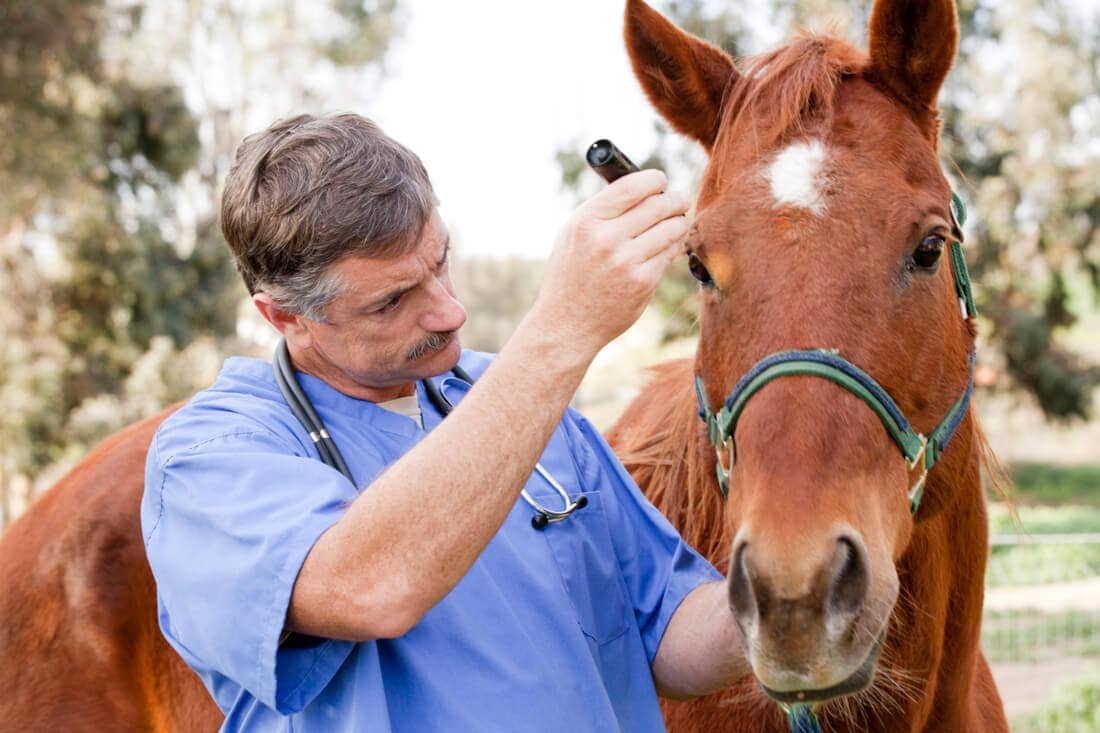
The equine eye is one of the most sensitive structures in the body and critical to a horse’s comfort, safety, and performance. Even small issues can quickly escalate if not addressed.
Ophthalmic examinations provide veterinarians with the opportunity to identify, diagnose, and manage eye disease in horses before it leads to permanent damage or vision loss.
An ophthalmic examination involves more than simply looking at the surface of the eye. A complete assessment evaluates the cornea, lens, anterior and posterior chambers, tear production, ocular pressure, and reflexes. Special diagnostic tests, such as fluorescein dye eye staining, Schirmer tear testing, tonometry, and ophthalmoscopy, help veterinarians pinpoint subtle abnormalities that may not be obvious on initial inspection.
For horse owners, understanding the importance of routine eye checks and recognizing early warning signs of ocular disease can lead to better long-term outcomes. Prompt veterinary attention for any suspected eye problem is crucial, as treating equine eye conditions early provides the best chance of preserving vision.
Ophthalmic Examinations in Horses
An ophthalmic examination is a detailed evaluation of the horse’s eyes performed by a veterinarian. The goal is to assess all structures of the eye to detect disease or injury that could affect vision.
Equine eyes have a significant number of nerve endings, which makes them incredibly sensitive to inflammation or injury.
Horses typically show similar clinical signs regardless of the type of ocular disease, due to the pain they are experiencing.
Clinical signs of ocular pain or discomfort include: [1][2]
- Squinting
- Pus-like or bloody fluid in the front of the eye
- Swelling of the eyelids
- Discharge from the eyes
- Avoiding bright light
- Redness of the tissue around the eye
- Cloudy eye
- Abnormally dilated or constricted pupils
- Changes in eye size (bulging or shrinking)
The ophthalmic examination allows veterinarians to assess the horse’s eye structures completely in an effort to determine the underlying cause of pain or discomfort. Ophthalmic examination is often a component of a pre-purchase examination or general health assessment, ensuring that the horse’s eyes are healthy.
Equipment
The essential equipment for an ophthalmic examination in horses includes: [3]
- Tear test strips
- Tonometer, a device used to measure ocular pressure
- Fluorescein stain
- A strong light source
- An ophthalmoscope
- Topical anesthetic for the eye
- Tropicamide, a medication that dilates the pupil
Many horses also require sedation to keep them quiet and amenable to the procedure.
Depending on the scenario, the veterinarian may perform regional nerve blocks, where they inject lidocaine near nerves that provide muscle control or pain sensation to the eye. [3] This is particularly useful for horses with ocular pain, as it allows for thorough examination without causing distress to the horse.
The ideal location for an ophthalmic examination is a well-lit barn or indoor area where the lights can be turned off. Lighting is important during the initial stages of the examination, particularly when placing regional nerve blocks.
A darker area is preferred later in the examination to maximize illumination of the back of the eye from the veterinarian’s light source.
What's your top priority with your horse's health?

Enter your email to receive your store credit
Procedure
The ophthalmic examination begins by observing the horse standing. The veterinarian notes any abnormalities in the eyes’ appearance, including the size of the pupils and their position, the position of the eye within its socket, and the position of the eyelids. [3]
They then assess whether the horse is blind. The most common test for blindness is the menace response, where the veterinarian moves their hand towards the horse’s eye. The horse should blink or move their head away in response. [3]
They assess whether the horse can move their eyes normally by moving the horse’s head. [3] They can also gently push on the horse’s eye to elevate the third eyelid, allowing them to examine for masses or tumors.
The final component of a basic ophthalmic examination is evaluating the horse’s pupils carefully. [3] This includes performing a pupillary light reflex, where the veterinarian shines a bright light into the horse’s eye to see if the pupils constrict appropriately. [3]
They also perform a dazzle reflex, where they assess whether the bright light stimulates the horse to blink. [4] These tests are best performed in a dark environment.
If any abnormalities are noted in the basic eye examination, or there is suspicion of disease, the veterinarian proceeds with a more thorough assessment.

“Equine eye issues can progress rapidly, so even mild signs matter. A thorough eye exam helps us catch pain, inflammation, or early disease before it threatens vision.”
— Dr. Jennifer Skaggs, DVMEquine Veterinarian
At this point, the veterinarian may sedate the horse and perform a palpebral nerve block. The palpebral nerve block prevents the horse from blinking, allowing the veterinarian complete access to the eye’s surface. [3] They may also apply topical anesthetic that numbs the eye’s surface.
Once the nerve block comes into effect, the veterinarian can proceed with the examination.
The veterinarian begins the exam with the following tests: [3][4]
- Schirmer tear test
- Bacterial or fungal culture or cytology
- Fluorescein stain
- Intraocular pressure measurement (tonometry)
Schirmer Tear Test
The Schirmer tear test evaluates the eye’s tear production. [3] The test involves placing a strip of specialized paper underneath the lower eyelid for 1 minute. [3]
The tears produced by the horse’s eye spread down the strip, giving a reading that the veterinarian can interpret.
Culture or Cytology
These tests help identify infectious and inflammatory diseases. [3] To take a sample, the veterinarian rolls or rubs the eye surface with a swab, brush, or small spatula. [3]
The veterinarian then submits the acquired sample for further processing or evaluates it in their own laboratory. [3]
Fluorescein Stain
Fluorescein stain allows veterinarians to identify corneal ulcers or other defects in the eye surface. They wet a strip containing fluorescein dye to release the dye, then apply it to the horse’s cornea.
As the horse blinks, it distributes the dye across the eye surface. [3] The dye only sticks to damaged areas of the corneal surface. A blue or ultraviolet light source highlights the dye, helping the veterinarian identify surface defects.
Intraocular Pressure
Measuring intraocular pressure is important for diagnosing conditions like glaucoma, increased pressure within the eye. Veterinarians use a tonometer, a specialized device for measuring eye pressure, for this procedure.
The machine uses a probe or tip that is gently pressed or tapped against the eye surface to collect a pressure reading. [3]
Opthalmoscopy
The main component of this examination is ophthalmoscopy, looking at the back of the horse’s eye using a specialized magnifying lens. [3]
 Illustration: Dr. Ana Mesa, PhD
To start, they use a bright light source to examine the anterior chamber, the front of the horse’s eye. This allows them to identify any abnormalities or cellular debris floating in the aqueous humor, the fluid in front of the lens. [3] They can also examine the cornea, the outer surface of the eye, and the lens.
Applying tropicamide dilates the horse’s pupils, allowing full visualization of the fundus or posterior chamber, the back of the horse’s eye. [3] The veterinarian then uses their ophthalmoscope to assess the fundus. They look for changes in the size and shape of the optic nerve, alterations to the retinal vessels, and color changes.
Preparing Your Horse for an Ophthalmic Examination
No specialized preparation is necessary for an ophthalmic examination. If possible, have your horse in a well-lit area where you can easily turn the lights off as needed.

Interpreting Results
Based on their examination, the veterinarian determines what condition is most likely occurring. Conditions affecting the eye can be broadly categorized based on their anatomic locations. Some common diseases affecting each structure are described below.
Cornea
The cornea is the outer surface of the eye, and is highly prone to scratches, penetrating foreign objects, and other injuries. Fluorescein stain highlights these surface defects, allowing for diagnosis. [1] Culture samples can also aid in diagnosis by identifying any infectious agents. [1]
Corneal inflammation can also occur without a previous surface defect. This condition, called keratitis, can arise due to immune-mediated disease, fungal infection, or allergic disease. [1] Cytology is helpful for diagnosing these conditions by identifying the types of cells present.
Uvea
The uvea is the “middle” of the eye, including the iris and pupil.
Corpora nigra are a normal, balloon-like structure along the top and bottom of the horse’s pupils. In some cases, these structures enlarge and form a uveal cyst, which can obstruct vision. [1]
Uveitis refers to inflammation of the uvea and is a common result of many diseases affecting the eyes. [1] Causes may include: [1]
- Blunt force trauma
- Tumors or masses
- Corneal ulcers
- Parasitic infection
- Septicemia
- Immune-mediated disease
- Leptospirosis
- Strangles
- Equine recurrent uveitis
Uveitis causes constricted pupils and occasionally swelling of the eyelids. The veterinarian can also identify aqueous flare, a hazy or cloudy appearance in the anterior chamber due to protein and cell leakage. [1] They may also see swelling of the cornea and atrophy of the corpora nigra. [1]
Glaucoma refers to increased pressure within the eye, usually due to improper drainage of the fluid in the front of the eye. [1] The most common cause of glaucoma in horses is equine recurrent uveitis. [1]
Lens
The lens is a transparent structure that sits behind the pupil. It directs light to the back of the eye, where it is converted into an electrical signal by the retina.
Cataracts are the most common condition affecting the lens. [1] A cataract is an opacity within the lens, preventing it from directing light appropriately. The most common cause of cataracts in horses is equine recurrent uveitis. [1]
Cataracts are visible during assessment of the lens, appearing as a cloudy or opaque area.
Retina
The retina is part of the nervous system. The retina detects light that hits its surface, converts the light into an electrical signal, and transmits that signal to the brain where the information is decoded to produce an image . [1]
Retinitis, or inflammation of the retina, is common with uveitis, as the structures are closely linked. [1] In particular, equine recurrent uveitis, septicemia, and severe infectious diseases like strangles can result in retinitis.
Severe inflammation may result in retinal detachment, where the retina separates from the back of the eye, causing blindness. Veterinarians identify signs of retinitis using their ophthalmoscope.
Complications
Ophthalmic examination is a safe procedure with few complications.
The most common complications are local irritation to the eye from medications or topical solutions. [3] These irritations typically resolve on their own without further intervention.
For horses with pre-existing corneal ulcers, examination may worsen the defect by putting pressure on the eye or irritating the ulcer edges, but this complication is extremely rare. [3]
Frequently Asked Questions
Here are some frequently asked questions about ophthalmic examinations in horses:
Horses are prone to a variety of eye problems, including corneal ulcers, conjunctivitis, uveitis, and traumatic injuries. An ophthalmic exam helps detect these issues early, guide treatment, and preserve vision.
Common signs that indicate a horse may need an ophthalmic exam include squinting, excessive tearing, discharge, cloudiness, swelling, redness, rubbing the eye, or sensitivity to light. Sudden changes in behavior, such as spooking or bumping into objects, may also indicate vision problems.
Not all horses require sedation for ophthalmic examination. Many horses tolerate an eye exam well with gentle restraint and topical anesthesia for comfort. However, sedation may be needed if the horse is anxious, painful, or if the exam requires more invasive procedures.
Routine wellness exams include a basic eye check, but a full ophthalmic exam should be performed if any abnormalities are noticed. Horses with a history of eye disease, such as ERU, may need more frequent monitoring.
Eye problems in horses are medical emergencies because they can deteriorate quickly. Contact your veterinarian immediately for an exam. Delays in treatment can increase the risk of permanent vision loss.
Summary
Ophthalmic examination is the process of thoroughly assessing a horse's eyes to diagnose ocular problems.
- All major structures within the horse's eyes can be assessed with a complete ophthalmic examination
- Local nerve blocks, topical anesthetics, and sedation can help veterinarians examine the eye without causing pain or stress
- Ophthalmic examinations are safe with few complications and help detect problems early, reducing the risk of vision loss
- No special preparation is necessary, but access to a well-lit area that can have the lights turned off is ideal
References
- Reed. S. M. et al. Equine Internal Medicine. 3rd ed. Saunders Elsevier, St. Louis, Mo. 2010.
- Knickelbein. K. E. and Hanson. R. Ophthalmic Emergencies in Horses - Emergency Medicine and Critical Care. MSD Veterinary Manual.
- Costa. L. R. R. and Paradis. M. R. Manual of Clinical Procedures in the Horse. Wiley Blackwell, Hoboken. 2018.
- Dwyer. A. E. Ophthalmology in Equine Ambulatory Practice. Veterinary Clinics of North America: Equine Practice. 2012. View Summary