English




The Orlov Trotter is a rare Russian breed known for their elegant appearance, trotting ability, and noble history. Once used for harness racing throughout Russia, these horses declined in popularity after the rise of the less-refined but faster Standardbred.
Orlov Trotters originated during the rule of Catherine the Great at Count Alexei Orlov’s Khrenovskoy stud. Today, state stud farms continue to preserve the breed despite challenges imposed by conflicts and cross-breeding trends.
Although rare in other parts of the world, Orlov Trotters gained recognition in the early 21st century for their success in international sport. This adaptable breed is now considered a versatile pleasure horse and a living link to a rich cultural heritage.
This breed profile will discuss the history, characteristics, health problems, and nutritional needs of the Orlov Trotter horse breed. Keep reading to learn more about feeding and caring for these horses.
Orlov Trotter Horse History
Orlov Trotters are the most famous Russian horse breed. Most purebred Orlov Trotters today are found at Russian and Ukrainian stud farms, where breeding programs are dedicated to preserving the breed and its unique history.
Origin
These horses get their name from Count Alexei Orlov, who first developed Orlov Trotters at his Khrenovskoy stud in the late 18th century.
All Orlov Trotters can trace their ancestry to Smetanka, a purebred grey Arabian stallion that Count Orlov purchased in Turkey to stand at his stud. Breeding records describe Smetanka as a large, long-backed horse with an extravagant trot. [1]
After Smetanka’s untimely death a year after Count Orlov purchased him, an autopsy revealed he had an extra rib responsible for his unique conformation. [1]
Despite his short breeding career at the stud, Smetanka sired several influential offspring. A cross between the Arabian and the Danish mare Isabelline produced the stallion Polkan in 1778.
Polkan sired Bars I, the first Orlov Trotter. Born in 1784 to a grey Dutch mare, Bars I was taller than most Russian horses and renowned for his fast trot and beauty. Count Orlov crossed Bars I and his sons to his large herd of mares to further refine the breed. [1]
Historic Use
Count Orlov’s original breeding program at the Khrenovsky stud aimed to produce healthy, hardy horses with the constitution to survive the local climate. Orlov trotters were bred for trotting ability, but breeding stock also had to meet strict aesthetic standards. [2]
Muzhik, a famous Orlov Trotter gelded for his white markings despite being the fastest horse on the stud, inspired famous Russian novelist Leo Tolstoy’s novella Kholstomer. [3]
The noble appearance of the breed attracted the attention of Russian Tsars and nobility, but Count Orlov famously only sold geldings to protect his breeding stock. This rule continued after his death, until the Russian Crown took ownership of the stud.
The large, hard-working horses were popular all-around working mounts and elegant harness horses. Historical artwork often portrays Orlov Trotters in a troika, a traditional Russian harness of three horses abreast with the middle horse in a shaft bow.
Orlov Trotters also dominated harness racing in Russia throughout the 19th century. But crossbreeding with faster Standardbreds to produce the Russian Trotter threatened the breed’s survival in the late 1800s. [4]
Russian horse breeding faced significant challenges during the Russian Civil War and World War II. Populations of horses further declined during the Soviet Union. But today, renewed commitments to preserve Orlov Trotters have helped the breed recover.
Breed Registry
The International Committee for the Protection of the Orlov Trotter was established in 1997. While purebred Orlov Trotters are rare in North America, some crossbred descendants of Orlovs are eligible for registration with the Orlov-Rostopchin Sporthorse Association.
| Breed Summary | |
|---|---|
| Breed Name | Orlov Trotter |
| Origin | Russia |
| Breed Registry | International Committee for the Protection of the Orlov Trotter |
| Population Status | Rare; fewer than 1,000 breeding individuals |
| Average Height | 16 hh |
| Common Coat Colors | Grey, black, bay, chestnut |
| Conformation | Large head, expressive eyes, long arched neck, long muscular back, broad chest, well-sprung ribs, sturdy legs, prominent joints, clean tendons |
| Common Uses | Harness racing, competitive driving, recreational riding, driving, endurance, jumping, dressage |
| Temperament | Intelligent, friendly, loyal, sensitive, willing |
| Common Health Concerns | Inbreeding risk, tendon injuries, suspensory injuries, joint disease, gastric ulcers |
What's your top priority with your horse's health?

Enter your email to receive your store credit
Breed Characteristics
Centuries of selective breeding produced a uniform breed type in Orlov Trotters. Although only a small breeding population is left today, new research into the heritability of desired Orlov characteristics has helped to continue improving the breed. [5]
Conformation
Orlov Trotters have an average height of 16 hands. These horses are generally larger than other harness horse breeds but still have characteristic driving horse conformations. These conformations allow Orlov Trotters to trot with speed and stamina. [6]
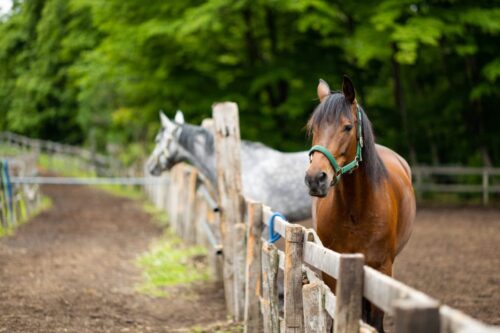
The ideal Orlov has a large head with expressive eyes and a long, elegantly arched neck. Like their founding sire, Orlov Trotters have long, muscular backs. Their chests are broad, and their ribs are well-sprung. The legs should be sturdy, with prominent joints and clean tendons.
Colours
Foundation breeding programs prioritized producing horses with grey coats, which is still the most common coat colour in the breed. Orlovs can also be black, bay, or chestnut.
Temperament
Orlov Trotters are known for their intelligence and friendly temperaments. They are loyal and sensitive horses that develop close bonds with their owners. Many trainers also find these horses learn quickly and have willing work ethics.
While most Orlov Trotters are generous horses with a strong will to please riders of any level, personalities can vary between individuals. Beginner riders should have expert guidance to ensure they don’t inadvertently reinforce undesired behaviours in these intelligent horses.
Disciplines
Orlov Trotters are still used for harness racing in Russia today. However, Orlovs aren’t as fast as Standardbreds and typically participate in races restricted to purebred Orlov Trotters.
Russian troika racing has become popular as a modern hobby celebrating historical traditions. These races often use sleds pulled by Orlov Trotters over snow in the winter.
The Orlov Trotter’s talents are well-suited to competitive driving. But most owners use Orlovs for recreational riding and driving. Popular riding disciplines for these horses include endurance, jumping, and dressage.
Orlov Trotters and crosses have also made it to the top of international equestrian sport. Balagur, an Orlov Trotter stallion with previous careers in the circus and mounted police, competed in the 2004 and 2008 Olympic Games in dressage.
Orlov Trotter Health
Orlov Trotters are generally healthy and long-lived horses, with many famous breed members enjoying long competitive careers into their late teens. However, they are susceptible to similar health problems as other harness racehorses.
Genetic Diseases
Several genetic studies have examined the Orlov Trotters, particularly focusing on the impact of cross-breeding and limited population size on the breed’s genome.
Surveys from countries housing Orlov Trotter studs indicate breeding populations of fewer than 1,000 individuals. Such small populations can lead to increased inbreeding, which poses potential risks for the breed’s health and genetic diversity. [8]
Interestingly, one study found that crossbred Orlov Trotters had significantly higher heterozygosity (genetic diversity) and reduced inbreeding coefficients compared to their purebred counterparts. Higher inbreeding coefficients can increase the risk of health issues in small breeding populations, a phenomenon known as inbreeding depression. [9]
Further research is needed to determine if Orlov Trotters are susceptible to the same genetic diseases as their Arabian ancestors. [7] However, one study found no evidence of PSSM Type 1 genes in a sample of Orlov Trotters.
Health Problems
Orlov Trotters that compete in harness racing are susceptible to similar health problems as other racehorses. These problems include athletic injury, joint disease, and gastrointestinal conditions.
Intense training programs can increase wear and tear on the Orlov Trotter’s joints and musculoskeletal system. Studies in Standardbreds show trotter racehorses have a higher incidence of tendon and suspensory ligament injuries than Thoroughbred racehorses. [10]
Other studies found gastric ulcers in 52.5% of harness racehorses. Increased stress and high-energy diets can contribute to a high prevalence of gastric ulcers in performance horses. [11]

Care and Management
Whether your Orlov Trotter is a competitive racehorse or a beloved pleasure horse, all equines need quality basic care to meet their physical and behavioural needs.
Collaborate with your veterinarian, trainer and other equine health practitioners to implement a preventative wellness plan that includes:
- Veterinary Check-ups: Schedule routine veterinary visits to detect and address health concerns promptly.
- Vaccines: Adhere to a vet-recommended vaccination plan to protect against infectious diseases.
- Dental Maintenance: Schedule a dental exam and teeth floating at least once a year. Senior Orlov Trotters may need more frequent care due to dental issues.
- Parasite Control: Implement a deworming strategy to guard against internal parasites.
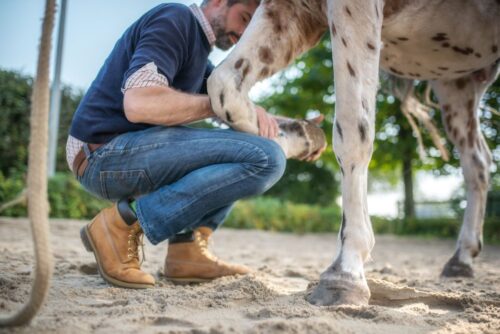
- Hoof Maintenance: Schedule regular farrier appointments for hoof trimming and balance.
Regular farrier care from a qualified professional can also reduce your horse’s risk of athletic injury. Frequent trimming helps maintain hoof balance and limits excess strain on the tendons and ligaments of the lower leg.
While many racehorses and competition horses live in stalls, prolonged stall confinement can contribute to stress and a higher risk of gastric ulcers. Daily turnout reduces stress and promotes strong bones, tendons, and ligaments.
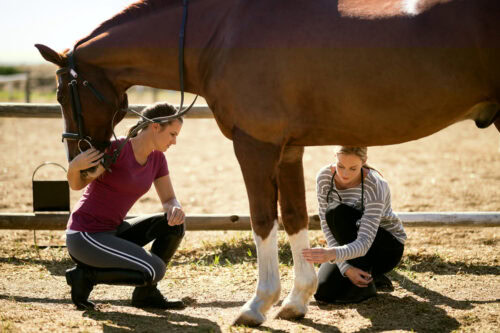
These intelligent, athletic horses thrive in programs that provide regular exercise and mental stimulation. Daily grooming also enables these horses to bond with their owners.
Orlov Trotter Nutrition
Nutrition is essential for keeping Orlov Trotters healthy and performing their best, no matter what their job is. Orlov Trotters with competition careers need a diet tailored to their high energy demands.
Weight Maintenance
Most Orlov Trotters are relatively easy keepers, meaning these horses should easily maintain their weight on a balanced diet. But horses with racing careers may need higher energy feeds to support their intense training and competition schedules.
The modern Orlov Trotter horse descends from breeds with a predisposition to equine metabolic syndrome. Feeding an appropriate diet and maintaining your horse at a healthy weight are important for reducing the risk of metabolic problems. [12]
Regularly check your horse’s body condition score to monitor for changes in their body weight. A body condition score of 5 on the 9-point Henneke scale is considered ideal. If your horse is underweight or overweight, work with an equine nutritionist to modify their diet.
Unexplained weight loss in Orlov Trotters could indicate an underlying gut health issue that requires veterinary attention.
Sample Diet
The following sample diet is intended for a mature 450 kg (1000 lb) Orlov Trotter horse with normal body condition at maintenance (not exercising).
| Feed | Amount per day |
|---|---|
| Mid-Quality Hay (8% crude protein) | Free-choice |
| Salt | 30 g (2 tbsps) |
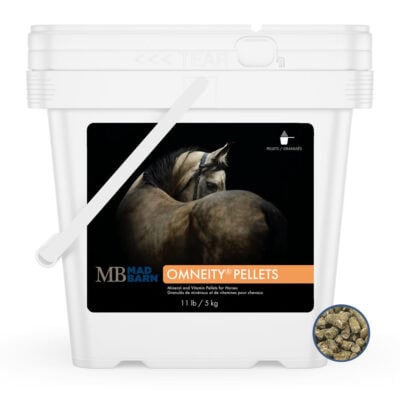
| Omneity® Pellets | 200 g (2 scoops) |
| Diet Analysis | |
| Digestible Energy (% of Req) | 105% |
| Protein (% of Req) | 127% |
| HC (ESC + starch; % Diet) | 8.8% |
Note that this diet analysis is based on an average forage sample from North America and the NRC (2007) requirements. For a better estimation, submit your forage for analysis and consult with an equine nutritionist.
Forage alone can meet the energy and protein needs of Orlov Trotters at maintenance or in light work. However, hay and pasture will not meet all vitamin and mineral requirements, leading to nutrient deficiencies.
Mad Barn’s Omneity® is a comprehensive vitamin and mineral supplement formulated with essential amino acids, organic trace minerals, and a complete profile of vitamins. Ensuring these requirements are met can support hoof and joint health, immune function, and more. Omneity® also contains digestive enzymes and yeast to support gut health.
Forage
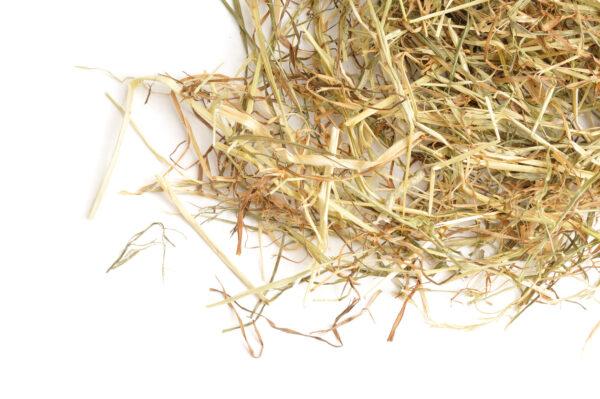
A forage-based diet mimics natural grazing behaviour and supports optimal digestive health in all horses, including Orlov Trotters. Providing free-choice hay also reduces the risk of gastric ulcers.
Horses will typically eat around 2% of their body weight in forage daily on a dry matter basis. For an average 1000 lb (450 kg) Orlov Trotter horse, that is roughly equivalent to 20 pounds (9 kg) of hay dry matter each day.
Easy keeper Orlov Trotters in light work do best on low-starch, low-sugar grass hay. By providing lower calorie hay, you can feed a higher volume of roughage without contributing to weight gain.
Together, starch and sugar (ESC) are known as hydrolyzable carbohydrates (HC). This is the fraction of NSC that is digestible in the small intestine and contributes to insulin release.
Orlov Trotters in heavy work may need higher quality hay to meet their energy requirements. Avoid high-starch/sugar concentrates, which can contribute to digestive problems in Orlov Trotters. Fibre from forage should be the primary energy source in the equine diet. [13]
Alfalfa hay is an excellent energy and protein source for Orlov Trotters in heavy work. You can also consider feeding beet pulp which is a high fiber energy source with calories roughly equivalent to oats. The high calcium content of alfalfa and beet pulp also helps buffer gastric acid, potentially reducing the risk of gastric ulcers. However, feeding large amounts of this legume hay or beet pulp can lead to imbalanced mineral ratios. Hard working Orlov trotters can have their alfalfa or beet pulp balanced for major minerals with plain oats or wheat bran. [14]
Feeding hay in a slow feeder can ensure your Orlov Trotter has constant access to free-choice forage. Keep in mind that full-time grazing on fresh pasture can heighten the risk of pasture laminitis in Orlov Trotters with metabolic issues.
Feeding Recommendations
If you feed your Orlov Trotter grain-based concentrates, split the daily ration into multiple small meals to reduce the risk of digestive upset. Forage-based alternatives such as soaked alfalfa pellets or beet pulp are a safer, low-starch option. [13]
For performance horses that need a concentrated source of calories, substitute a fat supplement for some of their grain. Fat provides cool calories and is metabolically efficient for horses to use.
All horses need supplementation with vitamins and minerals to provide nutrients commonly deficient in hay. Choose a concentrated vitamin and mineral supplement that balances the diet without adding extra sugar or starch.
Ensure your horse has constant access to fresh water and salt. Feeding loose salt with your horse’s daily ration can help meet their sodium requirement and encourages them to drink more water.
Consult with your veterinarian or an equine nutritionist if you have questions before changing your Orlov Trotter’s diet.
Nutritional Supplements
When feeding your Orlov Trotter, the first priority is to balance their diet and ensure it meets their energy, protein, vitamin, and mineral needs. After balancing the diet, you can consider supplements tailored to your horse’s performance goals and individual needs.
- W-3 Oil is an omega-3 fatty acid and energy supplement that provides high levels of microalgal DHA and natural Vitamin E. This supplement supports joint health, skin and coat quality, and respiratory health in Orlov Trotters.
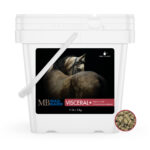
- Visceral+ is a comprehensive gut supplement that helps maintain stomach and hindgut health in Orlov Trotters. This veterinarian-recommended formula is designed to meet the needs of competition horses with intense training programs.
- MSM is an organic sulfur compound which supports comfortable movement and the normal homeostatic responses to inflammation.
Have questions about your Orlov Trotter’s feeding regimen? Submit their details online for a complimentary consultation with our expert equine nutritionists to receive personalized guidance.
Frequently Asked Questions
Here are some frequently asked questions about Orlov Trotter horses:
The Orlov Trotter is a rare Russian horse breed developed in the late 18th century for trotting speed and endurance. The breed originated at Count Alexei Orlov’s Khrenovskoy stud and became one of Russia’s most famous national horse breeds. Orlov Trotter horses are known for combining athletic ability with a noble appearance, which helped make them successful as both harness horses and all-around working horses.
The Orlov Trotter horse breed is best known for its powerful, sustained trot, elegant conformation, and historic role in Russian harness racing. Orlov Trotter horses were once dominant in trotting competition and are still strongly associated with driving traditions in Russia. Beyond racing, the breed is also recognized for intelligence, stamina, and adaptability. These qualities have helped Orlov Trotter horses transition into pleasure riding, sport, and recreational driving.
Orlov Trotter horses are large, elegant horses with a refined yet powerful build designed for speed and stamina at the trot. Most stand around 16 hands high and have a noble head, expressive eyes, a long arched neck, a broad chest, and a long muscular back. Their legs are sturdy with prominent joints, clean tendons, and good bone, reflecting selection for durability and soundness. Overall, the breed combines beauty, athleticism, and strength in a type well suited to driving and versatile riding.
Grey is the most common coat color in Orlov Trotter horses. Orlov Trotter horses can also be black, bay, or chestnut, but grey is the color most strongly associated with the breed. Many grey horses are born darker and gradually lighten with age. This traditional preference for grey helped shape the breed’s classic look.
Orlov Trotter horses are known for being intelligent, friendly, loyal, and willing. They often form strong bonds with their handlers and usually respond well to thoughtful, consistent training. Their sensitive nature can make them rewarding partners, but it also means they do best with clear guidance and regular engagement. Many owners value Orlov Trotter horses for their cooperative attitude and adaptable temperament.
Orlov Trotter horses are used today for harness racing, driving, recreational riding, and several sport disciplines. In Russia, they are still seen in purebred harness racing and traditional troika driving. In other settings, Orlov Trotter horses are commonly used for pleasure riding, dressage, jumping, endurance, and competitive driving. Their versatility allows them to succeed in both historical and modern roles.
Orlov Trotter horses are generally healthy and long-lived, but performance demands can increase strain on their musculoskeletal system, causing joint wear and tendon and suspensory injuries.Increased stress and high-energy diets can also cause gastric ulcers in Orlov Trotters involved in racing. Limited population size also makes genetic diversity an important long-term concern for the breed. Careful breeding, balanced nutrition, and proactive veterinary care help support the health of Orlov Trotter horses.
Yes, Orlov Trotter horses are considered a rare breed. Most purebred Orlov Trotter horses are found in Russia and Ukraine, and the global breeding population remains limited. Historical crossbreeding and population decline have made breed preservation a major priority. Because of their rarity, Orlov Trotter horses are valued as both performance horses and an important part of Russian equestrian heritage.
Most Orlov Trotter horses stand around 16 hands high. Some individuals may be slightly shorter or taller, but the breed is generally considered larger than many other harness horse breeds. Their height, combined with their long neck and strong frame, contributes to their elegant and athletic appearance. This size helps support the powerful, ground-covering trot for which the breed is known.
Orlov Trotter horses can be suitable for some beginners, but they are best matched with riders who have guidance from an experienced trainer. The breed is generally willing, intelligent, and people-oriented, which can make Orlov Trotter horses rewarding partners. However, their sensitivity and quick learning ability mean they may pick up both good and bad habits easily. With proper support and consistent handling, some Orlov Trotter horses can work well for less experienced riders.
Summary
The Orlov Trotter is a rare Russian harness and riding breed developed in the late 18th century at Count Alexei Orlov’s Khrenovskoy stud, selected for a powerful, stylish trot and a refined, noble type. Once dominant in Russian harness racing, the breed declined with the rise of faster trotters and crossbreeding, but is now conserved through dedicated stud programs and valued as a versatile sport and pleasure horse.
- The breed traces to the Arabian stallion Smetanka and his descendants, with Bars I recognized as the foundational Orlov Trotter type
- Orlovs are typically around 16 hands with long, muscular backs, substantial bone, and conformations designed for trotting speed and endurance
- Grey is the most common colour, though bay, black, and chestnut occur; temperament is generally intelligent, people-oriented, and trainable
- Traditional uses include troika driving and harness racing; modern Orlovs are also used for competitive driving and a range of riding disciplines, including dressage and jumping
- Conservation focuses on maintaining breed identity and managing genetic diversity in a small breeding population, where inbreeding risk increases as numbers decline
References
- Lukanova, N. Development on Genealogic Lines in Orlov Trotter in Bulgaria. Int J Curr Microbiol App Sci. 2016.
- Afanasjev, S. Methods of genealogical selection in Orlov Trotter studs. Konovodstvo i Konnyi Sport. 1960.
- Andrianova, A. Narrating Animal Trauma in Bulgakov and Tolstoy. Humanities. 2016.
- Ambros'eva, E. et al. Genetic structure of the Orlov trotter and the Russian trotter. Tsitologiia i Genetika. 1992. View Summary
- Bachurina, E. et al. Evaluation of Orlov trotting breed stud horses on exterior, action and quality of offspring. Perm Agrarian J. 2020.
- Thiruvenkadam, A. et al. Inheritance of racing performance of trotter horses: An overview. Livestock Sci. 2009.
- Blohina, N. et al. Biodiversity and functional variability of the allele pool of horse breed populations. IOP Conf Ser Earth Environ Sci. 2021.
- Tkachova, I. et al. The quality of the reproductive composition of the Orlov’s trotting breed of Ukraine and its effect on the frolic of offspring. Animal Husbandry of the Steppe of Ukraine. 2022.
- Kalinkova, L. et al. The influence of crossbreeding on genetic structure of the Orlov Trotter breed. IOP Conf Ser Earth Environ Sci. 2019.
- Bertuglia, A. et al. Epidemiology of musculoskeletal injuries in a population of harness Standardbred racehorses in training. BMC Vet Res. 2014. View Summary
- Cate, R. et al. Prevalence of gastric ulcers and relationship to other parameters in Standardbred racehorses. Comparat Exerc Physiol. 2012.
- Lewis, S. et al. Genomewide association study reveals a risk locus for equine metabolic syndrome in the Arabian horse. J Anim Sci. 2017. View Summary
- Zeyner, A. et al. Effect of feeding exercised horses on high-starch or high-fat diets for 390 days. Equine Vet J. 2010.View Summary
- Lybbert, T. et al. Feeding alfalfa hay to exercising horses reduces the severity of gastric squamous mucosal ulceration. Proceed AAEP. 2007.