English






Have you noticed changes in your horse such as weight loss, a dull coat, disinterest in feeding or crib chewing that have resulted in poor performance? Your horse might be experiencing stomach pain, most likely due to gastric ulcers.
Equine Gastric Ulcer Syndrome (EGUS) is a condition in which ulcers or erosions develop in the lining of a horse’s stomach. EGUS occurs when the normal protective physicochemical barrier of the stomach is compromised, allowing gastric acid to irritate and damage the stomach lining, which can lead to pain, discomfort, and reduced performance.
In addition to causing discomfort, gastric ulcers in horses may also be associated with hindgut ulceration, which can interfere with normal digestion and nutrient absorption and contribute to a range of health and behavioural concerns.
Equine gastric ulcers are reported to affect approximately 60–90% of performance horses, particularly in situations involving frequent travel, high-intensity exercise, and prolonged periods without access to forage. High prevalence has also been documented in pleasure horses and young foals.
Research indicates that any horse exposed to common management stressors—such as stall confinement, inconsistent feeding schedules, grain or concentrate-based diets, or regular trailering—is at increased risk of developing gastric ulcers.
This article explains the different types of gastric ulcers in horses, outlines key risk factors and clinical signs, and will guide you through evidence-based strategies to support prevention and management.
What are Gastric Ulcers in Horses?
Gastric ulcers are painful sores that develop in the lining of a horse’s stomach. Ulceration can also occur in the horse’s hindgut, but this is a separate condition.
The equine stomach is divided into two anatomically and functionally distinct regions: the upper squamous region and the lower glandular region. Ulcers can develop in either region, but they differ in prevalence, underlying mechanisms, and contributing risk factors.

Ulcers affecting the squamous region are referred to as equine squamous gastric disease (ESGD). This region lacks protective secretions and relies primarily on feed and saliva to buffer stomach acid, making it particularly vulnerable to acid exposure. As a result, ESGD accounts for the majority of diagnosed gastric ulcers.
Ulcers affecting the glandular region are known as equine glandular gastric disease (EGGD). Although this region produces stomach acid, it is normally protected by bicarbonate and mucus secretions that form a physicochemical barrier over the stomach lining. Ulceration in this region is thought to occur when these protective mechanisms are disrupted.
A horse’s stomach produces gastric acid continuously throughout the day, regardless of whether feed is present. This constant acid production places horses at inherent risk for gastric ulcers, particularly during periods when the stomach is empty and acid is not buffered by forage.
In natural grazing conditions, horses consume forage for up to 16 hours per day, which helps maintain stomach fill, stimulate saliva production, and reduce direct acid contact with the stomach lining.
By contrast, horses managed with stall confinement, limited turnout, or prolonged intervals between meals may experience extended periods without feed in the stomach. These fasting periods increase acid exposure and significantly elevate the risk of both squamous and glandular ulcer development.
There are many additional dietary, management, training, and stress-related factors that contribute to the high prevalence of gastric ulceration in horses, which are discussed in further detail below.
What Are the Signs & Symptoms of Gastric Ulcers?
How can you tell if your horse is affected by gastric ulcers? The only definitive way to diagnose Equine Gastric Ulcer Syndrome (EGUS) is through a veterinary gastroscopic examination.
During this procedure, a veterinarian uses a gastroscope to visually examine the lining of the horse’s stomach, allowing ulcers to be identified, graded by severity, and classified by location.
While gastroscopy is required for diagnosis, many horses with gastric ulcers show observable changes that raise suspicion. If these signs are present, veterinary evaluation and scoping are warranted.
Clinical signs of gastric ulcers in horses are often nonspecific and can vary widely between individuals. Owners frequently describe affected horses as having subtle changes in attitude, performance, or comfort rather than obvious signs of illness.
Some common signs observed in affected horses include: [1]
- Poor appetite or “picky eating”
- Poor body condition or weight loss
- Chronic diarrhea
- Poor coat condition or a rough coat
- Bruxism or teeth grinding
- A more aggressive or nervous disposition
- Increased stereotypic behaviours such as cribbing
- Acute or recurrent colic
- Poor performance
- Sensitivity in the girth area
- Excessive recumbency
- Stretching to urinate
What's your top priority with your horse's health?

Enter your email to receive your store credit
What Causes Gastric Ulcer in Horses
Equine Gastric Ulcer Syndrome develops when prolonged exposure to gastric acid damages the horse’s stomach lining.
Feeding practices, activities, and management factors that reduce the horse’s natural ability to buffer stomach acid make ulcers more likely to develop. These include limited forage intake, high-grain diets, and added physical or environmental stress.
1. Diet and Feeding
Diet and feeding patterns are directly associated with gastric ulcer risk. Horses are adapted to near-continuous forage intake, which helps buffer gastric acid through both stomach fill and saliva production.
Under many management systems, horses experience extended periods without feed in the stomach. Because gastric acid is produced continuously, fasting allows acid to remain in direct contact with the stomach lining, increasing irritation and ulcer risk.
Intermittent feeding with long gaps between meals reduces the buffering effect of forage and saliva, particularly in the squamous region of the stomach, which lacks protective secretions.
When horses consume forage or meals, feed material and bicarbonate from saliva help neutralize gastric acidity and reduce acid-related damage to the stomach lining.
This is why ad libitum (unrestricted) forage access is widely recommended to support gastric health and reduce ulcer risk. Free-choice forage allows horses to mimic their natural trickle-feeding behaviour, maintaining stomach fill and saliva production and reducing prolonged acid contact with the stomach lining.

2. High Grain Consumption
Feed composition can have a large effect on ulcer risk. Grain is easier to chew and therefore does not produce as much acid-neutralizing saliva as hay does. Saliva production during consumption of hay is approximately double that produced during intake of an equivalent amount of grain. [2]
In addition, grain empties out of the stomach more rapidly than hay leaving longer periods of time with an empty stomach that is susceptible to ulcer formation.
A high starch or grain intake can lead to local volatile fatty acid production in the stomach which further lowers pH and increases ulcer risk. [3]
Exceeding 2 kg of grain per day approximately doubles the likelihood of gastric ulcers.
3. Intense Exercise
Approximately 95% of endurance horses and racehorses have gastric ulcers. This increases to 100% when you just consider horses that are actively racing. Racehorses have an increase in prevalence, lesion severity and number of lesions in the squamous mucosa associated with long durations of intense exercise. [4]
There are several reasons why performance horses have such high rates of gastric ulcers.
The greatest contributor is increased abdominal pressure during exercise which compresses the stomach, pushing acidic contents to acid-sensitive areas of the stomach that are prone to developing ulcers.
In addition, if ulcers are already present, reduced blood flow to the stomach during exercise hinders their healing.
Horses in training or competition often go long intervals without access to feed, which increases the time spent with an empty stomach in which acid is unbuffered by stomach contents.
Furthermore, the stresses of travel, frequent changes in environment, and workload contribute to their high risk of ulcers.
According to the American Association of Equine Practitioners, “Even typical training and recreational showing have been shown to induce ulcers within a five to seven day period.” [5]
4. Intermittent Access to Water
During training and competition there can be long periods of time without access to water, particularly during transport.
Intermittent access to water increases the chances of developing gastric ulcers in all parts of the stomach.
Turnout without constant access to water, or frozen water in the winter, might also increase the risk of ulcers.
Giving oral electrolyte solutions repeatedly to horses in competition has also been shown to increase the number of ulcers and the severity of the lesions. [6]
5. Physical Stress
Slight changes to a horse’s routine and living conditions can induce stress which contributes to ulcer risk. When stress hormones in your horse are elevated, it can result in a cascade of hormonal changes that make your horse more susceptible to ulcers forming. [7]
The major stress hormone is cortisol. When this hormone is secreted, it results in lower levels of prostaglandin being produced. This causes the pH levels in the horse’s stomach to decrease, weakening the protective barrier in the stomach. Over time, the lining of the stomach is eroded, and ulcers can occur.
Stressful events such as travel, change in environment and illness can predispose horses to higher cortisol levels and higher risk of ulcers. Horses that are recovering from an injury often develop ulcers when they go on stall rest.
Stall confinement can also induce stress and lead to ulcers even with free-choice hay available. Stall confinement may lead to stereotypical behaviours like cribbing that can hinder proper feeding behaviours. Generally, horses that are housed in stalls are fed two large meals per day that are high in grain which increases the risk for ulcers. [8]
6. Social Environment
A major factor that can contribute to the formation of ulcers in your horse is their social environment. Horses are social creatures and are affected by their surroundings.
Horses that experience a change in the herd population are at high risk of developing ulcers.
Being introduced to a new grouping, experiencing the addition of a new horse or departure of a familiar horse, or a change in the condition of a nearby horse can all influence your horse’s stress levels.
Research also shows that horses kept on their own have a higher risk of gastric ulceration.

7. Anti-inflammatory drugs
Non-steroidal anti-inflammatory drugs (NSAIDs) used for treatment of lameness or other illnesses can contribute to ulcer risk. If your horse has been on phenylbutazone or other NSAIDs for longer than one week, they are at high risk for gastric ulceration.
NSAIDs may cause ulcers by decreasing production of prostaglandins which normally help with blood flow to the stomach and production of mucous defenses.
NSAIDs work by inhibiting the effects of the inflammatory prostaglandin COX-2. However, these drugs also block the effects of another prostaglandin COX-1 which has a protective effect on the stomach.
While some newer anti-inflammatory drugs used in horses target COX-2 specifically without blocking COX-1, many horse owners continue to use conventional NSAIDs which are nonspecific.
If your horse is prescribed a regimen of NSAIDs, ask your veterinarian about ways to reduce the risk of ulcers forming.
Horses develop gastric ulcers when stomach acid repeatedly contacts areas of the stomach lining that aren’t well protected, especially during fasting or high-stress management. The most common causes include long gaps without forage, high-starch meals, intense exercise, travel/stall confinement, stress, intermittent water intake, and prolonged NSAID use.
Diagnosis of Gastric Ulcers
Diagnosing gastric ulcers in horses can be challenging because clinical signs are often subtle, inconsistent, or nonspecific. Changes in appetite, performance, attitude, or comfort may raise suspicion, but these signs alone are not sufficient to confirm the presence or severity of ulcers.
Several indirect or non-invasive tests have been proposed, including measurements of sucrose permeability and other biomarkers. However, current evidence suggests that these methods lack sufficient reliability and accuracy to be used as standalone diagnostic tools.
Gastroscopy, also known as gastric endoscopy, is the only reliable method for definitively diagnosing Equine Gastric Ulcer Syndrome (EGUS). This procedure allows a veterinarian to directly visualize the lining of the stomach and proximal small intestine using a flexible endoscope equipped with a camera and light source.
Gastroscopy enables the veterinarian to identify whether ulcers are present, determine their location within the stomach, and assess their number and severity. This information is critical, as different types of gastric ulcers may have different contributing factors and management considerations.
Importantly, the severity of ulcers observed during gastroscopy does not always correlate with the degree of clinical signs. Some horses with relatively mild lesions may show marked changes in behaviour or performance, while others with more severe ulceration may show few outward signs. [9]
Access to gastroscopy may be limited for some horse owners due to cost or availability. Given the high prevalence of gastric ulcers in both performance and pleasure horses, many veterinarians recommend assuming a degree of ulcer risk and implementing management and feeding strategies that support gastric health, particularly in horses exposed to known risk factors.
If you suspect your horse may be affected by gastric ulcers, consult your veterinarian to discuss gastroscopy, particularly if your horse has recurrent mild colic, persistent appetite changes, unexplained weight loss, escalating girthiness, behaviour changes under saddle, or symptoms that return shortly after treatment.
Gastric Ulcer Grading Scale
Veterinarians use a standardized grading system during gastroscopy to describe the severity of gastric ulceration present in the horse’s stomach. This scale helps quantify the extent of tissue damage and provides a consistent framework for monitoring disease progression and response to management or treatment. [13]
- Grade 0: No visible lesions or areas of abnormal tissue
- Grade 1: Intact lining with areas of tissue thickening or hyperkeratosis
- Grade 2: One or more small, superficial ulcers
- Grade 3: Large or extensive ulcerative lesions
- Grade 4: Widespread ulceration with areas of deep tissue damage
How is Equine Gastric Ulcer Syndrome Managed?
The primary goal of treatment for gastric ulcers is to reduce acid exposure in the stomach, allowing damaged tissue time to heal. Because horses produce gastric acid continuously, medications that suppress or counteract acid play a central role in managing existing ulcers.
Omeprazole (GastroGard® or UlcerGard®) is the most commonly prescribed treatment for Equine Gastric Ulcer Syndrome. Omeprazole is a proton pump inhibitor (PPI) that reduces acid production by blocking the final step of acid secretion in the stomach. By lowering gastric acidity, omeprazole creates a less corrosive environment that supports healing of ulcerated tissue. This approach is most effective for squamous gastric ulcers, which are directly exposed to acid and lack protective secretions. [11]
Sucralfate is often used alongside acid-suppressing therapy as an adjunct treatment. In the acidic environment of the stomach, sucralfate forms a viscous, paste-like substance that adheres to ulcerated areas. This physical barrier helps protect damaged tissue from further acid exposure and may support localized healing. [11]
Misoprostol, a prostaglandin analogue, is most commonly used for glandular gastric ulcers. Prostaglandins play an important role in maintaining blood flow, mucus production, and bicarbonate secretion in the glandular stomach. Misoprostol helps support these protective mechanisms and has been shown to be more effective for glandular ulcers than omeprazole alone or omeprazole combined with sucralfate. [12]
While acid suppression can be effective for healing existing ulcers, it does not address the underlying management factors that contribute to ulcer formation. Once treatment is discontinued and acid production resumes, recurrence is common, particularly if feeding practices, stressors, or medication use remain unchanged.
In some horses, acid production may temporarily rebound after discontinuation of proton pump inhibitors, further increasing the risk of ulcer recurrence if protective strategies are not in place. This can result in a condition known as rebound acid hypersecretion (RAH), where acid production temporarily increases above baseline levels after acid-suppressing medication is discontinued.
Pharmaceutical treatment also has important limitations, including:
- It does not correct the root causes of ulcer formation, such as feeding gaps, stress, or NSAID use
- Reduced gastric acidity may alter normal digestive processes, allowing more undigested protein to reach the hindgut
- Excess protein fermentation in the hindgut may contribute to secondary digestive disturbances
- Lower stomach acidity may reduce the natural barrier against ingested pathogens
How to Support Gastric Health to Prevent Ulcers
Supporting gastric health in horses requires more than treating ulcers once they occur. Long-term prevention depends on identifying and addressing the underlying factors that contribute to ulcer formation, such as feeding practices, exercise demands, stress, and medication use.
In many cases, however, some risk factors cannot be fully eliminated, particularly in performance, training, or management-intensive environments. In these situations, targeted nutritional and management strategies can help support the stomach’s natural protective mechanisms and reduce the likelihood of ulcer recurrence.
Turnout & Housing
Turnout has a meaningful impact on supporting gastric health and reducing ulcer risk by allowing horses to express natural feeding, movement, and social behaviors. Horses that spend more time turned out typically have greater access to forage, spend more time eating, and experience fewer prolonged fasting periods, which helps to buffer gastric acid.
Access to pasture or turnout with forage encourages continuous or near-continuous intake of fibre. This maintains stomach fill, stimulates saliva production, and reduces direct acid contact with the stomach lining, particularly in the acid-sensitive squamous region of the stomach.
Turnout also reduces several non-dietary risk factors associated with gastric ulcers. Horses kept in stalls for long periods are more likely to experience physical and psychological stress, including limited movement, social isolation, and changes in routine. Elevated stress hormones can impair normal protective mechanisms in the stomach and increase susceptibility to ulcer formation.
In addition, turnout supports regular movement and gut motility, which can improve overall digestive function and comfort. Horses with daily turnout generally show fewer stress-related behaviors, such as cribbing or wood chewing, that are commonly associated with gastric discomfort.
While turnout alone cannot eliminate ulcer risk, especially in performance horses, it is a key management strategy that supports natural gastric defenses. When full-time turnout is not possible, increasing turnout duration or incorporating regular hand walking can still provide benefits.
Feeding Strategies
Feeding strategies to reduce ulcer risk involve feeding a forage-based diet, promoting saliva production, and limiting prolonged exposure of the stomach lining to gastric acid.
For horses housed in stalls, providing free-choice access to hay and water throughout the day is one of the most effective ways to prevent EGUS. Continuous forage intake increases feeding frequency and minimizes the amount of time the stomach remains empty, allowing forage and saliva to naturally buffer gastric acid.
Incorporating alfalfa hay or alfalfa cubes or pellets can further support gastric health. Alfalfa is relatively high in calcium and protein, both of which contribute to buffering stomach acid. Calcium may temporarily reduce acid secretion immediately following a meal, while the higher protein content of alfalfa helps increase gastric pH by binding acid within the stomach. [10]
Because the effect of calcium on acid production is short-lived, alfalfa is best used as part of a balanced feeding program rather than as a sole strategy for ulcer prevention.
To avoid excessive protein or mineral intake, alfalfa hay is typically recommended to make up no more than 10–20% of total forage intake. When used in this proportion, alfalfa can provide buffering benefits without displacing the fibre provided by grass hays.
Research supports the use of alfalfa in ulcer-prone horses. In one study, horses fed a diet containing alfalfa hay and grain had a higher gastric pH during the five hours following feeding compared to horses fed bromegrass hay alone. Despite the inclusion of grain, the alfalfa-containing diet was associated with fewer and less severe gastric ulcers. [10]
Grain and other high-starch feeds should be divided into multiple smaller meals whenever possible. Smaller meals reduce rapid gastric emptying and limit excessive bacterial fermentation in the stomach, both of which can contribute to increased acid production and greater ulcer risk.
Acid Buffers
Some horse owners use acid-buffering supplements in an effort to reduce gastric ulcer risk or manage mild gastric discomfort. Common buffering agents include calcium carbonate or calcium hydroxide, which work by temporarily neutralizing stomach acid.
While these products can raise stomach pH for a short period, their effects are transient and do not provide sustained protection of the stomach lining. It is also important to recognize that gastric acid plays an essential role in normal digestion.
The stomach is designed to acidify feed to initiate protein breakdown and support downstream nutrient absorption. Prolonged or excessive suppression of gastric acid may interfere with normal digestive processes and nutrient availability in the gut.
Acid-suppressing medications, such as proton pump inhibitors like omeprazole, are effective for reducing gastric acid during treatment and can allow ulcers to heal. However, once these medications are discontinued, acid production resumes and ulcers commonly recur if underlying risk factors remain unchanged.
For long-term gastric support, a forage-based feeding program is more effective than reliance on acid buffers alone. Incorporating forage, including modest amounts of alfalfa, helps buffer stomach acid naturally.
Visceral+
Mad Barn’s Visceral+ is a pelleted supplement formulated to support normal gastric and hindgut function in horses exposed to common digestive stressors such as training, travel, and intermittent feeding.
Visceral+ works by providing nutritional support for the stomach lining and hindgut environment, including ingredients that help maintain the integrity of the gastrointestinal barrier, support normal mucin production, and nourish a balanced hindgut microbiome.
Because the majority of the immune system is closely linked to gut health, Visceral+ also supports normal immune function as part of a comprehensive digestive management program.
Visceral+ may be used on its own for ongoing gastric support or alongside omeprazole (e.g., GastroGard® or UlcerGard®) as part of a veterinarian-directed feeding and management strategy.
Visceral+ is intended for nutritional support and does not replace veterinary diagnosis or medical treatment for horses with confirmed ulcers.
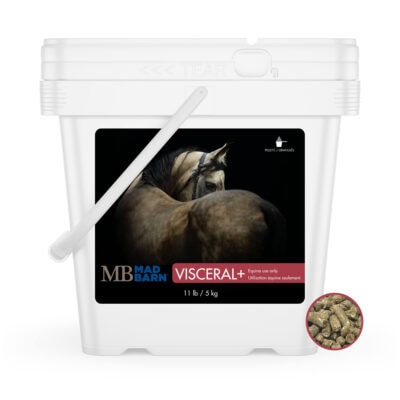

“Visceral+ provides targeted support for gastric health and the immune system... It helps maintain digestive function under stress, travel, intense training, and other challenges.”
— Dr. Priska Darani, PhDEquine Nutritionist, Director of Research
Frequently Asked Questions
Here are some frequently asked questions about causes of gastric ulcers in horses:
Gastric ulcers occur when the protective lining of the stomach becomes damaged, allowing acid to erode the tissue and form painful sores. Ulcers most commonly develop in the squamous region of the stomach, which lacks natural buffering defenses and accounts for 80% of all gastric ulcers. Horses are at high risk because they continuously produce stomach acid, especially when kept off forage for long periods.
Common signs of gastric ulcers in horses include poor appetite, weight loss, diarrhea, a dull coat, girth sensitivity, colic, teeth grinding, nervous behavior, and stereotypies such as cribbing. Many horses simply appear “not quite right,” as symptoms are nonspecific and vary widely. A gastroscopic exam is the only definitive method of diagnosis, although symptom patterns can strongly suggest EGUS.
Horses develop gastric ulcers because their stomachs produce acid continuously, even when no feed or forage is present. Under natural grazing conditions, frequent forage intake and saliva help buffer this acid and protect the stomach lining. However, domestic management practices mean that horses often consume grain-based diets and experience long periods between meals with an empty stomach. Stall confinement, intense exercise, travelling to competitions, stress, and certain medications also compromise the horse's natural defenses against stomach ulcers, increasing acid exposure. When acid repeatedly contacts unprotected areas of the stomach, particularly the squamous region, the lining becomes damaged and ulcers can form.
Gastric ulcers can result from infrequent feeding, high-grain diets, intense exercise, stress, stall confinement, transport, and intermittent water access. High-starch feeds reduce saliva production and increase stomach acidity, while exercise pushes acidic contents upward into unprotected areas of the stomach. Long-term NSAID use can also impair protective mechanisms of the stomach lining and increase ulcer risk.
Performance horses are at higher risk of EGUS because intense exercise, frequent travel, stall confinement, and stress all increase acid exposure in the stomach. Exercise compresses the stomach and can force acidic contents into the unprotected squamous region, while training schedules often involve long gaps between meals that reduce natural buffering of stomach juices.
Grain-based diets contribute to gastric ulcers in horses because grains require less chewing than forage, resulting in reduced saliva production and less buffering of stomach acid. Grain also empties from the stomach more quickly than hay and can increase volatile fatty acid production, both of which increase acidity and ulcer risk. When concentrates are fed, splitting them into several small meals throughout the day can help minimize time with an empty stomach; however, the most effective strategy for reducing ulcer risk is providing free-choice access to hay or other forage.
Feeding your horse a forage-based diet is the best way to protect against Equine Gastric Ulcer Syndrome. Free-choice or near-continuous access to hay or pasture helps maintain a full stomach, stimulate saliva production, and buffer gastric acid. Managing starch intake, dividing concentrates into smaller meals, and incorporating some alfalfa can further support gastric health and help lower ulcer risk.
Equine Gastric Ulcer Syndrome is most commonly treated with acid-suppressing medications such as omeprazole (GastroGard® or UlcerGard®). Additional therapies, including sucralfate or misoprostol, may be used depending on ulcer type and severity. However, gastric ulcers commonly recur once medication is discontinued because acid production resumes while underlying risk factors often remain unchanged. Without adjustments to feeding practices, housing, exercise routines, and stress management, the stomach lining is again exposed to conditions that promote ulcer formation. For this reason, long-term management and feeding strategies are necessary to reduce recurrence after medication is stopped.
Some horses with gastric ulcers can be ridden, but exercise at higher intensity may worsen ulceration or discomfort, particularly if the horse is worked on an empty stomach. Horses showing signs such as girth sensitivity, irritability, reluctance to work, or changes in behaviour may be uncomfortable and, in some cases, unsafe to ride due to the risk of bucking or other unpredictable responses to gastric pain. Decisions about your horse’s workload should be made in consultation with your veterinarian, taking into account ulcer severity, clinical signs, and the horse’s response to treatment. Your veterinarian may also recommend feeding and management strategies to reduce ulcer risk during exercise.
Gastric ulcers in horses are scored during gastroscopy using a grading system from 0 to 4. Grade 0 indicates a normal stomach lining, while Grades 1 through 4 reflect increasing numbers, size, and depth of ulcerative lesions, with Grade 4 representing extensive and deep ulceration.
The healing time for horses with Equine Gastric Ulcer Syndrome varies depending on ulcer type, severity, and management. Many squamous ulcers improve within 3 to 4 weeks of appropriate treatment, while glandular ulcers often require longer treatment periods. Follow-up gastroscopy is the most reliable way to confirm healing. Keep in mind that horses affected by gastric ulcers are prone to relapse once treatment is discontinued unless the underlying factors contributing to ulcer risk are appropriately addressed.
Horses with stomach ulcers often show subtle and nonspecific signs, such as reduced appetite, girth sensitivity, changes in attitude, poor performance, weight loss, or recurrent mild colic. Some horses may simply appear uncomfortable or “not themselves,” while others show few outward signs and are only diagnosed with a gastroscopy.
The best feeding approach for horses with gastric ulcers prioritizes forage-first diets with frequent access to hay or pasture. Grass hay forms the foundation, while small amounts of alfalfa can help buffer stomach acid. Grain intake should be limited and divided into smaller meals, with alternative energy sources used when possible. Digestive health supplements, such as Mad Barn’s Visceral+, can be added to the diet to support gastric health and help maintain a healthy gastric lining and normal mucin production.
Pyloric ulcers are ulcers that develop in the pyloric region of the stomach, which is the area that controls the passage of stomach contents into the small intestine. These ulcers are considered a form of equine glandular gastric disease (EGGD) and can interfere with normal gastric emptying, sometimes leading to delayed stomach emptying, discomfort, or recurrent colic. Pyloric ulcers are often more challenging to treat than squamous ulcers and typically require targeted therapy and management changes.
Gastric ulcers do not directly cause lameness, but they can contribute to poor performance, altered movement, and reluctance to work, which may be mistaken for musculoskeletal pain. Horses with gastric discomfort may exhibit shortened stride length, resistance to bending, or changes in gait due to pain, tension, or behavioural responses rather than true orthopedic lameness. A veterinary evaluation is important to distinguish gastric discomfort from other causes of lameness.
Calcium carbonate does not prevent gastric ulcers in horses. It can temporarily neutralize stomach acid and may provide short-term relief, but its effects are brief and do not address the underlying causes of ulcer formation. Long-term ulcer prevention relies on appropriate feeding and management practices, such as providing continuous access to forage, minimizing fasting periods, reducing dietary starch, and managing stress, rather than relying on acid-buffering supplements.
Summary
Equine Gastric Ulcer Syndrome (EGUS) is a common condition caused by prolonged exposure of the stomach lining to gastric acid and disruption of the horse’s natural protective mechanisms. Ulcers are strongly associated with modern management practices, and while pharmaceutical treatment can promote healing, long-term prevention depends on addressing underlying risk factors.
- EGUS develops most often in horses exposed to intermittent feeding, stall confinement, high-grain or low-forage diets, intense exercise, transport, stress, and certain medications such as NSAIDs.
- Clinical signs are often subtle or nonspecific, and gastroscopy remains the only definitive method for diagnosing and grading gastric ulcers.
- Treatment commonly involves proton pump inhibitors such as omeprazole, but ulcers frequently recur if feeding, housing, and stress-related contributors are not addressed.
- Supporting gastric health focuses on forage-first feeding with minimal fasting, limiting starch intake, maintaining consistent routines, reducing stress where possible, and using nutritional strategies to help support the stomach’s natural defenses.
References
- Buchanan, BR and Andrews, FM Treatment and prevention of equine gastric ulcer syndrome. Vet Clin N Am-Equine. 2003. View Summary
- Meyer, H et al. Investigations of saliva production and chewing in horses fed various feeds, in Proceedings of the Equine Nutrition and Physiology Society, East Lansing, MI, pp.38-41.
- Nadeau, JA et al. Effects of hydrochloric, acetic, butyric, and propionic acids on pathogenesis of ulcers in the nonglandular portion of the stomach of horses. Am J Vet Res. 2003. View Summary
- Murray, MJ et al. Factors Associated With Gastric Lesions in Thoroughbred Racehorses. Equine Vet J. 1996. View Summary
- McClure, Scott. Equine Gastric Ulcers: Special Care and Nutrition. AAEP. 2016.
- Holbrook, TC et al. Effect of Repeated Oral Administration of Hypertonic Electrolyte Solution on Equine Gastric Mucosa. Equine Vet J. 2005. View Summary
- Scheidegger, MD et al. Increased adrenocortical response to adrenocorticotropic hormone (ACTH) in sport horses with equine glandular gastric disease (EGGD). Vet J. 2017. View Summary
- Videla, R and Andrews, FM .New Perspectives in Equine Gastric Ulcer Syndrome. Vet Clin N Am-Equine. 2009. View Summary
- Murray, MJ et al. Gastric Ulcers in Horses: A Comparison of Endoscopic Findings in Horses With and Without Clinical Signs. Equine Vet J Suppl. 1989. View Summary
- Nadeau, JA et al. Evaluation of diet as a cause of gastric ulcers in horses. Am J Vet Res. 2000. View Summary
- Sykes, BW et al. European College of Equine Internal Medicine Consensus Statement—Equine Gastric Ulcer Syndrome in Adult Horses. J Vet Intern Med. 2015. View Summary
- Varley, G et al. Misoprostol is superior to combined omeprazole-sucralfate for the treatment of equine gastric glandular disease. Equine Vet J. 2019. View Summary
- Wise. J. C. et al. Interobserver and Intraobserver Reliability for 2 Grading Systems for Gastric Ulcer Syndrome in Horses. Journal of Veterinary Internal Medicine. 2021.