English







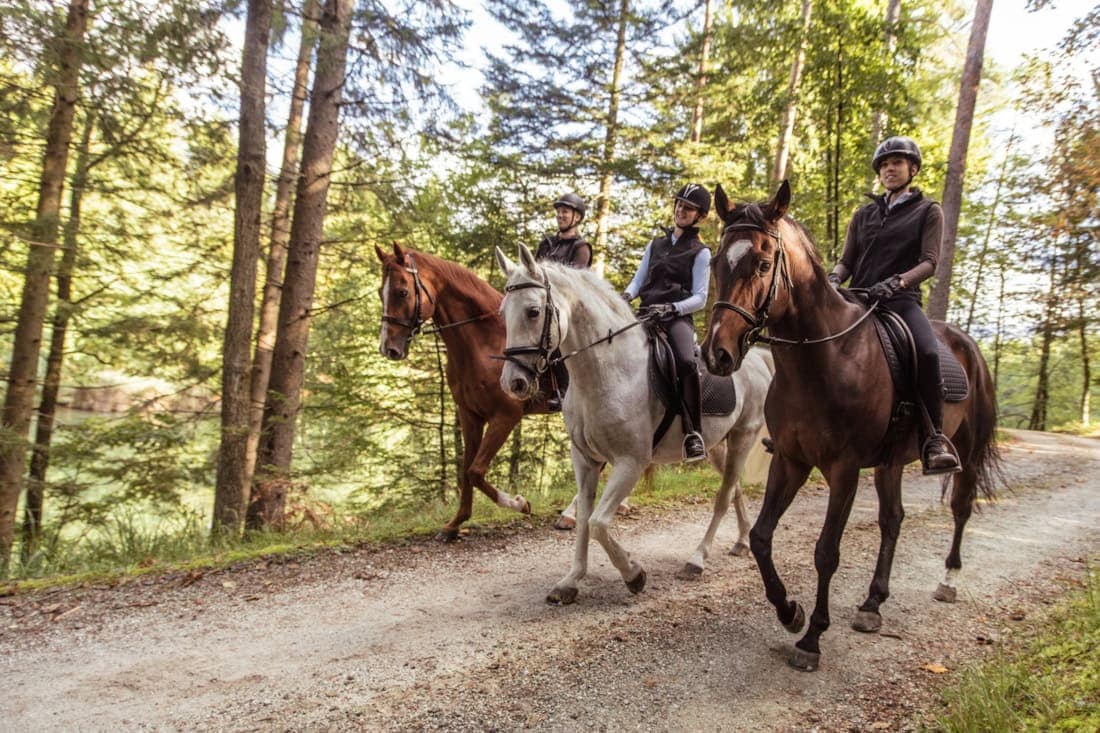
Trail riding offers your horse physical and mental challenges that don’t exist inside the arena. Changing terrain, natural obstacles, and open spaces engage different muscle groups, improve balance, and support cardiovascular fitness, while also exposing horses and riders to variables such as footing changes, wildlife, and weather that make safety an important consideration.
To maximize the benefits of trail riding, equestrians must account for more than fitness alone. Trail rides often involve additional logistics, including hauling to trailheads, riding in groups, navigating public land, managing equipment, and planning for longer or remote rides, all of which can influence both horse behavior and rider preparedness.
Trail riding also places unique demands on a horse’s training and soundness. Uneven ground, elevation changes, and unfamiliar environments can highlight weaknesses in balance, conditioning, or focus that may not be apparent in an arena setting, making thoughtful preparation essential.
This guide explores common safety concerns, practical trail logistics, and effective riding strategies to help you prepare your horse for varied terrain, manage challenges on the trail, and use trail riding as a productive tool for fitness, confidence, and partnership.
Trail Riding With Your Horse
Leaving the arena and navigating varied terrain engages your horse’s body and mind in ways that flatwork alone cannot. Time on the trail strengthens muscles, improves cardiovascular fitness, and deepens the partnership between horse and rider.
Trail riding also introduces unique demands that require thoughtful preparation. New environments, long hauls, overnight rides, and natural terrain can all influence your horse’s behavior and physical well-being.
Because no two trails or horses are alike, thoughtful preparation is key. Conditioning rides, obstacle practice, and careful attention to your horse’s behavior help set the stage for safe, enjoyable outings across all types of terrain.
What's your top priority with your horse's health?

Enter your email to receive your store credit
Challenges & Considerations
Trail riding can challenge a horse’s mind and body, and anticipating your horse’s needs can better equip you for trail riding.
If you understand how your horse reacts to new situations, you can keep them safe, confident, and physically fit on every trail ride.
Hills & Varied Terrain
Training across varied terrain is one of the easiest ways to boost a horse’s strength, balance, and overall fitness. Navigating hills and uneven terrain challenges your horse’s muscles and joints to work harder, conditioning their stability and power in ways a flat arena can’t.
Research shows just five minutes of walking on a 3% incline boosts a horse’s lateral limb sequence and overall stride regularity by 3–5% compared to level walking. It also trims variability in stride timing by nearly 50%, showing that brief, low-gradient incline work can markedly improve gait symmetry and consistency in horses. [1]
While hill work can help horses build overall fitness and strength, it’s important to tailor training sessions and trail rides to the horse’s current abilities. Even gentle slopes change how a horse’s limbs bear weight, sometimes revealing subtle soundness issues or placing extra strain on joints and soft tissues.
Negotiating uneven ground increases sideways hoof motion as horses compensate for shifts in balance, and over time, these movements can lead to soreness or strain.
Tips for Riding Hills
When conditioning your horse for trail riding, gradually ease into challenges like hills to help prevent overexertion. Begin with slight inclines, maintain a consistent rhythm, and adjust your seat to help your horse find its footing.
Lean back gently on downhill stretches, shifting your weight into the horse’s hindquarters and keeping your spine parallel to the trees you pass to lighten the forehand and maintain control. [2]
On uphill climbs, move your seat forward to keep the saddle secure and stay centered. Avoid leaning too far, whether ascending or descending, as that can unbalance both you and your horse. [2]
At home, simple ground pole exercises further sharpen proprioception and prepare your horse’s legs and joints for the varied challenges of trail riding. [3][4]
Behavioral Changes
Trail riding introduces new environments to your horse, which can influence their behavior.
Common behavioral changes when horses are exposed to new environments include:
- Jigging: A bouncy gait, similar to a trot, sometimes signaling stress or impatience. The unease of certain situations can sometimes cause a horse to “jig.”
- Bolting: A sudden, uncontrolled burst of speed, usually out of fear or excitement. This is commonly triggered by a horse’s prey instincts.
- Spooking: A sudden reaction to unfamiliar sights, sounds, or smells, characterized as a startle response or an attempt to flee.
Prey instincts drive horses’ natural wariness of new stimuli, which is sometimes amplified by rider tension or group anxiety among unfamiliar horses. When riders anticipate a horse’s likely response to unfamiliar objects, they can prepare and allow the horse to explore new items or environments calmly.
Repeated exposure to new items can lessen a horse’s fear reaction, though responses such as spooking can still occur.
Positive reinforcement can also be used to teach your horse that calm, cooperative behavior results in a reward. This method can build trust between horse and rider. In contrast, negative reinforcement can lead to increased heart rates and avoidant behaviors. [5][6]
Hauling to Trail Rides
Hauling to trail rides, especially those that require significant travel, can increase the risk of certain equine health conditions, such as gastric ulcers.
Research shows feeding horses a forage-based meal about 60 minutes before hauling may reduce the chance of Equine Gastric Ulcer Syndrome (EGUS) by providing a protective barrier for the walls of the non-glandular stomach, especially if forage is also offered during transit. [7]
Overnight Camping
New environments can disturb a horse’s rest–recovery cycle, which is important to consider when participating in an overnight trail riding excursion.
When hauled to an unfamiliar place with new sights, smells, and herd dynamics, a horse may stay more alert overnight, lie down less, and accumulate a mild “sleep debt.” This sleep debt can lead to slower muscle recovery, dulled attention, and an increased risk of tripping or stumbling on the second day of a ride. [5]
Factoring in acclimation time before a ride, setting up a familiar hay net or bedding, and turning the horse out with a trusted buddy can help horses settle into their regular rest routine.
The horse’s stress response is usually short-lived, so once the environment feels predictable, horses quickly resume healthy sleep patterns. [5]
Preparation
Before you head out on the trail, set your horse up for success at home in the arena and pasture. Gradual fitness rides and targeted proprioception exercises help build confidence, balance, and stamina horses need to tackle a trail ride.
Desensitizing Your Horse at Home
Creating a mock trail in your pasture or arena by arranging items such as logs, tarps, and simple bridges teaches your horse to approach and negotiate unfamiliar obstacles before you take them out for a trail ride. [8]
Repeatedly introducing new objects helps reduce a horse’s fear response and steady their heart rate. Working from the ground or riding your horse over objects like tarps and logs lets them see and feel each obstacle at their own pace, building confidence before you hit the trail.
Horses that have new objects introduced alongside positive reinforcement show a noticeable drop in heart rate when faced with those items on the trail, making them more willing to approach an unfamiliar item. [9] Systematic at-home desensitization better prepares your horse for heading out on a trail in a new environment.
Once horses accept fundamental obstacles, you can expand their skills by practicing over obstacles such as water crossings, advanced ground pole work, and tight-corner maneuvers at home. Frequently riding horses outside the arena at home can also help mimic riding on natural trail terrain and build balance under saddle for both horse and rider. [10]
Fitness for Trail Riding
Building your horse’s fitness for trail riding should ideally follow a gradual progression. Start with short, gentle outings, such as walking easy trails of two to three miles, and slowly extend both distance and effort.
A work-and-rest cycle (e.g., trot for 5 minutes, walk for 3 minutes) can strengthen cardiovascular capacity with minimal strain. A properly conditioned trail mount can cover 10–15 miles at a steady walk without becoming winded or fatigued. [11]
Before trail riding, you can verify your horse’s fitness and health by checking key physiological markers:
- Ideal Resting Heart Rate: 28–40 bpm
- Ideal Respiration Rate: 8–16 breaths per minute
- Ideal Capillary Refill Time: Under 2 seconds
- Gut Sounds and Demeanor: Alert appetite, relaxed posture
Monitor these parameters twice daily to establish each horse’s baseline and detect when their health may be compromised.
A simple test to further assess your horse’s fitness before trail riding is to trot your horse briskly for two minutes, then measure their heart rate immediately post-trot and again after five minutes.
A return to baseline heart rate by five minutes post-exercise indicates adequate fitness and recovery for more demanding work. [12][13]
Heart Rate Monitoring
If you are not using a heart rate monitor for your horse, you can check their heart rate manually. Veterinarians recommend checking your horse’s heart rate regularly to establish their resting baseline, which helps identify changing conditions early.
To take a horse’s heart rate, position the stethoscope on the left side of the chest, just behind the elbow. [14] You may need to angle or adjust the head slightly so the stethoscope diaphragm has enough clearance to pick up a clear signal.
In deep-chested or overweight horses, reaching the heart from a neutral stance can be more difficult. If necessary, ask the horse to step forward a small amount or gently bring the front leg forward to improve access to the area.
 Heart Rate Check with Stethoscope
Note that 3 or 4 beats may be heard when listening with a stethoscope. When counting heartbeats, only count the loudest one.
If you don’t have a stethoscope available, you can check your horse’s pulse instead. The large arteries along the surface of the head provide an accessible site for monitoring heart rate. [15]
The most commonly used site is the facial artery, located just below the jaw. To find it, trace your fingers along the junction between the cheek and the lower jaw. Near the natural indentation of the cheek, you will feel a pencil-width, rope-like structure beneath the skin. Gently place your fingers over this area to detect the pulse. [14]
 Facial Pulse Check
Table 1. Equine heart rate reference ranges
| Urgency | Observation |
|---|---|
| Safe Healthy Horse |
|
| Caution Seek Veterinary Care ASAP |
|
| Urgent Seek Emergency Veterinary Care |
|
Proprioception Training
Specific conditioning methods help build the balance, proprioception, and strength that horses need to navigate varied terrain at all gaits. This reduces the likelihood of slips or stumbles on unfamiliar terrain.
Incorporating ground-pole exercises, gymnastic exercises, or cavalletti exercises into regular training can help your horse improve proprioception in preparation for trail riding. [16]
Benefits of Trail Riding with Your Horse
Trail riding provides horses with a complete physical workout and keeps them engaged with fresh challenges. It also strengthens tendons and ligaments on varied footing and builds mutual trust between horse and rider.
Physical Benefits
Depending on the level of difficulty, trail riding over varied terrain can be a dynamic workout for your horse’s body.
Negotiating varied trail conditions works a horse’s tendons, ligaments, and cartilage in ways a flat arena doesn’t. This unique stimulation promotes adaptation and strengthens tissues that are otherwise under-challenged. [17]
At the same time, sustained work on trails builds cardiovascular fitness. Long slow distance (LSD) riding over mixed terrain offers benefits such as improved lung capacity and enhanced stamina. [18]
Mental Benefits
Hacking outside of the arena can reduce boredom and give horses positive mental stimulation. Tackling new challenges on the trail enriches their minds, wards off stress, and breaks up the monotony of ring work.
Trail riding also has potential benefits for the horse’s temperament. Horses that experience safe, systematic exposure to new environments and objects exhibit calmer reactions and settle more quickly around the unfamiliar. For performance horses, that newfound confidence carries over to a variety of settings, such as the show arena. [19]
Building Trust & Confidence
Navigating the unpredictable terrain and challenges of a trail ride deepens the connection between horse and rider. Encountering new sights, sounds, and changes in footing demands trust and cooperation, which in turn builds communication, familiarity with riding aids, and confidence.
Each successful excursion strengthens the horse-rider partnership, carrying its benefits into every ride, even back in the arena. [20]
Trail Riding as a Conditioning Tool
Trail rides are a unique and functional conditioning tool that blend cross-training on varied terrain with targeted hill work and interval training. Riding trails can build strength, balance, and stamina in your horse without the monotony of arena work.
Conditioning Schedule
When incorporating significant trail riding workouts into a training program, consider making a structured conditioning schedule to maximize results and minimize the risk of overexertion or injury.
A gradual conditioning plan can start with brief walk-and-trot trail rides while slowly incorporating these elements:
- Jumping obstacles
- Canter sets
- Varied-terrain hacks
- Hill climbs
- Intervals
Adding these exercises into a conditioning schedule must be balanced with regular rest days and not more than a 10% increase in workload each week. This helps horses build cardiovascular fitness, strengthen their joints and muscles, and gradually accustom them to the demands of trail riding. [11]
For disciplines that demand similar skills, such as eventing, endurance riding, fox hunting, and ranch riding, regular trail sessions serve as perfect cross-training. Regular trail rides can reinforce the athletic qualities needed for various sports and help prevent overuse injuries by varying your horse’s workload. [21]
Hill Work
Trail riding over hilled areas offers a natural conditioning tool that engages the hindquarters and strengthens the topline in ways flat arena work cannot.
Uphill climbs increase cardiovascular load and muscular engagement in the gluteal and core muscles, while controlled downhill work teaches balance and proprioception as horses learn to shift weight safely. [22]
Hill work builds both strength and stamina, developing the major muscle groups needed for powerful, confident movement across a range of landscapes.
Interval Training
Interval training on the trail combines the principles of long slow distance (LSD) conditioning with targeted bursts of speed to improve heart rate recovery and overall stamina. Alternating between trot and canter in open areas, such as fields, boosts cardiovascular capacity without undue strain. [11]
A study on repeated exercise and recovery found that horses performing high-intensity intervals showed significant improvements in heart rate variability, an indicator of more efficient recovery and greater conditioning. [23]

Recovery
Trail riding often entails significant work over flat stretches, hills, and technical footing, which can be as demanding as a formal conditioning session.
Giving your horse a targeted recovery plan after trail rides helps maximize fitness benefits and ensure they are comfortable and willing to work.
Cool Down
Once you finish a trail ride, cooling down at a relaxed walk until their heart rate returns to near-resting levels is the first step to effective recovery.
After the horse is walked out, active cooling methods such as cold-hosing can accelerate heat dissipation and clear metabolites from the muscles. Both the process and duration of your horse’s cool-down significantly affect cardiovascular recovery and short-term muscle soreness. [24]
Research shows that continuously hosing your horse down with running water is the most effective method for quickly reducing their core temperature after intense exercise. This method outperforms fans, intermittent cold water application, and walking. [25]
Reduced Workload
In the hours and days following a demanding trail ride, a thoughtful recovery plan helps maintain soundness and readiness for the next outing. Controlled active recovery exercises, such as hand-walking or light under-saddle work, can help reduce inflammation and promote tissue repair. [26]
One whole week of predominantly lower-intensity activity is also recommended after a major trail outing, with careful monitoring of appetite, gut sounds, and musculoskeletal comfort before resuming regular training. [27]
Hydration
After a long trail ride, horses lose fluids and minerals through sweat that are essential for proper recovery.
Offering free access to water, plenty of forage, and an electrolyte supplement alongside a balanced diet helps restore electrolyte balance and ease muscle soreness. This approach also reduces the risk of dehydration and digestive upset in the hours and days following a challenging trail ride. [27]
Mad Barn’s Performance XL Electrolytes helps replenish losses with a balanced, highly absorbable formula that supports hydration, muscle function, and faster post-ride rebound.

Stretches
Incorporating slow, relaxed stretching into your pre- and post-ride routine can help alleviate muscle spasms, promote flexibility, and support the health of the horse’s connective tissue. Teaching a horse carrot stretches is a fun and easy way to help horses recover after a trail ride. [28]
Lateral Bending
For lateral bending, the handler stands beside the horse and uses a treat to guide the head and neck toward the girth area. [29] The horse holds the bend for 10–15 seconds before returning to a neutral posture. [29]
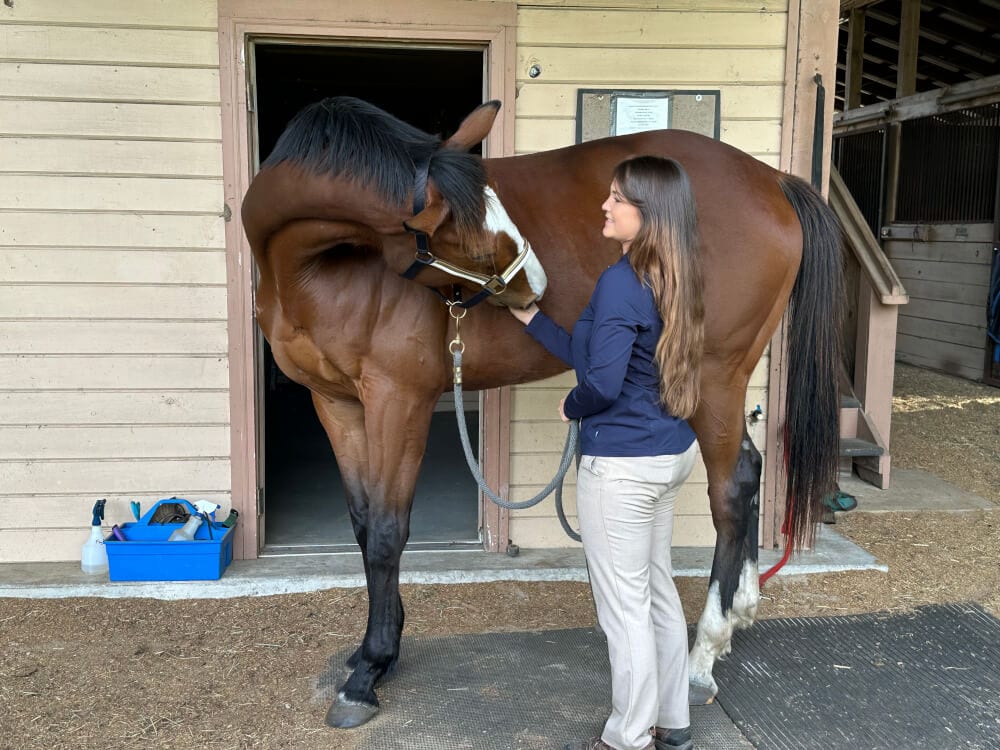 Photo by: Jessica Artman, MSc
As flexibility improves, the horse can be guided to reach farther—toward the hip, flank, or even hock. [29][30] These advanced bends activate deeper musculature of the neck, spinal column, and abdominal and pelvic stabilizers. [31]
Rounding Stretch
To perform a rounding stretch, the handler stands near the girth area, facing the horse’s head. [29] Using a treat, they encourage the horse to lower the head toward the knees or chest, maintaining the position for 10–15 seconds. [29] Progressions may include reaching between the knees or fetlocks. [29]
 Rounding stretch
to knees
 Rounding stretch
to chest
Extension Stretch
For the extension stretch, the handler stands facing the horse and uses a treat to encourage an upward reach, holding the position for 10–15 seconds. [29] This movement lengthens the neck musculature and targets the opposite muscle groups engaged during lateral bending and rounding stretches. [29]
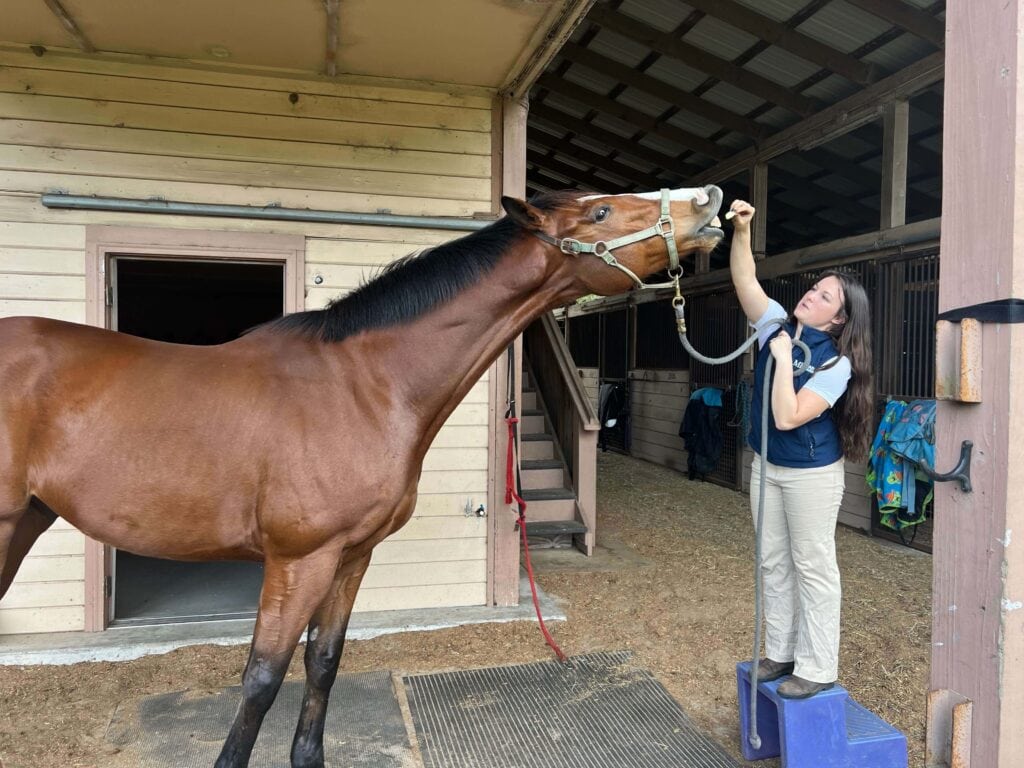 Photo by: Jessica Artman, MSc
Some horses benefit from a stall guard or similar barrier during this stretch to discourage stepping forward. [30]
Topical Recovery Therapies
Topical therapies, such as poultices, liniments, and ice treatments, can support healing in overworked limbs.
After ice treatments, applying a drawing poultice and standing wraps to all four legs helps remove excess heat and fluid, reducing swelling and supporting soft-tissue repair overnight.
Medicated liniments can be gently massaged over sore muscles, tendons, and joints to stimulate circulation and provide superficial pain relief. [27][30] Always select equine topical remedies and check with your veterinarian if you are unsure if a product is appropriate for your horse.
Making the Most of Trail Rides
Trail riding can be one of the most rewarding ways to keep your horse fit, mentally engaged, and confident in a wide range of environments. By approaching each outing with a plan for conditioning, desensitization, and recovery, you turn every hack into purposeful cross-training that supports long-term soundness and performance.
As you build your horse’s program, pay attention to how they feel before, during, and after trail rides. Small changes in behavior, vital signs, or way of going can help you fine-tune your schedule, choose appropriate terrain, and adjust your recovery routine so your horse stays comfortable and willing.
With thoughtful preparation, gradual progression, and targeted post-ride care, trail riding becomes more than just a change of scenery – it becomes a key part of your horse’s overall conditioning plan and a powerful way to strengthen the partnership you share outside the arena.
Frequently Asked Questions
Here are some frequently asked questions about trail riding for horses:
Trail riding helps build overall fitness by engaging your horse's muscles, tendons, and ligaments in ways that flat arena work does not. Riding over hills and uneven terrain strengthens the topline, enhances balance, and improves cardiovascular endurance.
To condition your horse, start with gentle trail rides of two to three miles at a walk, and gradually increase intensity and distance. Use a work-rest cycle, such as trotting for five minutes followed by three minutes of walking, to build cardiovascular fitness without overloading joints. Trail riding over hills and varying terrain builds strength, proprioception, and stamina. [12][13]
Desensitizing your horse at home by introducing mock trail obstacles such as tarps, logs, or bridges in a controlled setting builds their confidence and trust. Using positive reinforcement when introducing new objects has been shown to reduce heart rate and improve willingness to explore unfamiliar items. [9] Practicing over diverse footing, water crossings, and tight turns enhances the horse's comfort with natural terrain and improves their mental readiness for trail environments. [10]
Summary
Trail riding is a beneficial cross-training method that supports equine musculoskeletal health, boosts mental health, and deepens the bond between horse and rider.
- Varied terrain requires gradual conditioning and correct rider position to build stability and power while minimizing strain on joints and soft tissues.
- New environments, group dynamics, and travel can trigger behavioral changes such as jigging, bolting, or spooking, so riders must use preparation, calm handling, and positive reinforcement to build confidence and trust.
- At-home preparation with mock trail obstacles, ground poles, and proprioception exercises helps horses learn to navigate unfamiliar challenges safely before encountering them on real trails.
- Structured conditioning develops the fitness, stamina, and resilience needed for longer or more demanding rides.
- Careful cool-down, multi-day recovery, hydration, nutrition, stretching, and topical therapies after trail rides support muscle repair, reduce soreness, and help maintain long-term soundness.
References
- Lewczuk. D. and Maśko. M. Inclined Treadmill Short-Duration Exercise for Walk Regularity of Recreation Horses. Journal of Veterinary Behavior. 2024.
- Horseback Riding Up and Down Hills. American Quarter Horse Association. 2019.
- Bailey. J. et al. An Objective Study into the Effects of an Incline on Naturally Occurring Lameness in Horses. Veterinary Medicine and Science. 2022. View Summary
- Clayton. H. M. Biomechanics of the Distal Interphalangeal Joint. Journal of Equine Veterinary Science. 2010.
- Oliveira. T. M. et al. Environment Change Causes a Transient Adverse Impact on Horse Behavioral Resting Patterns. Applied Animal Behaviour Science. 2025.
- Corgan. M. E. et al. Evaluating the Reaction to a Complex Rotated Object in the American Quarter Horse (Equus Caballus). Animals. Multidisciplinary Digital Publishing Institute. 2021. View Summary
- Freccero. F. et al. Effects of Transport and Feeding Strategies Before Transportation on Redox Homeostasis and Gastric Ulceration in Horses. Journal of Equine Veterinary Science. 2023.
- Leiner. L. and Fendt. M. Behavioural Fear and Heart Rate Responses of Horses after Exposure to Novel Objects: Effects of Habituation. Applied Animal Behaviour Science. 2011.
- Tadich. T. et al. Assessing the Effect of Counterconditioning to Reduce Neophobic Response in Horses (Equus Ferus Caballus). Applied Animal Behaviour Science. 2024.
- Austen. C. Lauren Nicholson's Top Tips for Successful Hacking. United States Eventing Association. 2021.
- Coffin. T. Conditioning the Event Horse at the Novice and Training Levels. United States Eventing Association. 2020.
- De Maré. L. et al. Profiling the Aerobic Window of Horses in Response to Training by Means of a Modified Lactate Minimum Speed Test: Flatten the Curve. Frontiers in Physiology. 2022. View Summary
- Baker. S. Get Your Horse in Shape for Trail Riding. American Quarter Horse Association. 2018.
- Costa. L. R. R. and Paradis. M. R. Manual of Clinical Procedures in the Horse. Wiley Blackwell, Hoboken. 2018.
- Greene. E. A. and Mastellar. S. L., Knowing What Is Normal for Your Horse. University of Arizona Cooperative Extension. 2022.
- Walker. V. A. et al. Effect of Ground and Raised Poles on Kinematics of the Walk. Journal of Equine Veterinary Science. 2022. View Summary
- Baker. S. 3 Tips For Injury Prevention in Horses from an Equine Physio. The International Federation for Equestrian Sports. 2021.
- Duffy. J. The Heart of the Matter: Cardiovascular Fitness in Horses. United States Eventing Association. 2019.
- Christensen. J. W. et al. Training Methods for Horses: Habituation to a Frightening Stimulus. Equine Veterinary Journal. 2006. View Summary
- Roebuck. K. Help! Hacking with a Spooky Horse. The International Federation for Equestrian Sports. 2024.
- Horse Fitness: Building a Base. United States Eventing Association. 2021.
- Baker. S. 4 Benefits of Hill Work for Horses. The International Federation for Equestrian Sports. 2020.
- Cottin. F. et al. Effect of Repeated Exercise and Recovery on Heart Rate Variability in Elite Trotting Horses during High Intensity Interval Training. Equine Veterinary Journal. 2006. View Summary
- Kang. O.-D. et al. Effects of Cooldown Methods and Durations on Equine Physiological Traits Following High-Intensity Exercise. Livestock Science. 2012.
- Takahashi. Y. et al. A Comparison of Five Cooling Methods in Hot and Humid Environments in Thoroughbred Horses. Journal of Equine Veterinary Science. 2020. View Summary
- Atalaia. T. et al. Equine Rehabilitation: A Scoping Review of the Literature. Animals. 2021. View Summary
- Ortiz. S. Recovering from a Classic Three-Day Event. United States Eventing Association. 2023.
- Frick. A. Stretching Exercises for Horses: Are They Effective? Journal of Equine Veterinary Science. 2010.
- Equine Carrot Stretches. University of Tennessee College of Veterinary Medicine, Jul. 30, 2021. Accessed: Feb. 19, 2024. [Online].
- Clayton. H. M., Core Training and Rehabilitation in Horses. Veterinary Clinics of North America: Equine Practice. 2016. doi: 10.1016/j.cveq.2015.12.009. View Summary
- Clayton. H. M. Stretches for Healthy Horses. theHorse.com. 2012.