English






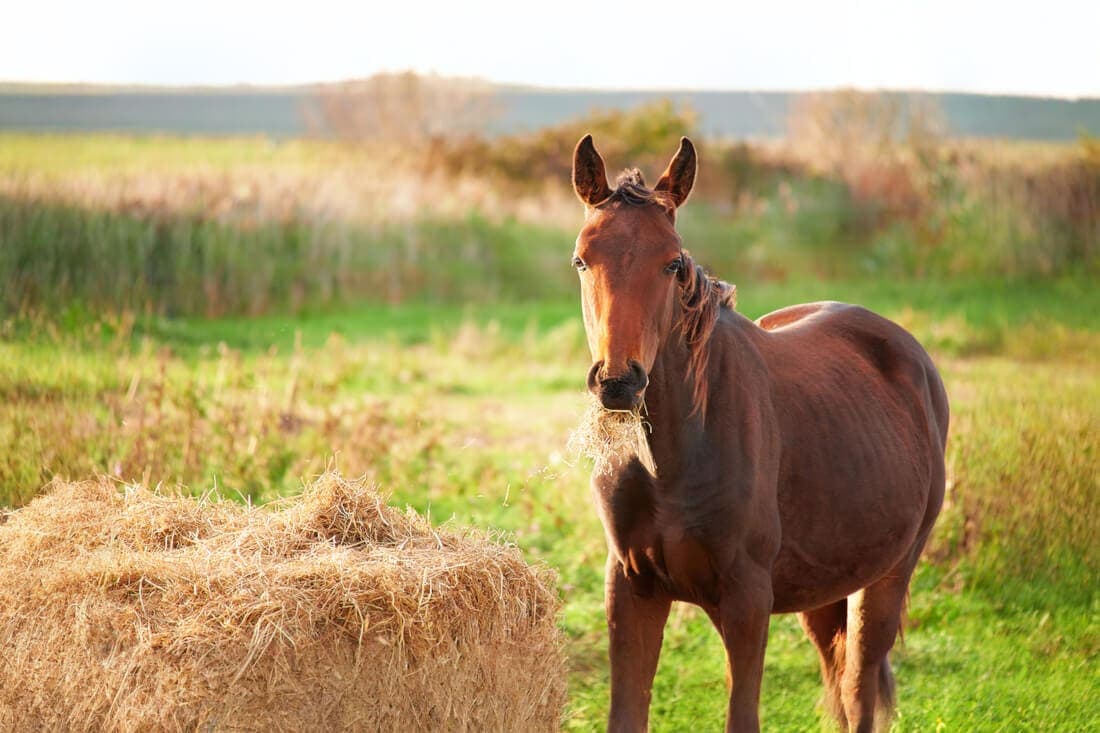
Upper airway obstruction in horses occurs when structures of the nasal passages, pharynx, or larynx partially restrict airflow, reducing the efficiency of breathing.
Because horses are obligate nasal breathers, even minor changes within the upper airway can significantly affect oxygen intake, particularly during exercise.
Upper airway obstruction may develop suddenly following infection, inflammation, or trauma, or it may progress gradually and become apparent only under increased respiratory demand. In many cases, abnormal or noisy breathing is one of the earliest observable signs of compromised airflow, signaling the need for further evaluation.
This article explains the structure and function of the equine upper airway, outlines common causes of obstruction, and reviews the clinical signs, diagnostic tools, and management strategies used to identify and address conditions that interfere with normal breathing in horses.
Upper Airway Obstruction in Horses
Efficient airflow through the upper respiratory tract is essential for basic health, athletic performance, thermoregulation, and overall comfort in horses.
When airflow is restricted, respiratory effort increases and oxygen delivery declines, which can lead to reduced performance and early fatigue during exercise.
In severe cases, upper airway obstruction can impair breathing even at rest and may become a life-threatening medical emergency.
Equine Respiratory Anatomy & Function
Horses are obligate nasal breathers, which means all of the air they breathe in must go through their nasal passages.
Unlike humans, they cannot breathe through their mouth. [1] This adaptation likely developed so horses can graze and breathe at the same time, allowing them to smell predators. [1]
Horses have a long soft palate separating the nasal passages from the mouth. The soft palate is a sheet of oral tissue that extends from the back of the mouth to the larynx (windpipe). In horses, the soft palate sits tightly against the larynx, forming a complete division between the oral and nasal cavities. [1]
The larynx is primarily composed of cartilage and has two main components: the epiglottis and the arytenoid cartilages. [1] The epiglottis is a tongue-like piece of cartilage that rests on top of the soft palate. The arytenoid cartilages are paired, crescent-shaped cartilages that further control access to the trachea.
During swallowing, the epiglottis guides food past the trachea and into the esophagus. During inhalation, the arytenoids swing outwards, widening the opening of the trachea for air intake. They close together, helping form a tight seal over the trachea when the horse swallows. [1]
Coordinated movement of the soft palate and larynx is important during exercise to maximize air intake. Failure of this coordinated system can cause tissues to partially block the trachea, resulting in an upper airway obstruction.
Affected horses may have decreased performance or exercise intolerance because they cannot take in the amount of air they need, especially as demands increase with effort.
What's your top priority with your horse's health?

Enter your email to receive your store credit
Signs of Upper Airway Obstruction
Signs of upper airway obstruction in horses may include:
- Reduced performance or early fatigue during exercise
- Abnormal respiratory noise
- Increased respiratory effort
- Sudden onset of breathing abnormalities after illness or trauma
- Respiratory distress, including signs at rest in severe cases
The most common clinical sign associated with upper airway obstruction is poor performance. Horses may be unwilling to perform high-speed work or may tire rapidly. [2]
Many horses also develop noisy breathing. The respiratory noise results from airflow past the obstructing tissue. The exact type of noise varies between conditions and can occur at any time during the breathing cycle.
Severely affected horses with near-complete obstructions can develop respiratory distress. This includes dyspnea (difficulty breathing) and tachypnea (rapid breathing). Depending on the severity of the condition, these signs may be present even at rest. [3]
When to Call Your Veterinarian
Veterinary evaluation is recommended if respiratory noise is persistent or worsening, if performance declines or fatigue occurs earlier than expected, or if breathing appears labored during or after exercise. Prompt veterinary care is advised for sudden onset of respiratory signs following illness or trauma, or for any signs of respiratory distress at rest. Early assessment is especially important in performance horses, as some upper airway obstructions progress over time and respond better to early intervention.
Causes of Upper Airway Obstruction
There are several potential causes of upper airway obstructions in horses, including: [2]
- Dorsal displacement of the soft palate
- Recurrent laryngeal neuropathy
- Epiglottic entrapment
- Arytenoid chondritis
- Nasopharyngeal cicatrix
- Strangles
These conditions vary in underlying cause and severity, ranging from structural or neuromuscular abnormalities to inflammatory or infectious disease. As a result, the clinical significance, treatment approach, and long-term management depend on the specific diagnosis. [2]
Dorsal Displacement of the Soft Palate (DDSP)
Dorsal displacement of the soft palate (DDSP) occurs when the soft palate flips up, over top of the epiglottis. It is most common during exercise and can contribute to poor performance. Around 10 – 20% of racehorses have this condition. [2]
DDSP typically produces a characteristic gurgling or vibrating respiratory noise that some owners call “choking down”. [2] In most cases, horses only develop respiratory noise during high-speed exercise or towards the end of their training session.
The underlying cause and risk factors for DDSP are largely unknown. [2] Horses with flaccid (limp) or dysfunction of the throat muscles are more likely to develop this condition.
Some horses may develop DDSP if their laryngeal muscles pull the larynx backwards excessively during exercise, allowing more room for the soft palate to flip up. [2] Some horses may have an unusually positioned larynx relative to their soft palate, even at rest, predisposing them to DDSP. [5]
On exercising endoscopy, the veterinarian can see the soft palate relaxing and the horse begins to swallow repeatedly. It is thought that swallowing may help the horse stabilize the palate to try and prevent DDSP. [5] If the horse is unsuccessful, the epiglottis drops below the soft palate. [5]
Treatment strategies for DDSP include: [2][5]
- Tongue ties: Fabric straps are placed in the mouth and secured around the lower jaw in an attempt to pull the larynx and tongue forward
- The Cornell collar: A device which provides forward and upward pressure to the larynx
- Palatoplasty: A surgery that stiffens the soft palate
- Strap muscle resection: A procedure that cuts the muscles that pull the larynx backwards
- Laryngeal tie-forward procedure: A surgery that “ties” the larynx in a forward position
Of these procedures, the laryngeal tie-forward procedure is most commonly used. [5] Success rates are around 80%, and many horses return to racing and their previous level of success. [2][5]
Recurrent Laryngeal Neuropathy
Recurrent laryngeal neuropathy (roars) results in the arytenoid cartilages not opening fully, causing the cartilage to partially block airflow. [2] Around 1.6 – 8% of Thoroughbreds and around 42% of draft horses have this condition. [2]
This condition develops due to damage to the recurrent laryngeal nerve, the nerve that signals the arytenoid cartilage to open. The left recurrent laryngeal nerve is most commonly affected as it is significantly longer than the right nerve, making it more susceptible to damage. [2] Damage can either be from a traumatic injury or progressive atrophy of the nerve that can occur due to its length. [2]
Horses with this condition frequently develop “roaring”, a characteristic respiratory noise that occurs during inhalation. Owners may describe this noise as a high-pitched whistle or roar during exercise. [6] This noise is a result of turbulent airflow passing the arytenoid cartilage during breathing.
On endoscopy, the veterinarian can observe the arytenoid cartilages’ movement to see if they open completely during breathing. Horses with partial or complete paralysis have one, or both, of their arytenoid cartilages remaining in the airway during inhalation. [6]
The main treatment for this condition is prosthetic laryngoplasty, where a surgeon places sutures between the arytenoid cartilage and the larynx wall to permanently hold the cartilage open. [2]
This procedure is commonly called a “tie-back procedure”. Horses who have had this procedure performed have a higher risk of aspiration pneumonia, as their airway may not fully close during swallowing. [6] However, many can return to race performance following the procedure.
Epiglottic Entrapment
Epiglottic entrapment is similar to dorsal displacement of the soft palate, but involves entrapment of the epiglottis underneath a thin membrane called the aryepiglottic fold.
This membrane stretches between the two arytenoid cartilages and the sides of the epiglottis. When entrapped, the tip of the epiglottis sits beneath this membrane. [2]
Treatment involves surgery to remove or shorten the aryepiglottic fold. [2] Most horses have a good prognosis but a higher risk of DDSP after surgery. [2]

Arytenoid Chondritis
Arytenoid chondritis refers to inflammation of an arytenoid cartilage. [2] The exact cause of this inflammation is unknown in most cases, but it can develop after respiratory infections.
On endoscopy, the cartilage is enlarged and may not move properly. [2] Typically only one of the arytenoid cartilages shows signs of disease, but the opposing cartilage may have abrasions called “kissing lesions” that develop where the two cartilages touch during swallowing. [2]
Mild cases may be managed with antibiotics and anti-inflammatory throat sprays. [2] Some horses may require surgical removal of the affected arytenoid cartilage to restore airway function. [2]
Nasopharyngeal Cicatrix
Nasopharyngeal cicatrix is an inflammatory condition almost exclusively seen in pastured horses in the southern United States. [2] The cause of this condition is unknown, but researchers currently suspect it is a response to an environmental allergen.
Horses with the condition develop inflammation and scarring of the nasopharynx, the area leading to the larynx. [2] The arytenoid cartilages are also inflamed and scarred in up to 70% of cases. [2]
Left unmanaged, the horse’s airway can scar completely, leaving them unable to breathe. Treatment typically involves removing the horse from pasture and anti-inflammatory medications.
Severely affected horses may require a permanent tracheostomy, placement of a surgical hole in their trachea to bypass the upper airway, allowing them to breathe. [2] Many horses can return to their previous work with placement of a permanent tracheostomy. [2]
Strangles
Strangles is an infectious disease caused by Streptococcus equi equi. Infections commonly affect the lymph nodes in and around the throat, causing massive enlargement of the affected nodes. In some cases, the enlarged lymph nodes can push on the horse’s airways and cause partial or complete obstructions. [2]
Drainage of the abscesses and placement of tracheostomy may be necessary to restore airflow. [2]
Table 1. Summary of equine upper airway obstructions
| Cause of Obstruction | Associated Breathing Noise | Typical Presentation | Risk Factors |
|---|---|---|---|
| Dorsal displacement of the soft palate (DDSP) |
|
|
|
| Recurrent laryngeal neuropathy (Roaring) |
|
|
|
| Epiglottic entrapment |
|
|
|
| Arytenoid chondritis |
|
|
|
| Nasopharyngeal cicatrix |
|
|
|
| Strangles |
|
|
|
Diagnosing Upper Respiratory Obstruction in Horses
The most common test for diagnosing upper airway obstruction is endoscopy. This procedure involves passing a tube with a camera into the horse’s upper airway and observing its movement and function. [4]
Using this diagnostic tool, the veterinarian can visualize: [4]
- The nasal passages
- The epiglottis and its position relative to the soft palate
- The arytenoid cartilages and their movements
To replicate maximal breathing effort, the veterinarian may block the horse’s nostrils with their hand, forcing the horse to hold their breath. When released, the horse takes a deep breath that simulates breathing during exercise or training. [4]
Respiratory endoscopy can also be performed during exercise, allowing veterinarians to evaluate the upper airway under conditions where clinical signs actually occur. [4]
This dynamic or exercise endoscopy is particularly valuable for identifying obstructions that develop only during sustained work, when increased airflow demands and negative pressures can cause airway structures to collapse or shift abnormally. [4]
By visualizing the airway in real time while the horse is performing, dynamic endoscopy provides a more accurate assessment of functional airway obstruction and helps guide appropriate treatment and management decisions.
Outlook & Long-term Management
Upper airway obstruction is an important cause of poor performance and respiratory noise in horses, and in severe cases, it can become a life-threatening emergency. Because horses depend entirely on nasal breathing, even partial narrowing of the upper airway can significantly affect airflow and oxygen delivery, particularly during exercise.
Many upper airway disorders are dynamic and may only appear under the increased demands of work, making careful evaluation essential. Endoscopy, including dynamic examination during exercise when needed, remains the most valuable tool for identifying the specific site and cause of obstruction.
With accurate diagnosis, many conditions can be successfully managed through medical therapy, surgical correction, or adjustments in training and equipment.
Recognizing early clinical signs and seeking prompt veterinary assessment can help improve comfort, support long-term respiratory function, and allow affected horses to return to their intended level of performance whenever possible.
Frequently Asked Questions
Here are some frequently asked questions about upper airway obstruction in horses:
An upper airway obstruction is any condition that partially or completely restricts airflow through the nasal passages, pharynx, larynx, or upper trachea, making it harder for the horse to breathe normally.
Horses are obligate nasal breathers and rely on a clear, stable airway to meet oxygen demands, especially during exercise. Even small obstructions can significantly affect performance and comfort.
No, not all upper airway obstructions are present at rest. Many conditions are dynamic, meaning they only occur during exercise when airflow demands and negative pressures increase. These problems may not be visible during a routine resting exam.
Common examples of upper airway obstructions in horses include recurrent laryngeal neuropathy, dorsal displacement of the soft palate, epiglottic entrapment, and inflammatory or infectious conditions affecting the upper respiratory tract.
Diagnosing equine upper airway obstructions typically involves endoscopic examination of the upper airway. Dynamic endoscopy during exercise may be needed to evaluate conditions that only occur during exercise.
A veterinarian should be consulted if a horse develops new or worsening respiratory noise, reduced performance, persistent coughing, nasal discharge, or any signs of breathing difficulty.
Summary
Upper airway obstruction in horses can significantly impair breathing and athletic performance, ranging from mild exercise-related noise to severe respiratory distress. Because horses are obligate nasal breathers, any narrowing of the upper airway is clinically important.
- Upper airway obstruction refers to partial or complete restriction of airflow through the nasal passages, pharynx, larynx, or upper trachea
- Many airway disorders are dynamic and only become apparent during exercise when airflow demands increase
- Common clinical signs include abnormal respiratory noise, reduced performance, coughing, nasal discharge, and increased respiratory effort
- Endoscopy is the primary diagnostic tool, and dynamic exercise endoscopy may be required for accurate evaluation
- Frequent causes include DDSP, recurrent laryngeal neuropathy, epiglottic entrapment, inflammatory cartilage disease, and infections such as strangles
- Management options depend on the underlying condition and may involve medical treatment, surgery, or changes in training and equipment
References
- Hinchcliff, K. W., et al., eds. Equine Exercise Physiology: The Science of Exercise in the Athletic Horse. Saunders/Elsevier, Edinburgh and New York, 2008.
- Reed, S. M., et al. Equine Internal Medicine. 3rd ed., Saunders Elsevier, St. Louis, MO, 2010.
- Lascola, K. Arytenoid Chondropathy in Horses. Merck Veterinary Manual, 2025.
- Costa, L. R. R., and Paradis, M. R. Manual of Clinical Procedures in the Horse. Wiley Blackwell, Hoboken, NJ, 2018.
- Boone, L. Dorsal Displacement of the Soft Palate in Horses. Merck Veterinary Manual, 2025.
- Boone, L. Laryngeal Hemiplegia in Horses. Merck Veterinary Manual, 2025.