English

Uveitis in horses is a condition in which the uvea layer of the eye becomes inflamed. It is the most common cause of blindness in horses.
It is estimated that as many as 25% of horses worldwide are affected by some form of uveitis. Some types of uveitis are due to an immune-related disorder and can be difficult to treat.
Uveitis can be recurring – referred to as Equine Recurrent Uveitis (ERU) – or it can be acute with a single episode of limited duration.
Recurrent uveitis often affects both eyes and eventually leads to blindness if left untreated. This form of uveitis is considered an autoimmune disease, where the body’s immune system attacks normal tissues. [1]
ERU is also commonly called Moon Blindness, a term coined in the 1600s when it was thought that recurring episodes of eye problems were related to the phases of the moon.
Causes of Uveitis
Uveitis involves inflammation of the uveal tract of the eye, which is the blood vessel-filled tissue beneath the sclera (white of the eye).
Uveitis can be acute, meaning it happens suddenly and lasts only a short period of time. More often, it is a recurring condition that gradually worsens over time.
Acute Uveitis
There are several possible causes of acute (sudden onset) uveitis in horses, including: [2]
- Traumatic injuries to the eye
- Bacterial infections
- Septicemia, a bacterial infection in the bloodstream
- Tooth root abscesses
- Tumors in or around the eye
- Corneal ulcers
- Abnormal structure of the eye present at birth
These causes all result in irritation in or around the eye, which triggers an inflammatory response by the body’s immune system. [3] The activated immune cells infiltrate the eye and damage the ocular structures as they try to resolve the source of irritation. [2]
Equine Recurrent Uveitis
Three types of Equine Recurrent Uveitis have been described: classic ERU, insidious ERU and posterior uveitis.
Classic ERU
Classic recurring uveitis is the most common form of uveitis and is characterized by periods of inflammation within the eye, followed by periods of dormancy.
With each inflammatory phase, the disease progressively worsens and vision may eventually be lost. [4] Warmbloods and Icelandic horses appear to be at higher risk of developing Classic ERU.
Insidious ERU
Horses with insidious ERU develop a low level of inflammation within their eye that never completely resolves. This form of uveitis leads to the gradual destruction of ocular tissues and degeneration of structures in the eye. [5] Insidious ERU is commonly seen in Appaloosas as well as some draft breed horses.
Horses with insidious ERU do not typically demonstrate eye discomfort. Owners may not recognize that their horse is experiencing uveitis until a cataract develops or the horse’s vision becomes impaired. [6]
Posterior Uveitis
Posterior uveitis is most commonly seen in Warmbloods and horses in Europe. It is characterized by changes and degeneration in the vitreous fluid and retina of the eye. [4]
The inflammation is mainly in the back or posterior part of the eye, hence the name.
Cause of ERU
Many different microorganisms have been found to trigger uveitis, but the most common is the Leptospira bacteria. In fact, this bacteria can be found in about 60% of horses with ERU. [7]
Though researchers are still working to understand how Leptospira triggers the disease, one theory is that it penetrates the eye where it is deposited in the ocular tissue, causing infection. [8]
The main carriers of Leptospira are small rodents, which excrete the bacteria in their urine. Swampy pastures present a higher risk for infections.
Oral mucous membranes, conjunctiva, nasal mucous membranes, and skin lesions may also be possible entry sites for pathogens. [1]
Other pathogens, viruses and illnesses that have been found to trigger uveitis include:
- Borrelia spp.
- Streptococcus spp.
- Equine influenza
- Equine viral arteritis
- Equine herpesvirus
Parasitic infection from Onchocerca spp., Strongylus spp., and Toxoplasma spp. has also been associated with uveitis. [9]
These infections activate T cells, one of the main white blood cell types within the body. When the T cells are activated, they overcome the blood retinal barrier to invade the eye. [10]
The T cells then cause severe inflammation within the eye, especially in the retina and iris. With each inflammatory episode, the retina further degrades until eyesight is eventually lost. [11]
This may also help to explain why some horses have episodes of inflammation following routine vaccinations or anthelmintic treatments when the immune system is stimulated. [6]
Genetic Predispositions
A genetic component has been linked to ERU in German Warmbloods. A mutation on chromosome 20 may affect important components of the immune system to predispose these horses to ERU. In Appaloosas, another genetic mutation has been found affecting the major histocompatibility complex which is involved in defence against pathogens. [12]
The frequency of ERU in Appaloosas is eight times higher than in the general population.
Equine Eye Anatomy
Given the high rates of occurrence of eye injury and disease in horses, it can be helpful for horse owners to familiarize themselves with eye anatomy.
 Illustration: Dr. Ana Mesa, PhD
 Signs of Uveitis
Signs and symptoms of uveitis will vary depending on the form of this condition that your horse experiences. Early warning signs of uveitis and other eye problems in horses include: [5]
- Eye redness
- Increased tearing
- Squinting
- Swelling
During acute episodes, horse owners may notice the following symptoms:
- Milky or hazy appearance to the eye
- Greenish-yellow appearance to the iris
- Blood or pus in eye
- Sensitivity to light (photophobia)
- Pain in the eye
Upon veterinary examination of the eye, the following clinical signs may be observed:
- Lowered intraocular pressure
- Iris adhesions
- Corneal haze
- Constricted pupil
- Aqueous flare
- Corneal scarring
- Depigmentation
- Lesions
Over time with recurring episodes of ERU, horses may experience secondary complications including: [1][3]
- Cataracts
- Retinal detachment
- Atrophy of the globe often resulting in the “3rd corner of the eye”
- Chronic keratitis (inflammation of the cornea)
- Corneal opacity
- Glaucoma
- Blindness
What's your top priority with your horse's health?

What's your top priority with your horse's health?
Diagnosing Uveitis
The diagnosis of ERU is based on clinical signs and ophthalmic examination as well as a history of documented recurrent or persistent inflammation in one or both eyes. The more uveitis episodes that have occurred, the more changes that can be seen even during periods of dormancy. [1]
The attending veterinarian or specialist will examine both the front and back of the eye to identify signs of ERU and rule out other ocular conditions.
One diagnostic tool is a fluorescein stain, which can be used to assess the health of the cornea and rule out other eye diseases. A complete blood count and blood tests can also be performed, as well as serologic testing for Leptospira spp. [5]
A new software tool has been developed to aid in the early detection of uveitis as well as other ophthalmic diseases of the equine eye. This image analysis has the potential to help horse owners and veterinarians detect uveitis. [13]
LP Genetic Test
The Leopard Print (LP) genetic test can be used to identify Appaloosas with a higher risk for recurrent uveitis. This test determines how many copies of the LP mutation a horse has.
Research shows that horses with two copies of the mutation (homozygous LP/LP) have a higher risk of ERU compared to horses with no copies of this mutation (N/N). [5]
The Leopard Complex gene produces coat patterns that are characterized by leopard-like spots on a white coat. It is not yet known whether this gene is responsible for the higher rates of ERU in horses that are LP/LP or whether another gene is responsible.
However, it is recommended for horses with two copies of the LP mutation to have regular eye exams from a trained veterinary ophthalmologist to detect early signs of uveitis. [5]
Treating Uveitis
The two main objectives of uveitis therapy are to reduce pain and control inflammation. There is currently no cure for this disease, but several treatment options exist.
Treatments include nutritional therapy, topical drugs, immunosuppressive medication and various surgical procedures.
Common treatments for acute flare-ups of uveitis include: [1]
- Mydriatic drugs to dilate the pupil and prevent cataract formation (atropine)
- Topical corticosteroids to reduce inflammation (prednisolone, dexamethasone)
- Systemic administration of non-steroidal anti-inflammatory drugs (flunixin meglumine, phenylbutazone)
- NSAID eye drops to reduce inflammation (flurbiprofen, diclofenac, suprofen, bromfenac)
- Systemic administration of antibiotics if bacterial infection is involved (rarely indicated)
Unfortunately, antibiotics do not appear to be effective at resolving ERU even when Leptospira has been detected in blood work. However, they may be effective with some other types of bacterial infections. [4]
Systemic administration of corticosteroids is also not commonly used as it is associated with significant adverse effects such as laminitis. [14]
Diet & Management
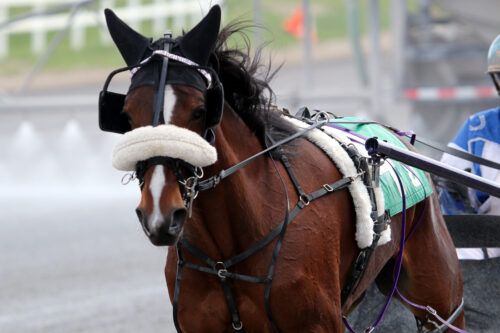
For any horse experiencing an acute flare-up of uveitis it is generally recommended to implement stall rest, avoid bright light (use face masks if needed), and limit exercise.
Ensuring that your horse has a balanced diet with sufficient trace minerals as well as omega-3 fatty acids may also help to reduce inflammation. [15]
Omega-3 fatty acids are precursors for molecules called resolvins which are involved in dampening the immune response and supporting tissue repair. Therapeutics that mimic resolvins are currently under development for treating several immune-related conditions. [15]
Treatments for ERU

Surgical Treatments
In some cases, surgery is the best option for relieving pain and inflammation from ERU. One such surgery that has been successful is vitrectomy.
In this procedure, vitreous fluid from the eye is exchanged in a minimally invasive way with a buffered salt solution. [7] Researchers believe vitrectomy is effective because of the removal of leptospiral infection in the vitreous cavity. [1]
Vitrectomy has proven particularly effective in Leptospira-associated ERU cases, while Leptospira-negative patients appear to be poorer candidates. [8]
However, this procedure is a specialized surgery that requires a high level of experience and skill on the part of the surgeon and surgical team. It also requires specific equipment that many veterinary facilities may not have. [1]
Other surgical procedures include injecting fibrinolytic drugs into the front part of the eye to break up blood clots or surgically removing blood clots and/or diseased tissues from the front of the eye.
Another surgical procedure involves injecting the antibiotic gentamicin into the vitreous cavity. [1]
Medications
Immunosuppressive drugs such as cyclosporine A have also proven helpful for some horses. Long-term studies following use of a slow-release implant which delivers this drug into the eye have shown a reduction in the number and severity of uveitis episodes with few complications. [8]
Another potential therapy for ERU which has not yet been well explored is mesenchymal stem cell (MSC) therapy.
This type of therapy has been effective in reducing immune cell activation in other animals and may help to do the same for ERU horses. However, more research is needed to verify the efficacy of this treatment. [16]
In the United States, a vaccine for the prevention of leptospiraemia is available and may help reduce the potential risk of ERU. [6]
Despite available treatments, a large number of ERU cases require enucleation (eye removal) to control pain and inflammation. This procedure can be performed under general anesthesia or standing sedation with a good prognosis for return to work if just one eye has been affected.
If both eyes are affected and do not respond to treatment, euthanasia may be necessary. [8]
Prognosis
Early diagnosis and treatment are associated with the best prognosis for horses diagnosed with uveitis and are critical to preserving the affected eye. Most cases of acute uveitis resolve with appropriate treatment and removal of the initial irritating stimulus that caused inflammation. [2]
For ERU, long-term prognosis is guarded. Many treatments can slow the progression of inflammation but they do not cure the problem.
More than 60% of horses with ERU are not able to return to previous levels of work and approximately 56% of horses will eventually become blind. Horses with glaucoma or cataracts are more likely to require enucleation. [5] Due to financial constraints and poorer quality of life, a significant portion of these horses (44.6%) are euthanized due to ERU. [17]
If you believe your horse is at risk for developing ERU or if symptoms are present, don’t hesitate to get your veterinarian involved right away.
Frequently Asked Questions
Here are some frequently asked questions about uveitis in horses:
Uveitis is inflammation of the uvea (the blood vessel-rich layer) of the eye. It's the leading cause of blindness in horses and can be recurrent or acute. If untreated, it may cause permanent damage to the eye.
Uveitis can be caused by infections, trauma, or autoimmune conditions. The bacterium Leptospira is often linked to recurrent uveitis (ERU). Other potential triggers include viral infections and parasites, such as Borrelia, Streptococcus, and Onchocerca species.
Common signs include eye redness, squinting, increased tearing, and sensitivity to light. During flare-ups, the eye may appear hazy or milky, with greenish-yellow discoloration in the iris. A veterinary examination is essential for confirmation.
Managing ERU involves controlling pain and inflammation with corticosteroids, mydriatics (to dilate the pupil), and anti-inflammatory medications. Long-term care requires regular veterinary check-ups to monitor recurrence. Limiting exposure to bright light and providing adequate rest are important. A balanced diet with omega-3 fatty acids may help reduce inflammation. Regular eye exams and veterinary follow-ups are essential for early detection of flare-ups or complications.
Summary
Equine Recurrent Uveitis (ERU) is a common and often recurring inflammation of the eye that can eventually lead to blindness if left untreated. It is most commonly triggered by infections such as Leptospira bacteria but can also be associated with autoimmune conditions.
- ERU is the most frequent cause of blindness in horses, with recurrent episodes leading to progressive damage.
- Classic ERU involves recurring periods of inflammation followed by dormancy, leading to progressive vision loss.
- Insidious ERU presents with low-level inflammation, often going unnoticed until cataracts or vision impairment develop.
- Posterior uveitis affects the back of the eye, leading to degeneration of the vitreous fluid and retina.
- Leptospira bacteria are often linked to ERU, with rodents being the primary carriers.
- Genetic predispositions in breeds like Warmbloods and Appaloosas increase the risk of developing ERU.
- Timely diagnosis and treatment can slow progression, but ERU often results in cataracts, glaucoma, and, in severe cases, blindness.
References
- Wallanke, B. et al. Infectious Uveitis in Horses and New Insights in Its Leptospiral Biofilm-Related Pathogenesis. Microorganisms. 2022. View Summary
- Gilger. B. C. and Hollingsworth. S. R., Diseases of the Uvea, Uveitis, and Recurrent Uveitis. Equine Ophthalmology. 1st ed. Wiley. 2016.
- Allbaugh, R.A. Equine recurrent uveitis: A review of clinical assessment and management. Equine Vet Educ. 2016.
- Ackerman, K. et al. In Vivo Biofilm Formation of Pathogenic Leptospira spp. in the Vitreous Humor of Horses with Recurrent Uveitis. Microorganisms. 2021. View Summary
- Young, Amy. Equine Recurrent Uveitis. UC Davis Veterinary Medicine. 2020.
- Gilger, B.C. and Michau, T.M. Equine recurrent uveitis: new methods of management. Vet Clin Equine. 2004. View Summary
- Fingerhut, L. et al. Neutrophil Extracellular Traps in the Pathogenesis of Equine Recurrent Uveitis (ERU). Cells. 2019. View Summary
- Malalana, F. What’s new in equine recurrent uveitis? In Practice. 2020.
- Witkowkski, L. et al. Multiple etiologies of equine recurrent uveitis – A natural model for human autoimmune uveitis: A brief review. Comp Immunol Microbiol Infect Dis. 2016. View Summary
- Deeg, C.A. Ocular immunology in equine recurrent uveitis. Vet Opthalmol. 2008. View Summary
- Degroote, R.L. and Deeg, C.A. Immunological Insights in Equine Recurrent Uveitis. Front Immunol. 2020. View Summary
- Kulbrock, M. et al. A genome-wide association study identifies risk loci to equine recurrent uveitis in German warmblood horses. PLoS One. 2013.View Summary
- May, A. et al. Artificial intelligence as a tool to aid in the differentiation of equine ophthalmic diseases with an emphasis on equine uveitis. Equine Vet J. 2021. View Summary
- Malalana, F. et al. Equine recurrent uveitis: Human and equine perspectives. The Vet J. 2015. View Summary
- Lin, P. et al. The Future of Uveitis Treatment. Opthalmol. 2014.
- Saldinger, L.K. et al. Horses with equine recurrent uveitis have an activated CD4+ T‐cell phenotype that can be modulated by mesenchymal stem cells in vitro. Vet Ophthalmol. 2020. View Summary
- Gerding, J.C. and Gilger, B.C. Prognosis and impact of equine recurrent uveitis. Equine Vet J. 2015. View Summary