English
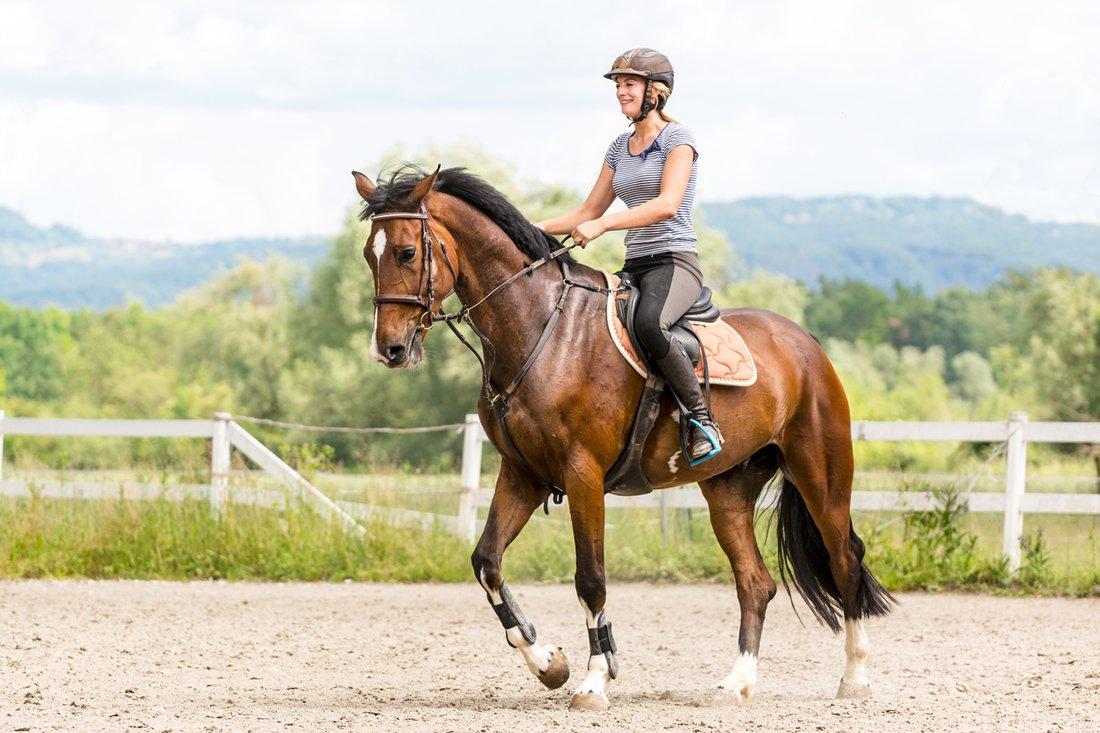
Vitamins are organic compounds that are essential for all living things. Vitamins have diverse roles within the horse’s body, affecting energy metabolism, growth and repair, muscle function, neurological health, immune function and much more.
Vitamins function as cofactors for metabolic reactions, including the breakdown of sugars and fats for energy, hormone synthesis, nerve impulse transmission, muscle contraction and more.
Your horse’s current vitamin requirements depend on age, exercise level, reproductive status (pregnant and lactating) and health status.
Whether your horse is meeting their requirement for a given vitamin depends primarily on what is in their feeding program, but can also be affected by gut health and endogenous (internal) production.
Other factors such as genetics (breed), nutrient interactions and health status can also play a role in how well the body absorbs and uses vitamins.
Forages can vary greatly in vitamin levels depending on the type of forage and when/how it is harvested and stored. As an example, fresh pasture is generally a good source of Vitamin E, but this vitamin degrades quickly after hay and grasses are cut.
Most horses should receive a vitamin and mineral premix to prevent deficiencies and ensure optimal health. Hoof quality, skin and coat condition, energy levels, mood and resistance to illness are all improved when vitamin and mineral requirements are met.
To find out whether your horse is meeting their vitamin requirements, submit your horse’s diet for analysis by our equine nutritionists.
Vitamins for Horses
The vitamin requirements for horses have been established by the National Research Council through an extensive review of scientific literature. These requirements are published in the Nutrient Requirements of Horses, last updated in 2007. [1]
The vitamins that your horse needs in their diet can be divided into two categories:
Fat-soluble vitamins:
The fat-soluble vitamins include:
- Vitamin A
- Vitamin D
- Vitamin E
- Vitamin K
These vitamins form solutions when mixed with fats (lipids) and are absorbed and transported in the body similar to fats.
In general, the requirements for these vitamins have been more carefully researched than the water-soluble vitamins.
Fat-soluble vitamins are stored in the body which can result in toxicity issues with excess consumption.
Water-soluble vitamins:
The water-soluble vitamins include:
- Vitamin B1 (Thiamin)
- Vitamin B2 (Riboflavin)
- Vitamin B3 (Niacin)
- Vitamin B5 (Pantothenic acid)
- Vitamin B6 (Pyridoxine)
- Vitamin B7 (Biotin)
- Vitamin B9 (Folate)
- Vitamin B12 (Cobalamin)
- Vitamin C
Vitamin C is made in the liver and typically does not need to be supplied in the horse’s diet to avoid deficiency. However, there may be cases in which supplementation provides an added benefit.
The horse’s hindgut produces significant levels of B-vitamins that the horse can absorb. Requirements for these vitamins are typically met by fibre-digesting microbes.
However, if hindgut function is impaired or nutrient absorption is poor, supplementation may be necessary. Furthermore, supplementation beyond the minimum requirement may support optimal health, such as feeding 20 mg per day of biotin to promote hoof health.
Water-soluble vitamins are not stored in the body and excess amounts are excreted in urine.
What's your top priority with your horse's health?
Fat Soluble Vitamins
Vitamin A
Vitamin A is most well-known for its role in night vision and eye health. It is also important for reproductive health in mares and for maintaining immune function.
Vitamin A is made from the precursor beta-carotene which is found in high levels in fresh forage and converted to vitamin A (retinol) in the intestine. Vitamin A is stored in the liver and can be used to meet the needs of the horse when beta-carotene intake is low.
Horses grazing on green pasture are likely meeting their vitamin A requirement.
Levels of beta-carotene quickly decline in stored hay. Therefore, vitamin A deficiency is more likely in the wintertime when access to fresh pasture is limited. [2]
Roles:
- Acts as an antioxidant to neutralize free radicals before they can damage cells
- Helps cells of the immune system act more efficiently to protect against infection
- Supports reproductive health in mares and reduces embryonic mortality
Requirements:[1]
Beta-carotene requirements for mature horses at maintenance are based on intake levels required to prevent night blindness. This is the main sign of vitamin A deficiency.
There is also an additional allowance to maximize tissue storage based on research in other animals.
Maintenance: 30 IU vitamin A / kg bodyweight (BW) (15,000 IU for a 500 kg mature horse)
Growth: 45 IU vitamin A / kg BW
Pregnancy and Lactation: 60 IU vitamin A / kg BW (30,000 IU for a 500 kg mature horse).
Some research suggests supplementation with vitamin A and vitamin E can improve reproductive status in mares including more serviced heats and a greater number of live foals.
Work: 45 IU vitamin A / kg BW (22,500 IU for a 500 kg mature horse).
Vitamin A requirements for working horses are not well defined. The requirement is based on assumptions that it would be between maintenance and gestation/lactation.
Sources:
Fresh, green pasture is the best source of beta-carotene, which is converted to vitamin A in the gut.
Supplementation in the form of retinyl-palmitate might be warranted if there is minimal access to fresh pasture and/or if there is greater demand (growth or pregnancy/lactation).
Deficiency Symptoms:
Night blindness is the classical vitamin A deficiency symptom found in most species, including horses. This requires a chronic intake of very low beta-carotene diets.
Less severe deficiency can impair growth and hematopoiesis (formation of blood cells).
Respiratory infections in weanlings have been associated with low vitamin A status. [3]
Vitamin A deficiency has been linked to reproductive failure in several species but requires more research in horses.
Toxicity Symptoms:
Vitamin A toxicity can result in fragile bones, hyperostosis (abnormal calcification of soft tissues), poor skin condition, and malformation of the growing fetus. It might also be involved in developmental orthopedic disease in growing horses. [1]
Upper Tolerable Limit:
16,000 IU/kg of dry matter intake, or approximately 160,000 IU per day for a 500 kg horse. [1]
Vitamin D
Vitamin D exists in two forms for horses: vitamin D2 (ergocalciferol) is produced by fungi that grow on plant material or vitamin D3 (cholecalciferol) that is supplemented in the diet or synthesized in skin.
Vitamin D3 is made in skin when it is exposed to sunlight (ultraviolet light B) which removes 7-dehyrocholestrol from cell membranes in skin. This is converted to vitamin D3 in the liver and further converted to its active form, calcitriol, in the kidney.
Although there are seasonal fluctuations in vitamin D levels, wearing blankets does not appear to significantly affect vitamin D levels in horses. [4]
For most mammals and birds, vitamin D is important for maintaining calcium and phosphorus balance in the body. It acts on the intestine to increase calcium absorption, on the kidney to support calcium resorption, and at the bone to influence calcium and phosphorus mobilization.
In comparison to other animals, horses have much lower levels of vitamin D and its metabolites in blood and higher circulating levels of calcium. [4]
Horses do not appear to rely on vitamin D for calcium absorption in the gut, unlike other animals. They also secrete more calcium in urine than other species.
More research is needed to understand what role, if any, vitamin D plays in maintaining calcium homeostasis in horses. [5]
Roles:
The role of vitamin D in horses is not well-known. It appears to be less important for calcium and phosphorus homeostasis in horses than in other animals. Some other roles that might be important for horses include: [5]
- Regulation of inflammation
- Immune system control
- Anti-proliferative (anti-cancer) effects
Requirements: [1]
6.6 IU / kg BW (3,300 IU per day for a 500 kg mature horse)
Sources:
- Endogenous production (synthesized within the body) when horses are in sunlight
- From roughages in the diet
- Supplementation with vitamin D3 might be warranted for horses living at high latitudes or with minimal exposure to sunlight.
Deficiency:
The most common symptoms of vitamin D deficiency in animals are rickets or osteomalacia, conditions of soft, weak bones. However, this is extremely rare in horses.
Bone growth and development can be impaired when horses are not exposed to any sunlight or vitamin D in the diet, but this is unlikely beyond the experimental setting.
Excess:
Toxicity of vitamin D can occur with extreme over-supplementation. Horses given over 1 million IU of vitamin D3 per day had severe clinical signs including calcification of soft tissues such as the heart.
This also resulted in weight loss, limb stiffness and an elevated heart rate. [6]

Upper Tolerable Limit:
Estimated at 44 IU / kg BW per day, equivalent to 22,000 IU for a 500 kg horse or approximately 2,200 IU / kg dry matter. [1]
Vitamin E
Vitamin E is a potent antioxidant that must be supplied in the diet because horses can not make it in their bodies. It is found in fresh grass and forages.
Horses that are mostly on lush pasture will get enough vitamin E from grazing. However, vitamin E rapidly degrades when grasses are cut for hay. If your horse is fed mostly hay, they likely have low intake of this vitamin.
Low levels of vitamin E can contribute to tying-up after exercise, frequent and prolonged illnesses and worsening of some equine neurological disorders.
Roles:
- Anti-oxidant effects that are important for supporting muscle recovery after exercise
- Important for cells of the immune system to fight illnesses
- Supports healthy tissues of the nervous system
Requirements:[1]
Minimum requirements are easily met if horses have frequent access to fresh grasses and forages in pasture. However, horses consuming mostly cut hay may be deficient.
Based on the National Research Council’s Nutrient Requirements for Horses (2007) vitamin E requirements are:
Maintenance: 1-2 IU / kg BW (500 – 1,000 IU for a 500 kg mature horse)
Growth: 500-750 IU vitamin E per day for weanlings and yearlings
Pregnancy and Lactation: Minimum of 1,000 IU per day
Work: Minimum of 1,000 IU per day
These requirement levels are the minimum required intake levels to avoid vitamin E deficiency. However, more recent research indicates that several scenarios warrant higher levels of vitamin E intake.
Higher levels can support horses with allergies, equine metabolic syndrome and those recovering from illness. Daily intake of up to 10,000 IU has been shown to be safe in horses.
Sources:
Fresh, lush pasture is an excellent source of vitamin E and may be sufficient to meet the requirements of most horses. Supplemental vitamin E should be provided if horses are mainly consuming hay or on high-grain diets.
Vitamin E supplements are more effectively used by the body if natural forms are used, rather than synthetic forms. Natural vitamin E is most commonly supplemented in the form of d-alpha-tocopherol.
Deficiency:
Vitamin E deficiency can result in muscle soreness and tying-up after exercise, slow recovery from illness and more time spent lying down. A blood test can be used to determine the vitamin E status of your horse.
Vitamin E deficiency can contribute to neurological disorders in adult horses and foals, including equine motor neuron disease and equine neuroaxonal dystrophy. Pregnant and lactating mares should receive supplemental vitamin E to increase levels in the milk.
Excess:
Toxicity is thought to be rare in horses. High dose supplementation above 10,000 IU per day can cause issues with blood clotting, bone mineralization and vitamin A absorption.
Upper Tolerable Limit:
Estimated at 20 IU / kg BW, or 10,000 IU for a 500 kg horse.
Vitamin K
Vitamin K is well-known as a cofactor for enzymes involved in blood clotting. It also supports healthy blood vessels and bone health.
Vitamin K is found in plants, is made by intestinal microbes and is commonly found in equine feeds. A precise daily requirement has not been established for horses.
Roles:
- Required for the vitamin K-dependent proteins; coagulation factors II, VII, IX, and X. These factors are converted to their active form in the liver by a process that requires vitamin K.
- Activates enzymes that protect against vascular calcification (hardening of blood vessels).[7]
- Activates osteocalcin, an enzyme that supports strong bones [8]
Requirements:
In horses, it is presumed that Vitamin K requirements are met from dietary intake and production in the gut.
Sources:
Vitamin K occurs naturally in plants as phylloquinone (vitamin K1). It is absorbed in the gut and converted to the active form of vitamin K in the liver.
It also exists as a group of compounds called menaquinone (vitamin K2). These can be produced by intestinal microbes and might contribute to the horse’s vitamin K requirements.
Vitamin K3 (menadione) is the synthetic form given in feed and supplements. It is metabolized to the active form menaquinone-4.
Deficiency:
The most common sign of vitamin K deficiency in all animals is impaired blood coagulation.
Moldy, sweet clover hay can contain dicumarol, a compound that interferes with vitamin K metabolism leading to deficiency in this mineral.
Warfarin treatment can also impair blood coagulation by interfering with vitamin K metabolism.
Excess:
Menadione at doses of 1 – 2.5 grams is toxic to horses, causing acute kidney damage. They might also show more subtle signs such as dullness, depression, weakness, lethargy and anorexia. [9] [10]
Water-Soluble Vitamins
Water-soluble vitamins have important functions in the body but excess levels are not stored in tissues. Therefore, requirements have not been as carefully established as for fat-soluble vitamins.
The National Research Council’s Nutrient Requirements of Horses (2007) specifies roles, requirements and deficiency of vitamin C, thiamin, riboflavin, niacin, biotin and folate.
Other important B-vitamins that are not as extensively reported on in the NRC include cyanocobalamin, pantothenic acid and vitamin B6.
Vitamin C
Vitamin C, also known as ascorbic acid, is a powerful antioxidant that supports the healthy function of all cells of the body.
Like other water-soluble vitamins, vitamin C is not stored in the body in sufficient amounts and must be provided in the diet on a regular basis. Horses get this vitamin mostly from the production in the liver and in most cases this is enough to meet their vitamin C needs.
Roles:
- Vitamin C is essential for making collagen, an important protein found in cartilage and bone
- Antioxidant effects support muscle recovery after exercise [11]
Requirements:
There is no vitamin C requirement currently listed by the NRC. It is thought that amounts made in the liver are enough to meet most horse’s needs.
More recently, research recommends the following intake levels for horses in certain circumstances: [11]
In training: 1500 mg per day
Pregnancy: 600 mg per day
Foals: 400 mg per day
Sources:
- Endogenous production from glucose in the liver
- Ascorbic acid supplements of 1 gram to 20 grams are thought to be beneficial:
- During hot weather
- Under stressful conditions such as travel and competition
- During rapid growth or periods of intense training
- When vitamin C synthesis is impaired
Deficiency:
In humans and guinea pigs, vitamin C deficiency results in scurvy, a condition in which poor collagen formation can lead to weak blood vessels, bone, cartilage, tendons and other tissues. This condition has never been reported in horses.
Associations between low levels of vitamin C in the blood and several diseases have been made in horses, including:
- Wound infections after surgery or trauma
- Epistaxis – bleeding from the nose
- Strangles – an infectious disease causing abscesses in the upper respiratory tract
- Acute rhinopneumonitis – respiratory infection caused by equine herpesvirus
Excess:
There are no known negative effects of Vitamin C toxicity in horses. Daily doses of 20 g (approximately 44 mg per kg BW) for 8 months caused no negative effects in horses.
Thiamin (Vitamin B1)
Thiamin, also known as vitamin B1, is required by key enzymes involved in carbohydrate metabolism which are important for getting energy from sugar. It is high in most cereal grains and their by-products.
Roles:
- Necessary to support enzymes involved in carbohydrate metabolism including pyruvate dehydrogenase and alpha-ketoglutarate dehydrogenase
- Important for nerve, muscle, and heart function by supporting movement of electrolytes into and out of cells
Requirements:[1]
Requirements are based on levels needed to maintain a healthy appetite, and support growth and exercise.
Maintenance: 0.06 mg/ kg BW (30 mg per day for a 500 kg horse)
Moderate exercise: 0.1 mg/ kg BW (50 mg per day for a 500 kg horse)
Sources:
- Dietary sources rich in thiamin include cereal grains (oats, wheat, barley)
- Cereal grain by-products (wheat bran, wheat middlings, rice bran and brewer’s yeast)
- Thiamin supplements in the form of thiamin hydrochloride or thiamin mononitrate
Deficiency:
Thiamin deficiency is rare in horses. However, horses cannot rely solely on thiamin production in the hindgut to meet their needs.
The classical sign of thiamin deficiency is beriberi, a degenerative condition that affects the cardiovascular and nervous systems resulting in an elevated heart rate, shortness of breath, numbness and confusion.
When diets are experimentally low in thiamin (1.1 mg / kg DM, approximately 11 mg per day), the following deficiency symptoms can appear in horses:
- Loss of appetite and weight loss
- Muscle twitching
- Ataxia – degenerative disease of the nervous system that causes poor coordination
Thiamin deficiency has been reported in horses that ingest bracken fern or those given the coccidostat amprolium (antiprotozoal drug). These compounds interfere with thiamin metabolism.
Horses maintained on regular diets without these compounds are unlikely to develop thiamin deficiency.
Excess:
As with other water-soluble B-vitamins, thiamin toxicity is unlikely and has not been reported in horses.
Riboflavin (Vitamin B2)
Riboflavin, also known as vitamin B2, is required by enzymes that make energy from carbohydrates, protein and fat. It is found in legumes such as alfalfa and clover and to a lesser extent in grass hays.
Roles:
- Is a precursor for the coenzymes flavin adenine dinucleotide (FAD) and flavin mononucleotide (FMN) which are important for redox reactions used to make ATP – the main energy currency of cells
- Is involved in antioxidant processes that use glutathione peroxidase
- Supports lipid metabolism
Requirements:[1]
The minimal requirement is thought to be 0.04 mg / kg BW (approximately 20 mg per day for a 500 kg horse). Horses consuming forage-based diets are likely easily meeting this requirement.
Sources:
Riboflavin is high in alfalfa and clover, slightly lower in grass hays, and low in cereal grains. The following levels are typical: [1]
- Alfalfa and clover: ranging from 13 to 17 mg / kg dry matter
- Grass hays: ranging from 7 – 10 mg / kg DM
- Cereal grains: ranging from 1.4 – 1.7 mg / kg DM
Considerable riboflavin synthesis occurs in the hindgut, with concentrations in the cecum and colon reaching 7 – 12 mg / kg DM.
Deficiency:
Symptoms of riboflavin deficiency have not been observed in horses even when diets are artificially low in this vitamin.
In other species, riboflavin deficiency can contribute to poor coat and skin quality, and issues with eye health such as light sensitivity and excessive tear production.
Excess:
No reports of riboflavin toxicity exist in horses or most other species.
Niacin (Vitamin B3)
Niacin, also known as vitamin B3 or nicotinic acid, is required for coenzymes involved in energy production, redox reactions and cell division.
It is found in most feeds and exists in either bound or unbound forms. Only the unbound form can be used by the body.
Roles:
- Required to form the coenzymes nicotinamide adenine dinucleotide (NAD) and nicotinamide adenine dinucleotide phosphate (NADP) which are crucial electron acceptors for a variety of enzymatic reactions
- Important for enzymatic reactions involved in nutrient metabolism, cell division, and calcium metabolism
- Regulate blood flow
Requirements:
No requirements for dietary niacin intake are reported by the NRC Nutrient Requirements of Horses (2007).
Sources:
- Cereal grains are high in nicotinic acid, but up to 90% of it is bound and unavailable to the horse
- Oilseeds, such as flaxseed, are a good source of nicotinic acid with approximately 40% of it bound
- Niacin can be synthesized by microbes in the hindgut
- Niacin can be synthesized from the amino acid tryptophan in the liver. It is estimated that 60 mg of tryptophan are needed to make 1 mg of niacin in the liver
- Supplementation in the form of nicotinic acid
Deficiency:
Niacin deficiency has not been reported in horses. In other animals, it can cause metabolic disorders that result in lesions in the skin and digestive system.
The amino acid leucine can interfere with niacin production in the liver. Horses on high-protein diets might require supplemental niacin.
Excess:
Symptoms of excess niacin have not been reported in horses.
In other animals, it is suggested that levels above 350 mg / kg BW are toxic (equivalent to 175 grams for a 500 kg horse), resulting in pronounced vasodilation, itchiness and nausea.
Biotin (Vitamin B7)
Biotin, also known as vitamin B7, is well known to most horse owners as a vitamin that supports hoof health.
It is found in most feedstuffs and commonly supplemented in equine diets. Beneficial effects on hoof growth and strength are noted with supplementation at 20 mg per day for a 500 kg horse.
Roles:
- Biotin is an important cofactor for four enzymes:
- Acetyl-coA carboxylase (involved in fat synthesis)
- Pyruvate carboxylase (involved in glucose production)
- Propionyl-coA carboxylase (involved in amino acid and cholesterol metabolism)
- Beta-methylcrotonyl-coA carboxylase(involved in amino acid metabolism)
- Biotin is also essential for regulating cell division and gene expression
Requirements:
No specific requirement has been outlined by the NRC’s Nutrient Requirements of Horses. However, for optimal well-being biotin supplementation is recommended at 15 – 30 mg per day.
Feeding less than 15 mg is not recommended and may contribute to hoof health issues.
Typical recommendations for biotin supplementation to support hoof growth and integrity are 20 mg of biotin per day.
Sources:
Biotin is relatively high in fresh alfalfa (0.49 mg / kg DM), moderately high in oats, barley and soybean meal (0.11 to 0.5 mg / kg DM) and low in corn (up to 0.1 mg / kg DM).
Biotin availability from these sources is unknown in horses, but likely highest in corn and soybean meal.
Biotin can be synthesized by microbes in the hindgut, resulting in biotin concentrations in the cecum and colon between 0.2 to 3.8 mg / kg DM. Whether this biotin can be absorbed to significantly impact biotin levels in the body is unknown.
Deficiency:
The most common sign of biotin deficiency observed in other animals is severe dermatitis (inflammation of the skin).
Although this has not been observed in horses, suboptimal intake of biotin likely contributes to other issues. Most notably, poor hoof quality including soft white line and crumbling, fissured hoof horn has been linked to biotin deficiency.
Excess:
No symptoms of excess biotin intake have been reported.
Folate (Vitamin B9)
Folate, also known as folic acid or vitamin B9, is important for enzymatic reactions that require the movement of single carbon units. Examples of these include DNA and methionine synthesis.
Therefore, folate is important during growth and for tissues that rapidly turn over, such as tissues in the intestine.
Roles:
Folate is important for several processes in the body including:
- Production of red blood cells
- Development of the nervous system
- Synthesis of neurotransmitters
- Cell division
Requirements:
Folate requirements have not been established for horses. It is thought that microbial synthesis and levels in the diet are sufficient to meet the needs of most horses.
Folate levels in the blood are lower in exercising horses, suggesting they might require higher levels in the diet.
Sources:
Naturally occurring dietary folate exists in a polyglutamate form in which several molecules of the amino acid glutamic acid are linked to the folate molecule.
Information about folate concentrations of common feedstuffs is lacking but it is suggested that folate is higher in alfalfa and timothy hay compared to cereal grains such as corns, oats and barley.
Horses consuming diets high in fresh forage have higher circulating levels of folate than those on consuming hay or high-grain diets.
The microbiome of the horse’s hindgut is able to produce folate, however, levels of absorption are unknown.
Deficiency:
Folate deficiency has not been reported in horses. In other animals, it can cause anemia and poor function of tissues that have rapid turnover (intestinal lining, skin, bone marrow).
In humans, folate deficiency during pregnancy is associated with neural tube defects and fetal growth restriction.
Some drugs used to treat equine protozoal myeloencephalitis (EPM) can interfere with folate synthesis in the hindgut and folate absorption.
Long-term treatment with sulfadiazine and pyrimethamine for EPM caused defects in red blood cells, bone marrow and oral health. However, folic acid supplementation is not recommended in this case as it will compete for absorption with 5-methyl tetrahydrofolate (the active form of folate).
Excess:
No adverse effects of folic acid ingestion have been noted in any species. It is generally considered nontoxic and any excess intake is excreted in the urine.
Cobalamin (Vitamin B12)
Cobalamin, also known as vitamin B12, is involved in a variety of enzymatic processes including protein synthesis, carbohydrate and fat metabolism.
This vitamin is not found in plants and must be synthesized in the hindgut using the trace mineral cobalt.
Roles:
- Co-factor for DNA synthesis
- Important for the synthesis of myelin which is necessary for normal function of the nervous system
- Involved in maturation of red blood cells
Requirements:
No specific cobalamin requirement has been established for horses. It is thought that synthesis from cobalt in the hindgut is sufficient to meet the needs of most horses.
The minimum requirement for cobalt is estimated at 0.1 mg / kg DM or approximately 1 mg per day for a 500 kg horse.
Sources:
This vitamin is not found in plant sources, it must be made by microbes in the horse’s hindgut using the micromineral cobalt.
It can be supplemented in the form of cyanocobalamin or hydroxocobalamin. These will be converted to adenosylcobalamin or methylcobalamin which are the active forms in the body.
Deficiency:
No deficiency has been reported in foals or adult horses. In other animals, including ruminants, low cobalt intake can be fatal. However, horses grazing low cobalt pasture that would be deadly for ruminants showed no signs of cobalamin deficiency.
Excess:
Cobalamin excess has not been reported in horses. As with other B-vitamins, excess vitamin B12 is rapidly excreted.
The maximum tolerable limit of cobalt is estimated at 25 mg / kg DM, or approximately 250 mg for a 500 kg horse. This value is based on research in other animals and has not been firmly established in horses.
Pantothenic acid (Vitamin B5)
Pantothenic acid, also known as pantothenate or vitamin B5, is involved in a wide range of metabolic processes. It is found throughout the diet and can be made by microbes in the hindgut.
Roles:
Pantothenic acid is a part of coenzyme A and acyl-carrier protein. These are crucial for numerous metabolic pathways including:
- Getting energy from carbohydrates, proteins and lipids
- Communication between hormones and cells
- Synthesis of fatty acids, thiamin and folic acid
Requirements:
No specific dietary requirements have been established. However, based on observations in Shetland ponies, a daily intake of 0.038 mg per kg BW (approximately 19 mg per day for a 500 kg horse) is adequate to support normal growth and health in the horse. [12]
Sources:
Pantothenic acid is found in cereal grains and is synthesized by microbes in the hindgut.
Deficiency:
No deficiency symptoms have been reported in horses. In other animals, experimental induction of pantothenic acid results in reduced growth rate, low appetite, skin lesions and poor coat quality.
Excess:
No reports of toxicity have been reported in horses. As with other B-vitamins, excess pantothenic acid is easily excreted in urine.
Pyridoxine (Vitamin B6)
Pyridoxine, also known as vitamin B6, is required for several metabolic processes. It plays a role in blood sugar regulation, muscle development, mood regulation, hormone production and joint health.
Roles:
- Getting energy from carbohydrates, proteins and fat
- Anti-inflammatory processes
- Involved in healthy function of the nervous system and immune cells
Requirements:
No specific requirement has been established for horses. It is thought that synthesis by the hindgut and the amount provided by dietary sources are sufficient to meet the needs of most horses.
Sources:
Vitamin B6 is widely found in the diet of horses.
Deficiency:
No deficiency has been reported in horses.
Excess:
No toxicity symptoms have been reported in horses.
Frequently Asked Questions
Here are some frequently asked questions about vitamin requirements for horses:
Vitamins are essential for supporting nearly all physiological processes in horses, including energy metabolism, immune function, tissue repair, and neurological health. They act as cofactors in metabolic reactions and influence growth, muscle function, and disease resistance. Equine vitamin requirements vary based on age, workload, reproductive status, and health condition. [1]
Vitamin deficiencies in horses can show up in different ways depending on which nutrient is lacking, but common signs include a dull coat, fading hair color, poor hoof quality, reduced immune function, slow recovery from exercise or illness, muscle problems, low energy, and changes in growth or reproduction. In some cases, horses may also develop neurological signs or poor performance. Because these signs can overlap with other nutritional problems, the best approach is to evaluate the full diet rather than guessing based on symptoms alone.
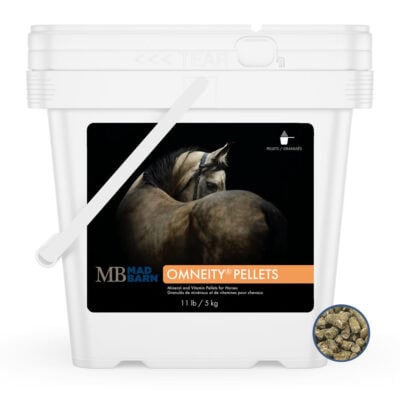
The best way to meet your horse’s vitamin requirements is to feed a balanced diet using a well-formulated vitamin and mineral supplement that fills common nutrient gaps in hay and pasture. For many horses, this means adding a comprehensive product such as Mad Barn’s Omneity®, which provides a full serving of vitamin E, complete B-vitamin fortification, and other essential nutrients often lacking in equine diets. This approach is usually more effective than relying on multiple single-nutrient products, because horses rarely fall short in just one vitamin and overall diet balance matters more than supplementing isolated nutrients.
Most horses benefit from vitamins that are commonly low in forage-based diets, especially vitamin E, vitamin A when pasture intake is limited, and biotin to support hoof quality. They also need the right balance of trace minerals and other nutrients that work together to support skin and coat condition, immune function, metabolism, and overall health. In most cases, the best approach is not to add several separate vitamin products, but to feed a comprehensive supplement such as Omneity®, which is designed to provide broad nutritional support in one balanced formula.
The right vitamin supplement for your horse depends on their current diet, including forage quality, pasture access, how much fortified feed is being fed, and the horse’s workload, health status, and physiological stage. Even when horses are fed commercial grain, they are often not fed at the manufacturer’s recommended rate, so the diet may still fall short in key vitamins and minerals. In these cases, a comprehensive vitamin and mineral supplement is usually more appropriate than adding separate products for hoof, coat, or general health support. Mad Barn’s Omneity® is an all-in-one supplement that provides complete B-vitamin fortification, a full serving of vitamin E, 20 mg of biotin, and balanced trace minerals in one product. Omneity® supports hoof growth, coat quality, immune function, and overall health while reducing the risk of nutrient gaps or unnecessary overlap from feeding multiple separate supplements.
Horses on hay often need more vitamin supplementation than horses on fresh pasture because some vitamins decline after forage is harvested and stored. Vitamin E is one of the best examples, since fresh grass is a rich source but levels in hay drop significantly over time. Beta-carotene, the precursor to vitamin A, also decreases in stored forage. As a result, horses eating hay-based diets often benefit from a well-balanced vitamin and mineral program, and some may need additional vitamin E depending on their workload, health status, and pasture access.
Yes, most forage-fed horses need added vitamins and minerals because hay and pasture alone often do not provide the full range of nutrients required to maintain optimal health. While forage should remain the foundation of the diet, it commonly falls short in key nutrients such as copper, zinc, selenium, sodium, and sometimes vitamins such as vitamin E. This is why many forage-fed horses benefit from a balanced supplement such as Omneity® to help fill nutritional gaps.
The vitamins most likely to be low in a horse’s diet depend on forage quality, pasture access, and the rest of the feeding program, but vitamin E is one of the most common concerns in horses eating mostly stored forage. Vitamin A can also become low when horses have no access to fresh pasture for long periods because beta-carotene levels decline in hay over time. However, vitamin nutrition should always be considered alongside mineral balance, since many horses have multiple dietary gaps rather than just one isolated vitamin deficiency.
The most reliable way to tell if your horse’s diet is missing important vitamins and minerals is to evaluate the full ration, including hay, pasture, fortified feeds, and supplements. Visible signs such as poor hoof growth, a dull coat, weak topline, reduced performance, or slower recovery may suggest nutritional gaps, but these signs are not specific enough to identify exactly which nutrients are lacking. In many cases, the issue is not a single deficiency but an overall imbalance in the diet. Feeding adequate forage and adding a comprehensive vitamin and mineral supplement such as Omneity® can help address common gaps and provide more complete nutritional support.
Yes, many horses on commercial grain still need a vitamin and mineral supplement. Fortified feeds are formulated to balance the diet only when fed at the manufacturer’s recommended rate, but in practice many horses are fed far less than that, sometimes only a small fraction of a full serving. At those intake levels, the horse may not receive meaningful amounts of the vitamins and minerals the feed is designed to provide. Horses with higher requirements or diets based mostly on hay may also still have nutritional gaps. In these situations, a concentrated supplement such as Omneity® can help fill those gaps without adding excess calories or starch.
Fat-soluble vitamins (A, D, E, K) are stored in body tissues and can accumulate to toxic levels if over-supplemented, while water-soluble vitamins (such as B-complex and C) are not stored and must be regularly replenished through diet or endogenous production. Fat-soluble vitamins are absorbed with dietary fats, whereas water-soluble ones are absorbed directly into the bloodstream and excreted in urine when in excess. Horses typically meet their water-soluble vitamin needs through hindgut synthesis, but deficiencies can occur if gut function is impaired. [1]
Vitamin A is important for vision, reproduction, and immune health. Horses grazing on fresh pasture usually get enough beta-carotene, the precursor to vitamin A, but levels drop significantly in stored hay, especially during winter months. Supplementation may be necessary in horses without pasture access, or those with increased needs such as pregnant or lactating mares. [1][2][3]
Most horses synthesize sufficient vitamin D through exposure to sunlight, specifically UVB rays, which convert precursors in the skin to vitamin D3. However, supplementation may be necessary for horses kept indoors, living at high latitudes, or during winter when sunlight exposure is limited. Vitamin D plays a role in calcium metabolism and immune regulation, although its function in equine calcium absorption is less prominent than in other species. [4][5]
Vitamin E is a potent antioxidant that supports muscle recovery, immune response, and nerve health. Horses on fresh pasture typically meet their needs, but those consuming mostly hay may become deficient, since vitamin E degrades rapidly after forages are harvested. Symptoms of deficiency include tying-up, prolonged illness recovery, and neurological issues, and blood testing can assess vitamin E status. [1]
Biotin (Vitamin B7) supports hoof growth, skin condition, and metabolism by acting as a cofactor in multiple enzymatic reactions. While horses can produce biotin in the hindgut and get it from feed, supplementation at 20 mg/day is often recommended to improve hoof strength and structure. Low dietary intake can contribute to weak or crumbling hooves even if overt symptoms are not always apparent. [1]
Summary
As with all nutrients, vitamin intake must be carefully balanced with a horse’s requirements to support long-term health and performance.
- While most forages and hays provide adequate energy and protein, they often fail to supply sufficient vitamins and trace minerals to fully meet a horse’s nutritional needs.
- In a 2018 study evaluating the diets of 200 horses, more than 90% were found to be deficient in at least one major vitamin or trace mineral. [13]
- Short-term vitamin deficiencies may not cause obvious clinical signs, but inadequate vitamin intake over long periods can negatively impact overall health.
- Feeding a balanced vitamin and mineral supplement helps prevent nutritional gaps, regardless of whether it comes from Mad Barn or another trusted manufacturer.
- To determine whether your horse is meeting their vitamin requirements, you can submit your horse’s diet online for a complementary evaluation, and our equine nutritionists will help you put together a feeding program that covers all of your horse’s needs.
References
- Chapter 6: Vitamins. Nutrient Requirements of Horses. 2007.
- Pitel, M.O. et al. Influence of specific management practices on blood selenium, vitamin E, and beta-carotene concentrations in horses and risk of nutritional deficiency. J Vet Intern Med. 2020. View Summary
- Greiwe-Crandell, K.M. et al. Seasonal vitamin A depletion in grazing horses is assessed better by the relative dose response test than by serum retinol concentration. J Nutr. 1995. View Summary
- Breidenbach, A. et al. Peculiarities of vitamin D and of the calcium and phosphate homeostatic system in horses. Vet Res. 1998. View Summary
- Hymoller, L., Jensen, S.K. We Know Next to Nothing About Vitamin D in Horses!. J Equine Vet Sci. 2015.
- Harrington, D.D., Page, E.H. Acute vitamin D3 toxicosis in horses: case reports and experimental studies of the comparative toxicity of vitamins D2 and D3. J Am Vet Med Assoc. 1983. View Summary
- El Asmar, M.S. et al. Vitamin K Dependent Proteins and the Role of Vitamin K2 in the Modulation of Vascular Calcification: A Review. Oman Med J. 2014.
- Wen, L. et al. Vitamin K-dependent proteins involved in bone and cardiovascular health (Review). Mol Med Rep. 2018.
- Mohamed, W.A.M. et al. Diagnostic Approach to Nephrotoxicosis with Vitamin K3 in Draft Horses Based on iNOS and Selective Urinary Variables. Adv Anim Vet Sci. 2017.
- Menadione (vitamin K3) toxicity in six horses. Can Vet J. 1992. View Summary
- Kirschvink, N. et al. The oxidant/antioxidant equilibrium in horses. The Vet J. 2008. View Summary
- Pearson, P.B., Schmidt, H. Pantothenic acid studies with the horse. J Anim Sci. 1948. View Summary
- Bruggink et al. Diet Evaluation Study of 200 Horses. 2018 unpublished.