English

Horse owners often wonder what supplements their horse actually needs to stay healthy and perform well. While feed rooms are often filled with products promising support for gut health, joints, hooves, and behavior, many horses are still fed diets that don’t meet their basic nutritional requirements.
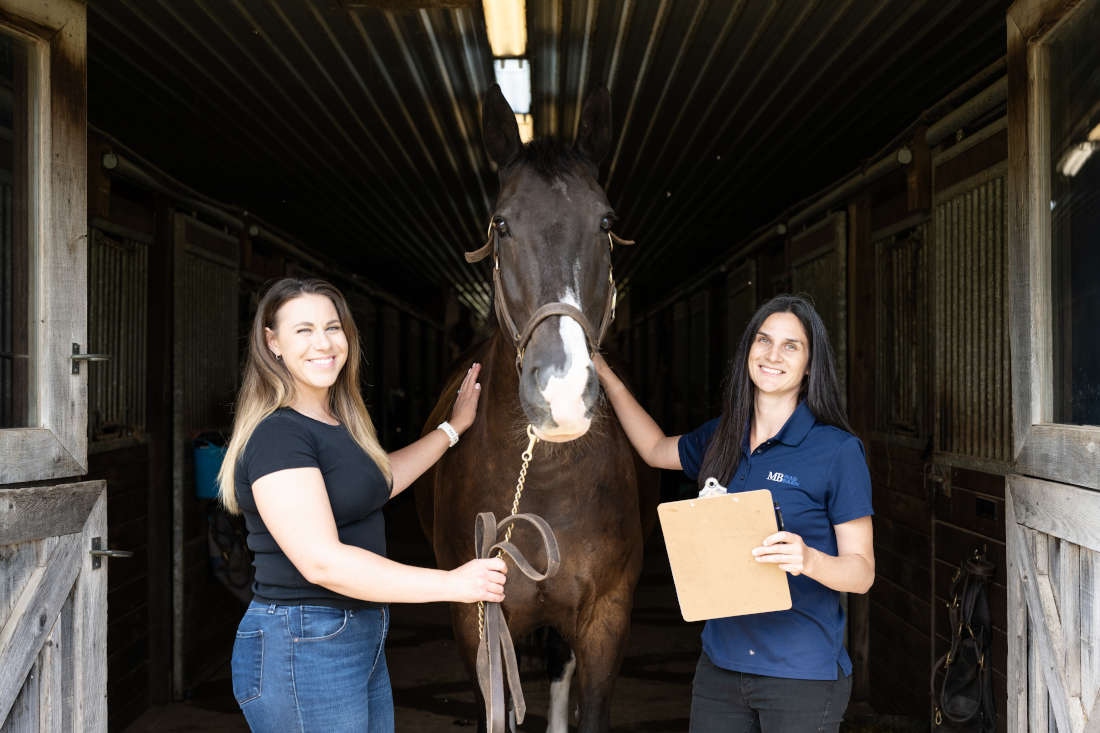
According to Dr. Priska Darani, PhD, PAS, Equine Nutritionist and Director of Research at Mad Barn, the most common mistake horse owners make is overcomplicating their feeding programs by feeding multiple supplements without balancing the diet.
Instead of starting with individual products, Dr. Darani recommends a simpler approach: build a balanced, forage-first diet and then add targeted support only when it is needed.
Mad Barn’s evidence-based framework helps owners simplify supplement decisions while ensuring their horses receive the nutrients required for long-term health and performance.
What Supplements Do Horses Actually Need?
The supplements horses actually need in their feeding program are those that supply nutrients required to balance the diet, especially vitamins, minerals, and amino acids that may be lacking in forage and feed.
Most horses thrive on a balanced feeding program formulated around good-quality forage and essential vitamins, minerals, and salt. According to equine nutritionist Dr. Priska Darani, many horses are already receiving more supplements than they need, while the underlying diet remains unbalanced and deficient in key nutrients.
Rather than adding multiple products to address individual concerns, the first priority should be ensuring the horse’s basic nutritional requirements are met. Once the diet is balanced for energy, protein, vitamins, minerals, and electrolytes, additional supplements can be considered to support specific needs such as digestive health, joint comfort, metabolic function, or omega-3 intake.
In many cases, simplifying the feeding program can lead to better nutritional balance, lower costs, and clearer insight into whether a targeted supplement is actually helping the horse.
Basic Supplements Most Horses Need
For most horses on a forage-based diet, only a few supplements are typically required to meet basic nutritional needs. As Dr. Darani explains, many feeding programs become unnecessarily complicated when multiple supplements are added before ensuring the diet itself is properly balanced.
Most horses benefit from focusing on three key nutritional foundations:
- Vitamin and mineral supplement: Provides essential micronutrients that are often deficient in forage-based diets, including copper, zinc, selenium, iodine, and vitamin E.
- Salt (sodium chloride): Supplies sodium, which is rarely adequate in forage and supports hydration and electrolyte balance.
- Targeted supplements when needed: Products such as digestive support, omega-3 fatty acids, or metabolic supplements may be added based on the horse’s health status, workload, or management conditions.
Once these nutritional fundamentals are addressed, additional supplements should only be considered if they serve a clear purpose based on the horse’s individual needs.
What's your top priority with your horse's health?

What's your top priority with your horse's health?
Balance the Diet First
Before making changes to your horse’s supplement program, Dr. Darani recommends taking a step back, asking practical questions, and ensuring the diet is balanced first.
Many horses receive multiple supplements when the underlying diet is still missing essential nutrients, which is why evaluating the full ration should always come before adding new products.
Training, management, underlying health conditions, and an unbalanced diet can all contribute to common problems that horse owners ask about during nutrition consultations. Many of those owners are already feeding a variety of supplements.
Supplements aren’t a quick fix. But thankfully, good nutrition isn’t complicated.
“My first thoughts are, have they tested their hay? Are there nutrient imbalances? Are there health issues? Is it a chronic issue they hope to address, or a new one? Have they ruled out medical diagnoses?” she says.
Dr. Darani’s top tip for improving nutrition and balancing the diet? Start by simplifying.
Before adding new products to the diet, first review everything your horse is already being fed to identify nutrient imbalances, overlap between supplements and more straightforward ways to achieve the same goal.
Not only does simplifying their feeding program save owners money, but it also often improves outcomes by making it easier to balance the diet. By balancing the diet first, owners can rule out nutrient deficiencies as contributing factors to any ongoing issues. [1]
When formulating a balanced feeding program, Dr. Darani focuses on three key priorities:
- Providing adequate forage intake to supply most of the horse’s energy and protein needs from hay or pasture while supporting normal grazing behavior
- Adding a concentrated vitamin and mineral source to correct common micronutrient gaps without introducing unnecessary ingredients or excess calories
- Supporting hydration and electrolyte balance with free-choice access to fresh water and plain loose salt
While the principles of a balanced feeding program are similar for most horses, exact nutrient requirements vary based on body weight, life stage, workload, and the forage being fed. That’s why diets should be evaluated individually rather than relying on generic feeding recommendations.
If you’re not sure where to start, Mad Barn’s free ration balancing consultation can help identify nutritional gaps in your horse’s current diet.
Energy & Protein
Many horse owners consider protein or muscle supplements when their horse struggles with topline development or body condition. In fact, muscle development and weight issues are among the most common reasons owners seek nutritional guidance.
However, according to Dr. Darani, these problems are often related to the overall balance of the diet and the horse’s exercise program, rather than a straightforward protein deficiency.
When evaluating a horse for poor topline or inadequate muscle development, the first step is to assess the full feeding program. In many cases, equine diets already provide excess calories and protein, but are still not balanced to meet the horse’s needs. Overfeeding calories can contribute to unwanted weight gain or metabolic issues without improving muscle development.
Choosing forage with appropriate energy content for your horse’s age, workload, and body condition is critical. [2][3] But even when calorie and crude protein intake appear adequate, the diet may still fall short if it does not provide the right balance of essential amino acids, vitamins, and minerals needed to support muscle tissue and normal muscle protein synthesis.
When owners ask about dietary topline support, Dr. Darani recommends looking beyond supplements and focusing first on nutritional balance. Most equine diets she reviews are not deficient in total protein, though they may be low in the specific amino acids needed to support muscle development.
Once the diet provides adequate energy and the nutrients required to support muscle metabolism, exercise becomes the most important factor in muscle development.
Training is the stimulus that triggers muscle protein synthesis, while good nutrition provides the amino acids, vitamins, minerals, and energy needed to support that process. In other words, nutrition supports muscle development, but exercise is what initiates it.

“For topline development, the horse needs specific exercises that engage the right muscles. You can't force topline development just through diet if the diet is already providing adequate protein and essential amino acids.”
— Dr. Priska Darani, PhD, PASMad Barn Director of Research
Essential amino acids are the building blocks of protein that the body cannot synthesize and must be obtained through diet. The three most important essential amino acids for horses are: [4]
- Lysine
- Methionine
- Threonine
If the topline change is sudden, asymmetrical, or accompanied by other clinical signs, Dr. Darani advises involving a veterinarian while addressing any nutritional deficits.
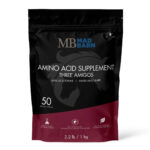
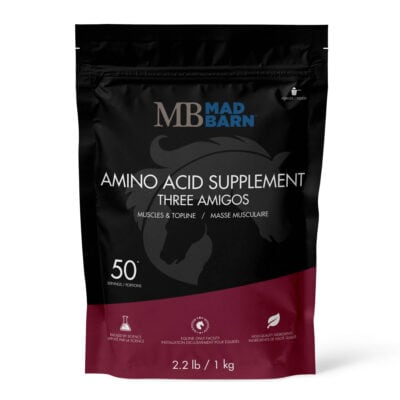
If a ration analysis shows a protein quality gap, Mad Barn’s Three Amigos might be a good choice for your horse. With an ideal ratio of lysine, methionine and threonine amino acids, Three Amigos is designed for horses who need extra support for topline and muscle development.
Vitamins & Minerals
Once the diet is balanced for energy and protein, the next step is to make sure the horse’s vitamin and mineral requirements are met. Many horses that seem to need additional products for hoof quality, coat condition, or other concerns are simply lacking essential vitamins or trace minerals that are commonly low in equine diets.
Common deficiencies found in forage-only diets include: [1][5]
The type of forage your horse eats directly determines their supplementation needs. For example, vitamins A, D, and E are present in higher amounts in fresh pasture, but their levels decline significantly once forage is harvested and stored as hay. [6]
According to Dr. Darani, a hay analysis can help identify forage-related issues that may need to be addressed in the diet, such as high iron levels or an unbalanced calcium-to-phosphorus ratio.
The next step is to work with an equine nutritionist to interpret those results in the context of the individual horse, since nutrient needs will vary depending on factors such as lactation, growth, age, and workload.
A concentrated vitamin and mineral supplement is often the best choice for horses eating forage-based diets or grain feeds that are not fed at the manufacturer’s recommended rate. In these situations, the diet may provide enough calories, but still fall short in essential vitamins, minerals, and trace nutrients.
This is especially common in easy keepers, where owners may avoid feeding larger amounts of ration balancers or complete feeds because of excess calorie intake. Horses receiving only small amounts of these products do not get the full micronutrient fortification the feed was designed to deliver.
For most horses in this situation, Dr. Darani recommends using a complete vitamin and mineral product with a low feeding rate to help balance the diet without adding unnecessary calories. This approach provides a more reliable nutritional foundation while also leaving room to adjust calories, protein, or other targeted nutrients based on the horse’s individual needs.
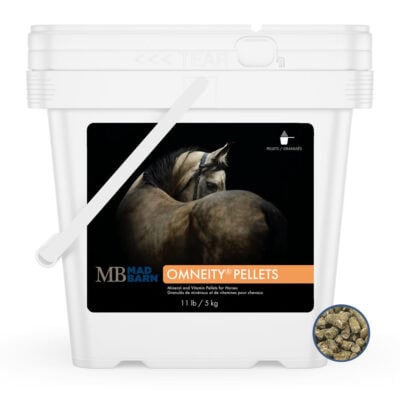
Mad Barn’s Omneity® Pellets is a concentrated vitamin and mineral formula designed to balance the majority of forage-based diets and grain feeding programs. It is also available as a loose mineral premix for easy top-dressing.
Omneity® provides full vitamin E requirements, a complete profile of B-vitamins, and 100% organic trace minerals to support improved nutrient absorption and utilization. It also provides a nutritionally effective amount of biotin to support hoof growth and quality in all horses.
In some cases, forage analysis may reveal additional imbalances such as high iron levels or increased needs for specific trace minerals. In these situations, a more targeted vitamin and mineral supplement may be appropriate.
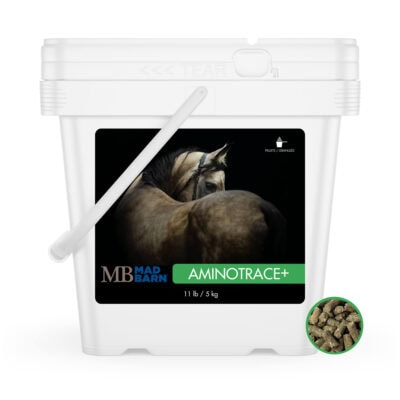
AminoTrace+® is a concentrated vitamin/mineral supplement with elevated levels of zinc, copper, vitamin E, and amino acids to provide enhanced support for horses with metabolic issues and help balance high iron forages.
Salt & Electrolytes
Salt is one of the most important and commonly overlooked supplements in equine diets because forage rarely provides enough sodium to meet a horse’s daily requirements.
While free-choice salt blocks and licks help encourage hydration, they’re not enough on their own. [7]
Salt intake from salt blocks is hard to measure and often insufficient to meet sodium requirements. Dr. Darani recommends feeding at least 2 tablespoons of salt mixed into feed daily and providing free access to loose salt.
“Salt is really intended to meet sodium needs that aren't met by forage and to encourage water intake, but horses sweating heavily also lose other electrolytes that need to be replenished.”
— Dr. Priska Darani, PhD, PASMad Barn Director of Research
While electrolyte supplements may contain salt, they serve a different purpose than feeding plain salt. Salt supplies sodium and chloride needed for daily maintenance, but electrolyte supplements are designed to replace additional minerals lost through sweat during intense exercise or hot weather.
In addition to sodium and chloride, sweat contains other electrolyte minerals that need to be replenished in the diet, including: [8]
- Potassium
- Calcium
- Magnesium
For pleasure horses, feeding plain salt is usually sufficient to maintain electrolyte balance. Electrolyte supplements are most useful for horses that sweat heavily, such as those in strenuous training, competition, endurance riding, or prolonged work in hot and humid conditions.
Many electrolyte products also contain sugars to improve electrolyte absorption and flavoring agents that help encourage drinking, which can be especially helpful when horses are traveling or exposed to unfamiliar water sources. [9]
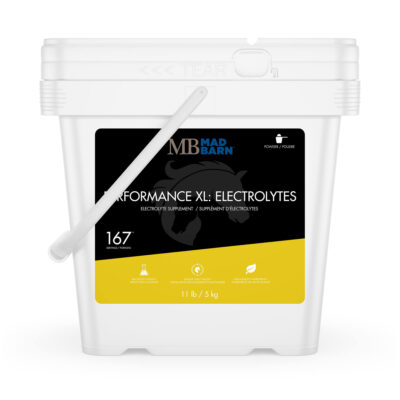
Mad Barn’s Performance XL: Electrolytes is a scientifically formulated electrolyte supplement designed to replace the minerals horses lose in sweat. Feeding Performance XL supports hydration, muscle function, and exercise recovery during training, competition, or hot weather.
Individual Needs
Many horses do well on a balanced, forage-based diet supplemented with a concentrated vitamin-mineral source and salt. Whether a horse benefits from additional supplementation beyond those fundamentals depends on the individual horse and their specific goals or needs. [10]
According to Dr. Darani, the need for targeted supplements is usually driven by differences in health status, workload, digestive function, and overall management. These factors affect nutrient requirements, nutrient losses, and how well a horse can digest and absorb what is already being fed.
When deciding whether a horse may need additional dietary support, Dr. Darani recommends looking at the full picture, including:
- Workload
- Age
- Dental condition
- Body condition
- Metabolic health
- Gastrointestinal risks and history
- Travel and competition schedule
- Turnout and management factors
- Current health concerns
- Sport goals
Asked what factor most strongly influences whether a horse may need additional nutritional support, Dr. Darani points to gut health, particularly, “the risk of gastrointestinal issues that impair digestion, forage fermentation, and nutrient absorption.”
Horses at greater risk of gut issues include those in intense training, frequent competition, regular travel, limited turnout, or low-forage feeding programs. [11] In these cases, targeted supplementation may help support digestive health, the hindgut microbiome, and normal gut function.
Gut Supplements
Gastrointestinal support is one of the biggest categories of equine supplements. Many horse owners turn to digestive supplements to support hindgut health, improve feed efficiency, or help manage stress-related digestive disturbances.
Dr. Darani identifies performance horses and seniors as common candidates for gastrointestinal supplements, but she emphasizes the importance of putting management first.
For performance horses, she looks at feeding relative to exercise, total forage intake, energy sources, travel stress, water intake, turnout, social stress, and even tack fit. For seniors, she emphasizes dental care, feeding an appropriate form of fiber (including mashes or forage pellets/cubes when needed), and ensuring the horse can safely and consistently access feed.
Dr. Darani’s recommendations for different digestive health supplements are tailored to address specific concerns:
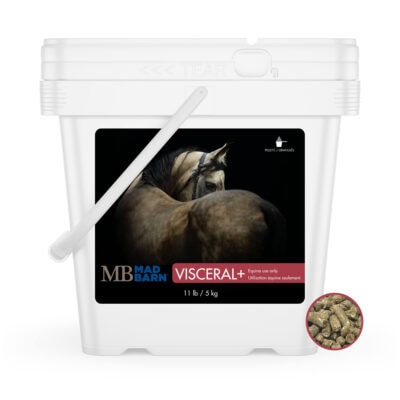
- Visceral+ for comprehensive gut support in horses that need both stomach and hindgut support, especially performance horses, horses in intensive training, or those at higher risk of digestive upset
- Optimum Digestive Health for horses that need broad hindgut support, including probiotics, prebiotics, and yeast to help maintain fibre fermentation, digestive function, and microbial balance
- Optimum Probiotic for horses that would benefit from simple, cost-effective daily probiotic support to help maintain hindgut microbial balance
- Psyllium for horses that need additional soluble fibre to support digestive regularity, manure consistency, and normal gut motility
“You can also use Visceral+ during competition season and switch to Optimum Digestive Health or Optimum Probiotic in the off-season.”
— Dr. Priska Darani, PhD, PASMad Barn Director of Research
To assess whether your horse’s digestive needs are being effectively supported, Dr. Darani recommends tracking practical signs of digestive health over time, including manure consistency, appetite, attitude, performance, coat quality, and body condition.
Improvements in these areas can suggest the horse is digesting and utilizing nutrients more effectively, while ongoing issues may indicate that the feeding program, management, or underlying health status still needs further evaluation.
Omega-3 Supplements
Omega-3 supplements are another popular category of equine products. Omega-3 fatty acids are essential fats that horses must obtain from the diet and that play important roles in cell function and inflammatory regulation.
The main types of omega-3 fatty acids are eicosapentaenoic acid (EPA), docosahexaenoic acid (DHA), and alpha-linolenic acid (ALA). EPA and DHA are long-chain omega-3 fatty acids found primarily in marine sources, while ALA is found in plant sources including flax, camelina, and fresh pasture. [12]
Dr. Darani suggests owners consider omega-3 supplementation when horses need joint, immune, respiratory, or skin support. Supplementation may also be beneficial for horses eating stored forage, because pasture provides more omega-3 fatty acids than cured hay. [5]
However, the source and type of omega-3 provided in the diet matter. While flax and camelina can increase intake of ALA, ALA is not the active long-chain form of omega-3 associated with many of the desired effects on inflammation regulation and cell function. For horses needing targeted support for joint health, immune function, or other tissues influenced by omega-3 status, it is generally preferable to feed the active long-chain forms, EPA and DHA.
“Long-chain omega-3s are more potent for modulating immune response. Ground flax can be an option to increase fat and ALA, but it doesn't supply DHA and EPA.”
— Dr. Priska Darani, PhD, PASMad Barn Director of Research
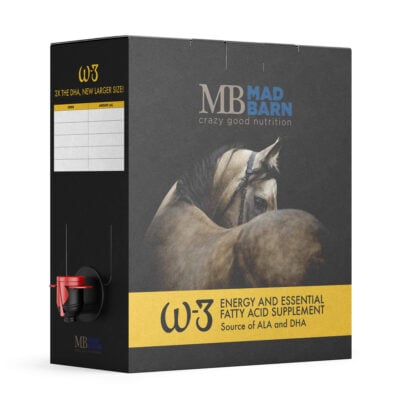
Fish oil is a common source of DHA and EPA for horses, but some horses refuse it because of its strong taste and odor. Mad Barn’s w-3 Oil provides a more palatable source of long-chain omega-3s using algal DHA, along with natural vitamin E. It is designed to support joint health, coat quality, cardiovascular health, and weight maintenance.
Because it provides calorie-dense fat without added sugar or starch, w-3 Oil can also help support horses that need extra energy for healthy weight maintenance. The added natural vitamin E helps support antioxidant defenses, while the omega-3 fatty acids contribute to healthy skin and a shiny coat. DHA also provides active long-chain omega-3 support for tissues involved in normal inflammatory regulation, including the joints and immune system.
“Algal DHA provides long-chain omega-3 from a more palatable marine source than fish oil. It’s also more environmentally sustainable,” Dr. Darani explained.
Joint Supplements
Joint supplements are widely used in horses, especially for older and performance horses. Dr. Darani advises owners to seek out research-backed ingredients and set realistic expectations when using oral joint supplements.
“There’s some evidence that some types of ingredients can slow the progression of joint issues like arthritis, but they can’t reverse it. Always work with a veterinarian to get a lameness assessment if you suspect joint problems are developing. The issue could also involve other joints, muscles, hooves, tendons, or an injury.”
Dr. Darani also emphasizes that joint health is influenced by many factors, including:
- Body weight and condition
- Overall diet and antioxidant intake
- Workload progression and footing
- Hoof care and biomechanics
- Omega-3 to omega-6 balance in the diet
“Carrying excess weight puts more strain on joints, so avoid calorie excess and support gradual weight loss,” Dr. Darani explains. “A well-balanced diet and omega-3 fatty acids will also support antioxidant capacity and help modulate immune responses. Try to avoid a high feeding rate of oils very high in omega-6, such as corn oil.”
Targeted joint supplements may also be considered to support connective tissue and joint comfort, particularly for horses in heavy work or those experiencing age-related joint changes.
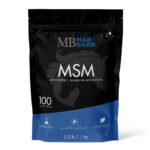
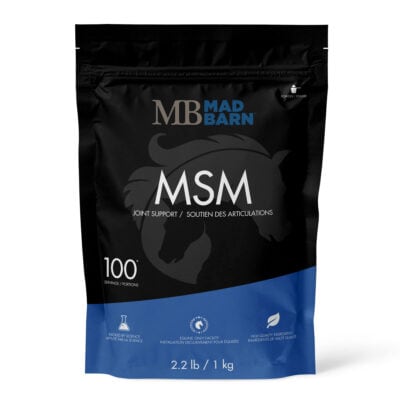
Mad Barn’s MSM powder is a cost-effective joint supplement that provides a highly bioavailable source of sulfur to support connective tissue health, joint comfort, and mobility in performance and aging horses.
Hoof Supplements
If there is one category of supplements Dr. Darani considers overused, it is hoof supplements.
As she puts it, “Hoof supplements are often not needed in a balanced diet because the nutrients that have the biggest impact on hoof health should be adequately supplied in a vitamin and mineral supplement like Omneity® or AminoTrace+.”
In many cases, poor hoof quality is not a sign that the horse needs a separate hoof product. It is a sign that the underlying diet may not be supplying the nutrients required for proper hoof growth.
Before adding a hoof supplement, Dr. Darani recommends asking a more important question: why is the current feeding program not providing the nutrients needed to support hoof health in the first place?
Hoof horn is made primarily of keratin, a structural protein that depends on an adequate supply of specific nutrients for normal growth and integrity. Key nutrients involved in hoof quality include: [14]
- Zinc and copper, which support keratin formation and connective tissue structure
- Biotin, which supports normal hoof horn growth and quality
- Sulfur-containing amino acids such as methionine and cysteine, which are required for keratin synthesis [15]
Because these nutrients are fundamental to hoof structure, they are usually better supplied through a well-formulated vitamin and mineral supplement than through a separate hoof supplement added on top of an unbalanced ration. If the horse is chronically low in trace minerals, biotin, or key amino acids, adding a hoof-specific product without correcting the rest of the diet may not address the core problem.
For this reason, Dr. Darani typically recommends improving the nutritional foundation first by using a comprehensive vitamin and mineral supplement such as Omneity® or AminoTrace+, which are designed to help correct common gaps in forage-based diets and supply the nutrients involved in hoof growth.
When making dietary changes to improve hoof quality, owners should also keep expectations realistic. Visible improvement in hoof growth takes time, and meaningful changes usually occur over months rather than weeks as new, healthier hoof horn grows down from the coronary band.
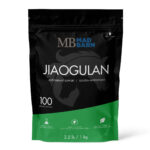
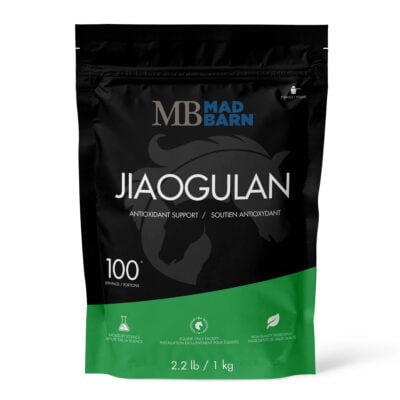
Additional hoof support may still be useful in certain situations, such as horses with chronic hoof quality issues or those recovering from laminitis. In these cases, Dr. Darani recommends Jiaogulan to support blood flow and nutrient delivery to the hooves.
Metabolic Supplements
For easy keepers and horses with insulin resistance, metabolic support begins with the overall diet. The goal is to provide a balanced feeding program that avoids grain and other unnecessary sources of sugar and starch, limits excess iron, and still supplies the vitamins and minerals needed to support normal metabolic function.
Insulin dysregulation is strongly associated with an increased risk of laminitis, making careful dietary management essential. [16]
Dr. Darani recommends focusing on the fundamentals first:
- Keep hydrolyzable carbohydrate (HC; starch + ESC) content <10% of the total diet
- Test forage for carbohydrate levels and mineral content
- Manage pasture access carefully, or avoid it completely if needed
- Implement weight loss strategies where appropriate
- Increase exercise if the horse is sound
- Use a low-NSC vitamin and mineral supplement formulated without added iron to help meet nutrient requirements
“There's some evidence supporting magnesium, chromium, spirulina, and DHA supplementation for metabolic health. But the priorities are feeding a balanced diet low in hydrolyzable carbohydrates and increased exercise.”
— Dr. Priska Darani, PhD, PASMad Barn Director of Research
Many horses with metabolic concerns are fed forage-only diets to reduce sugar and starch intake. While this can help support healthy insulin regulation, forage-only diets will fall short in important nutrients such as copper, zinc, selenium, vitamin E, and essential amino acids unless they are carefully balanced.
A concentrated vitamin and mineral supplement can help address these nutrient gaps without relying on grain-based feeds that add unnecessary calories, sugar, starch, or iron. Mad Barn’s AminoTrace+ is a low-NSC supplement designed for this purpose.
AminoTrace+ provides key vitamins, trace minerals, and essential amino acids in a concentrated formula that can be fed alongside forage while keeping the overall diet low in sugar and starch.
It is formulated without added iron and provides higher levels of key trace minerals, including copper and zinc, which are important for hoof health in horses with metabolic concerns. This is particularly relevant because many forage-based diets already provide excess iron, which may interfere with the absorption of other trace minerals.
The formula also includes magnesium and chromium, nutrients commonly used in metabolic feeding programs to support normal glucose metabolism and insulin function.
By supplying essential micronutrients in a concentrated, low-NSC formula, AminoTrace+ helps support hoof health, coat quality, energy metabolism, and overall nutritional balance in horses that require careful carbohydrate management.
Calming Supplements
Calming supplements are one of the most popular categories of supplements for horses, used in both competition and pleasure horses.
These products are typically given to horses described as hot, sensitive, reactive, spooky, or difficult to settle, particularly when these behaviors affect handling, training, transport, or performance. However, calming supplements are not usually an effective standalone solution for ongoing behavioral challenges. [17]
In many cases, sensitive or reactive behavior is influenced by multiple factors, including pain, gastric ulcers, hormonal changes, management, training, and social environment. [17]
A well-established starting point for supporting calm behavior in horses is the framework of forage, friends, and freedom. This approach is consistent with equine welfare guidelines that emphasize adequate forage intake, social interaction, and freedom of movement as key components of horse management.
Before adding a calming supplement, it is important to clearly define the behavior of concern and rule out non-nutritional causes, including:
Supplements may still be useful when nutrition is contributing to the problem. For example, magnesium may help support normal muscle function and relaxation in horses with inadequate intake. Digestive support may also be helpful for horses that are irritable or reactive because of underlying gut discomfort.
Dr. Darani also notes that some horses may respond to dietary changes, although the evidence is not consistent across all cases. Replacing starch and sugar with fat may support a calmer demeanor in some horses, and targeted supplements may be appropriate when there is a clear nutritional or physiological reason to use them.
In horses where digestive discomfort is a contributing factor, supporting gut health may help improve comfort and behavior. Mad Barn’s Visceral+ is formulated to support the stomach and hindgut in horses exposed to common digestive stressors.
Targeted supplements may also be considered when hormonal factors are contributing to behavioral changes. Mad Barn’s Chasteberry powder is a natural herbal supplement that supports normal hormone production and pituitary function in mares.

Respiratory, Immune, & Skin Supplements
Respiratory health, immune function, and skin condition are three other areas where horse owners often consider supplements. All are influenced by the horse’s overall diet, management, and environment.
For horses with respiratory concerns, Dr. Darani emphasizes starting with environmental changes rather than supplements.
Key management strategies include reducing dust exposure from bedding, hay, and the barn environment, avoiding round bales in some cases, and using steamed or soaked hay when appropriate. These changes can help reduce airway irritation and are usually more important than adding a supplement alone.
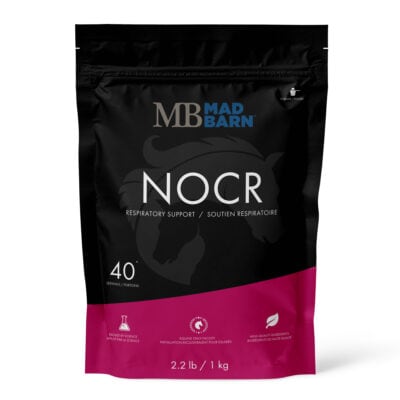
Once environmental factors have been addressed, supplementation may be considered to help support normal respiratory function. Mad Barn’s NOCR is an herbal formula designed to support airway health and normal breathing in horses exposed to dust, allergens, or other environmental irritants.
NOCR contains antioxidant and anti-inflammatory plant compounds that may help maintain normal respiratory tissue function and support the horse’s natural defenses against inhaled irritants.
For immune support, the first priority is ensuring the horse’s diet is balanced and provides adequate levels of nutrients that contribute to normal immune function. Dr. Darani notes that nutrients commonly discussed in immune supplements, such as zinc and essential amino acids, should already be supplied in sufficient amounts by a well-balanced feeding program.
Because the gastrointestinal tract plays an important role in immune function, supporting gut health is also relevant when evaluating immune support. In horses with digestive stressors, Mad Barn’s Visceral+ may be used to support the stomach and hindgut as part of a broader feeding and management program.
In selected cases, omega-3 fatty acids may also be considered to help support normal regulation of inflammatory responses. Mad Barn’s w-3 Oil provides a source of long-chain DHA for horses requiring additional omega-3 support. [12]
Skin health should also be evaluated in the context of the horse’s overall diet and management. Issues such as dry skin, poor coat quality, a dull or faded hair coat, or hypersensitivity reactions may be influenced by nutrient intake, inflammatory status, and environmental factors.
In some horses, adding oils rich in omega-3 fatty acids may help support skin health and may be particularly useful in cases of seasonal skin hypersensitivity.
Certain nutrients may also be considered as part of a nutritional plan for horses with skin irritation associated with allergic or hypersensitivity responses.
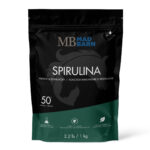
Mad Barn’s Spirulina is a blue-green algae that provides antioxidants, fatty acids, vitamins, minerals, and essential amino acids that may help support skin health as part of a broader nutritional program.
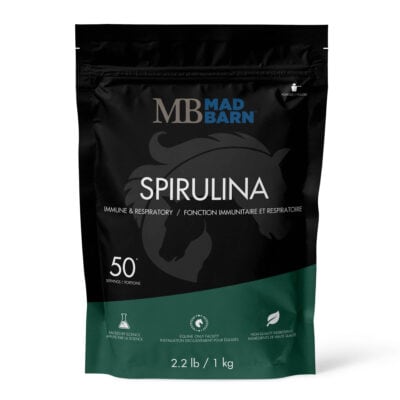
“Skin issues could be helped by adding oils rich in omega-3s, which have been shown to help hypersensitivity to midges. Oils can also help with dry skin. Anecdotally, the histamine-regulating properties of spirulina have helped horses with skin allergies.”
— Dr. Priska Darani, PhD, PASMad Barn Director of Research
Supplement Decision Checklist
Mad Barn’s supplement decision checklist for horses is a practical framework any horse owner can use to avoid common supplement mistakes.
Ask yourself these questions before starting your horse on any new supplement:
- Is my horse getting enough forage and meeting their energy and protein requirements?
- Is my horse’s diet already balanced and supplying adequate amounts of vitamins, minerals, and amino acids?
- Have I reviewed the full ration, including all feeds and supplements, for overlap, redundancy, or nutrient gaps?
- Could my horse’s concerns be related to management, training, pain, dental issues, ulcers, or factors unrelated to the diet?
- Have I addressed the basics first, including forage, friends, freedom, hydration, and routine care?
- What specific outcome am I trying to achieve with this supplement?
- Does this supplement contain ingredients with research to support its use for a clearly defined need?
- Would I get a better result by consulting an equine nutritionist before adding another product?
Finally, know when to consult a veterinarian instead of turning to supplements or feeding changes. Weight loss, behavior changes, severe diarrhea, and persistent lameness can all be signs of an underlying health condition.
Working With an Equine Nutritionist
The easiest way to reduce unnecessary supplements in your horse’s diet and build a balanced feeding program is to work with a qualified equine nutritionist.
Dr. Darani says the goal of a nutrition consultation is to balance the diet first, then determine whether any targeted supplements are truly needed. This approach can help simplify the feeding program, avoid unnecessary overlap between products, and focus on the nutrients or management changes that are most likely to benefit the horse.
Mad Barn offers free professional ration balancing to help owners evaluate their horse’s current diet and identify potential nutrient gaps or imbalances. Horse owners can also book a free phone consultation or ask questions directly to Mad Barn’s nutritionists for individualized guidance. To get started, submit your horse’s information online for a free diet analysis.
When booking a nutrition consultation, Dr. Darani recommends having the following information ready:
- A complete list of all feeds and supplements
- The actual amounts fed each day, preferably by weight rather than volume
- Forage details, including a hay analysis if available
- Recent photos and body condition information
- Your horse’s workload and relevant health history
- Your horse’s age, breed, and sex
- Your goals and priorities for your horse
Consulting with a qualified equine nutritionist can have a meaningful impact on your horse’s quality of life. Helping horses and their owners find practical, evidence-based solutions is one of the biggest motivators for Dr. Darani.
“It’s like a puzzle that brings together science and practical limitations,” she reflects. “It’s very rewarding to help owners figure out the best path forward to help their horse feel their best.”
“Nutritionists can give you clear guidance on what to change to help you avoid overthinking. We also encourage you to consult other professionals as needed.”
— Dr. Priska Darani, PhD, PASMad Barn Director of Research
Supplement Safety & Efficacy
A horse on multiple supplements is not necessarily a well-supported horse.
When asked about the risks of combining many fortified products, Dr. Darani highlights redundancy, imbalances, and unnecessary cost. She notes the same nutrients are often supplied by multiple supplements, while the nutrients actually lacking may still be missing.
She also recommends checking labels carefully to see how much of each nutrient is in the supplement beyond just looking for a desired ingredient’s name. Make sure to review feeding rates, and be aware some herbal products may not meet label claims if they are not well-studied in horses.
“Take precautions when incorporating herbal supplements. Many have not been assessed for safety in horses,” she explains. “Work with a veterinarian and nutritionist first to provide a balanced diet and medications as needed, then evaluate whether targeted supplementation with herbs generally regarded as safe is appropriate.”
Competition horses require additional diligence to avoid ingredients that may conflict with competition rules. [18]
When determining whether a supplement is worth continuing, Dr. Darani advises owners to define the target outcome first and use a realistic timeline.
General guidelines for ensuring the best outcome when adding supplements include:
- Work with a veterinarian before starting a new supplement to rule out underlying health conditions
- Supplements intended to balance the diet should always be used as directed
- If other supplements aren’t helping, revisit your feeding and management plan and consult a veterinarian or nutritionist when appropriate
- The time frame varies: coat changes may be noticed sooner, while hoof quality takes much longer
If you have any questions about your horse’s feed and supplement program, you can book a free nutrition consultation with Mad Barn’s qualified equine nutritionists.
Holistic Care for the Whole Horse
Take it from an equine nutritionist, you can’t supplement your way out of an unbalanced diet.
Dr. Darani’s perspective captures the holistic approach Mad Barn takes to feeding and management: “Horses need forage and nutrient gaps addressed, but they also need lots of movement and friends,” she concludes.
Focus on simplifying your feeding program, improving management, and getting the basics right with a nutritionist-approved, step-by-step approach that determines what supplements your horse actually needs:
- Balance the diet first
- Provide appropriate energy and protein
- Feed a vitamin/mineral supplement and salt
- Identify and address management and veterinary issues
- Use targeted supplements based on individual needs
A holistic, forage-based approach is simpler, more cost-effective, and more likely to help your horse than adding yet another supplement to that already crowded feed room shelf.
Frequently Asked Questions
Here are some frequently asked questions about what supplements horses actually need:
The supplements horses actually need are those that supply nutrients required to balance the diet. For most horses, that means adding plain salt and a concentrated vitamin and mineral supplement because hay and pasture do not provide enough sodium and often fall short in key nutrients such as copper, zinc, selenium, iodine, and vitamin E. For many horses, Mad Barn’s Omneity® is the best supplement to start with because it is formulated to correct these common nutrient gaps in forage-based diets and grain feeding programs. Once the diet is balanced for energy, protein, vitamins, minerals, and salt, additional supplements can be considered for specific needs such as digestive support, omega-3 intake, joint health, or metabolic support.
For most horses, the best supplement to balance the diet is Mad Barn’s Omneity®. Omneity is a complete vitamin and mineral supplement formulated to balance both forage-based diets and grain feeding programs by supplying nutrients commonly lacking in equine diets, including trace minerals, vitamins, and essential amino acids. Even when horses receive commercial feeds or grains, they are often not fed at the manufacturer’s recommended rate, which means the diet may still fall short in key micronutrients. Omneity helps fill these gaps while providing a reliable nutritional foundation for overall health and performance. For horses with metabolic concerns, high-iron forage, or increased copper and zinc requirements, AminoTrace+ may be a better choice.
Horses fed only hay or pasture will not receive all of the nutrients required to fully balance the diet. Forage provides the foundation of the feeding program, but it does not supply adequate amounts of all essential vitamins, minerals, and amino acids. Horses on forage-based diets require added salt and a concentrated vitamin and mineral supplement to meet nutritional requirements. For most horses, Mad Barn’s Omneity® is the best choice to balance common nutrient gaps in hay and pasture. Horses with metabolic concerns, high-iron forage, or higher trace mineral needs may be better suited to AminoTrace+.
Most horses need added salt and a concentrated vitamin and mineral supplement to meet nutritional requirements. Hay and pasture provide the foundation of the diet, but they do not supply enough sodium and often fall short in key micronutrients such as copper, zinc, selenium, iodine, and vitamin E. For most horses, the best strategy is not to supplement one vitamin or mineral in isolation, but to provide a balanced source of the nutrients commonly missing from forage and underfed grain diets. Mad Barn’s Omneity® is formulated for this purpose, supplying essential vitamins, organic trace minerals, and amino acids to help support hoof health, coat quality, muscle function, immune health, and overall nutritional balance.
For horses with metabolic concerns such as insulin resistance, EMS, PPID, or a history of laminitis, the first priority is a low-NSC feeding program designed around appropriate forage, weight management, and exercise when possible. These horses still need a fully balanced diet, but they often cannot safely consume enough fortified feed to meet vitamin and mineral requirements without adding excess sugar, starch, or calories. For this reason, the best supplement for many metabolic horses is a concentrated vitamin and mineral product formulated specifically for low-NSC diets. Mad Barn’s AminoTrace+ is designed for this purpose. It provides elevated copper and zinc, along with magnesium, chromium, amino acids, and antioxidants, in a low-NSC formula without added iron. This is especially important because many forage-based diets for metabolic horses are high in iron and relatively low in copper and zinc, which can make it more difficult to maintain proper trace mineral balance, hoof quality, and overall metabolic support.
The best gut health supplement depends on which part of the digestive tract needs support and why. Horses exposed to travel, competition, stress, limited turnout, irregular feeding schedules, or dietary changes are at higher risk of digestive disturbances involving both the stomach and hindgut. In these situations, nutritional support should be used alongside good management, especially adequate forage intake and consistent feeding practices. Mad Barn’s Visceral+ is a comprehensive digestive supplement designed to support both gastric and hindgut health. It helps maintain the stomach lining while also supporting hindgut microbial balance and digestive function. This makes it particularly useful for performance horses, horses in intensive training, or horses with recurring digestive stressors.
Omega-3 fatty acids are essential fats that horses must obtain from the diet. Fresh pasture is a natural source of omega-3s, but levels decline once forage is harvested and stored as hay. As a result, horses on hay-based diets often have lower omega-3 intake than grazing horses. Supplementing omega-3s may be beneficial for horses needing support for skin and coat condition, joint comfort, immune health, respiratory health, or normal regulation of inflammatory responses. Mad Barn’s w-3 Oil provides long-chain DHA from algae, which is the active form more directly involved in many of these functions. It also provides natural vitamin E, which helps support antioxidant protection. For horses that need targeted omega-3 support, long-chain DHA is generally more useful than relying only on plant sources of ALA.
Topline and muscle development depend both on exercise and nutrition. Horses cannot build topline if they are not receiving the right training stimulus, and they also cannot build muscle effectively if the diet is unbalanced. The first step is to make sure the horse is receiving adequate energy, high-quality protein, vitamins, and minerals. In many cases, horses consume enough total protein but do not get enough of the specific essential amino acids needed to support muscle protein synthesis. The three most important limiting amino acids for horses are lysine, methionine, and threonine. Mad Barn’s Three Amigos provides these amino acids in a targeted formula to support topline and muscle development when the rest of the diet is already balanced. This makes it most useful for horses with a confirmed amino acid gap, horses in work, or horses struggling to build or maintain muscle despite adequate calorie intake.
Joint health in horses is influenced by many factors, including workload, body condition, footing, hoof balance, and overall diet. No supplement can reverse established joint disease, but some nutritional strategies may help support connective tissue health and normal inflammatory regulation as part of a broader management plan. A practical nutritional approach is to combine omega-3 fatty acids with connective tissue support. Mad Barn’s w-3 Oil provides DHA to help support normal regulation of inflammatory responses, while MSM provides a bioavailable source of sulfur used in connective tissues. Together, these supplements can be used alongside a balanced vitamin and mineral program to support joint comfort, mobility, and long-term musculoskeletal health in performance and aging horses.
Salt is required in every horse’s diet because hay, pasture, and most feeds do not provide enough sodium to meet daily requirements. Sodium is essential for hydration, nerve function, muscle contraction, and maintaining normal fluid balance. Without added salt, many horses will not meet even their basic sodium needs. Most horses should receive plain salt every day, along with free-choice access to loose salt. This is important even for horses at maintenance, and it becomes even more important in hot weather or during exercise when sweat losses increase. Salt supports daily sodium and chloride intake, while electrolyte supplements are used separately when horses lose larger amounts of minerals through heavy sweating.
Feeding multiple supplements can cause problems when products are added without evaluating the full diet, it can create overlap, or introduce nutrient imbalances. Different supplements may contain many of the same nutrients, which can lead to unnecessary excesses and a more complicated feeding program without improving overall diet quality. Owners may also spend more money while still failing to correct the nutrients that are actually missing. This is one of the most common supplement mistakes horse owners make. A better approach is to balance the diet first with forage, salt, and a complete vitamin and mineral supplement, then add targeted support only when there is a clear reason to do so.
The best way to determine what supplements your horse actually needs is to evaluate the full diet, including forage, pasture, feed, salt, and any supplements already being fed. Horses can maintain body weight and still have important nutrient gaps or mineral imbalances, so appearance alone is not a reliable guide. A comprehensive diet evaluation can identify whether the horse is missing key nutrients, receiving redundant products, or dealing with a problem that is more related to management or health than nutrition. Mad Barn offers a free diet analysis performed by qualified equine nutritionists to help identify nutrient gaps, review hay and feeding programs, and recommend the most appropriate supplementation strategy for the individual horse.
Summary
Choosing the right supplements for horses starts with balancing the diet rather than adding multiple products. According to equine nutritionist Dr. Priska Darani, most horses thrive on a forage-based diet supported by targeted nutrients rather than a long list of supplements.
- Begin by balancing the diet with adequate forage, energy, protein, vitamins, minerals, and salt
- Test forage and evaluate the full ration to identify nutrient deficiencies before adding supplements
- Use a concentrated vitamin and mineral supplement to address common forage-based nutrient gaps
- Provide plain salt daily to meet sodium needs and support hydration
- Consider targeted supplements such as omega-3s, digestive support, or metabolic aids only when specific needs are identified
- A simplified feeding program guided by a nutritionist can improve outcomes while reducing unnecessary supplements
References
- Nutrient Requirements of Horses. The National Academies Press. 2007.
- Latham. C. M. et al. 72 A Survey of North American Horse Diets: What Are We Missing?. Journal of Equine Veterinary Science. 2023.
- Honoré. E. K. and Uhlinger, C. A. Equine Feeding Practices in Central North Carolina: A Preliminary Survey. Journal of Equine Veterinary Science. 1994.
- Mok. C.H. et al. Amino acid requirements in horses. Asian-Australas J Anim Sci. 2020.
- Geor. R. J. et al., Eds. Equine Applied and Clinical Nutrition. Saunders. 2013.
- Tuszka. A. et al. 92 Seasonal Variation in Plasma Vitamin A and E Concentrations in Horses with or without Pasture Access. Journal of Equine Veterinary Science. 2023.
- Jansson. A. and Dahlborn, K. Effects of feeding frequency and voluntary salt intake on fluid and electrolyte regulation in athletic horses. J Appl Physiol. 1999. View Summary
- Shrimanker. I. et al. Electrolytes. In: StatPearls [Internet]. Treasure Island (FL): StatPearls Publishing. 2022.
- Electrolyte Supplementation in Horses: No Benefit to Include Sugar. Kentucky Equine Research. 2012.
- Richards. N. et al. Nutritional and Non-Nutritional Aspects of Forage. Veterinary Clinics of North America: Equine Practice. 2021. View Summary
- Sykes. B.W. et al. European College of Equine Internal Medicine Consensus Statement—Equine Gastric Ulcer Syndrome in Adult Horses. Journal of Veterinary Internal Medicine. 2015.
- Hess. T. and Ross-Jones. T. Omega-3 fatty acid supplementation in horses. R Bras Zootec. 2014.
- O'Connor. C.I. et al. Dietary fish oil supplementation affects serum fatty acid concentrations in horses. J Anim Sci. 2007. View Summary
- Higami. Atsuko. Occurrence of white line disease in performance horses fed on low-zinc and low-copper diets. J Equine Sci. 1999.
- Feinberg. A. et al. Reductions in the deposition of sulfur and selenium to agricultural soils pose risk of future nutrient deficiencies. Commun Earth Environ. 2021.
- Katarzyna. K. et al.IR in the horse: a review. J Appl Anim Res. 2014.
- Ross. D and Roberts. J. Equine calming products: a short survey into their use, effect, and knowledge using a small sample of horse owners in the North of Scotland, UK. J Equine Vet Sci. 2018.
- FEI Rules & Regulations. Fédération Équestre Internationale. 2025.