English







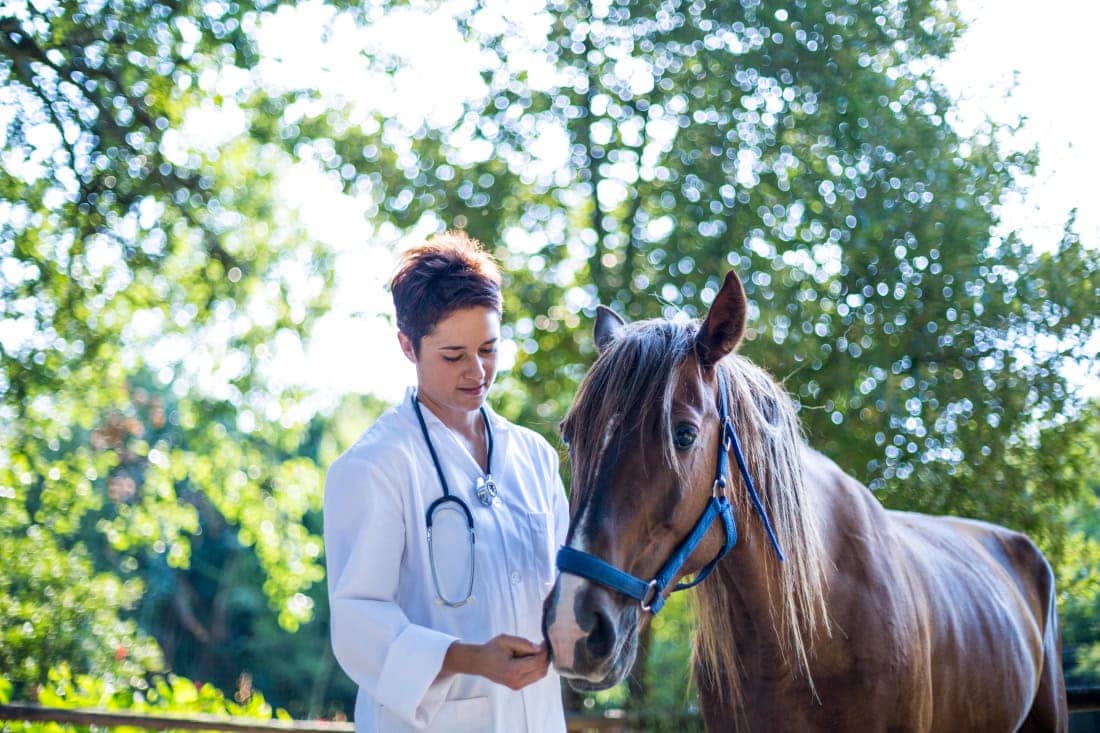
Abdominal ultrasound is a non-invasive diagnostic tool that allows veterinarians to visualize the organs and soft tissues within a horse’s abdomen. Using high-frequency sound waves, the technique produces real-time images that can reveal both normal anatomy and subtle abnormalities.
In horses, abdominal ultrasound is commonly used to investigate the causes of colic. It can help identify displaced or distended intestines, fluid accumulation, abscesses, tumors, or changes in the liver, spleen, kidneys, bladder, or reproductive organs. By assessing how these structures move and interact, ultrasound can also provide insight into gastrointestinal motility and blood flow.
Abdominal ultrasound not only aids in diagnosing active disease but also helps guide clinical decisions, such as whether surgical intervention is warranted or medical management is appropriate. It can also be used to monitor progress during treatment or recovery.
When combined with other diagnostic methods, such as rectal examination, abdominocentesis, or laboratory testing, ultrasound provides a comprehensive view of the equine abdomen, supporting timely and informed veterinary care.
Abdominal Ultrasound for Horses
Abdominal ultrasound is commonly included in the diagnostic process for horses with colic. This procedure allows the veterinarian to examine the abdominal organs that cannot be palpated during a rectal examination. It also allows them to assess the motility (movement) of the intestinal tract.
The findings on ultrasound examination are combined with physical examination, nasogastric intubation, rectal examination, and other diagnostic tests to determine the underlying cause of the horse’s colic signs.
The veterinarian interprets this information to determine whether the horse requires colic surgery, or can be managed using medication alone. [1]
Signs of colic include: [1]
- Lack of appetite
- Lethargy
- Looking at the flanks
- Pawing
- Stretching out as if to urinate
- Kicking at the abdomen
- Restlessness
- Rolling or thrashing
- Unwilling to stand
Repeated abdominal ultrasound can also help monitor response to treatment for horses undergoing medical management. For surgical cases, abdominal ultrasound can be used to monitor recovery by ensuring intestinal function returns. [1]
Equipment
The tool used to perform an abdominal ultrasound is the ultrasound machine. This device works by sending out ultrasound waves through a transducer, also known as a probe. [2]
Inside the transducer are piezoelectric elements, ceramic crystals that create soundwaves when an electrical current passes through them. These crystals also function in reverse, generating electrical signals when they detect returning soundwaves. [2]
When electricity activates the piezoelectric crystals, they emit ultrasound waves that travel through the body’s tissues. As these waves strike different structures, they are reflected back toward the transducer.
The returning soundwaves are then converted by the piezoelectrics into electrical impulses, which the ultrasound machine processes into an image. [2] The resulting image is displayed on the machine’s monitor, allowing the veterinarian to interpret the findings.
Different tissues reflect sound waves to varying degrees, a property known as echogenicity. Echogenicity determines how tissues appear on ultrasound as shades of white, gray, or black.
- Highly echogenic (bright white): Structures that strongly reflect sound waves, such as bone or air, appear bright white on the screen because they produce strong echoes.
- Anechoic (black): Fluids, including intestinal fluid, reflect sound waves poorly and therefore appear black, indicating an absence of internal echoes.
- Hypoechoic (dark gray): Tissues that reflect fewer sound waves than surrounding structures appear darker gray; examples include fluid-filled or edematous soft tissues compared to normal tissue.
- Moderately echogenic (gray): Most soft tissues, such as muscle, have intermediate reflectivity and display as shades of gray on the ultrasound image.
Other equipment necessary for an abdominal ultrasound includes: [1]
- Stocks or other restraint method
- Ultrasound gel or rubbing alcohol
- Sedation in some cases
What's your top priority with your horse's health?
Procedure
Prior to the procedure, the veterinarian may clip the horse’s coat to ensure there is good contact between the ultrasound probe and the horse’s skin. [1] They clean the area and apply ultrasound gel or rubbing alcohol as needed throughout the examination.
Depending on available facilities, horse behavior, and practitioner preference, the veterinarian may request that the horse is placed into stocks or sedated to facilitate the examination. [1]
There are two main types of abdominal ultrasound in horses: fast localized abdominal sonography of horses (FLASH) and a complete abdominal examination.
FLASH Examination
The FLASH examination focuses on key areas of the equine abdomen that are most commonly affected in colic: [1][3]
- Ventral abdomen
- Stomach
- Nephrosplenic space
- Cecum and large colon
- Small intestine
- Liver
This type of ultrasound typically takes less than 15 minutes and helps the veterinarian rapidly determine whether a horse requires surgery. [1] This procedure is most common for horses experiencing acute colic, particularly if they are in severe pain causing distress. [1]
Complete Abdominal Examination
Complete abdominal examination involves systematically evaluating the horse’s abdominal organs. This procedure takes more time than a FLASH exam, so it is usually reserved for chronic colic cases or horses showing minimal signs of distress. [1]
The exact procedure used for complete abdominal examination varies between practitioners. During the examination, they evaluate both the digestive system and other organs found within the abdomen.
When examining the digestive system, the veterinarian evaluates the motility, contents, and wall thickness of each structure. They also confirm that the digestive system is sitting in the correct position within the abdominal cavity.
Structures evaluated include: [1]
- Stomach
- Small intestine
- Cecum
- Large and small colon
For the abdominal organs, the veterinarian examines their size, shape, and architecture. For some structures, they may be able to evaluate blood flow patterns within the organ. [1]
Organs evaluated include: [1]
- Liver and bile ducts
- Kidneys
- Spleen
They also examine the ventral (lower) abdomen. Due to gravity, this area is the most likely place for free fluid within the abdomen to collect. This fluid is prominent on ultrasound and can provide the veterinarian information about the horse’s digestive function. [1]
Finally, they may perform a transrectal ultrasound, where they ultrasound the abdomen via the rectum. This allows them better access to structures such as: [1]
- Root of the mesentery
- Ureters
- Bladder and urethra
- Uterus and ovaries in mares
- Inguinal rings in stallions
- Abdominal aorta and associated large arteries
Interpreting Results
Abdominal ultrasound provides clues about the state of the horse’s abdominal organs, including their position, motility, and potential areas of compromise. Veterinarians interpret this information in the context of their physical examination and other diagnostic tests.
Diagnoses that can be made on ultrasound include: [1]
- Large colon displacements
- Large colon impactions
- Right dorsal colitis
- Intussusception
- Strangulating obstructions, including hernias
- Stomach distention and impaction
- Peritoneal fluid
- Urolithiasis
Large Colon Displacements
Identifying the exact position of displacements can be difficult on ultrasound, as there is no way to reliably distinguish between the different portions of the large colon. [1]
However, examining the position of the large colon in relation to other structures such as the spleen, kidney, liver, stomach, etc. can help veterinarians identify if the colon is out of position. [1]
The simplest displacement to identify on ultrasound is left dorsal displacement. In this condition, the nephrosplenic ligament (a ligament between the spleen and left kidney) traps a loop of large colon. [1]
On ultrasound, veterinarians can identify a gas-filled loop of colon blocking their view of the left kidney, indicating there is entrapment. [1] They may also note that the spleen is out of position.
Changes such as the identification of large blood vessels associated with the colon on the right side of the body or thickening of the colonic wall can indicate right dorsal displacement or colonic volvulus. [1]
These changes are more subtle and require an experienced ultrasound user to identify.
Large Colon Impactions
Impactions are an accumulation of feed or other material that blocks the passage of intestinal contents.
The most common location for large colon impactions is at the pelvic flexure, a narrowing of the colon on the left side of the horse’s body near their pelvis. [1] Due to this narrowing, bulky materials are more likely to obstruct flow, resulting in impaction.
On ultrasound, impactions typically appear as hyperechoic (white) material within the intestinal lumen. The veterinarian may also identify enlargement of the intestine before the impaction, as feed material backs up and expands the intestine. [1]
Right Dorsal Colitis
Right dorsal colitis is an inflammatory condition affecting the right dorsal colon. It is typically linked to excessive non-steroidal anti-inflammatory administration. [1]
On ultrasound, the right dorsal colon has a thick wall due to the accumulation of inflammatory cells. [1]
Intussusceptions
Intussusceptions result from the intestine telescoping in on itself, resulting in overlapping layers of intestinal wall. This can pinch off the blood vessels running through the intestinal wall, resulting in tissue death. [1]
On ultrasound, intussusceptions have a characteristic “bullseye” or target appearance created by the overlapping intestinal layers. [1] Identification of this pattern and assessing which intestinal structures are contributing to it helps the veterinarian confirm the diagnosis. [1]
Strangulating Obstructions
Strangulating obstructions occur when a portion of the intestine becomes kinked, pinching off blood supply and preventing the flow of intestinal contents. [1] Common strangulating obstructions include strangulating lipomas and hernias.
On ultrasound, the veterinarian can identify two distinct populations of intestine: one that is dilated and thickened due to accumulation of intestinal contents and inflammation in the intestinal wall, and one that is normal. The strangulation is found at the junction of these two areas. [1]
The veterinarian may be able to identify the strangulating mass or hernia using their ultrasound depending on its location. [1]
Stomach Distention & Impaction
Dilation of the stomach occurs when there is a blockage preventing stomach contents from entering the intestine. One common cause of dilation is gastric impaction, where bulky material blocks the exit of the stomach and causes stomach contents to accumulate. [1]
On ultrasound, the veterinarian can identify a large, fluid-filled stomach. They may be able to identify a gastric impaction depending on its location and size. [1]
Peritonitis or Free Fluid in the Abdomen
Peritoneal fluid is free fluid within the abdomen surrounding the abdominal organs. A small amount is present normally, and it typically pools near the horse’s sternum due to gravity. [1]
Excessive peritoneal fluid can be seen when there’s inflammation or infection in the abdomen, termed peritonitis.
Other fluids can also be present in the abdomen when there’s disease or trauma, such as:
- Blood: When blood is present in the abdomen, it’s called hemoabdomen. This typically occurs when there’s blunt force trauma to the abdomen that lacerates the liver or spleen, resulting in hemorrhage. It can also occur when large vessels rupture, such as the uterine artery post-foaling.
- Urine: When urine is present in the abdomen, it’s called uroabdomen. This occurs when the urinary bladder is damaged and leaks, most commonly seen in foals.
- Feed material: When feed material, digestive contents, or feces is present in the abdomen, it means that bowel has ruptured. This typically occurs in severe cases of colic, particularly strangulating lesions or stomach impactions.
There are a few potential sources of fluid: [1]
- Blood
- Stomach contents after a stomach rupture
- Inflammation
Fluid appears as black or nearly black on ultrasound. Identification of free fluid prompts the veterinarian to perform abdominocentesis, a procedure where they sample the fluid to identify what type of fluid it is.
Urolithiasis
Uroliths are stone or mineral concentrations within the urinary tract. They can be found anywhere from the kidneys to the urethra, and may cause chronic low-grade colic signs in some horses. [1]
On ultrasound, the dense stones appear bright white. If left untreated, uroliths may obstruct the flow of urine causing hydronephrosis, a condition where urine accumulates in the kidneys and causes tissue death. [1]

Preparing Your Horse for Abdominal Ultrasound
There are no specific preparations necessary for abdominal ultrasound.
Depending on the practitioner’s preference and the density of your horse’s hair coat, they may ask that your horse is clipped prior to the procedure.
If your horse is wary of clippers, you may need to have your veterinarian sedate the horse for clipping.
Complications
External abdominal ultrasound is a safe, non-invasive procedure with no known complications.
Transrectal examination carries a risk of serious complications, such as rectal tears. The management and prognosis of rectal tears depends on the severity of the tear, with some cases having a very poor prognosis and typically resulting in euthanasia. [4]
For this reason, rectal examination should never be performed by anyone except a trained veterinarian.
Frequently Asked Questions
Here are some frequently asked questions about abdominal ultrasound in horses:
Abdominal ultrasound is a diagnostic imaging technique that uses sound waves to create real-time images of the organs inside a horse's abdomen. It allows veterinarians to assess the structure and function of internal organs without surgery, helping identify problems such as intestinal obstruction, colic causes, organ enlargement, fluid accumulation, or masses.
The horse's abdominal area is clipped and cleaned to allow good contact between the ultrasound probe and the skin. Ultrasound gel is applied, and the veterinarian systematically scans different regions of the abdomen. The horse may be standing and lightly restrained during the procedure. Depending on the clinical question, sedation may or may not be necessary.
Commonly evaluated structures include the stomach, small intestine, large colon, cecum, liver, spleen, kidneys, bladder, and uterus or ovaries in mares. The veterinarian can also assess the presence and character of peritoneal fluid and detect abnormalities such as thickened bowel walls, gas patterns, or displaced organs.
Ultrasound is especially useful in horses with colic, chronic weight loss, suspected abdominal infections, or urinary tract disorders. It may also be performed after abdominal surgery to monitor recovery or check for complications.
A focused exam can take as little as 15–20 minutes, while a full abdominal study may take 45 minutes or more. Images are typically interpreted immediately, allowing veterinarians to make timely decisions about treatment and further testing.
Summary
Abdominal ultrasound is a non-invasive imaging technique that allows veterinarians to assess internal organs and detect abnormalities within the equine abdomen.
- Abdominal ultrasound uses high-frequency sound waves to create real-time images of the horse's abdominal structures
- This procedure is commonly performed to investigate causes of colic
- It allows visualization of organs such as the intestines, liver, spleen, kidneys, and bladder
- Abdominal ultrasound is commonly combined with other tests, like abdominocentesis or bloodwork, for a complete diagnosis
References
- Southwood. L. L. Ed. Practical Guide to Equine Colic. Wiley-Blackwell, Ames, Iowa. 2013.
- Ultrasound. National Institute of Biomedical Imaging and Bioengineering.
- Busoni. V. et al. Evaluation of a Protocol for Fast Localised Abdominal Sonography of Horses (FLASH) Admitted for Colic. The Veterinary Journal. 2011.
- Costa. L. R. R. and Paradis. M. R. Manual of Clinical Procedures in the Horse. Wiley Blackwell, Hoboken. 2018.