English

Assessing a horse’s nutritional status is critical for maintaining health and performance. Identifying and correcting vitamin and mineral deficiencies can help prevent a range of health issues, from poor coat condition and hoof quality to more serious problems like immune dysfunction or muscle weakness.
Many horse owners and veterinarians use blood vitamin and mineral analysis to detect these deficiencies and ensure their horses are receiving the necessary nutrients.
However, while these tests can provide some valuable insights, they may not always present a complete picture of a horse’s overall nutritional status. Factors such as exercise, feeding time, medical conditions, and stress can temporarily alter blood nutrient levels.
For certain nutrients, such as calcium, copper, zinc, and iron, blood levels don’t correlate well with dietary intake. In other cases, such as sodium, chloride, and selenium, blood tests are primarily useful for identifying extreme levels, revealing toxicity or long-term deficiencies.
Continue reading to learn more about the applications and limitations of blood vitamin and mineral analysis in equine nutrition. We’ll also discuss the most reliable ways to assess nutritional status in equines and how a nutritionist can use this information to develop a balanced diet for your horse.
Vitamins & Minerals in the Equine Diet
Vitamins and minerals make up a small portion of the equine diet, but are critically important for supporting many processes in the body, including:
- Hormone synthesis
- Energy metabolism
- Electrolyte balance
- Immune function
- Antioxidant protection
In horses, prolonged deficiencies in vitamins and minerals can lead to many health issues such as: [1]
- Poor hoof health
- Suboptimal exercise performance
- Skin disorders
- Skeletal disorders
- Neuromuscular dysfunction
- Reproductive failure
Vitamins
Vitamins are essential organic compounds that function as catalysts, accelerating chemical reactions within the body to support various physiological processes.
Important vitamins for horses include:
- Vitamin A: Essential for vision, immune function, and skin health.
- Vitamin D: Supports calcium absorption and bone health.
- Vitamin E: Acts as an antioxidant, supporting muscle and immune function.
- Vitamin K: Important for blood clotting and bone health.
- Vitamin B1 (Thiamine): Helps convert carbohydrates into energy and supports nerve function.
- Vitamin B7 (Biotin): Critical for hoof health, skin, and coat condition.
- Vitamin C (Ascorbic Acid): An antioxidant that supports immune function and collagen production.
Most vitamins must be supplied through the diet because the horse’s body cannot produce them in sufficient quantities. [1]
Vitamins are categorized into two main groups: fat-soluble and water-soluble.
- Fat-soluble vitamins — such as vitamins A, D, E, and K — are stored in the body’s fat tissues and liver, meaning they don’t need to be consumed daily. However, because they are stored, there’s a risk of toxicity if too much is provided. Vitamins A and E must be supplied by the diet, while vitamin D can be synthesized through exposure to sunlight, and vitamin K is partially synthesized by microbes in the horse’s gut. [1]
- Water-soluble vitamins — like the B-vitamins and vitamin C — are not stored in the body and are excreted through urine, so they need to be consumed regularly. B-vitamins are synthesized by microbes in the horse’s hindgut, although the extent of their absorption is still uncertain. Vitamin C can be produced from glucose within the horse’s body and is also provided through the diet. [1]
Minerals
Minerals are inorganic substances that play crucial roles in various physiological processes. They must be obtained through the diet because the body cannot synthesize them. [2]
Some minerals act as cofactors in enzymatic reactions and are involved in energy production, while others are vital for structural functions — supporting strong bones, hooves, and teeth. Additionally, certain minerals function as electrolytes, helping to regulate fluid balance, nerve signaling, and muscle contractions.
Minerals are divided into two categories based on the amounts required: [2]
- Macrominerals are needed in larger quantities, typically measured in grams per day.
- Microminerals, or trace minerals, are required in much smaller amounts, measured in micrograms per day.
Below is a list of some important minerals that horses require in their diet:
- Calcium (Ca) – Essential for bone structure and muscle function.
- Phosphorus (P) – Works with calcium to support healthy bones and energy metabolism.
- Magnesium (Mg) – Important for muscle function, nerve transmission, and enzyme activity.
- Potassium (K) – Crucial for electrolyte balance, muscle contractions, and nerve function.
- Sodium (Na) – Helps regulate fluid balance and is important for nerve and muscle function.
- Chloride (Cl) – Works with sodium to maintain proper fluid and electrolyte balance.
- Selenium (Se) – Acts as an antioxidant and is important for muscle function.
- Iron (Fe) – Essential for oxygen transport in the blood.
- Copper (Cu) – Supports the formation of connective tissue and red blood cells.
- Zinc (Zn) – Important for immune function, skin, and hoof health.
- Iodine (I) – Necessary for thyroid function and regulating metabolism.
Blood Analysis for Vitamins & Minerals in Horses
Horse owners are increasingly interested in using blood analysis as a tool to evaluate their horse’s nutritional status. Some services even claim to use these results to create personalized feeding programs. But how does blood testing for vitamins and minerals work and is it reliable for all nutrients?
Blood tests can measure specific nutrient levels in the serum, the clear fluid in blood that contains important substances like electrolytes, proteins, vitamins, and minerals. These results can then be compared against reference ranges to determine if a horse’s blood is high or low in a particular nutrient.
Veterinary clinics commonly offer blood tests that measure levels of minerals and vitamin E in a horse’s bloodstream, along with other metrics to assess organ function, immune status, and hydration. Below are examples of nutrients commonly tested in the blood analysis of horses, along with their typical reference ranges in serum:
Table 1: Example reference ranges for vitamins and minerals in equine. [3]
| Nutrient | Uses in the Body | Reference Range in Blood Serum |
|---|---|---|
| Serum Vitamin E |
|
4.6 – 23 pmol/L |
| Calcium |
|
2.75 – 3.35 mmol/L |
| Phosphorus |
|
0.73 – 1.71 mmol/L |
| Magnesium |
|
0.6 – 1 mmol/L |
| Sodium |
|
136 – 144 mmol/L |
| Potassium |
|
3.1 – 4.3 mmol/L |
| Chloride |
|
95 – 104 mmol/L |
| Iron |
|
1.3 – 2 ug / mL |
| Copper |
|
0.9 – 1.4 ug / mL |
| Zinc |
|
0.6 – 1.7 ug / mL |
| Molybdenum |
|
12 – 30 ng / mL |
| Selenium |
|
0.12 – 0.18 ug / mL |
| Manganese |
|
0.5 – 2 ng / mL |
| Cobalt |
|
>0.25 ng / mL |
Note that the trace mineral molybdenum is often included in blood mineral analysis. Molybdenum plays a role in DNA and RNA synthesis, but there is no established minimum intake requirement for horses. It is generally assumed that horses get enough of this mineral from forages, but high intake may interfere with copper balance in horses. [4]
Some laboratories require whole blood for mineral testing, so it’s important for your veterinarian to confirm what type of blood sample is appropriate for the test you are requesting. For example, selenium is routinely run off of a whole blood sample. Reference ranges for serum samples may be different than those for whole blood samples.
Reliability of Blood Testing
How reliable is blood analysis in determining whether your horse has too much or too little of a specific vitamin or mineral?
Even though these nutrients can be detected and quantified in a blood sample, this does not guarantee that blood testing accurately reflects the horse’s nutritional status (i.e. whether the nutrient levels are deficient, adequate, or toxic) within the body.
This is because blood doesn’t simply store nutrients as they are absorbed from the diet. Instead, the body tightly regulates the composition of blood through a process known as homeostasis.
This system ensures that essential nutrients and minerals in the blood remain within specific ranges, regardless of dietary intake.
As a result, blood levels for certain nutrients are not correlated to dietary intake. Furthermore, blood levels can be influenced by various factors such as timing of the test, recent meals, exercise, stress, and underlying health conditions.
The following is an overview of whether dietary intake of specific nutrients is reflected in blood vitamin & mineral analysis of horses.
Table 2. Relationship between blood vitamin & mineral levels and dietary intake in horses. [5]
| Nutrient | Reliable | Notes |
|---|---|---|
| Calcium | No |
|
| Phosphorus and Magnesium | Yes |
|
| Sodium and Chloride | Toxicity only |
|
| Potassium | Yes |
|
| Copper | No |
|
| Zinc | No |
|
| Selenium | Extremes only |
|
| Iron | No |
|
| Iodine | No |
|
| Vitamin A | Yes |
|
| Vitamin D | Yes |
|
| Vitamin E | Yes |
|
Note that there is significant individual variability in how horses respond to dietary intake, resulting in varying blood levels of vitamins and minerals even when horses consume the same amounts.
This variability is evident even for nutrients where blood levels are typically more indicative of dietary intake. For instance, in a study of selenium-deficient horses supplemented with sodium selenite, only 12% reached adequate blood selenium levels, while 63% remained in the marginal range, and 25% still showed deficient levels after 30 days of supplementation. [6]
Due to this variability, it is essential to conduct repeated blood testing after any changes to supplementation practices in order to accurately evaluate each horse’s individual physiological response.
What's your top priority with your horse's health?

Enter your email to receive your store credit
Limitations of Blood Analysis
Although blood analysis is a convenient way to investigate vitamin and mineral levels in the horse’s blood at a given time, it does not necessarily reflect nutrient absorption from the diet or overall nutritional status.
Blood tests only show the levels of vitamins and minerals present in the blood at the time of sampling. These levels are influenced not only by the absorption of the nutrient from the gastrointestinal tract but also by the efficiency of nutrient utilization, redistribution, and removal from the bloodstream.
Homeostasis is the body’s mechanism for maintaining biochemical balance within specific set points, allowing it to function optimally despite environmental changes. As a result, the concentrations of many substances in blood, including vitamins and minerals, do not increase proportionally with higher dietary intake.
Intake of certain nutrients can cause temporary spikes in blood levels, but the process of homeostasis works quickly to restore blood chemistry to its set points. This is why factors like the timing of sample collection in relation to feeding or exercise can impact test results, as these activities can transiently alter nutrient levels before the body restores balance.
Additionally, while some nutrient deficiencies may eventually be detected through blood analysis, it can take a considerable amount of time for significant changes to appear in the horse’s blood. This delay occurs because the body often compensates for deficiencies for an extended period before levels drop enough to be reflected in blood tests.
In some cases, other biomarkers may provide a more accurate assessment of nutrient status than measuring the nutrient itself. For example, a study of horses in Chile, a selenium-deficient region, found that 78% of the horses had blood selenium levels within the reference range, despite chronic deficient intake. [6]
However, when researchers measured glutathione peroxidase, an antioxidant enzyme that depends on selenium, they found that 44% of the horses had sub-adequate enzyme levels in the blood, reflecting poor antioxidant protection despite normal selenium levels in the blood. [6]
Internal Factors Impacting Blood Test Results
Another limitation of blood analysis is that various factors can temporarily alter the horse’s physiological state before homeostasis restores balance. These internal factors, which may be unknown or unaccounted for, include: [7][8][9]
- Time of sampling relative to exercise: Some vitamins and minerals are removed from the blood during exercise. For example, electrolyte minerals (sodium, potassium and chloride) are lost through sweat and must be replenished in the diet.
- Time of sampling relative to food intake: Intakes of vitamins and minerals can cause a temporary spike in blood concentration before internal regulation (homeostasis) brings them back down.
- Underlying medical conditions: Some diseases can impair nutrient absorption. Chronic diseases increase the demand for certain nutrients or impair their metabolism. Some forms of acute illness lead to shifts in trace mineral concentrations in the blood.
- Hydration status: Dehydration or excess hydration impact the concentration of some blood constituents.
- Stress: Physical and mental stress affects hormone levels, which can affect nutrient metabolism. Stress also increases demand for antioxidants such as vitamin E and selenium.
- Age of the horse: Some mineral concentrations decrease as the horse ages.
In addition to the above, other factors can influence the level of vitamins and minerals detected in a blood sample and how those values are interpreted.
External Factors Impacting Blood Test Results
Sometimes blood test results for horses are inaccurate due to issues with sampling and processing methodology. It is estimated that 40 – 65% of errors in laboratory procedures happen before the analysis actually occurs. [10]
Examples of how sampling and analytical methods can influence results include: [5][11][12]
- Sampling procedure: The type of vacutainer tube that the blood is collected into can impact results. Some anticoagulants such as EDTA can interfere with the laboratory methods.
- Sample characteristics: If hemolysis (breakdown of red blood cells) occurs during sampling, levels of minerals within red blood cells such as iron and potassium will be elevated.
- Sample handling: Exposure to light after sample collection can influence levels of some vitamins, particularly vitamin C and folate.
- Sample storage: The time between sampling and analysis and how samples are stored (frozen vs. refrigeration) before analysis can also influence test results.
Another factor to consider is the reference ranges provided by the laboratory. Each laboratory provides reference ranges for different vitamins and minerals based on their own procedure. These are usually based on a specific type of blood sample (i.e., plasma collected with a certain anticoagulant, or serum), and may not be accurate for other types of samples.
Reference ranges also differ between labs, which can change the interpretation of the result.

How to Reliably Assess Nutritional Status in Horses
To accurately assess a horse’s vitamin and mineral status, evaluating the diet is the most reliable approach. By determining the amount of each nutrient provided through the diet, potential deficiencies can be effectively predicted using the minimum dietary intake requirements outlined in the National Research Council’s (NRC) Nutrient Requirements of Horses, often eliminating the need for blood testing.
To evaluate whether your horse’s diet meets these minimum nutrient requirements, a qualified equine nutritionist can conduct a comprehensive diet assessment tailored to your horse’s individual needs.
A diet evaluation involves analyzing the nutrient composition of all dietary components, including forages, concentrates, supplements, and other feedstuffs that the horse consumes daily. This process not only quantifies the intake of individual vitamins and minerals but also considers the interactions and ratios between key minerals, such as calcium to phosphorus or copper to zinc, which can influence nutrient absorption and utilization.
For accurate results, the nutritionist compares the horse’s nutrient intake to the established requirements for horses at various life stages or activity levels.
To complete this analysis, the nutritionist follows a systematic approach:
1. Assess vitamin and mineral supply from forages
Your nutritionist will start the diet evaluation by assessing the nutrient contribution of forage in the horse’s diet. Forages, such as hay and pasture, form the foundation of most equine diets and are the primary source of essential amino acids, vitamins, minerals, and other nutrients.
- The vitamin and mineral content of hay is influenced by multiple factors, including plant species, the maturity stage at harvest, and the soil composition where it was grown. [13][14]
- A forage analysis is recommended to determine the exact levels of macro- and micro-minerals in the sample. Some laboratories also offer vitamin analysis for an additional cost.
- If a forage analysis is not available, the mineral composition can be estimated based on factors such as plant species and the geographic region in which the forage was produced.
- Vitamin degradation occurs rapidly post-harvest as grasses are cut and cured, particularly for fat-soluble vitamins like vitamin A and vitamin E, making it unlikely that hay alone will provide sufficient levels of these nutrients. [13][14]
2. Determine the vitamin and mineral supply of feeds and concentrates
The next step in a diet evaluation is to assess the nutritional contributions from any additional feeds, concentrates, or supplements that the horse is consuming. Commercial feeds and concentrates are typically formulated to provide specific amounts of vitamins and minerals, but the actual contribution depends on the type and quantity fed.
- To accurately calculate nutrient supply, it’s important to know the exact amount of each feed or supplement being provided. Nutritionists recommend measuring feed by weight (e.g., grams, pounds) rather than volume (e.g., scoops, quarts, litres) to ensure precise calculations.
- The guaranteed analysis on a feed label provides the concentrations of vitamins and minerals, indicating whether these values represent minimum, maximum, or exact levels. It is important to note that these values are typically reported within an allowable range and may not reflect the precise nutrient content of each bag. To obtain precise nutrient data, a laboratory analysis—similar to a forage analysis—would be required.
- Mad Barn’s FeedBank compiles nutritional information from thousands of feeds, concentrates and supplements, which can be used to determine total dietary supply based on the amount fed. Your nutritionist may use this database to assess your horse’s daily intake.
3. Provide updated vitamin and mineral requirements
In the next step, your nutritionist will calculate your horse’s specific vitamin and mineral requirements based on guidelines from the National Research Council (NRC). These requirements vary depending on factors such as the horse’s age, body weight, activity level, physiological status (e.g., growth, pregnancy, lactation), and overall health.
By using the NRC’s established nutrient requirements, the nutritionist can ensure that the horse’s dietary intake meets or exceeds the minimum levels needed for avoiding a nutritional deficiency.
The following factors influence your horse’s NRC nutritional requirements: [1]
- Age: Growing horses (less than 5 years of age) have proportionally higher requirements for most vitamins and minerals to support their rapid development. It’s also crucial to maintain the correct mineral ratios during this growth phase, such as the calcium-to-phosphorus ratio and the balance of manganese, zinc, and copper, to ensure proper bone and tissue development.
- Exercise level: Horses that are in heavy or very heavy work such as racehorses, endurance horses, or elite three-day eventers require higher intake of electrolytes to make up for losses in sweat. They also require higher intake of antioxidants such as vitamin E and selenium to support healthy muscle function.
- Breeding status: Mares that are in late gestation or lactating have higher requirements for some vitamins and minerals to support development of the foal and milk production. Breeding stallions also need higher levels of certain nutrients, such as selenium and vitamin E, to support robust sperm production.
4. Tailor recommendations to the individual horse
An equine nutritionist may also offer additional recommendations tailored to your horse’s specific needs. For instance, horses prone to tying up (recurrent exertional rhabdomyolysis) may require more electrolytes and/or increased levels of selenium and vitamin E to support muscle function and prevent oxidative damage. [15]
Horses that are prone to frequent illnesses may benefit from increased antioxidant support in the diet. Horses with hoof issues may need higher levels of biotin, zinc, copper and methionine in their diet. Horses that seem excitable or anxious may benefit from additional magnesium.
Whether your horse needs joint support, respiratory support, improved topline, or better athletic performance, an equine nutritionist can help develop feeding and management strategies tailored to your horse’s specific needs and your specific goals.
After considering all of these factors, your nutritionist will design a customized feeding program that optimizes your horse’s vitamin and mineral intake, balances energy requirements, and addresses any specific health or performance goals.
Equine nutritionists recommend forage-based diets, which maximize the nutrient intake from hay and pasture, providing fiber, vitamins, and minerals while supporting overall digestive health.
Feeding a balanced, forage-based diet promotes overall well-being in horses by offering:
- A diet that closely approximates the horse’s natural grazing behavior
- Support for gut health by keeping ingesta moving continuously through the digestive tract and supporting the hindgut microbiome
- Mental stimulation through regular feeding, which mimics the horse’s natural foraging habits
This management strategy helps ensure that the horse’s physical and mental health are maintained in alignment with its natural dietary needs. However, forage alone will not meet all of a horse’s vitamin and mineral requirements, making supplementation necessary to support your horse’s health.
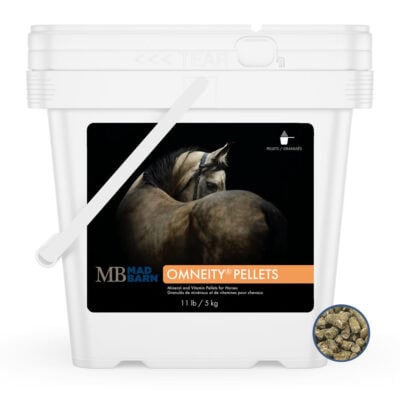
Mad Barn’s Omneity is a balanced vitamin and mineral supplement that can be added to a forage-based diet to prevent common nutritional deficiencies. Omneity is formulated to balance the majority of hay-based diets, providing 100% organic trace minerals for optimal bioavailability, 20 mg of biotin per day to support hoof health, and a full profile of B-vitamins.
Using Blood Analysis in Diet Evaluations
In some cases, it may be relevant to take into account your horse’s blood test results for certain vitamins and minerals when evaluating the diet.
If your horse is showing signs of a vitamin and mineral deficiency or toxicity, it is critical to discuss potential causes with your veterinarian and to pursue diagnostic tests. A blood vitamin & mineral analysis alone might not be sufficient to reach a diagnosis.
After a clinical diagnosis from your veterinarian, dietary adjustment of certain vitamins and minerals may be recommended. For example, horses with Hyperkalemic Periodic Paralysis (HYPP) require controlled intake of the electrolyte mineral potassium. [16]
Horses with neuromuscular disorders such as Equine Motor Neuron Disease (EMND) or White Muscle Disease require higher levels of vitamin E and/or selenium in the diet. [17]
An equine nutritionist can help you formulate an appropriate diet for your horse that supplies these nutrients in formats that are best utilized by the body. Your veterinarian and nutritionist can recommend timelines for when to re-test your horse’s blood levels to monitor the effectiveness of any dietary adjustments.
Frequently Asked Questions
Here are some frequently asked questions about blood testing for vitamin and mineral levels in horses:
Blood testing is only partly reliable for checking a horse's vitamin and mineral status. Some nutrients, such as vitamin E, vitamin A, vitamin D, potassium, phosphorus, and magnesium, may be reflected in blood under the right conditions, but many others do not correlate well with dietary intake. Blood results must also be interpreted carefully because feeding time, exercise, stress, hydration, illness, and lab methods can all affect the numbers reported.
Vitamin deficiencies in horses are assessed on a blood test by measuring the concentration of specific vitamins in the blood and comparing those values to laboratory reference ranges. In practice, this is most commonly done for nutrients such as vitamin E, and in some cases vitamin A or vitamin D, depending on the marker being tested. However, blood testing does not assess all vitamin deficiencies equally well. Some vitamins are better reflected in blood than others, and results can be influenced by recent feeding, exercise, stress, illness, sample handling, and the type of blood sample collected. Blood values also show what is circulating at the time of sampling, not necessarily what the horse has been consuming long term or whether the overall diet is balanced. That is why bloodwork is usually best used as one part of a broader assessment. A qualified equine nutritionist can evaluate the full ration against NRC requirements to determine whether the diet is likely to be deficient in key vitamins, and your veterinarian can use blood testing when there is concern about a specific deficiency, toxicity, or medical condition.
The best way to assess whether your horse is getting enough vitamins and minerals is to evaluate the overall diet, starting with forage analysis. This process, often called ration balancing or diet analysis, is performed by a qualified equine nutritionist who reviews everything your horse eats each day, including hay, pasture, feeds, and supplements, and compares those nutrients to your horse's estimated requirements. It helps identify whether the diet is deficient, excessive, or imbalanced in key vitamins and minerals so you can make targeted adjustments instead of guessing. Mad Barn offers free diet analysis by a qualified equine nutritionist to help horse owners balance the ration appropriately.
Blood mineral levels do not always match what your horse is eating because the body tightly regulates many nutrients in the bloodstream through homeostasis. This means blood concentrations are often maintained within a narrow range even when dietary intake changes. As a result, normal blood values do not always mean the diet is balanced, and low or high values may reflect short-term factors rather than true long-term status.
Some vitamins and minerals are not accurately assessed with blood tests in horses because blood levels do not always reflect what the horse is actually eating. Blood tests are not very useful for assessing intake of calcium, copper, zinc, iron, and iodine, because these nutrients are either tightly regulated in the bloodstream or do not show a dependable relationship with dietary intake. Sodium, chloride, and selenium are also more limited, because blood testing is mainly helpful for identifying toxicity or prolonged deficiency rather than confirming routine adequacy.
Blood tests can sometimes help tell you if your horse has a vitamin or mineral deficiency, but they do not give a complete picture for every nutrient. They are most useful for evaluating certain vitamins and minerals, investigating suspected deficiency or toxicity, or monitoring how a horse responds after a targeted dietary change. For many nutrients, blood levels do not reliably reflect total body status or dietary intake, so results should be interpreted alongside clinical signs, veterinary findings, and a professional diet analysis performed by a qualified equine nutritionist.
A diet evaluation determines if your horse's diet is balanced by calculating the nutrients supplied by the full ration and comparing them to your horse's estimated requirements. A qualified equine nutritionist reviews the forage, feeds, supplements, and daily feeding amounts, then assesses vitamin, mineral, protein, and energy intake against NRC requirements for the horse's age, body weight, workload, and physiological status. This process helps identify nutrient deficiencies, excesses, and imbalances, including important mineral ratios such as calcium to phosphorus or copper to zinc. Mad Barn offers a free diet analysis performed by a qualified equine nutritionist to help horse owners determine whether the ration is properly balanced.
Several factors can affect blood vitamin and mineral test results in horses, including recent feeding, exercise, stress, hydration status, age, and underlying disease. Sampling and handling also matter, because hemolysis, tube type, storage conditions, and delays before analysis can all change the results. Different laboratories may also use different reference ranges, which can affect interpretation.
Vitamin and mineral deficiencies in your horse's diet are best corrected by first identifying which nutrients are actually lacking through a professional diet evaluation. If a qualified equine nutritionist determines that the diet has broad gaps or imbalances, a balanced vitamin and mineral supplement such as Mad Barn's Omneity can help bring the overall ration into better balance. Omneity was formulated based on thousands of forage analyses and grain-based feeding programs to provide nutrients commonly lacking in forage and grain-based diets. If the diet is otherwise well balanced and only a few specific nutrients are low, targeted single-ingredient supplements may also be considered to address those individual deficiencies.
The best supplement to cover all of your horse's nutrient requirements is a comprehensive vitamin, mineral, and amino acid supplement formulated to balance the overall diet. Mad Barn's Omneity is designed to complement forage-based diets and many grain-based feeding programs that still leave important nutrient gaps. It provides broad nutritional support for hoof health, coat quality, muscle function, immune health, and performance by supplying key nutrients commonly lacking in the equine diet. A professional diet analysis completed by a qualified equine nutritionist is the best way to confirm whether Omneity is the right fit for your horse.
Summary
Although blood analysis is convenient and non-invasive, its accuracy in reflecting a horse's vitamin and mineral levels depends on the specific nutrient being tested. For some nutrients, such as vitamin E or potassium, blood levels can provide useful insights, while for others, like calcium or copper, blood tests may not accurately reflect dietary intake or overall body status due to the body's tight regulation of these minerals.
- Prolonged deficiencies in vitamins and minerals can lead to serious health issues in horses, including suboptimal performance, weak hooves and a dull coat.
- Blood vitamin & mineral analysis has limitations for assessing nutritional status in horses, as blood may not accurately reflect nutrient intake. Factors such as sampling conditions, temporary changes in blood chemistry, and errors in processing can affect the results.
- A diet evaluation by a qualified equine nutritionist is the most effective and reliable method to ensure your horse is receiving optimal levels of all essential nutrients.
References
- Nutrient Requirements of Horses: Sixth Revised Edition. National Academies Press, Washington, D.C. 2007.
- Davies. Z., Introduction to Horse Nutrition. Wiley-Blackwell, Chichester, West Sussex. 2009.
- Biochemistry Reference Intervals. University of Guelph Animal Health Laboratory.
- Strickland. K. et al., Dietary Molybdenum as a Putative Copper Antagonist in the Horse. Equine Veterinary Journal. 1987. View Summary
- Vervuert. I. and Kienzle. E., Assessment of Nutritional Status from Analysis of Blood and Other Tissue Samples. Equine Applied and Clinical Nutrition. Elsevier. 2013.
- Deride. C. et al., Relationship Between Selenium, Copper, Zinc and Their Biomarkers in Blood and Skeletal Muscle Tissue in Adult Horses From Southern Chile. Journal of Equine Veterinary Science. 2023. View Summary
- Finno. C. J. and Valberg. S. J., A Comparative Review of Vitamin E and Associated Equine Disorders. Journal of Veterinary Internal Medicine. 2012. View Summary
- Owen. R. N. et al., Elevated Dietary Selenium Rescues Mitochondrial Capacity Impairment Induced by Decreased Vitamin E Intake in Young Exercising Horses. Journal of Animal Science. 2022. View Summary
- Galloway. S. P. et al., Effect of the Inflammatory Response on Trace Element and Vitamin Status. Annals of Clinical Biochemistry: International Journal of Laboratory Medicine. 2000.
- Elefson. S. and Greiner. L., Influence of Biological Sample Pre-Analytical Manipulation for Fat-Soluble Vitamin Analysis. Journal of Swine Health and Production. 2023.
- Cuerq. C. et al., Overview of the in Vitro Stability of Commonly Measured Vitamins and Carotenoids in Whole Blood. Annals of Clinical Biochemistry: International Journal of Laboratory Medicine. 2015.
- Namkoong. S. et al., Reliability on Intra-Laboratory and Inter-Laboratory Data of Hair Mineral Analysis Comparing with Blood Analysis. Annals of Dermatology. 2013.
- Saha. U., Selenium in Animal Nutrition: Deficiencies in Soils and Forages, Requirements, Supplementation and Toxicity. International Journal of Applied Agricultural Sciences. 2016.
- Shastak. Y. et al., A Century of Vitamin E: Early Milestones and Future Directions in Animal Nutrition. Agriculture. 2023.
- Valberg. S. J., Exertional Myopathies in Horses. Merck Veterinary Manual. 2022.
- Young. A., Hyperkalemic Periodic Paralysis (HYPP). UC Davis Veterinary Medicine Center for Equine Health. 2019.
- Divers. T. J. et al., Equine Motor Neuron Disease: A Review of Clinical and Experimental Studies. Clinical Techniques in Equine Practice. 2006.