English








In equestrian sports and horsemanship, the relationship between horse and rider relies on clear communication, trust, and mutual understanding. Natural aids — such as the seat, legs, hands, and voice — serve as the rider’s primary tools for guiding the horse. Meanwhile, artificial aids like bits, whips, spurs, reins, and martingales are often used to reinforce or fine-tune the signals provided by natural aids. [1][2]
When used thoughtfully and skillfully, artificial aids may enhance clarity and improve safety in both training and competition. However, their use raises ethical questions, particularly when misuse, overuse, or lack of rider knowledge leads to compromised equine welfare.
As public concern for animal welfare grows and equestrian practices come under increased scrutiny, it is essential that the use of artificial aids aligns with principles of humane and ethical horsemanship.
Read on to learn more about the use of artificial riding aids in horse training and ways to optimize the use of aids to improve performance without compromising the horse’s quality of life.
Artificial Aids in Horse Riding
In riding, aids are the signals a rider uses to communicate with their horse. These are typically divided into two categories: [1]
- Natural aids: The rider’s seat, legs, hands, and voice
- Artificial aids: External tools used to reinforce or clarify signals
Common examples of artificial aids used in horseback riding and equestrian sports include:
- Whips – Used as an extension of the rider’s arm to provide cues or reinforcement, rather than for punishment, when applied correctly.
- Spurs – Small metal attachments worn on the rider’s boots, intended to refine leg aids and give more precise signals to the horse.
- Martingales – Straps designed to help control the position of the horse’s head and prevent excessive head tossing.
- Auxiliary reins – Training tools, such as draw reins or side reins, used to encourage a specific head and neck position during schooling sessions.
- Bits – Metal or synthetic mouthpieces used with a bridle to communicate through rein pressure; available in various designs that provide different levels of comfort and control.
When used correctly, it is widely believed that artificial aids can improve the clarity of cues, refine signals, and enhance safety, especially in situations that require precision or control. For example, a whip may reinforce a leg cue to move forward, while a martingale can limit excessive head movement. They can also play a corrective role in refining a horse’s responses. [1][2][3]
However, when misused, artificial aids can cause discomfort or pain, negatively affecting the horse’s well-being and overall training experience.
Despite these risks, a study found that approximately 78% of horse owners use at least one form of artificial aid, highlighting the need for education and responsible use. It’s important for riders to understand when and how to use these aids to avoid unintentional harm and maintain an ethical partnership with the horse. [4]
Horse Training
Using learning theory in horse training means taking the horse’s natural behavior and cognitive abilities into account. Learning theory describes four types of operant conditioning: [5]
- Positive reinforcement: Adding a pleasant stimulus (e.g., a food reward) immediately after a desired behavior to increase the likelihood that the horse will repeat it
- Negative reinforcement: Removing an aversive stimulus (e.g., releasing leg pressure) when the horse performs the correct response, thereby strengthening that behavior
- Positive punishment: Applying an unpleasant stimulus (e.g., a sharp tap from a whip or spur) after an unwanted behavior to decrease its occurrence
- Negative punishment: Withdrawing a valued stimulus (e.g., taking away access to a treat) following an undesired behavior to reduce its frequency
Reinforcement increases the likelihood of a behavior happening again, while punishment decreases the likelihood. [5][6][7]
Proper timing and consistent use of aids are fundamental to successful training. If the cue is delayed or inconsistent, it can confuse the horse, making learning harder. Escalating pressure to achieve a result can cause fear-based behaviors like bucking, rearing, or bolting, while insufficient pressure may fail to prompt a response. [6]
Risks Associated With Training Aids
The impact of misusing artificial aids on horses can be significant, often resulting in pain, frustration, fear, and anxiety. When these tools are misapplied or overused, they can cause emotional distress, which can negatively affect a horse’s behavior, performance, and relationship with the rider. [8]
Training risks associated with misuse of artificial aids include: [8][9][10][11]
- Pain and discomfort: Incorrect use of artificial aids can cause physical pain, leading to discomfort and behavioral changes in the horse.
- Frustration: A horse may become frustrated if aids are used inconsistently or if they are giving conflicting signals. This can lead to resistance or avoidance behaviors.
- Fear, stress and anxiety: Negative experiences associated with artificial aids can cause the horse to develop fear or anxiety, making it harder for the horse to trust the rider. This mistrust can create safety risks, as the horse may become unpredictable or resistant to cues, raising the potential for accidents or injuries.
- Learned helplessness: Prolonged misuse of artificial aids can lead to learned helplessness, where the horse becomes passive and unresponsive, unable to escape or avoid constant pressure.
Misusing artificial aids can impact the horse’s emotional well-being and behavior, underscoring the importance of responsible use to maintain a healthy relationship and protect the horse’s welfare.
What's your top priority with your horse's health?

What's your top priority with your horse's health?
Training & Conflict Behaviors
Training sport horses to a high level of performance is a complex process that requires not only skill and consistency, but also an understanding of each horse’s individual needs, maturity, and learning pace. The most effective horse training is a gradual and thoughtful progression that allows the horse to develop physically, mentally, and emotionally. [12]
While owners and caretakers go to great effort to ensure their horses are well cared for, competitive environments, financial constraints, and even inexperience can result in some horses being pushed beyond their current capabilities.
Putting excess demand on horses before they are developed enough for the task often leads to conflict behaviors or hyperreactive responses, which are signs of stress, confusion, or discomfort.
Common examples of conflict behaviors include: [9][13][14]
- Head tossing or shaking
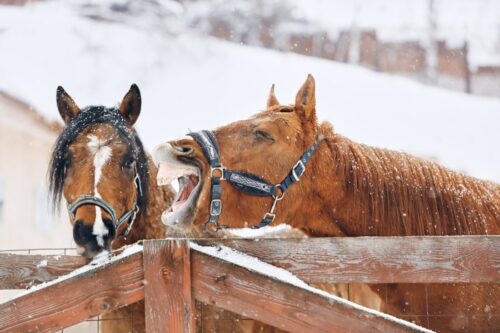
- Gaping or resistance to the bit
- Pulling the reins from the rider’s hands
- Excessive tail swishing
- Tension, balking, or overreactions to aids
Unfortunately, some riders misinterpret these behaviors as a “bad attitude” and respond with stronger, harsher, or more frequent use of artificial aids. Rather than resolving the issue, this response can escalate the horse’s stress and, in severe cases, lead to injury, learned helplessness, or even euthanasia if the horse is deemed dangerous or untrainable. [13][14][15]
Conflict behaviors are not signs of disobedience; they are the horse’s way of communicating something is wrong, whether it’s pain, fear, or confusion. Such behaviors are rarely seen in wild horses, which highlights how training methods and equipment can affect equine well-being. [16][17]
For artificial aids to be effective, riders need to recognize signs of stress or emotional overload, as these states reduce the horse’s ability to think and learn. Emotional reactions are often a response to unfamiliar or frightening situations, and highly reactive horses can be harder to manage. [18]
Further, trainers should consider how their methods and signals may be confusing to the horse. As riders, we ask for many different responses using just a few body areas, which makes it easy to send mixed signals. Since industry and research professionals don’t fully understand how horses interpret these cues, pressure should always be applied with care and clarity. [12]
Factors Contributing to Misuse of Artificial Aids
While artificial aids can enhance training when used correctly, their misuse can lead to significant harm. The risk of misuse is influenced by factors such as lack of education, pressure to succeed, and adherence to traditional practices that may conflict with modern animal welfare standards.
Unintentional Misuse
Rider misunderstanding or under-education can contribute to unethical use of artificial aids. Inexperienced riders may not understand the potential harm caused by improper application.
For example, incorrect use of spurs can give horses painful abrasions or bleeding, while auxiliary reins can cause equine muscle fatigue or discomfort. [2][3][19]
Riders who are unaware of subtle signs of distress may unintentionally make the horse’s discomfort worse, continuing harmful practices without realizing the negative impact. Proper education is key to ensure that artificial aids are applied responsibly, respecting the horse’s welfare and preventing unnecessary harm.
Any equipment that applies pressure or restricts a horse’s movement can affect welfare. These tools should never replace proper training or be used to force compliance. [6][12]
Pressure to Succeed
In highly competitive environments, riders often face immense pressure to perform and win, which can lead to an over-reliance on artificial aids. The desire to secure top placements or impress judges may push riders to use tools that enhance control or refine performance, sometimes at the expense of the horse’s well-being.
Sometimes, this drive can lead riders to rely on firmer cues when subtler adjustments would be just as effective. Fostering a culture of mentorship and shared learning — where riders feel supported in exploring kinder strategies — helps balance competitive pursuits with the horse’s comfort.
Tradition
Many training tools and methods, passed down through generations, are deeply embedded in equestrian tradition and viewed as essential for success. Their historical significance makes them difficult to question, even when they conflict with modern animal welfare standards. [20][21]
Despite some innovation, the equine industry remains largely guided by traditional perspectives on horses and horsemanship.
Riders may choose methods that are familiar and promise quick results, and trainers may use certain tools because they are commonly accepted within their discipline, even if these practices do not always prioritize the horse’s well-being. [22]
Ethical horsemanship requires prioritizing the horse’s welfare over outdated practices, ensuring that training methods align with the horse’s best interests.

Public Scrutiny & Organizational Oversight
The rise of social media and public scrutiny has added a new layer of oversight in the enforcement of ethical standards within equestrian sport and the larger horse community.
Videos and photos from competitions, training sessions, and other behind-the-scenes activities are now widely accessible to the public. The increased reach of equine media allows greater visibility of how artificial aids are used, including instances where their application may be considered improper, and amplify these occurrences to a much wider audience.
Although many riders use artificial aids responsibly, high-profile incidents — such as the 2020 Olympics horse abuse case and the 2021 electric spurs controversy — have sparked global discussions about the ethical treatment of horses. These events have contributed to calls for increased regulation and oversight within equestrian sport to help safeguard horse welfare. [14][23]
The Fédération Équestre Internationale (FEI), the global governing body for equestrian sports, has implemented strict rules to ensure artificial aids are used ethically. These regulations aim to balance performance with horse welfare by: [2][24][25]
- Banning harmful equipment such as double-twisted wire bits
- Monitoring horse welfare during competitions via the FEI Veterinary Commission
- Disqualifying riders who misuse artificial aids or use excessive force
- Promoting humane training methods, including reward-based alternatives
In 2022, the FEI created the Equine Ethics and Wellbeing Commission, which published a 2023 report outlining key welfare priorities and 30 recommendations aimed at reinforcing the FEI’s leadership in ethical horsemanship. [26]
The Future of Artificial Aid Use
The future of artificial aids in horse training and competition will depend on balancing performance goals with consideration for the horse’s welfare. As awareness of the potential negative impacts of these tools increases, there is a growing focus on their responsible application. [2]
Looking ahead, education and informed horsemanship will play an important role in promoting the responsible use of artificial aids. This involves applying these tools appropriately, only when justified, and in ways that minimize the risk of stress, pain, or discomfort for the horse.
Our growing understanding of equine behavior and welfare, coupled with guidelines from organizations like the FEI, means the future use of these tools will be shaped by a focus on humane training practices. [27]
This shift requires a cultural change — one that balances performance with partnership and respect for the animal, focusing on a more sustainable and ethical approach to horse training. [21]
Frequently Asked Questions
Here are some frequently asked questions about aids in horse riding:
Artificial aids are external tools used to reinforce the rider's natural cues. Common examples include bits, whips, spurs, draw reins, martingales, and other auxiliary reins.
The four natural aids are the seat, legs, hands, and voice. These are the rider's primary tools for communicating with the horse.
Spurs should only be used by skilled riders with a steady leg position to refine leg cues — not to punish or force movement. They should never replace proper training or be used on overly sensitive or inexperienced horses.
Artificial aids can be ethical and helpful if used correctly, thoughtfully, sparingly, and with the horse's well-being in mind. Misuse or overuse, however, can cause harm and raise serious welfare concerns.
Summary
Artificial aids are tools like spurs, crops, whips and martingales that are used in horse training. Artificial aids can reinforce natural cues and improve rider-horse communication, but they carry the risk of harm if misused.
- Most horse training relies on negative reinforcement, which involves applying pressure and releasing it when the horse responds correctly
- Improper use of aids or inconsistent pressure release can cause pain, frustration, fear, or learned helplessness
- Unethical use may be linked to lack of education, competitive pressure, and traditional practices that overlook welfare
- Oversight from organizations like the FEI promotes responsible use and prioritizes horse welfare in training and competition
References
- Thompson. K. et al., A Critical Review of Horse-Related Risk: A Research Agenda for Safer Mounts, Riders and Equestrian Cultures. Animals : an Open Access Journal from MDPI. 2015.
- Holmes. T. Q. and Brown. A. F., Champing at the Bit for Improvements: A Review of Equine Welfare in Equestrian Sports in the United Kingdom. Animals : an Open Access Journal from MDPI. 2022. View Summary
- Gehlen. H. et al., Evaluating Horse Owner Expertise and Professional Use of Auxiliary Reins during Horse Riding. Animals. Multidisciplinary Digital Publishing Institute. 2021.
- Hockenhull. J. and Creighton. E., Equipment and Training Risk Factors Associated with Ridden Behaviour Problems in UK Leisure Horses. Applied Animal Behaviour Science. 2012.
- McLean. A. N. and Christensen. J. W., The Application of Learning Theory in Horse Training. Applied Animal Behaviour Science. 2017.
- McKenzie. J. et al., Equine Responses to Acceleration and Deceleration Cues May Reflect Their Exposure to Multiple Riders. Animals : an Open Access Journal from MDPI. 2020.
- Christensen. J. W. et al., Does Learning Performance in Horses Relate to Fearfulness, Baseline Stress Hormone, and Social Rank?. Applied Animal Behaviour Science. 2012.
- Pereira-Figueiredo. I. et al., Forced Handling Decreases Emotionality but Does Not Improve Young Horses' Responses toward Humans and Their Adaptability to Stress. Animals : an Open Access Journal from MDPI. 2024. View Summary
- Tuomola. K. et al., Is Rein Tension Associated with Horse Behaviour and Mouth Injuries in Harness Racing Trotters? – Pilot Study. Applied Animal Behaviour Science. 2024.
- Pannewitz. L. and Loftus. L., Frustration in Horses: Investigating Expert Opinion on Behavioural Indicators and Causes Using a Delphi Consultation. Applied Animal Behaviour Science. 2023.
- Bartolomé. E. and Cockram. M. S., Potential Effects of Stress on the Performance of Sport Horses. Journal of Equine Veterinary Science. 2016.
- Goodwin. D. et al., How Equitation Science Can Elucidate and Refine Horsemanship Techniques. The Veterinary Journal. 2009.
- Luke. K. L. et al., Bit Use and Its Relevance for Rider Safety, Rider Satisfaction and Horse Welfare in Equestrian Sport. Applied Animal Behaviour Science. 2023.
- Luke. K. L. et al., How Equestrians Conceptualise Horse Welfare: Does It Facilitate or Hinder Change?. Animal Welfare. 2023. View Summary
- Carroll. S. L. et al., Understanding and Treating Equine Behavioural Problems. The Veterinary Journal. 2023. View Summary
- Dyson. S. and Pollard. D., Application of a Ridden Horse Pain Ethogram and Its Relationship with Gait in a Convenience Sample of 60 Riding Horses. Animals : an Open Access Journal from MDPI. 2020. View Summary
- Górecka-Bruzda. A. et al., Conflict Behavior in Elite Show Jumping and Dressage Horses. Journal of Veterinary Behavior. 2015.
- Fenner. K. et al., Effects of Pre-Conditioning on Behavior and Physiology of Horses during a Standardised Learning Task. PLoS ONE. 2017.
- Lemon. C. et al., An Investigation into Equestrian Spur Use in the United Kingdom. Journal of Veterinary Behavior. 2020.
- Maurício. L. S. et al., The Easiest Becomes the Rule: Beliefs, Knowledge and Attitudes of Equine Practitioners and Enthusiasts Regarding Horse Welfare. Animals : an Open Access Journal from MDPI. 2024. View Summary
- Wolframm. I. A. et al., Changing Hearts and Minds in the Equestrian World One Behaviour at a Time. Animals. Multidisciplinary Digital Publishing Institute. 2023. View Summary
- Lord. R., Understanding Adoption or Resistance of Long-Standing Belief Systems within the Equine Industry.
- Douglas. J. et al., Social Licence to Operate: What Can Equestrian Sports Learn from Other Industries?. Animals : an Open Access Journal from MDPI. 2022. View Summary
- GA18_Annex_15.3_PART 2_Mark-up Rules.Pdf.
- FEI Eventing Guidelines on Use of Tack, Equipment and Dress 2023 20.04.2023.Pdf.
- EW - Welcome to the FEI Equine Welfare Hub. FEI. 2025.
- FEI Code of Conduct for the Welfare of the Horse.Pdf.