Sidewinder Syndrome, also known as sidewinder gait or crab walking, is one of the more perplexing and challenging equine health conditions for horse owners and veterinarians alike. This syndrome is characterized by a distinct sideways drift of the horse's trunk...
Seizures, while relatively rare in horses compared to dogs and humans, pose significant challenges for both horse owners and veterinarians. These neurological episodes, characterized by abnormal electrical activity in the brain, can manifest in various forms. During a seizure, a...
Breeders should observe all foalings as closely as possible to monitor the health and wellness of the mare and foal during this period of rapid transition. The 1-2-3-4 Rule is a helpful guideline for breeders to follow when evaluating their...
Endurance riding is a marathon for horses, with horses and riders covering distances of up to 100 miles per day. Athletes cover rugged terrain including slopes, hills, water, and different types of footing, during the competition. Endurance riding has its...
Horses evolved as a social prey species who were able to survive in a variety of environments due to their adaptability and ability to roam long distances in search of food and water. [ref n="1"] The adaptable nature of horses...
Non-steroidal anti-inflammatories, or NSAIDs, for short, are a type of medication commonly administered to horses for a variety of conditions. Veterinarians most often prescribe NSAIDs for soft tissue and musculoskeletal injuries, as well as for abdominal inflammation and pain. [ref...
Hoof health is one of the pillars of overall horse health and well being. There are numerous conditions that can impact the horse's hooves, including quittor. Quittor is an infection in the collateral cartilage of the hoof often resulting from...
Salmonellosis refers to infection with Salmonella, a bacterium that primarily causes intestinal infections and diarrhea. Salmonella can affect numerous species, including horses and humans. Horses typically acquire the bacteria through the ingestion of contaminated feed or water. Common symptoms of...
Bucked shins is a condition that affects the cannon bones of young race horses in the first 6 to 8 months of their speed training. Since the horse's bones are still developing, the strain of the training results in a...
Bog spavin is a common term for effusion in the horse's tarsocrural joint. This painful condition describes inflammation and fluid accumulation in the joint capsule between the tibia and the tarsal bones in the hock. Bog spavin is characterized by...
The horse's gastrointestinal system is evolved for processing forage and fiber. Domestic feeding and management strategies often challenge the horse's natural digestive process. Significant disruptions can lead to bloating - a condition where gas accumulates in the gut, causing abdominal...
A 21 year old mare received dietary intervention from Mad Barn to resolve persistent hay belly and coat and hoof quality issues with an aim to return to light exercise. After two months of dietary intervention, the mare had improvement...
Anthrax is a rapidly fatal disease caused by the bacterium Bacillus anthracis. This bacterium can infect horses, other livestock species, and humans. Anthrax cases occur globally every year, including sporadic outbreaks in North America. B. anthracis primarily exists as spores...
In recent years, extensive and persistent wildfires have been a growing concern for horse operations everywhere. Evacuation and preventive protocols are often challenging and put a great deal of strain on livestock and their human caretakers. Equally as concerning is...
Parasites are organisms that live in or on the horse, and rely on the horse for sustenance while often causing harm or disease. These include worms like roundworms, tapeworms, and bots, as well as external parasites such as ticks and...
Keratosis is an equine skin condition where patches or bands of skin become thickened, rough, dark, and oily. The patches are not painful nor itchy, are not contagious, and do not impact the overall health of the horse. There are...
The Ridden Horse Pain Ethogram (RHPE) is a list of 24 behaviours associated with musculoskeletal pain in the ridden horse. Dr. Sue Dyson et al. developed this ethogram as a means of identifying low-grade lameness and horses experiencing discomfort during...
Vesicular stomatitis is a viral disease that more commonly affects horses living in warmer climates. The disease typically results in blister-like lesions (referred to as vesicles) forming in and around the mouths of horses and other farm animals. This condition...
Hendra virus (HeV), also known as equine morbillivirus, is a frequently fatal viral infection that can affect both horses and people. All reported cases of human Hendra virus infection occurred after exposure to an affected horse, emphasizing the significance of...
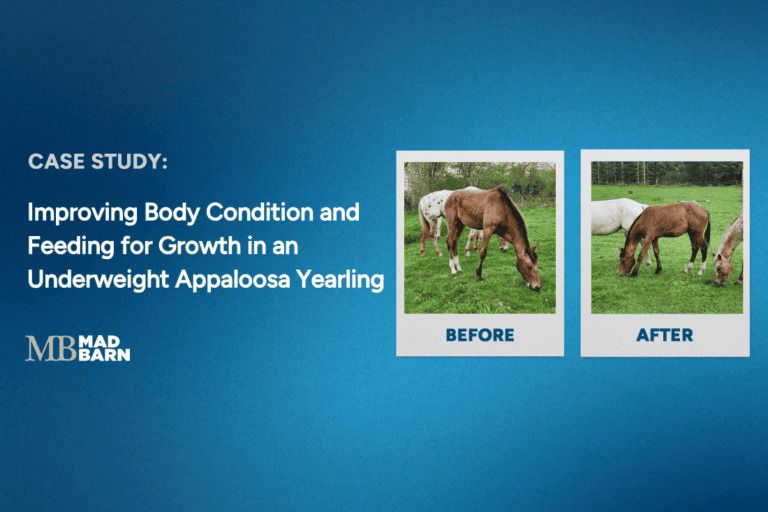
Promoting healthy weight gain can be a challenge for some underweight horses. Whether they are recovering from illness, not eating enough, or simply a hard keeper, some horses need extra nutritional support to counteract unwanted weight loss. The main goal...
Equine recurrent uveitis (ERU) is an autoimmune disease and the leading cause of blindness in horses. The disease results in the immune system repeatedly attacking the structures of the eye causing tissue damage, inflammation, and eventually blindness. The underlying cause...
Ear mites are tiny, wingless, external parasites that live in the ears of horses and cause psoroptic mange. They are round with eight legs and are sometimes visible to the naked eye. They do not burrow into the horse but...
When a horse lies down for extended periods, especially with long-heeled horseshoes or on shallow bedding, prolonged pressure and "squishing" from the hoof on the elbow can occur, leading to a condition known as shoe boil. Shoe boils, otherwise known...
Fiber is one of the most important components in the equine diet, providing up to 70% of a horse’s energy needs. Fiber in equines diets predominantly originates from forages such as hay and pasture grass. Fiber can also be obtained...
Forage should constitute the bulk of your horse's diet, but not all of it needs to be provided as long-stemmed forages like baled hay. Forage cubes and pellets are other options that may be beneficial for horses in different management...
Glaucoma refers to increased intraocular pressure, the fluid pressure within the eyeball that gives the eye its shape. [ref n="1"] Glaucoma in horses develops when there is an imbalance in fluid drainage at the front of the eye, leading to...
Degenerative joint disease (also called arthritis) refers to degeneration and loss of the articular cartilage, cartilage within a joint space that protects the bones on either side of a joint. As the articular cartilage degenerates, the bones contact each other,...
A Breeding Soundness Exam (BSE) aims to evaluate your stallion’s overall health, reproductive anatomy, ability to perform in the breeding shed, and semen quality. This exam ensures your stallion is […]
Neurectomy refers to the surgical cutting and removal of a nerve to prevent pain sensation. In horses, neurectomy is considered a salvage procedure, meaning it is a last resort only performed if no other treatments were effective. Veterinarians may recommend...
Progressive ethmoidal hematomas (PEHs) in horses are non-cancerous masses that develop from the ethmoidal labyrinth. This is a structure with a high concentration of blood vessels within the horse’s nasal […]