English








Diphenhydramine, commonly sold under the brand name Benadryl®, is an antihistamine medication used in horses to manage allergic reactions, including hives, insect bite hypersensitivity, and other inflammatory skin conditions.
While this product may be recommended by a veterinarian, its use in horses is off-label, meaning it is not specifically approved for equines. Its use should be approached with a clear understanding of its effects, limitations, and competition status.
For owners, it’s important to understand why a veterinarian may recommend diphenhydramine for management of equine allergies. Although it can provide relief in some cases, this medication does not address the underlying cause of allergic reactions and may cause side effects such as sedation.
Keep reading to learn more about the use of Benadryl® for horses, including side effects, contraindications, and withdrawal times for competition horses.
Benadryl® (Diphenhydramine) for Horses
Diphenhydramine is an H1 receptor antagonist used to block the effects of histamine, an inflammatory compound released during allergic reactions that leads to signs of inflammation such as itching. [1] It is approved for use in humans but is commonly used in animals, including horses, on an extra-label basis. [2]
In veterinary medicine, diphenhydramine is primarily used to manage allergic conditions, prevent hypersensitivity reactions, and reduce inflammation associated with histamine release. [1][2] Diphenhydramine also has anticholinergic and sedative properties due to its central nervous system activity. [2]
Historically, diphenhydramine was one of the most commonly used antihistamines in equine practice, particularly for acute allergic reactions such as hives, insect bites, and drug-related hypersensitivity.
As a first-generation antihistamine, it readily crosses the blood-brain barrier, which contributes to its sedative effects. [2]
In contrast to second-generation antihistamines such as cetirizine (Zyrtec®), which have limited penetration into the central nervous system, diphenhydramine is more likely to cause drowsiness or reduced alertness. [2]
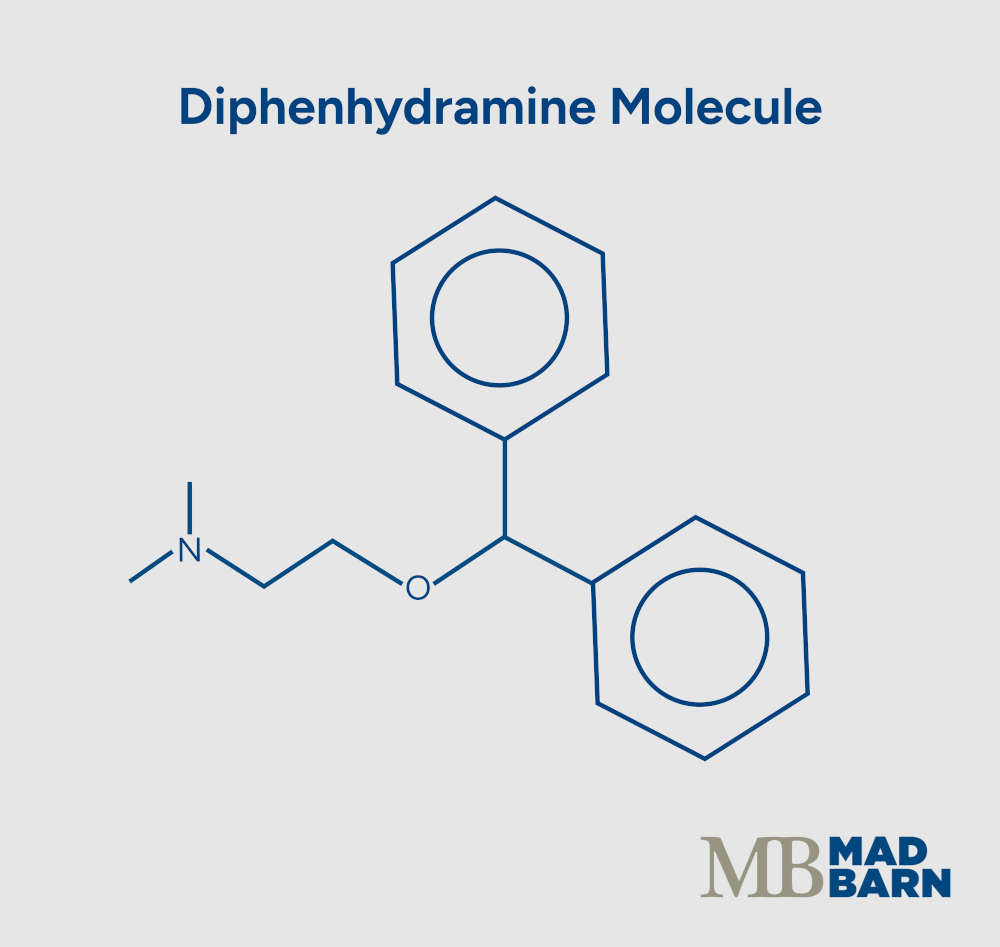
The response to antihistamines in horses can be variable and is influenced by the underlying cause of the allergic reaction. In conditions where histamine is a primary mediator, antihistamines such as diphenhydramine are more likely to provide clinical benefit. [1]
In more complex inflammatory conditions where multiple mediators are involved, antihistamines alone may not fully control clinical signs. [1]
This variability explains why diphenhydramine is often used as part of a multimodal treatment approach rather than as a sole therapy. Combining antihistamines with other treatments, such as corticosteroids or environmental management strategies, may improve overall outcomes in horses with allergic disease. [1]
What's your top priority with your horse's health?

What's your top priority with your horse's health?
Available Forms
There are currently no equine-labeled formulations of diphenhydramine. Veterinarians use human formulations in an off-label manner. [2]
In human medicine, diphenhydramine is marketed for management of allergic symptoms under the trade name Benadryl®.
Other brand names of diphenhydramine are marketed for sleep-aid and include:
- Nytol®
- Sominex®
- Unisom SleepGels®
This medication is available over the counter (OTC) and is typically sold in oral forms such as tablets, caplets, and flavored syrups. Veterinarians may also request custom intravenous formulations from compounding pharmacies.
Drug Class: First Generation Antihistamines
Diphenhydramine belongs to the class of first-generation H1 antihistamines. [1] These drugs cross the blood-brain barrier and are associated with sedative effects in many species. [3]
Antihistamines are drugs that block histamine receptors, preventing histamine from binding and exerting its effects on tissues. [1] These medications are divided into classes based on receptor selectivity and their ability to penetrate the central nervous system.
First-generation antihistamines are highly lipophilic (fat-soluble), allowing them to readily cross the blood-brain barrier. Once in the central nervous system, they bind to histamine receptors in the brain, which can result in sedation, drowsiness, and reduced alertness. [3]
In contrast, second-generation antihistamines are more selective for peripheral H1 receptors and are less able to enter the brain. This difference limits their sedative effects and makes them more suitable for situations where maintaining normal behavior and performance is important.
Mechanism of Action
Diphenhydramine acts as a competitive antagonist at H1 histamine receptors. [1] These receptors are located on the outer surfaces of blood vessels, bronchial smooth muscle, and peripheral nerves. [1]
By binding to these receptors, diphenhydramine blocks histamine from exerting its effects, thereby reducing vasodilation, limiting vascular permeability, and decreasing pruritus (itching). It also helps prevent smooth muscle contraction associated with allergic responses. [1]
This reduces the local inflammatory response histamine typically triggers, decreasing swelling, redness, and relief of clinical signs such as hives and itching. Diphenhydramine’s additional anticholinergic effects may contribute to drying of secretions and sedation. [2]
In addition to blocking histamine at H1 receptors, diphenhydramine’s effects on the central nervous system are an important consideration in horses. Because this drug readily crosses the blood-brain barrier, it can influence neurotransmission and contribute to sedation or altered behavior. [2]
The combination of peripheral antihistamine effects and central nervous system activity can influence how horses respond clinically. While sedation may be beneficial in some situations, such as reducing stress associated with allergic reactions, it may also limit the usefulness of the drug in performance horses or animals requiring normal alertness. [2]
Uses in Horses
Diphenhydramine is only approved for use in humans, meaning its use in horses is extra-label, also referred to as off-label. [2] Veterinarians may recommend diphenhydramine for horses at their discretion, which is permitted under prescribing regulations.
Diphenhydramine is used in horses primarily to prevent and manage allergic conditions associated with histamine release, such as:
- Insect bite hypersensitivity (sweet itch)
- Seasonal allergies
- Skin allergies
The strongest evidence supports use in managing urticaria (hives) and other hypersensitivity reactions. [1] Histamine release from mast cells leads to inflammation and vascular changes in the skin, which diphenhydramine helps counteract. [1]
Administration Routes
Diphenhydramine is most commonly administered orally in horses, although injectable formulations may be used by veterinarians in certain clinical settings. [2]
Because diphenhydramine is used extra-label in equine medicine, dosing must be determined based on the horse’s body weight, clinical condition, and the formulation being used. [2] Human over-the-counter products are available in oral forms such as tablets, caplets, and syrups, but these products should only be used in horses under veterinary supervision.
Oral Benadryl® may be given with or without food. Tablets or liquid preparations can be administered directly or mixed with a small amount of feed when appropriate. [2]
As a first-generation antihistamine, diphenhydramine readily crosses the blood-brain barrier and may cause sedation or reduced alertness. [3] These effects should be considered when timing administration, particularly in performance horses or in situations where CNS depression is undesirable.
Storage
Always store medications according to the instructions on the label.
Most formulations of diphenhydramine have the following storage instructions: [2]
- Store at room temperature
- Protect from light
- Keep in original container
- Keep out of reach of animals and children
Safety Warnings & Precautions
Diphenhydramine has a relatively wide safety margin but must be used carefully in horses due to limited data supporting its use.
One consideration when using diphenhydramine is the potential for paradoxical reactions. Although sedation is the most commonly expected effect, some animals may instead exhibit excitation or hyperactivity. [2] This variability in response may be related to individual sensitivity, dosage, or differences in central nervous system effects.
Additionally, diphenhydramine’s anticholinergic properties can contribute to physiologic effects such as decreased secretions and changes in gastrointestinal motility. [2] These effects may be mild in many cases but can become clinically relevant in horses with underlying health conditions, which underscores the importance of veterinary oversight when using this medication in horses.
Monitoring
Horses receiving Benadryl® or other formulations of diphenhydramine should be monitored for:
- Sedation or altered behavior: Signs of drowsiness, sleeping, recumbency, and reduced responsiveness are expected effects of diphenhydramine, but should not be excessive or prolonged. Unusual agitation or hyperactivity may also occur in some horses.
- Signs of improvement: Monitor for reduction in clinical signs such as decreased itching, swelling, or hives. Lack of response may indicate limited effectiveness or the need for an alternative treatment approach.
- Cardiovascular status: Observe for changes in heart rate or overall demeanor. While significant effects are uncommon, any abnormalities should be evaluated, particularly in horses receiving concurrent medications.
- Gastrointestinal function: Monitor appetite, manure output, gut sounds, and signs of discomfort. Mild changes such as reduced appetite or soft manure may occur, but persistent gastrointestinal signs warrant further assessment.
Due to variability in drug absorption and response, monitoring clinical efficacy is essential. [1][2][3]
Contraindications
Contraindications refer to circumstances where a drug should be avoided or used with caution.
Diphenhydramine is contraindicated for horses in the following scenarios:
- Hypersensitivity: Do not use in horses with a known allergy or hypersensitivity to diphenhydramine or any components of the formulation.
- Pregnancy and lactation: The safety of diphenhydramine has not been well-established in pregnant or lactating mares. Its use is generally avoided unless the potential benefits outweigh the risks, as determined by a veterinarian.
Side Effects
Side effects refer to known effects of a drug that are not directly related to their intended effects.
Diphenhydramine is generally well-tolerated in horses, but its activity in the central nervous system and peripheral tissues can lead to a range of predictable side effects.
Common side effects of diphenhydramine use in horses include: [2]
- Drowsiness or sedation
- Reduced energy
- Decreased responsiveness
Additional effects may include: [2]
- Dry mouth due to anticholinergic activity
- Decreased appetite
- Gastrointestinal upset, such as mild colic signs or changes in manure consistency
Less common effects include: [2]
- Excitability or paradoxical hyperactivity
Adverse Reactions
Adverse reactions refer to responses to a drug that are not typically expected under normal administration.
Adverse reactions to diphenhydramine are uncommon in horses, but may occur in sensitive individuals or at higher doses.
Severe reactions may include: [2]
- Marked sedation or profound central nervous system depression
- Behavioral changes, including agitation or disorientation
- Difficulty urinating due to anticholinergic effects

Acute Toxicity (Overdose)
Overdose of diphenhydramine in horses is not well-characterized in the literature, but excessive dosing is expected to amplify its central nervous system and anticholinergic effects.
Signs of overdose may include: [2]
- Severe sedation or profound lethargy
- Tremors
- Loss of coordination (ataxia)
In other species, diphenhydramine overdose has been associated with additional systemic effects, including: [2]
- Neurologic abnormalities, such as agitation or seizures
- Cardiovascular effects, including changes in heart rate or rhythm
Drug Interactions
Since diphenhydramine is used off-label in horses, drug interactions are not well-characterized in equine contexts.
Diphenhydramine can influence how other medications work or how they are absorbed, metabolized, or eliminated in the body. The concurrent use of multiple medications increases the risk of interactions. [3]
Potential concerns include: [2]
- Additive sedation with other CNS depressants
- Interactions with drugs affecting cardiovascular or neurologic function
- Additive anticholinergic effects
Regulatory Status & Legal Considerations
There are currently no equine-approved formulations of diphenhydramine available. [2]
Veterinarians use human formulations such as Benadryl® in an off-label manner. This means drug companies cannot guarantee the safety and efficacy of the product in horses and are unlikely to warranty the product in the case of adverse reactions.
Off-label use is permitted under veterinary prescribing regulations when no approved equine alternative is available. In these cases, veterinarians rely on published research, clinical experience, and established treatment protocols to determine appropriate dosing and monitoring.
If your veterinarian recommends diphenhydramine, it’s appropriate to ask about the expected benefits, potential risks, monitoring plan, and alternative treatment options.
Status in Competition
Diphenhydramine use in horses is regulated by most competitive organizations including the Fédération Equestre Internationale (FEI). Under FEI rules, substances are classified as either banned or controlled medications.
Diphenhydramine is listed as a controlled medication, meaning it is permitted for therapeutic use outside of competition but prohibited in competition unless properly declared. [4]
This classification reflects diphenhydramine’s pharmacologic effects as an antihistamine, which may alter clinical signs of allergic or inflammatory conditions.
Its use during competition could potentially mask underlying disease or affect a horse’s clinical presentation. [4]
Withdrawal & Detection Time
The FEI provides detection times as a general guideline for how long a substance may be detectable in a horse’s system. Detection time is not the same as withdrawal time. [5]
Withdrawal times must include an appropriate safety margin and are determined by the attending veterinarian, taking into account factors such as dosing, route of administration, and individual variation between horses. [5]
Work with your veterinarian to determine an appropriate withdrawal period before competition. Always review the regulations specific to your discipline prior to administering diphenhydramine.
Frequently Asked Questions
Here are some frequently asked questions about diphenhydramine (Benadryl®) for horses:
Diphenhydramine (Benadryl®) may help reduce clinical signs associated with allergic reactions in horses, particularly those involving histamine release such as hives (urticaria). However, its effectiveness can vary between individuals, and it may not be sufficient as a standalone treatment for more complex allergic conditions.
Diphenhydramine (Benadryl®) is most commonly used in horses to manage allergic conditions, including hives and hypersensitivity reactions. It may also be used as part of a broader treatment plan when corticosteroids are not appropriate or when additional symptom control is needed.
There is no formula of diphenhydramine that is approved for use in horses. However, it is generally well-tolerated in horses when used under veterinary guidance. Side effects such as sedation or, less commonly, excitability may occur, and appropriate dosing is important to minimize the risk of adverse effects.
Diphenhydramine (Benadryl®) can be administered orally in horses, but absorption is relatively poor compared to other species. This may limit its effectiveness and lead to variable clinical responses depending on the individual horse and formulation used.
Diphenhydramine (Benadryl®) typically begins working within a few hours when effective, but the onset and degree of response can vary depending on the route of administration and the individual horse's metabolism.
Diphenhydramine (Benadryl®) is not specifically approved for use in horses, and its use is considered extra-label. It should only be administered under the direction of a veterinarian who can determine appropriate dosing and monitor for safety.
Diphenhydramine (Benadryl®) is classified as a controlled medication in many equestrian competitions. Its use is restricted by the FEI, and withdrawal times must be followed in accordance with governing body regulations. Always consult the current rulebook for your discipline before starting your competition horse on a new medication.
Diphenhydramine (Benadryl®) may cause side effects in horses, most commonly drowsiness and reduced energy. Some horses may also experience excitability, gastrointestinal upset, or changes in behavior, although more serious reactions are uncommon.
Diphenhydramine (Benadryl®) may be used alongside other medications in horses, but caution is required due to the potential for drug interactions or additive sedative effects. Veterinary guidance is recommended when combining treatments.
Diphenhydramine (Benadryl®) and cetirizine (Zyrtec®) differ in their pharmacologic profiles, with diphenhydramine more likely to cause sedation due to its central nervous system effects. Cetirizine is less sedating but may not be effective for all conditions, so the choice depends on the clinical scenario and individual response.
Diphenhydramine (Benadryl®) should not be given to horses without veterinary guidance, even though it is available over the counter. Proper dosing, formulation selection, and monitoring are important to ensure safety and effectiveness.
Summary
Benadryl® (diphenhydramine) is a first-generation antihistamine used off-label in horses to manage allergic reactions such as hives and insect bite hypersensitivity.
- Diphenhydramine blocks H1 histamine receptors, which reduces inflammation, swelling, and itching associated with allergic reactions
- Because it crosses the blood-brain barrier, sedation is a common effect and may impact behavior, alertness, and performance
- Clinical effectiveness varies, with the best results seen in conditions where histamine is a primary driver rather than in complex inflammatory diseases
- It is often used as part of a multimodal treatment approach alongside corticosteroids, environmental management, and other supportive therapies
- Use in horses is extra-label, requiring veterinary guidance to determine appropriate dosing, monitor response, and minimize potential risks
References
- Redmond. J. S. et al. Pharmacokinetics of Diphenhydramine Following Single‐dose Intravenous and Oral Administration in Non‐fasted Adult Horses. Journal of Veterinary Pharmacology and Therapeutics. 2022.
- Budde. J. A. et al. Eds. Plumb's Veterinary Drug Handbook. 10th edition. Educational Concepts, LLC, dba VetMedux, Tulsa, OK. 2023.
- Cole. C. et al. Eds. Equine Pharmacology. Wiley Blackwell, Ames, Iowa. 2015.
- 2026 Equine Prohibited Substances List. FEI. 2025.
- FEI LIST OF DETECTION TIMES. FEI. 2024.