English

Digestive health plays a central role in your horse’s comfort, performance, and overall well-being, which is why many horse owners add gut supplements to their horse’s diet.
However, with a wide range of products targeting different areas of the digestive system, it can be difficult to know which ingredients to look for and which supplements provide meaningful support.
The most effective gut supplement for your horse depends on whether the goal is broad digestive support, gastric health, hindgut support, or microbial balance. In most cases, the best starting point is a formula that supports the digestive tract as a whole, alongside a balanced, forage-based diet with consistent access to fiber, clean water, turnout, and sound feeding management. [1][2]
For most horses, Mad Barn’s Visceral+ is the best overall gut supplement because it provides broad support for both gastric health and hindgut function in a single formula. Visceral+ is formulated with ingredients that help maintain stomach barrier function, support hindgut microbial balance, and promote normal digestive and immune function in horses. [3]
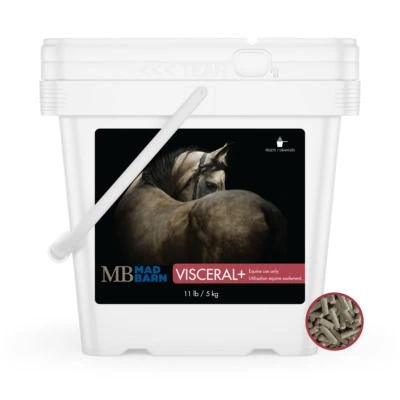
For horses that primarily need hindgut support, Mad Barn’s Optimum Digestive Health is the best targeted option. It provides probiotics, prebiotics, yeast, and digestive enzymes to maintain a healthy hindgut environment and support normal digestive function, especially during feed changes, higher-starch diets, travel, training, or other management changes that can challenge microbial balance.
Does My Horse Need a Gut Supplement?
Not every horse needs a gut supplement, but many horses can benefit from targeted digestive support depending on their diet, workload, stress level, and management routine.
A gut supplement may be helpful if your horse is exposed to factors that can challenge digestive health, such as frequent travel, intense training, stall confinement, limited forage access, high-starch meals, feed changes, competition stress, or inconsistent turnout. These situations can affect stomach comfort, hindgut microbial balance, and normal digestive function.
The first priority should always be the feeding program. Horses do best with consistent access to forage, clean water, adequate salt, balanced vitamins and minerals, and a feeding schedule that avoids long periods between meals.
Horses are grazing animals adapted to consume forage almost continuously. Maintaining near-constant access to quality fiber is one of the most important factors in supporting normal digestive function. [4][5]
Constant forage intake supports digestive function in multiple ways. As horses chew, saliva is produced, which helps buffer stomach acid and protect against gastric ulcers. At the same time, a steady supply of fiber enters the hindgut, where it is fermented by the microbiome to produce volatile fatty acids (VFAs), the horse’s primary source of energy. [1][3]
Forage quality is just as important as continuous access. Changes in hay type, maturity, or nutrient content can influence digestibility and microbial activity. For some horses, variability between batches of hay or pasture quality can be enough to affect manure consistency or overall digestive stability. [6][7][8]
When forage intake is interrupted for long periods, the stomach is left relatively empty, with less fiber and saliva available to help buffer gastric acid. This allows acid to splash against the unprotected squamous region of the stomach, increasing the risk of gastric irritation and ulcer development.
In the hindgut, inconsistent forage intake can shift the microbial population, altering fermentation patterns and reducing digestive efficiency. For this reason, consistency in feeding routine is just as important as what is being fed. [3]
Starch and sugar intake should also be carefully managed, particularly in horses receiving grain or concentrate meals. Large, high-starch meals can exceed the small intestine’s capacity to digest starch, allowing more starch to pass into the hindgut.
In the hindgut, rapid fermentation can shift microbial populations, increase acid production, lower pH, and contribute to gas, loose manure, digestive discomfort, or colic risk. Smaller, low-starch meals fed throughout the day are easier on both the stomach and hindgut and less likely to disrupt digestive function. [9][10]
Hydration is essential for digestive function because water supports gut motility, helping move feed through the gastrointestinal tract. Adequate salt intake also helps trigger thirst and encourage consistent water consumption.
Regular turnout or exercise further supports natural gut motility and helps maintain a healthy digestive rhythm. [11][12][13] With these fundamentals in place, gut supplements can provide targeted support to help maintain digestive comfort, microbial balance, and overall gut function.
The most useful gut supplement is one that matches your horse’s specific needs. For horses that need broad support, a comprehensive supplement such as Visceral+ is often the best choice because it supports both gastric health and hindgut function.
For horses that primarily need hindgut support, Optimum Digestive Health provides an effective blend of probiotics and prebiotics.
If your horse has ongoing digestive symptoms such as reduced appetite, weight loss, recurrent colic signs, diarrhea, persistent loose manure, poor performance, or signs of gastric ulcers, consult your veterinarian.
Gut supplements can support digestive health, but they should be used alongside appropriate veterinary care, treatment, and management changes when a medical concern may be involved.
What's your top priority with your horse's health?

What's your top priority with your horse's health?
What Causes Gut Problems in Horses?
Digestive challenges in horses typically arise from a combination of management, environmental, and physiological influences. In many cases, several factors overlap rather than a single clear cause.
Gastric Ulcers
Gastric ulcers are a common condition in horses, particularly those in training or inconsistent management routines. Gastric ulcers are most common in the squamous, upper region of the stomach where prolonged contact with stomach acid can damage the stomach lining.[14]
Risk factors for squamous gastric ulcers include: [15]
- Limited forage intake
- Intermittent feeding schedules
- Restricted water access
- High-grain diets
- Intense, or long-duration exercise
Ulcers can occur alongside other digestive imbalances and may not be immediately obvious based on outward signs.
In most cases, ulcers are managed most effectively alongside consistent feeding routines and regular forage access. Nutritional support is typically focused on maintaining a stable gastric environment and supporting normal stomach function under acid exposure.
Stress
Stress can influence digestive function through changes in gut motility, blood flow, and hormonal activity. [16] Horses may experience stress in response to changes in environment, training intensity, social grouping, or routine. [17][18]
Because digestive function is closely linked to the nervous system, these effects often overlap with broader management and feeding factors. Support is generally aimed at maintaining normal digestive function during periods where routine or environment is less stable. [19]
Travel
Transport is a common short-term stressor for horses and can temporarily affect normal digestive patterns. During travel, horses may eat and drink less, and reduced movement can influence gut motility. [20][21]
These changes are usually temporary, but repeated travel may contribute to digestive sensitivity in some horses. Maintaining access to forage during travel and minimizing feed gaps are important management considerations. [22]
Feeding Practices
Feeding management plays a key role in maintaining digestive function. Horses are adapted to consume a forage-based diet continuously throughout the day. [1]
Factors that may influence gut stability include: [21][23]
- Extended periods without forage
- Sudden feed or forage changes
- Higher-starch concentrate feeding
- Variability in forage quality or type
Over time, inconsistent feeding patterns may contribute to changes in stomach buffering and hindgut fermentation. A forage-first approach forms the base of most feeding programs.
Dysbiosis
Dysbiosis refers to a shift in the normal balance of the gut microbiome. This can involve changes in fiber-digesting bacteria and other microbial populations involved in fermentation and digestion. [24]
Potential contributing factors include dietary changes, stress, antibiotic use, and forage quality. Dysbiosis is generally considered part of a broader pattern of digestive imbalance rather than a standalone condition, and is often influenced by long-term feeding and management consistency. [25][26]
Common Signs of Gut Issues in Horses
Signs of digestive discomfort or imbalance in horses can vary in severity and may develop gradually. In some cases, behavioral or performance changes appear before more obvious physical signs.
Horses with gut issues may show a combination of signs, including: [27][28][29]
- Increased sensitivity during grooming, saddling, or riding (girthiness)
- Changes in willingness to work or exercise tolerance
- Altered attitude or reduced engagement
- Changes in appetite or feed interest
- Slower or more selective intake of forage or concentrates
- Changes in manure consistency (looser or less formed)
- Irregular manure production patterns
- Difficulty maintaining weight or body condition
- Dull coat
- Mild, intermittent signs of abdominal discomfort
- Teeth grinding
- Changes in drinking patterns
What to Look For in a Gut Supplement
Not all gut supplements are designed for the same purpose. Some focus primarily on the stomach, others target hindgut microbial populations, and some provide only basic probiotic support.
Certain products aim to buffer stomach acidity, while others work by supporting fiber fermentation or supplying beneficial microbes to the hindgut. Because of these differences, the best gut supplement is not defined by a single ingredient or mechanism, but by which component of the digestive system it meaningfully supports.
Key considerations include:
- Coverage across both stomach and hindgut
- Support for horses under stress, travel, or workload
- Maintenance of microbial balance and fiber fermentation
- Stability during routine disruption such as training or competition
- Practicality for daily, long-term use
- Suitability for performance horses where digestive stress is more likely
In practice, the strongest option is the one that supports the full digestive system without requiring multiple products to achieve the same effect.
Visceral+: Best Overall Gut Supplement
Mad Barn’s Visceral+ is the best overall gut supplement for horses because it provides advanced support for both gastric health and hindgut function in a single formula.
Visceral+ was formulated by a veterinarian and nutritionist to support multiple parts of the digestive system at the same time. It combines ingredients that help maintain the stomach’s natural protective barrier, support a healthy intestinal lining, nourish the hindgut microbiome, and aid normal immune function.
Key ingredients in Visceral+ include phospholipids, yeast cultures, 20 billion CFUs of probiotics, amino acids, herbs, and other nutrients selected for effective gastrointestinal support. [30][31]
In the stomach, ingredients such as lecithin and soothing botanical compounds help maintain the mucosal barrier and support the squamous region of the stomach, which is more vulnerable to acid exposure. This is especially important for horses in work, horses with inconsistent forage access, and horses exposed to stress, travel, stall confinement, or competition. [32][33]
In the hindgut, Visceral+ provides probiotic and prebiotic support to help maintain a healthy microbial population. This supports normal hindgut fermentation, manure quality, fiber digestion, and digestive efficiency. Supporting both areas together provides more complete digestive coverage than targeting one area alone. [32][33]
Visceral+ also includes nutrients such as glutamine, which supports the rapidly renewing cells of the intestinal lining. [34][35] This whole-gut approach is one reason Visceral+ is trusted by elite equine athletes, including Olympians and top-level reining champions, to help keep horses feeling their best and ready to perform.
Many horse owners report that after adding Visceral+ to their horse’s program, their horses appear more comfortable, less sensitive around the girth area, easier to maintain in good body condition, and more settled.
Optimum Digestive Health: Best Hindgut Supplement
Mad Barn’s Optimum Digestive Health is the best hindgut supplement for horses that need targeted support for microbial balance, fiber fermentation, manure quality, and digestive efficiency.
The hindgut is where horses ferment fiber into volatile fatty acids, the most important energy source for maintaining body condition and performance. This process depends on a stable population of fiber-digesting microbes.
When the hindgut environment is disrupted by feed changes, forage variation, high-starch meals, stress, medications, travel, or age-related digestive changes, horses may show signs such as loose manure, fecal water, gas, hay belly, poor appetite, weight loss, or reduced feed efficiency. [36][37][38]
Optimum Digestive Health is formulated to support this hindgut environment with a comprehensive blend of probiotics, prebiotics, yeast, digestive enzymes, immune nucleotides, and toxin binders. Each serving provides a 5-strain probiotic blend along with prebiotic compounds such as MOS and beta-glucans to help nourish beneficial microbes and support a stable microbial population. [39]
This makes Optimum Digestive Health especially useful for horses with loose manure, fecal water, occasional gas, digestive sensitivity, or a history of colic. By supporting fiber-digesting microbes and more stable fermentation, ODH helps maintain normal manure consistency, efficient fiber breakdown, and overall hindgut comfort.
ODH is also a strong choice for senior horses, hard keepers, and horses with dental issues that need help getting more nutritional value from forage.
The yeast, probiotics, prebiotics, and enzymes in ODH support fiber utilization and nutrient absorption, which can help horses maintain weight and body condition without relying on larger grain meals.
For horses with a history of mild or stress-related digestive upset, including horses that are prone to gas or colic-like episodes, ODH can be used as part of a management program to support hindgut stability. It is not a treatment for colic, and any horse with recurrent colic signs should be evaluated by a veterinarian, but maintaining a more stable hindgut environment is an important part of digestive health management. [45]
ODH is also useful during diet transitions, such as switching hay sources, moving from hay to pasture, increasing forage quality, changing concentrates, or supporting the gut during and after medication use. These are times when the hindgut microbiome may need extra support to adapt smoothly. [45]
While Visceral+ is the better choice for horses that need both gastric and hindgut support, Optimum Digestive Health is the best targeted option when the main concern is hindgut function, manure quality, fiber digestion, weight maintenance, or microbial balance.
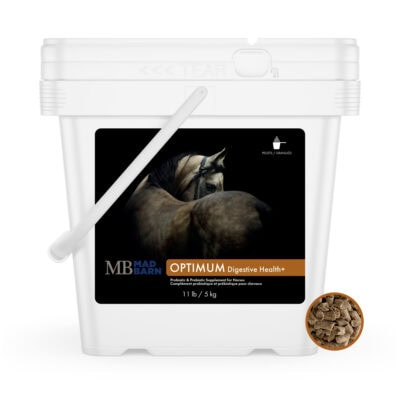
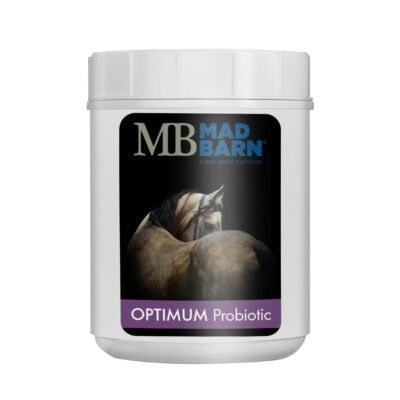
Optimum Probiotic: Cost-Effective Daily Microbiome Support
Optimum Probiotic is a pure, cost-effective daily probiotic for horses that need routine support for hindgut microbial balance.
Each 1-gram serving provides 20 billion CFU from a 5-strain blend of beneficial bacteria: Lactobacillus acidophilus, Lactobacillus fermentum, Lactobacillus casei, Lactobacillus plantarum, and Lactobacillus farciminis.
Because it is a concentrated powder with no bulky serving size, Optimum Probiotic is easy to add to any feeding program. It can be mixed into grain, a ration balancer, soaked feed, or a small carrier meal, making it a practical option for daily digestive maintenance.
The horse’s hindgut relies on a stable microbial population to ferment fiber, support nutrient absorption, and maintain normal manure quality. [45] Optimum Probiotic provides a consistent source of live beneficial bacteria to help maintain this microbial balance during normal feeding, training, travel, weather changes, or minor diet transitions.
It is best suited for otherwise healthy horses that need daily microbiome maintenance rather than full gastrointestinal support. For horses with ongoing loose manure, fecal water, poor weight maintenance, digestive sensitivity, or more significant hindgut challenges, Optimum Digestive Health is usually the better choice because it combines probiotics with prebiotics, yeast, digestive enzymes, immune nucleotides, and additional hindgut support.
Antibiotic use, travel, stress, and feed changes can temporarily affect hindgut microbial balance, which is why probiotic support is often used during or after these periods as part of a normal digestive management program. [40][41][42][45]
Optimum Probiotic is not intended to provide gastric support or whole-gut coverage like Visceral+. Instead, it offers a straightforward, economical way to support hindgut microbial balance as part of a well-managed diet.
Psyllium: Situational Soluble Fiber for Motility Support
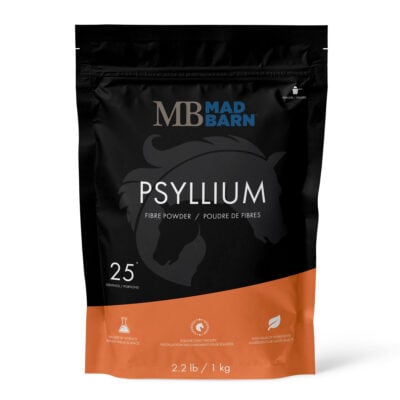
Psyllium husk powder is a targeted soluble fiber supplement for horses, best used in specific situations rather than as a complete daily gut-health formula.
Psyllium is derived from the husk of Plantago ovata seeds and is rich in gel-forming soluble fiber. When it absorbs water in the digestive tract, it forms a soft mucilage that helps support normal intestinal motility, manure consistency, and comfortable passage of digesta through the gut. [43]
This makes psyllium especially useful for horses kept in sandy environments, dry lots, or areas where accidental sand ingestion is more likely. Horses that graze close to the ground, eat hay from sandy soil, or live in dry, sparse paddocks may benefit from periodic psyllium support as part of a broader sand-management program. [44]
Psyllium can also provide functional fiber support during mild diet or environmental changes, when maintaining normal manure quality and gut motility is a priority. Because it is low in sugar and starch, it is also suitable for metabolic horses that need additional digestive fiber without adding grain or molasses-based products.
Unlike Visceral+ or Optimum Digestive Health, psyllium does not provide broad gastric support, probiotics, prebiotics, yeast, or digestive enzymes. Its role is more specific: it works through its water-holding, gel-forming fiber properties to support normal motility and manure consistency.
If sand accumulation, recurrent colic signs, or digestive obstruction is a concern, psyllium should be used under veterinary guidance. It can be a helpful tool, but it should be part of a complete management plan that includes appropriate feeding practices, clean forage placement, turnout management, hydration, and veterinary care when needed.
How to Choose the Best Gut Supplement for Your Horse
Digestive issues in horses are rarely caused by one factor alone. They usually reflect how well the horse’s feeding routine, management, workload, stress level, and environment are supporting normal stomach and hindgut function.
Horses are adapted for near-continuous fiber intake and a stable diet. When forage intake is inconsistent, meals are large or high in starch, turnout is limited, travel is frequent, or stress levels are high, both gastric comfort and hindgut microbial balance can be affected.
For this reason, supplements work best when the horse’s overall management is already supporting healthy digestion. [1]
With this foundation in place, the best gut supplement depends on where your horse needs the most support. For most horses, Mad Barn’s Visceral+ is the best overall choice because it supports both gastric health and hindgut function in one formula.
This makes it especially useful for horses exposed to multiple digestive stressors, including training, travel, stall confinement, forage changes, or competition.
For horses with more specific needs, a targeted supplement may be a better fit. Optimum Digestive Health is best for hindgut-focused support, particularly in horses with loose manure, digestive sensitivity, poor fiber utilization, or difficulty maintaining weight.
Optimum Probiotic is a simple, cost-effective option for daily microbial maintenance in otherwise healthy horses, while Psyllium is best used situationally for soluble fiber support, especially in sandy environments.
Choose broad digestive support like Visceral+ when:
- Your horse is exposed to multiple digestive stressors, including training, travel, stall confinement, competition, or management changes
- You want to support stomach comfort, hindgut microbial balance, gut barrier function, and normal immune function in one formula
- Your horse needs to stay comfortable, focused, and ready to perform as a reliable riding or competition partner
- Your horse is sensitive or reactive, and digestive comfort may influence attitude, willingness, girth sensitivity, or rideability
- Your horse has inconsistent forage access, frequent hay or pasture changes, variable appetite, or changes in manure quality
- You want a comprehensive, all-in-one gut health solution instead of managing separate stomach and hindgut supplements
Choose targeted hindgut support like Optimum Digestive Health when:
- Your horse needs more support for hindgut function, fiber fermentation, manure quality, or digestive efficiency
- Your horse has loose manure, fecal water, gas, hay belly, or recurring digestive sensitivity
- Your horse is a senior, hard keeper, or has dental issues and may need help getting more nutritional value from forage
- Your horse is prone to digestive upset during feed changes, forage transitions, travel, stress, or medication use
- You want more than a basic probiotic, including support from probiotics, prebiotics, yeast, digestive enzymes, and other hindgut-focused ingredients
- Stomach sensitivity is not the primary concern, and the main goal is supporting hindgut microbial balance and fermentation
Choose daily microbiome support like Optimum Probiotic when:
- Your horse is otherwise healthy but benefits from simple daily support for hindgut microbial balance
- You want a cost-effective probiotic that is easy to add to any feeding program
- Your horse needs routine microbiome maintenance during normal training, travel, weather changes, or mild feed transitions
- You want to provide a consistent source of beneficial bacteria without adding a more comprehensive digestive formula
- You are supporting microbial balance during or after antibiotic use, under veterinary guidance
- Your horse does not need full gastric support or broader hindgut support from prebiotics, yeast, enzymes, or toxin binders
Consider targeted soluble fiber support such as psyllium when:
- Your horse lives in a sandy environment, dry lot, sparse pasture, or area where accidental sand ingestion is more likely
- Your horse eats hay from the ground or grazes close to sandy soil
- You want to support normal gut motility, manure consistency, and comfortable passage of digesta
- You need a low-starch, low-sugar source of functional fiber for a specific management situation
- You are using psyllium as a situational tool, not as a complete daily gut supplement
Use the table below to choose the best gut supplement for your horse based on digestive needs, management factors, and whether broad or targeted support is required.
| Horse Profile | Best Fit | Why |
|---|---|---|
| Performance horse under stress, travel, or training changes | Visceral+ | Provides broad support for both stomach and hindgut, which are often affected together during stress, competition, and routine disruption |
| Horse with general digestive sensitivity or mixed signs | Visceral+ | Supports multiple areas of the digestive system, making it suitable when the source of digestive imbalance is not isolated to one region |
| Horse with signs of gastric sensitivity or inconsistent feeding routine | Visceral+ | Helps maintain gastric stability alongside hindgut function, particularly when forage intake or feeding timing is inconsistent |
| Hindgut-specific concerns (manure changes, fiber fermentation issues) | Optimum Digestive Health | Targets hindgut microbial balance and supports efficient fiber fermentation, which is central to digestive consistency |
| Horse transitioning between forage sources or experiencing mild digestive fluctuation | Optimum Digestive Health | Supports adaptation in the hindgut during dietary changes where microbial balance may be temporarily disrupted |
| Healthy horse needing daily maintenance support | Optimum Probiotic | Provides a consistent source of beneficial microbes to help maintain baseline hindgut microbial stability |
| Horse undergoing mild stress (travel, feed change, antibiotics) | Optimum Probiotic | Helps support microbial balance during short-term disruptions without adding unnecessary complexity to the feeding program |
| Horse in sandy environments or with concern about sand ingestion | Psyllium | Provides soluble fiber support that helps maintain normal gut motility and manure consistency in specific environmental conditions |

Final Recommendations
The best gut supplement for your horse is the one that supports overall digestive function within a consistent, forage-based feeding program. Good quality forage, proper hydration, and balanced nutrition remain the foundation of gut health.
For most horses, Mad Barn’s Visceral+ is the best overall gut supplement because it provides broad support for both stomach and hindgut function in a single, comprehensive formula. This makes it the most complete option for horses where multiple aspects of digestion may be influenced by stress, training, travel, or management changes.
For more specific needs, Optimum Digestive Health is best suited to hindgut-focused support, Optimum Probiotic provides simple daily microbial maintenance for otherwise healthy horses, and
Psyllium is used as a situational fiber supplement when additional support is required, particularly in sandy environments.
While these products address different areas of digestive function, they are most effective when used to complement a well-balanced diet rather than replace it.
Frequently Asked Questions
Here are some frequently asked questions about gut supplements for horses:
You can tell if your horse needs a gut supplement by looking at both management factors and signs of digestive imbalance. Horses with inconsistent forage access, frequent travel, or higher training demands are more likely to benefit from digestive support. Signs such as changes in manure consistency, appetite, attitude, or performance may also indicate digestive sensitivity. In many cases, gut supplements are most useful when these challenges overlap rather than from a single issue alone.
The best gut supplement for horses is one that supports the full digestive system rather than targeting a single area. For most horses, this means using a product that addresses both stomach and hindgut function together. Mad Barn’s Visceral+ is the best overall option because it provides broad, integrated digestive support in one formula. This makes it especially useful for horses experiencing stress, training demands, or changes in routine.
A gut supplement cannot replace a balanced diet because digestive health starts with proper feeding management. Horses require consistent access to forage, clean water, and appropriate nutrient intake to maintain normal gut function. Supplements are designed to support digestion, not correct poor feeding practices. Without a strong dietary foundation, even the best supplement will have limited effectiveness.
Gut problems in horses are usually caused by a combination of feeding practices, stress, and environmental factors. Common contributors include limited forage intake, high-starch diets, sudden feed changes, and inconsistent routines. Stress from training, travel, or social changes can also affect gut motility and function. In many cases, multiple factors interact to disrupt normal digestion rather than a single clear cause.
The signs of digestive issues in horses can vary but often include changes in manure consistency, appetite, and behavior. Horses may become more sensitive during grooming or riding, show reduced willingness to work, or have difficulty maintaining body condition. Other signs include dull coat, teeth grinding, or mild, intermittent abdominal discomfort. These signs can develop gradually and may reflect underlying digestive imbalance.
The difference between stomach and hindgut support in horses lies in the part of the digestive system being targeted. Stomach support focuses on maintaining a stable gastric environment and buffering stomach acid. Hindgut support targets microbial balance and fiber fermentation in the large intestine. Because these systems are interconnected, many horses benefit from support that addresses both areas together.
You should choose a broad-spectrum gut supplement when your horse is exposed to multiple digestive stressors at once. This includes situations such as training, travel, changes in routine, or inconsistent forage access. In these cases, both stomach and hindgut function may be affected simultaneously. A product like Visceral+ is designed to provide this type of comprehensive support.
A hindgut-focused supplement is a better choice when digestive concerns are primarily related to microbial balance and fiber fermentation. This may include horses with inconsistent manure, mild digestive sensitivity, or those transitioning between forage sources. Products like Optimum Digestive Health are designed to support hindgut stability in these situations. This approach is most appropriate when stomach sensitivity is not the primary concern.
Probiotics for horses provide beneficial microbes that help support a stable hindgut environment. These microbes play a key role in fermenting fiber and maintaining digestive efficiency. Probiotic supplements are often used for daily maintenance or during short-term disruptions such as travel or feed changes. They are not intended to provide full digestive system support but can help maintain microbial balance.
Psyllium is not typically used as a daily gut supplement for horses because it serves a specific, situational purpose. It is a soluble fiber source most often used in horses kept in sandy environments. Psyllium helps support normal gut motility and manure consistency in these conditions. It is best used as part of a targeted management strategy rather than routine supplementation.
Stress can affect your horse’s digestion by altering gut motility, blood flow, and microbial balance. Horses may experience stress from travel, training intensity, environmental changes, or routine disruptions. These factors can influence both stomach function and hindgut fermentation. Managing stress alongside feeding practices is important for maintaining digestive stability.
Feeding practices impact gut health in horses by influencing both stomach buffering and hindgut fermentation. Horses are designed to consume forage continuously, and long gaps without feed can disrupt digestive stability. Sudden changes in feed or high-starch meals can also increase digestive stress. Consistent forage intake and gradual diet transitions are key to maintaining normal gut function.
Summary
Gut health in horses depends first on consistent forage intake and overall diet balance, with supplements playing a supporting role rather than a primary fix.
- Digestive function relies on continuous fiber intake, hydration, and stable feeding management
- Most gut issues involve both the stomach and hindgut, not a single isolated system
- Visceral+ provides the best complete overall support, covering both gastric and hindgut function
- Optimum Digestive Health supports hindgut microbial balance and fiber fermentation
- Optimum Probiotic provides simple daily microbial maintenance in healthy horses
- Psyllium is a situational fiber supplement, used when additional support is needed in sandy environments or similar conditions
- Supplements are most effective when used to support a properly balanced, forage-based diet
References
- Ermers. C. et al. The Fibre Requirements of Horses and the Consequences and Causes of Failure to Meet Them. Animals. 2023.
- Muhonen. S. et al. Effects of Differences in Fibre Composition and Maturity of Forage-Based Diets on the Microbial Ecosystem and Its Activity in Equine Caecum and Colon Digesta and Faeces. Animals. 2021. View Summary
- Julliand. V. and Grimm. P. The Impact of Diet on the Hindgut Microbiome. Journal of Equine Veterinary Science. 2017.
- Cichorska. B. et al. Significance of Nutrient Digestibility in Horse Nutrition – A Review. Annals of Animal Science. National Research Institute of Animal Production. 2014.
- Clauss. M. et al. The Effect of Very Low Food Intake on Digestive Physiology and Forage Digestibility in Horses. Journal of Animal Physiology and Animal Nutrition. 2014. View Summary
- Saastamoinen. M. et al. Forages and Grazing in Horse Nutrition. Springer Science & Business Media. 2012.
- Muhonen. S. et al. Effect of Three Different Forage-Based Diets on Microbial Flora, pH and Viscosity of the Equine Hindgut. Brill. 2010.
- Edouard. N. et al. Voluntary Intake and Digestibility in Horses: Effect of Forage Quality with Emphasis on Individual Variability. Animal. 2008. View Summary
- Raspa. F. et al. A High-Starch vs. High-Fibre Diet: Effects on the Gut Environment of the Different Intestinal Compartments of the Horse Digestive Tract. BMC Veterinary Research. 2022. View Summary
- Cipriano-Salazar. M. et al. The Dietary Components and Feeding Management as Options to Offset Digestive Disturbances in Horses. Journal of Equine Veterinary Science. 2019.
- Muhonen. S. and Julliand. V. Fibre Composition and Maturity of Forage-Based Diets Affects the Fluid Balance, Faecal Water-Holding Capacity and Microbial Ecosystem in French Trotters. Animals. 2023. View Summary
- Jansson. A. and Dahlborn. K. Effects of Feeding Frequency and Voluntary Salt Intake on Fluid and Electrolyte Regulation in Athletic Horses. Journal of Applied Physiology. 1999. View Summary
- Risk Factors of Colic in Horses in Austria . Journal of Animal Physiology and Animal Nutrition. 2009.
- Bell. R. et al. Equine Gastric Ulcer Syndrome in Adult Horses: A Review. New Zealand Veterinary Journal. 2007. View Summary
- Sykes. B. W. et al. European College of Equine Internal Medicine Consensus Statement-Equine Gastric Ulcer Syndrome in Adult Horses. Journal of Veterinary Internal Medicine. 2015.
- Sykes. B. W. et al. Management factors and clinical implications of glandular and squamous gastric disease in horses. Journal of Veterinary Internal Medicine. 2019.
- Arfuso. F. et al. Inflammatory-like status and acute stress response in horses after road transport. Nature Scientific Reports. 2023.
- Sikorska. U. et al. Role of Cortisol in Horse’s Welfare and Health. Agriculture. 2023.
- Chaucheyras-Durand. F. et al. Gastro-Intestinal Microbiota in Equines and Its Role in Health and Disease: The Black Box Opens. Microorganisms. 2022. View Summary
- Padalino. B. and Raidal. S. L. Effects of Transport Conditions on Behavioural and Physiological Responses of Horses. Animals. 2020. View Summary
- Raidal. S. L. et al. Road Transportation Is Associated with Decreased Intestinal Motility in Horses. Frontiers in Veterinary Science. 2025. View Summary
- Szemplinski. K. L. et al. Transporting and Exercising Unconditioned Horses: Effects on Microflora Populations. Journal of Equine Veterinary Science. 2020. View Summary
- Bishop. R. C. et al. Stability of Gastric Fluid and Fecal Microbial Populations in Healthy Horses under Pasture and Stable Conditions. Animals. 2024. View Summary
- Kauter. A. et al. The Gut Microbiome of Horses: Current Research on Equine Enteral Microbiota and Future Perspectives. Animal Microbiome. 2019. View Summary
- Di Pietro. R. et al. Species-Level Gut Microbiota Analysis after Antibiotic-Induced Dysbiosis in Horses. Animals. 2021. View Summary
- Boucher. L. et al. Current Understanding of Equine Gut Dysbiosis and Microbiota Manipulation Techniques: Comparison with Current Knowledge in Other Species. Animals. 2024. View Summary
- Easley. J. Introduction to Digestive Disorders of Horses. Merck Veterinary Manual. 2024.
- Julliand. V. et al. Starch Digestion in Horses: The Impact of Feed Processing. Livestock Science. 2006.
- Coverdale. J. A. HORSE SPECIES SYMPOSIUM: Can the Microbiome of the Horse Be Altered to Improve Digestion?1,2. Journal of Animal Science. 2016. View Summary
- Medina. B. et al. Effect of a preparation of Saccharomyces cerevisiae on microbial profiles and fermentation patterns in the large intestine of horses fed a high fiber or a high starch diet. Journal of Animal Science. 2002. View Summary
- Jouany. J-P. et al. Effect of live yeast culture supplementation on hindgut microbial communities and their polysaccharidase and glycoside hydrolase activities in horses fed a high-fiber or high-starch diet. Journal of Animal Science. 2009. View Summary
- Nikitina. D. Functional Disoders Of The Gastrointestinal Tract Of Horses Under The Influence Of Chronic Stress. Scientific and Technical Bulletin of State Scientific Research Control Institute of Veterinary Medical Products and Fodder Additives ?nd Institute of Animal Biology. 2025.
- Park. S.-K. et al. The Effect of Living Conditions on Stress and Behavior of Horses. Journal of Animal Science and Technology. 2013.
- Souba, W. W. et al. Glutamine Metabolism by the Intestinal Tract. Journal of Parenteral and Enteral Nutriton. 1985.
- Martinez, R. E. et al. Equine enterocytes actively oxidize l-glutamine, but do not synthesize l-citrulline or l-arginine from l-glutamine or l-proline in vitro. Journal of Animal Science. 2022.
- Colombino. E. et al. Gut Health of Horses: Effects of High Fibre vs High Starch Diet on Histological and Morphometrical Parameters. BMC Veterinary Research. 2022. View Summary
- Grimm. P. et al. Faecal Parameters as Biomarkers of the Equine Hindgut Microbial Ecosystem under Dietary Change. Animal. 2017. View Summary
- Valle. E. et al. Management of Chronic Diarrhea in an Adult Horse. Journal of Equine Veterinary Science. 2013.
- Schoster. A. et al. Probiotic Use in Horses - What Is the Evidence for Their Clinical Efficacy?. Journal of Veterinary Internal Medicine. 2014. View Summary
- Harlow. B. Changes to the Equine Hindgut Microflora in Response to Antibiotic Challenge. University of Kentucky Theses and Dissertations. 2012.
- Collinet. A. et al. Multidimensional Approach for Investigating the Effects of an Antibiotic–Probiotic Combination on the Equine Hindgut Ecosystem and Microbial Fibrolysis. Frontiers in Microbiology. Frontiers. 2021. View Summary
- Pyles. M. B. et al. Effect of Probiotics on Antibiotic-Induced Changes in Fecal Bacteria of Horses. Journal of Equine Veterinary Science. 2017.
- Niinistö. K. et al. Comparison of the Effects of Enteral Psyllium, Magnesium Sulphate and Their Combination for Removal of Sand from the Large Colon of Horses. The Veterinary Journal. 2014. View Summary
- Mienaltowski. M. J. et al. Psyllium Supplementation Is Associated with Changes in the Fecal Microbiota of Horses. BMC Research Notes. 2020. View Summary
- Li. F. et al. Gut microbiome regulation in equine animals: current understanding and future perspectives. Frontiers of Microbiology. 2025.
- Szemplinski. K. L. et al. Transporting and Exercising Unconditioned Horses: Effects on Microflora Populations. Journal of Equine Veterinary Science. 2020.