English
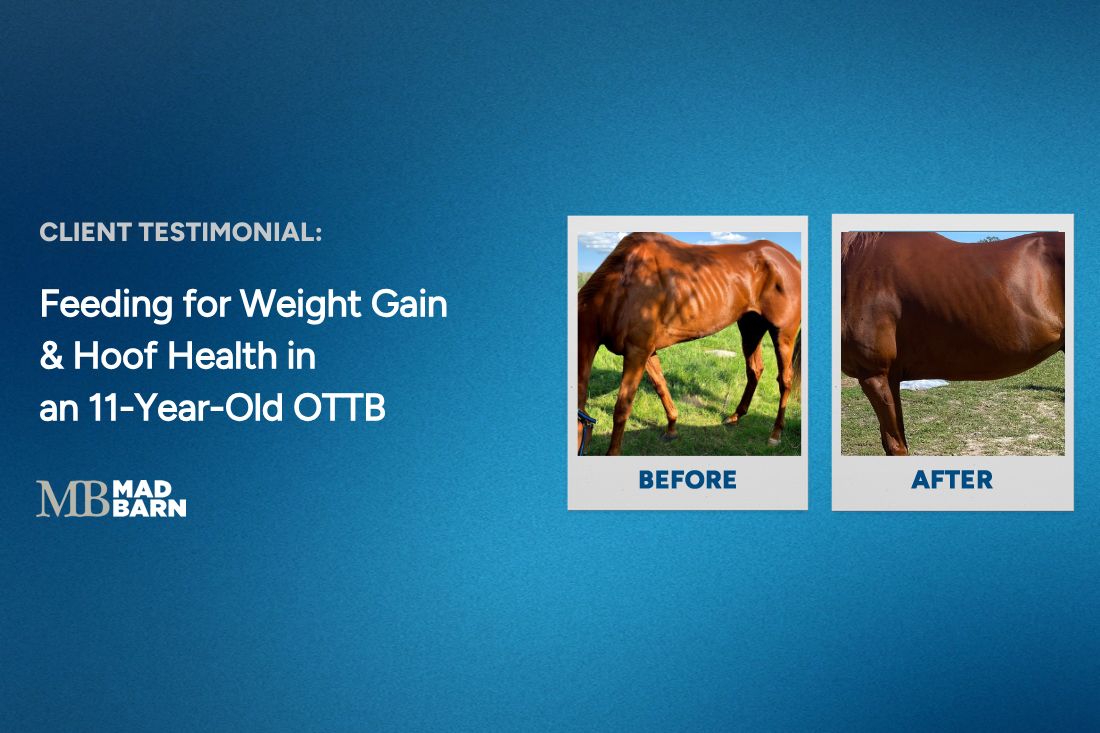
In January 2024, a dietary modification progress report was submitted for Hades, an eleven-year-old off the track Thoroughbred gelding located in Manitoba, Canada. He weighed approximately 1,150 lbs (522 kg) and was reported to be in good body condition.
His owner reached out to share progress in his hoof health and body condition following dietary changes she implemented.
Presentation Prior to Diet Intervention
Hades had a history of struggling with weight and hoof issues. After four years at his current home, he had only recently begun working under saddle. His poor hoof health and thin body condition precluded under saddle work before dietary changes were made.
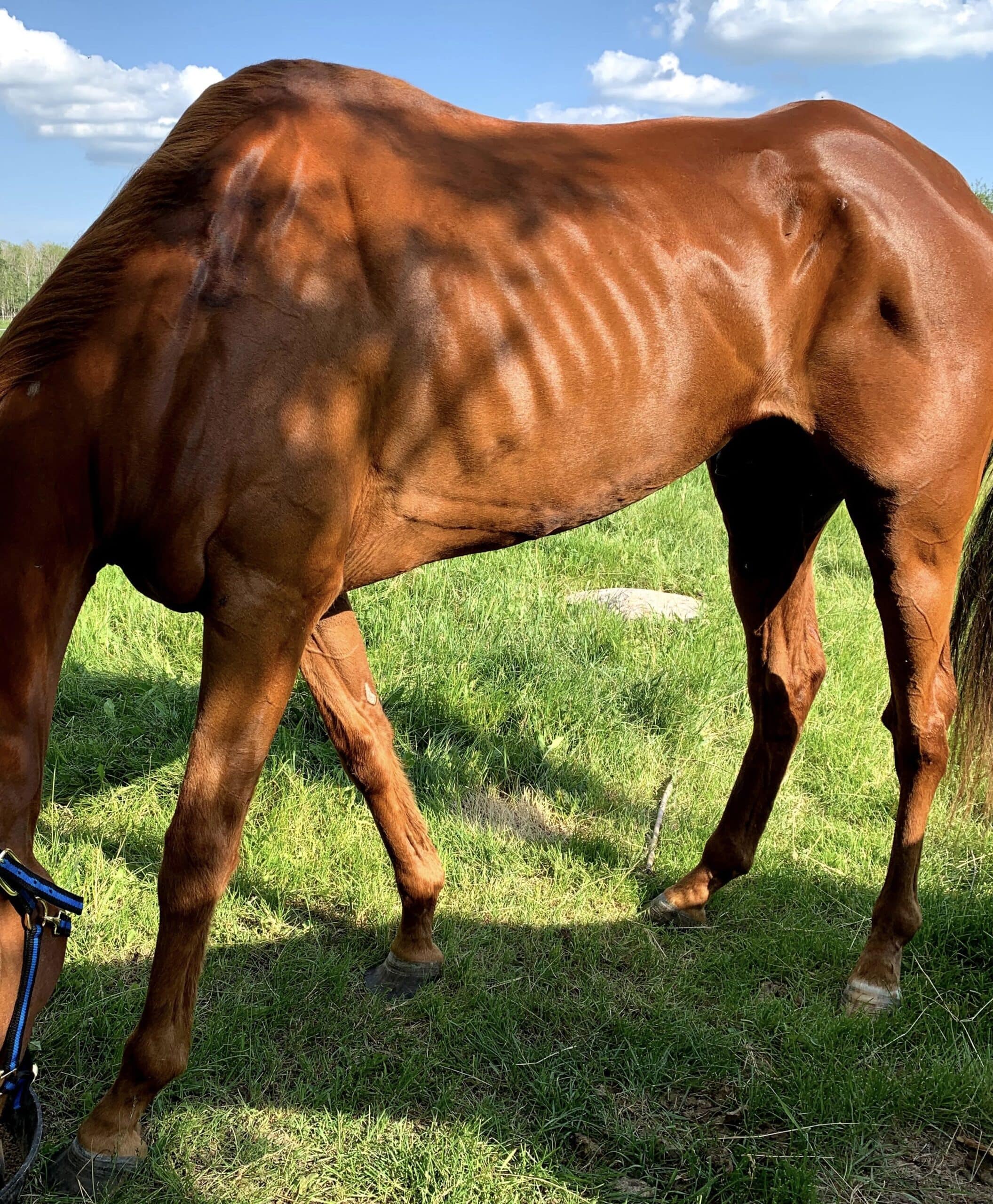
The following photos show Hades’ hoof and body condition before diet changes were made:
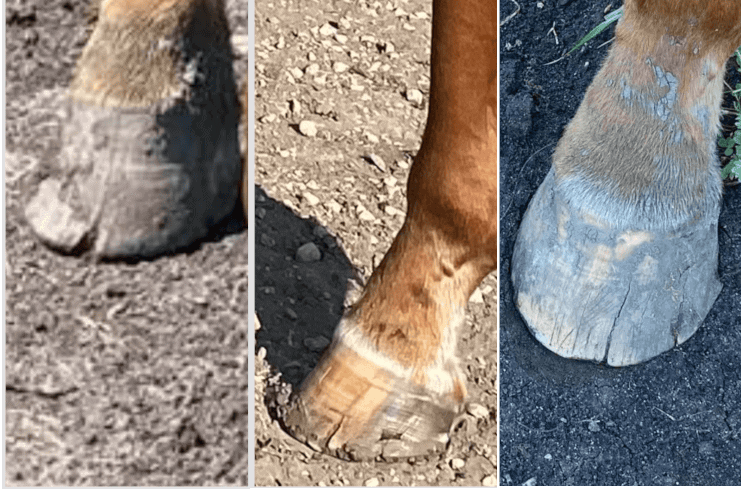 Hades in 2020
 Hades in 2020
Horse History
Hades retired from the track and was relocated to his new Manitoba home in 2020. His owner found he had significant hoof cracks and overall poor hoof quality immediately. He also had a thin body condition and difficulty gaining weight.
At the beginning of 2024, Hades had free choice access to forage – either pasture grass, good quality grass hay, or mixed hay. During this time, his owner explored dietary and supplemental options to address his hoof and weight management issues in hopes of returning him to work under saddle.
Feeding Hard Keepers
Off the track Thoroughbreds (OTTBs) are often hard keepers. Generally, weight loss in horses may be caused by:
- Insufficient forage quality or quantity
- Insufficient calorie intake
- Digestive disorders
- Underlying medical conditions
Since horses are adapted to graze continuously, maximizing their calorie intake from forage is often the easiest and most cost-effective way to encourage weight gain.
In cases where forage intake is already maximized and forage quality is good, additional calories can be added in the form of energy-dense feeds, supplements, or oils. However, feeding large amounts of high-hydrolyzable carbohydrate (HC; sugar + starch) grain should be avoided. High HC intakes can cause digestive issues that further hinder weight gain. [1][2][3]
As an alternative to additional grain, calories from fiber- and fat-rich feeds and supplements can be used to increase calorie intake. These may include:
In addition, improving digestive health may help encourage weight gain in cases where weight loss is due in part to impaired digestive function. Supporting gut health can help your horse extract and absorb more energy from microbial fermentation – the primary way horses access energy from their diet.
Products that contain yeast, probiotics, prebiotics, in combination with a controlled-HC diet, can support healthy digestive function by improving feed efficiency and nutrient absorption. With an appropriate diet, this can encourage gradual, healthy weight gain.
When Hades was first acquired from the track, he was estimated at a body condition score of 2 on the 9-point Henneke scale. This score means that he was very underweight.
After three years at his new home, during which he received appropriate nutrition, his body condition improved from a score of 2 to 3 on the 9-point Henneke scale. However, the owner requested a dietary evaluation to explore additional measures to achieve an optimal score of 5.
What's your top priority with your horse's health?

Enter your email to receive your store credit
Hoof Health
Hades had severe hoof cracks that were preventing him from returning to work at his new home. His owner was keen to build his hoof quality and strength to prevent any decline in his quality of life.
Poor hoof health in horses may result from nutrient deficiencies, particularly in those nutrients essential for synthesizing keratin, collagen, and other proteins that support hoof structure and growth.
Nutrients that are important for supporting hoof health include: [4][5][6][7]
Initial Diet
Before dietary adjustments were made, Hades’ daily ration consisted of:
- Free-choice forage
- 4 lb (1.8 kg) Alltrack (Masterfeeds)
- 4 oz (120 mL) Camelina oil
- 2 tbsp (30 g) Salt
Hades’ diet was meeting his energy and protein requirements based on average hay and pasture nutrient content estimates. However, the diet was deficient in vitamin E.
In addition, it was only providing 2 mg per day of biotin, significantly less than the recommended 20 mg per day to support hoof health. [8]
Intervention
To balance his diet and meet his nutritional requirements, Hades’ owner added several supplements to his diet including vitamins, minerals, biotin, lysine, and probiotics.
Table 1. Summary of Diet Intervention
| Horse Issue | Intervention |
|---|---|
| Underweight Body Condition |
|
| Poor Hoof Health |
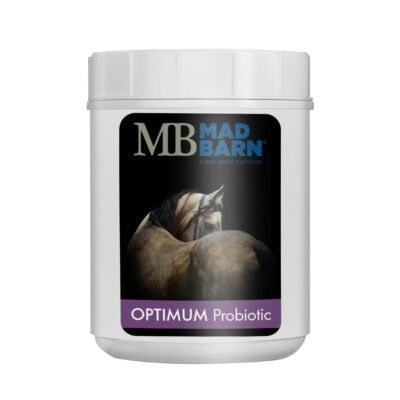
To encourage weight gain, Hades’ owner had previously added a fat supplement to his diet to increase his calorie intake. Optimum Probiotic was also added to encourage weight gain through improved digestive health.
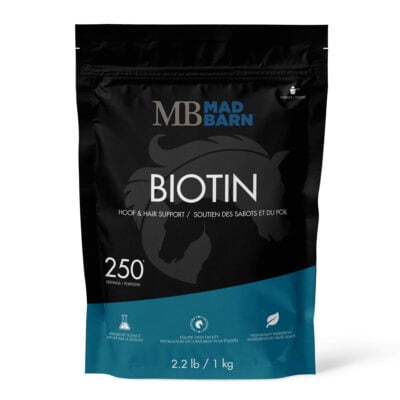
The addition of a vitamin and mineral supplement met his vitamin E requirement and increased his mineral intake, while the addition of biotin provided the recommended 20 mg of biotin per day to support hoof health.
Fortifying the Diet
The primary focus of the dietary changes was to address Hades’ body condition and support his hoof health. Given that his energy and protein requirements were met, his owner opted to try digestive support in lieu of further increasing his calorie intake.
Adding Optimum Probiotic provided a healthy dose of probiotics at a competitive price. Optimum Probiotic delivers 20 billion CFUs per serving of probiotic bacteria, formulated to support overall digestive health and feed efficiency.
Including biotin and lysine in the diet also helped to support hoof strength by facilitating the synthesis of structural proteins involved in hoof growth and repair. Their inclusion in the diet helps maintain keratin production, which is important for hoof integrity and preventing the formation of hoof cracks.
Further fortifying the diet with required vitamins and minerals also helped to support hoof growth and overall health.

Updated Diet
Following these dietary modifications, Hades’ revised daily diet consisted of the following:
- Free choice forage
- 4 lb (1.8 kg) Alltrack (Masterfeeds)
- 4 oz (120 mL) Camelina oil
- 2 tbsp (30 g) Salt
- 3.5 oz (100 g) Loose Horse Mineral (Masterfeeds)
- 5 g of Lysine (Mad Barn)
- 4 g of Biotin (Mad Barn)
- 1 g of Optimum Probiotic (Mad Barn)
Outcome
After the updated feeding program was introduced, Hades’ body condition score improved from 3 to 4 on the 9-point Henneke scale during Spring and Summer 2024. By that time, he had been receiving camelina oil supplementation for approximately eight months and biotin for around four months.
Hades’ weight gain likely resulted from the combined effects of additional calories from oil, improved digestive function, and increased pasture intake during spring and summer.
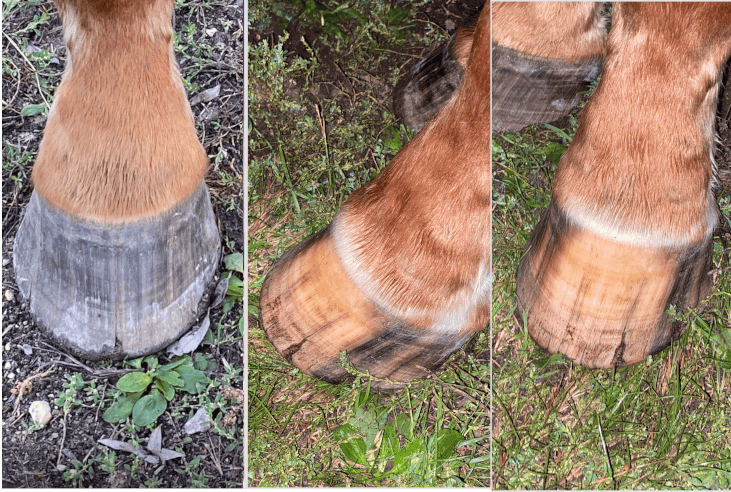
His owner also noted a significant improvement in hoof health, as his hoof cracks began to disappear as his feet grew out.
The following photos show differences in his body condition and hoof health roughly eight months after the dietary adjustments were made:
 Hades 2024
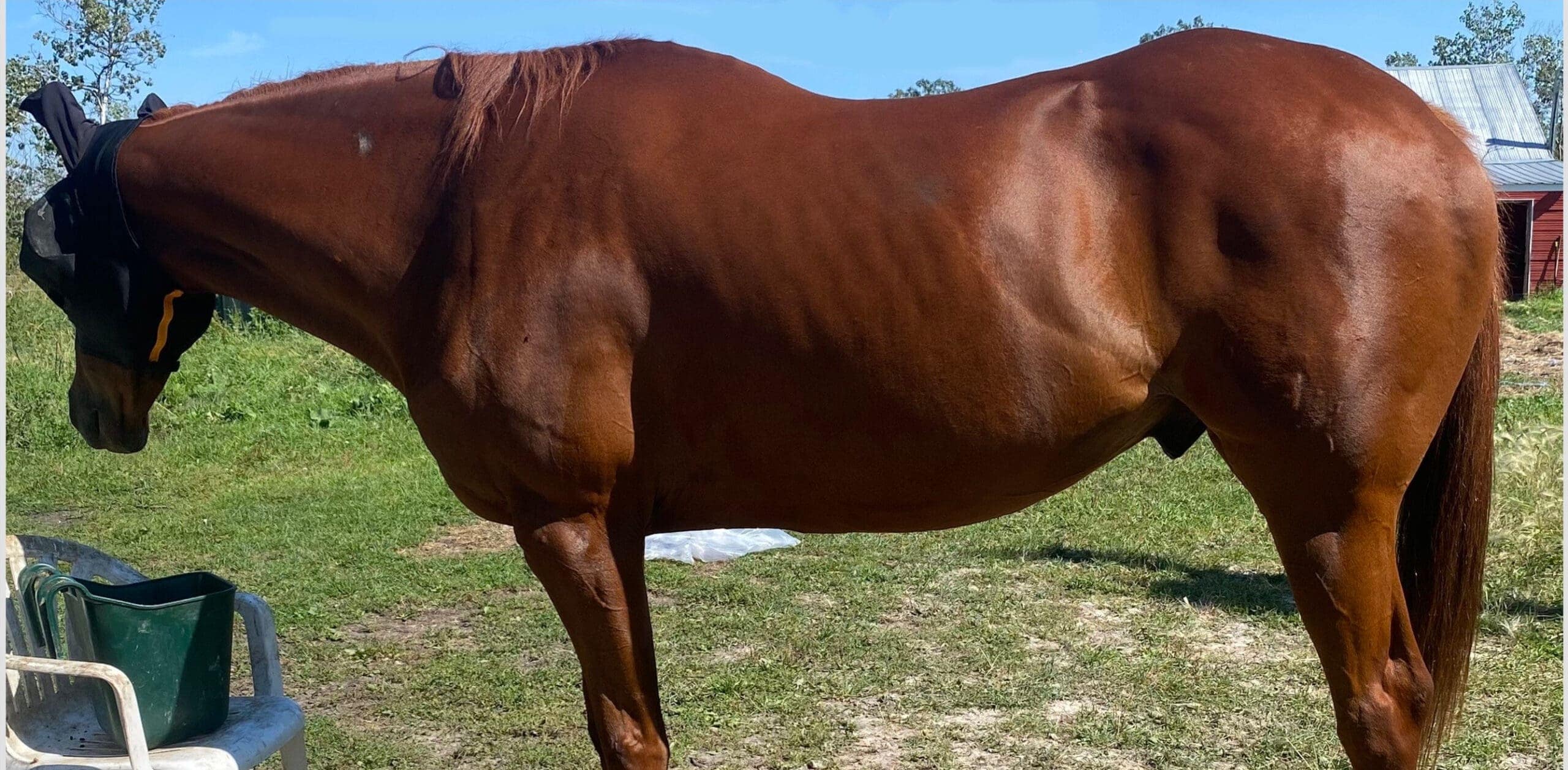 Hades Sept 2024
Discussion
Hard keeper horses typically have high calorie requirements, and they may lose weight even when their diets appear to meet those energy needs. While a forage-first diet is the best approach for supporting digestive health and encouraging weight maintenance, some horses need additional calories or dietary support to maintain weight.
In Hades’ case, his initial forage-based diet provided sufficient calories, so his owner opted to trial digestive support instead of increasing his calorie intake further.
Supplementing his diet with Optimum Probiotic and a vitamin and mineral blend provided digestive support and met his micronutrient requirements. Together, these interventions promoted weight gain and improved hoof health.
The primary objective was to stabilize Hades’ body condition and hoof health, enabling him to safely engage in a ridden exercise program. By summer 2024, his improvements were substantial enough to begin training under saddle again for the first time in the four years she has owned him.
His new daily light exercise program consisted of:
- 20 minutes of lunging at a walk, trot, and canter
- 10 – 15 minutes of lunging over ground poles
By September of 2024, Hades’ owner reported that he had achieved significant weight gain and his hoof cracks were growing out.
“Within 4 months I've noticed, and my farrier has noticed a drastic change in his feet! You can see when I started feeding Mad Barn Biotin!”
— Feedback from OwnerFollowing these improvements, Hades’ owner opted to simplify the diet by replacing his mineral, biotin, and lysine supplements with Mad Barn’s Omneity® – an all-in-one vitamin and mineral supplement.
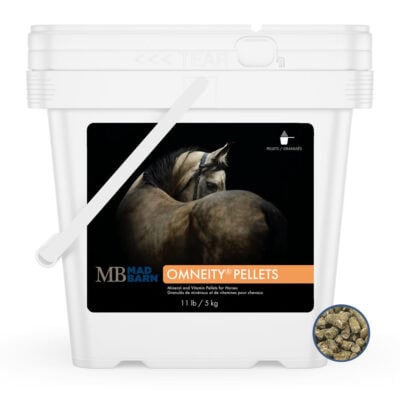
Omneity® contains a full profile of vitamins, including vitamin E, and 100% complexed trace minerals, which are easier to absorb than inorganic minerals. It also contains a nutritionally effective level of biotin per serving to support hoof health.
References
- Raspa. F. et al., A High-Starch vs. High-Fibre Diet: Effects on the Gut Environment of the Different Intestinal Compartments of the Horse Digestive Tract. BMC Veterinary Research. 2022.
- Colombino. E. et al., Gut Health of Horses: Effects of High Fibre vs High Starch Diet on Histological and Morphometrical Parameters. BMC Veterinary Research. 2022. View Summary
- Raspa. F. et al., Microbiota Characterization throughout the Digestive Tract of Horses Fed a High-Fiber vs. a High-Starch Diet. Frontiers in Veterinary Science. Frontiers Media SA. 2024.
- Marycz. K. et al., The Correlation of Elemental Composition and Morphological Properties of the Horses Hair after 110 Days of Feeding with High Quality Commercial Food Enriched with Zn and Cu Organic Forms. Electronic Journal of Polish Agricultural Universities. Wydawnictwo Akademii Rolniczej we Wrocławiu. 2009.
- Higami. A., Occurrence of White Line Disease in Performance Horses Fed on Low-Zinc and Low-Copper Diets. Journal of equine science. Japanese Society of Equine Science. 1999.
- Buffa. E. A. et al., Effect of Dietary Biotin Supplement on Equine Hoof Horn Growth Rate and Hardness. Equine Veterinary Journal. Wiley Online Library. 1992. View Summary
- McKittrick. J. et al., The Structure, Functions, and Mechanical Properties of Keratin. Jom. Springer. 2012.
- National Research Council, Nutrient Requirements of Horses: Sixth Revised Edition. The National Academies Press, Washington, DC. View Summary