English
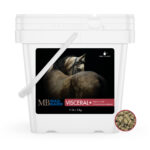
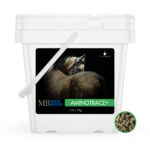
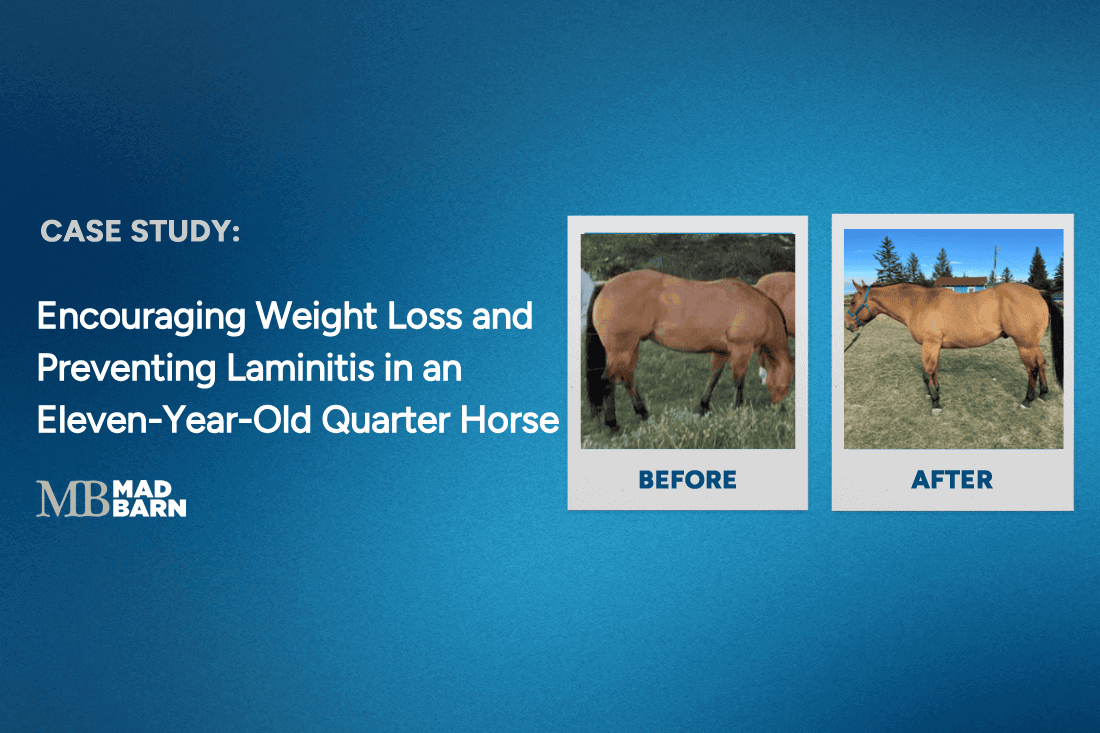
In January 2024, a diet evaluation was requested for Junior, an eleven-year-old Quarter Horse gelding located in Alberta, Canada. Weighing 1,300 lbs (590 kg) and described as overweight, he was recovering from a recent bout of laminitis.
His owner’s primary goals were to encourage weight loss and reduce the risk of future laminitic episodes.
Presentation Prior to Diet Intervention
In his January 2024 diet submission, Junior was described as overweight with a body condition score (BCS) of 8.5 on the 9-point Henneke scale. He had been diagnosed with laminitis in early December 2023.
Before this laminitic episode, Junior was kept on pasture with a senior horse that struggled to maintain weight. At that time, his regular meals included:
- Hoffman’s BalancI.R. Ration
- Free-choice Hoffman’s Horse Mineral
- A magnesium supplement
Following his laminitic episode, Junior was moved to a dry lot with two other horses and fed rationed timothy hay offered in hay nets with a small amount of loose hay offered on the ground.
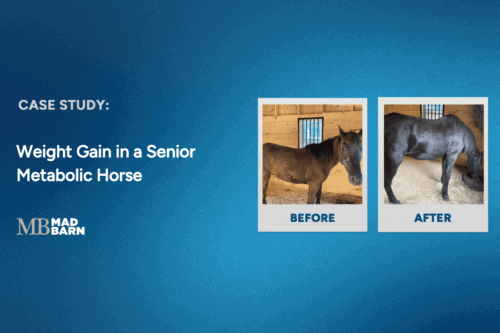
The owner provided the following photos showing Junior’s condition in Fall 2023 and December 2023:
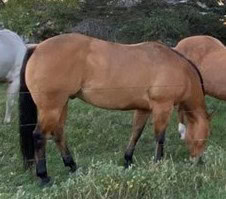 Junior Fall 2023
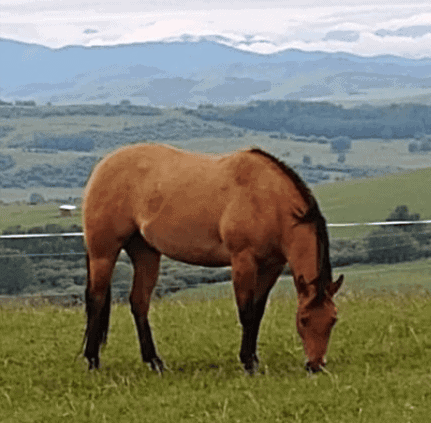 Junior December 2023
Horse History
Junior experienced a laminitic episode in early December 2023, prompting his owner to remove all other feeds and supplements from his diet. He was initially lame but returned to soundness after a short period of maintenance in boots.
Subsequent testing confirmed he was negative for Pituitary Pars Intermedia Disorder (PPID). Insulin testing for Equine Metabolic Syndrome (EMS) was not performed at the time.
Despite postponing formal testing, Junior’s owner suspected EMS because of the laminitic episode and the fat pockets on his body.
Between his laminitic episode and diet evaluation, Junior began losing weight. His owner planned to start him on a light exercise program once he was sufficiently sound to support further weight loss.
In addition to these metabolic concerns, Junior exhibited allergy symptoms, including eye swelling and discharge. His owner managed these issues by rinsing his hay before feeding to reduce dust exposure.
What's your top priority with your horse's health?

Enter your email to receive your store credit
Feeding Overweight Horses
According to research estimates, up to half of the North American equine population may be considered overweight, while around 8% could be classified as obese. [1][2][3]
Overweight horses are at an increased risk of health and performance complications, including: [4][5]
Equine Metabolic Syndrome (EMS) is also more prevalent in obese horses, and controlled weight loss can protect their metabolic health. [6][7] For this reason, encouraging weight loss is critical for horses at risk of metabolic disorders.
Several common interventions can help encourage weight loss in horses, including:
- Reduce or eliminate pasture access: Pasture is often more energy-dense than hay, so limiting pasture access can reduce calorie consumption.
- Ration hay: For horses on free-choice forage, restricting intake to 1.5–2% of body weight can reduce calorie consumption. Feeding smaller, more frequent meals and using a hay net helps slow feeding.
- Soak the hay: Soaking removes soluble carbohydrates, lowering its calorie content. This is especially important for horses prone to metabolic complications.
- Exercise: Light to moderate exercise helps burn calories, improves insulin sensitivity, and supports weight loss. If horses are not sound enough to exercise, light hand walking at the discretion of their veterinarian can help to maintain their weight until more exercise is possible.
In Junior’s case, he was estimated to have a body condition score of 8.5 (on the 9-point Henneke scale) before his diet evaluation. His owner was committed to his weight loss program and employed all of the above methods to encourage weight loss and protect his metabolic health.
In addition to dietary and lifestyle changes, Junior was prescribed levothyroxine sodium by a veterinarian to promote more rapid weight loss.
Laminitis
Laminitis is a painful hoof condition caused by weakening or inflammation of the laminae — tissues that anchor the coffin bone to the hoof wall. It can range in severity from mild hoof tenderness to complete inability to stand or walk.
Laminitis typically results from one of the following: [8]
- Infections
- Endocrine system issues
- Excessive weight bearing or concussion, also known as “road founder”
 Illustration: Dr. Ana Mesa, PhD
 While the root causes can differ, laminitis often presents in a similar way, making it challenging for owners to pinpoint the exact trigger for individual horses. Junior’s veterinarian’s assessment of possible EMS indicates that endocrinopathic factors may be involved.
However, Junior’s owner also noted there was a drought earlier in the year, leading her to suspect that high grass sugar content during this period might also have played a role in triggering his laminitis.
Allergies
Allergies in horses may arise from inhaled irritants (respiratory), ingested allergens (food), or direct contact with the skin.
Skin allergies can arise when horses come into direct contact with or inhale environmental factors, triggering a hypersensitive immune response. Environmental allergens include:
- Dust
- Molds
- Insect bites
- Plants
A variety of specific skin allergies exist, and symptoms often include: [9]
- Itching
- Redness
- Swelling
- Hives
- Recurring skin wounds and infections
Dust and dust mites are common winter allergy triggers, coinciding with the onset of Junior’s symptoms. Although no formal medical investigation was conducted, his owner suspected that dusty hay contributed to his reactions.
His owner opted to rinse his hay before feeding and was interested in supplements to provide anti-inflammatory support while his triggers persisted.
Initial Diet
At the time of his initial nutrition consultation, Junior’s diet consisted only of rationed timothy hay, as all other feeds and supplements had been discontinued after his laminitic episode.
Table 1: Nutrient content of Junior’s timothy hay (dry matter basis)
| Nutrient | Analysis (dry matter basis) |
|---|---|
| Digestible Energy | 2.03 Mcal/kg |
| Crude Protein | 8.3% |
| Acid Detergent Fiber | 34.6% |
| Neutral Detergent Fiber | 57.0% |
| Starch | 0.2% |
| Sugar (ESC) | 7.0% |
| Hydrolyzable Carbohydrates (Sugar + Starch) | 7.2% |
Junior’s diet was likely meeting his energy and protein requirements. However, his exact hay intake could not be calculated because he was fed from a shared supply without any way of tracking his individual intake. The hydrolyzable carbohydrate (HC; ESC sugar + starch) content of his diet was also low at 7.2%.
Hay-only diets are often deficient in key nutrients such as zinc, copper, selenium, and vitamin E. As a result, Junior’s diet was likely lacking in several essential vitamins and minerals.
Intervention
Based on Junior’s diet and condition at the time of evaluation, a revised feeding plan was proposed to address his weight, ensure his vitamin and mineral requirements were met, and offer metabolic support while helping maintain a healthy inflammatory response.
Table 2. Summary of Diet Intervention
| Horse Issue | Intervention |
|---|---|
| Overweight |
|
| Vitamin and Mineral Deficiencies |
|
| Allergies |
|
At the time of Junior’s diet evaluation, the hay’s nutrient composition was unknown. Following his evaluation, his owners submitted a sample for forage analysis to determine hydrolyzable carbohydrate (HC) content.
While awaiting the results, his owner soaked the hay to minimize the risk of high HC levels triggering another laminitic episode. Once analysis confirmed low HC content, soaking was discontinued due to the challenges of feeding soaked hay in winter.
A forage-based diet can often meet the energy needs of horses at maintenance or in lighter exercise levels. However, easy keepers like Quarter Horses may need restricted forage intake to maintain a healthy body condition.
To encourage weight loss, Junior’s owner rationed hay provisions to a combined 1.5% of body weight in dry matter for each horse in the dry lot. AminoTrace+® was added to both meet vitamin and mineral requirements and provide metabolic support.
Looking for additional support for Junior’s environmental sensitivities, his owner was interested in herbal supplements that help maintain a balanced inflammatory response: [10][11][12][13][14][15]
- Spirulina contains phycocyanin, which helps regulate pro-inflammatory antibodies. Combined with its high antioxidant content, it’s beneficial when allergen triggers cannot be fully removed. Studies also suggest that spirulina helps maintain normal insulin sensitivity in horses with EMS, which may support a weight loss diet. This made spirulina a particularly good choice for Junior, given his allergies, obesity, and suspected metabolic concerns.
- Jiaogulan helps modulate inflammatory nitric oxide activity, supporting a normal inflammatory response. Research indicates that pairing jiaogulan with spirulina may maintain normal respiratory health in horses with conditions like inflammatory airway disease.
- Milk Thistle contains the active compounds silymarin and silibinin, which may support normal liver function, maintain a balanced inflammatory response, and maintain healthy metabolic processes.
Balancing the Diet
The primary focus of this diet evaluation was addressing Junior’s excess body condition and minimizing the risk of another laminitic episode. With his energy needs already met, the priority was to reduce overall calories by rationing hay while ensuring adequate protein, vitamins, and minerals.
Adding Mad Barn’s AminoTrace+® vitamin and mineral supplement as well as salt helped to meet his vitamin and mineral requirements while also supporting metabolic health. AminoTrace+® contains elevated levels of zinc, copper, biotin, antioxidants, amino acids, and other nutrients that support hoof health, metabolic function, the immune system, and overall health.
AminoTrace+® also contains 100% organic trace minerals, natural vitamin E, and proprietary digestive support with no added sugars or fillers. This makes it an ideal choice for horses that need to avoid excess calories in their diet.
In addition to the dietary changes, a light exercise program suited to Junior’s soundness was recommended to promote weight loss and help maintain a healthy body condition.

Updated Diet
Following the consultation, Junior’s owner gradually transitioned him to a diet designed to limit calorie intake, meet his nutrient requirements, and support his allergy symptoms. His updated daily ration included:
- Approximately 22 lb (10 kg) – timothy hay (group-fed)
- 2/3 cup – soaked and rinsed beet pulp
- 250 g – AminoTrace+®
- 2 tablespoons – salt
- Insulinwise®
- 20 g – MSM
- 60 g – Spirulina
- 15 g – Jiaogulan
- 6 g – Milk Thistle
Outcome
After following the dietary adjustments recommended by the Mad Barn nutritionist, Junior experienced a significant improvement in body condition. His body condition score dropped from 8.5 to 6.5 on the 9-point Henneke scale.
He also lost about 200 lb (91 kg), going from 1,300 lb (590 kg) to 1,100 lb (500 kg) based on weight tape estimates.
The following photos illustrate the changes in his body condition after four months and nine months, respectively, on the recommended diet:
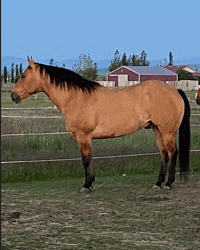 Junior May 2024
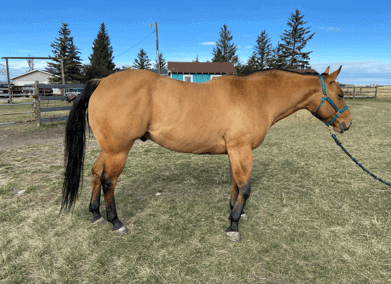 Junior Oct 2024
Discussion
Easy keepers have a more efficient metabolism, allowing them to better extract and store energy from their feed. Because of this, they require fewer calories to maintain their weight and can quickly become overweight if their diet is not carefully managed.
Even a forage-only diet may provide too many calories, especially if it includes high-calorie pasture grass, potentially leading to unwanted weight gain.
Since Junior’s diet was deficient in vitamins and minerals, it was important to meet those needs while still reducing his caloric intake to support weight loss.
Adding AminoTrace+® and salt helped meet Junior’s nutrient requirements. Meanwhile, eliminating pasture, rationing hay, and incorporating light exercise supported sustained, gradual weight loss.
By March of 2024, Junior’s owner reported that he had lost weight and that his neck crest was smaller, although still firm. The main goal at this stage was to stabilize his body condition so he could transition to restricted pasture turnout with a muzzle in the spring, allowing him normal grazing and social activities.
“He looks amazing!! I've never seen him so shiny with a winter coat and I'm sure that's all about the AminoTrace+®... He is doing great has lost 110 lbs in the past 2 months mostly due to Mad Barn supplements, your advice, and articles.”
— Feedback from OwnerBy April of 2024, Junior’s weight was down by 100 lb according to weight tape estimates. By October, his soundness had steadily improved, and his owner increased exercise intensity from seven days of very light exercise to five days of more challenging workouts, further promoting weight loss.
References
- Kosolofski. H. R. et al., Prevalence of Obesity in the Equine Population of Saskatoon and Surrounding Area. The Canadian Veterinary Journal. Canadian Veterinary Medical Association. 2017.
- Durham. A. E. et al., ECEIM Consensus Statement on Equine Metabolic Syndrome. Journal of Veterinary Internal Medicine. 2019. View Summary
- Christie. J. L. et al., Demographics, Management, and Welfare of Nonracing Horses in Prince Edward Island. The Canadian Veterinary Journal. Canadian Veterinary Medical Association. 2004. View Summary
- Johnson. P. J. et al., Medical Implications of Obesity in Horses—Lessons for Human Obesity. Journal of Diabetes Science and Technology. 2009. View Summary
- Chapman. S. J., Obesity and the Health and Welfare of the Leisure Horse. The Veterinary Nurse. 2014.
- Giles. S. L. et al., Obesity Prevalence and Associated Risk Factors in Outdoor Living Domestic Horses and Ponies. PeerJ. PeerJ Inc. 2014. View Summary
- Ungru. J. et al., Effects of Body Weight Reduction on Blood Adipokines and Subcutaneous Adipose Tissue Adipokine mRNA Expression Profiles in Obese Ponies. Veterinary Record. 2012. View Summary
- Patterson-Kane. J. C. et al., Paradigm Shifts in Understanding Equine Laminitis. The Veterinary Journal. Elsevier. 2018. View Summary
- Marsella. R. et al., Equine Allergic Skin Diseases: Clinical Consensus Guidelines of the World Association for Veterinary Dermatology. Veterinary Dermatology. 2023. View Summary
- Nemoto-Kawamura. C. et al., Phycocyanin Enhances Secretary IgA Antibody Response and Suppresses Allergic IgE Antibody Response in Mice Immunized with Antigen-Entrapped Biodegradable Microparticles. Journal of Nutritional Science and Vitaminology. 2004.
- Nawrocka. D. et al., Spirulina Platensis Improves Mitochondrial Function Impaired by Elevated Oxidative Stress in Adipose-Derived Mesenchymal Stromal Cells (ASCs) and Intestinal Epithelial Cells (IECs), and Enhances Insulin Sensitivity in Equine Metabolic Syndrome (EMS) Horses. Marine Drugs. 2017. View Summary
- Shen. C.-Y. et al., Comparison of the Effects and Inhibitory Pathways of the Constituents from Gynostemma Pentaphyllum against LPS-Induced Inflammatory Response. Journal of Agricultural and Food Chemistry. 2018.
- Kellon. E., Use of the Herb Gynostemma Pentaphyllum and the Blue-Green Algae Spirulina Platensis in Horses. 2006.
- Choi. Y. H. et al., Silibinin Attenuates Allergic Airway Inflammation in Mice. Biochemical and biophysical research communications. Elsevier. 2012.
- Karimi. G. et al., “Silymarin”, a Promising Pharmacological Agent for Treatment of Diseases. Iranian journal of basic medical sciences. Mashhad University of Medical Sciences. 2011.