Analyze Diet
arthroscopy-for-horses
Arthroscopy for Horses: A Veterinarian’s Guide to Advanced Joint Imaging & Repair Dr. Fran Rowe, DVM, PAS | February 12, 2026

Joint disease and injury are common causes of lameness and poor performance in horses, particularly in athletic or young growing animals. Conditions such as osteochondritis dissecans (OCD), synovitis, and traumatic fractures of joint surfaces can significantly affect a horse’s comfort,...
threadworms-in-foals
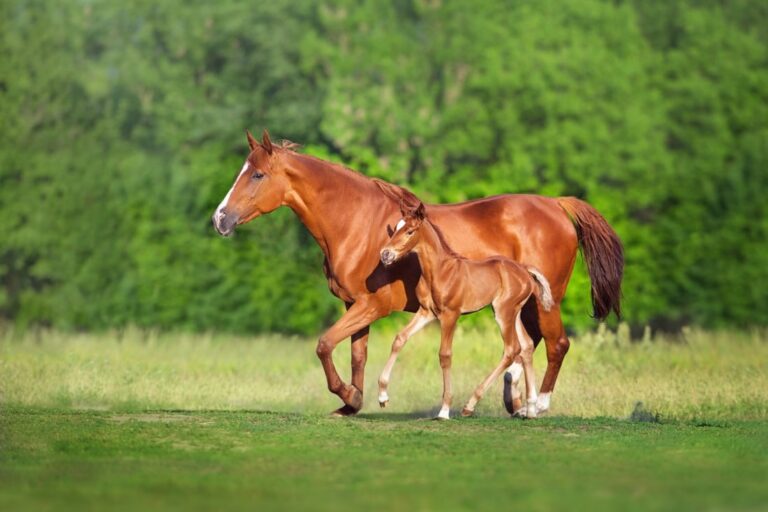
Threadworms (Strongyloides Westeri) in Horses: Symptoms, Risk Factors & Treatment Camryn McNeill, B.B.R.M. | January 24, 2026

Threadworms (Strongyloides westeri) are an equine intestinal parasite that primarily affects newborn foals, making them one of the earliest parasitic concerns in young horses. Transmission often occurs through the mare's milk, allowing larvae to establish in the foal's intestines within...

horse-bucking-behavior-guide-1
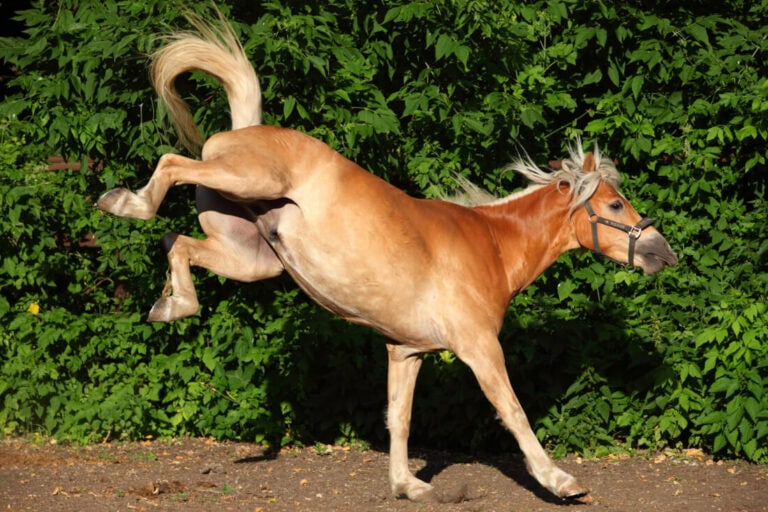
Why Do Horses Buck? Causes, Prevention, and How to Stop Bucking Dr. Megan Ross, PhD | February 19, 2026

Bucking is an equine behavior that can be both thrilling and frightening for riders. It can be a playful leap in the pasture or a dangerous kick under saddle. Some horses buck to release energy or excitement, while others do...

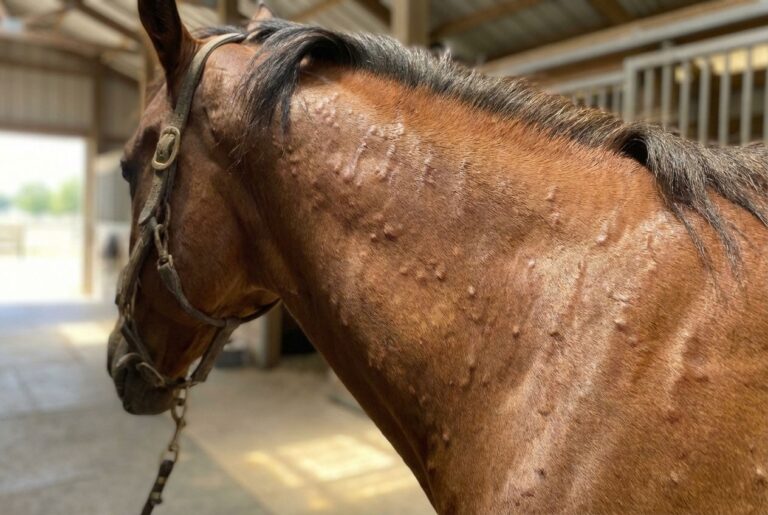
raised bumps on horse's skin - wheals
Raised Bumps on a Horse’s Skin: Hives & Wheals Explained Camryn McNeill, B.B.R.M. | January 30, 2026

Raised, red, or itchy swellings on a horse's skin are commonly described as hives, wheals, or urticaria. While the terminology may differ between veterinarians, owners, or practitioners, they all refer to the same physiological reaction. "Hives" is the common term...

top-10-signs-of-gut-issues-in-horses
Top 10 Warning Signs of Gut Problems in Horses Dr. Madison Ricard, DVM, PhD, DACVP | March 29, 2026

The equine digestive system is a remarkably complex and sensitive network of organs, adapted to process a steady supply of forage around the clock. When its delicate balance is disrupted, the horse's ability to process and absorb nutrients is affected....

top-gut-issues-in-horses
Gut Issues in Horses: Complete Guide to Conditions, Risk Factors & Prevention Dr. Madison Ricard, DVM, PhD, DACVP | February 2, 2026

The equine gastrointestinal system is one of the most complex parts of a horse’s body. Designed for nearly constant grazing, a horse’s digestive tract depends on a steady flow of forage, water, and beneficial microbes to function properly. When this...

how-to-cool-down-a-horse-after-training
How to Cool Down a Horse After Riding: Best Practices to Optimize Recovery Lucia K Ryan, MA. | February 18, 2026

Cooling down a horse after exercise is a vital part of responsible equine care, ensuring their body transitions safely back to its normal state. This process allows the horse’s temperature, heart rate, and respiration to stabilize after exertion, supporting overall...

cerebrospinal-fluid-analysis-for-horses
“Spinal Tap” Testing for Horses: A Veterinarian’s Guide to Cerebrospinal Fluid Analysis Dr. Fran Rowe, DVM, PAS | January 26, 2026

Neurologic disease in horses often presents a diagnostic challenge, as clinical signs can be vague or difficult to narrow down to one disease. A valuable tool available to veterinarians handling neurologic cases is cerebrospinal fluid (CSF) analysis. By providing a...

guide-to-diagnosing-fungal-infection-in-horses
Diagnosing Fungal Infection in Horses: A Veterinarian’s Guide to Specialized Laboratory Testing Dr. Fran Rowe, DVM, PAS | February 3, 2026

Fungal diseases in horses represent a diverse group of conditions that can affect the skin, respiratory tract, eyes, and internal organs. While less common than bacterial or viral infections, fungal infections are often more insidious and challenging to diagnose. Because...

abdominocentesis-for-horses
Abdominocentesis (Belly Tap) for Horses: A Veterinarian’s Guide to Abdominal Fluid Sampling Tests Dr. Fran Rowe, DVM, PAS | February 7, 2026

Abdominal disease is a common and sometimes life-threatening problem in horses, with colic being one of the most frequent emergencies encountered in equine practice. One valuable tool in the diagnostic process for colic cases is abdominocentesis, also known as a...

echocardiography-in-horses
Echocardiography in Horses: A Veterinarian’s Guide to Equine Heart Imaging Dr. Fran Rowe, DVM, PAS | February 7, 2026

The equine heart is a remarkable organ, designed to support athletic performance, endurance, and overall health. However, like any system, it can be affected by disease or structural abnormalities that compromise its function. Detecting heart problems in horses can be...

about-equine-sleep
Can Horses Sleep Standing Up and with Their Eyes Open? Guide to Equine Sleep Patterns Dr. Jennifer Skaggs, DVM | March 22, 2026

Sleep is a fundamental part of equine life, yet it remains one of the least understood aspects of horse behavior. Every horse depends on rest to restore the body and mind, and equine sleep is quite different from what we...

ophthalmic-exams-for-horses
Ophthalmic (Eye) Examinations for Horses: A Veterinarian’s Guide to Equine Ocular Diagnostics Dr. Fran Rowe, DVM, PAS | March 6, 2026

An ophthalmic examination involves more than simply looking at the surface of the eye. A complete assessment evaluates the cornea, lens, anterior and posterior chambers, tear production, ocular pressure, and reflexes. Special diagnostic tools, such as fluorescein dye, Schirmer tear...

risks-of-feeding-moldy-hay-to-horses
Is Moldy Hay Dangerous for Horses? How to Identify Mold & Manage Exposure Camryn McNeill, B.B.R.M. | February 26, 2026

Hay is the cornerstone of most equine diets, providing the fiber necessary for gut motility and a healthy microbiome, along with essential nutrients to support body condition, energy levels, and overall well-being. However, when hay becomes moldy, its value as...

lens-luxation-in-horses
Dislocated Eye Lens (Luxated Lens) in Horses: Risk Factors, Treatment & Prognosis Dr. Jennifer Skaggs, DVM | February 21, 2026

Lens luxation is an uncommon but serious eye condition in horses. It occurs when the lens — the clear, flexible structure inside the eye that helps focus light — slips out of its normal position. This displacement can cause pain,...

eye-prolapse-in-horses
Eye Prolapse (Proptosis) in Horses: Risk Factors, Treatment & Prognosis Dr. Jennifer Skaggs, DVM | February 21, 2026

The horse's eye is large, delicate, and vital for navigating its environment. Its prominent position and limited natural protection make it especially vulnerable to injury. Eye prolapse, also called proptosis, is uncommon but serious, occurring when the eyeball is displaced....

swollen-sheath-in-horses
Swollen Sheath in Horses: Risk Factors, Treatment & Prevention Dr. Ana Mesa, Ph.D. | February 3, 2026

Swollen sheath in horses is a common condition that owners may notice when the area around the penis appears enlarged or puffy. In many cases, sheath swelling is mild and temporary, often linked to inactivity, seasonal changes, or fluid retention...

viral-infection-diagnosis-in-horses
Diagnosing Viral Infection in Horses: A Veterinarian’s Guide to Specialized Laboratory Tests Dr. Fran Rowe, DVM, PAS | March 22, 2026

Viral infections are among the most common health challenges faced by horses, ranging from mild, self-limiting illnesses to severe, life-threatening diseases that spread rapidly through equine populations. Because many different viruses can affect horses, recognizing and correctly diagnosing these infections...

cloudy-eye-in-horses
Cloudy Eye (Corneal Edema) in Horses: Causes, Risk Factors & Management Dr. Christine Latham, Ph.D. | January 26, 2026

A horse’s eyes are highly specialized organs that play an essential role in survival, communication, and performance. The equine eye is large and laterally placed, offering a wide field of vision that allows horses to detect threats in their environment....

electrocardiogram-in-equine-medicine
Electrocardiogram (ECG) for Horses: A Veterinarian’s Guide to Equine Heartbeat Irregularities Dr. Fran Rowe, DVM, PAS | February 11, 2026

Electrocardiography (ECG) is one of the most important tools veterinarians use to evaluate equine heart health. While stethoscopes remain invaluable for identifying murmurs and abnormal rhythms during a physical exam, an ECG provides a more precise and objective way to...

neurological-exams-for-horses
Neurologic Exams for Horses: A Veterinarian’s Guide to Nervous System Health Dr. Fran Rowe, DVM, PAS | February 7, 2026

The nervous system plays a vital role in every aspect of a horse's health and performance, from balance and coordination to sensory perception and behavior. When this system is interrupted, the signs can be subtle or dramatic, and distinguishing neurologic...

guide-to-equine-urinalysis
Urinalysis for Horses: A Veterinarian’s Guide to Urine Testing Dr. Jennifer Skaggs, DVM | February 3, 2026

Urinalysis is a simple yet powerful diagnostic tool that can provide valuable insights into a horse’s overall health. By examining the appearance and composition of urine, veterinarians can assess kidney function, hydration status, and the presence of certain toxins. Although...

necropsy-in-equine-medicine
Necropsy in Equine Medicine: A Veterinarian’s Guide to Post-Mortem Findings Dr. Jennifer Skaggs, DVM | February 2, 2026

Necropsy, also known as an autopsy or post-mortem examination, is a vital diagnostic tool in equine veterinary medicine. When a horse dies unexpectedly or under unclear circumstances, performing a necropsy can provide critical insights into the cause of death. Necropsy...

radiography-x-rays-in-equine-medicine
Radiography for Horses: A Veterinarian’s Guide to X-Rays Dr. Jennifer Skaggs, DVM | February 3, 2026

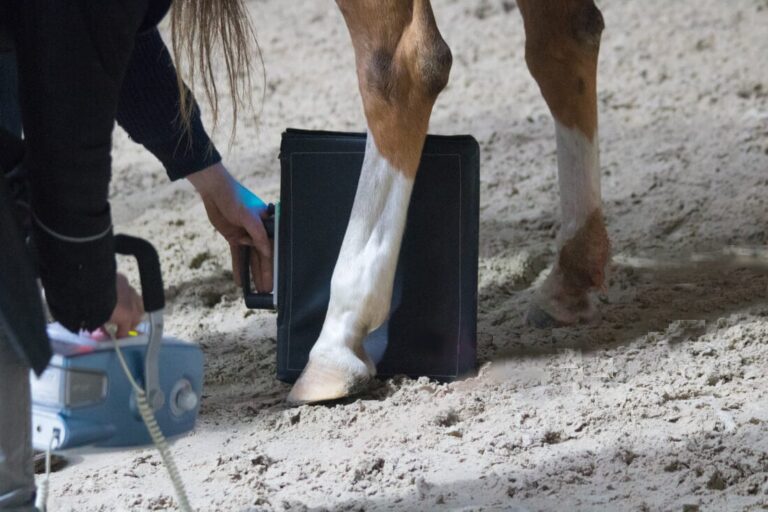
Radiographs, commonly known as X-rays, are one of the most valuable diagnostic tools in equine veterinary medicine. They allow veterinarians to examine the internal structures of the horse—primarily bones and joints—without the need for surgery or invasive procedures. Whether evaluating...

gastric-endoscopy-for-horses
Gastroscopy in Equine Medicine: A Veterinarian’s Guide to Scoping Horses for Ulcers Dr. Jennifer Skaggs, DVM | February 18, 2026

Gastroscopy is a valuable diagnostic tool that allows veterinarians to directly visualize the inside of a horse's upper digestive tract. This minimally invasive procedure uses a specialized flexible camera, called a gastroscope, to identify abnormalities that cannot be detected through...

autologous-protein-solution-pro-stride-therapy-for-horses
Autologous Protein Solution (Pro-Stride®) Therapy for Horses: Procedures, Uses & Effects Sara Rice, MSc. | February 2, 2026

Autologous Protein Solution (APS) is a biologic therapy that has emerged as an innovative treatment for managing joint and soft tissue injuries in horses. This biologic therapy uses the horse's own blood to create a concentrated solution of anti-inflammatory proteins...

guide-to-equine-recovery
Workout Recovery in Horses: Post-Exercise Strategies to Optimize Performance Dr. Christine Latham, Ph.D. | January 26, 2026

Sports recovery is an important aspect of equine management, focusing on the horse’s well-being following periods of exercise. During physical exertion, a horse’s muscles, tissues, and cellular structures undergo stress. When well-managed, this leads to adaptations that strengthen and condition...

equine-sacroiliac-joint-and-related-conditions
Sacroiliac Joint Dysfunction in Horses: Types, Risk Factors & Management Casie Bazay, BS, NBCAAM | January 26, 2026

The sacroiliac joint (SIJ) is one of the largest and most important joints in the horse’s body, yet it is also one of the least understood. Situated deep within the pelvis, the SIJ forms the critical connection between the sacrum...

gum-color-changes-in-horses
Gum Color Changes in Horses: What Red, Yellow, White and Blue Gums Mean Dr. Jennifer Skaggs, DVM | February 2, 2026

Mucous membranes play a critical role in assessing equine health. The most familiar mucous membranes are the gums, but these thin, moist tissues line various body cavities, including the eyes and genitals. In clinical settings and daily management, evaluating mucous...

seasonal-respiratory-allergies-in-horses
Seasonal Respiratory Allergies in Horses: Understanding Equine Pasture Asthma (EPA) Camryn McNeill, B.B.R.M. | February 3, 2026

Most horse owners know that poor air quality in dusty barns can cause coughing, nasal discharge, or laboured breathing in sensitive horses. But what happens when a horse seems worse outdoors—even on fresh green pasture? Just like people, horses can...