English
Moldy hay is a common and often underestimated threat to horse health. Even when hay is harvested and stored with care, environmental factors like humidity, temperature fluctuations, or hidden moisture pockets can lead to fungal growth and contamination.
Once established, mold transforms an otherwise nutritious feed into a potential source of respiratory and digestive distress. Invisible spores, dust, and microbial byproducts can circulate through the air or be ingested during feeding, exposing horses to irritants and toxins that strain multiple body systems.
The risks extend beyond visible patches or musty odors. Many types of mold develop deep inside tightly packed bales, where heat and moisture create ideal conditions for fungal colonies to thrive undetected. Horses with existing respiratory sensitivities or metabolic challenges may show signs of mold exposure sooner, but even healthy animals can be affected over time.
Because mold contamination is not always obvious, careful inspection, handling, and storage practices are essential to prevent problems before they begin. Understanding how mold forms, what it looks and smells like, and the risks it poses allows caretakers to make informed decisions about forage quality.
Mold, Hay & Equine Health
Stored hay is the cornerstone of most equine diets, providing fiber to maintain a healthy digestive system and microbiome, along with essential nutrients to support body condition, energy levels, and overall well-being. When hay becomes contaminated with mold, its nutritional value declines and the risks to equine health increase. [1]
Moldy forage is a hazard, particularly for individuals with respiratory conditions, metabolic disorders, or weakened immune systems. Mold can be especially difficult to control, as contamination isn’t always obvious. The microscopic structure of many fungal species means harmful spores might be present in hay that looks and smells fine. [2]
Recognizing the signs of mold, understanding its health risks, and knowing how to prevent and manage exposure are important skills for anyone involved in horse care. From selecting high-quality hay to storing it properly, good management practices can make the difference between safe feeding and a negative health outcome.
Causes of Mold Formation in Hay
Mold develops in hay when excess moisture and storage conditions create an environment that supports fungal growth.
The most common cause of mold contamination is baling hay that is too wet. Hay that is baled above 15 – 20% moisture is at higher risk of mold. When this happens, heat builds up inside the bale as microbes break down plant material, creating the perfect conditions for mold growth. [1][2][3]
Other contributing factors include: [2][3]
- High humidity during storage
- Leaky roofs or poor ventilation in haylofts
- Direct contact with damp ground or condensation
- Prolonged exposure to rain before baling
Even well-cured hay can develop mold if it isn’t stored properly. Large, tightly packed bales are especially prone to internal mold growth, which may not be visible on the outside.
What's your top priority with your horse's health?

Enter your email to receive your store credit
How to Identify Moldy Hay
Detecting mold in hay isn’t always straightforward, and harmful contamination may be hidden deep inside the bale. However, several key signs can help you recognize moldy hay before feeding it to horses. [3][4]
Appearance
Look for unusual discoloration such as white, gray, black, blue-green, brown, or reddish patches, as these may indicate mold growth. Mold can appear as fuzzy clusters, a dusty coating, or areas of uneven or darkened color deep inside the bale. Clean hay should have a uniform, natural greenish tone.
Smell
Moldy hay typically has a strong musty, sour, or earthy odor. An unpleasant odor is one of the most noticeable early warning signs, especially when a bale is opened.
Even subtle yeasty or alcoholic smells can signal microbial activity, while putrid or heavily musty odors indicate more advanced mold contamination. In contrast, uncontaminated, quality hay should smell fresh, grassy, and clean.
Texture
Hay that feels damp, clammy, or unusually soft is at risk for mold growth. Bales that are warm or hot to the touch may indicate internal microbial activity, often due to improper curing before baling.
Excessive dust—especially gray or white—can indicate the presence of mold spores. Even hay that looks clean may release harmful respirable particles if mold is present.
Risks of Feeding Moldy Hay to Horses
Feeding moldy hay to horses can have health consequences that impact comfort and performance. Even small amounts of mold can have a negative impact, especially with repeated exposure. [2]
Respiratory Risks
Inhalation of mold spores and dust from contaminated hay is a major contributor to respiratory disease in horses. These particles irritate the airways, provoke allergic and inflammatory responses, and can worsen chronic conditions such as equine asthma.
The threat is partly due to the respirable particle size of mold and organic dust. Particles smaller than 5 µm can bypass the upper airways and reach the bronchioles and alveoli, where gas exchange occurs. [4]
Once deposited, these particles can interfere with oxygen exchange and trigger inflammation and immune activation in the airways.
Allergic Reactions
Many horses develop hypersensitivity to inhaled mold spores, dust, or pollen. This allergic response causes airway irritation, mucus accumulation, and coughing.
Horses with allergies may show seasonal flare-ups or worsening signs when exposed to poor air quality, dusty bedding, or moldy hay. [6][7]
Equine Asthma
Moldy hay is one of the most common environmental triggers of equine asthma, an umbrella term that covers both Inflammatory Airway Disease (IAD) and Recurrent Airway Obstruction (RAO) or “heaves”. [5]
Inhaling particles from moldy or dusty hay can trigger an immune response in affected horses, leading to bronchoconstriction (narrowing of the airways), excess mucus production, and airway wall thickening.
The result is coughing, nasal discharge, and labored breathing that worsen with exposure and improve when horses are removed from the dusty environment. [8][9]
Increased Susceptibility to Infection
Ongoing airway inflammation damages the cilia, the microscopic hairs that help clear mucus and debris from the airways. This disruption weakens the defense system within the lungs, making them more vulnerable to bacteria. [10]
Mycotoxins
One of the most serious risks of feeding moldy hay to horses is mycotoxins (toxic substances produced by certain molds). These harmful compounds are invisible to the naked eye and can pose a threat even when the hay appears and smells normal.
Mycotoxins can cause a wide range of health issues in horses, including: [11][12][13][14]
- Immune suppression
- Respiratory issues
- Colic
- Diarrhea
- Weight loss
- Abortion
- Liver or kidney damage
- Neurological effects
- Poor performance
- Lethargy
- Muscle loss
Nutritional Deficiencies
In addition to its immediate health risks, moldy hay often has reduced nutritional value. Molds and other microbes feed on the hay’s sugars, proteins, and other nutrients. [2]
This microbial activity leads to dry matter (DM) losses and can significantly reduce the energy, vitamin, and protein content of the hay. Heat produced by mold growth can also destroy heat-sensitive nutrients, such as vitamin A. [15]
As a result, horses fed moldy hay may not meet their dietary needs, even if they eat a sufficient volume. [16][17]
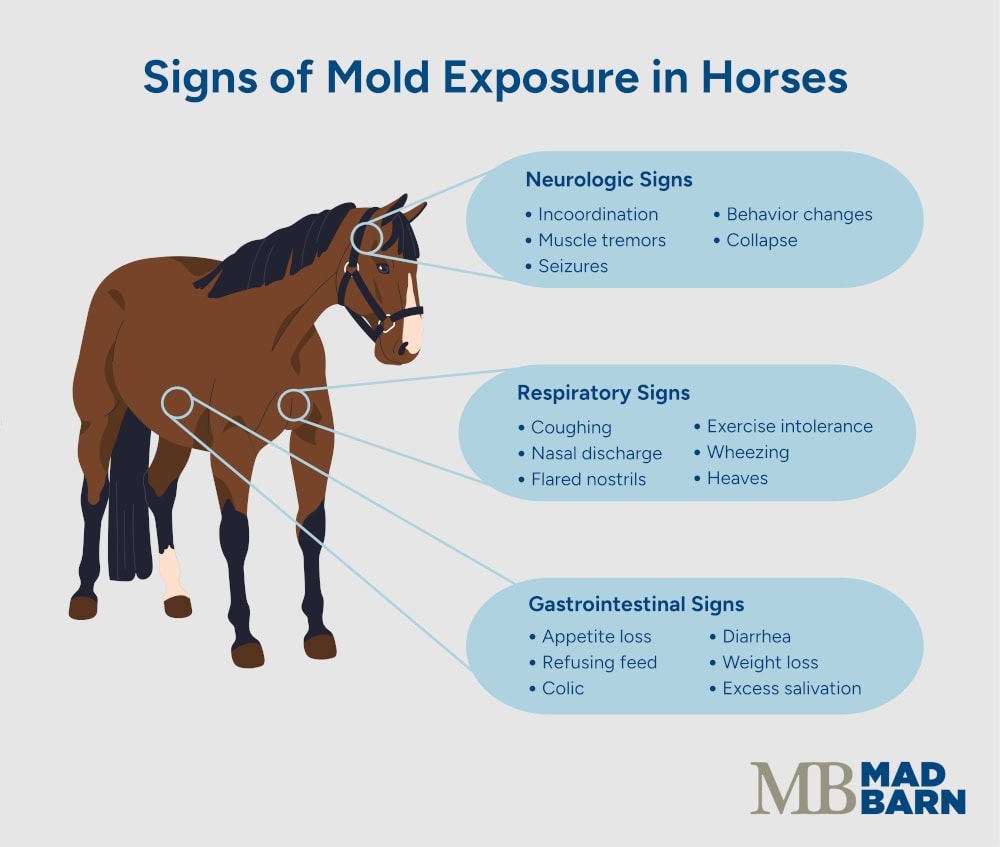
Signs of Mold Exposure in Horses
Mold exposure can affect horses in various ways depending on the mold species, the amount inhaled or ingested, and the individual horse’s sensitivity.
Symptoms may develop gradually and be mild or appear severely and suddenly, especially when mycotoxins are involved. Early recognition is essential to prevent long-term health problems. [5][18][19]
Managing Mold Exposure
If a horse consumes or inhales mold spores from contaminated hay, rapid intervention is essential to reduce health risks. [19][20] Follow these steps to manage and prevent mold-related issues in horses.
1) Remove the Source
Immediately stop feeding any hay that shows signs of mold. Inspect all stored forage, including partial bales and feeding areas, for visible contamination or musty odors.
Dispose of any affected hay and replace it with clean, good-quality forage to eliminate ongoing exposure and support recovery.
2) Assess Severity
Evaluate the horse’s condition and contact a veterinarian if any respiratory, neurologic, or digestive symptoms are observed, such as coughing, nasal discharge, colic, or reduced appetite.
If mycotoxin exposure is suspected, diagnostic tests such as bloodwork or toxin screening may be recommended to assess internal effects and guide treatment. [21]
3) Provide Supportive Care
Mild cases often improve once the contaminated hay is removed, particularly when the horse is kept in a clean, well-ventilated environment. More severe respiratory conditions, such as recurrent airway obstruction (heaves), may require medical management with bronchodilators, corticosteroids, or nebulized medications. [22]
Horses showing systemic illness or signs of colic may need fluids, anti-inflammatory therapy, or hospitalization for stabilization. Consider feeding soaked hay or hay cubes to horses with a history of respiratory sensitivity.
4) Optimize Hay Storage
Prevent recurrence by storing hay in a dry, well-ventilated location that minimizes moisture build up. [23] Avoid stacking damp or tightly packed bales, and ensure adequate airflow between stacks. Regularly inspect hay for spoilage, especially during warm or humid weather, to maintain a safe and consistent forage supply.
Can You Remove Mold from Hay?
Hay represents a significant investment, so it’s understandable why horse owners may wish to salvage as much as possible if mold appears. However, mold cannot be safely removed once it has developed within a bale. Even if only a few flakes appear affected, the entire bale is likely compromised, as mold spores spread microscopically throughout the forage.
Even in portions that appear clean, harmful spores or mycotoxins may persist. These toxins can remain active long after the mold itself has died, and moldy hay can still release airborne particles that irritate the respiratory tract even if the hay is not consumed.
Soaking or steaming hay may reduce dust and improve palatability, which can benefit horses with respiratory sensitivities. While soaking can help limit airborne particles, it also leaches essential nutrients.
Steaming is more effective at reducing mold and bacterial counts, but neither method removes mycotoxins or makes contaminated hay safe to feed. [2][24][25][26]

Prevention
Preventing mold in hay begins at harvest and continues through storage. The first step is selecting hay that was harvested at the appropriate growth stage. Timely harvest ensures optimal nutrient content and reduces the risk of weather-related spoilage, which can increase the likelihood of mold development. [27]
Proper drying and curing are also essential. Hay that is baled before it has dried thoroughly is at high risk of internal heating and mold growth. High-quality hay should feel dry, not damp or soft, and should not emit any musty or sour odors. Even slight moisture retention inside bales can create conditions that favor microbial activity. [23]
Moisture content plays a critical role in mold prevention. Hay should be baled at a moisture level below 15% to minimize the risk of spoilage. During storage, humidity control is equally important. Hay stored in damp environments, poorly ventilated barns, or directly on concrete or soil is more likely to develop mold, even if it was properly cured. [1][2][3]
In some cases, commercial hay producers may apply preservatives to inhibit mold growth, especially when weather conditions complicate the curing process. These additives can reduce microbial proliferation in high-risk situations but do not eliminate the need for proper storage conditions. [23][28][29]
Selecting clean, dry, well-cured hay from reliable sources remains the most effective strategy to reduce the risk of mold exposure in horses. Visual and tactile inspection combined with an understanding of proper harvest and storage practices can help ensure forage is safe and nutritionally intact.
Frequently Asked Questions
Here are some frequently asked questions about moldy hay in horses:
No. Moldy hay should never be fed to horses, even in small amounts, due to the risk of respiratory issues, digestive upset, and mycotoxin exposure.
Yes. Moldy hay exposure can cause serious equine health problems, including coughing, nasal discharge, colic, reduced appetite, and toxic reactions from ingesting mold spores or mycotoxins.
Symptoms may include lethargy, inappetence, diarrhea, colic, neurological signs, respiratory distress, and immune suppression. Severity depends on the amount and type of mold or toxins present.
Summary
Mold develops when hay is baled too wet or stored in damp, poorly ventilated conditions
- Exposure to moldy hay can cause respiratory problems, digestive upset, and toxic effects in horses
- Signs of mold include musty odors, discoloration, dampness, and excessive dust
- Soaking or steaming hay does not remove mold or mycotoxins, but can help reduce symptoms caused by airborne particles
- Proper harvesting, thorough drying, moisture control, and good storage prevent mold growth
References
- Raymond. S. L. et al. An Investigation of the Concentrations of Selected Fusarium Mycotoxins and the Degree of Mold Contamination of Field-Dried Hay. Journal of Equine Veterinary Science. 2000.
- Foulk. D. Mold and Mycotoxins in Horse Hay. PennState Extension. 2023.
- Undersander. D. et al. Moldy Hay for Horses. UW Extension.
- Cha. M. L. and Costa. L. R. R. Inhalation Therapy in Horses. Veterinary Clinics of North America: Equine Practice. 2017. View Summary
- Davis. E. and Rush. B. Equine Recurrent Airway Obstruction: Pathogenesis, Diagnosis, and Patient Management. Veterinary Clinics of North America: Equine Practice. 2002. View Summary
- Costa. L. R. R. et al. Temporal Clinical Exacerbation of Summer Pasture-Associated Recurrent Airway Obstruction and Relationship with Climate and Aeroallergens in Horses. American Journal of Veterinary Research. 2006.
- Intemann. S. et al. The Hygienic Status of Different Forage Types for Horses—A Retrospective Study on Influencing Factors and Associations with Anamnestic Reports. Veterinary Sciences. 2022. View Summary
- Herszberg. B. et al. Heaves, an Asthma-like Equine Disease, Involves Airway Smooth Muscle Remodeling. Journal of Allergy and Clinical Immunology. Elsevier. 2006. View Summary
- Houtsma. A. et al. Association between Inflammatory Airway Disease of Horses and Exposure to Respiratory Viruses: A Case Control Study. Multidisciplinary Respiratory Medicine. 2015. View Summary
- Couetil. L. et al. Equine Asthma: Current Understanding and Future Directions. Frontiers in Veterinary Science. 2020. View Summary
- Hintz. H. F. Molds, Mycotoxins, and Mycotoxicosis. Veterinary Clinics of North America: Equine Practice. 1990. View Summary
- Ensley. S. and Mostrom. M. Equine Mycotoxins. The Veterinary Clinics of North America. Equine Practice. 2024.
- Durham. A. E. Association between Forage Mycotoxins and Liver Disease in Horses. Journal of Veterinary Internal Medicine. 2022. View Summary
- Son. V. et al. Changes in the Nutrient Profile and the Load of Mycotoxins, Phytoestrogens, and Pesticides in Horse Pastures during Spring and Summer in Austria. Journal of Equine Veterinary Science. 2023. View Summary
- Jacobsen. B. Hay, Molds, and Feeding Problems in Montana. Big Sky, Small Acres. 2016.
- Killerby. M. A. et al. Meta-Analysis of the Effects of Chemical and Microbial Preservatives on Hay Spoilage during Storage. Journal of Animal Science. 2022.
- Hlödversson. R. and Kaspersson. A. Nutrient Losses during Deterioration of Hay in Relation to Changes in Biochemical Composition and Microbial Growth. Animal Feed Science and Technology. 1986.
- Bochnia. M. et al. Effect of Hay Soaking Duration on Metabolizable Energy, Total and Prececal Digestible Crude Protein and Amino Acids, Non-Starch Carbohydrates, Macronutrients and Trace Elements. Journal of Equine Veterinary Science. 2021. View Summary
- Brown. C. et al. Mycotoxicosis in Horses (Equis). Vetlexicon.
- Martinson. K. et al. Don’t Feed Your Horse Moldy Hay. University of Minnesota Extension. 2021.
- Sampling for Toxicology Screens. Cornell University College of Veterinary Medicine.
- Léguillette. R. Recurrent Airway Obstruction—Heaves. Veterinary Clinics of North America: Equine Practice. 2003. View Summary
- Hay, Haylage and Treated Hay for Horses. Government of Ontario. 2024.
- Humer. E. et al. Steaming Conditions Enhance Hygienic Quality of the Compromised Equine Hay With Minimal Losses of Nonfiber Carbohydrates. Journal of Equine Veterinary Science. 2019.
- Earing. J. E. et al. Effect of Hay Steaming on Forage Nutritive Values and Dry Matter Intake by Horses. Journal of Animal Science. 2013. View Summary
- Martinson. K. Steaming Horse Hay to Reduce the Effects of Mold and Dust. University of Minnesota Extension. 2021.
- Smith. S. R. Understanding and Reducing Mold Growth in Hay. UW Extension.
- Coblentz. W. K. and Bertram. M. G. Effects of a Propionic Acid-Based Preservative on Storage Characteristics, Nutritive Value, and Energy Content for Alfalfa Hays Packaged in Large Round Bales1. Journal of Dairy Science. 2012.
- Lord. K. A. et al. Laboratory Application of Preservatives to Hay and the Effects of Irregular Distribution on Mould Development. Animal Feed Science and Technology. 1981.
- CCOHS: Farmer's Lung. Government of Canada. 2025.
- Awuchi. C. G. et al. Mycotoxins' Toxicological Mechanisms Involving Humans, Livestock and Their Associated Health Concerns: A Review. Toxins. 2022.