English











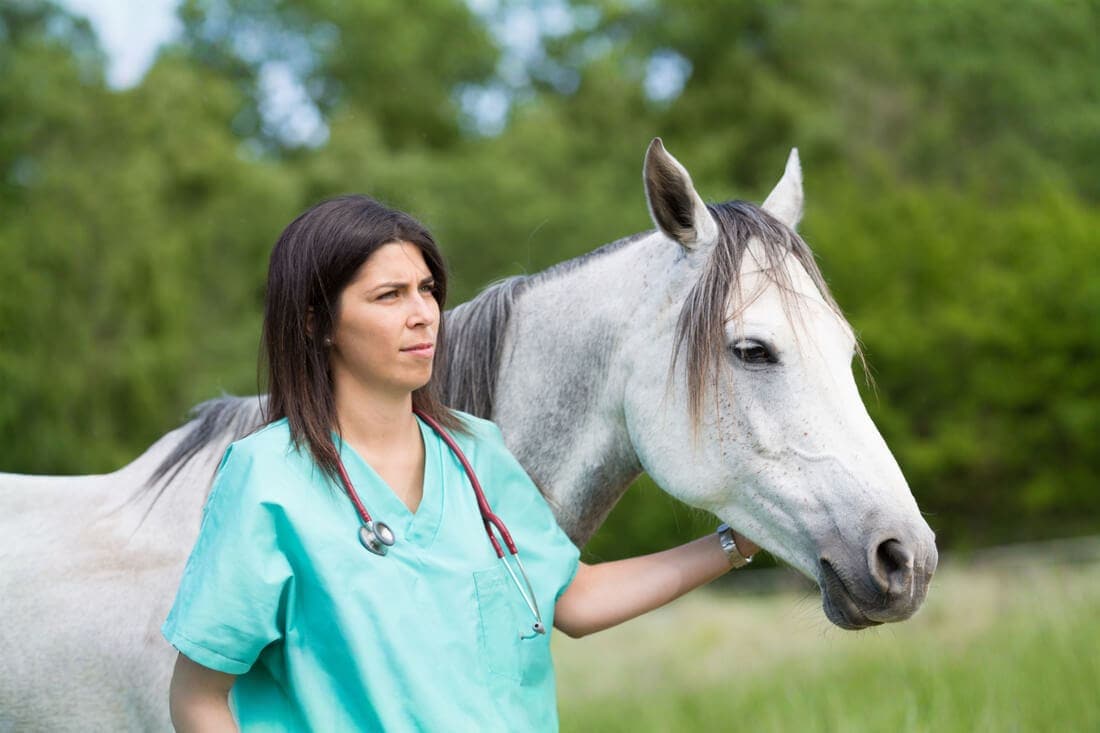
Bacterial infections are a common cause of illness in horses and can affect nearly every body system, from the skin and respiratory tract to the gastrointestinal tract, urinary system, and joints. These infections may develop after wounds or surgical procedures, as a complication of another illness, or simply from exposure to contagious bacteria in the environment.
A key component of diagnosing bacterial infections is bacterial culture and sensitivity testing. By growing bacteria from a sample collected from the horse’s bodily fluids, veterinarians can determine exactly which organism is responsible. Sensitivity testing then identifies which antibiotics are most effective at treating the infection.
This targeted approach is crucial, especially as antimicrobial resistance is a growing concern, ensuring that horses receive the most appropriate therapy while preserving the effectiveness of vital drugs.
Understanding the diagnostic process can help horse owners recognize when to seek veterinary care. It also shows why precise, evidence-based testing is essential for protecting both individual horses and the wider equine community.
Diagnosing Bacterial Infections in Horses
Bacterial diseases are common in equine medicine, requiring prompt diagnosis so an appropriate antibiotic treatment plan can begin. Concerns about antimicrobial resistance have made accurate diagnosis of bacterial infections a priority for veterinarians, as using incorrect antibiotics may worsen antimicrobial resistance.
Diagnostic testing for bacterial diseases aims to identify the type of bacteria present in an infection and which antibiotics are best suited for treating that infection.
Equine bacterial diseases that may require specific testing include: [1]
- Strangles
- Rhodococcus pneumonia
- Pigeon fever
- Rain rot
- Diarrhea, such as from Salmonella infection
- Hoof thrush
- Leptospirosis
Clinical Signs
Clinical signs can vary widely in type and severity depending on the body system affected and the specific infectious agent involved.
Common signs that may be associated with bacterial infections in horses include: [1][2]
- Fever
- Swelling, heat, or pain at the infection site
- Pus or yellowish discharge from the area
- Diarrhea
- Swollen lymph nodes
- Lethargy
- Reduced appetite
- Weight loss
Sample Collection
If a veterinarian suspects a bacterial infection, they will collect diagnostic samples from the affected area to identify the specific bacteria involved. The type of sample collected depends on the location and characteristics of the infection.
Samples taken from horses for bacterial testing may include: [1][3]
- Blood
- Urine
- Swabs of an infected site
- Samples of body fluids, such as nasal, joint, or cerebrospinal fluid
- Small pieces of tissue
- Feces
The process of sample collection is critically important for bacterial testing, as any contamination from the veterinarian, the horse, or the environment may alter the testing results.
Veterinarians collect bacterial samples under aseptic conditions to reduce the risk of contamination. This means they clean the sample area thoroughly, use sterile equipment for fluid collection, and avoid contact with any contaminated surfaces. [3]
After collecting a sample, it must be preserved properly to ensure survival of the bacteria until the sample reaches the diagnostic laboratory. [1] Samples should be kept cool, usually in the fridge or freezer, until transport. [1]
What's your top priority with your horse's health?

Enter your email to receive your store credit
Diagnostic Testing
There are four main tests used for diagnosing bacterial infections in horses and other animals: [1]
- Microscopic examination
- Bacterial culture
- Polymerase chain reaction (PCR)
- Serology
Veterinarians can also request antimicrobial susceptibility testing to guide antibiotic selection for treating the infection.
Microscopic Examination
Evaluating a sample under a microscope often reveals bacterial colonies. [1] Based on the shape of these bacterial colonies, veterinarians can narrow down the list of potential bacterial species causing the infection.
They can also use Gram staining, a special type of dye that stains the bacterial cell wall. [1] Gram staining characteristics provide clues about which antibiotics may be most effective against those bacteria. For example, penicillin is most effective against Gram-positive bacteria. [2]
Using this information, veterinarians can make a decision about which antibiotics to use. They often start the horse on an antibiotic based on microscopy while they wait for antimicrobial susceptibility testing results. In some cases, the infection resolves with the selected antibiotic, and further susceptibility testing is unnecessary.
In a diagnostic laboratory, microscopic evaluation can also help the diagnosticians determine what bacterial species are present. They can use additional stains, such as acid-fast staining, to further characterize the types of bacteria. [1]
They may also use immunologic techniques, such as immunohistochemistry or immunofluorescence. In these techniques, a special dye is attached to an antibody against a particular species of bacteria. When introduced into the sample, the antibody binds to the bacterium if it is present, and the dye highlights its presence under the microscope. [1]
Bacterial Culture
Bacterial culture is the process of growing bacteria in a laboratory setting to identify its species. To perform this test, diagnosticians place a sample of bacteria onto a growth medium and observe characteristics of the bacterial colonies that grow. [4]
Characteristics examined include: [4]
- Colony size
- Shape of the colonies
- Texture
- Transparency
- Color or pigmentation
They can also grow the bacteria on different types of media (the substance the bacteria grows in) to identify unique functions of the bacteria. For example, they may grow the bacteria on a medium containing mannitol, a specific sugar. The medium changes color if the bacteria ferment the mannitol, giving the diagnostician clues about what species it may be. [4]
Based on the results of these tests, the diagnostician can typically make a final identification of the bacterial species. This allows the veterinarian to confirm a specific diagnosis. Since the bacterial sample is already growing in the laboratory, diagnosticians often perform susceptibility testing as well to provide the veterinarian with the most information they can.
Bacterial culture is a highly valuable tool in diagnosing infectious disease as it is a non-specific test. Many bacteria grow well in the laboratory, so the identification process can rule in or out numerous bacterial species from one sample.
Polymerase Chain Reaction
The polymerase chain reaction (PCR) is a chemical process where DNA fragments within a sample are replicated in large amounts.
To perform this test, the diagnostician introduces a primer, a short segment of DNA that matches a specific bacterial species. [4] If there is DNA from that bacterial species within the sample, the two DNA fragments bind together. The polymerase chain reaction process amplifies that DNA, making millions of copies of that DNA segment, which are then detected to confirm the diagnosis.
PCR can detect virtually any bacterial species, as long as the appropriate primer is provided. However, choosing the correct primer requires suspicion of a particular bacterial species. This means PCR testing is more specialized than bacterial culture, it only tests for one bacterial species at a time. [1]
Diagnosticians typically use PCR for bacterial species that do not grow well on culture. PCR is also useful for fluid samples where the infectious bacteria is present in small amounts. [1]
These samples may not provide enough bacterial colonies to create a viable culture, but they can still be detected on PCR. This is common for fluids such as joint fluid, which often has low bacterial numbers even during an active infection. [1]
Bacterial species commonly diagnosed through PCR include: [1]
- Lawsonia intracellularis
- Streptococcus equi equi (strangles)
- Anaplasma phagocytophilum (anaplasmosis)
- Neorickettsia risticii (Potomac horse fever)
Serology
Serology involves identifying antibodies against a specific bacterium in the horse’s bloodstream. [1] The laboratory identifies the presence and concentration of these antibodies to confirm whether the horse was exposed to the bacterium. [1]
Serologic testing can be helpful for diagnosing bacteria such as: [1]
- Lawsonia intracellularis
- Streptococcus equi equi (strangles)
- Anaplasma phagocytophilum (anaplasmosis)
- Neorickettsia risticii (Potomac horse fever)
- Borrelia burgdorferi (Lyme disease)
Although serology is a useful diagnostic test, it does have significant downsides. Interpretation of a positive result can be challenging, as the presence of antibodies only indicates that the horse was exposed previously.
This exposure may have happened long ago, before the current clinical signs developed, or may have been due to a previous vaccination against the disease. A thorough assessment of the horse’s disease exposure and vaccination history is necessary to draw conclusions from a serologic test.
Antimicrobial Susceptibility Testing
In general, susceptibility testing is recommended whenever there is a bacterial infection present. This helps veterinarians choose the best antimicrobials to target the infection effectively, reducing the risk of antimicrobial resistance. [1] Susceptibility testing is also strongly recommended if current antimicrobial therapy is failing to resolve the infection.
Some bacteria have known susceptibility profiles that vary minimally and have a low risk of developing antimicrobial resistance. For these bacteria, veterinarians may choose antibiotics based on pre-existing knowledge of these bacteria without performing additional testing. [1]
Bacteria that typically require susceptibility testing include: [1]
- Pseudomona spp.
- Staphylococcus
- E. coli
- Klebsiella
- Enterobacter
There are two primary methods for antimicrobial susceptibility testing: the agar diffusion method and broth dilution.
In the agar diffusion method, the diagnostician spreads bacterial colonies grown in the laboratory evenly across an agar plate. They then place small discs containing different antibiotics onto the agar. [1]
As the antibiotics spread from the disc into the agar, they may kill the bacterial colonies in that area. After 18 to 24 hours, the diagnostician measures the radius of the “zone of inhibition”, the area where bacterial colonies are no longer present. [1] This tells them whether bacteria are susceptible to that particular antibiotic.
The broth dilution method is similar, where bacteria are grown in a broth before exposure to multiple antibiotics at different concentrations.
The concentration where the bacteria are no longer present tells the diagnostician how much of that antibiotic is necessary to kill the bacteria. [1] Veterinarians can use this concentration as a guideline when designing their antimicrobial treatment plans.

Interpreting Results
Interpreting the results of bacterial testing can be challenging, particularly when there is a negative result. Veterinarians must carefully consider all aspects of the horse’s history, clinical signs, collection of the sample, transport of the sample, and diagnostic testing performed when interpreting bacterial diagnostics.
Potential causes of a false negative result, where the horse has a bacterial infection that is not detected by diagnostics, include: [3]
- Inadequate sample collected
- Unsuitable sampling or storage technique for the specific bacteria
- Inappropriate time or temperature between collecting the sample and processing
- Bacteria cannot be grown in a laboratory and PCR testing for that species is not performed
Bacterial culture can also result in false positives, where a bacterium is detected that is not the causative agent of the infection. These also require careful interpretation.
Causes of a false positive include: [3]
- Contamination of the sample from the environment
- Collection of a sample from a non-sterile site, such as the skin or nasal cavity, which have normal bacterial microflora present
In general, if only 1-2 bacterial isolates predominate the results, those bacteria are considered pathogenic (disease-causing) and a diagnosis is made. [3] If more than 2 species grow from a sample, there is likely contamination, and the diagnostician or veterinarian must interpret whether the species shown likely came from the environment or from the infection.
For samples coming from a non-sterile site, the growth of bacteria that are known members of the microflora is not significant. Only bacterial species not known to be part of the microflora are considered pathogenic, unless there is massive overgrowth of one microflora member. [3]
Frequently Asked Questions
Here are some frequently asked questions about diagnosing bacterial infections in horses:
Clinical signs of equine bacterial infection vary, but may include fever, lethargy, loss of appetite, swelling or abscesses, nasal discharge, coughing, diarrhea, lameness, or painful urination. Subtle signs such as weight loss or poor performance can also be associated with chronic infections.
A bacterial culture involves collecting a sample (such as pus, nasal swab, urine, or fluid) and growing any bacteria present in the lab. This identifies the specific organism causing the infection and guides appropriate antibiotic selection.
Sensitivity testing is performed alongside a culture to determine which antibiotics are most effective against the identified bacteria causing infection in the horse. This helps ensure the treatment is targeted and reduces the risk of antibiotic resistance.
Basic bloodwork results are often available within 24 hours, but cultures and sensitivity tests may take several days. Rapid point-of-care tests exist for some pathogens, but full confirmation of bacterial infections in horses usually requires lab work.
Summary
Diagnosing bacterial infections in horses requires combining clinical examination with laboratory testing to confirm the cause and guide effective treatment.
- Common signs of bacterial infections include fever, lethargy, poor appetite, nasal discharge, and weight loss.
- Bacterial culture is the gold standard for identifying the specific organism involved.
- Sensitivity testing ensures the chosen antibiotic is effective and helps combat antimicrobial resistance.
- Early and accurate diagnosis improves outcomes, protects other horses, and supports responsible antibiotic use.
References
- Sellon. D. C. and Long. M. T. Eds. Equine Infectious Diseases. Second edition. Saunders/Elsevier, St. Louis, Missouri. 2014.
- Reed. S. M. et al. Equine Internal Medicine. 3rd ed. Saunders Elsevier, St. Louis, Mo. 2010.
- Pusterla. N. and Higgins. J. Interpretation of Equine Laboratory Diagnostics. Wiley-Blackwell, Hoboken, NJ. 2017.
- Ahern. H., Bacteriological Culture Methods. Microbiology: A Laboratory Experience. Open SUNY Textbooks.