English

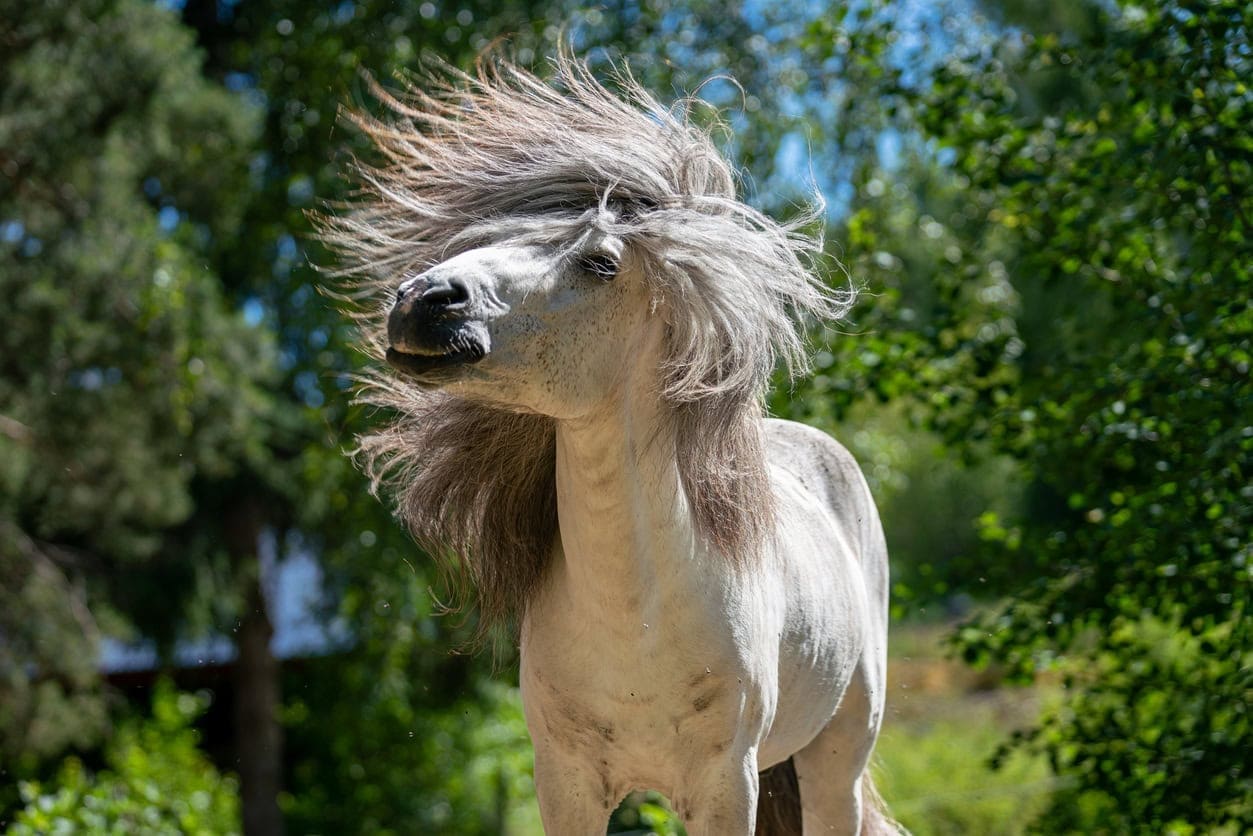
Headshaking in horses is characterized by repeated, uncontrollable, usually vertical movements of the head and neck. [1] It may appear gradually or suddenly, and it may be persistent or intermittent. Some horses exhibit this behavior seasonally, while others have episodes throughout the year. [1][2]
In some horses, headshaking can have a noticeable impact on daily activities and overall performance. Persistent headshaking may interfere with eating, training, and social interactions, potentially reducing the horse’s quality of life.
Although headshaking itself is not a disease, it can indicate a variety of underlying medical conditions, with the cause remaining unknown in many cases.
Read on to learn more about this equine behavior and when to seek veterinary intervention. By understanding the possible causes and triggers of headshaking in horses, owners and caretakers can ensure their horse is happy and comfortable for years to come.
Headshaking in Horses
Headshaking in horses is a complex and often frustrating phenomenon that can challenge even experienced caretakers. This erratic behavior not only disrupts routine activities, but may also signal underlying issues that require careful attention.
While the exact cause often remains unknown, factors such as allergies, irritation from tack, or other health conditions may contribute.
Researchers are investigating whether this behavior results from interactions between the nervous system and environmental factors. In particular, they are focusing on how sensory nerves in the trigeminal region respond to stimuli such as sunlight and allergens.
Early recognition and timely veterinary evaluation are key in managing headshaking.
Associated Conditions
There are many conditions associated with headshaking in horses, including: [2][3][4][5]
- Progressive ethmoidal hematoma
- Ear mites
- Tumors of the head
- Allergic rhinitis
- Sinusitis
- Dental issues
- Inflammation/disorders of middle ear structures
- Guttural pouch disease
- Ill-fitting tack
- Upper airway/nasal congestion or inflammation
- Soft tissue disorders in the head and neck
- Musculoskeletal disorders
- Ocular disease
- Equine Protozoal Myeloencephalitis (EPM)
While the conditions listed above are not the most common causes of headshaking, they are treatable once appropriately identified. [3]
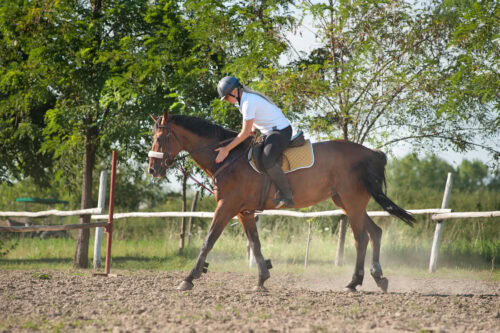
Some horses only show signs of headshaking during exercise, which may indicate that the cause is musculoskeletal pain. [6]
Lame horses are more likely to show behavioral signs of pain under saddle than fully sound horses. This may include repeated changes in head position, such as moving their head up and down, side to side, or tilting their head. [6]
Trigeminal-Mediated Headshaking
If a confirmed cause can’t be identified for a horse’s headshaking, trigeminal-mediated headshaking syndrome (TMHS) is usually diagnosed. This condition was formerly referred to as idiopathic head-shaking syndrome. [3]
Researchers now understand that the trigeminal nerve is involved with a large percentage of equine headshaking cases. However, even with this diagnosis, the exact etiology of the disease is still unclear. [3][7]
Evidence that the trigeminal nerve is associated with headshaking was initially discovered in 1899. A veterinary surgeon described infraorbital neurectomy, a surgical procedure that involves cutting or removing a nerve, as a successful treatment for equine headshaking. [4]
Current research shows that injecting local anesthetic around certain branches of the horse’s trigeminal nerve provides temporary relief from headshaking, which further supports the theory that this nerve is associated with the condition. [4]
The trigeminal nerve complex has three main branches:
- Ophthalmic
- Maxillary
- Mandibular
This nerve complex is one of the largest sensory nerves in the head. It is responsible for transmitting information related to touch, temperature, pain, and proprioception from the face and head to the brain. [7]
The clinical signs of TMHS are thought to result from trigeminal neuropathic pain. This theory is based on similarities between TMHS and trigeminal neuralgia in humans. In trigeminal neuralgia, patients report intermittent or continuous burning, itching, tingling, tickling, or electric shock-like pain, otherwise known as neuropathic pain, originating along the trigeminal nerve. [7]
Some horses may only show signs of TMHS seasonally while others show signs year-round. Horses can also enter spontaneous remission from TMHS, which can last from weeks to years. The factors contributing to remission in horses remain unclear. [7]
What's your top priority with your horse's health?

Enter your email to receive your store credit
Triggers
A number of triggers are associated with headshaking behavior in horses, including: [2][3]
- Long, bright days
- Exercise
- Rain, wind, or heat
- Pollen, dust and other allergens
- Certain sounds
- Tough foods like carrots or fibrous hay
Some researchers suggest that the light trigger in horses with TMHS may work similarly to the photic sneeze reflex in humans. In this reflex, continuous stimulation of the optic nerve by light causes a tickling sensation in the nasal mucosa. [7]
Research also shows that headshaking may be triggered or worsen after a nasal swab or when food comes in contact with the nasal passages. [7]
Exercise is a common trigger for headshaking in horses, although the exact reason remains unclear. Potential factors contributing to exercise-induced headshaking include: [4][7]
- Air moving over the nose
- Increased blood flow to the nasal and turbinate mucosa
- Increased/stronger pulse in the face and jaw adjacent to the maxillary nerve.
Symptoms
Headshaking behavior typically refers to repeated vertical movements of the horse’s head and neck, although some horses may also shake their heads horizontally or in circular patterns. [3][6]
In addition, horses exhibiting headshaking may present with other related signs, such as: [2][3][6][7]
- Muzzle rubbing
- Striking the muzzle with forelimbs
- Sneezing or snorting
- Flicking head toward chest
- Acting as if an insect has flown up a nostril
- Pushing face into trees, bushes, or other objects
- Anxious facial expression
- Active avoidance of light, warmth, or wind on face
- Low head carriage
- Nostril clamping
- Nasal discharge
- Eye discharge
- Lethargy
- Flehmen response (flipping the upper lip)
- Nose shyness
Many owners report that their horse’s headshaking behavior becomes worse during exercise, especially at faster gaits. [2][8]
Severely affected horses may have compromised welfare and can be dangerous to handle or ride. [7] Some horses may also show significant self-inflicted trauma. [1]
Risk Factors & Prevalence
Trigeminal-mediated headshaking syndrome affects approximately 1 – 1.5% of all horses worldwide. [3][8] The average age of onset for this condition is between 8 – 10 years old.
All horse breeds are susceptible to developing TMHS, though the condition appears to affect Thoroughbreds at a higher rate. [6]
Approximately 60% of equine headshaking cases show seasonal symptoms. These symptoms typically begin in the spring or summer and often subside during the winter. [3] Increased sunlight and higher temperatures are believed to trigger these seasonal episodes. [1]
Geldings appear to be more susceptible to headshaking than mares and stallions. One theory suggests that this may be due to geldings not experiencing the springtime increase in sex hormone levels observed in intact horses, potentially contributing to the onset of headshaking symptoms. [3]
While this theory has not been validated by research, the seasonality of clinical signs and the higher prevalence in geldings does suggest there may be hormonal involvement with this condition. [3]
Diagnosing TMHS
Diagnosing TMHS is often a long and difficult process, since all other potential causes must be ruled out first. [3]
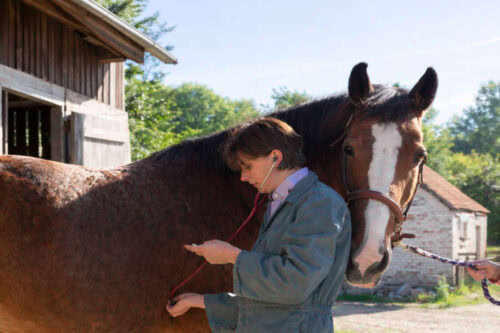
The veterinarian typically performs a detailed examination with a focus on the horse’s teeth, jaws, ears, and eyes. Additional diagnostic tests to exclude other causes of headshaking may include: [1]
- Upper airway endoscopy
- Blood tests
- Allergy testing
If a musculoskeletal condition is suspected, the veterinarian may evaluate the horse during exercise or under saddle. Unlike musculoskeletal pain, which usually causes abnormal head movement only during exercise, TMHS symptoms are present both at rest and while exercising. [6]

Treatment & Management
Treatment for headshaking is determined by the underlying cause and specific triggers. If a particular condition is identified, addressing that condition should resolve the headshaking.
In horses diagnosed with TMHS, many treatments tend to lose effectiveness over time, and the condition is generally managed rather than cured. [1][7]
The most common treatments for TMHS involve physical aids, topical products, pharmaceutical drugs, non-invasive treatments, and supplements. These include: [1][3][4][6][7][9]
Physical aids
- Nose net (half or full)
- Eye/Face mask
- Tinted contact lenses
Topical Products
- Sunscreen applied over muzzle and/or nares (for suspected photic triggers)
Pharmacological Drugs
- Oral cyproheptadine (antihistamine)
- Carbamazepine (anticonvulsant drug)
- Cyproheptadine combined with carbamazepine
- Gabapentin (neuropathic pain relief)
- Sodium cromoglycate eye drops
- Intranasal corticosteroids
Non-Invasive Treatments
- Electrical nerve stimulation (PENS therapy)
- Electroacupuncture
- Cryotherapy of the infraorbital nerve
Supplements
Additionally, some horse owners report a reduction in their horse’s symptoms after using the following alternative therapies: [8]
- Acupuncture
- Physiotherapy
- Osteopathy
- Traditional Chinese Medicine
If none of the above treatments provide long-term relief, surgical treatment may be recommended. Depending on the specific case, the procedures might include chemical sclerosis, coil compression or permanent tracheostomy. [4]
Chemical Sclerosis:
Chemical sclerosis of the maxillary nerve has been shown to improve headshaking symptoms in some horses. In this procedure, a needle is guided through the infraorbital canal using radiographic or fluoroscopic imaging, and phenol in almond oil is injected near the maxillary foramen.
While some horses experience long-term remission of symptoms, others may relapse within 6 weeks to 9 months after treatment.
Coil Compression:
One of the newest surgical treatments for TMHS involves compression of the maxillary nerve by placing platinum embolization coils in the infraorbital canal.
This procedure has a 60% success rate at 6 months, which increases to 85% if the procedure is repeated.
Permanent Tracheostomy:
For horses with occasional exercise-induced headshaking, a permanent tracheostomy may offer a solution. This surgical procedure creates a permanent opening in the neck, allowing the horse to bypass the nasal passages during breathing.
By eliminating the airflow stimulus in the nasal passages, this treatment can lead to long-term improvement in some cases.
Prognosis
Occasionally, a horse’s headshaking symptoms may enter spontaneous remission, although the duration of remission varies widely. This phenomenon suggests that trigeminal nerve sensitization can be reversed, providing hope for the development of new treatments. [2][7]
If all treatments prove ineffective and the horse’s welfare is compromised, humane euthanasia may be considered as a last resort. Always consult your veterinarian to evaluate your horse’s quality of life and make end of life decisions. [1]
Frequently Asked Questions
Here are some frequently asked questions about headshaking in horses:
Headshaking is a repetitive, uncontrollable movement of the horse's head and neck, usually in a vertical motion. It can be caused by various conditions or remain idiopathic, making it a distressing issue for horses and caretakers. [1]
Headshaking can be triggered by medical conditions such as sinusitis, dental issues, ear mites, or musculoskeletal pain. In many cases, however, it is linked to trigeminal-mediated headshaking syndrome (TMHS), a neuropathic condition involving the trigeminal nerve in the face. [2][3][4][5]
Summary
Headshaking is a behavioral concern in horses that may result from various underlying medical conditions. However, when no specific cause can be identified, the condition is classified as trigeminal-mediated headshaking syndrome.
- Headshaking is characterized by vertical movement of the head and neck, but some horses move their head side-to-side or in circular patterns
- Horses often show other signs, such as nasal irritation
- Symptoms may be seasonal, occurring in spring or summer only, or they may occur all year long
- There are a number of treatments that may help with TMHS but most do not offer a long-term solution
- Occasionally, horses go into spontaneous remission from headshaking symptoms
References
- Ross. S. E. et al., Prevalence of Headshaking within the Equine Population in the UK. Equine Veterinary Journal. 2018.
- Newton. S. A. et al., Headshaking in Horses: Possible Aetiopathogenesis Suggested by the Results of Diagnostic Tests and Several Treatment Regimes Used in 20 Cases. Equine Veterinary Journal. 2000. View Summary
- Bell. T. et al., Equine Headshaking Syndrome: Triggers, Seasonality, and Treatment Efficacy in Australia. Animals: an open access journal from MDPI. 2024. View Summary
- Schott II. H. C. and Petersen. A. D., Equine Headshaking Syndrome. Veterinary Allergy. John Wiley & Sons, Ltd. 2013.
- Moore. L. A. et al., Management of Headshaking in Three Horses by Treatment for Protozoal Myeloencephalitis. The Veterinary Record. 1997. View Summary
- Thomsom. K. et al., Head Tossing Behaviour in Six Horses: Trigeminal‐mediated Head‐shaking or Musculoskeletal Pain?. Equine Veterinary Education.
- Pickles. K., Is Electrical Nerve Stimulation the Answer for Management of Equine Headshaking?. The Veterinary Clinics of North America. Equine Practice. 2019. View Summary
- Stange. L. M. et al., Comparison of the Current Situation of Equine Headshaking Syndrome in France and Switzerland Based on an Online Survey. Animals. 2022. View Summary
- Mills. D. S. et al., Reported Response to Treatment among 245 Cases of Equine Headshaking. The Veterinary Record. 2002. View Summary