English







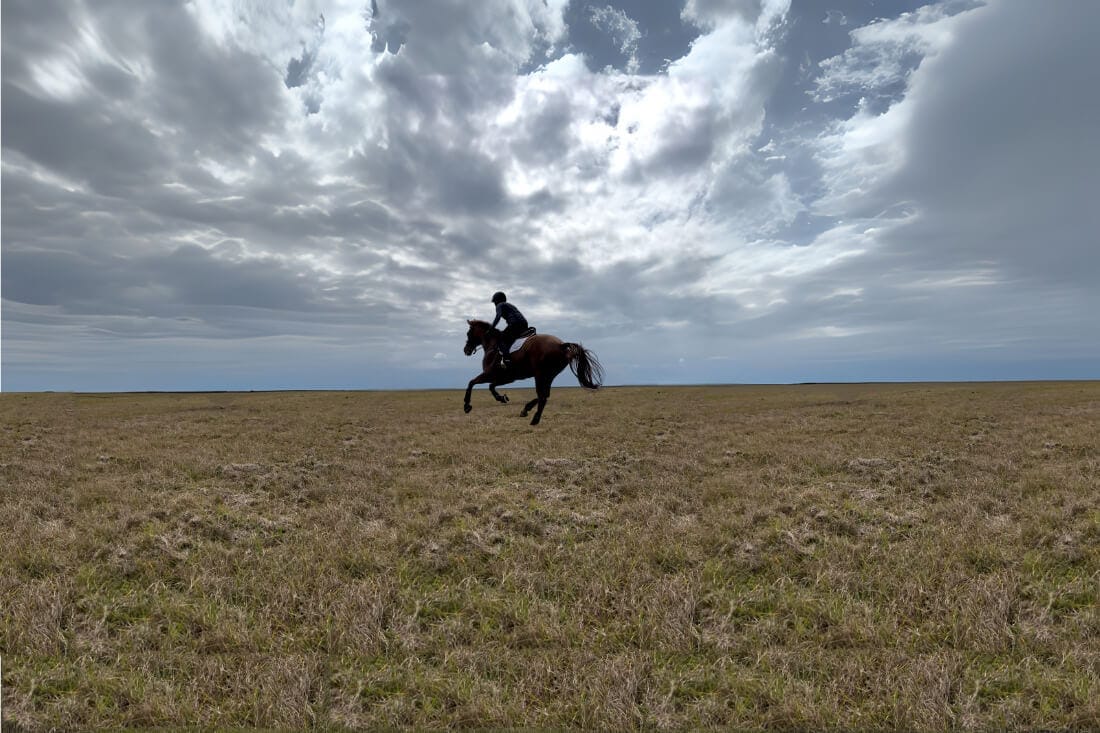
Including hill work in your horse’s training and conditioning program offers numerous benefits across all disciplines. Whether performed in-hand, under saddle, or with the support of equipment like treadmills, working on an incline engages the horse’s musculoskeletal system in a way that flat work cannot.
This natural form of resistance training develops your horse’s strength, balance, and coordination while minimizing stress on the joints.
Beyond its physical benefits, hill work also strengthens communication between horse and rider. Navigating slopes teaches riders how to support their horse’s balance, use core stability to maintain correct equitation, and encourage proper biomechanics, such as lifting through the withers and engaging the hindquarters. These foundational skills translate into improved movement and responsiveness in the arena, on the trail, and in competition.
Learn how to incorporate inclines into your horse’s exercise routine to enhance muscle strength, cardiovascular fitness, coordination, and mental engagement.
Hill Work for Horses
Hill work is a highly effective and versatile conditioning method that involves training the horse to move up and down an incline at various gaits. It is suitable for horses in any discipline and can be done in-hand or under saddle.
This form of exercise promotes joint health, encourages unrestricted movement, and supports more fluid, supple gaits. As a result, hill work is a valuable tool in both conditioning and therapeutic programs, helping horses develop better movement patterns, improved performance, and surefootedness on varied terrain. [1]
To maximize the benefits of hill work, vary the slope gradient and duration of each session. Gentle inclines allow inexperienced or rehabilitating horses to engage key muscle groups without excessive strain, while steeper hills can be introduced gradually to challenge more advanced athletes.
By planning workouts that progress from short uphill walks to longer trots or canters, riders and trainers can systematically build endurance, proprioception, and strength. [2]
It’s useful to plan for hill work two to three times per week, with the frequency adjusted based on the horse’s training level. Start with brief sessions of five to ten minutes of walking or trotting uphill. Gradually increase the duration or gait intensity as fitness improves to prevent fatigue and overtraining.
Consult with your treating veterinarian if you are considering hill work as part of your horse’s return to work plan after an injury.
What's your top priority with your horse's health?

Enter your email to receive your store credit
Top 5 Benefits of Hill Work for Horses
To help focus your training efforts, here are the top five benefits of hill work for horses. These key advantages showcase how incline conditioning can transform strength, balance, cardiovascular fitness, and mental engagement with minimal joint impact.
1) Muscle Engagement
Hill work stimulates the horse to use their core and topline muscles more effectively, leading to smoother, stronger movement. [2]
Including hill work in a horse’s training program encourages the horse to engage their hindquarters and reach further beneath the body, especially when going uphill. Back muscle and topline build with increased muscle engagement and balance as the horse works up and down hills. [2]
Working against gravity on inclines also promotes muscle development without excessive stress on the horse’s joints. This makes hill work an effective method for building strength and endurance with reduced joint impact compared to flat-surface training. [2][3]
Guiding your horse to take a few steps backward while facing downhill is an excellent way to build hindquarter strength. This exercise activates the major muscle groups in the hind end, supporting balanced development. [2]
Hindlimb & Trunk Muscles
Research shows that increasing speed and incline on a treadmill or while riding uphill activates more muscles, especially in the hind legs and trunk. Walking or trotting uphill engages key muscles, such as: [3][4]
- Gluteus medius: the primary hip extensor that drives the hind limb backward, propelling the horse forward and stabilizing the pelvis during movement
- Biceps femoris: a powerful muscle that extends the hip and stifle joints and flexes the stifle, providing strong thrust and aiding in propulsion
- Longissimus dorsi: the main back muscle that lifts and supports the spine, transferring power from the hindquarters to the forehand and maintaining a strong topline
Incline work helps build muscle endurance by engaging core muscles, such as the rectus abdominis, for more extended periods compared to working on the flat.
Unlike speed training, which causes muscles to activate sooner during quick, short strides, incline training increases the intensity of muscle work while delaying activation. This makes it an effective tool for building strength and improving condition. [3]
Forelimb Muscles
Like the hindlimbs, increasing speed and incline affect both the movement and muscle activity in the horse’s forelimbs. In particular, working on an incline requires subtle changes in the cadence of a horse’s gait compared to working at the same pace on the flat.
When working on the flat, stride length grows and stride cadence decreases as the horse’s speed increases. Working on an incline alters this trend by increasing the stance phase of a gait and decreasing the swing phase. [5]
- The stance phase of a gait refers to the time spent with feet on the ground.
- The swing phase of a gait refers to the time spent swinging the feet forward when they are off the ground.
Certain muscles, such as the brachiocephalicus and triceps brachii, activate in sync with the movement of the legs. Increased speed and uphill work require these muscles to work harder for a longer period of time, increasing demand on the forelimbs for enhanced fitness training. [5]
2) Cardiovascular Fitness
For horses in conditioning programs, hill work is one of the most effective exercises for developing cardiovascular fitness.
Moving uphill increases muscular effort, which raises the horse’s heart rate and respiratory rates more than flat work at the same speed. This sustained demand stimulates the heart muscle to contract more strongly and pump a greater volume of blood with each beat.
Over time, these adaptations lead to improved fitness, higher cardiac output, and better oxygen delivery to working muscles.
The increased oxygen demand also drives changes in lung function and the circulatory system. Respiratory efficiency improves, red blood cell production increases, and capillary density within muscle fibers expands, allowing for more efficient oxygen uptake and waste removal.
Together, these changes enhance aerobic capacity, delay fatigue, and improve overall endurance without the need for high-speed exercises that may increase the risk of musculoskeletal injuries. [2]
3) Mental Enrichment
Hill work and other exercises performed outside the arena not only benefit a horse’s body but also support mental well-being.
New environments and varied terrain provide sensory stimulation, requiring the horse to stay alert, process different visual and auditory cues, and adjust to constantly changing footing. This mental engagement helps reduce boredom and stress, which are common in repetitive arena work. [2]
Training regimens that include hacking in a field, fox hunting, trail riding, cross-country riding, or other forms of riding outside the arena help keep horses mentally stimulated and engaged, preventing burnout that can occur with repetitive arena training.
4) Injury & Strain Prevention
Working against gravity on inclines provides a form of resistance training that builds muscular strength without placing excessive stress on the joints.
Compared to flat-surface training, hill work is particularly beneficial for developing strength and endurance while minimizing the risk of joint strain. Since hill work can be performed at any gait, even walking, it can be a low-impact activity, unlike high-speed exercises, which may increase the risk of musculoskeletal injuries.
Further, navigating uneven terrain during hill work challenges a horse’s balance and coordination, enhancing neuromuscular control and proprioception (awareness of where the legs are in space). Developing these skills helps support performance across disciplines and may help prevent injury. [2]
5) Enhanced Coordination & Balance
Incorporating incline workouts, such as walking or trotting on hills or an inclined treadmill, improves the horse’s balance and coordination.
Lateral hill work, such as walking across slopes, can be beneficial for addressing gait and muscle asymmetries. This approach helps encourage even muscle development on both sides, particularly in horses that are stiffer or weaker on one side. [2]
A study on recreational warmblood horses found that a 5-minute walk on a treadmill with a 3% incline significantly improved stride regularity and lateral limb coordination compared to flat work.
While flat walking had no effect, inclined exercise increased stride symmetry, positively influencing movement quality. This suggests brief incline sessions or hill work can enhance balance and coordination in training or rehabilitation programs. [6]

Scientific Evidence
While hill work builds fitness even at slower gaits, research shows incline steepness and speed strongly affect a horse’s muscle activation.
A study on equine treadmill exercise examined how different speeds and inclines affect hindlimb muscle activity. The results showed that faster speeds increased activity in the gluteus medius (GM), biceps femoris (BF), and gastrocnemius lateralis, strengthening these muscles.
Increasing the incline by as little as 10% increased muscle activity across all tested muscles, while trotting on an incline mainly targeted the GM, which is essential for propulsion and lifting the withers. [4]
In the same study, downhill work reduced activity in the GM and BF, particularly during trotting, but still posed a challenge for the horse. Other muscles, such as the extensor digitorum longus, vastus lateralis, and gluteus maximus, remained active in all exercises, highlighting their role in basic movement. [4]
Another study examined the effect of varying treadmill speed and incline on muscle activity in the splenius (Sp), longissimus dorsi (LD), and rectus abdominis (RA) muscles during trotting. As speed increased, the muscles activated earlier and deactivated later. The intensity of muscle activity increased for the LD and RA, while the Sp was less affected by speed. [3]
Raising the incline from 0% to 6% delayed the onset and offset of LD and RA muscle activity, resulting in longer activity durations, while Sp showed no change. All three muscles exhibited increased intensity as the incline increased. [3]
The findings of both studies suggest that varying speed and incline during hill work can more effectively target specific muscle groups. This can enhance a horse’s strength, coordination, and performance, and aid in rehabilitation.
Types of Hill Work & Exercises
One of the easiest and most natural ways to incorporate hill work is by riding or working horses on hills and uneven terrain. However, equine treadmills can also be used to mimic hill work.
Hill work can be physically demanding, and overuse may lead to fatigue or muscle strain, so ensure you choose a routine and schedule that is appropriate for your horse. [1]
Uphill Work
Uphill work builds strength, especially in a horse’s hindquarters and topline. It boosts cardiovascular fitness and enhances balance and coordination. This method of hill work also helps develop power, stride efficiency, and agility over uneven terrain. [1][3][6]
Incorporating uphill work encourages the horse to engage its hindquarters and step further underneath their body. Working both up and down hills can increase your horse’s muscle use and balance, which helps develop their back and topline muscles. These benefits can be achieved even at a walk. [1][3][6]
Downhill Work
Downhill work helps develop coordinated, controlled movement by challenging the horse to manage their balance and foot placement. This type of work particularly engages muscles in both the forelimbs and hindquarters in ways that differ from flat or uphill work.
Downhill work also encourages a longer, more deliberate stride and helps improve the horse’s awareness of limb position and movement. This contributes to better balance and coordination. [1][3][6]
Backing Uphill
Backing uphill challenges a horse’s balance, requiring control and awareness of their body and movement. It also strengthens the hindquarters, as the horse must engage pelvic limb muscles to counteract the forward shift in their center of gravity. [1]
An effective strength-building exercise involves guiding the horse to take a few steps backwards while facing uphill. This can be done both in-hand and under saddle. [1][3]
Poles on a Slope
Ground pole exercises are commonly used in equine rehabilitation because they support recovery by improving: [7]
- Movement quality
- Proper movement patterns
- Awareness of position and movement
- Neuromuscular control
Regular work over poles has also been shown to strengthen the limbs, back, and abdominal muscles, which contributes to overall upper body development. [7]
The benefits of hill and pole work are combined when poles are set on a slope. Using poles on a hill further helps horses build strength, improve coordination, and develop better balance. Walking uphill over poles encourages the horse to shift its weight to the hindquarters and lighten the forehand, while also promoting steady rhythm and stride control both up and downhill. [1][7]
Placing poles on a slope can also be an excellent training tool for disciplines that require horses to go over or jump obstacles on varied terrain, such as eventing. [8]
A simple incline pole exercise involves setting two poles on a hill and having the rider navigate them in both directions. The goal is to identify the number of strides the horse naturally takes between the poles and practice consistently maintaining that same number, whether going up or downhill. Riders can perform the exercise in both two-point and sitting positions. [8]
Incline Water Treadmill Training
Incline water treadmill training for horses is another exercise that mimics hill work. It involves the horse walking on a treadmill while submerged in water and gradually increasing the incline to simulate uphill training.
This form of exercise enhances fitness, aids in injury rehabilitation, and is beneficial for training and recovery. [9]
A recent study found that a four-week inclined water treadmill routine can significantly improve back muscle development in horses. Six horses completed 24 sessions on a treadmill set at a 4% incline with water up to the mid-cannon bone.
Muscle gains were noticeable by the second week, suggesting this type of exercise is an effective way to quickly strengthen the thoracic back muscles. [9]
Planning a Hill Workout for Your Horse
When used thoughtfully, working on hills improves strength, balance, and body awareness. The following guidelines and tips can help you make the most of hill work at every stage of training while promoting safe, effective movement and a stronger connection between horse and rider.
Easy Hill Work
Gentle incline exercises can help your horse rebuild strength and confidence by gradually reintroducing muscle engagement without overloading joints.
This 6-week plan is designed to recondition horses that are returning to work after injury, illness, or an off-season layup. Follow these steps to rebuild strength, balance, and confidence with minimal joint stress: [10]
- Circle or lunge your horse from the ground on a hill with no other tack. Start at a walk to help your horse build fitness and improve your skills before progressing to a trot
- On the first day of hill work, start with just 5 minutes in each direction, with a 2-minute break between changes in direction
- If needed, you can move around as your horse circles, allowing the horse to continue working up and down the slope
- Gradually increase the duration each day while focusing on building balance and strength in your horse
- In week 1, complete up to 5 days of hill work with your horse. Take a rest day once you have increased session duration up to 15 minutes of active work
- If your horse is doing well, decrease to 3 days a week of hill work at maximum duration in week 2
- Reduce to two days per week at maximum duration during weeks 4 – 6 and start increasing the intensity of the workout by increasing speed, incline, or both
Make sure you monitor your horse as you increase the duration and intensity of exercise. If they seem fatigued or are struggling to complete the session, take the intensity back down to a level they are capable of performing.
Advanced Hill Work
Once your horse has built a solid foundation, advanced hill exercises can further improve strength, coordination, and responsiveness while adding variety to your training routine.
Some tips to ensure effective use of advanced hill work include: [10]
- Always start with a warm-up to gradually prepare your horse’s muscles, cardiovascular system, and joints for exertion
- Traveling sideways across hills improves coordination, especially in young or green horses
- Trot and canter hills only when the horse is physically and mentally ready. Mix in walk-trot transitions and include both uphill and downhill work
- Practice stopping mid-slope to reinforce communication and ensure your horse is tuned in to the rider’s cues
- Once the horse is strong and confident, try backing up and down hills to further challenge balance and aids
- Vary the hill work routine to work different muscle groups, keep training fresh, and make it more enjoyable for horse and rider
Equitation & Hill Work
Hill work also provides an opportunity for riders to improve their equitation. Riders working on hills have to resist gravity to maintain upright posture and centered seat, which improves their balance, core strength, and effectiveness.
Some methods to encourage your horse to stay balanced while performing hill work include: [10]
- Maintain a centered position: if working under saddle, ensure the rider’s body remains centered over the horse’s center of gravity while going up or downhill.
- Avoid leaning forward on the uphill: this shifts weight onto the front legs, which places added strain as they navigate up the hill.
- Avoid leaning back on the downhill: leaning back loads the hindquarters, which makes balancing and controlling movement difficult.
- Use your core for balance: rely on your abdominal muscles rather than the reins to maintain your steady position.
- Allow your horse’s head to move freely: the horse needs to lower its head to maintain balance and carefully place its feet.
Frequently Asked Questions
Here are some frequently asked questions about hill work for horses:
Hill work offers a low-impact, high-reward conditioning method that builds muscle strength, enhances cardiovascular fitness, and improves coordination. Uphill and downhill movement engages the hindquarters, core, and topline muscles while minimizing stress on the joints. Even walking on hills can yield significant benefits, including improved stride regularity, posture, and mental engagement in training. [1][3][6]
Uphill work improves hindquarter and topline strength, cardiovascular fitness, and balance, downhill work refines coordination and encourages longer, more controlled strides. Backing uphill challenges hind-end control and strengthens key pelvic muscles. Poles on a slope combine the benefits of pole work and incline training, enhancing stride control, strength, and readiness for specific disciplines like eventing. [1][3][6][7][8]
Yes, hill work is safe for horses returning from injury or the off-season, when done gradually and thoughtfully. Begin with short sessions (e.g., 5 minutes of walking in each direction) and increase duration over time. Avoid overexertion and monitor your horse's condition closely. Groundwork and slow in-hand work on hills can effectively rebuild strength and coordination without risking joint strain. An ideal routine includes two to three hill work sessions per week over a 4–6 week span. [10]
Incline treadmills and inclined water treadmills can replicate hill work benefits in controlled environments. A study using a 4% incline and mid-cannon depth water showed significant improvements in back muscle development after just four weeks. These tools offer consistent, low-impact resistance and are useful for horses in training, recovery, or rehabilitation settings. [9]
Summary
Incorporating hill work into a horse's training program can significantly enhance their physical and mental well-being.
- Hill work is a valuable tool for building strength, preventing injuries, and improving overall performance
- Hill or incline work improves key muscle groups, including the hindquarters, back, and core
- Regularly including this exercise through riding, groundwork, or treadmill training can benefit horses in any discipline
- Always monitor your horse during training sessions and provide opportunities for rest and recovery
- Work with your treating veterinarian if you are using hill work as part of your horse's rehabilitation program
References
- Paulekas. R. and Haussler. K. K. Principles and Practice of Therapeutic Exercise for Horses. Journal of Equine Veterinary Science. 2009.
- Baker. S. 4 Benefits of Hill Work for Horses. Fédération Équestre Internationale. 2020.
- Robert. C. et al. The Effects of Treadmill Inclination and Speed on the Activity of Three Trunk Muscles in the Trotting Horse. Equine Veterinary Journal. 2001. View Summary
- Crook. T. C. et al. The Effect of Treadmill Speed and Gradient on Equine Hindlimb Muscle Activity. Equine Veterinary Journal. Supplement. 2010.
- Hodson-Tole. E. Effects of Treadmill Inclination and Speed on Forelimb Muscle Activity and Kinematics in the Horse. Equine and Comparative Exercise Physiology. 2006.
- Lewczuk. D. and Maśko. M. Inclined Treadmill Short-Duration Exercise for Walk Regularity of Recreation Horses. Journal of Veterinary Behavior. 2024.
- Walker. V. A. et al. Effect of Ground and Raised Poles on Kinematics of the Walk. Journal of Equine Veterinary Science. 2022.
- Mastervich-Beshear. E. Utilizing Pole Work for the Rider's Development. United States Eventing Association. 2024.
- Fair. N. et al. Four Weeks of Incline Water Treadmill Exercise Can Contribute to Increase Epaxial Muscle Profile in Horses. Veterinary Medicine International. 2023.
- Conditioning Horses on Hills. American Quarter Horse Association. 2018.