English







Biting behavior in horses can develop for multiple reasons, but even a playful nip can result in bruises, broken skin, or unsafe handling situations. For owners, riders, and barn staff, addressing biting is essential for maintaining safety and building clear communication.
By recognizing what motivates horses to bite and creating an environment that supports calm, appropriate interaction, you can reduce this behavior and help your horse feel more confident and secure. Consistent handling, clear expectations, and thoughtful management strengthen the horse–human relationship and encourage positive behavior that lasts.
Because biting can appear in many forms, understanding your horse’s emotional state and environmental influences is fundamental to effective training and correction.
Paying attention to early warning signs, routine care, and the overall stability of the horse’s daily life provides valuable insight into why the behavior occurs and how to address it safely and effectively.
Biting Behavior in Horses
Biting is a natural part of how horses interact with their environment, their herd, and the people around them. In a social setting with the herd, horses use their teeth to communicate, establish boundaries, play, and respond to discomfort.
While these behaviors make sense within the herd, they can become unsafe when directed toward humans who do not share the same communication cues.
Some horses bite softly and tentatively, using their mouths to investigate new objects or express curiosity. Others may use more assertive or defensive bites when they feel threatened, uncomfortable, or unsure about what is being asked of them.
Understanding this spectrum of behavior helps distinguish harmless exploration from potentially dangerous actions.
Because biting can emerge from many different motivations — ranging from playful nipping to forceful, fear-driven reactions — recognizing the context is essential. The better handlers understand what the horse is trying to express, the more effectively they can intervene, set boundaries, and guide the horse toward safer, more appropriate behavior.
What's your top priority with your horse's health?

Enter your email to receive your store credit
Common Situations Where Horses Bite
Biting rarely happens without reason. Many horses show mouthy or defensive behavior in situations that create discomfort, uncertainty, or excess energy. Recognizing when biting tends to occur can help owners understand the underlying cause and respond more effectively.
Some situations where horses may bite include:
- During grooming: Some horses become reactive when brushed around sensitive areas such as the girth, belly, or flanks. This may reflect discomfort, pain, tension, or overstimulation, especially in younger horses still learning safe boundaries.
- During tacking up: Biting that occurs while tacking up often signals anticipation of discomfort or pain. Horses may react when tack does not fit properly, when their girth is tightened too quickly, or when they have had negative associations with riding in the past, making tacking up a common scenario for defensive behaviors.
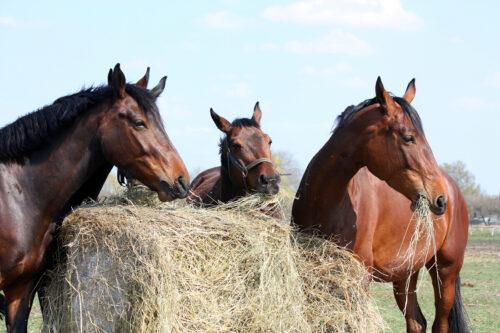
- At feeding time: Excitement or competition at feeding time can lead to crowding, pinning ears, or snapping. Horses that have learned to guard resources may show increased tension during mealtimes, even if other horses are not present.
- When being led or handled: Some horses nip when seeking attention or are unsure about boundaries. Inconsistent cues across different handlers can also contribute to this behavior.
- During confinement: Limited movement or boredom can make confined spaces like stalls or cross-ties challenging for some horses. Mouthy behavior may surface when the horse feels restricted or overstimulated by activity around them.
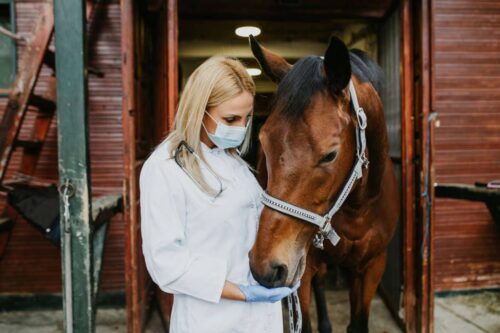
- During routine care: Some horses can be reactive during veterinary or farrier appointments. These responses often develop after past negative experiences or uncertain handling. They may also occur as a result of pain.
Causes of Biting Behavior
Understanding why horses bite is the first step in addressing this potentially dangerous behavior. Horses may nip or become mouthy for a variety of reasons, including natural instincts, boredom, attention-seeking, pain, fear, or equine social dynamics.
Recognizing the motivation behind biting helps handlers respond safely and effectively, preventing injury and building better communication with the horse.
Curiosity
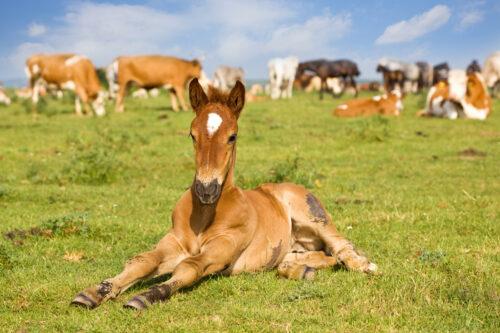
Young horses, especially foals and yearlings, explore the world with their mouths. Nibbling on blankets, halters, or even human hands is a normal part of learning about their environment. [1]
While this curiosity is natural, failing to set boundaries around nipping can unintentionally teach the horse that biting humans is acceptable. Over time, playful exploration may develop into a persistent biting habit if not managed early.
Play & Boredom
Mouthy behavior can also stem from playfulness or boredom. Horses confined to stalls or with limited turnout often seek stimulation, and nipping at handlers can provide a form of stimulation in an otherwise barren environment. [2]
Playful bites among horses, such as foals sparring, are harmless within the herd, but can be dangerous when redirected toward humans.
Attention-Seeking
Some horses bite or become mouthy because they have learned that nipping elicits a reaction from humans. This can include attention in the form of scolding, laughing, petting, or food rewards. [3][4]
Horses kept in stalls or isolated at a young age may also become overly eager for human interaction as they are not receiving adequate socialization opportunities elsewhere. This can lead to unwanted behaviors such as nipping, biting, or kicking if they have not learned safe ways to interact with people. [5][6]
Pain or Discomfort
Horses may bite when experiencing physical discomfort, including: [7][8]
- Dental issues: Sharp points, wolf teeth, or retained caps can make grooming, handling, tacking up, or rein pressure painful in the mouth and face.
- Ill-fitting tack: Saddles, girths, or bits that do not fit properly can cause soreness or irritation.
- Gastric ulcers: Pain from ulcers or abdominal discomfort can increase defensiveness, especially during grooming or tacking.
- Back pain: Soreness from poor saddle fit, muscle strain, or spinal issues may cause a horse to react protectively to touch or pressure.
- Skin irritations: Conditions such as insect bites, hives, dermatitis, or rubbing-related irritation can make even gentle touch uncomfortable.
Punishing a horse that bites due to pain does not address the underlying problem and may worsen fear or stress. Work with your veterinarian if your horse is showing signs of pain or discomfort.
Fear or Defensiveness
Fear is a major trigger for biting. As prey animals, horses instinctively try to escape perceived threats. When they feel trapped or cornered, biting may become a defensive response. hese fear responses may occur in tandem with pain responses. [9]
Signs of fear-based biting include:
- Flattened or sideways ears
- Flared nostrils
- Wide, frantic eyes
- Tucked tail
- Tense neck muscles
- Sudden lunges
- Pawing
- Vigilance
- Attempts to push a handler away or escape from the handler
Fear-based bites are different from playful or attention-seeking nips. They often develop after rough handling, confinement, chronic pain, or situations that limit the horse’s ability to escape.
Handlers may unintentionally reinforce defensive biting behavior if the horse’s attempts to create space are successful — for example, when a handler steps back. Over time, this can lead to deep-seated avoidance or defensive behaviors, making retraining more difficult.
Punishing fear-based biting can escalate the horse’s anxiety, increasing the risk of other unsafe behaviors. When addressing biting behavior that stems from pain or fear, it is most effective to look to the root cause of biting, rather than the behavior itself. [10]
Herd Dynamics
Biting is a natural part of herd dynamics, where horses use it to test boundaries, control space, and influence access to food or companions.
Horses kept in individual stalls with only occasional pasture time may face constantly changing group compositions. Because humans determine herd groupings rather than allowing natural compatibility, herd dynamics must be re-established each time horses are introduced or removed.
This instability can create tension, and some horses may nip or bite as they test boundaries or assert themselves with other horses. [11][12]
Myths About Equine Biting Behavior
There are some common misconceptions about why horses bite, which can make it more difficult to address the behavior effectively, including: [13][14][15]
- Biting is a dominance issue: While herd dynamics can influence biting behavior between horses, biting behaviors directed towards humans stem from fear, discomfort, curiosity, or inconsistent handling. Horses do not view humans as part of their dominance structure, and assuming they do can cause the true source of the biting to be overlooked.
- A quick smack will fix the problem: Physical correction may stop behavior in the moment, but often increases tension or anxiety, especially for horses who bite from fear or pain. In many cases, punishing biting is punishing an effort to communicate, which can negatively impact learning and the human-horse bond.
- Horses bite because they’re being mean: Horses are not motivated by malice – they lack the cognitive capacity for such concepts. Biting is a response to discomfort, confusion, or unmet behavioral needs rather than intentional aggression. Most importantly, biting is an important form of communication from the horse.
- Young horses will grow out of nipping: Without guidance, exploratory nipping can become a habit. Early handling that rewards calm, unintrusive behavior helps prevent long-term issues.
- Playful nips are harmless: Even light nips can escalate over time. Horses do not naturally differentiate between playful and unsafe interactions the way humans do.
Clarifying these myths helps owners understand what the behavior may be communicating and how to respond safely.
Handling Horses that Bite
Managing a horse that bites requires a balance of safety, clear communication, and thoughtful handling.
Some biting behavior can be dangerous or beyond the skill level of the average handler, in which case an experienced equine behaviorist or trainer should be consulted. Recognizing your own limits and understanding the horse’s behavior are key to preventing injury.
Safety comes first when working with a horse that bites. Stay out of reach of the head and neck, avoid standing directly in front of the horse, and use appropriate equipment such as halters, lead ropes, or gloves if needed.
Always be aware of your surroundings and keep other people at a safe distance during training or handling sessions.
Warning Signs
Preventing bites begins with recognizing early behavioral signs. [9] These cues are often subtle and may include changes in muscle tension, facial expression, ear position, or how a horse orients its head and neck.
Noticing these shifts allows handlers to intervene before the behavior escalates.
It’s also helpful to distinguish whether the horse’s body language suggests aggressive or playful origins.
Signs of Playful Biting Behavior
Playful nipping or mouthiness is often seen in younger or curious horses and is usually exploratory rather than threatening.
Horses who are about to make playful bites may show indications such as:
- Relaxed ears
- Soft eyes
- Loose posture
- Brief, gentle mouthing gestures, potentially involving the lips or tongue
These horses are typically seeking interaction or attention if biting is directed towards handlers.
Signs of Aggressive Biting Behavior
Aggressive biting is more serious and potentially dangerous. Warning signs include:
- Pinned ears
- A tense or braced body
- Narrowed or hard eyes
- Active tail swishing
- Repeated or forceful lunging with the head or shoulder
This behavior may indicate an attempt to create distance or a response to fear, frustration, or pain.
 Illustration: Dr. Ana Mesa, PhD
Distinguishing between playful and aggressive body language helps handlers respond appropriately, whether through reinforcing boundaries, adjusting management, or seeking professional assessment for more concerning behaviors.
Effective Behavior Correction
Biting can be frustrating and is a concerning behavior that owners need to address to ensure everyone’s safety.
There are many schools of thought on how to correct biting, but equine welfare and behavior specialists emphasize the importance of calm, consistent responses that avoid punishment. These approaches help reduce tension, prevent escalation, and support clearer communication with the horse.
Here are some strategies that promote safe, effective behavior change in biting horses:
- Avoid physical punishment: Physical corrections may interrupt the behavior in the moment, but they often increase anxiety or defensive behavior. Horses learn more reliably when they feel safe and understand what is being asked of them. Physical punishment negatively impacts both learning and the human-horse relationship.
- Respond calmly: Keeping your voice and body language steady helps prevent escalation. A calm reaction may help your horse emotionally regulate and reduces the likelihood of fear-based responses.
- React consistently: Horses thrive on predictable cues. Offering the same response each time the behavior occurs, regardless of the handler, helps clarify boundaries and reduce confusion.
- Reward desired behavior: Reinforcing calm, unintrusive behavior encourages the horse to repeat it. Praise, scratches, or appropriate treat-based rewards can help redirect attention and strengthen positive associations. Biting behaviour may also be redirected to a more desired response through consistent, positive training.
- Watch for early signs: Subtle changes in posture, facial tension, or ear position often appear before a bite. Noticing these cues early allows you to redirect the horse before the behavior escalates or change tactics to reduce anxiety or fear.
- Address potential pain or discomfort: If biting occurs during grooming, saddling, or specific handling tasks, discomfort may be contributing. Ensuring the horse is physically comfortable supports better learning and reduces defensive reactions, addressing the root cause of the issue rather than the symptom.

Training Horses Not to Bite
Horses can quickly learn behaviors that help them avoid unpleasant situations, making these avoidance behaviors persistent and challenging to change. Because deviating from these strategies can feel risky to the horse, retraining requires careful planning. [10]
Effective correction combines clear rules, consistent training, and supportive management. Horses respond best when expectations are consistent, their environment meets basic needs, and handlers use techniques that build trust rather than fear.
Pain responses cannot be trained away if pain is still present. If you are struggling with a biting horse, it’s important to rule out pain as a cause of the behavior before you attempt to train your horse not to bite.
If your horse is biting out of fear or anxiety, it’s most effective to try and address these emotional challenges through management and handling strategies. As the horse’s emotional state eases, their biting behavior is likely to fade away.
Changing Perspectives on Training Methods
Historically, biting and other undesirable behaviors were often addressed using aversive control (punishment or pressure) or indirect methods like offering more exercise and turnout.
While these strategies may appear effective in the moment, they fail to address the root cause of biting behavior. The use of positive punishment has also been shown to hinder learning and negatively impact the human-horse relationship. [14]
If physical punishment is used, horses may also habituate to the initial level of force, leading handlers to use stronger measures that risk greater harm. Further, untrained handlers often apply pressure inconsistently, risking confusion and stress or unintentionally reinforcing the behavior. [16] Punishment is not recommended as a solution to undesired behaviors such as biting.
Instead, modern approaches emphasize safe, consistent, and clear communication.
Alternatives such as positive reinforcement of alternative behaviors, predictable routines, environmental management, and gentle pressure-and-release techniques reduce risk, improve welfare, and strengthen the horse-human bond.
Positive Reinforcement
Positive reinforcement is a safe and effective method for teaching horses not to bite. Rather than relying on punishment, this approach rewards desirable behaviors, encouraging the horse to repeat them. This not only helps reduce biting but also builds trust and strengthens the horse–human bond. [17][18]
Follow these steps to implement positive reinforcement effectively:
- Identify the desired behavior: Examples include standing calmly during grooming, yielding to pressure, moving the head away from the handler, or keeping a relaxed mouth. If an undesired behavior occurs, simply ignore it.
- Choose an appropriate reward: Rewards can be verbal praise, gentle wither scratches, or small food treats like carrots or apple pieces.
- Reinforce immediately: Deliver the reward as soon as the horse performs the correct behavior so the connection is clear. Avoid accidentally rewarding nipping or mouthy behavior, as this can reinforce the very behavior you are trying to eliminate. Be sure to feed your horse with an outstretched arm away from your body so that you don’t accidentally encourage mugging behavior.
- Pair with clear cues: Use consistent positive signals to mark correct behavior, such as a clicker or a verbal “yes”. This helps the horse understand exactly which actions are being rewarded.
- Gradually reduce treats: Once the horse consistently responds appropriately, gradually switch to intermittent reinforcement to maintain the behavior.
Benefits of positive reinforcement for horses include: [17][19]
- Promotes voluntary cooperation instead of fear-based reactions
- Helps the horse identify desired behaviors, and makes them more likely to perform them
- Offers a safe and humane alternative to punishment-based methods
- Boosts the horse’s motivation to learn and engage
- Builds a stronger, more trusting horse–human relationship
Environmental & Management Factors
Biting is often influenced by a horse’s environment and daily care. Meeting physical and mental needs reduces frustration and prevents mouthy behavior. [20][21]
- Evaluate Health and Comfort: Pain from dental problems, saddle fit issues, or ulcers can trigger defensive behaviors. Regular veterinary and dental care help ensure comfort and prevent pain-related reactions.
- Provide Adequate Turnout and Exercise: Horses confined for long periods may become frustrated or understimulated. Regular turnout and structured exercise help release energy, reduce stress, and prevent unwanted behaviors.
- Encourage Social Interaction: Horses are herd animals, and isolation can lead to attention-seeking behaviors such as nipping. Turnout with compatible companions or opportunities for safe social contact supports natural behavior.
- Provide Mental Enrichment: Boredom contributes to biting and other undesirable behaviors. Mental enrichment outlets for curiosity and problem-solving include using slow feeders, toys, puzzles, and learning new skills.
Preventing Biting in Horses
The best way to manage biting is to prevent it from developing. Set your horses up for success with early handling, clear expectations and consistent management so they are less likely to develop the habit.
Early Handling and Training
Foals and young horses need to learn from the start that biting and nipping are not acceptable ways to interact with people. Rough play, hand-feeding without rules, or allowing nips during grooming can unintentionally normalize the behavior.
Instead, handlers should reward calm interactions and observance of physical boundaries so safe behavior becomes the horse’s default in the long-term.
Consistent Boundaries & Expectations
Clear and consistent expectations are critical for all horses, regardless of age. Every handler must uphold the same standards: no nipping, no crowding, and no invading personal space. Mixed signals confuse horses. [10][22]
Even light or playful nibbling is worth addressing gently, as ignoring it may reinforce unwanted behavior. Redirecting the horse and immediately rewarding appropriate behavior teaches them that keeping their mouth to themselves earns positive attention. [10]
Setting Horses Up for Success
Bite prevention works best when the horse’s environment and routine reduce the motivation to bite in the first place. Adequate turnout, opportunities for social interaction, mental enrichment, and addressing health issues such as dental pain or poorly fitting tack all reduce frustration and boredom that often lead to nipping.
A horse that feels comfortable and engaged is much more likely to respond with polite, safe behavior. [18]
If you are having difficulty dealing with a horse who bites often, work with your veterinarian to rule out any underlying health conditions.
If the problem persists after medical concerns have been ruled out, consider working with a professional equine behaviorist who can help assess the root cause and provide individualized strategies to address it.
Frequently Asked Questions
Here are some frequently asked questions about equine biting behavior:
If a horse bites you, the behavior is usually a response to an underlying cause such as pain, fear, curiosity, or learned attention-seeking. Equine biting behavior is a form of communication, so understanding the context, timing, and body language surrounding the bite is essential for identifying the root cause and preventing future incidents.
If your horse tries to bite you, it may be due to discomfort, unclear boundaries, inconsistent handling, or learned behavior. Horses that receive mixed signals from handlers or are hand-fed without structure may develop equine biting behavior as a way to seek attention or control interactions. Pain, tack issues, or fear should always be ruled out before moving forward with a retraining plan to correct a horse who is biting.
Dealing with a biting horse requires prioritizing safety, identifying the cause of equine biting behavior, and responding consistently. Avoid punishment, as it can increase fear or defensiveness. Instead, set clear boundaries, reinforce calm behavior, and address contributing factors such as pain, poor saddle fit, inconsistent cues, or lack of turnout and enrichment.
Yes, a horse bite can cause significant injury. Horses have strong jaws and teeth, and equine biting behavior can result in bruising, broken skin, or more serious trauma. Even playful nipping can escalate, so all biting behavior should be addressed early to maintain handler safety.
A mouthy horse frequently uses its lips or teeth to explore objects, people, or equipment. Mouthy equine behavior is often linked to curiosity, boredom, or attention-seeking, but it can develop into biting if boundaries are not clearly established and consistently reinforced.
Yes, pain is one of the most important causes of equine biting behavior and should always be ruled out first. Dental issues, ulcers, back pain, skin sensitivity, or ill-fitting tack can all trigger defensive biting. A sudden change in behavior, especially during grooming or tacking, should prompt veterinary and tack evaluation.
Mugging behavior in horses refers to when a horse uses its muzzle to nudge, search, or invade a handler's space, often in anticipation of food. This type of equine behavior is commonly learned through inconsistent hand feeding and can lead to nipping or biting if boundaries are not clearly established.
Yes, failing to correct mugging behavior in horses can lead to biting behavior over time. What begins as exploratory or food-seeking behavior can escalate into nipping or more forceful equine biting behavior if the horse learns that using its mouth results in attention or rewards.
Hand feeding can contribute to equine biting behavior if not done carefully. Horses may begin to associate hands with food and develop mugging or nipping behaviors. Using structured feeding practices and reinforcing polite behavior can help prevent this issue.
Equine biting behavior toward humans is not a dominance issue. Horses do not relate to humans using herd dominance hierarchies. Biting is more accurately linked to discomfort, fear, confusion, or learned responses, and focusing on "dominance" can lead to misinterpretation and ineffective handling.
Most horses will not grow out of equine biting behavior without guidance. Young horses may start with playful nipping, but without consistent boundaries and training, this behavior can become habitual and more dangerous over time.
To stop a horse from biting during grooming or tacking, first rule out pain from ulcers, dental issues, or ill-fitting tack. Then use calm, consistent handling, avoid sudden or rough movements, and reinforce relaxed behavior. Gradual desensitization and positive reinforcement can help improve tolerance.
You should seek professional help if equine biting behavior is frequent, escalating, or associated with aggression, fear, or sudden behavior changes. A veterinarian can assess for pain or medical causes, while a qualified trainer or behaviorist can help address handling and training factors safely.
Summary
Horses bite for many reasons, and understanding the emotional, physical, and environmental factors driving the behavior is essential for safe, effective handling. Clear boundaries, consistent training, and supportive management help reduce biting and promote safe interaction.
- Biting can stem from curiosity, play, fear, pain, or attention-seeking, making context essential for interpretation
- Recognizing early warning signs and maintaining safe handler positioning reduce the risk of escalation or injury
- Consistent boundaries across all handlers prevent confusion and discourage undesired behavior
- Positive reinforcement encourages calm, appropriate responses and avoids fear-based reactions that physical punishment may create
- Turnout, social interaction, enrichment, and routine veterinary and dental care help address environmental and physical contributors
- Early training teaches foals and young horses to interact politely, reducing the likelihood of long-term biting habits
References
- Landsberg. G. M. and Denenberg. S. Normal Social Behavior in Horses - Horse Owners. Merck Veterinary Manual. 2025.
- Sarrafchi. A. and Blokhuis. H. J. Equine Stereotypic Behaviors: Causation, Occurrence, and Prevention. Journal of Veterinary Behavior. 2013.
- Merkies. K. and Franzin. O. Enhanced Understanding of Horse–Human Interactions to Optimize Welfare. Animals. 2021.
- Hockenhull. J. and Creighton. E. Unwanted Oral Investigative Behaviour in Horses: A Note on the Relationship between Mugging Behaviour, Hand-Feeding Titbits and Clicker Training. Applied Animal Behaviour Science. 2010.
- Søndergaard. E. and Ladewig. J. Group Housing Exerts a Positive Effect on the Behaviour of Young Horses during Training. Applied Animal Behaviour Science. 2004.
- Hausberger. M. et al. A Review of the Human–Horse Relationship. Applied Animal Behaviour Science. 2008.
- Cook. W. R. Pathophysiology of Bit Control in the Horse. Journal of Equine Veterinary Science. 1999.
- Cook. W. R. and Kibler. M. Behavioural Assessment of Pain in 66 Horses, with and without a Bit. Equine Veterinary Education. 2019.
- Houpt. K. and Textor. J. Behavior Problems of Horses - Behavior. Merck Veterinary Manual. 2025.
- Starling. M. et al. The Contribution of Equitation Science to Minimising Horse-Related Risks to Humans. Animals. 2016.
- Knubben. J. M. et al. Bite and Kick Injuries in Horses: Prevalence, Risk Factors and Prevention. Equine Veterinary Journal. 2008.
- Torres Borda. L. et al. Equine Social Behaviour: Love, War and Tolerance. Animals. 2023.
- ISES position statement on the use/misuse of leadership and dominance concepts in horse training. ISES. 2017.
- ISES position statement on the use if aversive stimuli in horse training. ISES. 2018.
- McGreevy. P. Equitation Science. 2nd edition. Wiley. 2018.
- (PDF) Reduction of Biting and Chewing of Horses Using Differential Reinforcement of Other Behavior. Behavioural Processes. 2012.
- Larssen. R. and Roth. L. S. V. Regular Positive Reinforcement Training Increases Contact-Seeking Behaviour in Horses. Applied Animal Behaviour Science. 2022.
- Hockenhull. J. and Creighton. E. Training Horses: Positive Reinforcement, Positive Punishment, and Ridden Behavior Problems. Journal of Veterinary Behavior. 2013.
- Carroll. S. L. et al. Moving toward Fear-Free Husbandry and Veterinary Care for Horses. Animals. 2022.
- Bradshaw-Wiley. E. and Randle. H. The Effect of Stabling Routines on Potential Behavioural Indicators of Affective State in Horses and Their Use in Assessing Quality of Life. Animals. 2023.
- Krueger. K. et al. Basic Needs in Horses?—A Literature Review. Animals. 2021.
- Doherty. O. et al. The Importance of Learning Theory and Equitation Science to the Veterinarian. Applied Animal Behaviour Science. 2017.