English









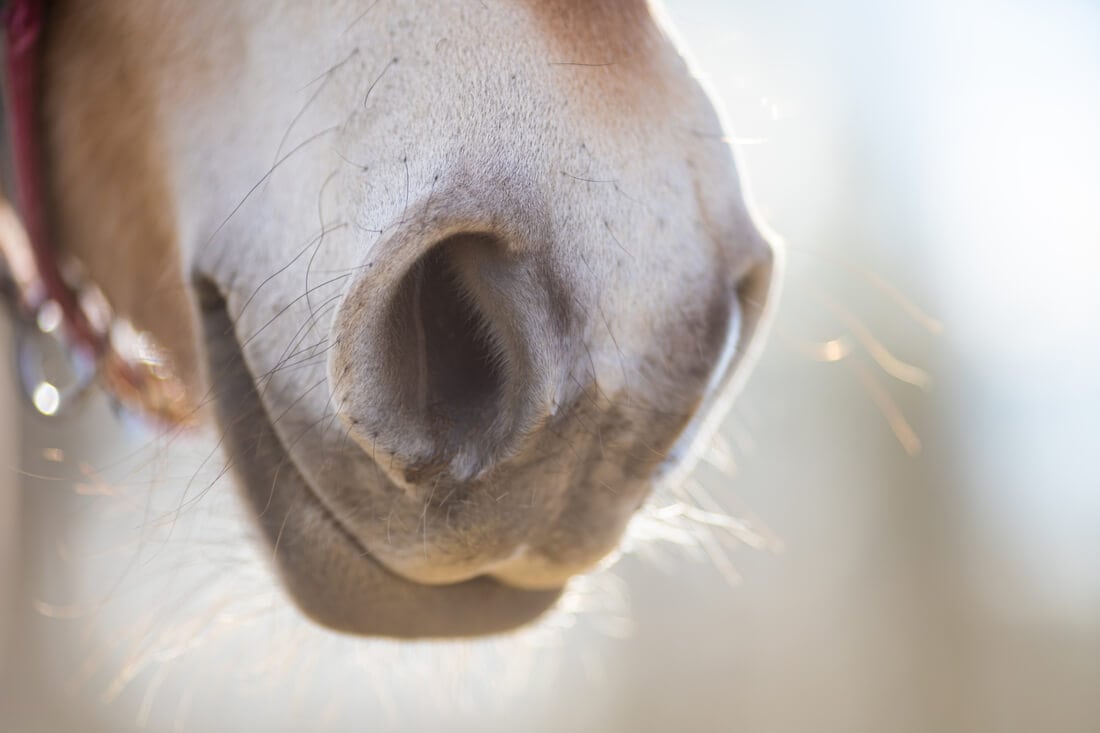
Nostril flaring in horses is often overlooked as a temporary reaction to excitement or physical exertion. But this common behavior can offer important clues about a horse’s respiratory health, cardiovascular function, and overall well-being.
During intense activity or emotional arousal, flared nostrils help increase airflow to meet the body’s elevated oxygen demands. This is a normal, healthy response.
However, nostril flaring that occurs while a horse is calm or at rest may point to underlying health issues that warrant closer inspection. Persistent or exaggerated flaring can be an early warning sign of respiratory distress, pain, or cardiovascular issues.
Recognizing the difference between normal nostril flaring and signs of distress is an important skill for horse owners, caretakers, and riders. Read on to learn everything you need to know about why horses flare their nostrils, what it can indicate, and how to assess a horse’s respiratory health so you are prepared if one of your horses is struggling for air.
Nostril Flaring in Horses
Flaring nostrils is a natural behavior in horses. Generally, horses flare their nostrils in response to: [1]
- Physical exertion: Increased effort demands an increase in oxygen intake. As obligate nasal breathers, flaring the nostrils is the only way for horses to inhale a greater volume of air to meet oxygen needs during intense activity.
- Emotional arousal: Situations that trigger excitement, fear, curiosity, or anxiety in horses can cause nostril flaring and increased visibility of the sclera (the whites of the eyes). Because the horse is a prey animal, its sympathetic nervous system responds to these external triggers by preparing to flee, and elevated heart and respiratory rates are part of this response.
In both scenarios, nostril flaring is a physiological response to external stimuli and increased metabolic demand. [1]
A horse flaring its nostrils in response to exercise or intense emotional stimuli is not concerning behavior. If the nostril flaring ceases once the horse finishes exercising or calms down, it is considered a normal, healthy reaction.
In such cases, further investigation is usually not required unless other signs of respiratory distress or discomfort are also present.
Abnormal Nostril Flaring
While normal during activity or excitement, persistent nostril flaring at rest can indicate an underlying health issue that requires attention. [2][3]
Flared nostrils at rest are often linked to respiratory distress or systemic pain, both of which can escalate quickly if not addressed. Recognizing symptoms that accompany nostril flaring can help distinguish between a minor concern and a condition requiring prompt veterinary attention.
Signs to watch for include: [2][3]
- Flaring that persists without any obvious cause, such as exercise or arousal
- Rapid, shallow breathing (tachypnea) that does not settle after rest
- Difficulty breathing (dyspnea), often with exaggerated abdominal effort
- Visible nostril movement that is forceful and continuous
- Presence of coughing, nasal discharge, or noisy breathing
- Anxiety, distress, restlessness, or reluctance to move
- Flared nostrils paired with signs of pain, such as pawing, excessive sweating, or abnormal posture
Persistent nostril flaring in horses should never be ignored, especially when accompanied by other warning signs. It often reflects increased effort to maintain oxygen levels or manage physiological stress. Nostril flaring in these scenarios frequently precedes more severe clinical signs, especially if the underlying issue is not addressed. [2][3]
What's your top priority with your horse's health?

Enter your email to receive your store credit
Assessing Equine Respiration
Monitoring a horse’s respiratory rate is a simple but essential skill for owners and caretakers. A horse’s breathing provides critical insight into their overall health, and knowing how to assess breathing can help detect early signs of respiratory distress, pain, or systemic illness.
Equine Breathing Patterns
Breathing patterns in horses provide important clues about their health status. Careful observation of the horse’s respiratory rate, depth, and effort can help identify whether breathing is normal or if there may be an underlying problem.
By recognizing abnormal patterns that can accompany flared nostrils, owners and caretakers can decide when a veterinary assessment is needed.
Table 1. Guide to Equine Breathing Patterns [4]
| Breathing Pattern | Description | Associated Conditions |
|---|---|---|
| Eupnea | Normal, effortless breathing | Healthy horses |
| Tachypnea | Rapid, shallow breathing | Pain, fever, respiratory disease |
| Hyperpnea | Deep, rapid breathing (e.g., exercise) | Normal during work, abnormal at rest |
| Dyspnea | Labored, distressed breathing | Severe respiratory or cardiac disease |
| Apnea | Cessation of breathing | Extremely serious, emergency |
The normal respiratory rate for an adult horse at rest typically ranges from 8 to 15 breaths per minute. Rates outside of this range (especially if consistently elevated) may indicate an underlying problem that needs further investigation. [4]
How to Check a Horse’s Respiratory Rate
Follow these steps to measure your horse’s respiratory rate: [5]
- Observe or feel the movement of the horse’s flank or nostrils: Watch the sides of the horse’s body just behind the ribs, or gently place a hand in front of one nostril to feel the airflow
- Time the counts: Use a stopwatch or clock with a second hand to accurately time the count of each breath to avoid misjudging the rate.
- Count the breaths for 30 seconds: Each breath cycle includes one inhalation and one exhalation. Some people find it helpful to count inhalations only, but it is more accurate to count full cycles.
- Multiply by two to calculate breaths per minute: Doubling the 30-second count gives the standard per-minute respiratory rate.
Alternatively, a stethoscope can be used to listen to breaths directly, placing it on the trachea (windpipe) just below the throat-latch or against the chest wall where respiratory sounds are most audible.
Table 2. Equine Breathing Assessment Guidelines
| Urgency | Observation |
|---|---|
| Safe Healthy Horse |
|
| Caution Seek Veterinary Care ASAP |
|
| Urgent Seek Emergency Veterinary Care |
|
It’s best to measure the respiratory rate when the horse is calm and standing quietly. Excitement, anticipation, or physical exertion can naturally elevate the respiratory rate, making it harder to get an accurate baseline reading.
Consistently tracking a horse’s normal respiratory rate at rest makes it easier to recognize when something is out of expected range so you can act quickly when medical attention is needed.
Table 3. Quick Reference: Equine Breathing Assessment [5]
| Feature | Normal at Rest | Concerning Signs |
|---|---|---|
| Respiratory rate | 8–15 breaths per minute | Over 20 breaths per minute at rest |
| Breathing effort | Smooth, with mild abdominal motion | Labored, with exaggerated movements |
| Nostril movement | Subtle or minimal | Pronounced, wide flaring continuously |
| Audible sounds | None or very soft | Wheezing, rattling, gurgling sounds |
| Posture | Relaxed | Extended neck, reluctance to move |
Conditions Associated with Abnormal Nostril Flaring
Several conditions can cause abnormal, persistent nostril flaring in horses. These range from primary respiratory problems to systemic diseases that impact breathing patterns indirectly.

“Persistent nostril flaring at rest is a key clinical sign that the horse is working harder to meet its oxygen needs. Early recognition and prompt veterinary assessment are critical to identifying underlying conditions. Careful attention to these subtle signs can make the difference between a manageable case and an emergency.”
— Dr. Madison Ricard, DVMMad Barn Veterinary Educator
Respiratory Diseases
Respiratory distress is one of the most common reasons for abnormal nostril flaring. When lung function is compromised, the horse must exert more effort to draw in sufficient air.
Equine respiratory diseases associated with abnormal nostril flaring include: [2][3][6]
- Equine Asthma (formerly RAO and IAD): Equine asthma is a chronic respiratory condition that encompasses what were previously classified as two separate disorders: recurrent airway obstruction (RAO or heaves) and inflammatory airway disease (IAD). RAO is often seen in older horses housed in poorly ventilated or dusty environments. IAD, on the other hand, typically affects younger performance horses.
- Bacterial pneumonia and pleuropneumonia: These serious infections of the lungs and pleural cavity lead to fever, coughing, nasal discharge, lethargy, and visible respiratory effort. Horses with pneumonia may flare their nostrils to compensate for reduced lung function to improve oxygen intake.
- Pulmonary edema: Fluid accumulation in the lungs reduces the ability to oxygenate blood effectively. Pulmonary edema can develop secondary to heart disease, severe respiratory infections, or as a complication of negative pressure pulmonary edema (NPPE) following an airway obstruction.
Upper Airway Obstruction
Obstruction of the upper airway makes it physically harder for the horse to breathe, often causing dramatic nostril flaring as the horse tries to draw in enough air.
Common causes in horses include: [2][3][7]
- Strangles: An infectious disease caused by Streptococcus equi, strangles leads to swollen lymph nodes, nasal discharge, and in severe cases, obstruction of airflow
- Laryngeal paralysis or hemiplegia (roaring): Roaring (roars) is a condition that occurs when the muscles controlling one or both sides of the larynx (throat) fail, partially blocking the airway and making breathing noisy and difficult during exercise
- Foreign bodies: Inhaled foreign objects can partially block the nasal passages or trachea, leading to immediate respiratory distress and exaggerated nostril movement
Pain
Systemic pain can influence a horse’s breathing patterns significantly. Pain stimulates the sympathetic nervous system, increasing heart and respiratory rates as part of the “fight or flight” response. [8][9]
Horses experiencing significant pain may exhibit rapid, shallow breathing. In this situation, horses may also have flared nostrils as they attempt to meet increased oxygen demands or cope with the physiological effects of stress. [8][9]
In painful conditions unrelated to the respiratory system, nostril flaring may be moderate but persistent, and it often accompanies other signs such as sweating, agitation, and abnormal posture or behavior. [8][9]
Cardiovascular Conditions
Although less common, cardiovascular diseases can result in nostril flaring in horses at rest. Conditions that impair heart function may lead to pulmonary congestion, where fluid backs up into the lungs.
This makes breathing more difficult and less efficient, prompting the horse to work harder with each breath. As a result, nostrils may flare persistently even without other obvious signs of respiratory disease. [4]
Cardiovascular conditions that may manifest with nostril flaring in horses include: [4][10]
- Congestive heart failure
- Arrhythmias
- Valve disease
In these cases, other signs such as lethargy, exercise intolerance, and jugular vein distension may also be present. [4][10]

Diagnosing Associated Conditions
When abnormal nostril flaring in a horse warrants veterinary attention, diagnosis typically begins with a complete medical history and physical examination. The veterinarian may also ask about recent travel, new herd introductions, and exposure to irritants like dust or allergens. [11]
Depending on the results of the physical examination, diagnostic testing may be recommended to assess respiratory and/or cardiovascular health. Diagnostic procedures may include: [2][11]
- Endoscopy
- Ultrasound
- Radiography (X-rays)
- Arterial blood gas analysis
- Tracheal or bronchoalveolar lavage
Prevention
Good management practices play a key role in reducing the risk of respiratory diseases in horses and minimizing episodes of abnormal nostril flaring. Many respiratory conditions are influenced by the horse’s living environment.
Taking proactive steps to create a clean, well-ventilated space can significantly improve respiratory health and overall well-being.
Some important management strategies include: [2][12][13]
- Improve ventilation: Poor airflow allows dust, mold spores, and ammonia fumes to accumulate. Ensuring that barns are well-ventilated with open windows, doors, and mechanical systems when needed helps provide a constant supply of fresh air.
- Control dust: Dry hay can be a major source of airborne irritants. Soaking or steaming hay before feeding greatly decreases dust and mold spores in hay.
- Maximize turnout: Pasture turnout allows horses to breathe cleaner outdoor air, reducing their exposure to stable dust and indoor air pollutants.
- Minimize ammonia: Accumulated horse urine in stalls can lead to a build-up of ammonia gas in indoor stables. Frequent stall cleaning and the use of absorbent bedding help keep ammonia levels low.
- Maintain vaccination status: Staying up-to-date with your horse’s vaccine schedule helps protect against common viral respiratory infections, such as equine influenza and herpesvirus, reducing the risk of serious respiratory illness.
By prioritizing environmental management, owners can help protect their horses’ respiratory systems and reduce the chances of abnormal nostril flaring due to environmental triggers.
Frequently Asked Questions
Here are some frequently asked questions about flared nostrils in horses:
Horses commonly flare their nostrils during exercise or periods of arousal to boost oxygen intake; this is a normal response. However, persistent flaring at rest may signal respiratory distress, pain, or cardiovascular issues and should prompt a veterinary evaluation.
No, nostril flaring is not always a sign of disease. Horses naturally flare their nostrils during exercise, emotional excitement, or when investigating scents. It becomes a concern when the flaring is persistent at rest, especially if it is accompanied by other signs of distress such as rapid breathing, coughing, or lethargy. [2]
It is a good practice to check your horse's respiratory rate regularly, even when they appear healthy. Ideally, you should record a baseline respiratory rate during calm, resting conditions. During times of illness, after transportation, or following intense exercise, checking the respiratory rate becomes even more important to catch early signs of trouble.
If you notice persistent nostril flaring while your horse is resting, first assess their breathing pattern and respiratory rate. Look for additional signs like coughing, nasal discharge, or labored breathing. If you observe anything abnormal, or if the flaring continues for more than a few minutes without an obvious cause, contact your veterinarian promptly to rule out serious respiratory or systemic issues.
Summary
Flared nostrils in horses are an important indicator of the horse's physical and emotional state. While nostril flaring can be entirely normal during exercise or excitement, persistent or exaggerated flaring at rest demands closer attention.
- The assessment of respiratory rate, breathing effort, and other signs can help owners identify when flared nostrils warrant veterinary intervention.
- Persistent nostril flaring at rest is a serious concern that requires prompt veterinary guidance.
- Abnormal nostril flaring can indicate underlying respiratory or cardiovascular illness, including infectious conditions like strangles.
- Staying up-to-date with routine medical care and best management practices are effective strategies to protect equine respiratory health.
References
- Maurício. L. S. et al., How to Understand Them? A Review of Emotional Indicators in Horses. Journal of Equine Veterinary Science. 2023.
- Rush. B. and Mair. T., Equine Respiratory Diseases. Blackwell Science Ltd. 2004.
- Dunkel. B., Respiratory Emergencies in Adult Horses. Equine Veterinary Education. 2024.
- Hines. M. T., Clinical Approach to Commonly Encountered Problems. Equine Internal Medicine. 2004.
- How to Take Your Horse’s Vital Signs. PennState Extension. 2023.
- Rush. B. R., Recurrent Airway Obstruction (Heaves) in Horses. Merck Veterinary Manual. 2024.
- Malone. E., Roaring in Horses. University of Minnesota. 2021.
- Davidson. L., Part 2: Recognising the Signs - Pain Management. Horse Health Hub, Virbac.
- Kane. E., Exploring the Perception and Physiology of Pain in Horses. DVM 360. 2007.
- Thal. D., Congestive Heart Failure, CH. Horse Side Vet Guide. 2014.
- Hewson. J. and Arroyo. L. G., Respiratory Disease: Diagnostic Approaches in the Horse. The Veterinary Clinics of North America. Equine Practice. 2015. View Summary
- Blundell. E. L. et al., The Effect of Steaming and Soaking Treatments on Respirable Dust Content of Hay and the Potential Environmental Polluting Impact of the Waste Water Produced. Forages and grazing in horse nutrition. Academic Publishers, Wageningen. 2012.
- Wickens. C. L. et al., Strategies for Reducing Ammonia in Horse Barns. Southern Equine. 2016.