Analyze Diet

How to Use Lactate Testing to Improve Your Horse’s Training Program

In elite equestrian sports, performance optimization is critical to success. Whether your horse is racing, eventing, competing in endurance trials or show jumping, every rider wants to unlock their horse's full athletic potential while protecting them from overexertion or injury. Like human athletes, understanding and monitoring the physiological aspects of a horse’s performance is key to effective conditioning. This enables horses to perform at their best in every training session and competition. An emerging tool in assessing a horse's fitness is lactate testing. This technique involves measuring lactate levels in the horse's blood after exercise, providing useful insight into their aerobic capacity and training effectiveness.


How to Use Lactate Testing to Improve Your Horse’s Training Program2026-07-25T18:57:36-04:00

Eventing at the 2024 Paris Olympic Games – [Equestrian Sport Guide]

Eventing is one of three Olympic equestrian sports in the Paris 2024 Games. Eventers are the triathletes of the equestrian world. At Paris 2024, the world's best horses and riders will complete three phases of competition on the palace grounds of Versailles that challenge their training, bravery, and stamina. The Olympic Games helped shape eventing into a modern sport loved by equestrians and spectators. Today, the equestrian disciplines of eventing, dressage, and jumping are also the only Olympic sports where men and women compete directly against each other.

Eventing at the 2024 Paris Olympic Games – [Equestrian Sport Guide]2026-07-25T18:54:29-04:00

Para Equestrian at the 2024 Paris Olympic Games – [Equestrian Sport Guide]

Para equestrian is the only equestrian sport held at the Paralympics, including at the upcoming Paris 2024 Paralympics in September. Para equestrian athletes demonstrate precision and harmony with their equine counterparts as they perform different dressage movements in the Paralympic arena. Judges score the pairs on the quality of their movements and overall impression of the team. Para equestrian is relatively new to the Paralympics, with the first event hosted in 1996 as part of the Atlanta Summer Paralympics. Like the Olympic equestrian events, men and women compete together in para equestrian, but are separated into Grades based on the athlete's physical ability.

Para Equestrian at the 2024 Paris Olympic Games – [Equestrian Sport Guide]2026-07-25T18:53:29-04:00

Salmonella Infection in Horses: Risk Factors, Symptoms & Prevention

Salmonellosis refers to infection with Salmonella, a bacterium that primarily causes intestinal infections and diarrhea. Salmonella can affect numerous species, including horses and humans. Horses typically acquire the bacteria through the ingestion of contaminated feed or water. Common symptoms of salmonellosis in horses include diarrhea, fever, and lethargy. In some cases, Salmonella can cause sepsis (blood infection), which can be life-threatening. Veterinarians use a fecal or blood sample to identify the bacteria and make a diagnosis. Treatment of Salmonella often requires hospitalization and intensive care. Fluid therapy, antibiotics, and toxin neutralization products are key components of many treatment protocols. The outcome of Salmonella infection depends on the severity of disease, and ranges from excellent to very poor.

Salmonella Infection in Horses: Risk Factors, Symptoms & Prevention2026-07-25T18:53:02-04:00

Bucked Shins (Dorsal Metacarpal Disease) in Horses: Risk Factors, Treatment & Prognosis

Bucked shins is a condition that affects the cannon bones of young race horses in the first 6 to 8 months of their speed training. Since the horse's bones are still developing, the strain of the training results in a cycle of stress and repair that results in weak and porous bones. If left untreated, the bones start to develop microfractures and inflammation that can then lead to hairline fractures and eventually catastrophic midshaft fracture. Horses with bucked shins have painful, swollen forelegs and a short, choppy gait.

Bucked Shins (Dorsal Metacarpal Disease) in Horses: Risk Factors, Treatment & Prognosis2026-07-25T18:52:05-04:00

Bog Spavin (Tarsocrural Joint Effusion) in Horses: Causes, Treatment & Prognosis

Bog spavin is a common term for effusion in the horse's tarsocrural joint. This painful condition describes inflammation and fluid accumulation in the joint capsule between the tibia and the tarsal bones in the hock. Bog spavin is characterized by a ring of lumps swollen around the hock. When one of the swellings is compressed, the others expand as the fluid moves around the swollen joint. Joint effusion in horses is usually connected to an underlying condition such as osteochondrosis, osteoarthritis, traumatic injuries, chronic strain, poor conformation, joint infection, hemarthrosis, and even vitamin and mineral deficiencies. Bog spavin develops most often in working horses and equine athletes.

Bog Spavin (Tarsocrural Joint Effusion) in Horses: Causes, Treatment & Prognosis2026-10-07T17:06:02-04:00

6 Common Causes of Bloating in Horses: Signs, Treatment & Prevention

The horse's gastrointestinal system is evolved for processing forage and fiber. Domestic feeding and management strategies often challenge the horse's natural digestive process. Significant disruptions can lead to bloating - a condition where gas accumulates in the gut, causing abdominal distension and discomfort.

6 Common Causes of Bloating in Horses: Signs, Treatment & Prevention2026-07-25T18:50:23-04:00

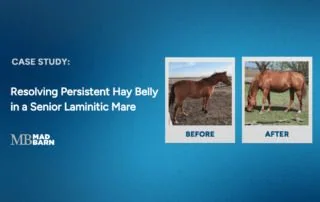
Case Study: Resolving Persistent Hay Belly in a Senior Laminitic Mare

A 21 year old mare received dietary intervention from Mad Barn to resolve persistent hay belly and coat and hoof quality issues with an aim to return to light exercise. After two months of dietary intervention, the mare had improvement in coat and hoof condition, hay belly is resolved, body condition has improved, and the owner is exploring return to light exercise.

Case Study: Resolving Persistent Hay Belly in a Senior Laminitic Mare2026-07-25T18:48:25-04:00

Undescended Testicles (Cryptorchidism) in Horses: Risk Factors, Diagnosis & Treatment

During fetal development, the testicles form near the kidneys and gradually descend into the scrotum through a passage called the inguinal canal. In some cases, this descent is incomplete, resulting in one or both testicles being retained within the abdomen or inguinal canal. This condition, known as cryptorchidism, occurs when one or both testicles fail to descend into the scrotum. Affected horses, often called "rigs," may face fertility problems and behavioral issues. It affects approximately 5-8% of male foals. Cryptorchidism is relatively common in horses and can lead to various health and behavioral complications if left untreated. Therefore, early detection and appropriate management are essential for ensuring the health and well-being of affected animals.

Undescended Testicles (Cryptorchidism) in Horses: Risk Factors, Diagnosis & Treatment2026-07-25T18:47:07-04:00

Staphylococcus & MRSA in Horses: Causes, Symptoms & Treatment

Staphylococcus bacteria are a common member of the equine microflora, found on the skin, in the nasal passages, and in the intestines. These bacteria typically do not cause infection or disease. However, under certain circumstances, the bacteria may take advantage of tissue damage or a weakened immune system to produce an infection. Staphylococcal infections (or staph infections) are most common in the skin, soft tissues, bones, and joints. Humans are also susceptible to staph infections and can acquire the bacteria from an affected or carrier horse. Symptoms can include fever, swelling of the infected area, pain, and loss of function. Veterinarians can diagnose staphylococcal infections by submitting samples for bacterial culture.

Staphylococcus & MRSA in Horses: Causes, Symptoms & Treatment2026-07-25T18:46:34-04:00

Anthrax Poisoning in Horses: Transmission, Treatment & Prevention

Anthrax is a rapidly fatal disease caused by the bacterium Bacillus anthracis. This bacterium can infect horses, other livestock species, and humans. Anthrax cases occur globally every year, including sporadic outbreaks in North America. B. anthracis primarily exists as spores within soil. Disturbance of the soil can make spores accessible to livestock, resulting in infection. Horses typically become infected after inhaling or ingesting the spores. Once inside the body, the bacteria produces toxins that cause tissue damage and organ failure.

Anthrax Poisoning in Horses: Transmission, Treatment & Prevention2026-07-25T18:43:34-04:00

Equine Fire Hazards & Smoke Inhalation Injury: Toxicology, Management & Prevention

In recent years, extensive and persistent wildfires have been a growing concern for horse operations everywhere. Evacuation and preventive protocols are often challenging and put a great deal of strain on livestock and their human caretakers. Equally as concerning is the risk of on-site fires. With long periods of drought recurring across North America year over year, building fires are an increasing threat to the health and safety of equine operations. Both kinds of fires pose a significant danger to horses, even from a significant distance. In particular, horses can suffer from varying degrees of poisoning and injury associated with exposure to smoke. Symptoms of smoke inhalation poisoning in horses vary depending on the severity of exposure, the specific chemical composition of the smoke, and the presence of pre-existing respiratory conditions.

Equine Fire Hazards & Smoke Inhalation Injury: Toxicology, Management & Prevention2026-07-25T18:42:15-04:00

Liver Disease in Horses: Signs, Causes, Treatment & Prevention

Liver health is paramount to the overall well-being and performance of horses. It is one of the largest and most vital organs in the equine body. This organ plays a crucial role in numerous physiological processes including metabolism, digestion, detoxification, and immune function. For example, it regulates blood glucose levels, produces bile acids, and stores vital nutrients. Although the equine liver possesses a significant ability to regenerate itself, it is still susceptible to a variety of conditions and diseases that can significantly impact a horse's health and quality of life.

Liver Disease in Horses: Signs, Causes, Treatment & Prevention2026-07-25T18:45:39-04:00

Hives in Horses (Urticaria): Causes, Treatment & Prognosis

Hives, also known as urticaria, are a common skin reaction in horses characterized by the sudden appearance of raised, swollen wheals on the skin. These wheals can vary in size, and may be accompanied by itching or discomfort. Hives in horses can be triggered by various factors, such as allergic reactions to insect bites, foods, medications or environmental allergens. If a horse develops hives, the first step is to identify and remove the trigger. However, identifying the exact cause of hives is difficult. Horses may have a wide range of potential allergens, and can even develop hives due to underlying health conditions.

Hives in Horses (Urticaria): Causes, Treatment & Prognosis2026-07-25T18:41:30-04:00

Selenium Poisoning (Alkali Disease) in Horses: Causes, Symptoms & Prevention

Selenium (Se) is a micronutrient that horses require in trace amounts to support cellular function. The selenium content in soil contributes to its final concentration in plants. Worldwide, selenium levels in soil vary widely. Selenium imbalances are common in horses. Deficiency is more common than poisoning, but absorption of excessive amounts of selenium is potentially life-threatening.

Selenium Poisoning (Alkali Disease) in Horses: Causes, Symptoms & Prevention2026-07-25T18:35:00-04:00

Tapeworms in Horses: Risk Factors, Transmission & Prevention

Parasites are organisms that live in or on the horse, and rely on the horse for sustenance while often causing harm or disease. These include worms like roundworms, tapeworms, and bots, as well as external parasites such as ticks and lice. Equine tapeworms are flatworms that inhabit the intestines of horses, attaching themselves to the intestinal lining. These parasites are unique, as many common deworming medications are ineffective against them and their eggs are rarely detected in the horse's feces, making diagnosis and treatment difficult.

Tapeworms in Horses: Risk Factors, Transmission & Prevention2026-07-25T18:33:42-04:00

Keratosis (Stud Crud) in Horses: Symptoms, Prognosis & Treatment

Keratosis is an equine skin condition where patches or bands of skin become thickened, rough, dark, and oily. The patches are not painful nor itchy, are not contagious, and do not impact the overall health of the horse. There are two forms of keratosis: cannon or linear. Cannon keratosis appears as patches of thickened skin on the front side of the lower part of the horse's hind legs, along the cannon bone. Cannon keratosis is usually present on both sides of the horse's body. Linear keratosis appears as bands of thickened skin on the ribs, neck or back of the horse. Occasionally patches of linear keratosis are noted on the chest, legs, or hips. They typically appear only on one side of the horse's body.

Keratosis (Stud Crud) in Horses: Symptoms, Prognosis & Treatment2026-07-25T18:31:18-04:00

Ringworm (Girth Itch) in Horses: Risk Factors, Transmission & Prevention

Ringworm, or dermatophytosis, is a common fungal skin infection. Despite its name, ringworm isn't caused by a worm but rather by various fungi, or dermatophytes, that infect the skin. This fungal infection presents circular hair loss patches with crusty, scaly skin. Though ringworm isn't life-threatening, it's highly contagious and can spread through direct contact with an infected horse or indirectly through contaminated grooming tools, tack, or environment. It can also be spread to humans and other animals. Preventing infected horses from participating in shows, races, and other events is crucial to halt the spread of ringworm to other horses. Allowing infected horses to attend could result in a broader outbreak among horses.

Ringworm (Girth Itch) in Horses: Risk Factors, Transmission & Prevention2026-08-20T15:16:07-04:00

Ragwort Poisoning (Pyrrolizidine Alkaloid Toxicity) in Horses: Toxicology, Treatment & Prevention

Pyrrolizidine alkaloids (PAs) are a naturally occurring type of compound found in many species of plants. When ingested, PAs are toxic to horses. Some of the most common plants that contain high concentrations of PAs include Ragwort (Senecio spp.), Rattlepod, Hound's tongue, Heliotrope, and Fiddlenecks. Chronic pyrrolizidine alkaloid poisoning, also referred to as ragwort toxicosis, occurs when sufficient amounts of these plants are consumed for a prolonged period.

Ragwort Poisoning (Pyrrolizidine Alkaloid Toxicity) in Horses: Toxicology, Treatment & Prevention2026-07-24T22:53:53-04:00

Quarantine Protocols and Horse Management: Infectious Disease Control in Equine Facilities

Quarantine refers to the practice of separating infected or potentially infected animals to reduce the risk of disease spread. Horse farms, boarding facilities, and show facilities commonly use quarantine protocols to protect the health of their equine population. Quarantine is also a critical component of an infectious disease outbreak response plan to prevent infection of healthy animals. All horse facilities should have a quarantine plan in place to respond to a potential disease threat rapidly. The key feature of quarantine is a complete separation from healthy horses by physical barriers or distance, to prevent contact that may spread disease. Actively infected horses require a higher level of quarantine protocol that includes additional measures, such as personal protective equipment for handlers.

Quarantine Protocols and Horse Management: Infectious Disease Control in Equine Facilities2026-07-24T22:52:21-04:00

Kendal Lehari’s Journey to the 2024 Olympics in Eventing – [Equestrian Athlete Profile]

Kendal Lehari is passionate about all things horses. She has an unwavering drive to succeed and the tenacity to make things happen. From raising and training promising foals to re-training racehorses into top-level Eventing athletes, Kendal has the patience to embrace all phases of horse development while simultaneously chasing her ambitions relentlessly. Kendal is a dynamic individual with growing expertise in breeding, a long standing passion for training horses at all levels, and a clear focus on her biggest goal: "To ride in the Olympics has been my dream for as long as I can remember."

Kendal Lehari’s Journey to the 2024 Olympics in Eventing – [Equestrian Athlete Profile]2026-07-24T22:49:13-04:00

Strangulating Lipomas in Horses: Risk Factors, Diagnosis & Treatment

As horse owners the world over know, equines are prone to many forms of gastrointestinal disease and dysfunction. Strangulating lipomas are among the varied and complex risks of GI disruption in horses. A lipoma is a tumor made of fat cells and can develop anywhere in the body. Lipomas are common in aging mammals and are often harmless.

Strangulating Lipomas in Horses: Risk Factors, Diagnosis & Treatment2026-07-24T22:45:43-04:00

Nerve and Joint Blocks in Horses: Diagnostic Analgesia Medications, Uses & Interpretation

Diagnostic analgesia, commonly referred to as a "nerve block," refers to numbing an area using an analgesic, such as lidocaine, for diagnostic purposes. Diagnostic analgesia is a crucial component of lameness examinations, as numbing certain areas of the horse's limbs allows the veterinarian to identify the area causing pain. Veterinarians can use a combination of nerve blocks and joint blocks to identify sources of pain.

Nerve and Joint Blocks in Horses: Diagnostic Analgesia Medications, Uses & Interpretation2026-07-24T22:42:52-04:00

Hereditary Equine Regional Dermal Asthenia (HERDA): Causes, Genetic Testing & Prevention

Hereditary Equine Regional Dermal Asthenia (HERDA), or Hyperelastosis Cutis (HC), is a genetic degenerative skin disease that primarily affects Quarter Horses. It's characterized by a collagen deficiency, a crucial protein responsible for maintaining the strength and elasticity of the skin. Horses affected by HERDA typically exhibit extremely fragile skin that is prone to tearing even with minor pressure or friction. As a result, they may develop chronic wounds, scars and other severe skin abnormalities.

Hereditary Equine Regional Dermal Asthenia (HERDA): Causes, Genetic Testing & Prevention2026-07-24T22:40:38-04:00

Equestrian Eventing: History, Competition & Rules – [Discipline Guide]

Eventing is the triathlon of equestrian sport. Also known as horse trials or three-day eventing, this discipline requires horses and riders to master three phases of competition: dressage, cross-country, and show jumping. Initially developed to test cavalry horses, the sport evolved to maintain its spot as one of three equestrian disciplines featured in the Olympic Games. Today, eventing horses are some of the most impressive equine athletes in the world. However, eventing isn't just a sport for daring elite riders. There are several levels of competition, allowing riders and horses of all abilities to participate in the discipline and train as well-rounded athletes. Get to know these triathletes of the equestrian world and keep reading to learn more about eventing history, competition, training, and horses.

Equestrian Eventing: History, Competition & Rules – [Discipline Guide]2026-07-24T22:33:53-04:00

Karl Slezak’s Journey to the 2024 Olympics in Eventing – [Equestrian Athlete Profile]

Karl Slezak, a member of the Canadian Eventing Team, is one of those people who immediately makes you feel comfortable and eager to hear his story. His calm demeanour and friendly approach invite you into his life. And his life will leave you awe-inspired. It's easy to forget you’re chatting with one of the most recognized and highly ranked (he currently ranks in the top 2 per cent on the FEI World Rankings for the sport) Canadian Eventing athletes, with multiple wins at major Eventing competitions at the CCI4* level spanning his over twenty-seven-year career in the sport.

Karl Slezak’s Journey to the 2024 Olympics in Eventing – [Equestrian Athlete Profile]2026-07-24T22:36:35-04:00

Ridden Horse Pain Ethogram: 24 Signs of Pain in Horses Under Saddle

The Ridden Horse Pain Ethogram (RHPE) is a list of 24 behaviours associated with musculoskeletal pain in the ridden horse. Dr. Sue Dyson et al. developed this ethogram as a means of identifying low-grade lameness and horses experiencing discomfort during ridden work. Earlier identification of lameness issues can improve horse welfare by allowing for medical treatment prior to overt lameness. Many studies using the RHPE currently focus on welfare evaluations of horses performing at competitive events, to examine whether horses are fit and sound enough to compete. Current studies show a correlation between RHPE score and performance in dressage and eventing, with horses that have lower RHPE scores placing higher in competition.

Ridden Horse Pain Ethogram: 24 Signs of Pain in Horses Under Saddle2026-07-24T22:18:26-04:00

Mike Winter’s Journey to the 2024 Olympics in Eventing – [Equestrian Athlete Profile]

Mike Winter, a member of the Canadian Eventing Team and a world-class equestrian athlete, doesn’t want to talk about his successes, his equestrian business in England, or even much about his competition experience. Instead, Mike wants to focus on the bigger picture—a passion rooted in making the Canadian Eventing High Performance Program the best it can be.

Mike Winter’s Journey to the 2024 Olympics in Eventing – [Equestrian Athlete Profile]2026-07-24T22:30:01-04:00

Jumping at the 2024 Paris Olympic Games – [Equestrian Sport Guide]

Jumping is one of three equestrian sports featured in the Olympic Games. The speed and precision of show jumping make this sport a spectator favourite. Equestrian jumping events at the Paris 2024 Olympic Games will test the ability of the world's best jumping horses and riders to navigate a challenging course against the clock. Alongside the other equestrian disciplines of eventing and dressage, jumping has been part of the Olympic program for over a century. The equestrian events are the only Olympic sports where men and women compete directly against each other.

Jumping at the 2024 Paris Olympic Games – [Equestrian Sport Guide]2026-07-24T22:28:03-04:00