Analyze Diet

Blister Beetle Poisoning (Cantharidin Toxicity) in Horses: Causes, Treatment & Prevention

Blister beetles, also known as oil beetles, secrete a blistering agent called cantharidin as a natural defense against predators. Beetles in this family feed on flower blossoms, particularly in alfalfa plants, which makes them a common contaminant in alfalfa hay. Cantharidin is highly toxic to horses: ingestion of as little as five grams of beetles is enough to cause death in a 1 000 lb (540 kg) horse. Cantharidin toxicosis, also referred to as blister beetle poisoning, occurs when horses ingest a toxic dose of blister beetles.

Blister Beetle Poisoning (Cantharidin Toxicity) in Horses: Causes, Treatment & Prevention2026-07-14T14:56:15-04:00

Equestrian Show Jumping: History, Competition & Rules – [Discipline Guide]

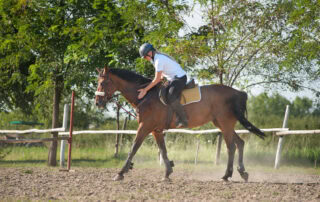
Show jumping is one of the most popular and recognizable equestrian sports in the world. Jumping appears alongside eventing and dressage in the equestrian events at the Olympic Games. While well-known for attracting celebrities at the international level, show jumping is fun for equestrians of all backgrounds. Show jumping is popular with spectators because it is easy to understand and exciting to watch. This sport continues to grow at every level, from grassroots to Grand Prix.

Equestrian Show Jumping: History, Competition & Rules – [Discipline Guide]2026-07-14T15:08:00-04:00

Dressage at the 2024 Paris Olympic Games – [Equestrian Sport Guide]

Dressage is one of three equestrian sports featured at the 2024 Paris Olympics. Known as the highest expression of horse training, dressage is an equestrian discipline that develops the horse's strength, balance, and rideability. In competition, dressage athletes perform movements that showcase their training in front of a panel of judges.

Dressage at the 2024 Paris Olympic Games – [Equestrian Sport Guide]2026-07-24T16:43:02-04:00

Alsike Clover Poisoning in Horses: Big Liver Disease & Dew Poisoning

Alsike clover toxicosis is a potentially life-threatening condition in horses caused by ingesting large quantities of the Trifolium hybridum plant, commonly referred to as Alsike clover. To date, neither the precise mechanism of action nor the specific toxin from Alsike clover have been identified. Ingestion of large quantities (20% of the animal's diet) of Alsike clover can cause two separate conditions: equine hepatic failure (big liver disease) and photosensitivity (dew poisoning).

Alsike Clover Poisoning in Horses: Big Liver Disease & Dew Poisoning2026-07-14T15:06:21-04:00

Venomous Snake Bites (Snake Envenomation) in Horses: Causes, Symptoms & Treatment

Poisonous snake bites (snake envenomation) in horses, while not common, are a medical emergency. Without prompt veterinary attention, snake envenomation can result in severe injury and, in some cases, death. In North America, venomous snakes belong to either the Elapid (coral snakes) or Crotalid (pit vipers) family. Rattlesnakes are the most common source of equine snake envenomation on this continent.

Venomous Snake Bites (Snake Envenomation) in Horses: Causes, Symptoms & Treatment2026-07-24T13:32:06-04:00

Guttural Pouch Disease in Horses: Causes, Treatment, & Prognosis

The guttural pouches are large, air-filled structures within the horse's skull, in the throatlatch region. These pouches can develop bacterial infections, fungal infections, or tympany, the excessive accumulation of air. Most diseases of the guttural pouches are not life-threatening. However, fungal infections within the guttural pouches can damage large arteries, causing horses to bleed profusely from their nostrils. Horses experiencing a severe nosebleed require emergency medical attention as this condition can be fatal in some cases.

Guttural Pouch Disease in Horses: Causes, Treatment, & Prognosis2026-08-25T21:16:48-04:00

Immune Mediated Myositis (IMM) in Horses: Causes, Symptoms & Treatment

Immune-mediated myositis (IMM) is a muscle disorder in horses where the immune system mistakenly attacks its own muscle fibers, resulting in severe muscle atrophy. IMM is one of the two disorders classified under Myosin Heavy Chain Myopathy (MYHM) in horses. These diseases are associated with mutations in the myosin heavy chain 1 (MYH1) gene.

Immune Mediated Myositis (IMM) in Horses: Causes, Symptoms & Treatment2026-07-24T10:14:13-04:00

Flexion Tests in Horses for Lameness & Pre-Purchase Evaluations: Uses & Limitations

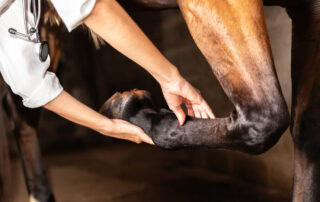
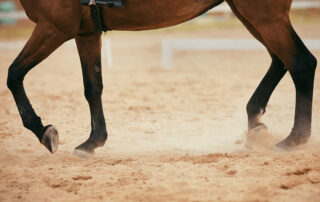
Flexion tests are a component of the diagnostic work-up for lameness in horses. These tests exacerbate pre-existing soreness or irritation in the limbs to make subtle lameness more obvious. Veterinarians most commonly use flexion tests during lameness examinations or pre-purchase examinations, to provide additional information about potential sources of lameness.

Flexion Tests in Horses for Lameness & Pre-Purchase Evaluations: Uses & Limitations2026-07-24T10:11:41-04:00

Psyllium for Horses: Benefits, Risks & Feeding Guide

Psyllium is a rich source of soluble fiber that can be incorporated into equine diets. Soluble fiber remains undigested by enzymes in the stomach (gastric juices), but passes into the hindgut where it may be partially digested by microbes. Psyllium is included in horse diets to facilitate sand clearance, provide hindgut and metabolic support, and as a supplement for performance horses. In addition to supplemental feeding, psyllium is often part of wider treatment protocols for sand impaction colic.

Psyllium for Horses: Benefits, Risks & Feeding Guide2026-07-24T10:16:24-04:00

Equine Underwater Treadmills: Low-Impact Exercise for Performance & Rehabilitation

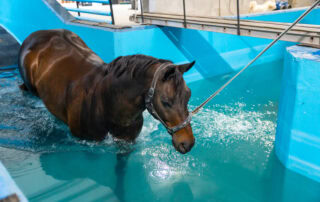
A water treadmill is a piece of exercise equipment used in equine training and rehabilitation. This type of treadmill is submerged in water so the horse is chest-deep while they are moving. Exercising in water is increasing in popularity as it provides low-impact exercise, encourages horses to move their joints through the full range of motion, and improves muscle building.

Equine Underwater Treadmills: Low-Impact Exercise for Performance & Rehabilitation2026-08-20T15:11:48-04:00

Equine Nebulizer Guide: Types, Uses, & Related Medications

Respiratory (lung) function is critical to ensure equine performance and overall health. Equine asthma, pneumonia, and lung capacity during exercise are all common health concerns for riders and trainers. One strategy to treat respiratory inflammation is delivering medication directly into the lungs using a nebulizer.

Equine Nebulizer Guide: Types, Uses, & Related Medications2026-07-23T21:18:00-04:00

Clipping Horses for Beginners: Benefits, Types of Clips & How-To Guide

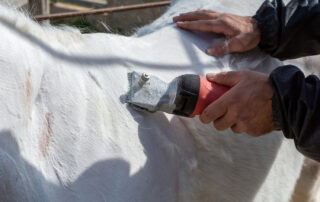
Clipping a horse’s coat is often messy and time-consuming. It can also be stressful for both horses and humans. With the right approach, clipping your horse doesn't have to be a dreaded chore. Clipping offers numerous benefits, particularly for horses expected to work or show during the winter. Fall is the season when most horse clipping occurs in anticipation of colder temperatures.

Clipping Horses for Beginners: Benefits, Types of Clips & How-To Guide2026-07-23T21:17:25-04:00

Overo Lethal White Syndrome (OLWS) in Horses: Causes, Signs & Genetic Testing

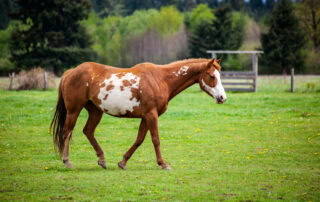
The overo pattern is one of three coat patterns in American Paint Horses (APHs) recognized by the American Paint Horse Association (APHA), along with Tobiano and Tovero. Among Overo variations, the frame overo subtype stands out for its distinctive markings. Unfortunately, breeding two frame overo horses together can lead to Overo Lethal White Syndrome (OLWS), a fatal condition in foals characterized by poor intestine function. Foals affected by OLWS typically exhibit white skin and abdominal pain and die within a few days of birth.

Overo Lethal White Syndrome (OLWS) in Horses: Causes, Signs & Genetic Testing2026-07-23T21:11:53-04:00

Do Wolf Teeth in Horses Need to be Removed?

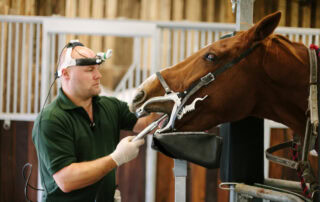
Wolf teeth in horses are short teeth sometimes found in the space between the front and cheek teeth on both sides of the upper jaw. Wolf teeth are normal, but have no particular function for horses. Wolf teeth have traditionally been removed from horses in the name of dental care, but recent evidence suggests this is not necessary unless their presence is causing symptoms or interfering with training.

Do Wolf Teeth in Horses Need to be Removed?2026-07-23T21:18:23-04:00

Platelet-Rich Plasma (PRP) in Horses: Uses, Benefits & Side Effects

Platelet-Rich Plasma (PRP) is a regenerative therapy used to treat horses with tendon and ligament injuries. PRP is a blood preparation where plasma, the water and protein component of blood containing no cells, is mixed with highly concentrated platelets and injected into a site of injury.

Platelet-Rich Plasma (PRP) in Horses: Uses, Benefits & Side Effects2026-07-23T21:09:44-04:00

Bisphosphonates in Horses: Benefits, Uses and Side Effects

Bisphosphonates are drugs used to treat bone conditions in horses. The two main bisphosphonates used in horses are clodronate (OsPhos®) and tiludronate (Tildren®). These medications are used to treat conditions associated with increased bone turnover (removal of old bone). By reducing bone turnover, bisphosphonates may slow progression of these diseases. These drugs may also reduce bone pain and inflammation, enhancing quality of life for affected horses.

Bisphosphonates in Horses: Benefits, Uses and Side Effects2026-07-23T21:07:36-04:00

PEMF (Pulsed Electro Magnetic Therapy) in Horses: Benefits, Uses & Research

Pulsed electromagnetic field (PEMF) therapy is a treatment modality for horses where a machine produces pulses of electromagnetic fields directed at a specific part of the body. Research suggests that PEMF can improve bone healing rates, regenerate and protect cartilage cells, and reduce pain and inflammation.

PEMF (Pulsed Electro Magnetic Therapy) in Horses: Benefits, Uses & Research2026-07-23T21:06:04-04:00

Corticosteroid Joint Injections in Horses: Uses, Side Effects, & Evidence

Corticosteroids are a class of medication used to treat inflammation and pain. Corticosteroid joint injections are a common treatment for arthritis in horses. When injected directly into a joint, corticosteroids produce an anti-inflammatory effect that reduces pain associated with arthritis and slows damage to the joint cartilage

Corticosteroid Joint Injections in Horses: Uses, Side Effects, & Evidence2026-07-23T21:19:07-04:00

Stretching in Horses: Benefits, Uses & Techniques

Wondering about the best stretching exercises for your horse? Stretching is the process of extending a muscle to its maximum extension to release muscle tightness, improve flexibility and reduce pain.

Stretching in Horses: Benefits, Uses & Techniques2026-07-23T21:02:03-04:00

Massage Therapy in Horses: Benefits, Techniques & Trigger Points

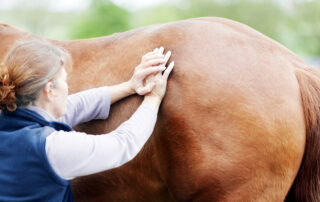
Equine massage therapy is a bodywork modality that involves the systematic manual manipulation of a horse’s muscles and soft tissues to alleviate muscle tension and promote overall well-being. It’s an increasingly popular component of holistic veterinary care and equine management.

Massage Therapy in Horses: Benefits, Techniques & Trigger Points2026-07-23T20:55:10-04:00

Mad Barn and Equestrian Canada Forge Innovative Sport Science and Nutrition Partnership

Equestrian Canada (EC) is excited to announce a new partnership with Mad Barn, a leading provider of equine nutrition research, education, and products. This collaboration marks a significant step forward in enhancing the health and performance of the Canadian Equestrian Team.

Mad Barn and Equestrian Canada Forge Innovative Sport Science and Nutrition Partnership2026-07-23T20:50:53-04:00

Exertional Rhabdomyolysis in Horses: Causes, Symptoms & Treatment

Exertional Rhabdomyolysis (ER), commonly known as tying-up or azoturia, is an exercise-induced condition in horses characterized by the excessive breakdown of muscle tissue. This results in muscle spasms, pain and impaired performance following bouts of exercise. [1] In severe cases, affected horses may exhibit signs of colic or even collapse.

Exertional Rhabdomyolysis in Horses: Causes, Symptoms & Treatment2026-07-23T20:46:51-04:00

Leptospirosis in Horses: Symptoms, Diagnosis & Treatment

Leptospirosis is a bacterial infection that is commonly spread to horses through direct contact with contaminated food and water sources. While there are many different species of the Leptospira bacteria, symptoms in horses are most commonly caused by Leptospira interrogans.

Leptospirosis in Horses: Symptoms, Diagnosis & Treatment2026-07-23T20:36:50-04:00

Sesamoiditis in Horses: Causes, Symptoms and Treatment

Sesamoiditis in horses refers to pain and injury around the sesamoid bones, pairs of small triangular bones found at the back of the fetlock. Inflammation in this area can cause pain and changes to the bony structure of the sesamoid bones, resulting in lameness. Sesamoiditis is most common in hunter/jumper horses, young racehorses, and barrel racing horses. Treatment typically involves a prolonged period of rest, anti-inflammatory medications, and a slow return to exercise.

Sesamoiditis in Horses: Causes, Symptoms and Treatment2026-07-23T20:34:49-04:00

Guide to Shelter for Horses: Design of Sheds and Stalls

Choosing the best configuration of shelter in your horse’s pasture is one of the most important aspects of horse management. Most horses seek shelter at some point during the day, whether from cold and precipitation or from insects and heat.

Guide to Shelter for Horses: Design of Sheds and Stalls2026-07-23T20:34:00-04:00