Analyze Diet

Feeding Straw to Horses: A Low-Energy Forage Alternative

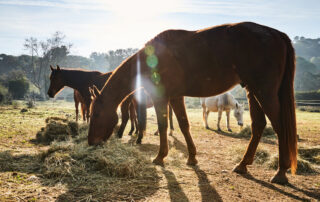
Straw or chaff is a high-fibre low-sugar forage that is ideal for horses that are overweight or insulin-resistant. Straw adds bulk to your horse's diet without contributing significant calories or protein. Research shows that adding straw to a forage ration can increase time spent grazing and the expression of natural foraging behaviours. This can improve wellness and prevent boredom without adding excess energy to the diet. While straw is not widely used as horse feed in North America, chaff or chopped straw is commonly fed in the United Kingdom. Mixing straw with other forages is recommended to avoid health concerns that are associated with feeding a straw-only ration.
Feeding Straw to Horses: A Low-Energy Forage Alternative2026-07-20T22:18:56-04:00

Equine COPD: Signs, Causes, Diagnosis & Treatment

Equine COPD - or chronic obstructive pulmonary disease - is a now-obsolete term for a common condition in horses that causes coughing and poor performance. This condition is now referred to as equine asthma and is one of the most common non-infectious lung diseases. Severe equine asthma affects 14–17% of horses in some populations, but up to 70% of pleasure horses have indicators of mild to moderate asthma. Horses affected by equine asthma typically have increased mucus production, difficulty breathing during exercise and sometimes at rest, cough, and nasal discharge. More severe cases may result in acute respiratory distress.

Equine COPD: Signs, Causes, Diagnosis & Treatment2026-07-20T21:46:08-04:00

How Much Hay to Feed Your Horse [Feeding Guide]

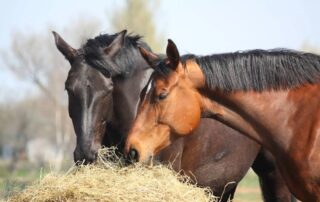
A forage-based diet is the best way to support your horse’s health and happiness, but it is not always easy to know how much hay to feed. Horses that are allowed free-choice (ad libitum) access to hay-only diets will typically consume 1.5 – 3% of their body weight in forage on a dry matter basis. For a typical adult horse, this is roughly 4 to 8 flakes of hay per day.

How Much Hay to Feed Your Horse [Feeding Guide]2026-07-20T21:43:15-04:00

Feeding Flaxseed & Flax Oil to Horses

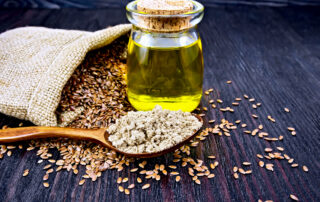
Also known as linseed, flaxseed is produced from the flax plant and can be used to provide fat, protein, and fibre in the equine diet. Flax products are cost-effective, calorie-dense and commonly fed to horses for weight gain or to support the energy requirements of high-performance exercise. Flax seeds and flax oil are also sources of the omega-3 fatty acid, alpha-linolenic acid (ALA). This essential fatty acid can be used to balance omega-6 intake and helps maintain skin and coat quality. While consuming omega-3s is generally associated with health benefits, not all omega-3 fatty acids have the same effects on the horse's body. Flax oil does not contain DHA or EPA, the two fatty acids associated with healthy inflammatory regulation and improved joint health.

Feeding Flaxseed & Flax Oil to Horses2026-08-20T14:29:51-04:00

Teff Hay for Horses: Nutrition Overview & Feeding Guide

An increasingly popular equine forage, teff grass is grown in warm geographic regions and is commonly cultivated in the Southern USA. Native to Africa, teff is a warm-season grass that is high in fibre and low in sugars and starch. The digestible energy content of teff hay varies from high to low, depending on growing conditions and crop management strategies. Teff hay can have variable levels of starch and sugar, together known as hydrolyzable carbohydrates (HC).

Teff Hay for Horses: Nutrition Overview & Feeding Guide2026-07-20T14:41:56-04:00

How to Manage Mud in your Horse’s Paddock – [Step-by-Step Guide]

You bring your horses in from turnout only to find their legs and hooves coated in mud. You know that mud is bad for your horse, but why and what can you do about it? Hosing down a muddy horse may be an all-too-common experience for equestrians that live in rainy climates, low-lying regions or areas with clay soils. Not only is mud a nuisance to clean, but muddy conditions also increase the risk of injuries, infections and health conditions such as cellulitis or lymphangitis. Tack shops are stocked with products promising to prevent mud-related diseases in horses and there is ample discussions online about whether these products work.

How to Manage Mud in your Horse’s Paddock – [Step-by-Step Guide]2026-07-20T14:40:34-04:00

Lymphangitis in Horses: Symptoms, Causes, Treatment & Recovery

Lymphangitis, also known as big leg disease or stovepipe leg, is a condition in horses involving inflammation of the lymph vessels, most often in the lower limb. Lymphangitis presents as extreme swelling with rapid onset, resulting in pain in the lower leg, reluctance to bear weight, lethargy, lack of appetite, and sometimes fever. This condition is caused by bacterial or fungal infection, usually following a wound to the leg. The infection can also result in very painful sores or lumps on the leg and cracking of high-motion skin areas (such as the fetlock). Seek veterinary care immediately if you suspect your horse has lymphangitis. If left unaddressed, the infection can spread to other organs and cause internal abscesses or sepsis, a potentially life-threatening condition.

Lymphangitis in Horses: Symptoms, Causes, Treatment & Recovery2026-07-20T14:31:56-04:00

Equine Asthma: Symptoms, Diagnosis, Treatment & Management

Equine asthma (EA) is a relatively new collective term for chronic respiratory signs in horses that range in severity from mild to severe. These conditions were previously known as inflammatory airway disease (IAD) or recurrent airway obstruction (RAO), respectively. Equine asthma is characterized by inflammation and mucous production in the lungs, which leads to lower airway obstruction. The horse may cough, and breathing may or may not be laboured. Asthma is most commonly observed in horses stabled over winter months that have become hypersensitive to dust, airborne allergens, mold spores, or mites in stable bedding or stored hay.

Equine Asthma: Symptoms, Diagnosis, Treatment & Management2026-07-20T14:27:46-04:00

Chronic Kidney Diseases in Horses: [Signs & Causes of Renal Failure]

Chronic kidney disease (or chronic renal failure) in horses is a rare but serious disorder that interferes with normal kidney function. Your horse's kidneys perform many important processes in the body including managing blood pressure, excreting waste products, and regulating electrolyte balance. When kidney function is impaired, waste products begin to build up in the blood and affect the function of other organ systems. Horses with reduced renal function often experience weight loss and have difficulty maintaining body condition. They may also show signs of poor coat quality, excessive thirst and increased urination.

Chronic Kidney Diseases in Horses: [Signs & Causes of Renal Failure]2026-08-18T18:42:48-04:00

How to Feed an Overweight Horse for Weight Loss – [10 Tips]

In North America, it is estimated that up to 51% of horses are overweight and up to 8% are obese. Horses become overweight from a combination of factors, including insufficient activity and consuming excess calories. A horse’s energy requirements depend on many factors such as age, breed, genetics, exercise, and life stage. Some horses are easy keepers and are prone to gaining weight quickly.

How to Feed an Overweight Horse for Weight Loss – [10 Tips]2026-08-20T14:08:00-04:00

Obesity in Horses: Health Risks, Prevalence & Management Strategies

Obesity is a health concern in horses worldwide, with a prevalence estimated between 31 – 45% in some equine populations. Among ponies and easy keeper breeds, the prevalence is even higher with one study reporting that 72% of adult ponies were overweight or obese. Horses are generally considered obese when they have a body condition score of greater than 7 on the Henneke 9-point scoring system.

Obesity in Horses: Health Risks, Prevalence & Management Strategies2026-08-18T19:11:06-04:00

Stocking Up in Horses: Stagnation Edema Causes, Symptoms, & Treatments

Stagnation edema, also known as stocking up, is a common cause of leg swelling in stabled horses. It occurs due to impaired circulation from periods of reduced activity. This short-lasting form of edema typically affects both hind limbs and causes swelling from the coronary band up to the hock. Occasionally, it occurs in the forelegs as well. Stocking up is also called distal limb edema because it affects to lower portion of the limbs. Another term for stocking up is pitting edema. This is because when pressure is applied to the area, a pit or indentation will remain temporarily. Stocking up results from the pooling of lymph, a clear fluid that circulates in the lymphatic vessels. Sometimes this circulation is compromised allowing fluid to accumulate. This typically occurs if blood flow and lymphatic drainage are impaired.

Stocking Up in Horses: Stagnation Edema Causes, Symptoms, & Treatments2026-08-18T19:07:53-04:00

Stall Walking, Circling and Weaving in Horses – Causes & How to Stop

Box walking, stall circling and weaving are examples of locomotor stereotypic behaviours in horses. They are believed to be caused by a lack of freedom to express natural equine behaviours. Over time, stall walking and weaving can have negative physical consequences such as hoof problems, joint wear and tear, weight loss, ulcers, and uneven muscle development. Stereotypic behaviours are repetitive, habitual movement patterns with no obvious function or benefit to the animal. These behaviours are often seen in confined or domesticated horses that do not have access to the same lifestyle as their wild counterparts. Stall walking, circling and weaving are common and difficult to stop completely. However, changes in management and routine can reduce a horse’s compulsion to perform these actions.

Stall Walking, Circling and Weaving in Horses – Causes & How to Stop2026-08-18T19:05:59-04:00

How to Choose the Best Mineral Supplement for Your Horse – [Buyer’s Guide]

Proper vitamin and mineral nutrition is critical to maintaining your horse's health and well-being. But how do you ensure that your horse gets everything they need to balance their diet? Horses on a forage-only diet universally have deficiencies in key minerals, including sodium, copper, and zinc. Even if you provide your horse with a salt or mineral lick, the chances are that their diets will under-supply nutrients required for optimal health. This is why a vitamin and mineral balancer is necessary for almost all horses. Feeding a concentrated mineral supplement can benefit your horse through improved coat condition, stronger hooves, improved stamina, mood regulation, and better performance.

How to Choose the Best Mineral Supplement for Your Horse – [Buyer’s Guide]2026-08-18T19:04:29-04:00

Weaving in Horses: Causes, Effects & How to Prevent

Weaving is a locomotive stereotypic behaviour typically seen in stabled horses. It is estimated that between 3 to 10% of horses kept in stables weave. The expression of this behaviour involves repetitive shifting of body weight from one front leg to the other, combined with a sideways swaying of the head. Occasionally, this repetitive swaying motion involves the hindquarters. Stall weaving serves no function or purpose. This stereotypy may develop when a horse is prevented from walking toward a desired goal, such as a feed or other horses. Horses may begin weaving as a result of stress, frustration, their environment, or an inability to express natural equine behaviours. Over time, weaving can cause hoof and joint problems or lead to weight loss if it interferes with eating behaviour.

Weaving in Horses: Causes, Effects & How to Prevent2026-08-18T19:02:40-04:00

20+ Common Dental Issues in Horses – [Signs of Problems & Treatment]

Horses can experience a number of different dental issues over their lifetime, impacting their ability to chew and digest their feed. Unaddressed dental issues can affect your horse's health, condition, behaviour and performance. This is why it’s important to have your horse's teeth checked by an experienced veterinarian or equine dentist on a regular basis. Dental problems are the third most common medical problem seen in large animal practices in the U.S.

20+ Common Dental Issues in Horses – [Signs of Problems & Treatment]2026-08-18T19:01:05-04:00

Glucosamine & Chondroitin Supplements for Horses – [Joint Health Research Review]

Glucosamine and chondroitin sulfate are two of the most common ingredients found in equine joint products. These natural supplements are purported to promote mobility and joint comfort in hard-working performance horses and aging seniors. But despite their commercial success, there is limited research to support the efficacy of glucosamine or chondroitin in horses. Although studies in humans, other animals and cell cultures suggest potential benefits, the results are not as promising when these supplements are fed to horses. The poor results in horses are likely because these compounds are not well absorbed from the gut and are typically used at much lower doses than the amounts used in cell culture studies.

Glucosamine & Chondroitin Supplements for Horses – [Joint Health Research Review]2026-09-27T15:12:47-04:00

Equine Biosecurity Measures: Tips for Horse Owners & Barn Managers

Whether you are a horse owner, handler or the manager of an equine facility, biosecurity plays an important role in keeping horses under your care safe and healthy. Horses can be affected by many different transmissible diseases, including equine infectious anemia, strangles, and equine influenza. Any time a horse comes into contact with new animals, people or environments, they may be exposed to novel pathogens. Biosecurity measures involve actions and protocols to protect livestock health by reducing disease transmission. Examples of biosecurity guidelines include controlling access at equine facilities, designating quarantine areas for newly arriving or ill horses, practicing good hygiene, and using pest control.

Equine Biosecurity Measures: Tips for Horse Owners & Barn Managers2026-08-18T18:58:12-04:00

Hay Dunking in Horses: Causes of this Abnormal Eating Behavior

Hay dunking describes an abnormal equine feeding behaviour in which horses dunk their hay in water before chewing and swallowing it. This can be a messy habit and many horse owners want to know why it happens and how to stop it. While there is little research into why horses dunk their hay, several theories attempt to explain the behaviour. Anecdotal reports suggest some horses dunk their hay before eating it simply because they prefer it when it is dampened or because it helps them chew. It is also thought that underlying health issues can promote the behaviour, including gastrointestinal discomfort, allergies to dust, and dental issues.

Hay Dunking in Horses: Causes of this Abnormal Eating Behavior2026-08-18T18:56:50-04:00

Why is My Horse Eating Soil? – [Geophagia Causes & Prevention]

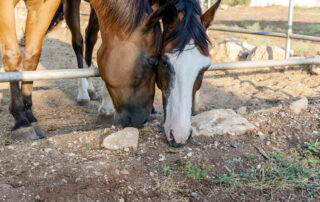
Has your horse started eating or licking the soil? The ingestion of soil in animals is referred to as geophagia. The reason some horses eat dirt is not fully understood. But the behavior is thought to serve a nutritional purpose by providing minerals and other nutrients that might be lacking in the diet. Geophagia may also be linked to boredom or stress. Horses may nibble on the soil to pass the time, relieve anxiety, or alleviate stomach pain. Geophagia can be harmful because the soil may contain parasites and other pathogens that cause illness. Excessive ingestion of dirt can also damage the intestines and lead to impaction colic.

Why is My Horse Eating Soil? – [Geophagia Causes & Prevention]2026-08-18T18:55:15-04:00

Ranitidine for Equine Gastric Ulcer Treatment – [Dosages & Guidelines]

Ranitidine (Zantac) is a medication used to reduce stomach acidity temporarily. It is commonly used in humans and animals to treat peptic ulcers and heartburn. In horses, this drug is used to alleviate gastric ulcers. Ranitidine is an H2 blocker that works by reducing the amount of acid produced in the stomach, helping to heal ulcers. Ranitidine is not as effective as other ulcer treatments such as omeprazole, but your veterinarian may recommend it as part of a multi-drug regimen to prevent and treat ulcers.

Ranitidine for Equine Gastric Ulcer Treatment – [Dosages & Guidelines]2026-08-18T18:52:59-04:00

Equine Influenza Virus (Flu): Symptoms, Treatment & Prevention

Equine influenza virus, or EIV, is an extremely contagious respiratory disease or flu affecting horses, mules, and donkeys. EIV is characterized by fever, apathy, and lack of appetite, and causes respiratory symptoms such as coughing and nasal discharge. However, some horses infected with EIV have no observable signs of the virus. Left untreated, the virus can lead to secondary infections and pneumonia. In most cases, influenza is not fatal, however, horses with impaired immune function may be more susceptible to negative outcomes.

Equine Influenza Virus (Flu): Symptoms, Treatment & Prevention2026-08-18T18:51:14-04:00

Windsucking in Horses: Causes, Effects & How to Stop

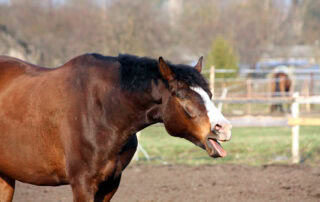
Windsucking is an oral stereotypic behavior performed by horses. It is closely related to cribbing, but they are distinct behaviors. Horses windsuck by arching their necks and using their mouth to suck air into the cranial esophagus. The horse will then blow the air back out of the mouth while making a grunting sound. Horses may begin windsucking in response to stress, boredom, or gastrointestinal discomfort. While the behavior may not be problematic to begin with, it can develop over time into a nearly irreversible habit with negative consequences for health and well-being. If your horse exhibits signs of windsucking, it's important to talk to your veterinarian about potential causes and treatment options.

Windsucking in Horses: Causes, Effects & How to Stop2026-08-18T18:49:00-04:00

Why is My Horse’s Appetite Decreasing or Increasing? [Top Reasons]

Have you noticed changes in your horse's appetite and eating behavior? Perhaps your horse has gone off their feed or is no longer interested in eating as much forage as usual. Or maybe your horse's appetite has increased, and they are going through their hay faster. Your horse's appetite can change frequently and for a variety of reasons. While short-term fluctuations are nothing to be alarmed about, longer-lasting changes can impact body condition and overall health. Equine feeding behavior is complex and affected by many different factors. Your horse's appetite is affected by temperature changes in the environment, activity level, gut function, reproductive status, feed composition, dental health, psychological well-being and more.

Why is My Horse’s Appetite Decreasing or Increasing? [Top Reasons]2026-08-18T18:45:17-04:00

White Muscle Disease in Horses: Signs, Causes & Treatment – [Nutritional Myodegeneration]

Nutritional myodegeneration (NMD), more commonly known as white muscle disease, is a disorder that affects various animals, including horses. In equids, the condition primarily occurs in newborn foals, although adult horses can also develop it. The condition results in degeneration in the skeletal and cardiac muscle most often due to inadequate levels of selenium in the body. It also occurs less commonly in horses that are deficient in vitamin E. Selenium and vitamin E are important antioxidant nutrients for horses. Antioxidants are molecules that neutralize free radicals, which are unstable molecules that can damage cells. Common signs of white muscle disease include weakness, poor coordination, and difficulty standing, eating, and nursing. Due to a loss of muscle function, respiration can be impaired, and respiratory failure may occur in foals.

White Muscle Disease in Horses: Signs, Causes & Treatment – [Nutritional Myodegeneration]2026-08-18T18:41:53-04:00

Equine Pneumonia: Causes, Symptoms & Treatment

Equine pneumonia is a common respiratory illness that can be life-threatening. It can affect different parts of the horse’s lungs and may cause varied symptoms. Pneumonia refers to inflammation of the lung tissue. Upper airways and lining of the lungs (pleura) may also be involved. Horses affected by pneumonia can experience cough, fever, weakness and difficulty breathing.

Equine Pneumonia: Causes, Symptoms & Treatment2026-08-18T18:36:40-04:00

Equine Infectious Anemia (EIA) – Signs, Treatment & Coggins Test

Equine Infectious Anemia (EIA) is an infectious disease that affects horses and other equids, such as donkeys and mules. The disease is caused by an RNA virus transmitted by blood-sucking insects. Many affected horses show no clinical signs and are asymptomatic carriers of the disease. However, stress or illness can cause signs to become apparent. Horses that test positive for the virus must be isolated from other horses to prevent the spread of the disease. Horses infected with the EIA virus carry it for life and remain contagious.

Equine Infectious Anemia (EIA) – Signs, Treatment & Coggins Test2026-08-18T18:33:51-04:00

Girth Aversion (Girthiness) in Horses – Causes & Remedies

Is your horse showing signs of girthiness? Also known as girth aversion or cinch sensitivity, horses that are girthy express signs of discomfort when they are being saddled. A girthy horse may respond to having a girth tightened by expressing various behaviors ranging from tossing their head, biting, swishing the tail, stomping their hooves, and moving away from their handler. Such behaviours can be problematic for horse owners, handlers, and grooms to manage. These behaviors could also be a sign of an underlying health problem, such as gastric ulcers.

Girth Aversion (Girthiness) in Horses – Causes & Remedies2026-08-18T18:31:05-04:00

How to Feed a Pregnant Mare – [Nutrient Requirements]

Your vet has just confirmed that your mare is pregnant, and you can’t wait for that healthy foal to arrive! When should you be changing her feed? How much weight does she need to gain? What additional nutrients does she require to grow a healthy baby? All these questions are important to consider when planning a nutritional program for your expecting mare. How you feed a mare while she is pregnant not only affects growth and development in utero but can also have lifelong impacts on the foal. Your mare's diet affects the foal's bone and tendon health, neurological development, immune status and more.

How to Feed a Pregnant Mare – [Nutrient Requirements]2026-08-18T18:28:39-04:00

Is Soy Good or Bad for Horses? [Review of Soybean Meal in Feeds]

Soy is a common ingredient in many equine feeds. Different parts of the soybean can be used to provide protein, energy, and fiber in your horse's diet. Soybeans are popular because of their versatility and affordability. Soy oil is a palatable fat source for horses who require additional calories. Soybean meal and roasted soybeans also have a superior amino acid profile compared to other commonly fed protein sources. This makes soy a desirable addition to the high-protein diets required by lactating and growing horses.

Is Soy Good or Bad for Horses? [Review of Soybean Meal in Feeds]2026-08-18T18:27:27-04:00