Analyze Diet

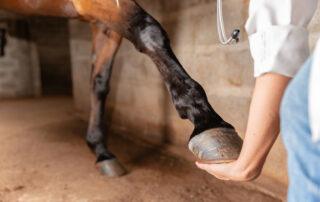
Arthritis in Horses: Symptoms, Diagnosis, Treatment & Management

Arthritis is defined as inflammation in one or more joints, which leads to pain and stiffness. The condition is degenerative, meaning it cannot be reversed in most cases and tends to worsen over time. However, there are steps that horse owners can take to lessen symptoms and also slow the progression of the disease.
Arthritis in Horses: Symptoms, Diagnosis, Treatment & Management2026-09-24T18:52:14-04:00

Top 6 Calming Supplements for Horses [Research Review]

Riding and working with horses poses some inherent risk of danger, but the risk is greater when working with an aggressive or moody horse. For this reason, horse owners often look to calming supplements to help make their horse more manageable and easier to train.

Top 6 Calming Supplements for Horses [Research Review]2026-08-01T19:09:01-04:00

Ligament Injuries in Horses: Diagnosis, Treatment and Recovery

What is the best way to support a horse affected by a ligament injury? Unfortunately, due to the nature of many equine disciplines, a horse’s ligaments are prone to injury. In fact, ligament sprains (along with tendon injuries) are the most frequent cause of early retirement for Thoroughbred racehorses.

Ligament Injuries in Horses: Diagnosis, Treatment and Recovery2026-08-01T19:05:31-04:00

DSLD in Horses [Causes, Management & Prevention]

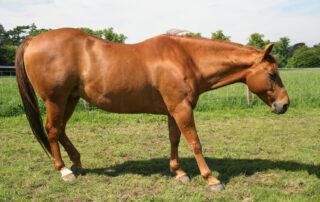
Degenerative Suspensory Ligament Desmitis (DSLD) is a chronic condition in horses that affects connective tissue, including the suspensory ligament and other ligaments and tendons. This painful condition commonly leads to debilitating lameness. In horses with DSLD, the suspensory ligament progressively weakens causing hyperextension of the fetlock, hock, and stifle.

DSLD in Horses [Causes, Management & Prevention]2026-09-16T14:42:13-04:00

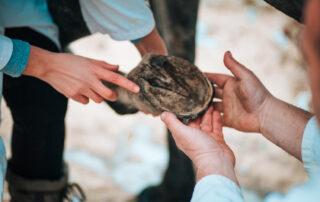
Hoof Abscesses in Horses: Causes, Symptoms, Treatment & Recovery Time

Painful hoof abscesses in horses develop when bacterial and fungal organisms enter the hoof structure through a wound or opening and cause infection in the inner tissues. The invading microorganisms and the ensuing immune response generate purulent exudate (pus) which causes pressure inside the hoof. This leads to pain, structural damage and lameness.

Hoof Abscesses in Horses: Causes, Symptoms, Treatment & Recovery Time2026-08-01T18:57:44-04:00

Founder in Horses: Causes, Symptoms, Treatment and Prevention

Founder is a common cause of lameness in horses. It involves damage to the laminar connection between the hoof wall and the coffin bone. This often leads to rotation and/or sinking of the coffin bone which causes severe pain and can permanently damage the hoof structure.

Founder in Horses: Causes, Symptoms, Treatment and Prevention2026-08-01T18:56:19-04:00

How to Best Feed a Senior Horse [9-Step Guide]

When it comes to feeding senior horses, there are many factors to consider to support longevity and healthy ageing. Making sure your horse’s core nutritional needs are met and keeping up with routine healthcare are critical to promoting optimal well-being for many more years to come.

How to Best Feed a Senior Horse [9-Step Guide]2026-08-01T18:52:53-04:00

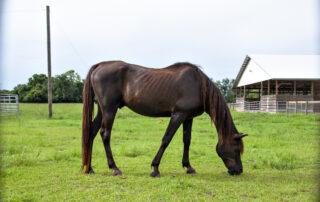
How to Feed an Underweight Horse [10-Step Guide]

Putting weight on a skinny horse can be a difficult and frustrating task. There are many different causes of weight loss in horses and feeding strategies will depend on why your horse is underweight in the first place. Weight loss occurs when a horse is in a negative energy balance, meaning that they are consuming less caloric energy than they are using in a day.

How to Feed an Underweight Horse [10-Step Guide]2026-08-01T18:51:56-04:00

Leaky Gut in Horses – Symptoms, Causes, Treatment & Prevention

Leaky gut is a digestive issue is horses that occurs as a component of a broader gut health issue such as dysbiosis, inflammatory bowel disease, or gastric ulcers. It is said that 70% of the horse’s immune system resides in the gut. The horse’s gastrointestinal tract breaks down food and absorbs nutrients while blocking toxins and microbes from entering the body.

Leaky Gut in Horses – Symptoms, Causes, Treatment & Prevention2026-08-01T18:42:14-04:00

Podotrochlear Syndrome in Horses – Causes, Diagnosis & Treatment

Podotrochlear Syndrome (also referred to as navicular syndrome or navicular disease) affects the podo­trochlear apparatus (PTA) of the equine foot and typically occurs in the forelimbs. The condition can cause a variable degree of lameness. There is no single cause of Podotrochlear Syndrome. Multiple structures including bones, tendons, and ligaments within the foot can be affected.

Podotrochlear Syndrome in Horses – Causes, Diagnosis & Treatment2026-08-01T18:39:53-04:00

White Line Disease in Horses [Causes, Symptoms, Treatment & Recovery]

While line disease is a hoof condition that can lead to pain and lameness. This condition affects the equine hoof wall in one or more hooves at a time. White line disease originates as a separation between adjacent layers in the hoof wall starting at the toe, quarter, and/or heel, which can then become infected with bacteria and fungi.

White Line Disease in Horses [Causes, Symptoms, Treatment & Recovery]2026-08-01T18:38:14-04:00

How Much Water Should Your Horse Drink? [Encouraging Hydration]

How much water does your horse need to drink every day to stay healthy and how much do water requirements increase in hot conditions or when working? Ensuring adequate water intake is important for the optimal health and well-being of all horses. Some horses are more susceptible to becoming dehydrated and have a higher need for water.

How Much Water Should Your Horse Drink? [Encouraging Hydration]2026-08-01T18:36:11-04:00

Hyperkalemic Periodic Paralysis (HYPP) in Horses [Treatments & Feeding Guide]

Hyperkalemic periodic paralysis (HYPP) is a genetic condition in horses that affects how their muscles function and respond to signals from the nervous system. These horses have high levels of potassium in the blood and should be fed low potassium diets. Horses affected by HYPP have pronounced musculature which is sometimes perceived as a desirable appearance. They may also perform better in halter classes.

Hyperkalemic Periodic Paralysis (HYPP) in Horses [Treatments & Feeding Guide]2026-08-01T18:34:55-04:00

De-Worming Your Horse: Best Schedule & Medications to Use

De-worming your horse is an important practice to prevent health complications associated with internal parasites. Worms, also known as helminths, are large endoparasites which live within horses and other mammals. In high numbers, they can result in colic, weight loss, intestinal impaction and lead to organ damage.

De-Worming Your Horse: Best Schedule & Medications to Use2026-08-01T18:26:52-04:00

Heaves in Horses: Symptoms, Treatment & How to Manage

Equine Heaves is a condition that is characterized by inflamed airways in the lungs. This can lead to a number of associated symptoms such as chronic coughing, excess mucous, poor performance and weight loss. This condition also goes by several other names, including Recurrent Airway Obstruction (RAO), Equine Asthma, Equine Chronic Obstructive Pulmonary Disease, and Inflammatory Airway Disease (IAD).

Heaves in Horses: Symptoms, Treatment & How to Manage2026-08-01T18:34:22-04:00

Potomac Horse Fever: Symptoms, Causes, Treatment & Vaccination

Potomac Horse Fever (PHF) is a bacterial disease that can result in severe colic, diarrhea, inflammation, depression and laminitis. In serious cases, it can be fatal to the horse. PHF is caused by infection with Neorickettsia risticii and typically affects horses grazing in pastures that border rivers or creeks. This bacteria may be found in bodies of water or in aquatic insects.

Potomac Horse Fever: Symptoms, Causes, Treatment & Vaccination2026-08-01T18:25:02-04:00

How to Feed a Horse with Polysaccharide Storage Myopathy (PSSM)

Equine polysaccharide storage myopathy (PSSM or EPSM) is a genetic condition in horses that affects how muscle cells partition, generate, and store energy. This can lead to exercise intolerance, stiffness, and an abnormal gait in your horse. After diagnosis, owners often notice signs, such as tail swishing, high resting muscle tone, behavioural changes, and slight performance reductions indicating mild tying-up. Horses with PSSM are at higher risk of tying-up, also known as exertional rhabdomyolysis. These episodes cause significant pain and are characterized by stiff, firm muscles along with profuse sweating and reluctance to move.

How to Feed a Horse with Polysaccharide Storage Myopathy (PSSM)2026-08-01T18:24:27-04:00

Top 9 Reasons Why Your Horse is Acting “Hot”

A hyperactive horse is commonly referred to as a "hot" horse. You may know the feeling of dealing with a hot horse all too well: it can feel like your horse is going to explode at any moment. Luckily, there are strategies that can be implemented to help manage hot horse. The first step is to ensure your horse has a well-balanced diet with the right amounts of energy, vitamins, and minerals.

Top 9 Reasons Why Your Horse is Acting “Hot”2026-08-01T18:23:39-04:00

Tying-up in Horses: Types, Symptoms, Causes & Management

Tying-up in horses is a colloquial term for Exertional Rhabdomyolysis, a condition involving exercise-related muscle cramping and damage. Some horses experience a single episode of tying up whereas others experience recurrent tying-up. During an episode, the affected horse becomes stiff and reluctant to move. Your horse may only taking short, shuffled steps.

Tying-up in Horses: Types, Symptoms, Causes & Management2026-08-01T18:22:38-04:00

8 Common Stereotypic Behaviours in Horses & What They Mean

Equine stereotypic behaviours are repetitive behaviours involving a constant sequence of movements that have no obvious or apparent function. Examples of common stereotypies include cribbing, wind-sucking, weaving, stall walking and head shaking.

8 Common Stereotypic Behaviours in Horses & What They Mean2026-08-01T18:21:11-04:00

Minerals for Horses: Requirements, Roles, Deficiency & Supplements

Adequate mineral intake in your horse’s diet is essential for overall well-being and function. Minerals play important roles in supporting tissue structure, enzyme reactions, energy metabolism, and maintaining electrolyte balance. Mineral deficiencies can contribute to poor hoof and coat quality, joint issues, metabolic concerns, and growth issues. Excess intake of minerals can also cause health issues.

Minerals for Horses: Requirements, Roles, Deficiency & Supplements2026-08-01T18:18:50-04:00

Lyme Disease in Horses: Symptoms, Testing, Prevention & Treatment

Equine Lyme disease is a growing concern for horses in North America, especially during the summer months when tick bites are more common. Lyme disease is primarily caused by infection with Borrelia burgdorferi, a bacteria that is carried by ixodid, or hard-bodied, ticks. You may recognize this tick by its more popular name, the black-legged or deer tick (Ixodes scapularis).

Lyme Disease in Horses: Symptoms, Testing, Prevention & Treatment2026-08-01T18:17:38-04:00

How to Build Your Horse’s Topline Muscles [9 Step Guide]

Building topline muscle and dealing with topline loss is a common struggle for horse owners. Your horse may have a weak topline due to a variety of factors including nutrition and exercise. Physiological factors such as age or underlying health conditions can also affect topline muscle.

How to Build Your Horse’s Topline Muscles [9 Step Guide]2026-08-01T18:17:17-04:00

EOTRH in Horses: Equine Odontoclastic Tooth Resorption and Hypercementosis

Equine odontoclastic tooth resorption and hypercementosis (EOTRH) is a progressive and painful dental condition that occurs in some horses. Primarily affecting senior horses, it typically involves the gradual degeneration of the incisors and canine teeth. Over time, the roots of these teeth are resorbed or dissolved.

EOTRH in Horses: Equine Odontoclastic Tooth Resorption and Hypercementosis2026-08-01T18:12:15-04:00

26 Potential Reasons Why Your Horse Has Diarrhea [List]

Diarrhea is a common problem in horses as it can be a result of many different causes. It is typically a sign of of disrupted function or motility of the hindgut, including dysbiosis or infection. Diarrhea is defined as the excessive and frequent defecation of loose or liquid stool. It can rapidly result in imbalanced electrolyte levels due to extensive sections of the hindgut that have impaired absorption and/or increased secretion of water into the gut.

26 Potential Reasons Why Your Horse Has Diarrhea [List]2026-08-01T18:08:23-04:00

How to Body Condition Score your Horse [Henneke Scale]

Body condition and body weight are two very important metrics for understanding and measuring the health of your horse. Both can be assessed easily and without any expensive equipment. Body weight alone gives us very little insight into how much stored fat your horse has. An accurate Body Condition Score (BCS) can tell you whether your horse is underweight, overweight or at an appropriate weight for his or her size.

How to Body Condition Score your Horse [Henneke Scale]2026-09-24T18:47:06-04:00

How and What to Feed a Horse with Diarrhea [Top 10 Tips]

Dealing with a horse that has diarrhea requires careful attention to their feeding plan and to their daily management. In some cases, diarrhea is a temporary annoyance that resolves itself with minimal intervention. Chronic cases in which diarrhea persists for at least 7 to 14 days can require greater intervention.

How and What to Feed a Horse with Diarrhea [Top 10 Tips]2026-08-01T18:03:11-04:00

Scott Cieslar & Informed Equestrian Discuss Meeting your Horse’s Nutritional Needs

Scott Cieslar of Mad Barn recently appeared on the Canada Horse Podcast by Informed Equestrian to discuss the ins and outs of equine nutrition. Scott chatted with hosts Nikki and Nadine about the horses’ core nutritional needs and how to design a forage-first feeding plan that is appropriate for pleasure horses all the way to performance athletes.

Scott Cieslar & Informed Equestrian Discuss Meeting your Horse’s Nutritional Needs2026-08-01T17:59:54-04:00

Diarrhea Causes in Horses: Risk Factors & Complications

Diarrhea can affect horses of all ages, breeds and sizes, resulting in dehydration, weight loss, poor nutrient absorption or electrolyte imbalance. Diarrhea is described as the increased excretion of liquid or semi-solid feces. Cases of equine diarrhea can range in severity from mild episodes to serious and long-term episodes, which may require veterinary attention.

Diarrhea Causes in Horses: Risk Factors & Complications2026-08-01T17:59:00-04:00

Mycotoxins in your Horse’s Hay – [Symptoms, Treatment & Prevention]

Mycotoxins are naturally occurring toxic substances which are produced by mould and fungus in your horse’s hay. Mycotoxins can cause negative effects in horses including colic, gastrointestinal upset, weight loss, feed withdrawal, immune suppression, impaired performance or poor growth.

Mycotoxins in your Horse’s Hay – [Symptoms, Treatment & Prevention]2026-08-01T17:53:33-04:00