English












Respiratory dysfunction is a common and often overlooked issue in horses, with a variety of causes including infections, allergies, environmental irritants, and anatomical abnormalities.
Horses depend on efficient lung function to meet the high oxygen demands of their large, athletic bodies. Even mild disruptions in the respiratory system can lead to noticeable declines in performance, comfort, and behavior.
Problems may involve the upper airways, such as the nose and throat, the lower airways including the lungs and trachea, or both. Early signs like nasal discharge, coughing, labored breathing, unusual respiratory sounds, or reduced stamina can indicate an issue that requires attention.
Recognizing respiratory symptoms in horses and understanding the underlying causes and available treatments allows owners and caretakers to respond quickly and effectively. With proper management and early intervention, most horses can maintain healthy respiratory function and avoid complications that affect their quality of life or ability to work.
Respiratory Dysfunction in Horses
Respiratory conditions are among the most common health concerns in horses, affecting both the upper and lower airways. These issues can interfere with normal breathing and compromise the horse’s overall health and performance. [1][2][3]
The respiratory tract relies on natural defenses such as mucus production, sneezing, and coughing to clear out dust, pathogens, and other irritants. When these defenses are weakened or overwhelmed, harmful substances can build up, leading to inflammation, infection, or airway obstruction. [1][2][3]
Recognizing how these conditions develop is essential for identifying symptoms early and protecting your horse’s respiratory health.
Respiratory Function
By understanding how your horse’s respiratory system works, you can more easily spot where problems might develop when their breathing becomes impaired.
The respiratory tract is divided into two main regions. The upper tract includes the nostrils and cervical trachea. The lower tract includes the thoracic trachea, bronchi, bronchioles, and alveoli. [2][4]
The lungs are the primary site of gas exchange, where oxygen enters the bloodstream and carbon dioxide is expelled. Like all mammals, horses rely on this system even more during periods of increased demand, such as exercise. [1][2]
During inhalation, air enters through the nostrils and travels down the trachea. From the trachea, air flows into two bronchi, one for each lung, which branch into smaller bronchioles embedded deep within the lung tissue. [4][5]
At the ends of the bronchioles are alveoli, tiny air sacs surrounded by capillaries. These structures are where gas exchange takes place. Red blood cells release carbon dioxide and absorb oxygen, delivering it to the muscles and other tissues. When oxygen has been transferred and carbon dioxide released, the horse exhales to remove carbon dioxide from its airway and complete the cycle. [4][5]
Assessing Breathing in Horses
Tracking your horse’s normal breathing rate and effort can help detect changes early and flag potential health issues.
When assessing your horse’s respiratory function, there are two factors to consider: the breathing effort and rate.
Breathing Effort
Breathing effort refers to how much visible work the horse is using to move air in and out of the lungs. In a healthy, resting horse, breathing should appear smooth, quiet, and unforced.
Some horses may change their breathing patterns when people are nearby, so it’s best to observe from a distance.
For the most accurate assessment, watch the horse after it has been resting calmly for several minutes. This helps ensure that the respiratory rate and effort reflect a true resting state rather than being influenced by recent movement or stress.
| Urgency | Observation |
|---|---|
| Safe Healthy Horse |
|
| Caution Seek Veterinary Care ASAP |
|
| Urgent Seek Emergency Veterinary Care |
|
Breathing Rate
You can measure a horse’s breathing rate in two key areas with a stethoscope: over the trachea and over the lungs. If a stethoscope isn’t available, observing the movement of the flanks as they rise and fall is a useful alternative.
To check tracheal sounds, position the stethoscope along the windpipe about midway up the neck. These sounds tend to be louder and more distinct than those heard over the lungs.
 Breathing Check over Trachea
To listen over the lungs, place your stethoscope between two ribs of the horse, approximately halfway down their ribcage and halfway up their body. Listen carefully, as lung sounds are typically very quiet.
 Breathing Check over Lung
| Urgency | Observation |
|---|---|
| Safe Healthy Horse |
|
| Caution Seek Veterinary Care ASAP |
|
| Urgent Seek Emergency Veterinary Care |
|
Signs of Respiratory Issues in Horses
A horse that is making excessive or unfamiliar noise when breathing, whether at rest or while exercising, may be showing signs of respiratory dysfunction.
Abnormal respiratory noises in horses include: [2]
- Rattling: A coarse, low-pitched noise that may suggest mucus buildup or partial airway obstruction, often linked to respiratory infections or inflammation.
- Gurgling: A wet, bubbling sound typically caused by fluid or mucus in the airway. This can occur in conditions like recurrent airway obstruction (RAO) or lower respiratory tract infections.
- Roaring: A harsh, vibrating sound heard during inspiration, usually associated with laryngeal hemiplegia, a condition where one side of the larynx becomes paralyzed and partially blocks airflow. This is most commonly heard during exercise.
- Whistling: A high-pitched sound that can indicate narrowing or collapse of the airway, often due to soft tissue displacement or scarring within the upper respiratory tract.
Depending on the underlying cause, horses with respiratory issues may exhibit other symptoms, including: [1][2][3][6]
- Fever
- Coughing
- Rapid breathing (tachypnea)
- Lethargy
- Decreased appetite
- Swelling in the throat latch region
- Exercise intolerance
- Swelling on the face or around the eyes
- Flared nostrils
- Noticeable indentation along the abdominal wall (i.e. a “heave line”)
- Red-brown, yellow, or white nasal discharge
- Poor recovery from exercise
What's your top priority with your horse's health?

Enter your email to receive your store credit
Equine Respiratory Conditions
Respiratory conditions in horses can arise from a variety of underlying causes. These issues may stem from infections, environmental factors, allergies, or physical obstructions, including: [1][3][7][8]
- Bacterial infections
- Viruses
- Hypersensitivities or allergies
- Asthma
- Dust, mold, or other irritants
- Obstructions
Equine Asthma
Equine asthma describes chronic respiratory symptoms in horses. It is an umbrella term that includes Recurrent Airway Obstruction (RAO) and Inflammatory Airway Disease (IAD). [9]
These conditions lead to inflammation in the lungs, which contributes to the accumulation of mucus in the lower airway. Horses with equine asthma usually require ongoing veterinary care and management changes to prevent and control ongoing airway inflammation. [9]
The symptoms of these conditions include coughing and often labored breathing. Symptoms usually worsen after exercise, but in severe cases, they can appear while the horse is at rest. [10]
Recurrent Airway Obstruction
One of the most common respiratory conditions in horses is recurrent airway obstruction (RAO), a chronic, inflammatory disease of the lower airways. Previously referred to as heaves or Chronic Obstructive Pulmonary Disease (COPD), RAO shares similarities with human asthma. [1][7][8][11]
RAO is an inflammatory disease that causes coughing, difficulty breathing, nasal discharge, and a pronounced abdominal line (heave line). Symptoms are obvious at rest and worsen during exercise or if the horse is exposed to a dusty environment. These symptoms are a result of constriction in the bronchi and bronchioles, and an accumulation of mucus throughout the respiratory tract. [1]
In warmer climates, there is an associated condition known as summer pasture-associated RAO which is activated by allergens and molds that emerge in pasture during late summer. Horses who are sensitive to these irritants should be prevented from grazing on pasture at that time of year. [1]
Equine influenza
Equine Influenza (EIV) is a highly contagious viral infection that affects the lungs. While EIV is an equine disease, there is some evidence it has zoonotic potential, with rare cases of human infection having been documented.
This underscores the importance of robust biosecurity and quarantine protocols during an outbreak. [12]
EIV is usually not life-threatening in horses with healthy immune systems, but in severe cases it can lead to pneumonia and other serious secondary infections. [13]
Horses with EIV may show symptoms including: [13][14][15]
- Fever
- Nasal discharge
- Harsh, dry coughing
- Labored breathing
- Swollen lymph nodes at the lower jaw
Strangles
Strangles, also known as equine distemper, is a highly contagious condition that is the result of a Streptococcus equi equi infection. This bacteria most commonly affects horses under the age of 2. Most cases of strangles are mild, severe infections can be life-threatening. [16]
Horses with strangles may exhibit the following symptoms: [17]
- Fever
- Swollen lymph nodes that may rupture and release pus
- Lethargy
- Lack of appetite
- Dysphagia (difficulty swallowing)
Treatment for strangles varies depending on severity of symptoms. Most horses respond well to supportive care. Antimicrobials may be prescribed, but their use in treatment of strangles is controversial and not recommended for uncomplicated cases. [17]
Equine Herpesvirus
Equine herpesvirus, also known as rhinopneumonitis, is a very common, highly infectious condition in horses. It is spread primarily through respiratory secretions. [18] Horses suspected of herpesvirus infection should be quarantined immediately. Prompt veterinary care is necessary.
Equine herpesvirus can cause upper respiratory tract symptoms such as coughing and watery nasal discharge. In rare cases, this condition can progress to neurological symptoms, abortion in pregnant mares, and death. [18]
There is no definitive treatment for EHV infection. Many horses respond well to supportive care and administration of NSAIDs to control fever. There is ongoing research investigating the efficacy of antiviral medications as a defense and prophylactic against EHV infection. [18]
Guttural Pouch Disease
Guttural pouch disease describes inflammation or infection in the air-filled cavities in the horse’s skull. It can be caused by a number of triggers such as fungal spores, the accumulation of pus as the result of bacterial infections, and anatomical abnormalities. [19]
In most cases, guttural pouch disease is not life-threatening, but veterinary attention is necessary to rule out more serious underlying conditions.
The symptoms of guttural pouch disease may include: [19]
- Purulent (pus-like) nasal discharge
- Fever
- Lethargy
- Difficulty swallowing
- Noisy breathing during exercise
- Swelling and pain behind the jaw
- Paralysis of muscles in the face
Dorsal Displacement of the Soft Palate
Dorsal displacement of the soft palate (DDSP), also known as “flipping the palate,” occurs when the soft palate moves in the mouth during exercise, blocking the horse’s airway. [20]
This condition is usually temporary, but if it happens chronically, managing the risk factors may be necessary. In some cases, surgery is required to prevent ongoing issues. [20]
The symptoms of DDSP usually only occur during intense exercise and include: [20]
- Noisy breathing
- Coughing
- Poor performance
- Exercise intolerance
Other Conditions
Possible causes of issues affecting the upper respiratory tract include: [2][3][6][7][8][21]
- Airway obstruction
- Arytenoid chondritis
- Epiglottic entrapment
- Subepiglottic cyst
- Idiopathic laryngeal hemiplegia (also referred to as paralyzed flapper)
- Sinusitis
- Ethmoid hematoma
- Sinus cyst
Possible causes of issues in the lower respiratory tract include: [6]
- Pneumonia
- Necrotising pneumonia
- Pleuropneumonia
- Pulmonary edema
- ARDS (Acute Respiratory Distress Syndrome)
Diagnostics
Horses showing signs of respiratory distress should be evaluated by a veterinarian as soon as possible. If the horse is struggling to breathe or showing signs of severe respiratory difficulty, it is a medical emergency. Some respiratory conditions can become life-threatening if not treated promptly.
In some cases, especially when a horse is struggling to breathe or cannot breathe at all, immediate treatment takes priority over identifying the exact cause. Stabilizing the horse and restoring airflow is the most urgent concern, with diagnosis becoming the next step once the horse is no longer in distress. [6]
When it is appropriate to proceed with investigation, diagnosis of the underlying condition may require: [2][6]
- Physical examination
- Diagnostic imaging such as X-rays, CT, ultrasound, or MRI
- Video or dynamic endoscopy
- Bronchoalveolar lavage
- Blood work

Treatment & Management
Treatment for respiratory symptoms in horses depends on several key factors, including the severity of the condition, the underlying cause (if known), and the horse’s overall health and environment. Most respiratory diseases are managed through medications such as antibiotics, anti-inflammatories, immunosuppressants, or bronchodilators.
For horses experiencing respiratory distress, emergency measures are necessary. Possible emergency treatments for respiratory dysfunction include: [6]
- Emergency tracheotomy: A hole is cut directly into the trachea from outside, bypassing potential obstruction in the upper airway
- Needle thoracocentesis: A needle is used to puncture the chest cavity to remove fluid and relieve pressure
- Surgery: Some conditions may only resolve with surgical intervention
The horse may also need supportive care measures to aid recovery and maintain overall well-being during treatment. These measures help stabilize the horse, reduce discomfort, and support the body’s ability to heal while the primary condition is being treated. [6]
Supportive measures may include: [6]
- Sedation
- Local anesthesia
- Tracheostomy tube
- Wound management
- Oxygen therapy
- IV fluids
Preventing Equine Respiratory Issues
There are a number of straightforward, practical steps owners and caregivers can take to reduce the risk of respiratory symptoms in horses. These practices are especially valuable for horses predisposed to respiratory conditions or those housed in environments where risks are elevated. [12]
The most effective way to prevent respiratory issues in horses is to reduce airborne irritants like dust, mold spores, and other particles that can inflame the airways. Limiting exposure to these common triggers can greatly lower the risk of respiratory problems. [12]
Airborne particles come from a variety of sources, including: [12]
- Soil
- Insects and other pests
- Hair
- Manure
- Mold
- Bacteria
- Plant material
To reduce the prevalence of airborne particles in the horse’s environment, consider some of the following strategies: [1][12]
- Control dust: Use low-dust bedding such as wood shavings instead of straw to help reduce the amount of airborne particles in the horse’s environment. Feed low-dust options like hay cubes, pellets, silage, or haylage to minimize the amount of dust inhaled during meals.
- Optimize feed access: Offer hay at ground level or in clean feeders to allow the horse’s airways to drain naturally and reduce inhalation of dust or allergens. Avoid placing feed in deep bins or hay nets that force the horse to bury its nose while eating.
- Maintain adequate ventilation: Ensure stables and other indoor areas are well-ventilated to maintain good air quality. Proper ventilation helps disperse dust and contaminants, reducing the overall burden on the horse’s respiratory system.
- Maintain hygiene and cleanliness: Keep stables free of clutter to prevent dust from accumulating in hard-to-reach areas. Cluttered spaces are more likely to trap dust and make thorough cleaning more difficult, contributing to poor air quality.
- Inspect hay before feeding: Moldy or overly dusty hay can compromise a horse’s respiratory health and should be avoided.
- Store feed appropriately: Store hay away from the horse’s stall to reduce the risk of dust and mold spores contaminating the horse’s immediate living space. Proper storage can significantly cut down on the amount of airborne debris in the stable.
- Soak hay: Soaking hay before feeding removes dust particles, preventing them from becoming airborne when the horse eats.
- Coordinate turnout with cleaning tasks: Sweep stables and perform other dust-generating tasks while the horse is outside to prevent it from inhaling disturbed particles. Allowing at least 30 minutes for the dust to settle before returning the horse to the area further reduces exposure.
Maintain routine care and veterinary attention, including vaccinations, deworming, and dental care to help ensure overall horse health and improve the chance of identifying problems early.
Feed a balanced, forage-first diet to support a healthy immune system and respiratory function. It is critical to avoid vitamin and mineral deficiencies, as nutrients like vitamin E, selenium, and zinc play key roles in immune defense and tissue repair in the respiratory tract.
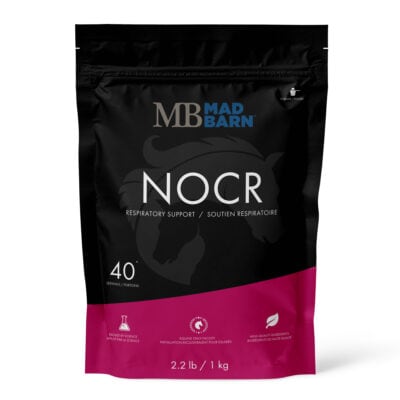
For additional respiratory support, consider Mad Barn’s NOCR. This science-based formula contains natural ingredients, including adaptogenic herbs, to help keep airways clear, support immune function, and maintain efficient oxygen exchange.
NOCR is especially beneficial for performance horses or those living in dusty or high-risk environments. It helps support healthy lung function and maintain normal respiratory defenses under stress.
If you are unsure if your horse’s diet has everything they need, schedule a free consultation with one of our qualified equine nutritionists today.
Frequently Asked Questions
Here are some frequently asked questions about respiratory issues in horses:
Horses with respiratory issues may exhibit symptoms such as coughing, nasal discharge, noisy breathing (e.g. roaring or gurgling), flared nostrils, lethargy, fever, and reduced performance. In severe cases, you may also observe labored breathing or a visible "heave line."
Respiratory conditions in horses can be caused by bacterial or viral infections, allergies, mold, dust, asthma (e.g. RAO or IAD), and physical obstructions like soft palate displacement or guttural pouch infections.
A healthy horse at rest should have a breathing rate between 8–24 breaths per minute (higher in foals) with minimal effort. There should be no nasal flaring, noise, or engagement of abdominal muscles. Abnormal signs warrant veterinary evaluation.
If your horse is struggling to breathe, seek emergency veterinary care immediately. Horses in respiratory distress may require urgent interventions such as oxygen therapy, medications, or even a tracheotomy to restore airflow.
Diagnosis of respiratory symptoms may involve physical exams, imaging (X-ray, ultrasound, CT), endoscopy, blood work, and bronchoalveolar lavage. Prompt veterinary assessment is critical, especially if the horse is in distress.
Prevention of respiratory symptoms in horses focuses on reducing dust and airborne irritants: use low-dust bedding and forage, ensure good ventilation, store hay away from stalls, and clean regularly. Routine care, vaccinations, and biosecurity also reduce risk.
Summary
Respiratory dysfunction in horses affects the upper or lower respiratory tract, causing difficulty with breathing and the removal of irritants from airways. Symptoms can result from infections, allergies, environmental triggers, or other conditions, and may lead to serious complications if left untreated.
- The respiratory system includes the upper and lower respiratory tracts, responsible for delivering oxygen to and removing carbon dioxide from the bloodstream
- Respiratory symptoms include noisy breathing such as rattling, gurgling, or whistling, along with symptoms like coughing, fever, and nasal discharge
- RAO, a chronic inflammatory condition similar to asthma in people, causes coughing, difficulty breathing, and nasal discharge, often triggered by dust or exercise
- Common respiratory conditions include airway obstructions like strangles, dorsal displacement of the soft palate, pneumonia, pleuropneumonia, and guttural pouch disease
- Treatment varies based on the severity and cause, including medications, supportive care, and sometimes procedures like thoracocentesis or tracheotomy
- Preventive measures include using low-dust bedding, offering low-dust feed, maintaining ventilation, and storing hay properly to reduce respiratory irritants
References
- Smith. K., Equine Respiratory Diseases. Purdue Extension. 2013.
- Respiratory Tract. Texas A&M Veterinary Medical Teaching Hospital.2025.
- Respiratory Diseases. Royal Veterinary College. 2025.
- Rush. B. R., Introduction to Lung and Airway Disorders of Horses. Merck Veterinary Manual. 2024.
- Lekeux. P. et al., The respiratory system: Anatomy, physiology, and adaptations to exercise and training. Veterian Key. 2016.
- Dunkel. B., Respiratory Emergencies in Adult Horses. Equine Veterinary Education. 2024.
- Rettmer. H. et al., Owner‐reported Coughing and Nasal Discharge Are Associated with Clinical Findings, Arterial Oxygen Tension, Mucus Score and Bronchoprovocation in Horses with Recurrent Airway Obstruction in a Field Setting. Equine Veterinary Journal. 2015. View Summary
- Laumen. E. et al., Relationship of Horse Owner Assessed Respiratory Signs Index to Characteristics of Recurrent Airway Obstruction in Two Warmblood Families. Equine Veterinary Journal. 2010. View Summary
- Couëtil. L. L. et al., Inflammatory Airway Disease of Horses—Revised Consensus Statement. Journal of Veterinary Internal Medicine. 2016.
- Bond. S. et al., Equine Asthma: Integrative Biologic Relevance of a Recently Proposed Nomenclature. Journal of Veterinary Internal Medicine. 2018.
- Couëtil. L. L. et al., Clinical Signs, Evaluation of Bronchoalveolar Lavage Fluid, and Assessment of Pulmonary Function in Horses with Inflammatory Respiratory Disease. American Journal of Veterinary Research. 2001. View Summary
- Xie. T. et al., A Review of Evidence That Equine Influenza Viruses Are Zoonotic. Pathogens. 2016.
- Sack. A. et al., Equine Influenza Virus—A Neglected, Reemergent Disease Threat. Emerging Infectious Diseases. 2019.
- Paillot. R. et al., Vaccination against Equine Influenza: Quid Novi?. Vaccine. 2006. View Summary
- Lascola. K. M. et al., Equine Influenza. Merck Veterinary Manual. 2024.
- Strangles: Understanding Equine Distemper and Purpura Haemorrhagica. Texas A&M University. 2012.
- Lascola. K. M. et al., Strangles in Horses. Merck Veterinary Manual. 2024.
- Lascola. K. M. et al., Equine Herpesvirus Infection. Merck Veterinary Manual. 2025.
- Lascola. K. M. et al., Guttural Pouch Disease in Horses. Merck Veterinary Manual. 2024.
- Lascola. K. M. et al., Dorsal Displacement of the Soft Palate in Horses. Merck Veterinary Manual. 2024.
- Smith. K., Dust Management in Horse Facilities. Purdue Extension. 2013.