English











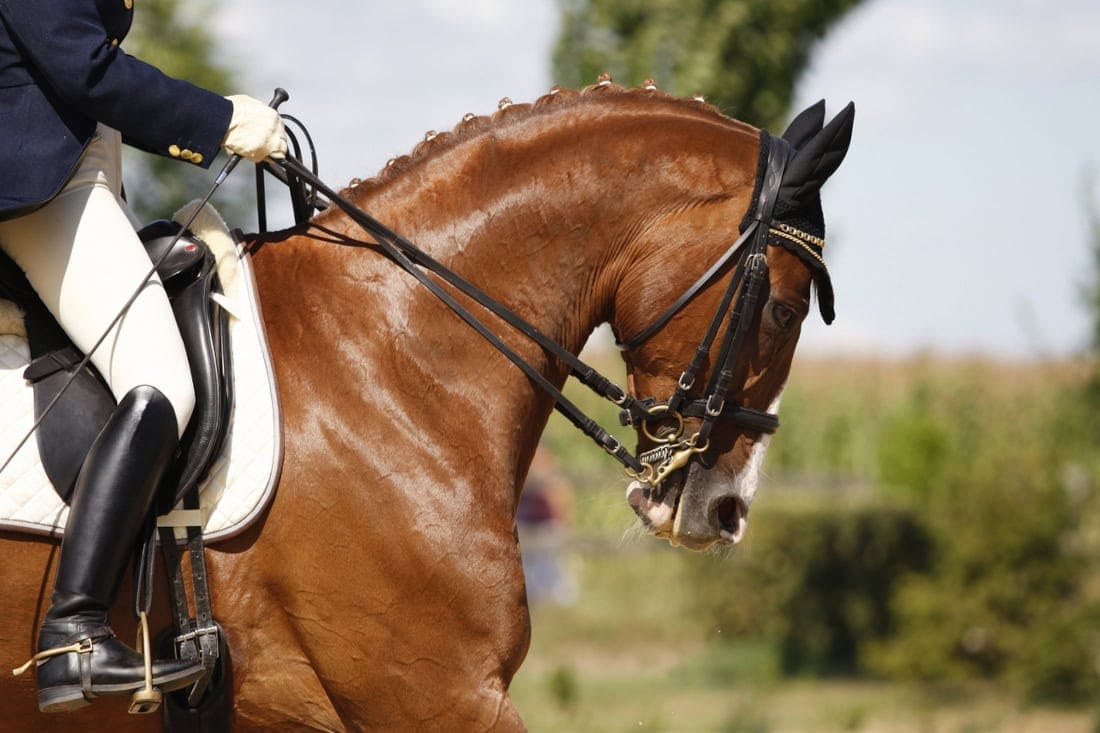
Rollkur, or hyperflexion, is a technique used in equestrian disciplines to create a compact, low, and rounded horse posture. It involves excessive flexion of the horse’s neck, where the horse’s head is drawn back towards its chest, potentially exceeding its natural range of motion. This position is typically achieved through pressure applied by the rider’s hands and legs.
Scientific evidence highlights that the positioning of a horse’s head and neck in rollkur can negatively affect both physical and mental well-being. Research has shown rollkur may lead to pain, stress, restricted airflow, and long-term health issues. [1]
Various factors influence the extent of rollkur’s impact on the individual horse, including the rider’s skill level, the horse’s age, conformation, and physical condition, as well as the amount of force and duration of application. These nuances have contributed to rollkur’s persistence despite building evidence of its negative impact on horse welfare and safety. [2][3][4]
Further, the distinction between rollkur and other neck flexion techniques, such as Low, Deep, and Round (LDR), often complicates the debate, as both involve significant neck bending but differ in the degree of force and the underlying training philosophy. [1][2][5]
What is Rollkur?
In high-level dressage, elements such as collection, suppleness, and balance are essential for achieving top scores, with judges often rewarding horses that exhibit a high degree of flexibility and an arched, rounded neck position. [6]
Rollkur, or hyperflexion, has been employed for centuries across various equestrian disciplines. Classical riding masters like François Robichon de la Guérinière and François Baucher included it in their training methods in the 1700s and 1800s, hoping to help improve suppleness and responsiveness. However, older texts do not endorse deliberately positioning the horse’s head in a hyperflexed position. [1]
In recent decades, cervical flexion (i.e. flexing the neck muscles and subsequent pressure they place on the spinal bones of the neck), has become widespread in many equestrian disciplines, even at the grassroots level. [7] Horses are often trained on a range of cervical flexion postures ranging from slightly behind the vertical to extreme flexion where the horse’s chin may touch its chest.
Horses ridden with their heads behind the vertical are often awarded higher scores by judges for ‘rideability,’ suggesting that in modern dressage, riders may be incentivized to use hyperflexion to meet competition expectations. [8][9]
To enforce cervical flexion, various pieces of equipment have been developed over time. These include lever bits with port mouthpieces, curb chains, combination bits, training reins, and pulley systems such as side reins, draw reins, chambon, de Gogue, and the Pessoa lunging system. [4][7][10]
Proponents of rollkur argue that when applied correctly by skilled riders, rollkur can enhance flexibility, improve range of motion, and strengthen the ventral muscles responsible for posture and balance. They contend that, under proper application, rollkur does not harm horses and may even contribute to competitive success. [11]
Despite these claims, rollkur has raised significant concerns regarding its impact on equine welfare.
Understanding Head-Neck-Positions (HNPs) in Horses
Horses have long, flexible necks that are integral to their natural behaviors, such as exploring their surroundings, social interactions, and grazing. The neck also plays a crucial role in locomotion, helping the horse maintain balance and coordination during movement.
In equestrian sport, Head-Neck Positions (HNPs) refer to the alignment of the horse’s head and neck in relation to “the vertical,” which is defined by the position of the atlanto-occipital joint (poll) and the cervical vertebrae. These positions significantly influence the horse’s balance, movement, and overall welfare. [3][9][12][13]
“On the Bit” & Head-Neck Alignment
The “vertical” is an imaginary line passing through the atlanto-occipital joint (poll) that serves as a reference for proper head and neck alignment. Proper alignment of the horse’s head and neck in relation to this vertical—either on or slightly in front of it—supports natural posture, balanced movement, and effective use of the back and hindquarters, minimizing strain or discomfort. [5][7]

The term “on the bit” refers to a horse that responds correctly to rein pressure, accepting contact with the bit in a relaxed and responsive manner. It is not about forcing the head into a specific position, but fostering a harmonious connection between horse and rider.
When “on the bit,” the horse’s head is slightly in front of the vertical, with an arched neck and balanced body, allowing energy to flow smoothly from the hindquarters through the back to the front legs. [10]
A vertical nose does not necessarily mean the horse is “on the bit,” especially if held by the rider’s hands. A horse who is truly “on the bit” shifts its nose back, arches its neck, and brings its hocks underneath, all with minimal rein pressure, naturally adjusting to the rider’s weight.
Negative reinforcement — specifically the release of pressure — is essential to maintaining an appropriate head and neck position without continuous or excessive rein tension. This encourages the horse to adopt the desired posture, with the pressure gradually released once the position is held. [7]
This method helps the horse learn to hold the position voluntarily, avoiding discomfort and minimizing high rein tension, which maintains the horse’s welfare and promotes a more natural posture.
Key Head-Neck Positions
The International Society for Equitation Science (ISES) describes four primary HNPs in horses that reflect the alignment of the horse’s head and neck in relation to the vertical line drawn through the poll: [1][7][9][12]
- Behind the Vertical: The horse’s head is positioned behind the vertical line, with the nose pulled back toward the chest. This position is often the result of excessive flexion at the poll.
- On the Vertical: The horse’s head is aligned directly in line with the vertical line passing through the poll, with the nose positioned directly beneath it. This is considered a balanced position.
- In Front of the Vertical: The horse’s head is positioned slightly ahead of the vertical line, with the nose extending beyond the poll. This position is often seen during relaxed or less intense activities.
- Inverted: The horse’s head is raised and positioned above the vertical line, with the neck becoming hollow and the nose protruding forward and upwards.
Proper alignment with the vertical ensures fluid, efficient movement by channeling energy from the hindquarters through the back to the front. Misalignment, such as being “behind the vertical” or “inverted,” disrupts natural biomechanics, leading to tension, restricted movement, and compromised balance.
What's your top priority with your horse's health?

Enter your email to receive your store credit
Rollkur & Horse Biomechanics
Rollkur involves excessive flexion at the atlanto-occipital joint, forcing the horse’s cervical vertebrae beyond their natural range. This excessive flexion causes the horse’s head to pull downward and behind the vertical, disrupting movement and leading to a hollowed back, restricted shoulders, and shorter strides, rather than true engagement of the body.
True engagement involves a raised chest, lifted withers, and a flexed back that allows kinetic energy to flow smoothly. The pelvis is tucked under, enabling the hind legs to step deeply beneath the body, engaging the core and hindquarters for balanced, fluid movement. [14]
Rollkur vs. Low, Deep and Round (LDR)
Over time, hyperflexion has been described by various terms (e.g., overbending, rollkur, extreme flexion, riding deep), often with subtle differences, leading to confusion. [1][2][7]
According to the FEI, both Rollkur and Low, Deep, and Round (LDR) involve neck flexion, but they differ in their approach and potential impact on welfare. Rollkur forces the neck behind the vertical using aggressive rein pressure, which can cause stress and discomfort for the horse.
In contrast, LDR encourages a lowered, rounded neck position through gentle, cooperative methods that align more closely with the horse’s natural movement. While rollkur is widely criticized for its potential harm, LDR is considered acceptable by the FEI when performed without force.
Distinguishing between the two can be difficult, as both involve extreme neck flexion and can appear similar, with the horse’s neck rounded and lowered. The key distinction lies in the intensity of the flexion and the methods used to achieve it.
Welfare Concerns
Rollkur has been the subject of extensive debate regarding its impact on horse welfare. While proponents claim it can enhance performance and flexibility, growing evidence indicates that it poses serious risks. The key welfare concerns associated with this practice include:
- Vision impairment
- Airway obstruction
- Structural and musculoskeletal changes
- Stress
Vision Impairment
Rollkur forces the horse’s head into an unnatural position, pulling it downward and behind the vertical, which restricts its forward vision. In a natural head position, the horse has a wide field of view, essential for navigating its environment and detecting potential hazards. [10][11]
By limiting the horse’s ability to see ahead, rollkur can cause disorientation and anxiety, increasing the risk of accidents, especially in high-stress situations, such as competitions. [7][15]
Airway Obstruction
One of the primary consequences of hyperflexion in the neck is compression of the horse’s airway. When the neck is excessively bent, it disrupts the natural alignment of the trachea (windpipe), narrowing the air passage. This mechanical compression increases airway resistance, making it more difficult for the horse to breathe freely. [1][10][16]
The narrowed airway demands more effort for respiration, leading to inefficient oxygen intake during both rest and exercise. As a result, the horse may experience fatigue more quickly and suffer from reduced performance, as it struggles to supply adequate oxygen to the muscles, particularly during physical exertion. Airway obstruction also presents a stressful and uncomfortable state for the horse.
Structural & Musculoskeletal Changes
Hyperflexion of the neck in horses can cause significant structural changes, including alterations in neck length and the angles between the cervical and thoracic vertebrae. This forced posture may enlarge the intervertebral foramina, potentially compressing nerves and resulting in nerve dysfunction. [7]
Prolonged neck flexion also places excessive stress on the nuchal ligament and other elastic structures that support the neck. The increased tension can lead to injuries at the ligament attachment sites, which are often observed in horses trained in hyperflexed positions. [9][14]
These structural and musculoskeletal changes can result in chronic pain, discomfort, and reduced mobility. Over time, they can severely impact the horse’s performance, well-being, and long-term welfare.
Stress
Rollkur may cause confusion and stress in horses by disrupting their natural learning process. The forced neck position hinders the horse’s ability to understand and respond to cues, leading to frustration and anxiety. [10] Compounded by physical discomfort, this may create resistance to training, impair performance, and result in behavioral issues. [14][1]
Additionally, factors such as individual conformation, the duration of the posture, the horse’s familiarity with the position, and the training method used to achieve it, further influence the stress associated with rollkur. [7]
Training Effects of Rollkur
Learning theory describes the process by which organisms, including horses, acquire, retain, and apply knowledge or behaviors. Based on this theory, horses learn most effectively when given a single, clear, and consistent signal. [10][17][18]
In hyperflexion, bit pressure combines two separate signals: one to slow down (via the reins) and one to flex the neck. Both responses are triggered by a single cue, creating confusion for the horse. With a single, contradictory cue, the horse cannot distinguish whether it should slow down or flex, leading to unclear or inconsistent responses.
This conflicts with core principles of learning theory, which emphasize the importance of a clear and predictable cause-and-effect relationship between a signal and the resulting behavior.
When a single cue elicits multiple responses, the horse cannot discern what is being asked, leading to confusion, frustration, and stress. As a result, hyperflexion interferes with the learning process and may have harmful effects on both the horse’s physical and mental health.
Hyperflexion also requires continuous strong rein pressure to maintain the position. When the horse cannot escape the pressure from the bit and receives no “release” after responding to the cue, learning is negatively impacted.
Horses under these conditions may become habituated to bit pressure (“hard mouthed“) and begin to ignore rein cues, requiring even more pressure to achieve the position on subsequent attempts. High levels of rein pressure can cause mouth corner lesions, tongue damage, stress, fear and pain. [19]

Rollkur & Sport Regulation
There is growing concern in the equestrian community about the impact of rollkur on horse welfare. This has led to revised positioning and regulation in some aspects of equestrian sport.
Fédération Équestre Internationale
The Fédération Équestre Internationale (FEI) is the governing body for international equestrian sports, overseeing disciplines such as dressage, show jumping, eventing, and driving.
The FEI has publicly taken a stance against rollkur in dressage, stipulating that the horse’s head must remain at or slightly in front of the vertical at all times. [8][9]
In 2010, the FEI redefined rollkur or hyperflexion as excessive neck bending achieved through aggressive force. This decision was prompted by ongoing debate and confusion over what constitutes acceptable neck positioning in horses. [2][14][16]
Techniques like Long, Deep and Round (LDR) and Long and Low (LL), which achieve neck flexion and stretching without excessive force, are considered acceptable by the FEI. Extreme neck flexion is also permitted for short periods (under 10 minutes), provided it is performed without aggressive force. [4][10] However, “aggressive force” is a vague term that is difficult to enforce.
Stewards, who enforce rules in competitions, are instructed to intervene if a horse shows signs of stress or fatigue, particularly when extreme neck flexion is used. Their main responsibility is to safeguard the horse’s well-being throughout the event. [14]
International Society for Equitation Science
The International Society for Equitation Science (ISES) takes a clear position on rollkur. The ISES Position Statement on Head and Neck Position advises against the use of extreme or hyperflexed head and neck postures (HNPs) in equine training due to significant welfare concerns. [7]
While such postures may offer gymnastic benefits, ISES states that the physiological and mental costs on the horse outweigh any advantages. [7]
ISES’s position is that extreme or hyperflexed HNPs are not acceptable in equine training, as they impair airflow and cause mental distress. Riders, trainers, and sports officials must ensure that HNPs do not compromise the horse’s health and function.
ISES also supports FEI dressage rules that require the cranio-facial profile, which refers to the side view of the head and face, to be at or in front of the vertical at all times in both FEI-regulated and non-FEI-regulated disciplines. While ISES does not see the need for further research on hyperflexion, as its negative effects are well-defined in the literature, additional studies on the effects of lesser flexion and extension are encouraged. [7]
Challenges in Enforcing Guidelines for Neck Flexion
Enforcing guidelines for techniques like rollkur presents significant challenges, primarily due to the subjective nature of monitoring a horse’s well-being during competitions.
Stewards are officials appointed by governing bodies to oversee and ensure the proper conduct of equestrian events. They evaluate factors like rein tension and signs of stress through visual observations. However, these assessments can vary significantly depending on each steward’s interpretation, experience, and expertise. [20]
Stress in horses may show up subtly, through changes in breathing patterns, muscle tension, or minor behavioral shifts like head shaking or tail swishing. Even seasoned judges may struggle to consistently identify such subtle cues, making it difficult to accurately assess a horse’s condition. [1][9][13][14]
Additionally, the emotionally charged atmosphere of competitions may cause stewards to hesitate in intervening when harm isn’t immediately clear. This reluctance can lead to inconsistent rule enforcement, potentially affecting horse welfare and the integrity of the competition.
Frequently Asked Questions
Here are some frequently asked questions about rollkur in horse training:
Rollkur, also known as hyperflexion, is a riding technique in which a horse's neck is deliberately flexed to a very high degree, with the head pulled well behind the vertical position. The horse's chin may almost touch its chest, creating a deep curvature in the neck.
The key difference between rollkur and "behind the vertical" is the extent of neck flexion. "Behind the vertical" refers to a slight position where the horse's head is just behind the vertical line, often used in dressage for collection. Rollkur, however, involves excessive neck flexion where the horse’s head is pulled far behind the vertical, sometimes almost touching the chest, often using forceful methods and equipment.
The term "rollkur" was coined by Professor Heinz Meyer in 1992. It is derived from the German words "roll" (meaning "to roll") and "kur" (meaning "cure" or "treatment"). The term is not related to anatomy or equine-specific terminology, but it has become widely associated with hyperflexion in the equine industry. [1]
Extreme neck flexion can cause physical harm, including damage to the cervical spine, muscle strain, impaired movement, and issues with vision and breathing, as well as increased stress. Despite these scientific findings, proponents contend that when practiced properly, rollkur can enhance flexibility without harm. The debate remains especially contentious in competitive dressage.
Summary
Rollkur is a technique that forces excessive neck flexion in horses, causing harm to their physical and mental health.
- The practice has historical roots in classical dressage but has become controversial due to its negative impacts on equine welfare.
- Rollkur disrupts the horse’s natural biomechanics, leading to a hollowed back, restricted movement, and less effective use of the hindquarters. It can also cause long-term musculoskeletal issues and reduced performance.
- Rollkur can result in vision impairment, airway obstruction, and stress, all of which compromise the horse's well-being. These effects can lead to anxiety, frustration, and even physical injuries over time.
- The FEI enforces rules against the use of extreme neck flexion in competitions, and the International Society for Equitation Science (ISES) opposes hyperflexion due to its negative effects on horse welfare, recommending less extreme head-neck positions for healthy, humane training.
References
- van Weeren P.R., About Rollkur, or Low, Deep and Round: Why Winston Churchill and Albert Einstein Were Right. The Veterinary Journal. 2013.
- FEI Round-Table Conference Resolves Rollkur Controversy. 2010.
- Borstel U. et al., Hyperflexing the Horse’s Neck: A Systematic Review and Meta-Analysis. Scientific Reports. 2024.
- van Oldruitenborgh-Oosterbaan M. m. S. et al., (PDF) Workload and Stress in Horses: Comparison in Horses Ridden Deep and Round ('rollkur’) with a Draw Rein and Horses Ridden in a Natural Frame with Only Light Rein Contact. ResearchGate. 2024. View Summary
- Meyer H., “Rollkur”, “Hyperflexion” and “LDR” - The Natural Position of the Head and Neck of the Horse and the Modification by the Rider. ResearchGate. 2024.
- Hobbs S.J. et al., A Scoping Review of Determinants of Performance in Dressage. PeerJ. 2020. View Summary
- ISES_PS_on_alterations_of_the_cervical_vertebrae_in_equitation.pdf. ISES_PS_on_alterations_of_the_cervical_vertebrae_in_equitation.pdf.
- Lashley M.J.J.O. et al., Comparison of the Head and Neck Position of Elite Dressage Horses during Top-Level Competitions in 1992 versus 2008. The Veterinary Journal. 2014.
- Kienapfel K. et al., Comparison of Head–Neck Positions and Conflict Behaviour in Ridden Elite Dressage Horses between Warm-up and Competition. Applied Animal Behaviour Science. 2024.
- McGreevy P.D. et al., Over-Flexing the Horse’s Neck: A Modern Equestrian Obsession?. Journal of Veterinary Behavior. 2010.
- Christensen J.W. et al., Effects of Hyperflexion on Acute Stress Responses in Ridden Dressage Horses. Physiology & Behavior. 2014. View Summary
- Kienapfel K. et al., Prevalence of Different Head-Neck Positions in Horses Shown at Dressage Competitions and Their Relation to Conflict Behaviour and Performance Marks. PLoS One. 2014. View Summary
- Smiet E. et al., Effect of Different Head and Neck Positions on Behaviour, Heart Rate Variability and Cortisol Levels in Lunged Royal Dutch Sport Horses. The Veterinary Journal. 2014.
- Von Borstel U.U. et al., Impact of Riding in a Coercively Obtained Rollkur Posture on Welfare and Fear of Performance Horses. Applied Animal Behaviour Science. 2009.
- Tilley P. et al., Effects of a 15° Variation in Poll Flexion during Riding on the Respiratory Systems and Behaviour of High-Level Dressage and Show-Jumping Horses. Animals (Basel). 2023. View Summary
- Zebisch A. et al., Effects of Different Head–Neck Positions on the Larynges of Ridden Horses. Animal Physiology Nutrition. 2014.
- McLean A.N. and Christensen J.W., The Application of Learning Theory in Horse Training. Applied Animal Behaviour Science. 2017.
- McGreevy P.D. and McLean A.N., Roles of Learning Theory and Ethology in Equitation. Journal of Veterinary Behavior. 2007.
- Tuomola. K. et al., Is Rein Tension Associated with Horse Behaviour and Mouth Injuries in Harness Racing Trotters? – Pilot Study. Applied Animal Behaviour Science. 2024.
- Hall C. et al., Assessment of Ridden Horse Behavior. Journal of Veterinary Behavior. 2013.