English


Sepsis-associated laminitis, also known as septic laminitis, is a serious and potentially life-threatening condition in horses. Like other forms of laminitis, this condition is characterized by inflammation, pain, and — in some cases — separation of the laminae that connect the hoof capsule to its underlying structures.
This condition results from systemic inflammation due to an infection, commonly associated with systemic inflammatory response syndrome (SIRS) caused by pneumonia, colitis, or trauma.
Prompt recognition and intervention are critical. Effective management includes supportive care, such as pain control, anti-inflammatory therapy, and measures to maintain hoof stability, all of which help prevent further damage and improve the horse’s chances of recovery.
Understanding the causes, symptoms, and treatment options is important for managing septic laminitis. Read on to learn everything you need to know about this serious condition so you are prepared if one of your horses is at risk.
Sepsis-Associated Laminitis in Horses
Laminitis is a debilitating condition in which the interlocking laminae within the hoof capsule become inflamed, and in severe cases, separate. The laminae, also known as lamellae, connect the inside of the horse’s hoof wall to the bone at the bottom of the hoof (the distal phalanx).
The inflammation of these structures causes intense pain and may lead to life-limiting lameness. [1][2][3]
Laminitis is classified into three broad categories, each with its own causes, risk factors, and underlying mechanisms. The three types are: [3][4][5]
- Sepsis-associated laminitis: Also known as septic laminitis, sepsis-related laminitis, and systemic inflammatory response-associated laminitis (SRL). This form is associated with widespread inflammation throughout the body, usually related to an infection or other trigger.
- Endocrinopathic laminitis: This form of laminitis is associated with metabolic diseases, such as pituitary pars intermedia dysfunction (PPID) or equine metabolic syndrome (EMS).
- Supporting limb laminitis: Occurs due to compensation after the horse favors one limb for an extended period. Uneven load bearing between the limbs results in excessive pressure on one or more compensatory hooves.
Sepsis is a systemic inflammatory response triggered by an infection and is a form of systemic inflammatory response syndrome (SIRS).
SIRS represents a whole-body reaction that can be induced by infectious agents — such as bacteria, viruses, or fungi — or by non-infectious factors including burns, trauma, toxins, or acidosis. In horses, SIRS-associated laminitis may result from either type of trigger, leading to a widespread inflammatory response. However, it typically results from an infectious agent. [1][6]
Hoof Anatomy
The interior hoof capsule contains tiny, finger-like structures called lamellae (laminae), which interlock tightly to hold the hoof securely to the distal phalanx bone. [3]
These structures are collectively referred to as digital lamellae or laminae. [4] Together, they are responsible for keeping the hoof connected to the underlying tissues and resisting the forces placed on the hoof by the horse’s body weight and momentum. [3]
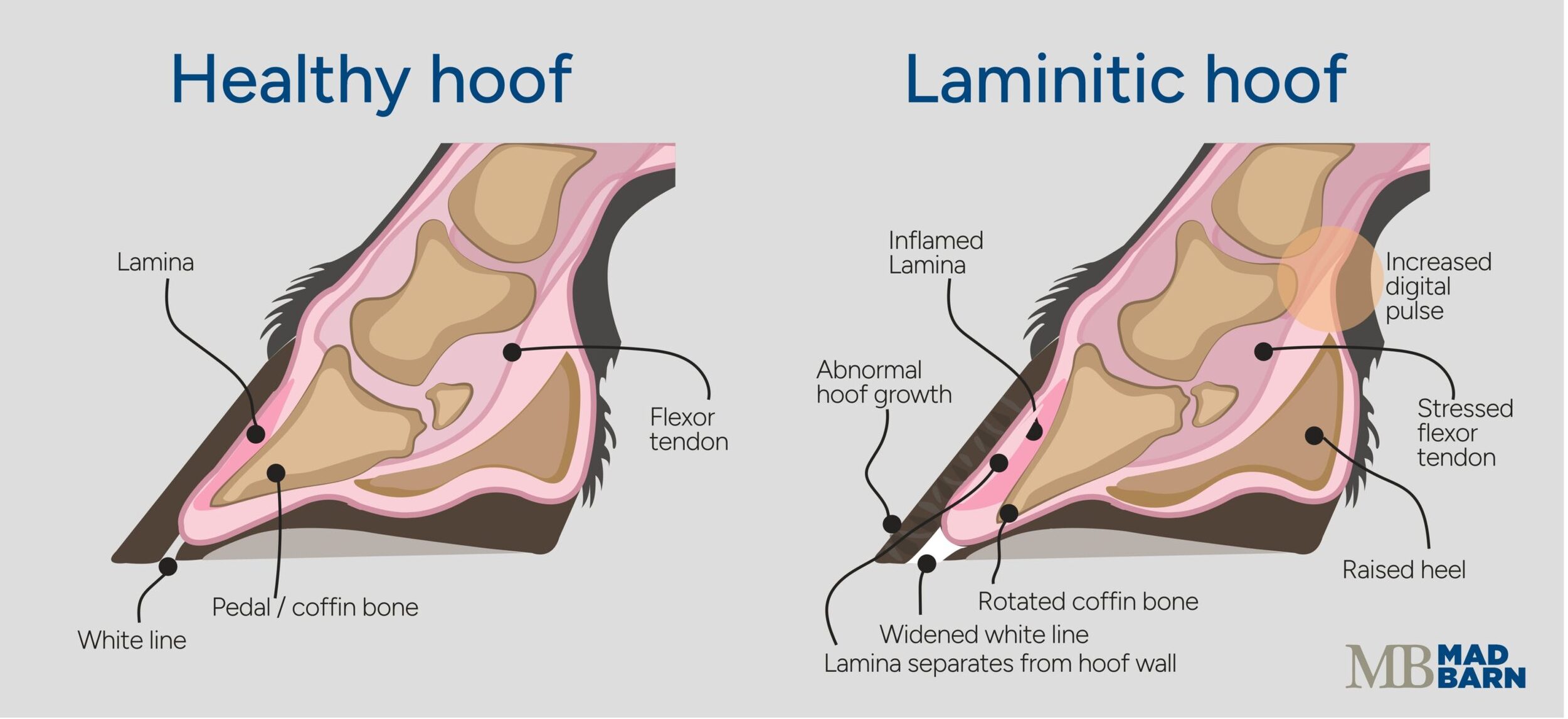 Illustration: Dr. Ana Mesa, PhD
 Laminitis occurs when this connection is disrupted due to inflammation of the digital lamellae, which compromises the hoof’s ability to resist the forces placed on it. This leads to severe pain and it eventually becomes difficult for the horse to continue bearing weight on the affected limb(s). [3][4]
Horses with septic laminitis experience widespread inflammation throughout the body, which results in inflammation in the laminae. In severe cases, this inflammatory cascade can lead to the separation of the hoof from its underlying tissues. [1]
Causes
When a horse experiences systemic inflammation, the laminae are often affected. In the past, researchers attributed laminitis primarily to poor blood flow (ischemia), which was thought to cause tissue damage. However, current findings indicate that although changes in blood flow may contribute, the primary cause is the body’s excessive inflammatory response, which disrupts normal cellular function in the hoof. [3]
Sepsis-associated laminitis leads to excessive accumulation of inflammatory cells and signaling molecules in the lamellar tissues. This inflammation causes damage at the cellular level, leading to structural breakdown within the hoof. Cells in the hoof lamellae exhibit mitochondrial dysfunction, preventing them from producing enough energy to maintain cellular structure and function. [3]
Additionally, the connections that hold the hoof together become disorganized, leading to a loss of stability in the hoof. This disruption results in stretching and weakening of the lamellae, making it harder for the hoof wall and coffin bone to remain properly attached. [3]
Abnormal growth factor signaling also plays a role in this process by disrupting cell behavior in the laminae. This dysregulation alters cell shape and function, causing the lamellae to weaken and stretch rather than remain tightly connected. [3]
What's your top priority with your horse's health?

Enter your email to receive your store credit
Symptoms
Laminitis varies by type and stage, but its primary symptoms stem from inflammation in the hoof. Common signs of laminitis in horses include: [3][7]
- Lameness, especially during tight turns
- Shifting weight from foot to foot
- Stiff limbs
- Increased digital pulses
- Increased hoof temperature
- Increased hoof sensitivity
Sepsis-associated laminitis is also marked by systemic inflammation. This widespread inflammation can result from endotoxemia caused by infectious agents, such as bacteria or viruses, or from non-infectious triggers like burns or trauma. [6] In cases where infection is involved, symptoms usually develop 24 to 72 hours after the onset of the septic process. [3]
Alongside the general symptoms of laminitis listed above, other signs of sepsis-associated laminitis include: [3]
- Fever
- Increased heart rate
- Redder than normal mucous membranes
Unlike other forms of laminitis, sepsis-associated laminitis often affects all four limbs. This can lead to the horse adopting a “camped out” position where the front legs are positioned further forward and the back legs are further back than the normal posture. [3]
Severity
The severity of laminitis depends on both the extent of the systemic inflammation and the severity of the horse’s symptoms. As the disease worsens, the level of lameness increases, and a more severe lameness is associated with a poorer prognosis.
When lameness reaches a severe stage (grade 3–4), it often indicates that the lamellae have suffered irreversible damage, leading to displacement (rotation or sinking) of the coffin bone—a condition known as founder. Founder can render the horse unable to stand and is potentially life-limiting. [3]

“Septic laminitis is a life-threatening complication that can occur secondary to systemic infection or severe illness. Early recognition and aggressive treatment of the underlying cause are critical to improving outcomes.”
— Dr. Jennifer Skaggs, DVMEquine Veterinarian
Since laminitis affects the feet, its severity is also influenced by individual factors, including: [4]
- Body weight
- Foot morphology and mechanics
- Discipline or use of the horse
Additionally, because horses with sepsis-associated laminitis are experiencing systemic inflammation from another source, symptoms related to that underlying cause can further increase the overall severity of the condition. [4]
Risk Factors
Septic laminitis is a serious complication in horses, and sepsis remains a major cause of illness and death in equines. The risk factors for sepsis-associated laminitis stem from the widespread inflammatory response that occurs when a horse’s body overreacts to pathogens or other triggers. [6][3]
Common infections that can cause sepsis in horses include: [1][4][6]
- Pneumonia
- Metritis
- Infectious colitis
- Bacteremia
- Infectious enteritis
- Omphalophlebitis
- Meningoencephalitis
- Septic arthritis
Additionally, horses with a volvulus of the large colon are at risk of developing sepsis-associated laminitis. [3]
Non-infectious factors that can trigger SIRS and contribute to SIRS-associated laminitis include: [6]
- Burns
- Trauma
- Toxins
- Acidosis

Diagnosis
Horses with sepsis-associated laminitis typically show early warning signs of the condition. Since it occurs as a result of systemic inflammation, horses with an active infection or exposure to non-infectious triggers should be closely monitored.
Laminitis can often be diagnosed through a physical examination and observation of pain in the feet. [3][7] To confirm the diagnosis, veterinarians may also use: [3]
- Nerve block
- X-rays
- Venography
Treatment & Prognosis
Treatment for laminitis aims to stabilize the hoof through therapeutic shoeing or, where necessary, surgery. [3][7] Horses that can be stabilized for 3 weeks have a good chance of recovery. [3]
Additionally, treatment might include: [1][3][4][7]
- Cryotherapy (ice boots)
- Anti-inflammatory drugs
- Anti-coagulant therapy
- Matrix metalloprotease inhibiting drugs
- Blood-flow targeting therapies
- Pain relief
- Resection of the hoof wall
- Stall rest
Horses that are experiencing sepsis-associated laminitis also need aggressive treatment of any underlying infection and systemic inflammatory response syndrome. This may include: [1][2][6]
- Antibiotics
- Fluid therapy
- Blood pressure medication
- Non-steroidal anti-inflammatory drugs
- Analgesics
The prognosis for general laminitis in horses is variable. For horses with sepsis-associated laminitis, the outlook is generally guarded to poor, depending on the severity of the systemic inflammation and lameness. [3][6]
Prevention
Prevention of sepsis-associated laminitis relies on minimizing the risk of infection and controlling inflammation once early signs develop. This is particularly important for horses recovering from an existing infection or injury. [4]
Strategies to reduce the risk of infection include:
- Staying up-to-date with routine vaccinations
- Adhering to rigorous biosecurity and quarantine protocols on the farm and when travelling
- Completing annual veterinary check-ups, including dental floatation
- Keeping the horse’s living environment clean and hygienic
- Implementing appropriate wound care after injuries
In addition, a balanced, forage-based diet is essential for supporting your horse’s hoof health and immune function. If you’re unsure your horse is meeting their nutrient requirements, consult a qualified equine nutritionist to assess their diet and identify any gaps.
Frequently Asked Questions
Here are some frequently asked questions about Septic Laminitis in Horses:
Sepsis-associated laminitis (a.k.a. septic laminitis) is a severe form of equine laminitis that occurs due to widespread systemic inflammation related to an infection or other triggers. This inflammation disrupts the connection between the hoof wall and the bone inside the hoof, causing pain and difficulty standing or walking. [3]
Sepsis-associated laminitis in horses is caused by a severe systemic inflammatory response to infections like pneumonia, colitis, or bacteremia, or by non-infectious agents like burns or trauma. The excessive inflammation disrupts the normal functioning of the hoof, causing structural breakdown in the lamellae and leading to pain and possible hoof displacement. [3]
Symptoms of septic laminitis in horses include lameness, shifting weight, increased hoof warmth, sensitivity, and fever. Horses may adopt a "camped out" posture where the front legs are extended forward, and the back legs are positioned further back. Sepsis-related symptoms, such as an increased heart rate and redder-than-normal mucous membranes, may also be present. [3]
The prognosis for SRL varies and is generally guarded to poor. The severity of the systemic inflammation and the extent of hoof displacement are key factors. Horses with severe systemic inflammation or significant hoof displacement may face a poorer outcome, while those with milder symptoms may have a better chance for recovery with appropriate treatment. [3]
Summary
Sepsis-associated laminitis is a serious condition that occurs when systemic inflammation leads to disruption of the lamellae (laminae), the structures that connect the hoof wall to the bone. This results in pain, instability, and lameness in affected horses.
- Sepsis-associated laminitis is caused by systemic inflammatory response syndrome (SIRS), which can be triggered by infections, trauma, or toxins
- The characteristic symptom of laminitis is hoof pain, signaled by lameness and the horse shifting its weight on its feet
- Unlike other forms of laminitis, sepsis-associated laminitis can affect all four limbs leading to a "camped out" posture in affected horses
- Other symptoms include fever, increased heart rate, lameness, and increased hoof sensitivity
- Laminitis requires stabilization of the hoof through therapeutic shoeing. Additional treatments for laminitis include cryotherapy, anti-inflammatories, pain relief, and stall rest
- Treatment for sepsis-associated laminitis also involves managing the inflammation with therapies like antibiotics, fluid therapy, and anti-inflammatory drugs
References
- Leise. B. S. and Fugler. L. A. Laminitis Updates. Veterinary Clinics of North America: Equine Practice. 2021.
- Hopster. K. and Driessen. B. Pharmacology of the Equine Foot. Veterinary Clinics of North America: Equine Practice. 2021. View Summary
- Stashak. T. S. and Baxter. G. M. Adams and Stashak’s Lameness in Horses. 7th edition. wiley Blackwell, Hoboken. 2020.
- Van Eps. A. W. and Burns. T. A. Are There Shared Mechanisms in the Pathophysiology of Different Clinical Forms of Laminitis and What Are the Implications for Prevention and Treatment?. Veterinary Clinics of North America: Equine Practice. 2019. View Summary
- Elliott. J. and Bailey. S. R. A Review of Cellular and Molecular Mechanisms in Endocrinopathic, Sepsis-related and Supporting Limb Equine Laminitis. Equine Veterinary Journal. 2023. View Summary
- Taylor. S. A Review of Equine Sepsis. Equine Veterinary Education. 2015. View Summary
- Ross. M. W. and Dyson. S. J., Eds., Diagnosis and Management of Lameness in the Horse. 2nd ed. Elsevier/Saunders, St. Louis, Mo. 2011.