English





The Suffolk Punch is the oldest English breed of draft horse. Also known as Suffolk horses, these gentle giants are regarded for their bright chestnut colouring and impressive strength.
Modern Suffolk horses closely resemble the working drafts employed in agriculture over three hundred years ago in their native counties of Suffolk and Norfolk. Unfortunately, the breed is considered more endangered than the giant panda and is at risk of disappearing forever.
Reproductive challenges have hindered conservation efforts since breeders first saved the Suffolk Punch from extinction in the mid-20th century. The future preservation of the breed hinges on new reproductive technology.
This breed profile will review the history, characteristics, health problems, and nutritional needs of the Suffolk Punch horse. Keep reading to learn more about feeding and caring for Suffolk horses.
Suffolk Punch History
The Suffolk Punch is the only draft breed in history developed exclusively for farm work. However, following a period of popularity that saw the breed spread throughout the world from its English homeland, only a handful of Suffolk Horses remain today.
Origin
Suffolk horses get their name from Suffolk County in Eastern England. Draft horses established themselves in this region in the 1500s, with the first mention of a Suffolk Punch appearing in a 1586 copy of William Camden’s Britannia. [1]
The old English word “punch” described a short person with a stout build. Camden referred to the working horses of the eastern counties as “Suffolk Punches,” pointing to their compact and heavy conformation.
Suffolk farmers rarely sold horses, so bloodlines remained pure for centuries. Breeding populations stayed isolated in their homelands between the North Sea and the marshlands of the Fens.
In the 1760s, the breed experienced a genetic bottleneck, meaning there was a sharp decline in the population size and genetic diversity. Today, the sole surviving male lineage can be traced back to Crisp’s Horse of Ufford, the foundation sire of the modern Suffolk Punch breed who was born in 1768. At the time, locals referred to the breed as the Suffolk Sorrel. [2]
The breed’s initial development was influenced by the region’s historic Norfolk Trotters and Cob horses. Outside influences also resulted in the average size of the breed increasing over time.
DNA studies also reveal genetic links between these horses and Fell Ponies, Dales Ponies, and Haflingers. [3] These influences had minimal impact on the breed’s overall type, which remained consistent from the first records of Suffolk horses in the 16th century to the first studbook in the late 19th century. [1]

Historic Use
Suffolk farmers used draft horses for heavy agricultural work. Plowing the region’s clay soil required a lot of horsepower, motivating the development of a local breed with unrivalled strength and stamina.
During the Middle Ages, the breeding of draft horses was significantly influenced by the demand for Great Horses to carry armoured knights into battle. However, Suffolk breeding programs instead focused on producing sturdy horses to work the quiet, isolated farmland. [1]
In the 1800s, demand for these specialized working horses of Suffolk grew throughout England. The first official export of Suffolks to North America occurred in 1865, and by 1908 Suffolks could be found worldwide. [4]
Tragically, the population collapsed when World War II caused many draft horses to be sent to slaughterhouses or used to pull machinery on the battlefield. The breed reached a low point in 1966 when only nine registered Suffolk foals were born in the UK.
North American breed registries and Belgian outcrosses helped to recover population numbers by the early 1980s. While North America boasts the largest population of Suffolks today, the British breed association bans the registration of horses with American bloodlines.
Breed Registry
Formed in 1877, the Suffolk Horse Society (SHS) is the official breed association for the Suffolk Punch in Britain.
The SHS only registers purebred Suffolk Punch horses with no history of outcrosses. According to the registry, there are fewer than 500 purebred Suffolk horses in the UK.
The North American Suffolk Horse Association is the official breed registry for Suffolk Punches in Canada and the United States.
| Breed Summary | |
|---|---|
| Breed Name | Suffolk Punch |
| Also Known As | Suffolk Horse; Suffolk Sorrel |
| Breed Type | Draft |
| Origin | Suffolk and Norfolk, England |
| Breed Registry | Suffolk Horse Society (SHS); North American Suffolk Horse Association |
| Population Status | Endangered; fewer than 500 purebred horses in the UK |
| Average Height | 16.1 hh |
| Common Coat Colors | Chestnut; liver to bright red |
| Conformation | Compact, massive build, dense bone, short legs, hard hooves, intelligent head, arched neck, upright shoulders, short back, long quarters, high tail, deep body |
| Common Uses | Farm work, driving, carriage work, sleighs, pleasure riding |
| Temperament | Gentle, willing, even-tempered, kind, hardworking |
| Best For | Experienced handlers seeking a strong driving or pleasure draft horse |
| Common Health Concerns | Reproductive disorders, infertility, PSSM, laminitis, hoof problems |
What's your top priority with your horse's health?

Enter your email to receive your store credit
Breed Characteristics
Breed organizations promote the Suffolk Punch as a horse with a temperament and conformation suited for all forms of work. The characteristics developed by Suffolk farmers now comprise a breed standard that distinguishes these massive horses from other draft breeds.
Conformation
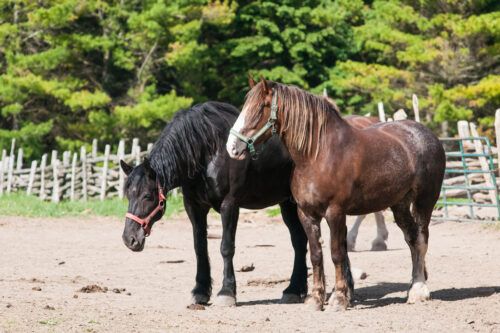
The Suffolk Punch’s conformation lives up to its name. These horses are shorter than other draft breeds but have more massive builds. An average Suffolk horse is 16.1 hands tall, although stallions often exceed 17 hands in height.
Their large frames are symmetrical and uniform, with dense bones. Legs appear short due to the breed’s draftiness. Unlike some drafts, Suffolk horses don’t have long feathering on their feet. The hooves are hard and well-sized to support their body weight.
Heads should appear intelligent with active ears and bright eyes. Their necks are powerful and arched with a clean throat latch. Suffolks have more upright shoulders compared to other breeds to support power over action. Backs are short and robust, with long quarters and high tails.
The ideal Suffolk punch has a deep body with symmetrical thickness from the withers to the leg. The overall impression should be pleasant, round, and distinct from other breeds.
Colours
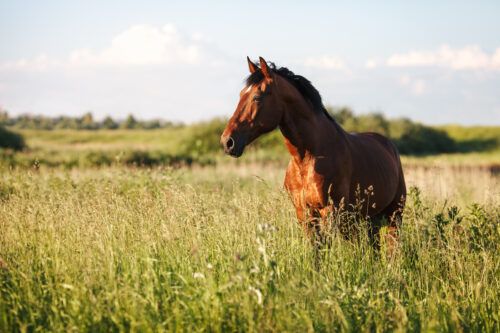
Suffolk Punch horses are always chestnut. The Suffolk Horse Society uses the traditional spelling of “chesnut” to describe the breed. Shades may range from dark liver to bright red.
Solid colouring is preferable, but small white facial markings are permitted. White leg markings are not acceptable for breeding stallions.
Temperament
This breed’s work ethic and willingness is its defining personality feature. These horses are hard workers with good stamina and endurance. Devotees of the Suffolk Punch frequently praise the breed’s heart and determination to do their best for their owners.
Suffolk horses are gentle giants with an even temperament and kind disposition. However, their size and power may intimidate timid or inexperienced handlers.
Disciplines
Suffolk horses move with quick springing action and well-balanced movements. While lighter sport horses are more graceful under saddle, the Suffolk Punch’s movement and conformation are ideal for hauling and pulling.
Some Suffolk horses still work as farm horses today, but the majority are used for recreational driving. These horses excel at pulling large carriages and sleighs. Teams of Suffolk horses are often used for promotion and historical showcases in their native counties.
Their willingness and easy temperaments make the breed an enjoyable pleasure mount for larger riders. Suffolks also compete under saddle in ridden heavy horse classes.
Suffolk Punch Health
Suffolk horses are susceptible to many of the same health problems found in other draft breeds. However, the breed is also predisposed to reproductive issues that threaten to undermine conservation efforts.
Genetic Diversity
With fewer than 75 female horses registered in the UK, the Suffolk Punch breed has a critically small breeding population. These numbers are a significant concern for the future genetic diversity of the breed.
Limited genetic diversity increases the breed’s vulnerability to genetic diseases. Low diversity is also associated with poor fertility, a frequent reproductive health challenge in Suffolk Horses. [5]
These horses have a high incidence of sexual development disorders characterized by abnormally small or undescended testicles in stallions and underdeveloped ovaries in mares. Many of these horses are infertile and cannot produce offspring. [6]
The genetics of equine reproductive disorders remains an area of active research. However, advanced reproductive technologies for sperm sexing could help produce more fillies and increase the breeding population. [7]
Breeders use sperm sexing and genetic testing to determine parent matches and maintain genetic diversity in the breed. The first Suffolk foal produced from sex-sorted semen arrived in 2020 and represented a turning point for the breed’s survival. [8]

Health Problems
Like many draft breeds, Suffolk Punch horses are susceptible to polysaccharide storage myopathy (PSSM). This muscle disorder affects how horses store glycogen and generate energy in their muscle tissue and can cause tying up. Research suggests that 36% of draft horses are affected by PSSM. [9]
Genetic studies have identified that some Suffolk horses are carriers of the GYS1 gene mutation known to be responsible for PSSM Type 1. Horses can also develop PSSM Type 2 without the GYS1 mutation. [10]
PSSM horses need a carefully managed diet and exercise regimen tailored to help alleviate symptoms and maintain their overall health.
Suffolk Punch horses historically had a reputation for poor hoof quality and small feet that were disproportionate to their massive body weight. The SHS encouraged Suffolk breeders to correct this trait by introducing hoof conformation classes to breed shows in the 20th century. [2]
While modern Suffolks generally have good hoof quality, their large body weight increases the risk of complications linked to hoof conditions. Heavy horses with laminitis have a worse prognosis than lighter horses due to the increased stress on the inflamed laminae. [11]
Care and Management
The proper management of Suffolk Punch horses requires attentive care to ensure their well-being and support preservation of this magnificent breed.
Veterinary Care
Work with your veterinarian to implement a preventive wellness program that includes regular vaccinations, deworming, and dental exams.
Selecting a veterinarian familiar with draft horses will ensure your horse gets the best care. Some veterinary procedures require sedation, and draft horses are often more sensitive to sedative medications and have a higher risk of complications during anesthesia. [15]
Farrier Care
Routine farrier care from a qualified hoof professional is essential for maintaining hoof balance in these heavy equines. Excessive hoof growth and imbalanced feet put extra stress on their lower limb structures, contributing to soundness problems.
Grooming Routine
Daily grooming of your Suffolk punch also supports healthy muscle tone, promotes bonding, and helps keep their chestnut coats shiny. While these horses don’t have the feathering of other draft breeds, they can still develop skin irritations from built-up dirt and sweat.
Housing
Owners must consider the large size of these horses when selecting the best housing situation. Draft horses are more likely to get cast in average-sized stalls and require bigger stalls and paddocks than lighter breeds.
If your Suffolk horse lives inside, adequate daily turnout is essential to provide opportunities for free exercise, social interaction and expression of species-appropriate behaviour. Horses that don’t get enough turnout are more likely to exhibit stereotypic behaviours.
Nutrition Program
Feeding a balanced diet supports optimal health and performance in Suffolk horses. Good nutrition is also essential for maintaining reproductive health and enhancing efforts to conserve the breed.
Weight Maintenance
True to their name, Suffolk Punch horses are easy keepers, signifying their ability to maintain good condition on relatively minimal feed.
However, the breed requires careful monitoring to prevent overfeeding and related health issues. Obesity worsens the prognosis of laminitis in draft horses. [12] However, purebred drafts are not prone to developing metabolic syndrome unless they also have PPID.
Regularly tracking your horse’s body condition score can help you determine if your Suffolk Punch is at a healthy weight. If they are not at an ideal body condition of 5 on a 9-point scale, adjustments to their diet may be necessary.
A healthy body condition is also important for fertility and reproductive function. Research indicates that stallions and mares with extremely high or low body condition scores have decreased fertility. [13]
Sample Diet
The following sample diet is intended for a mature 2,000 lb (900 kg) Suffolk Punch horse with normal body condition at maintenance (not exercising).
| Feed | Amount per day |
|---|---|
| Mid-Quality Hay (8% crude protein) | Free-choice |
| Salt | 60 g (4 tbsp) |
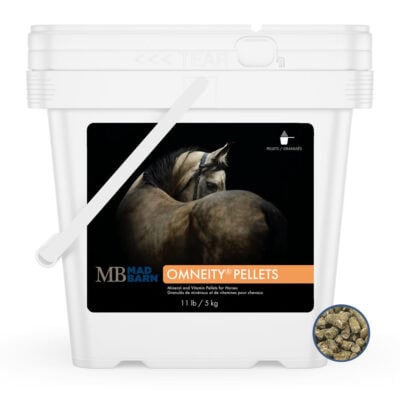
| Omneity® Pellets | 400 g (4 scoops) |
| Diet Analysis | |
| Digestible Energy (% of Req) | 107% |
| Protein (% of Req) | 127% |
| HC (ESC + starch; % Diet) | 8.8% |
Including Mad Barn’s Omneity® vitamin and mineral supplement in your horse’s feeding plan addresses the common nutritional deficiencies found in forages. Feeding Omneity® ensures your horse’s diet is optimized to support hoof health, metabolic function, and immune system support.
Omneity® is formulated without any added grains, sugars, or starches, making it an ideal option for easy keeper horses, such as Suffolk Punches.
Forage
Suffolk horses should be fed a forage-based diet to mimic natural grazing behaviours and support digestive health.
The average horse consumes approximately 2% of their body weight in forage per day. For a typical 2000 pound (900 kg) Suffolk Punch, this is equivalent to 40 pounds (18 kg) of hay per day.
It is recommended to provide your horse with free-choice or unrationed hay and to avoid long periods without access to hay. Use a slow feeder or hay net if you notice that your Suffolk Punch gains weight with unrestricted access to forage.
Selecting the right type and quality of hay is also important to match your horse’s individual requirements. Easy keeper breeds do best with average-quality, low-starch forage to provide adequate roughage while avoiding excess calorie intake.
If your horse lives outside, a grazing muzzle can support weight management when turned out on lush pastures. These muzzles are safe and comfortable for horses, helping to slow down grass intake. Turnout on a dry lot may be required for obese horses to prevent weight gain.
Feeding Recommendations
Forage alone should be sufficient to meet the energy and protein needs of most Suffolks. However, horses engaging in heavy work on farms or pulling carriages may need additional calories provided by feeds or supplements.
Avoid grain-based concentrates for additional energy and opt for safer choices like fiber-rich feeds or fat sources. [14] Diets containing excess starch from commercial feeds increase the risks of problems related to PSSM and gut issues, such as colic.
Breeds with a heavier body weight have an increased risk of mortality during colic surgery, making it even more important to prevent gastrointestinal disturbances. [15]
If you feed grain, split your horse’s daily ration into multiple small meals to reduce the risks of digestive upset. Use beet pulp or soaked forage pellets as a safer forage-based supplement carrier.
Fresh water and plain loose salt should be available to your Suffolk horse at all times. Adequate water intake helps to protect against colic, and draft horses need more water than other breeds to prevent dehydration.
Feeding four tablespoons (2 ounces) of loose salt per day also encourages your horse to drink water and ensures they meet their sodium requirement. Horses that do not freely take in enough salt can have it sprinkled onto moistened hay.
Nutritional Supplements
Formulating a balanced diet that provides adequate energy and protein is the first priority when deciding what to feed your horse. Once your Suffolk’s diet is balanced, you may want to add nutritional supplements to support their individual health needs.
- W-3 Oil by Mad Barn is an omega-3 fatty acid supplement that provides microalgae DHA and natural Vitamin E. W-3 Oil supports joint health, a shiny coat, regulation of inflammation and semen quality in breeding stallions. [17]
- Optimum Digestive Health is a probiotic and prebiotic supplement that supports hindgut health, immune function and a balanced microbiome in Suffolk horses. This pelleted supplement is enriched with yeast and intestinal enzymes to maintain normal gastrointestinal function.
- Natural Vitamin E is an important antioxidant that is commonly lacking in the diets of horses primarily fed hay. Suffolk Horses with muscular disorders or heavy workloads may also benefit from higher levels of this vitamin in their diet to support muscle function and the immune system.
- Acetyl-L-carnitine can support efficient energy generation and muscle relaxation in horses with PSSM by directing glucose into energy pathways and away from glycogen, acting as an antioxidant and promoting biogenesis of mitochondria.
Have questions about your Suffolk horse’s feeding program? Submit their information online for a free consultation from our qualified equine nutritionists and ensure their diet is meeting their needs.
Frequently Asked Questions
Here are some frequently asked questions about Suffolk Punch horses:
The Suffolk Punch is the oldest English breed of draft horse and the only draft breed developed exclusively for farm work. Originating in Suffolk and Norfolk in eastern England, Suffolk Punch horses are known for their strength, stamina, and distinctive chestnut coat. They were bred to work heavy clay soils efficiently, which shaped their compact, powerful build and steady temperament. Modern Suffolk Punch horses are valued as both historic working horses and a critically endangered heritage breed.
Suffolk Punch horses are known for having a calm, willing, and dependable temperament. They are often described as gentle giants because they are kind and generally even-tempered. Suffolk Punch horses typically respond well to consistent handling and purposeful work. Although they are usually steady and manageable, their size and strength still require confident, experienced handling.
Suffolk Punch horses can be good for riding, especially for pleasure riding and for larger or taller riders. While Suffolk Punch horses were not bred for speed or high-level athletic sports, many are comfortable, balanced, and suitable under saddle. They are most often used for pleasure riding, farm riding, and ridden heavy horse classes rather than performance disciplines. Their steady temperament can make them enjoyable mounts when they are properly trained and handled.
Suffolk Punch horses are prone to several health concerns, including polysaccharide storage myopathy (PSSM), laminitis, and hoof or joint problems associated with their heavy body weight. Like other draft breeds, they benefit from careful weight management, appropriate exercise, and routine hoof care. Suffolk Punch horses also face reproductive challenges linked to low genetic diversity, which affects breed conservation as well as breeding success. Preventive veterinary care and thoughtful breeding management are important for supporting the breed’s long-term health.
The Suffolk Punch is considered endangered because the breed has a very small breeding population and limited genetic diversity. Historical population losses, including major declines during the mechanization of agriculture and after World War II, left the breed with very few breeding animals. Suffolk Punch horses also face fertility and reproductive challenges that have slowed recovery efforts. As a result, careful breeding programs and modern reproductive technologies are important to help preserve the breed.
Suffolk Punch horses are known for their compact, powerful conformation, dense bone, and strong build. They typically have a broad chest, deep body, short sturdy legs, hard hooves, and a muscular frame designed for pulling heavy loads. Suffolk Punch horses are also recognized for their chestnut color, practical work ethic, and calm, reliable nature. Their overall type reflects strength, stamina, and efficiency rather than speed or flashy movement.
Suffolk Punch horses are always chestnut. Shades can range from dark liver chestnut to bright red chestnut, but the breed does not come in other colors. Solid coloring is generally preferred, and Suffolk Punch horses usually have minimal white markings. Small white facial markings may be acceptable, but white leg markings are not permitted in breeding stallions.
Suffolk Punch horses were originally bred for heavy agricultural work, especially plowing and pulling on the heavy clay soils of eastern England. Today, Suffolk Punch horses are also used for carriage driving, sleighs, historical demonstrations, promotional events, and pleasure riding. Some still perform farm work, while others appear in ridden heavy horse classes. Their strength, stamina, and willing temperament make them especially well suited to pulling and other practical jobs.
Suffolk Punch horses are typically around 16.1 hands high on average. Many individuals fall close to that height, although some stallions may exceed 17 hands. Suffolk Punch horses are often shorter than some other draft breeds, but they are exceptionally deep-bodied and powerfully built. Their height, combined with their dense bone and massive frame, gives them a compact but very strong appearance.
Suffolk Punch horses are not usually the best choice for complete beginners, despite their kind and steady temperament. Suffolk Punch horses are generally calm and willing, but their large size and strength can be intimidating or difficult for inexperienced handlers to manage safely. They are often better suited to people who already have confidence around horses or support from experienced supervision. In the right hands, they are dependable and rewarding horses to own and work with.
Summary
The Suffolk Punch is an English draft breed developed for farm work in eastern England and is recognized for its chestnut colour, strength, and calm temperament. Today, the breed is critically endangered, and conservation efforts are complicated by limited genetic diversity and reproductive challenges.
- The breed originated in Suffolk and Norfolk and has remained a distinct working draft type for centuries, with modern lines tracing to a single foundation sire born in 1768
- Suffolks are compact, powerful draft horses (typically around 16–17 hands) with dense bone, hard feet, and a uniform chestnut coat
- Historically used for heavy agricultural work, they are now most commonly seen in driving, heritage demonstrations, and some under-saddle classes
- Small population size and a past genetic bottleneck have reduced genetic diversity, increasing concern for long-term viability
- The breed has documented reproductive and sexual development abnormalities that can reduce fertility, making reproductive technologies and genetic management important tools for preservation
References
- Grimm, W. The development and organisation of the breeding of Suffolk horses in England. J Landwirtschaft. 1940.
- Ryder-Davies, P. The Suffolk. The working horse manual. 2011.
- Bodo, I. et al. Conservation genetics of endangered horse breeds. EAAP Sci Series. 2005.
- Moore-Colyer, R. Aspects of Horse Breeding and the Supply of Horses in Victorian Britain. Ag Hist Rev. 1995.
- Petersen, H. et al. Genetic Diversity in the Modern Horse Illustrated from Genome-Wide SNP Data. PLoS One. 2013.View Summary
- Brown, J. et al. Uterus unicornis in two mares. Austral Vet J. 2007.View Summary
- T, Raudsepp. Genetics of Equine Reproductive Diseases. Vet Clin North Am Equine Pract. 2020. View Summary
- Cabeza, J. et al. Advancements and challenges in in vitro reproductive technologies for the conservation of equine species. Theriogenology Wild. 2023.
- McCue, M. et al. Estimated prevalence of the Type 1 Polysaccharide Storage Myopathy mutation in selected North American and European breeds. Anim Genet. 2010. View Summary
- McCue, M. et al. Glycogen Synthase 1 (GYS1) Mutation in Diverse Breeds with Polysaccharide Storage Myopathy. J Vet Intern Med. 2008.View Summary
- Sillence, M. et al. Demographic, morphologic, hormonal and metabolic factors associated with the rate of improvement from equine hyperinsulinaemia-associated laminitis. BMC Vet Res. 2022.View Summary
- Senderska-Plonowska, M. The Differences in Histoarchitecture of Hoof Lamellae between Obese and Lean Draft Horses. Animals. 2022. View Summary
- Morley, S. et al. Effects of Body Condition Score on the Reproductive Physiology of the Broodmare: A Review. J Equine Vet Sci. 2014.
- Zeyner, A. et al. Effect of feeding exercised horses on high-starch or high-fat diets for 390 days. Equine Vet J. 2010.View Summary
- O'Donovan, K. et al. Risk of anesthesia-related complications in draft horses: a retrospective, single-center analysis. Vet Anaesth Analg. 2023. View Summary
- Ribeiro, W. et al. The Effect of Varying Dietary Starch and Fat Content on Serum Creatine Kinase Activity and Substrate Availability in Equine Polysaccharide Storage Myopathy. J Vet Intern Med. 2008. View Summary
- Brinsko, S. et al. Effect of feeding a DHA-enriched nutriceutical on the quality of fresh, cooled and frozen stallion semen. Theriogenology. 2005.View Summary