English






Swollen sheath in horses is a fairly common observation, where the area around the penis appears enlarged or puffy. Mild swelling is often temporary and may be linked to inactivity, seasonal changes, or fluid retention (edema).
Persistent or painful swelling can indicate more serious issues such as infection, insect bites, allergic reactions, tumors, or systemic health problems. Horses with limited turnout are also more prone to sheath swelling due to reduced circulation and lack of movement.
Recognizing the potential causes, knowing when swelling signals an underlying condition, and understanding treatment options are essential for maintaining your horse’s health and comfort.
This article will review the most common causes of sheath swelling, how it is diagnosed and treated, and management practices that can help reduce irritation and prevent recurrence.
Swollen Sheath in Horses
Sheath swelling is a common concern for horse owners, particularly for those caring for geldings and stallions. The sheath is the fold of skin that protects the penis when it is retracted, and while some variation in size and appearance is normal, noticeable swelling can be alarming.
In most cases, sheath swelling is minor and related to fluid accumulation, seasonal changes, or hygiene issues such as smegma build-up or bean formation.
However, swelling can sometimes signal more serious medical problems, including infections, trauma, parasites, or tumors, which require veterinary attention. [1][2]
The Equine Sheath
The sheath, also known as the prepuce, is a fold of skin that surrounds and protects the penis when it is not extended. It is a natural “pocket” that keeps sensitive tissues safe from dirt, debris, and injury. [3]
The sheath comprises two layers: an outer layer of skin and an inner mucosal lining. Sebaceous glands within the sheath produce sebum, which, combined with dead skin cells and other debris, forms a waxy substance known as smegma.
Smegma acts as a natural lubricant, facilitating the retraction and extension of the penis while protecting sensitive genital tissues from friction and injury. [4][5][6]
The sheath plays a crucial role in maintaining health in the male equine reproductive system. Its functions include: [6]
- Protecting the penis from environmental contaminants and injuries
- Supporting lubrication necessary for penile movement
- Promoting the elimination of smegma through natural processes
At the tip of the penis lies the urethral fossa, a small pocket where smegma can accumulate. Over time, this accumulation can harden into a mass commonly referred to as a “bean”. While beans are typically harmless, they can cause discomfort or interfere with urination if not addressed. [5]
Regular examination and maintenance of the sheath are essential to prevent complications such as infections, bean formation, or other abnormalities.
What's your top priority with your horse's health?

Enter your email to receive your store credit
Clinical Signs
Recognizing the signs of sheath swelling helps owners identify whether the issue is minor or requires veterinary attention.
Signs of sheath swelling in horses include: [1][2][7][8]
- Visible Swelling: The most obvious sign is a noticeable enlargement or puffiness of the sheath. Swelling may be mild or pronounced and can fluctuate throughout the day, often worsening after periods of inactivity
- Pain or Sensitivity: Horses may show discomfort when the sheath or penis is touched, which can manifest as kicking, tail swishing, or resistance to handling in that area
- Urination Changes: Difficulty or changes in urination, such as straining, dribbling, or reduced urine flow, can indicate pressure from a bean, infection, or other underlying issue
- Discharge or Odor: Foul-smelling discharge, pus, or excessive smegma can signal infection or inflammation
- Secondary Signs: Other signs of discomfort may include unwillingness to drop the penis, hind-end stiffness, kicking at the belly or subtle changes in behavior, such as irritability or reduced performance
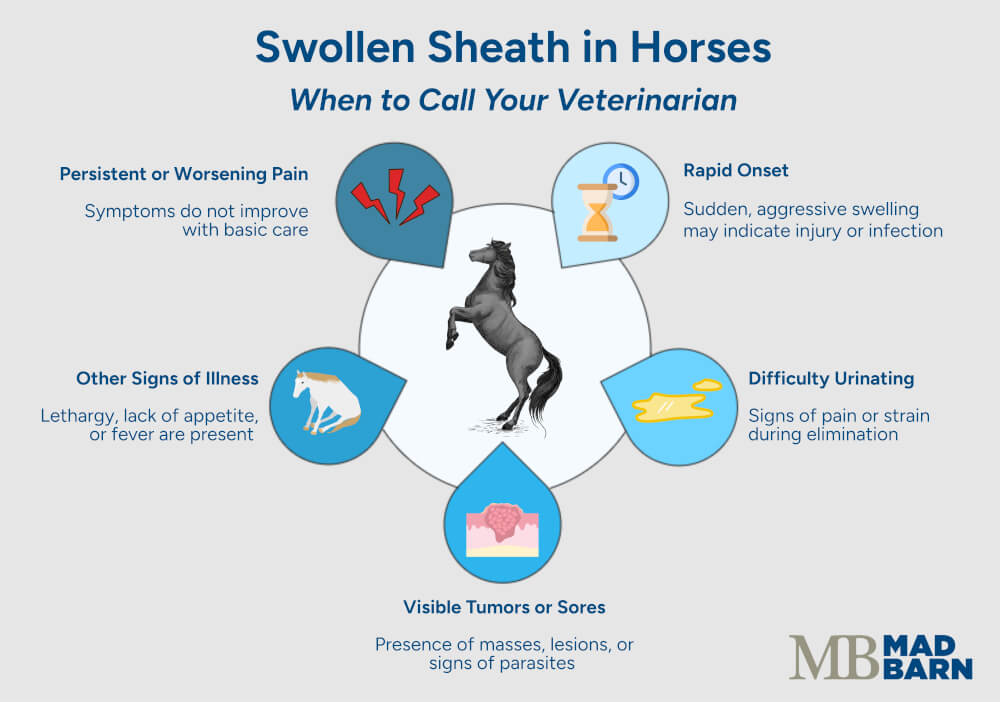
When to Call Your Veterinarian
While mild sheath swelling is often harmless, certain cases require prompt veterinary evaluation:
- Persistent or painful swelling: If swelling does not improve with basic management or seems to be worsening, a veterinarian should examine the horse
- Difficulty urinating: Straining, dribbling, or reduced urine flow may indicate a bean, obstruction, or infection
- Rapid enlargement of the sheath: Sudden swelling may signal trauma, infection, or a systemic issue that requires prompt care
- Visible tumors, sores, or maggots: Any growths, open lesions, or signs of parasitic infestation must be evaluated immediately
- Accompanying systemic signs: Swelling with lethargy, reduced appetite, fever, or generalized body swelling may signal systemic disease
Early veterinary involvement helps prevent complications and ensures appropriate treatment. Minor swelling should be monitored closely, with prompt action taken if the condition worsens to address the underlying cause.
Causes of Sheath Swelling
Sheath swelling has a range of causes. Some are harmless and resolve with simple management changes, while others may require prompt veterinary attention.
Physiological or Benign Causes
Swelling is sometimes a normal bodily response and doesn’t indicate disease. Benign causes include: [7][9][10]
- Lack of activity: Fluid naturally pools in the lowest parts of the body and is most noticeable in the horse’s legs, but it may be visible in the sheath area. This is especially common when a horse has been stalled for long periods, or after long trailer rides. The swelling usually goes down once the horse moves around and circulation improves.
- Seasonal and environmental triggers: Warm temperatures, insect activity, and humidity can all contribute to puffiness around the sheath.
- Age: Older horses may be more prone to benign swelling due to reduced circulation or changes in skin elasticity.
Hygiene-Related Causes
Hygiene issues are among the most common causes of sheath swelling in male horses. Over time, smegma can accumulate within the sheath, and excessive build-up may lead to irritation, swelling, and a noticeable odor. [1]
Hardened smegma can form a “bean” in the urethral fossa, which may press on surrounding tissues and even interfere with urination.
Both a lack of hygiene and excessive sheath cleaning can lead to problems. Insufficient cleaning allows smegma to accumulate, while excessive scrubbing removes natural protective oils, causing irritation and may lead to mild inflammation. [5]
Medical Causes
Sometimes equine sheath swelling is caused by underlying medical issues that require veterinary attention.
Possible medical causes include: [6][8][10][11][12][13][14][15]
- Infections: Bacterial or fungal infections of the sheath tissue can cause heat, swelling, and sometimes discharge with a foul odor
- Insect bites: Bites from flies, midges, or other insects can trigger localized swelling
- Allergies: Allergic reactions to bedding, topical products, or fly sprays may also cause sheath puffiness
- Trauma: Kicks, abrasions, or other injuries can lead to inflammation and build-up
- Parasitic infestations: Habronema larvae (“summer sores“) can invade small wounds in the sheath area, creating painful, swollen lesions
- Tumors: Growths such as squamous cell carcinoma or melanoma can cause chronic swelling
- Systemic Diseases: Conditions such as heart, liver, or kidney disease can cause fluid retention in various parts of the body, including the sheath
Penile Retention Disorders
Penile retention disorders are medical conditions that affect the normal extension and retraction of the penis. These disorders can lead to significant sheath swelling, discomfort, and an increased risk of secondary complications. [8]
- Priapism is a prolonged and often painful erection that does not resolve naturally. It can involve the entire penis or only the portion protruding from the sheath. This condition can cause significant swelling and increase the risk of infection due to restricted blood flow and bacterial exposure. Priapism is a medical emergency and requires immediate veterinary attention. [16]
- Phimosis refers to cases where the penis cannot extend normally from the sheath, often due to congenital narrowing, scar tissue, or swelling. Horses with phimosis may have smegma or urine trapped under the sheath, leading to irritation. [6][17]
- Paraphimosis is a condition in which the penis becomes trapped outside the sheath and cannot retract, often due to trauma-related paralysis or drug effects. This can lead to severe swelling, restricted blood flow, and an increased risk of tissue damage. [8][18]

Risk Factors
Sheath swelling is more common in certain horses and under specific management conditions. Understanding these risk factors can help guide prevention and early detection:
- Prolonged Stall Rest or Confinement: Horses kept in stalls for long periods without adequate movement are more prone to fluid accumulation, which may include swelling in the sheath
- Hot, Humid Weather: Warm temperatures and high humidity promote fluid pooling and insect activity, both of which can contribute to swelling
- Age: Older horses often have reduced circulation and skin elasticity, making them more susceptible to benign sheath swelling
- Poor Hygiene: Infrequent or excessive sheath cleaning can lead to smegma accumulation, irritation, or infections that trigger inflammation and swelling
- Allergies and Insect Sensitivity: Horses with hypersensitivity to insect bites, bedding, or topical products may experience recurrent sheath puffiness
- Trauma or Injury: Horses prone to pasture injuries or kicks may develop localized sheath swelling due to inflammation and restricted circulation
Diagnosis
Many cases of swollen sheath in horses are mild, temporary, and do not require veterinary attention. In cases where swelling persists, worsens, or presents with other symptoms, proper diagnosis is essential to determine the underlying cause and guide effective treatment.
Investigation of swollen sheath in horses begins with a thorough physical exam. This includes careful palpation of the sheath and penis to evaluate swelling, tenderness, and the presence of lumps, sores, or discharge. Horses that are sensitive in this area require careful handling to minimize stress and prevent injury.
Inspection of the urethral fossa is important during investigation of sheath issues. Smegma accumulation and bean formation may contribute to swelling. Experienced handlers or veterinarians may safely remove beans during an exam if necessary.
If infection, tumor, or systemic illness is suspected, the veterinarian may recommend other tests including:
- Bacterial or fungal cultures
- Biopsies
- Bloodwork
- Ultrasound imaging
Treatment
The approach to managing sheath swelling depends on the underlying cause. Many cases are minor and respond to simple care, while others require veterinary treatment.
Basic Management
Swelling associated with fluid accumulation or minor irritation can frequently be resolved through basic management adjustments.
Management strategies for mild cases of swollen sheath in horses include: [7]
- Encourage regular movement and provide consistent turnout to improve circulation
- Cold hosing or gentle washing can help reduce swelling and provide relief
- Monitor the horse daily for changes in sheath size, discomfort, or discharge
Hygiene
Occasional gentle cleaning of the horse’s sheath is beneficial for comfort and overall health. Veterinary guidelines generally recommend cleaning the sheath once or twice a year, depending on the individual horse’s needs. [5]
Use warm water and, if necessary, a mild, horse-safe soap, and always clean gently to preserve the natural skin barrier and prevent introducing harmful bacteria. Avoid strong antiseptic cleansers, as these can remove the natural, harmless bacteria that protect the penis from infection. [1][5]
Excessive cleaning can also strip protective oils from the skin, causing further irritation and making infections more likely. Balancing proper hygiene with the horse’s natural defenses is key to maintaining a healthy sheath and preventing common problems.
Veterinary Treatment
If your horse’s sheath swelling is caused by infection, trauma, tumors, or systemic disease, prompt veterinary intervention is essential.
Treatment strategies are tailored to the underlying cause, and may include:
- Antimicrobial medications: Bacterial or fungal infections may be treated with appropriate antibiotics or antifungal medications
- NSAIDs: Non-steroidal anti-inflammatory drugs (NSAIDs) may be used to alleviate pain and inflammation associated with sheath swelling
- Surgical Intervention: Surgery may be required for tumors or persistent obstructions
Prevention
Preventing sheath swelling in horses involves a combination of hygiene, management, and veterinary care.
General prevention tips include:
- Clean the sheath occasionally to maintain natural defenses and prevent smegma accumulation
- Provide adequate turnout and exercise to maintain healthy circulation
- Implement effective fly control to minimize irritation and the risk of summer sores
- Maintain parasite control with veterinary oversight
- Schedule routine veterinary checks to detect tumors, infections, or systemic disease early
- Monitor your horses consistently for changes in appearance, behavior, or discharge before issues escalate
- Maintain a clean and dry environment with appropriate bedding and well-designed stalls to reduce environmental risk factors
Frequently Asked Questions
Here are some frequently asked questions about sheath swelling in horses:
Mild sheath swelling in horses can often be managed at home with regular, gentle cleaning, turnout, and cold hosing. If swelling persists or is accompanied by pain, discharge, or other signs of infection, a veterinarian should evaluate the horse.
An infected equine sheath usually appears red, swollen, and warm. There may be discharge that is yellow, green, or foul-smelling. The horse may show discomfort, sensitivity when touched, or reluctance to drop the penis.
Sheath swelling in horses can be caused by fluid accumulation, poor hygiene (smegma, bean formation), infections, insect bites or allergies, trauma, tumors, or systemic conditions that affect fluid balance.
Beans are firm lumps that form in the urethral fossa of a horse's sheath. They can cause mild swelling, pressure, or discomfort, sometimes leading to slight straining during urination and a noticeable odor if smegma accumulates.
Summary
Sheath swelling is common in horses and is often mild, typically resulting from fluid accumulation, seasonal changes, or minor irritation.
- Regular hygiene helps prevent smegma build-up, bean formation, irritation, and odor; however, both inadequate and excessive cleaning can cause issues.
- Swelling may also result from infections, parasites, trauma, tumors, or systemic illness, many of which require veterinary attention.
- Warning signs include pain, difficulty urinating, discharge, foul odor, rapid swelling, or sores; these concerns warrant prompt veterinary consultation.
- Veterinary assessment, including physical examination, history review, and when necessary lab tests or imaging, is essential to determine the underlying cause and appropriate treatment.
- Ongoing management with consistent hygiene, exercise, fly control, parasite prevention, and routine veterinary checks supports sheath health and helps prevent complications.
References
- Held. J. P. et al. Prepuce: Smegma in Horses (Equis). Vetlexicon.
- Fogle. C. Preputial Swelling in the Horse: A Diagnostic Challenge. Equine Veterinary Education. 2010.
- Palozzo. A. et al. Segmental Posthetomy in a Four Stallions Case Series. Animals. 2021. View Summary
- Menzies-Gow. N. Sheath Washing - to Wash, or Not to Wash! In Horses (Equis). Vetlexicon.
- Dascanio. J. J. Washing the Penis. Equine Reproductive Procedures. 1st ed. Wiley. 2014.
- Schrank. M. et al. Case 6.5 - Congenital Phimosis. Comparative Veterinary Anatomy. Academic Press. 2022.
- El-Shafaey. E.-S. et al. Neoplastic and Non-Neoplastic Swellings of the External Genitalia in Horses and Donkeys: Clinical, Histopathological, and Treatment Outcomes. Frontiers in Veterinary Science. 2025.
- Sprayberry. K. A. and Lu. K. G. Managing Reproduction Emergencies in the Field: Part 1: Injuries in Stallions; Injury of the External Portion of the Reproductive Tract and Gestational Conditions in the Mare. Veterinary Clinics of North America: Equine Practice. 2021. View Summary
- Morgan. R. Protein-Losing Conditions in Horses (Equis). Vetlexicon.
- Ford. R. B. and Mazzaferro. E. M. Kirk & Bistner's Handbook of Veterinary Procedures and Emergency Treatment (Ninth Edition). W.B. Saunders, Saint Louis. 2012.
- Lloyd. S. et al. Insect Hypersensitivity in Horses (Equis). Vetlexicon.
- Young. A. Summer Sores. UC Davis School of Veterinary Medicine. 2022.
- Barlaam. A. et al. Habronematidosis in Equids: Current Status, Advances, Future Challenges. Frontiers in Veterinary Science. 2020. View Summary
- Rizk. A. et al. Surgical Management of Penile and Preputial Neoplasms in Equine with Special Reference to Partial Phallectomy. Journal of Veterinary Medicine. 2013. View Summary
- Holyoak. G. R. et al. Pathological Changes Associated with Equine Arteritis Virus Infection of the Reproductive Tract in Prepubertal and Peripubertal Colts. Journal of Comparative Pathology. 1993. View Summary
- Mcdonnell. S. M. Managing the Paralysed Penis, Priapism or Paraphimosis in the Horse. Equine Veterinary Education. 2010.
- Orsini. J. A. and Divers. T. J. Eds. Equine Emergencies (Fourth Edition). W.B. Saunders, St. Louis. 2014.
- Brinsko. S. P. et al. How to Treat Paraphimosis. AAEP Proceedings.