English






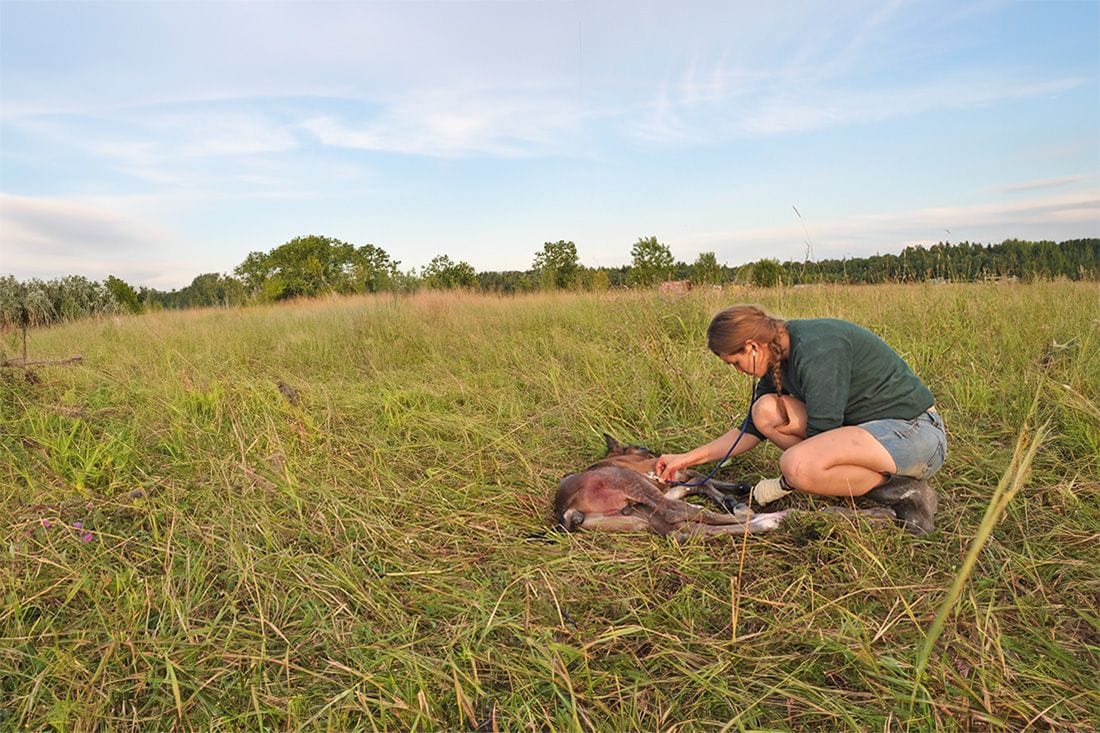
Warmblood Fragile Foal Syndrome (WFFS) is an inherited disease primarily affecting Warmblood horses and their related breeds. This condition is also referred to as Fragile Foal Syndrome Type 1 (FFS).
WFFS is characterized by the production of defective collagen, which compromises the integrity of connective tissues. This defect primarily affects the skin, ligaments, and tendons, making them prone to injury and damage.
There is no treatment for WFFS. Foals born with two copies of the gene mutation responsible for WFFS are non-viable and die during gestation or shortly after birth. Foals with one copy of the gene do not exhibit symptoms but are carriers of the disease and can pass it on to their offspring.
WFFS is a relatively new disease, and a genetic test for the condition was only developed in 2011. [1] Research is ongoing to determine how the disease affects carrier animals, what breeds of horses are affected, and the original source of the gene mutation that causes the disease.
Warmblood Fragile Foal Syndrome
WFFS occurs due to a mutation in a gene called PLOD1 (procollagen-lysine, 2-oxoglutarate 5-dioxygenase1). This gene is involved in the synthesis of collagen, a major component of connective tissue. [1]
A mutation in the PLOD1 gene is also a known cause of Ehlers-Danlos Syndrome in humans, which is a condition of hyperelasticity affecting the skin, joints, and blood vessels. [1]
The normal function of the PLOD1 gene is crucial for crosslinking collagen fibrils, which provide structural strength to collagen. The defective gene results in collagen that is unstable. [2] The unstable collagen is very thin, brittle and fragile, which makes the tissues it supports prone to damage. [2]
Common tissues where collagen is a structural component include:
- Skin
- Blood vessels
- Joint capsules
Inheritance Pattern
Fragile Foal Syndrome has an autosomal recessive inheritance, which means that both parents must carry a copy of the gene to produce an affected foal. [1] Two copies of the mutated gene are necessary to cause Fragile Foal Syndrome. [1]
When breeding two carriers, there is a 25% chance of the foal inheriting both copies. [1] There is also a 50% chance of the resulting foal being a carrier for the disease, who can pass the gene onto their foals. [1]
Affected Breeds
As the name suggests, WFFS primarily affects Warmblood horses, however it has been reported in other breeds. Examples of warmblood breeds include:
- Hanoverians
- Holsteiner
- Dutch Warmblood (KWPN)
- Oldenburg
- Westphalian
- Trakehner
- Swedish Warmblood
- Danish Warmblood
- Belgian Warmblood
- Selle Français
Many of the non-warmblood breeds with carriers are breeds derived from warmbloods or that allow warmblood crosses, such as the American Sport Pony and Knabstrupper. [3]
For these breeds, researchers presume that the mutation entered the breed from a warmblood carrier, rather than these breeds developing their own mutation.
Thoroughbreds
Thoroughbreds are common in warmblood pedigrees, as this breed was the foundation for many of the warmblood types. Originally, there was speculation that WFFS originated from the Thoroughbreds used in warmblood development, as many of the affected horses had pedigrees going back to Dark Ronald xx. This theory was later disproved based on genetic testing of preserved skin from Dark Ronald xx.
Although research has identified several WFFS carrier Thoroughbreds, studies show that carriers are uncommon overall in this breed. [4]
There is some speculation that the low prevalence of WFFS in Thoroughbreds is due to breeders selecting for racing performance, rather than the dressage and jumping-based performance, which Warmbloods are selected for. [4]
Therefore, WFFS-carrying Thoroughbreds may have been eliminated from racing breeding, but were still popular for use in Warmblood breeding, and introduced the mutation into warmblood breeds.
Other Breeds
Some breeds unrelated to warmbloods have also identified WFFS carriers. These breeds include: [3] [5]
- Haflingers
- Draft breeds
- Paint horses
- Quarter horses
Pedigree Analysis
Since the disease is inherited from the foal’s parents, researchers are currently conducting pedigree analyses of affected foals to try and identify commonly affected bloodlines. [1]
Many other genetic diseases of horses, such as hyperkalemic periodic paralysis (HYPP) in Quarter Horses, have a single common ancestor attributed to the disease. It is yet to be determined whether this is true for WFFS.
Current speculations on common ancestors or bloodlines include:
- An unnamed Hanoverian stallion. Based on evaluation of 76 carriers, one Hanoverian stallion born in 1861 was identified as a common ancestor. This stallion was from the F/W line of Hanoverians, which contributed heavily to dressage breeding lines. [6]
Research has also ruled out some previously speculated bloodlines, including:
- Dark Ronald, or his father, Bay Ronald, Thoroughbred stallions that heavily influenced both German Thoroughbred and Warmblood breeding. Preserved skin samples of Dark Ronald did not test positive for WFFS. [7]
- Bairactar, an Arabian stallion commonly found in the pedigree of European Sport Horses. There are reports from 1855 of horses inbred to Bairactar having a condition similar to WFFS. [1] A tooth from Bairactar’s remains preserved in a museum was tested for WFFS, and the mutation was not identified. [3]
Investigation into the source of the mutation is ongoing, however some breeders are unwilling to participate in these investigations as there is a risk that their preferred bloodline may be the carrier. For this reason, it seems likely that the source of the mutation will be unknown unless there is an indisputable link to a particular stallion or bloodline discovered.
What's your top priority with your horse's health?

Enter your email to receive your store credit
Symptoms
Foals carrying two copies of WFFS are not viable, and affected foals die shortly after birth. [1][2] In some cases, the foals may abort during late gestation, rather than being born at term. [1]
Symptoms observed in WFFS foals include: [1]
- Fragile skin only loosely attached to the underlying tissue
- Tears or abrasions on the skin surface
- Hairless areas
- Thickening of the skin
- Abnormal flexibility of the joints
- Flexed knee or hock joints that cannot be straightened
Mares giving birth to foals with WFFS often suffer from dystocia, or difficulty foaling. These mares may require additional interventions around foaling to protect their health. [1]
Complications
Since the collagen within blood vessel walls is weak and fragile, foals with WFFS often have hemorrhages (bleeding) in numerous locations throughout their body. In some cases, these hemorrhages may be the cause of death in these foals. Common locations for hemorrhage include: [1]
- Under the skin
- Into the muscles or fatty tissue beneath the skin
- Within the skull cavity, putting pressure on the brain
- Into the lungs, preventing proper breathing
The weak collagen can also cause cardiovascular problems, such as holes in the aorta and vena cava, which are the major blood vessels supplying the heart. [1] Bleeding from these vessels can cause rapid blood loss into the chest or abdominal cavity.
Other conditions described at autopsy of affected foals include: [1]
- Incomplete closure of the abdominal wall
- Deformed spinal cords
Diagnosis
Diagnosis of WFFS involves testing for the specific mutation in the PLOD1 gene associated with the disease. [8] Currently, many Warmblood breeders are testing their breeding stock for the mutation. [9]
This diagnostic test uses hair samples, which many breeders already collect as part of genetic validation of pedigrees when registering their foals. [8]
20 – 30 hairs should be collected from the horse’s mane to perform this test. [10] Hair can be removed by wrapping the strand around your finger or a pen and rapidly pulling down. To be suitable for testing, the hair must have visible root bulbs at the end, as this is where the DNA is most accessible. [10]
There is also a new protocol available for testing flushed or frozen embryos, prior to implantation into a recipient mare. [11] In this protocol, the veterinarian takes a biopsy of the embryo and tests for the specific PLOD1 mutation. [11]
Embryo biopsy is a relatively common practice usually used to determine the sex of the embryo or other genetic features. [11]
Differential Diagnoses
Other diseases can cause similar skin lesions as WFFS and must be ruled out to confirm a diagnosis. The two main diseases to consider are: [2]
- Hereditary equine regional dermal asthenia (HERDA)
- Ehlers-Danlos-like syndrome of unknown origin (EDLS)
HERDA occurs in Quarter Horses, and traces back to the stallion Poco Bueno. It primarily affects older horses, usually after they start their riding careers. [2] Affected horses have very fragile but stretchy skin that easily tears, leaving scars. [2]
EDLS causes increased skin elasticity, loss of the hooves, and scarring in affected horses. The disease is thought to be hereditary, however the causative genes are unknown. [2] There are reports of EDLS in warmbloods, Quarter horses, draft horses, Arabians and Thoroughbreds.
Prevention
Since WFFS is hereditary, the best method of prevention is genetic testing of all potential breeding animals to identify carriers.
If a mare or stallion is a carrier of WFFS, they should only be bred to horses who do not carry the gene. Carriers should not be bred to other carriers, to reduce the risk of both producing an affected foal and producing more carrier animals.

Impact of WFFS
Carrier Animals
Many genetic diseases require an affected horse to have two copies of the relevant gene, but some diseases can also cause symptoms in carrier animals with only one copy of the gene.
In some cases, carrier animals display desirable traits for performance, which can lead to inadvertent breeding of carriers and increased prevalence of the gene in a population. An example of this is hyperkalemic periodic paralysis (HYPP), which is associated with increased muscling in carrier animals, improving their performance in the stock horse halter arenas.
The exact effects of the PLOD1 gene on carrier animals is unknown currently, however research is investigating several possible changes that may contribute to the high prevalence of carrier animals in the Warmblood population.
Gaits
Since WFFS causes loosening of the tendons, there is speculation that carrier animals may have a naturally more fluid gait, which is desirable in dressage. An association between WFFS and the F/W line of Hanoverians supports this, as this lineage produces many successful dressage horses. [6]
Additionally, several studies show a connection between being a WFFS carrier and having higher gait elasticity, a highly desirable trait for dressage. [6][9][12]
One study also identified an association between WFFS carriers and increased scores in dressage on Mare Performance Tests. [6]
A recent study used artificial intelligence to analyze the gaits of several horses, and showed that carrier animals had greater extension of the joints and swing of both the front and hind limbs. [13] Once again, these are desirable traits for dressage, suggesting that carriers may have improved dressage performance scores.
Many researchers believe that selective breeding to improve gait fluidity is what led to identification of WFFS in 2011. The mutation is thought to be much older than 2011, however it went unnoticed as carrier animals did not show obvious symptoms and were bred primarily to non-carrier animals.
In trying to improve gaits for dressage performance, breeders inadvertently began breeding carriers to each other, resulting in an increase in affected foals and creation of more carrier animals.
Conformation
Studies show that WFFS carriers typically have different ratings on several aspects of their conformation during breeding evaluation compared to non-carriers. [6][12] Affected traits include the head, neck position, straightness of the front and hindlimbs, and positioning of the saddle area. [6][12]
One study also identified that WFFS carriers typically have a longer body frame than non-carriers. [12] However, the significance of these findings is currently unknown.
Musculoskeletal Injury
Only one study has investigated whether carriers of WFFS are more prone to injury than non-carriers. [4] This study focused on racing Thoroughbreds, and showed that carriers had similar injury rates to non-carriers. [4]
More research into how Warmblood carriers of WFFS are affected by the gene is necessary.
Breeding
Identification of a genetic disease in the breeding population can cause massive changes in selection of breeding pairs. However, the overall goals of the breed, including performance, must be maintained.
Since carrier animals perform better, as noted by studies showing increased dressage performance, breeders must find a balance between eliminating carrier animals while continuing to improve the breed.
Additionally, there is concern that due to high prevalence of carrier animals, complete elimination of carrier animals from the breeding population may lead to increased inbreeding. [12] Higher levels of inbreeding may uncover new genetic diseases, and can compromise progress towards breeding goals. [12]
Stallion Evaluation
Researchers suggest that studbooks should continue to include carrier animals, however they should be penalized during their stallion evaluations so that only the most high-performing carrier animals are entered for breeding. [12] By doing so, performance can continue to improve, while progressively reducing the prevalence of carrier animals in the population. [12]
One study showed that carrier stallions have only a 2.7% lower average foaling rate compared to non-carriers when bred to average mare populations. [9] Therefore, using a selective approach to breeding to stallion carriers will not have significant economic impacts for horse breeders. [9]
Frequently Asked Questions
Here are some frequently asked questions about warmblood fragile foal syndrome in horses:
WFFS is an inherited disease that affects Warmblood horses and related breeds, caused by a mutation in the PLOD1 gene. It leads to defective collagen, compromising connective tissues like skin, tendons, and ligaments. [1][2]
WFFS follows an autosomal recessive inheritance pattern, meaning both parents must carry the gene for a foal to develop clinical disease. Breeding two carriers results in a 25% chance of an affected foal. [1]
Summary
- Warmblood Fragile Foal Syndrome (WFFS) is an inherited condition primarily affecting Warmbloods and related breeds
- The mutation causes unstable collagen, and foals with two copies of the gene are non-viable
- Carrier animals may have more fluid and elastic gaits, which may benefit them in the dressage ring
- The best option for prevention is to genetically test breeding animals to identify carriers of the gene
- Carrier animals should not be bred to other carrier animals
References
- Aurich. C. et al., Characterization of Abortion, Stillbirth and Non-Viable Foals Homozygous for the Warmblood Fragile Foal Syndrome. Animal Reproduction Science. 2019. doi: 10.1016/j.anireprosci.2019.106202. View Summary
- Monthoux. C. et al., Skin Malformations in a Neonatal Foal Tested Homozygous Positive for Warmblood Fragile Foal Syndrome. BMC Vet Res. 2015. doi: 10.1186/s12917-015-0318-8. View Summary
- Reiter. S. et al., Distribution of the Warmblood Fragile Foal Syndrome Type 1 Mutation (PLOD1 c.2032G>A) in Different Horse Breeds from Europe and the United States. Genes. 2020. doi: 10.3390/genes11121518.View Summary
- Bellone. R. R. et al., Warmblood Fragile Foal Syndrome Type 1 Mutation (PLOD1 c.2032G>A) Is Not Associated with Catastrophic Breakdown and Has a Low Allele Frequency in the Thoroughbred Breed. Equine Veterinary Journal. 2020. doi: 10.1111/evj.13182.View Summary
- Martin. K. et al., Fragile Foal Syndrome (PLOD1 c.2032G>A) Occurs across Diverse Horse Populations. Animal Genetics. 2021. doi: 10.1111/age.13020.
- Metzger. J. et al., Hanoverian F/W-Line Contributes to Segregation of Warmblood Fragile Foal Syndrome Type 1 Variant PLOD1:C.2032G>A in Warmblood Horses. Equine Veterinary Journal. 2021. doi: 10.1111/evj.13271.View Summary
- Zhang. X. et al., Skin Exhibits of Dark Ronald XX Are Homozygous Wild Type at the Warmblood Fragile Foal Syndrome Causative Missense Variant Position in Lysyl Hydroxylase Gene PLOD1. Animal Genetics. 2020. doi: 10.1111/age.12972. View Summary
- Flanagan. S. et al., Development of a Real-Time PCR Assay to Detect the Single Nucleotide Polymorphism Causing Warmblood Fragile Foal Syndrome. PLoS ONE. 2021. doi: 10.1371/journal.pone.0259316.View Summary
- Wobbe. M. et al., Quantifying the Effect of Warmblood Fragile Foal Syndrome on Foaling Rates in the German Riding Horse Population. PLoS ONE. 2022. doi: 10.1371/journal.pone.0267975. View Summary
- Cotton. J. F., Sample Collection for Genetic Testing. Veterinary Genetics Laboratory. 2019. (accessed Nov. 27, 2023).
- Barandalla. M. et al., Genetic Diagnosis of Warmblood Fragile Foal Syndrome in Equine in Vitro Produced Preimplantation Embryos. Journal of Equine Veterinary Science. 2020. doi: 10.1016/j.jevs.2020.103047.
- Ablondi. M. et al., Performance of Swedish Warmblood Fragile Foal Syndrome Carriers and Breeding Prospects. Genet Sel Evol. 2022. doi: 10.1186/s12711-021-00693-4. View Summary
- Smythe. M. et al., 45 Quantifying Gait Quality Changes in Fragile Foal Syndrome Carriers Using Artificial Intelligence. Journal of Equine Veterinary Science. 2023. doi: 10.1016/j.jevs.2023.104347.