English
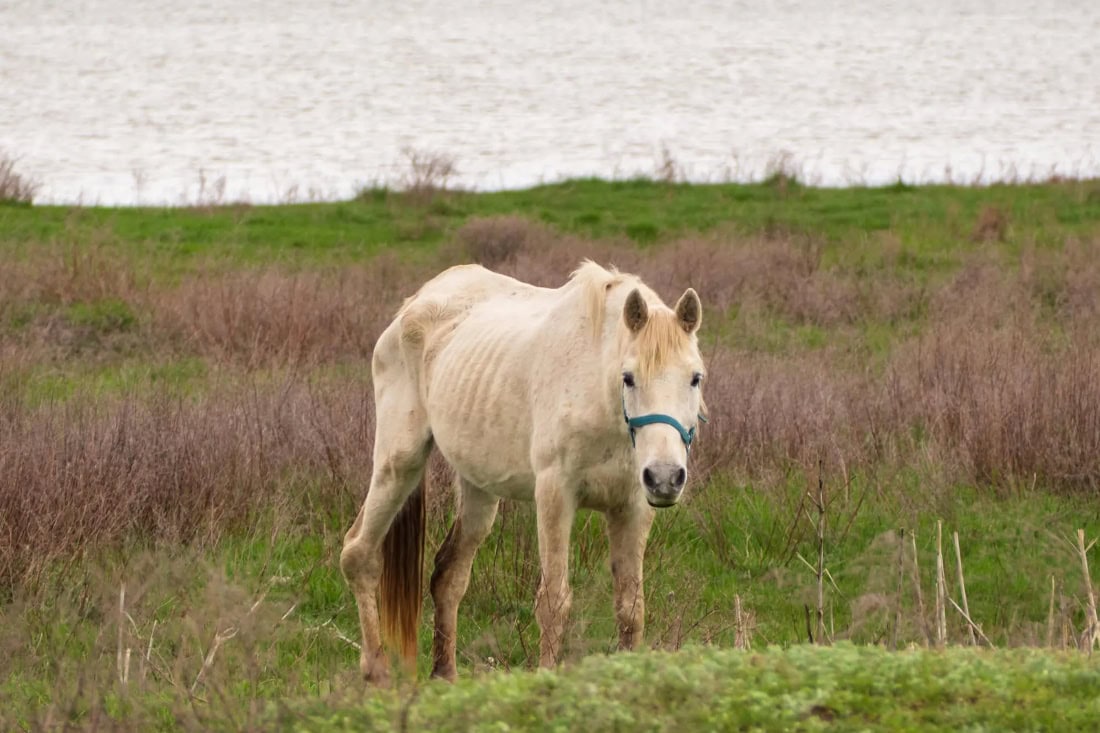
Promoting healthy weight gain can be a challenge for some underweight horses. Whether they are recovering from illness, not eating enough, or simply a hard keeper, some horses need extra nutritional support to counteract unwanted weight loss.
The main goal of a weight gain feeding plan is to increase the calorie content of the horse’s diet and create a positive energy balance. However, care must be taken to avoid overfeeding nutrients like sugar and starch, as these can lead to digestive issues and exacerbate insulin resistance in horses with metabolic disease.
There are a number of safe feed and supplement options that equine nutritionists recommend to help a horse gain weight. The optimal choice for your horse will depend on their existing diet, and other factors such as dental health or gut issues.
Before altering your horse’s diet, consult with your veterinarian to rule out underlying conditions that may be impacting weight maintenance. Some conditions lead to weight loss that may be difficult to resolve with dietary changes alone.
Continue reading to learn more about the seven best weight gain feeds that you can incorporate into your horse’s diet to improve their body condition.
Weight Gain Feeds for Horses
When it comes to helping a horse gain weight, the focus should be on increasing calorie intake with safe energy sources. This includes fats, fibers, and forages, which provide additional calories without increasing the risks of metabolic issues, laminitis, and colic.
Many grain-based feeds do provide high energy, but they also contain high levels of hydrolysable carbohydrates (sugars and starches). While these components are calorie-dense, their overconsumption can lead to serious health issues such as digestive upset and worsening of insulin resistance.
Fats, fibers, and forages are more appropriate for the horse’s sensitive digestive system, supporting a healthy hindgut microbiome. These nutrients are also less likely to cause “hot” behavior often associated with high-grain diets.
Here are seven nutritionist-recommended weight gain feeds that are safe and effective for most horses:
- Beet Pulp
- Legume Forages
- Brans
- Oils
- Dry Fat Supplements
- Flax Seed
- Hay Cubes and Pellets
Beet Pulp
Beet pulp is an excellent source of calories from fiber and can be implemented in many different types of feeding programs. It comes in several forms including pellets and shreds, as well as molassed and unmolassed beet pulp.
Horses tend to find beet pulp palatable, which makes it a useful addition to the diet of picky eaters. Beet pulp is highly digestible and because of its high fiber content, beet pulp also supports digestion and the hindgut’s microbial population.
Energy Source and Nutritional Content
The majority of energy garnered from unmolassed beet pulp comes from its high soluble fiber content. These soluble fibers are fermented readily by microbes in the hindgut, producing volatile fatty acids that horses use for energy. [2]
Volatile fatty acids from the microbial digestion of beet pulp are produced long after a meal is consumed, providing a prolonged energy source. [3][4]
Nutritional Profile
The following table provides the nutritional composition of dried molassed (3%) and unmolassed beet pulp. [5][6][7]
| Nutrient | Molassed Beet Pulp |
Unmolassed Beet Pulp |
|---|---|---|
| Digestible Energy | 2.84 mcal / kg | 2.8 mcal / kg |
| Crude protein | 10% | 10% |
| Fat | 1.1% | 1.1% |
| Sugar | 23% | 0.4% |
| Starch | 2% | 0% |
Feeding
Determining the appropriate amount of beet pulp to feed a horse depends on several factors, including the horse’s current weight and body condition, activity level, current diet, and overall health status.
For a typical 1100 lb (500 kg) horse, adding 2 – 3 lbs (0.9 – 1.4 kg) of beet pulp to the diet can provide a moderate caloric increase.
Beet pulp is usually soaked to make it easier to chew and consume. However, it can also be fed dry in smaller quantities (less than 1 lb). [8] It can be fed directly after soaking, or it can be rinsed before feeding to further reduce its sugar content. [9]
Soaking protocols for beet pulp vary. While some owners soak their beet pulp for just a few minutes before feeding, others may soak it for a few hours, or even overnight.
The best soaking method will depend on your management situation, your horse’s preferences, and their history of choke. Soaking beet pulp is recommended for horses with a history of choke to minimize the risk of recurring choke.
Regardless of the soaking method you choose, store soaked beet pulp in a cool place to prevent spoilage.
Considerations
The sugar content of unmolassed beet pulp is fairly low, making it a good choice for underweight horses that have metabolic or digestive concerns. For some horses, it may be helpful to soak and then rinse beet pulp to further reduce sugar intake.
Soaked beet pulp is also an excellent calorie source for horses with dental issues, as it can provide much needed supplemental fiber to support hindgut health.
Legume Forages
Legume forages such as alfalfa and peanut hays are rich in fiber and protein, as well as minerals such as calcium and phosphorus. Legumes can be supplemented in the diet in the form of hay, cubes, or pellets.
Energy Source and Nutritional Content
Legume hays are more energy-dense than grass hays and provide calories in the forms of protein and fiber. Protein is digested and absorbed in the small intestine and can be used to meet protein requirements or broken down to provide additional energy. [10]
The fiber portion of legume hays is digested in the hindgut to produce volatile fatty acids that horses use as an energy source. [2]
Nutritional Profile
The following table provides the nutritional composition of mid-maturity legume hay [5][11]
| Nutrient | |
|---|---|
| Digestible Energy | 2.43 mcal/kg |
| Crude protein | 21% |
| Fat | 2% |
| Sugar | 6.8% |
| Starch | 1.3% |
Feeding
The feeding rate for legume hay varies depending on your horse’s current condition and weight gain goals. Feeding 4 – 5 lbs (1.8 – 2.3 kg) of legume forage will provide a modest calorie increase for the average 1100 lb (500 kg) horse at maintenance or in light exercise loads.
Some owners prefer to feed legume hay cubes and pellets, which have a similar nutritional profile to hay and only differ in the particle size of the forage they supply. However, cubes and pellets may have differences in fiber digestibility that should be taken into account when incorporating these processed forages into the diet. [12][13]
Legume cubes and pellets are commonly soaked prior to feeding to make them easier to consume. While soaking isn’t strictly necessary, it can be helpful for horses with dental issues, or those with a history of choke.
The length of time that you choose to soak your cubes or pellets is flexible. Soaking in warm water for 30 minutes to an hour may be sufficient to soften them. However, they can also be soaked in cool water for more extended periods provided that they are kept in a cool place to avoid spoilage.
Considerations
Soaked legume cubes or pellets are easy to consume and do not require as much chewing, making them a good choice for horses with dental issues.
While legume forages are a helpful weight gain feed, they should be used sparingly in the diets of maintenance horses or those in lower exercise levels. Diets with large amounts of legume forage can oversupply protein and calcium, leading to hindgut disruptions, increased ammonia excretion, and imbalances in the calcium and phosphorus ratio of the diet.
It is recommended to limit legume forages to 20% of the total diet for horses that are not pregnant, lactating, or in heavy work.
What's your top priority with your horse's health?

Enter your email to receive your store credit
Brans
Wheat bran and rice bran are common byproduct feeds that can increase the energy density of a horse’s diet. Brans consist of the fibrous outer shells of cereal grains such as rice and wheat.
These feeds can be found in pelleted or loose forms, both of which provide a similar nutritional profile.
Energy Source and Nutritional Content
Brans provide calories mostly in the forms of starch and fat. These nutrients are digested in the stomach and small intestine and absorbed in the small intestine. [2][14]
In addition, brans will provide some fermentable fiber that is digested by microbes in the hindgut, leading to volatile fatty acid production. [2]
Nutritional Profile
The following table shows the nutritional composition of wheat and rice bran. [5][11]
| Nutrient | Rice Bran | Wheat Bran |
|---|---|---|
| Digestible Energy | 3.35 mcal / kg | 3.22 mcal / kg |
| Crude protein | 16% | 17% |
| Fat | 15% | 4.3% |
| Sugar | 6.3% | 5.3% |
| Starch | 23% | 23% |
Feeding
Brans should be added to a horse’s diet sparingly, because they are fairly high in hydrolysable carbohydrate content. Feeding 1 – 2 lbs (0.5 – 0.9 kg) will provide an appreciable increase in calorie intake for the average 1100 lb (500 kg) horse.
Brans are somewhat powdery and dry, which can cause palatability issues for some horses. For this reason, brans are often wetted down before feeding to improve their texture and palatability.
Considerations
The high hydrolysable carbohydrate (non-structural carbohydrate or NSC) content of brans makes them difficult to incorporate into the diets of horses with metabolic disorders. For these horses, it is recommended to use a lower hydrolysable carbohydrate weight gain supplement.
In addition, brans are typically rich in phosphorus content, which can imbalance the calcium to phosphorus ratio of the diet. Feeding brans fortified with calcium can help to keep the calcium to phosphorus ratio in check.
If fortified brans are not available, feeding a mixture of alfalfa or beet pulp with bran in the appropriate ratio can correct an imbalanced calcium:phosphorus ratio. Consider working with an equine nutritionist to help determine the best way to incorporate bran into a balanced diet.
Oils
Oils provide negligible hydrolysable carbohydrate content and a high energy density, making them a good weight gain option for any class of horse.
Common oil supplements for horses include:
Energy Source and Nutritional Content
Oils provide energy in the form of fat. This fat is digested and absorbed in the horse’s small intestine. [14]
Nutritional Profile
The following table shows the nutritional composition of vegetable oil. [5]
| Nutrient | |
|---|---|
| Digestible Energy | 9.19 mcal / kg |
| Crude protein | 0% |
| Fat | 99.9% |
| Sugar | 0% |
| Starch | 0% |
Feeding
Adding 1/2 – 1 cup (120 – 240 mL) of oil to the diet of an average 1100 lb (500 kg) horse will provide a meaningful calorie increase. It’s important to add oils to the diet slowly to avoid palatability and digestive issues.
Some horses do not like the texture of oil in their feeds. For these horses, dry fat supplements can be a good alternative weight gain supplement.
Considerations
Over-feeding fat can have negative consequences for digestive health. Large amounts of oil added to the diet too quickly may cause diarrhea.
In addition, feeding large amounts of fat to horses that are not adapted to a high-fat diet can allow the fat to bypass absorption in the small intestine and enter the large intestine. Here, the excess fat may interfere with fiber digestion. [14]
It’s important to add oil to your horse’s diet gradually and to avoid over-supplementing fat. For most horses, fat should make up no more than 8% of the diet. To allow your horse plenty of time to adapt to supplemental oil, you can start by adding 1 oz (30 mL) of oil per day, and increase their intake by half an ounce (15 mL) every three to four days.
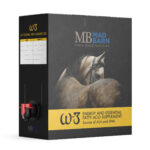
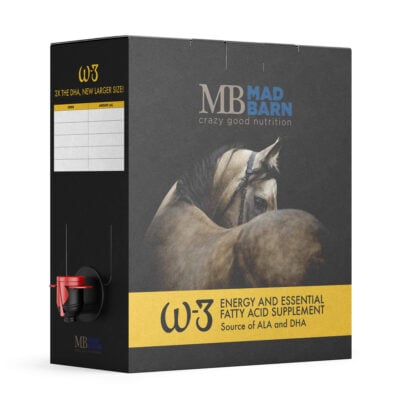
Mad Barn’s w-3 Oil is a fat supplement enriched with the omega-3 fatty acid DHA and natural Vitamin E. In addition to supporting weight management, W-3 oil also supports joint health, skin and coat quality, immune function and respiratory health.
Dry Fat supplements
Dry fat supplements are composed of fats that have been dried into a granular form consisting of small, solid particles. There are a variety of dry fat supplement options for horses, typically ranging from 40% to 100% fat content.
Based on studies in other animals, dried fat supplements such as prilled palm or coconut oil that are high in saturated fat are the least likely to interfere with hind gut function. [15] However, the normal equine diet is extremely low in saturated fats. Health consequences of feeding large amounts have not been explored.
Like oils, they are low in hydrolysable carbohydrate content, making them a good choice for many classes of horses.
Energy Source and Nutritional Content
Dry fat supplements provide calories in the form of fatty acids, which are digested and absorbed in the small intestine. [14]
Nutritional Profile
The following table shows the nutritional composition of a dried 100% fat supplement.
| Nutrient | |
|---|---|
| Digestible Energy | 10.9 mcal / kg |
| Crude protein | 0% |
| Fat | 99% |
| Sugar | 0% |
| Starch | 0% |
Feeding
Commercial dry fat supplements should be fed at the manufacturer’s recommended feeding rates. This may range from two to ten ounces per day, depending on the product formulation and needs of the horse.
Considerations
Dry fat supplements can be a good option for horses that do not like the texture of oil, but they also tend to be more expensive than oils. Like oils, dry fat supplements must be introduced to the diet slowly to avoid interfering with fiber digestion or causing digestive upset.
Follow the manufacturer’s guidelines for adding dry fat supplements to your horse’s diet. Introduction typically starts with a 2 oz serving per day, and the feeding rate can be adjusted up to the desired intake over a period of 2 – 3 weeks.
Flax Seed
Ground flax seed is rich in protein and fat, and has low hydrolysable carbohydrate content, making it a versatile energy additive.
Energy Source and Nutritional Content
The energy from flax is derived mostly from protein and fat. These nutrients are digested and absorbed in the small intestine. [10][14]
The fat content of flax seed is composed mostly of linoleic and alpha-linoleic acid, which are two essential fatty acids that must be supplied in the diet because they cannot be synthesized by horses. [16] The proportions of essential fatty acids in flax mimic those in grass.
Nutritional Profile
The following table shows the nutritional composition of ground flax seed.
| Nutrient | |
|---|---|
| Digestible Energy | 5.25 mcal / kg |
| Crude protein | 26% |
| Fat | 40% |
| Sugar | 2% |
| Starch | 1% |
Feeding
Flax seed can be purchased in whole, ground, and stabilized ground forms.
While whole flax seeds can be fed to horses, the digestibility of this form is quite low. This is because whole flax seed must be thoroughly chewed to break its outer shell and expose the nutrient-dense interior.
Whole flax seed should be ground prior to feeding to improve its digestibility. However, ground flax has a fairly short shelf life, as it is high in fat content and prone to rancidity. Alternatively, flax can be freshly ground daily at home using a coffee grinder.
Stabilized ground flax seed is a convenient alternative to feeding fresh ground flax. Stabilized flax is heat-treated to improve its shelf life while still offering the digestibility advantages of ground flax seed.
Feeding rates of flax seed can vary, but typically fall within 2 to 16 ounces per day. An eight-ounce serving of flax seed can provide a good calorie increase for the average 1100 lb (500 kg) horse.
Considerations
Because of its high fat content, flax should be added to the diet slowly to minimize the risk of digestive issues. Start with 2 oz of flax seed per day, and gradually increase your horse’s intake over a period of two to three weeks to achieve desired weight gain results.

Hay Cubes and Pellets
Hay cubes and pellets come in a variety of forage types, including grass and legume varieties. Common pelleted and cubed forages include:
Hay cubes and pellets typically have an energy density similar to the forage that comprises them. For this reason, they may not add an appreciable amount of energy to the diet of horses already consuming free-choice forage.
However, they can serve as a good weight gain supplement in cases where horses have difficulty consuming long-stem forage.
In addition, they can be a good dietary additive for slow eaters that often get chased off their feed. Since cubes and pellets are consumed faster than long-stem or chopped hay, slow eaters may be able to consume more of their meal before being displaced from their feed tub. [17][18]
Energy Source and Nutritional Content
Energy from hay cubes and pellets comes predominantly from fiber. This fiber is digested in the hindgut by microbes to produce VFAs, which the horse uses as an energy source. [2]
Nutritional Profile
The following table shows the nutritional composition of alfalfa and grass hay cubes. [11]
| Nutrient | Alfalfa Hay Cubes |
Grass Hay Cubes |
|---|---|---|
| Digestible Energy | 2.23 mcal / kg | 2.05 mcal / kg |
| Crude protein | 18% | 12% |
| Fat | 2.2% | 2.1% |
| Sugar | 5.7% | 6.2% |
| Starch | 1.3% | 1.4% |
Feeding
Cubes and pellets can be fed soaked or dry, depending on your horse’s preference and needs.
For horses with a history of choke, it is advisable to soak hay cubes and pellets before feeding. This is because horses typically consume cubes and pellets faster than long-stem hay, which may predispose them to choking if they are bolting their food.
The amount of cubed or pelleted forage that you should offer will depend on the amount of long stem forage your horse is able to consume.
For horses that cannot consume any long-stem hay, their forage can be entirely replaced with cubed or pelleted forage. In these cases, it is important to feed several small meals throughout the day to prevent them going long periods between meals without access to forage.
Considerations
Nutritionists aim to maximize a horse’s long-stemmed forage intake because long-stem forage is consumed more slowly than cubes and pellets and will last longer throughout the day.
However, for horses with dental issues that make it difficult to consume hay, cubes and pellets can provide much needed fiber in the diet and encourage weight gain.
If your horse needs to gain a significant amount of weight, alfalfa cubes or pellets offer a more energy-dense alternative to grass or mixed hay cubes and pellets.
Factors Causing Weight Loss
Before adjusting your horse’s diet to include weight gain feeds, it’s important to first understand why your horse is underweight. Factors can range from dental problems, medical conditions, and parasite infestations to stress, age, and workload.
A veterinary evaluation can help identify any underlying health issues in your horse that need to be treated or managed.
It’s also important to consider environmental and nutritional factors that could be affecting your horse’s weight maintenance. Addressing these factors comprehensively will provide the best foundation for a successful weight gain program.
Environmental Factors
Environmental issues can also cause weight loss in horses. For example, some horses struggle to maintain weight if they are housed with other horses that don’t allow them adequate time to consume their meals. In these cases, separating horses for feedings can improve their feed consumption and encourage weight gain.
Other environmental factors such as high temperatures and heat stress can lead to sudden weight loss because of dehydration, insufficient salt intake causing poor water intake, and reduced feed intake. [1]
Nutritional Factors
Malnutrition, starvation, and improperly balanced diets are common causes of weight loss in horses. These issues can occur due to inadequate forage intake.
If your horse is losing weight despite proper veterinary care, environmental management and adequate forage, then adding a weight gain feed or supplement may be the best way to improve their condition.
Implementing a Weight Gain Diet
The best way to implement a weight gain diet for your horse is to work with an equine nutritionist to provide professional guidance.
A nutritionist will start by reviewing what your horse is currently eating to understand the baseline of their diet. They will calculate the horse’s current caloric intake and examine the balance of nutrients to determine any adjustments needed.
Once you are ready to add weight gain feeds to your horse’s diet, keep the following in mind:
- Gradual Changes: Any dietary changes should be introduced slowly over several weeks to avoid upsetting the horse’s digestive system.
- Monitor Health and Weight: Regularly weigh the horse and monitor their body condition score. Adjust the feeding regimen based on their progress and any signs of health issues.
- Regular Veterinary Checkups: Maintain regular veterinary checkups to monitor the health of the horse, especially when dietary changes are involved. This helps catch any potential problems early.
Frequently Asked Questions
Here are some frequently asked questions about weight-gain feeding:
Before starting a weight-gain plan for your horse, speak to a vet to rule out fixable causes of weight loss such as dental problems, parasites, illness, stress, age-related issues, or workload mismatches. A veterinary exam sets the baseline, after which a nutritionist can calculate current calories, rebalance the diet, and monitor progress with regular checkups.
To avoid digestive upset, introduce new feeds slowly over several weeks. Add fats and concentrates gradually; for flax or dry-fat products, begin around 2 oz daily and build over 2–3 weeks; for soaked beet pulp or legume cubes/pellets, introduce modest amounts and increase stepwise while watching manure, appetite, and demeanor.
Feeding management can help a hard-keeper who gets chased off meals by separating that horse at feeding so it can finish its ration without competition. Practical tweaks include offering cubes or pellets (often eaten faster than long-stem hay), scheduling several smaller meals, and mitigating heat stress with ample water and salt—each change supports higher total intake and steadier calories.
Choose between beet pulp, oils, flax, or alfalfa for weight gain based on metabolism, dental status, and the current forage base. Unmolassed beet pulp adds fermentable fiber calories and is easy to soak for horses with dental issues; oils are the most calorie-dense and very low in sugar/starch but must be added slowly and kept within fat limits; ground or stabilized flax adds both fat and protein with low NSC; alfalfa (hay, cubes, or pellets) is energy- and protein-dense but, for maintenance/light-work horses, is best limited to ~20% of the total diet to avoid excess protein/calcium.
Summary
Adding weight gain feeds to your horse's diet can help to address unwanted weight loss and improve body condition.
- Before changing your horse's diet, it’s crucial to understand why they are underweight. Factors like dental problems, parasite infestations, stress, age, and workload can affect their weight, and a veterinary evaluation can help pinpoint any health issues.
- The main goal of a weight gain feeding plan is to increase calorie content while avoiding health problems. Safe energy sources like fats, fibers, and forages are recommended over high-starch grains to avoid metabolic issues and colic.
- Select weight gain feed and supplements based on your horse’s current diet and health conditions. Options like beet pulp, legume forages, brans, oils, dry fat supplements, flaxseed, and hay cubes and pellets are favored for their safety and effectiveness.
- Working with an equine nutritionist can help you decide on the right feeding program for your horse and ensure the diet is properly balanced.
- Make feeding changes gradually to avoid digestive upset and regularly monitor your horse's body condition to ensure they are gaining weight appropriately.
References
- Ott, E.A. Influence of temperature stress on the energy and protein metabolism and requirements of the working horse. Livestock Production Science. 2005.
- National Research Council Chapter 2: Carbohydrates. Nutrient Requirements of Horses. 2007.
- Hallbeek, A.C and A.C. Beynen. Influence of dietary beetpulp on the plasma level of triacylglycerols in horses. Journal of Animal Physiology and Animal Nutrition. 2003. View Summary
- Richardson, K. and J.A.M.D Murray. Fiber for Performance Horses: A Review. Journal of Equine Veterinary Science. 2016.
- National Research Council Chapter 16: Nutrient Requirements, Feedstuff Composition, and Other Tables. Nutrient Requirements of Horses. 2007.
- Lindberg, J.E. and C. Palmgren-Karlsson Effect of partial replacement of oats with sugar beet pulp and maize oil on nutrient utilisation in horses. Equine Veterinary Journal. 2010. View Summary
- Jensen, R.B. et al. Social Facilitation of Feeding and Time Budgets in Stabled Ponies. Animal Feed Science and Technology. 2016. View Summary
- Geor, R.J. et al. Chapter 17: Feedstuffs for Horses. Equine Applied and Clinical Nutrition: Health, Welfare and Performance. 2013.
- Groff, L., et. al. Effect of preparation method on the glycemic response to ingestion of beet pulp in Thoroughbred horses. Proceedings of 17th Equine Nutrition and Physiology Society Symposium. 2001.
- National Research Council Chapter 4: Proteins and Amino Acids. Nutrient Requirements of Horses. 2007.
- Equi-Analytical Feed Composition Library. Accessed Feb 15, 2024.
- Potts, L. et al. Nitrogen Retention and Nutrient Digestibility in Geldings Fed Grass Hay, Alfalfa Hay, or Alfalfa Cubes. JEVS. 2010.
- Haenlein, G.W.F. et al. Comparative Response of Horses and Sheep to Different Physical Forms of Alfalfa Hay. J Anim Sci. 1966.
- National Research Council Chapter 3: Fats and Fatty Acids. Nutrient Requirements of Horses. 2007.
- Kirpich, I.A. et al. Saturated and Unsaturated Dietary Fats Differentially Modulate Ethanol-Induced Changes in Gut Microbiome and Metabolome in a Mouse Model of Alcoholic Liver Disease. am. J. Pathol. 2016.
- Kajla, P. et al. Flaxseed—a potential functional food source. Journal of Food Science Technology. 2014.
- Argo, C.M. et al. Adaptive changes in the appetite, growth and feeding behaviour of pony mares offered ad libitum access to a complete diet in either a pelleted or chaff-based form. Animal Science. 2016.
- Petz, V. et al. Changes in eating time, chewing activity and dust concentration in horses fed either alfalfa cubes or long-stem hay. Veterinary Medicine and Science. 2023. View Summary




![White Line Disease in Horses [Causes and Recovery]](/wp-content/uploads/2021/09/White-Line-Disease-in-Horses-Causes-and-Recovery-500x333.jpg "White Line Disease in Horses [Causes and Recovery] | Mad Barn USA")