English
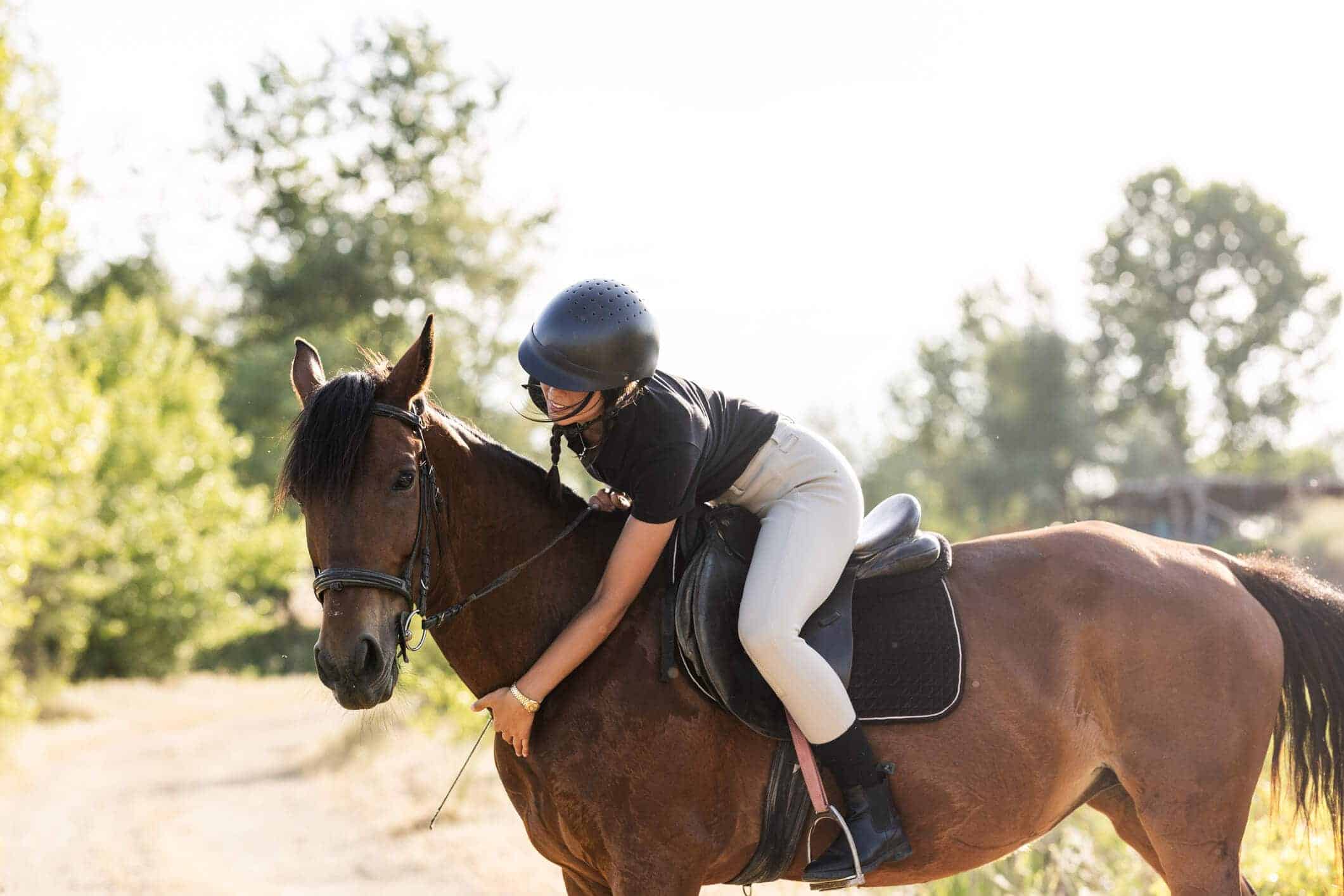
A properly fitted bridle is essential for keeping your horse comfortable during riding and training. Bridle design, strap placement, and tightness affect how pressure is distributed across structures of the head, including the ears, nose, and jaw.
Poor bridle fit contributes to discomfort, restricted movement, and resistance during ridden work. Horses sometimes express this discomfort through head tossing, mouth opening, or reluctance to accept the bit.
Correctly fitting a bridle involves choosing equipment suited to the horse’s head shape and adjusting each component for a secure, comfortable fit. This guide explains how to fit different types of bridles, identify common pressure points, recognize signs of discomfort, and maintain proper fit over time.
What is Bridle Fitting for Horses?
A bridle is a piece of horse tack worn on the head that allows a rider or handler to communicate with and guide the horse. Most bridles consist of a headpiece, cheekpieces, browband, and reins, with many designs also including a bit, noseband, and throatlatch.
A correctly fitted bridle sits securely and evenly on the horse’s head without placing excessive pressure on sensitive areas. All components should be properly positioned and adjusted to allow the horse to move its ears, jaw, and neck comfortably.
Riders use bridles to communicate with and guide their horses by applying pressure through the reins. Bitted bridles apply pressure primarily to the horse’s mouth, whereas bitless bridles apply pressure to areas of the nose and head.
Each part of a horse’s bridle has its own function and attachment point.
- Headpiece: Also called the crownpiece, this runs over the poll behind the ears and supports the weight of the bit.
- Browband: Runs across the forehead below the ears and prevents the headpiece from sliding backward down the neck.
- Cheekpieces: Connect the headpiece to the bit rings and set the bit’s height in the mouth.
- Throatlatch: Passes under the throat to help keep the bridle from coming off over the ears.
- Noseband: Encircles the nose and jaw to keep the bridle in position. In some designs, it limits how far the horse can open its mouth.
- Bit: Sits in the mouth over the bars and tongue and connects to the reins.
A bridle is positioned across much of a horse’s face, where the skin has minimal fat or soft tissue separating it from the bone. This provides limited cushioning, making these areas sensitive to pressure from tight straps or buckles. [1]
What's your top priority with your horse's health?

What's your top priority with your horse's health?
Bridle and Pressure Point Anatomy
The pressure created by a bridle is not distributed evenly across the horse’s head. Areas particularly susceptible to bridle pressure include the poll behind the ears, the cheeks below the eyes, and the nose and lower jaw.
These areas contain sensitive structures, including facial nerves, blood vessels, and joints, that may be impacted by excessive pressure from bridle straps and buckles.
Poll, Ears, and Atlas
The headpiece rests on the poll, just behind the top of the horse’s skull. Beneath it is the atlas, the first neck vertebra, whose wide wings can be felt behind each ear.
The base of each ear consists of cartilage surrounded by small muscles that allow the ear to swivel. A headpiece that is too wide, or one pulled forward by a short browband, presses against the back of this cartilage.
The junction between the browband and headpiece is a common pressure point. Several straps and buckles meet beside the base of the ear and near the jaw joint.
Facial Crest and Facial Nerves
The facial crest is the bony ridge that extends forward from below the eye along the side of the face. This is the primary marker for setting noseband height.
Branches of the facial nerve cross the cheek in this region. A large sensory nerve also exits the skull through a small opening just above and in front of the end of the crest. Both lie close to the skin.
A noseband fitted tightly against the facial crest presses on the end of the bone and surrounding soft tissue; a clear gap between the crest and top edge of the noseband is more comfortable.
Nasal Bone and Lower Jaw
Nasal bones form the bridge of the nose. They are thick near the eyes but taper toward the nostrils, ending in a thin, unsupported area above soft cartilage. A strap placed too low rests on this fragile area and can restrict the nostrils.
Under the head, the two branches of the lower jaw form narrow bony edges covered only by skin. A noseband loops around the nasal bones and these jaw edges, and tightening it compresses the head between hard surfaces.
The jaw experiences more pressure than the nose. In eight dressage horses ridden at the trot, noseband pressure was higher along the lower jaw than over the nasal bone with every noseband type tested. [2]
How to Fit a Bridle for a Horse
To properly fit a bridle to your horse, begin with them standing square on level ground. Their head should be in a relaxed, natural position.
Adjust the bridle from the top down, checking both sides as you go to ensure each component sits correctly before moving to the next.
Extra attention is required for younger horses, since their heads continue growing for several years. Teeth also erupt and shed during this period, changing how bits feel in the mouth.
Before a young horse wears a bit for the first time, have a veterinarian or qualified equine dental professional examine its mouth for sharp points, retained caps, and wolf teeth. Start with a snaffle bridle and recheck the fit more frequently than you would for a mature horse.
Step 1: Measuring and Sizing
To determine the correct bridle size for your horse, you will need to take several measurements of the head and compare them with the manufacturer’s sizing chart.
Most bridles are available in pony, cob, full, and oversize, although some manufacturers refer to the largest size as warmblood or extra full. Sizing is not standardized across brands, so a full-size bridle from one manufacturer can fit like a cob size from another.
Head shape also varies among breeds and individual horses, which can affect bridle fit. Ponies and fine-headed horses often have shorter faces, leaving less room between the facial crest and corners of the mouth. These horses may require narrower nosebands or shorter cheekpieces to accommodate their facial proportions.
Larger horses, including warmbloods and draft breeds, generally require larger bridle components. However, the size needed for each component depends on the horse’s individual anatomy.
For example, a horse with a broad forehead may need a longer browband but standard-length cheekpieces. Horses with wide jaws or thick throats may also need longer throatlatches.
Start measuring your horse for bridle fit by using a soft measuring tape to take the following four measurements:
- Headpiece and cheekpieces: Measure from one corner of the mouth, over the poll behind the ears, to the opposite corner
- Browband: Measure from the back edge of one ear base, across the forehead, to the corresponding point on the other side
- Noseband: Measure around the nose at the height where the noseband will sit
- Throatlatch: Measure from behind one ear, under the throat, to behind the opposite ear
Compare the measurements with the manufacturer’s sizing chart to determine the appropriate bridle size. The buckles should fasten near the middle of each strap’s adjustment range to allow for further adjustments.
Ensure the horse’s mane and forelock lie flat beneath the headpiece and browband to prevent bunching and uneven pressure.
Step 2: Headpiece
Position the headpiece flat across the poll, immediately behind the horse’s ears. The headpiece should rest evenly on the poll without pressing against the cartilage at the base of either ear.
Check the width of the headpiece to ensure it fits the horse’s anatomy. A headpiece that is too narrow concentrates pressure over a smaller area, while one that is too wide may interfere with the ears or press against the wings of the atlas, the first cervical vertebra.
Adjust the cheekpieces and noseband straps so their buckles rest against the flat surface of the cheeks, approximately level with the eyes. The buckles should be positioned away from the base of the ears and the temporomandibular joints (jaw joints).
Step 3: Browband
Position the browband flat across the horse’s forehead, approximately one finger’s width below the base of the ears. Check the fit by sliding a finger beneath the browband at the center of the forehead and on both sides.
A browband that is too short pulls the headpiece forward against the base of the ears, causing discomfort. To assess the length, unfasten the browband and check whether the headpiece moves backward when the tension is released. If it does, the browband is too short.
A browband that is too long may hang loosely across the forehead or move excessively during exercise.
Step 4: Cheekpieces and Bit Height
Adjust the cheekpieces evenly on both sides so the bit hangs level in the horse’s mouth. The buckles should sit near the middle of their adjustment range, leaving room for further adjustments.
The bit should rest comfortably at the corners of the lips without stretching them. Traditional fitting guidance recommends one or two soft wrinkles at each corner, although many bit fitters prefer little or no wrinkling. Because mouth shape varies between horses, wrinkles alone are not a reliable measure of fit.
A bit positioned too low risks contacting the teeth or allowing the horse to put its tongue over it. If fitted too high, it stretches the lips and increases pressure on the poll through the cheekpieces.
Once the height is correct, check the bit’s width. For a loose-ring bit, approximately one-quarter inch (6 mm) of mouthpiece should be visible on each side between the lips and bit rings. Fixed-ring bits generally fit more closely.
See Mad Barn’s Guide to Bits for Horses for more information about mouthpiece and cheek designs.
Step 5: Throatlatch
Fasten the throatlatch so you can fit four fingers, or a sideways fist, between the strap and the horse’s cheek. Its purpose is to help prevent the bridle from being pulled off over the ears.
A tight throatlatch presses into the throat and the glands behind the jaw when the horse flexes at the poll. Check it again with the horse’s head in a working position because the available space narrows as the neck arches.
Step 6: Noseband Position and Tightness
The correct position of a noseband depends on its design. Different noseband types sit at different heights on the horse’s face, but all should be positioned to avoid excessive pressure on sensitive areas of the nose and jaw.
Position a plain cavesson noseband on the solid part of the nasal bone, approximately two fingers’ width below the facial crest. The strap should remain clear of the facial crest and the thinner portion of the nasal bone near the nostrils.
For a drop noseband, position the front strap on the lowest firm section of the nasal bone, approximately four fingers above the nostrils. The back strap should rest in the chin groove below the bit.
For bridles with a flash strap, position the buckle away from the lips and adjust the strap so it does not pull the cavesson down the nose.
Adjust the noseband tightness to allow two stacked adult fingers to fit comfortably beneath the strap. Measure the clearance at the front of the nose, directly over the nasal bone.
The hollow along the side of the face provides more space beneath the strap and is not a reliable location for measuring noseband tightness.
Step 7: Check While Riding
After several minutes of riding with normal rein contact, check the bridle’s position and fit. Movement and rein pressure can cause straps to shift or place additional pressure on the horse’s head.
Check the following to ensure correct bridle fit:
- The bridle remains centered and the browband stays level
- Straps and buckles remain clear of the eyes when the horse turns or flexes its neck
- The cheekpieces lie flat against the face when rein contact is applied. Bowing outward may indicate that the bit is positioned too low
- The noseband remains in position without sliding upward toward the facial crest
- The horse can move its ears freely, chew, and swallow comfortably
After riding, examine the horse’s head before grooming. Check for uneven sweat marks, ruffled hair, or lingering indentations in the coat that may indicate areas of concentrated bridle pressure.

Different Bridle Types
Bridle designs differ in how they apply pressure and communicate signals from the rider’s hands. Some bridles use one or two bits, while others are bitless.
Designs also differ in how they apply pressure around the nose and jaw, and certain designs change how straps sit around the ears.
These differences affect how each bridle is fitted and which areas require particular attention.
Snaffle Bridles
A snaffle bridle uses a single bit attached to one pair of cheekpieces. Snaffle bridles can be fitted with different types of nosebands, including plain cavesson, crank, flash, and drop nosebands.
Research comparing noseband designs found that plain cavesson and crank nosebands produced similar pressure over the nasal bone and lower jaw when adjusted to the same tightness. [2]
In a study of competition horses, flash nosebands were the most commonly used design and were fitted significantly tighter than cavesson, drop, and Micklem nosebands. [4]
Double Bridles
Double bridles are commonly used in dressage and feature two bits: a bridoon snaffle and a Weymouth curb. Each bit is attached to a separate pair of cheekpieces, allowing the rider to control them independently using two sets of reins.
The additional cheekpieces and straps increase the amount of material around the horse’s head, especially behind the ears where they connect to the headpiece. The headpiece and browband must be fitted to accommodate these additional straps without placing excessive pressure on the poll or ears.
The bridoon sits in the standard snaffle position, with the Weymouth slightly below it. Both bits should rest comfortably in the mouth without crowding the lips or interfering with each other.
The curb chain should lie flat in the chin groove and engage gradually as the Weymouth rotates, rather than applying pressure immediately when the rider takes up the reins.
When fitted properly, double bridles should not produce more discomfort than snaffle bridles. In an analysis of 135 dressage tests, mouth opening and tail swishing occurred with both types of bridle. Competition level and head angle had a greater influence on these behaviors than bridle type. [6]
Western Headstalls
In Western disciplines, a headstall is the part of the bridle that holds the bit in position on the horse’s head. Western headstalls typically have fewer straps than English bridles and often do not include a noseband or throatlatch.
Western headstalls are available in several styles, including browband, one-ear, and split-ear designs. These styles differ in how the headstall fits around the horse’s ears and is secured on the head.
For browband headstalls, ensure the browband lies flat across the forehead without pulling the headpiece against the ears. On one-ear and split-ear designs, the ear loops should fit around the base of the ears without pinching or pulling them forward. Adjust the cheekpieces to position the bit correctly in the horse’s mouth.
When using a curb bit, position the curb strap flat in the chin groove. Adjust the strap so it engages gradually as the bit’s shanks rotate under rein pressure.
See the Western horse tack guide for more information about common headstall styles and curb equipment.
Bitless Bridles and Hackamores
Bitless bridles allow riders to communicate with their horses without using a bit in the mouth. Instead, rein pressure is applied to the nose, jaw, or poll through the bridle’s straps. Common designs include sidepull and cross-under bridles, as well as mechanical hackamores.
Sidepull bridles apply rein pressure primarily to the nose, whereas cross-under designs apply pressure around the nose, jaw, and poll. Mechanical hackamores use shanks to provide leverage, increasing the force applied to the nose and chin when the rider pulls on the reins.
Research has examined how these designs affect pressure on the horse’s head. In a study involving five horses, sidepull bridles produced significantly greater noseband pressure than snaffle bridles fitted with cavesson nosebands. Pressure beneath the headpiece was similar between the two designs. [7]
To fit a bitless bridle, position the nosepiece on the solid portion of the nasal bone, above the softer cartilage near the nostrils. Adjust the straps to allow the horse to move its jaw comfortably without excessive pressure on the nose.
For mechanical hackamores, the curb strap should rest flat in the chin groove and be adjusted to engage as the shanks rotate under rein pressure.
Anatomical Bridles
Anatomical bridles were developed to improve comfort for horses by addressing common pressure points associated with traditional bridle designs. Since horses differ in head shape and size, these bridles use specially shaped components to distribute pressure more evenly and accommodate individual anatomy.
Anatomical bridles often feature cutaway headpieces that provide more space around the ears and curved nosebands designed to avoid prominent bones and facial nerves.
These features still require careful fitting to ensure they align with the individual horse’s head.
Impact of Bridle Use
A poorly fitted bridle places pressure on sensitive areas of the horse’s head. When straps are too tight or positioned incorrectly, pressure concentrates around the ears, nose, and lower jaw rather than spreading evenly across the bridle.
Repeated pressure and friction can contribute to discomfort, skin irritation, and injuries that may become more noticeable over time. [1]
In addition to bridle fit, the rider’s use of the reins affects the pressure applied to the horse’s mouth and head. Excessive rein tension or abrupt rein movements can cause pain and discomfort, even when the bridle is correctly fitted.
Excessive Pressure and Discomfort
An excessively tight noseband compresses the soft tissues against the horse’s nasal bones and lower jaw.
Research shows that pressure increases as noseband tightness increases, particularly when the space beneath the strap falls below the recommended two-finger allowance. With no clearance beneath the noseband, pressure over the nasal bone was approximately four times higher than with two fingers of clearance. [2]
Excessive noseband tightness is common among competition horses. In a study of 750 horses, 44% had no measurable space beneath the noseband, while only 7% met the recommended two-finger guideline. [4]
In addition to increasing pressure on the horse’s head, tight nosebands can affect normal oral behavior and physiological responses.
In an experimental study, horses wearing tightly fastened nosebands showed reduced chewing, increased heart rates, and other signs associated with stress. After the nosebands were removed, the horses yawned, licked, and swallowed more frequently. [5]
Skin and Mouth Injuries
Poorly fitted bridle straps and buckles can cause repeated friction against the horse’s skin, particularly around the ears, nose, and jaw. Over time, this can lead to hair loss, skin irritation, swelling, tenderness, and sores. These injuries may develop gradually without obvious changes in the horse’s behavior.
The corners of the mouth are also susceptible to injuries caused by pressure and friction from the bit during riding. Noseband tightness can also influence the risk of mouth injuries.
In a survey of more than 3,000 competition horses, 9.2% had visible lesions or bleeding at the corners of their mouths. Lesions were more common in horses with tighter upper nosebands but were also observed in horses without upper nosebands. [10]
Changes to Bone Structure
There are concerns that prolonged pressure from nosebands and curb chains may cause structural changes to horses’ facial bones.
Bone thinning and new bone deposits have been observed in areas where nosebands and curb chains typically rest. Among 144 cavalry horses examined, 37.5% showed changes to the nasal bones, while 13.8% had changes to the lower jaw. [3]
These findings do not definitively establish that bridle pressure caused the bone changes, since the horses’ previous fitting practices and the development of these changes were not tracked.
However, they highlight the importance of monitoring the head for persistent swelling, unusual lumps, or depressions around areas contacted by the bridle.
Signs of a Poorly Fitting Bridle
A poorly fitting bridle can cause discomfort that manifests as changes in a horse’s behavior or physical signs of pressure and irritation.
However, these signs are not specific to bridle fit and may also result from dental pain, bit problems, saddle fit, lameness, or rider influence.
Physical Signs
Horses wearing a poor-fitting bridle can present with physical signs, including:
- Rubbed or broken hair behind the ears, beneath the browband, across the nose, or in the chin groove
- White hairs where a strap or buckle rests
- Swelling, heat, or flinching when pressed along the nasal bone or lower jaw
- Cracks, redness, or sores at the corners of the lips
- Dents in the coat that remain visible several minutes after untacking
Behavioral Signs
Changes in a horse’s behavior may be an early indication of a poorly fitting bridle, even before visible signs of pressure or irritation develop. Behavioral signs associated with bridle discomfort in horses include:
- Raising the head, clamping the teeth, or moving away during bridling
- Flinching or pulling back when the headpiece passes over the ears
- Head tossing, head shaking, or tilting the head while ridden
- Opening the mouth, crossing the jaw, or protruding the tongue
- Leaning on the bit, coming behind the contact, or resisting bend in one direction
Several of these behaviors also appear in the Ridden Horse Pain Ethogram, a checklist of 24 behaviors developed to help identify musculoskeletal pain in ridden horses. Horses displaying eight or more of the 24 behaviors are likely to be experiencing pain. [8]
Bridle Fit Maintenance
Bridle fit requires regular attention as horses grow and equipment wears over time. Checking the bridle each time you tack up helps identify problems before they cause discomfort. If fitting problems persist, a professional bridle fitter can assess the equipment fit and recommend appropriate adjustments.
A complete fitting assessment is especially important after changes to the horse or its equipment. Repeat the fitting process when:
- You change the bit, noseband, or another bridle component
- The bridle is new or the leather has softened and stretched with use
- Your horse gains or loses weight or muscle, particularly around the jaw and poll
- Your horse undergoes dental work or experiences a mouth injury
- New behaviors develop during bridling or ridden work
- Someone else uses or adjusts the bridle
Working With a Professional Bridle Fitter
A professional bridle fitter specializes in assessing and adjusting bridles to accommodate the anatomy of an individual horse’s head.
Formal qualifications include Registered Qualified Bridle Fitter (RQBF) through the Society of Master Saddlers and Qualified Bit and Bridle Fitter (QBF) through Neue Schule Academy.
During an assessment, the fitter examines the horse’s head shape and evaluates the position, size, and adjustment of each bridle component.
They check for areas of excessive pressure, restricted movement, and potential sources of discomfort. Based on their findings, they may recommend adjusting the existing bridle or replacing individual components to improve fit.
Bridle Care
Regular cleaning and inspection help maintain a bridle’s fit and condition. Leather gradually stretches around buckle holes, while accumulated sweat and dirt stiffen straps and create rough surfaces that irritate the skin. Storing the bridle on a rounded hook helps the headpiece retain its shape between rides.
Clean bridles after riding and inspect areas that experience strain, such as where the cheekpieces and reins attach to the bit. Check for:
- Loose or damaged stitching
- Cracked or worn leather
- Stretched buckle holes
- Damaged buckles
- Frayed synthetic materials
Replace worn or damaged components before using the bridle again to protect your horse’s safety.
Competition Noseband Checks
Equestrian competitions often have specific rules governing permitted bridles, bits, and noseband tightness. Some governing bodies also require standardized equipment checks to ensure tack meets their welfare requirements.
Since May 1, 2025, FEI stewards have used an approved measuring device to assess noseband tightness at competitions. The device must pass comfortably between the nasal bone and the fastened noseband. This requirement applies to all noseband designs, including both upper and lower straps. [12]
Nosebands that fail a pre-competition check must be loosened before the horse competes. A failed post-competition check results in elimination and a yellow warning card for the rider.
Before competing in an event, consult the current rulebook for your discipline to confirm noseband regulations and check your horse’s noseband fit before arriving.
Frequently Asked Questions
Here are some frequently asked questions about bridle fitting for horses:
A correctly fitted bridle sits level and remains stable without pinching, rubbing, or restricting the horse's jaw and ears. The headpiece should clear the ear cartilage, the browband should lie flat, and the bit should hang evenly at the corners of the mouth. The noseband should allow room for two stacked fingers over the nasal bone, while the throatlatch should accommodate four fingers or a sideways fist. Recheck the bridle during and after ridden work because movement can reveal pressure or shifting that is not visible when the horse is standing.
The main bridle pressure points are behind the ears, beside the ear bases where the browband attaches, and along the sides of the nasal bone. Pressure can also develop over the facial crest, beneath the lower jaw, and around buckles near the jaw joint. These areas have little natural padding and contain sensitive nerves, cartilage, bone, and soft tissue. A bridle should distribute pressure evenly and keep straps and buckles away from these vulnerable structures.
A horse's noseband should allow two stacked adult fingers to slide beneath it at the front of the nose over the nasal bone. The hollow at the side of the face gives a falsely loose measurement and should not be used to assess tightness. Because finger size varies, a taper gauge or measuring wedge can provide a more consistent check. The horse should still be able to chew, swallow, and move the jaw comfortably.
A plain cavesson noseband should sit on the solid nasal bone, approximately two fingers below the facial crest. This position keeps it away from the bony crest above and the thin, unsupported end of the nasal bone below. A drop noseband sits lower, with its front strap on the last firm part of the nasal bone and approximately four fingers above the nostrils. No noseband should restrict the nostrils or rest on the soft cartilage at the end of the nose.
The headpiece and browband should fit without pressing against the horse's ears or pulling the bridle out of position. The headpiece should lie flat just behind the ears, with clear space around the base of each ear, while the browband should sit about one finger below the ear bases. You should be able to slide a finger beneath the browband across the forehead and along both sides. If the headpiece springs backward when the browband is removed, the browband is likely too short.
The bit should sit at the corners of the horse's mouth without stretching the lips or hanging low enough to contact the teeth. One or two soft wrinkles are a traditional guide for a jointed snaffle, although light contact with little or no wrinkling may suit some horses better. The cheekpieces should use matching holes so the bit remains level. A bit that is too high can create constant lip and poll pressure, while one that is too low may become unstable or encourage the horse to put its tongue over it.
A horse's bit should be wide enough to avoid pinching without sliding excessively from side to side. With a loose-ring bit centered in the mouth, approximately one-quarter inch, or 6 mm, of mouthpiece should be visible between the lips and bit rings on each side. Fixed-ring bits can fit more closely because their cheeks do not move through the mouthpiece in the same way. Bit width should be checked only after the cheekpieces have been adjusted to the correct height.
The throatlatch should allow four fingers or a sideways fist between the strap and the horse's cheek. This leaves enough room for the horse to flex the poll without the strap pressing into the throat or the glands behind the jaw. Check the spacing again with the horse's head in a working position because the available room decreases when the neck arches. The throatlatch should still be secure enough to help prevent the bridle from being pulled over the ears.
The correct bridle size depends on the horse's individual head measurements rather than the pony, cob, full, or oversize label alone. Measure from one corner of the mouth over the poll to the opposite corner, across the brow, around the noseband position, and from behind one ear under the throat to the other ear. Compare these measurements with the manufacturer's size chart because sizing is not standardized among brands. When fitted, the buckles should sit near the middle holes instead of fastening only at the first or last hole.
Mixing bridle sizes is often appropriate when one complete size does not match the horse's proportions. A horse with a broad forehead may need a longer browband but standard cheekpieces, while a short-faced pony may need shorter cheekpieces and a narrower noseband. Large horses may also need a longer throatlatch without requiring every component in oversize. Each piece should be selected according to where it sits and how it affects the rest of the bridle.
Checking bridle fit in motion involves reassessing the tack after several minutes of normal ridden work. The bridle should remain centered, the browband should stay level, and no strap or buckle should move toward the eye when the horse bends or turns. The noseband should not ride upward, and the cheekpieces should remain flat rather than bowing outward when rein contact is taken. After riding, look for uneven sweat, ruffled hair, persistent coat dents, heat, or tenderness.
A double bridle should fit with the bridoon in the usual snaffle position and the Weymouth curb slightly below it. The two bits should not crowd each other or press excessively into the corners of the mouth. The curb chain should lie flat in the chin groove and engage gradually as the Weymouth rotates. Because a double bridle adds straps behind the ears, the headpiece shape and browband length need particularly careful assessment.
A bitless bridle or mechanical hackamore should place its nosepiece on the solid nasal bone, well above the soft cartilage near the nostrils. It should remain loose enough for the horse to move the jaw, chew, and swallow comfortably. Removing the bit does not eliminate pressure because rein forces are transferred to the nose, jaw, or poll instead. On a mechanical hackamore, the curb strap should lie flat beneath the chin and engage gradually as the shanks rotate.
An anatomical bridle is not automatically more comfortable because its cutaways and curved straps must align with the individual horse's anatomy. A cutaway headpiece can still press on the ear cartilage if the opening is the wrong shape or position. Anatomical designs should therefore be fitted with the same checks used for a conventional bridle. The horse's movement, behavior, and physical response remain more important than the product label.
Signs of a poorly fitting bridle can include resistance during bridling, flinching around the ears, head tossing, mouth opening, jaw crossing, and inconsistent rein contact. Physical signs include rubbed or white hairs, swelling, heat, tenderness, persistent coat dents, and sores at the corners of the lips. These signs do not prove that the bridle is the sole cause because dental disease, lameness, back pain, bit problems, and rider influence can produce similar behavior. Persistent problems require a broader assessment rather than simply tightening or changing one strap.
Veterinary assessment is appropriate when suspected bridle discomfort involves persistent swelling, heat, pain, wounds, mouth sores, firm changes over the nasal bone, or unexplained sensitivity around the poll, ears, or jaw. A veterinarian should also evaluate head tossing, mouth opening, resistance to bridling, or altered rein contact that continues after the bridle has been checked and adjusted. Stop riding and seek prompt advice if a wound is bleeding, swelling develops rapidly, the horse struggles to eat or swallow, or head shaking becomes sudden, violent, or dangerous. These signs can reflect dental, musculoskeletal, or neurologic problems that tack adjustments alone cannot resolve.
A horse's bridle fit should receive a quick check every time the horse is tacked up and a more thorough assessment several times a year. Recheck all adjustments after changing the bit or noseband, after dental work or a mouth injury, and whenever the horse gains or loses weight or muscle. New tack should be monitored as the leather softens and stretches, while young and growing horses need more frequent assessments. Any new behavior during bridling or ridden work is also a reason to repeat the full fitting sequence.
Nosebands at FEI competitions are checked with an approved measuring device passed between the fastened noseband and the nasal bone. Since May 1, 2025, this check has applied to every noseband type and to both upper and lower straps. [12] A noseband that fails a pre-competition check must be loosened before the horse can start, while failure after competition results in elimination and a yellow warning card. Riders should also consult their national federation's current rulebook because domestic requirements may differ.
Summary
Correct bridle fitting keeps riding equipment stable while protecting sensitive structures around the horse's poll, ears, face, nose, jaw, and mouth.
- Bridle pressure commonly concentrates behind the horse's ears and along both sides of the nasal bone
- Fit the bridle from the headpiece downward, then confirm that every component remains correctly positioned during movement
- Allow two stacked fingers beneath the noseband at the front of the nose, measured over the nasal bone
- Check that the bit hangs level, the browband does not pull the headpiece forward, and the throatlatch allows a sideways fist of space
- Different bridle designs require additional checks involving nosepiece height, curb chains, curb straps, or multiple bits
- Behavioral changes and physical marks may indicate poor fit, but persistent signs warrant investigation for dental, musculoskeletal, or neurologic causes
References
- Murray. R. et al. A Bridle Designed to Avoid Peak Pressure Locations Under the Headpiece and Noseband Is Associated With More Uniform Pressure and Increased Carpal and Tarsal Flexion, Compared With the Horse's Usual Bridle. Journal of Equine Veterinary Science. 2015.
- MacKechnie-Guire. R. et al. Noseband Type and Tightness Level Affect Pressure on the Horse's Face at Trot. Equine Veterinary Journal. 2025.
- Pérez-Manrique. L. et al. Prevalence and Distribution of Lesions in the Nasal Bones and Mandibles of a Sample of 144 Riding Horses. Animals. 2020.
- Doherty. O. et al. Noseband Use in Equestrian Sports: An International Study. PLOS ONE. 2017.
- Fenner. K. et al. The Effect of Noseband Tightening on Horses' Behavior, Eye Temperature, and Cardiac Responses. PLOS ONE. 2016.
- Faithfull. R. et al. Influences of Double Versus Snaffle Bridles on Equine Behaviour at Dressage Competitions and Factors That Interact with Their Effect. Animals. 2025.
- Robinson. N. and Bye. T. L. Noseband and Poll Pressures Underneath Bitted and Bitless Bridles and the Effects on Equine Locomotion. Journal of Veterinary Behavior. 2021.
- Dyson. S. et al. Development of an Ethogram for a Pain Scoring System in Ridden Horses and Its Application to Determine the Presence of Musculoskeletal Pain. Journal of Veterinary Behavior. 2018.
- Christensen. J. W. and Uldahl. M. Oral Behaviour During Riding Is Associated with Oral Lesions in Dressage Horses: A Field Study. Applied Animal Behaviour Science. 2024.
- Uldahl. M. and Clayton. H. M. Lesions Associated with the Use of Bits, Nosebands, Spurs and Whips in Danish Competition Horses. Equine Veterinary Journal. 2019.
- Crago. F. et al. An Opportunistic Pilot Study of Radiographs of Equine Nasal Bones at the Usual Site of Nosebands. Journal of Veterinary Behavior. 2019.
- Fédération Equestre Internationale. Introducing the FEI Noseband Measuring Device. FEI. 2025.