English
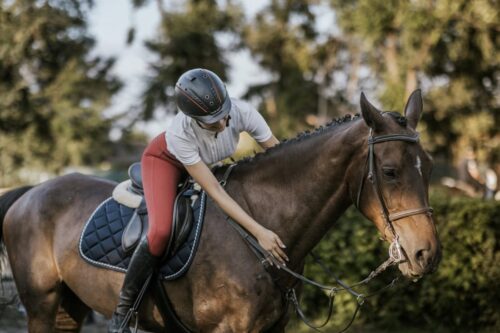
Starting horses under saddle is a gradual training process that can influence a young horse’s confidence, soundness, and future performance throughout their riding career.
Once called “breaking” a horse, the language around this stage has shifted to better reflect the needs of young horses during their first rides. Today, starting describes a careful, progressive approach that introduces tack, rider weight, and basic aids in a way that builds trust, clarity, and confidence.
Readiness depends on more than age alone. A young horse should have the physical maturity to begin carrying weight, the mental maturity to cope with new experiences, and a solid groundwork foundation before ridden work begins. Moving too quickly can increase stress and may contribute to resistance, fear, or physical discomfort.
Although the process often takes longer than many owners expect, working with an experienced professional and giving the horse time to progress at their own pace is well worth the investment.
Keep reading to learn more about starting horses under saddle, from assessing physical and mental readiness to managing the first ride and developing early ridden skills in the weeks that follow.
What Does Starting A Horse Under Saddle Mean?
Starting a horse under saddle describes the complete process of introducing ridden work. This includes learning to accept tack, carry a rider, and respond to basic rider aids.
Depending on the horse and the trainer, the process may take anywhere from several weeks to several months.
It begins well before a saddle comes near the horse and ends when walk, trot, and basic steering are consistent.
Backing vs. Breaking Language
The phrase “breaking in” dates to an era when starting a horse was often rapid and forceful. A horse was saddled, mounted, and ridden through resistance until it stopped fighting.
Horses trained using these methods may have looked calm, but many were likely displaying learned helplessness. In this state, an animal stops reacting not because the fear is gone, but because it has learned that resistance is pointless.
Today, trainers use “starting,” “backing,” or “colt starting” to describe the process of introducing horses to ridden work.
Many now incorporate training methods grounded in equine learning theory and welfare research to provide horses with a stronger foundation and a more positive experience.
Who Should Start a Young Horse?
Starting a horse well requires the ability to read subtle changes in body language, precise timing from the saddle, and enough composure to respond calmly when something goes wrong.
These are not beginner skills. The trainers best suited for starting young horses under saddle are experienced professionals with a deep understanding of equine behavior and horsemanship principles.
Many experienced horse owners do start their own horses. For anyone doing it for the first time, working with a professional trainer can substantially reduce risk.
At a minimum, the first several rides require a second experienced person on the ground, regardless of the rider’s experience level.
What's your top priority with your horse's health?

What's your top priority with your horse's health?
Ensuring Your Horse Is Ready to Start Under Saddle
A horse is ready to start under saddle when they have the physical development, mental maturity, and basic training needed to carry a rider safely and cope with new demands. Age provides a useful guideline, but it should not be the only factor used to determine readiness.
Before ridden work begins, the horse should be free from obvious pain or soundness concerns, comfortable with routine handling, responsive to basic groundwork cues, and able to remain calm during unfamiliar experiences.
Assessing each of these areas helps reduce stress, protect the horse’s developing musculoskeletal system, and create a safer foundation for early ridden training.
Table 1. Starting under saddle readiness checklist
| Readiness factor | What to look for | Why it matters |
|---|---|---|
| Physical maturity |
|
|
| Mental maturity |
|
|
| Basic handling |
|
|
| Response to pressure |
|
|
| Body handling |
|
|
| Groundwork foundation |
|
|
| Tack acceptance |
|
|
| First-ride preparation |
|
|
Skeletal Maturity & Physical Development
The horse’s skeleton does not mature all at once. Growth plates, the cartilaginous zones near the ends of long bones, close in a sequence that runs from the lower limbs toward the vertebral column. The spine matures last. [1]
Because the spine bears the rider’s weight directly, spinal development is of particular concern when assessing readiness for ridden work.
A 2021 review found that many horse breeds reach several human-equivalent measures of physical maturity around age 2, including closure of the appendicular growth plates and plateauing of vertical height. [2]
A separate study on Icelandic horses found the appendicular skeleton completes its length growth at approximately 3 years, providing a practical baseline for when training loads can begin. [3]
Starting earlier than 3 years is not always harmful if the work is very light and gradual. However, the risk of musculoskeletal stress is higher for younger horses.
Behavioral & Mental Readiness
A horse’s behavior and responses to handling should also be considered before starting under saddle.
The horse should lead calmly, stand quietly for routine handling, accept grooming and hoof care, and respond predictably to light pressure. These skills help handlers work with the horse safely and provide a foundation for introducing new training exercises. [4][5]
Regular groundwork gives young horses opportunities to become familiar with human contact, routine care, and basic cues before ridden training begins.
Research involving foals found that horses handled around weaning were generally easier to manage and less reactive during later behavioral tests than unhandled horses, with some effects persisting for several months. [6]
Early handling alone does not determine whether a horse is ready to carry a rider. Trainers should assess each horse individually and continue reinforcing calm, consistent responses as groundwork progresses into ridden training.
Breed & Discipline Considerations
Thoroughbreds often enter race training earlier than most breeds, commonly by 18 months to 2 years. The economics of racing drives the age at which racehorses begin training and remains a subject of ongoing welfare discussion.
For horses destined for sport, pleasure, or other work, most disciplines benefit from waiting until at least 3 years before beginning ridden work.
Warmblood breeds used in dressage and jumping are typically started between 3 and 4 years old, with competitive demands building gradually over the years that follow. Drafts and heavier breeds are slower to mature and may be better served by waiting longer.
Building the Foundation Before the First Ride
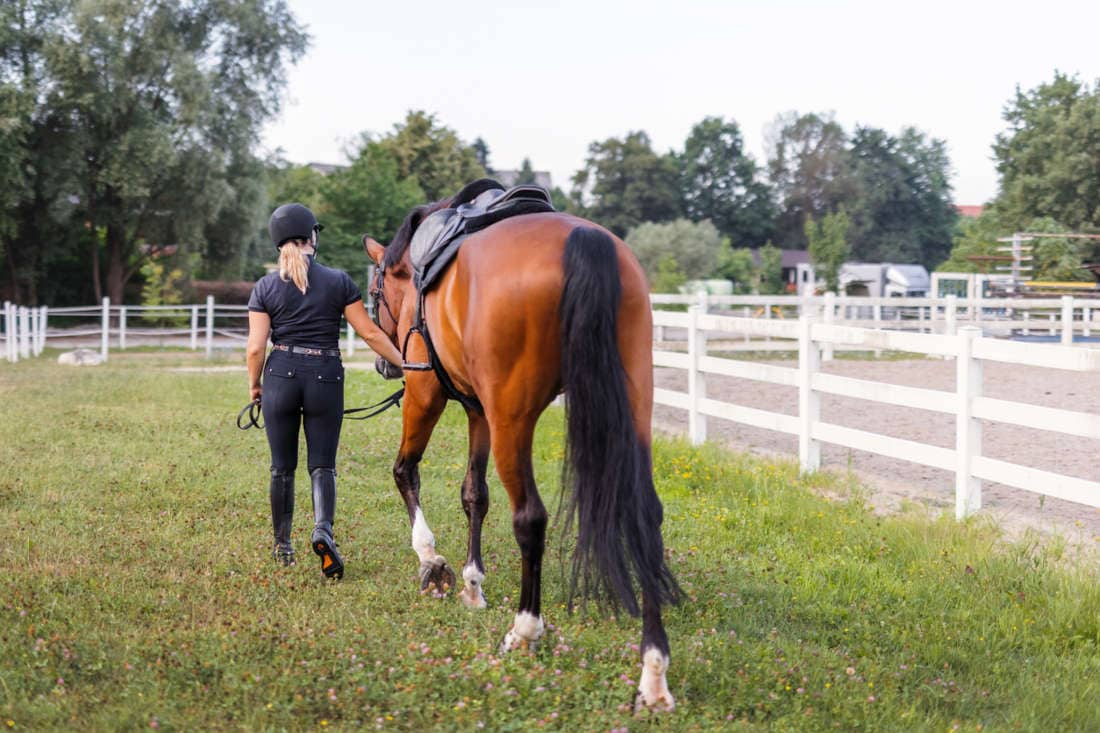
Groundwork builds the foundation young horses need for success under saddle. Everything a horse learns from the ground becomes the vocabulary the rider draws on once mounted.
A horse that arrives at its first ride with solid ground skills moves through the process more calmly, safely, and confidently than one whose foundation was rushed.
Core Groundwork Skills
Before any tack is introduced, the horse should perform a consistent range of basic handling and groundwork skills without significant stress.
These skills include: [4][6][7]
- Leading calmly from both sides
- Standing tied without pulling back
- Yielding the hindquarters and shoulders to light pressure
- Accepting touch anywhere on the body, including the girth area, belly, and legs
Lunging is the next step in training. Beyond building basic fitness and rhythm, it teaches the horse to work independently from the handler while responding to voice commands that can later support ridden work.
Lunging also provides a controlled way to introduce structured exercise before adding the rider’s weight. Short, progressive sessions allow the horse to adapt gradually to physical exertion while the handler observes their balance, rhythm, breathing, relaxation, and response to cues.
Research in young horses supports using a gradual, measured approach to conditioning during the preparation for starting under saddle. [8]
Long-lining often follows lunging and is an underused step in the starting process. The horse learns to accept rein contact from both sides while the trainer stays safely on the ground.
Early Desensitization
Desensitization helps prepare a young horse for the unfamiliar sights, sounds, movements, and sensations they may encounter during training.
Before the first ride, the horse should become comfortable with common experiences such as equipment moving around their body, pressure from both sides, and activity near their legs and hindquarters.
Introduce each new stimulus gradually and give the horse time to relax before increasing intensity or complexity. This progressive approach allows the horse to learn that unfamiliar experiences are not threatening, reducing reactive behavior and helping the handler maintain safety and control.
Research supports gradual exposure as an effective method for helping horses habituate to potentially frightening stimuli. [9]
Effective desensitization does not aim to make the horse unresponsive. Instead, the goal is a horse that notices a stimulus but remains calm, attentive, and able to respond to the handler’s cues. This preparation can make later steps, including saddling, mounting, and the first rides, more predictable and manageable.
An alternative method is “flooding,” which involves exposing the horse to the full intensity of a frightening stimulus from the start while preventing escape.
The International Society for Equitation Science (ISES) advises against this method, noting that flooding techniques can cause stress and may produce phobias rather than genuine habituation. [7]
Practical desensitization work before the first ride should include placing a saddle pad from both sides, introducing ropes that touch the legs and belly, applying girth pressure in stages, and allowing the horse to experience the saddle shifting and the stirrups swinging.
Introducing Tack
The sequence of tack introduction should progress slowly. Start with the saddle pad, letting the horse inspect it from both sides before it goes on the horse’s back. Move to a roller or surcingle before the full saddle, giving the horse time to adjust to girth pressure without the additional weight. [7][10]
Place the saddle quietly once the horse accepts the surcingle. Tighten the girth gradually over several minutes rather than all at once. Lunge the horse in the full saddle to let it feel the stirrups moving and settle into working in tack before adding a rider.
A simple snaffle is the standard choice for starting horses and introducing them to the bit. Letting the horse take the bit voluntarily, rather than forcing it, supports faster acceptance. Most horses are comfortable with a well-fitted snaffle within a few sessions.
The First Ride
When the horse is calm in tack, responsive on the lunge, and settled with a rider leaning across its back from both sides, the first ride becomes the natural continuation of a foundation that has already been built. [7][10]
Setting Up for Success
Good equipment and a familiar environment reduce the variables that can make a first ride difficult. [7][11]
A small, enclosed space works best for the first ride. A round pen or compact arena gives the ground handler control and limits the horse’s options if it becomes unsettled. At least one experienced person on the ground is essential. [12]
Attaching a lunge line during the first several rides helps maintain control from the ground. A neck strap gives the rider something stable to hold without pulling on the horse’s mouth. [12]
Introducing the Rider’s Weight
Begin by leaning across the saddle from the mounting block without swinging a leg over, a maneuver also known as a “belly over”. Practice from both sides and repeat each step until the horse stands quietly.
The rider can then progress to lying fully across the saddle before gradually sitting upright for the first time. Many horses require multiple sessions of belly overs before moving on to mounted work.
Once the rider is seated, allow the horse a moment to adjust before asking for movement. The ground handler should guide the first few steps, beginning with a short walk and halt. Ending after a calm response helps keep the session manageable and reinforces a positive first experience.
Owners can use positive reinforcement throughout this process to reward calm standing, relaxation, and willing responses. A consistent marker, such as a click, followed by an appropriate food reward can help the horse recognize which behavior the rider is reinforcing. [7][10]
Reward-based methods are best combined with gradual progression and clear, consistent cues. Breaking the process into small steps gives the horse time to become comfortable with each new sensation before the rider adds more weight, changes position, or asks the horse to move.
Reading the Horse During the First Ride
It’s important for owners to monitor their horse’s well-being during their first ride. Signs that a horse is managing well include:
- Relaxed ears
- Soft eyes
- A swinging tail
- A willingness to move forward without tension
Signs of stress include: [13]
- High head carriage
- A clamped tail
- Short, choppy strides
- Pinned ears
- A fixed expression
- Rapid breathing
Starting under saddle can be physically and mentally demanding, even when a horse does not show obvious signs of distress. Given this, handlers should monitor the horse’s entire response, including:
- Posture
- Breathing
- Movement
- Attention
- Willingness to follow familiar cues
Keeping the first rides short and progressing gradually gives the horse time to process each new experience without becoming overwhelmed. [14]
If the horse becomes significantly stressed, return to something familiar, offer a reward, and end the session there. Pushing through acute stress at this stage risks undermining progress. [7][9]
Early Ridden Work & Progression
The weeks following the first ride are when the horse develops balance under a rider, learns to interpret leg and hand aids, and builds the physical fitness needed for consistent work. Progress is rarely linear during this phase. [7][8][10]
Session Length, Frequency & Goals
Keep sessions short in the first weeks. Twenty to thirty minutes of total work, mostly spent walking, is appropriate when starting under saddle. The first goal is calm, rhythmical movement with basic responsiveness.
Reliable transitions between halt and walk, then walk and trot, take priority over introducing canter. Add canter only once the horse is relaxed at the trot and responding consistently to basic aids. Lunging for a few minutes before some rides gives the horse a chance to settle and the rider a chance to see how it moves before mounting.
Three to five sessions per week can build enough consistency for learning without overtaxing a horse who is still physically adapting to new demands.
The Stress Arc of the Starting Process
Research confirms that cortisol levels are highest during the initial backing period and decline as a horse accumulates experience under saddle. Horses in the first year of ridden work show significantly higher stress hormone concentrations than both unridden horses and horses with more than three years of training. [14]
These findings have direct implications for how riders manage the starting process. Horses pushed quickly through the process, asked to manage too many new demands at once, or repeatedly taken past their threshold are more likely to develop resistant behaviors or anxiety that persists.
The training relationship formed during the start builds the foundation for how horses progress under saddle in the future. Without a solid foundation, elevated stress levels may continue and become chronic instead of resolving as the horse advances.
Common Challenges When Starting Horses Under Saddle
Even well-prepared horses can encounter difficulty during the starting process. Most challenges are best treated as information rather than obstruction. Resistance usually signals something worth investigating, and doing so often leads to faster resolution than pushing forward. [7][14]
Bucking & Resistance Under Saddle
Some bucking is normal as a horse learns to carry weight and find its balance with a rider aboard, but explosive or repeated bucking points to underlying issues.
Before treating bucking as a training problem, rule out pain. A poorly fitted saddle, sharp teeth, gastric ulcers, or back soreness can all present as resistance while riding. [7][11][15]
Have the horse’s back and teeth examined and the saddle assessed by a qualified professional before increasing training pressure. In most cases, the answer to persistent resistance is to look deeper and slow down, not to push forward. [7][11]
Saddle Fit & Back Pain
Back pain is a common concern in ridden horses and can affect comfort, movement, behavior, and willingness to work. Because the horse’s back changes shape as it moves, a saddle that appears suitable while the horse is standing may not remain evenly balanced during exercise. [15]
Owners should assess saddle fit with the horse both standing and moving under typical riding conditions. Key signs a saddle is not fitting correctly include: [15]
- Restricted movement
- Resistance during saddling
- Changes in stride
- Discomfort when the back is touched
A properly fitted saddle should accommodate the movement of the horse’s back without concentrating excessive pressure in one area. Spotting and addressing fit problems early can help reduce discomfort and prevent pain from interfering with the horse’s training. [15]
Saddle fitting is not a one-time task, particularly for a young horse beginning regular training. Developing topline muscles, changes in body condition, and an increasing workload can alter how the saddle sits and distributes pressure. Owners should work with a qualified saddle fitter and have the fit reassessed as the horse’s body and training program change. [11][15]
Regular checks can identify changes in balance or contact before they begin interfering with the horse’s comfort and movement. The rider, trainer, saddle fitter, and veterinarian may all provide useful observations, especially if the horse develops new resistance, uneven movement, or sensitivity around the saddle area. [11]
When to Pause and Seek Help
Pausing training is not failure. If a horse’s behavior is worsening over time, becoming more resistant or more fearful rather than more settled, something in the approach needs to change. [7][9]
A veterinary examination is appropriate any time a cooperative horse suddenly becomes difficult. A professional trainer with problem-solving experience is worth calling before small issues become ingrained patterns. No training schedule matters enough to push through a horse’s declining confidence. [7]

Starting Horses Under Saddle with Confidence
Starting a horse under saddle is one of the most important transitions in a young horse’s training life. A good start gives the horse time to develop physically, understand basic communication, and learn that ridden work can be predictable and manageable.
Age can help guide timing, but readiness should also account for the horse’s soundness, skeletal development, mental maturity, handling skills, and response to new experiences. [2][3][4][5]
The best starting programs are progressive, quiet, and responsive to the individual horse. Groundwork, desensitization, tack acceptance, long-lining, and early conditioning all help make the first ride feel like the next familiar step rather than a sudden leap. Research on equine learning and habituation supports introducing new stimuli gradually and avoiding force-based methods that increase fear or stress. [7][9][10]
Owners and trainers should also remember that stress is naturally higher during the early backing period. Short sessions, clear cues, calm handling, and appropriate rewards can help young horses build confidence as they learn to carry a rider and respond to aids.
Monitoring posture, breathing, movement, facial expression, and willingness to follow familiar cues helps handlers recognize when the horse is coping well and when the session needs to slow down. [13][14]
Riders should treat resistance as useful information. Bucking, tension, reluctance to move forward, or sudden changes in behavior may reflect confusion, fear, saddle fit problems, dental discomfort, back pain, or another health concern. In these cases, pausing to reassess the horse, tack, environment, and training approach is often the most productive next step. [7][11][15]
A successful start is measured by the horse’s confidence, comfort, and understanding, not by how quickly they progress through a schedule. With patient preparation, professional support, and attention to the horse’s physical and emotional responses, starting under saddle can create a strong foundation for long-term soundness, trust, and future performance.
Frequently Asked Questions
Here are some frequently asked questions about starting horses under saddle:
Starting a horse under saddle describes a gradual process of introducing ridden work through groundwork, tack acceptance, rider weight, and basic rider aids. Breaking is an older term that historically referred to faster, more forceful methods focused on getting the horse ridden through resistance. Modern starting emphasizes trust, clarity, welfare, and the horse's emotional state. The goal is not just to get a rider on, but to build a safe foundation for the horse's future ridden career.
Most horses are started under saddle around 3 to 4 years of age, but the best timing depends on physical maturity, breed, body type, temperament, and future discipline. The spine matures later than the lower limbs, which matters because ridden work directly loads the horse's back. Some racehorses begin training earlier, while heavier breeds and slower-maturing horses may benefit from waiting longer. Readiness should be based on both body and mind, not age alone.
A horse is ready to start under saddle when it is physically mature enough for light ridden work and mentally prepared for new demands. The horse should lead calmly from both sides, stand tied, accept grooming and hoof handling, yield to light pressure, and handle basic groundwork without significant stress. It should also accept tack, lunge quietly, and remain settled while a rider leans across its back from both sides. If the horse shows escalating fear, tension, or resistance, more groundwork is needed before the first ride.
A young horse should be started under saddle by an experienced professional or a highly capable horse person working with professional support. Starting requires reading subtle body language, using precise timing, and staying calm when the horse is uncertain or reactive. These are not beginner skills, even for riders who are comfortable on trained horses. At minimum, the first several rides should involve a second experienced person on the ground.
A horse needs consistent groundwork before being backed so it understands basic expectations before a rider is added. Important skills include leading from both sides, standing tied without pulling back, yielding the shoulders and hindquarters to light pressure, and accepting touch over the body, belly, legs, and girth area. Lunging helps the horse learn rhythm, voice commands, and how to work away from the handler. Long-lining can also help introduce rein contact from the ground before ridden work begins.
Tack should be introduced to a young horse slowly and in a predictable sequence. Start with the saddle pad, allowing the horse to inspect it before placing it on the back from both sides. A roller or surcingle can help the horse adjust to girth pressure before the full saddle is added. Once the horse accepts the saddle, the girth should be tightened gradually and the horse should be allowed to lunge in tack before carrying a rider.
A simple, well-fitted snaffle is the standard bit for starting a horse under saddle. Fit matters as much as bit style because discomfort in the mouth can create resistance before the horse has a fair chance to learn. Letting the horse take the bit voluntarily helps support calm acceptance. A dental check before bitting is a good precaution to rule out sharp teeth or other mouth problems.
You do not need a round pen to start a horse under saddle, but a small enclosed space is helpful. A round pen or compact arena gives the handler more control and limits the horse's options if it becomes unsettled. The space should be familiar, safe, and free from distractions. For the first several rides, a lunge line and an experienced ground handler can add another layer of control.
Starting a horse under saddle can take several weeks to several months, depending on the horse's temperament, preparation, physical development, and previous handling. The process begins before the saddle is introduced and continues until the horse can walk, trot, steer, and respond to basic aids consistently. Some horses progress steadily, while others need more time at certain stages. A calm, confident horse at the end of the process is more important than finishing quickly.
The first ride should be short, calm, and focused on giving the horse a positive experience. The rider usually begins by leaning across the saddle from a mounting block, then lying fully across the saddle, and finally sitting upright once the horse stands quietly. After the rider is seated, the horse should be allowed a moment of stillness before taking a few controlled steps with help from the ground handler. If the horse remains calm, walking a short circle, halting, and ending the session can be enough.
Some light bucking can be normal when a young horse first learns to balance with a rider. However, explosive, repeated, or worsening bucking should not be dismissed as ordinary young horse behavior. Pain from poor saddle fit, dental problems, gastric ulcers, or back soreness can appear as resistance under saddle. Persistent bucking should prompt a pain check and a slower training approach before adding more pressure.
Early riding sessions for a young horse should be short and low-pressure. Twenty to thirty minutes of total work is often appropriate in the first weeks, with most of that time spent walking. The first goals are calm rhythm, basic steering, halt and walk transitions, and relaxation under the rider. Canter should wait until the horse is settled at trot and responding consistently to basic aids.
A newly started horse is often best worked three to five times per week, depending on its fitness, confidence, and recovery. Consistent sessions help the horse learn, but the workload should not exceed what the horse can mentally or physically handle. Some rides may benefit from a few minutes of lunging first so the rider can assess the horse's movement and tension before mounting. Progress should be measured by relaxation and understanding, not by how quickly new skills are added.
An older horse can be started under saddle if it is physically comfortable and mentally prepared for the process. Older horses with good handling, desensitization, and groundwork may accept ridden work calmly. However, they may also have established habits or fears that need extra time to address. A veterinary check, careful saddle fit, and professional guidance are especially useful when starting an older horse.
You should pause the starting process and seek help when the horse becomes more fearful, resistant, explosive, or difficult over time. Sudden behavior changes in a previously cooperative horse can signal pain or discomfort and should be assessed by a veterinarian. Ongoing resistance may also require input from a qualified saddle fitter, dental professional, or experienced trainer. Slowing down early is usually safer and more effective than pushing through a horse's declining confidence.
Summary
Starting a horse under saddle is a gradual training process that should account for the horse's physical development, mental maturity, handling skills, and emotional readiness. A patient, progressive approach helps young horses build confidence, reduce stress, and develop a safe foundation for future ridden work.
- Horses should be assessed for soundness, skeletal maturity, basic handling, tack acceptance, and calm responses before ridden work begins
- Groundwork, desensitization, lunging, and long-lining help prepare the horse to understand cues before a rider is added
- The first ride should be short, controlled, and supported by an experienced ground handler in a familiar enclosed space
- Early ridden sessions should focus on calm walking, simple transitions, rhythm, and confidence rather than rapid progression
- Resistance, bucking, or sudden behavior changes may indicate pain, fear, saddle fit problems, dental discomfort, or training confusion
References
- Baxter, G. M. Adams and Stashak’s lameness in horses. John Wiley & Sons. 2020.
- Rogers. C. W. et al. Growth and Bone Development in the Horse: When Is a Horse Skeletally Mature? Animals. 2021.
- Strand. E. et al. Radiographic Closure Time of Appendicular Growth Plates in the Icelandic Horse. Acta Veterinaria Scandinavica. 2007.
- Bickel. B. Building from the Ground Up: Safe Ground Handling of Horses. Penn State Extension. Updated 2026.
- International Society for Equitation Science. ISES Training Principles.
- Lansade. L. et al. Effects of Handling at Weaning on Manageability and Reactivity of Foals. Applied Animal Behaviour Science. 2004.
- ISES Training Principles. International Society for Equitation Science. 2026.
- Čebulj-Kadunc. N. et al. Fluctuations of Physiological Variables during Conditioning of Lipizzan Fillies before Starting under Saddle. Animals. 2022.
- Christensen. J. W. et al. Training Methods for Horses: Habituation to a Frightening Stimulus. Equine Veterinary Journal. 2006.
- Lethbridge. E. A Positive Start: Backing a Horse Using Positive Reinforcement. Animal Behaviour and Welfare Cases. 2024.
- MacKechnie-Guire. R. et al. The Role of Equestrian Professionals in Saddle Fit for Horses and Riders in the United Kingdom. Animals. 2024.
- United States Dressage Federation. The Pyramid of Training – The Young Horse: Introducing the Horse to the Stable, Tacking Up, Lungeing and Backing. USDF Training Manual. Chapter 8.
- Foreman. J. H. and Ferlazzo. A. Physiological responses to stress in the horse:. Pferdeheilkunde Equine Medicine. 1996.
- Krieber. J. et al. Fecal Cortisol Metabolites Indicate Increased Stress Levels in Horses During Breaking-In: A Pilot Study. Animals. 2025.
- Smirnova. K. P. et al. Shape Change in the Saddle Region of the Equine Back during Trot and Walk. Journal of the Royal Society Interface. 2024.