English

Enrofloxacin is a broad-spectrum antibiotic used off-label to manage selected bacterial infections in horses. In equine medicine, enrofloxacin is generally reserved for infections that are unlikely to respond to more commonly used antibiotics.
Bacterial culture and susceptibility testing can help determine whether the drug is appropriate while supporting responsible antibiotic use.
Treatment requires careful veterinary oversight because the medication’s formulation, administration route, potential interactions, and safety risks can affect individual horses differently. It is typically avoided in growing foals due to concerns about damage to developing joint cartilage.
Keep reading to learn how enrofloxacin works, when it may be prescribed, and what horse owners should know about administration, side effects, precautions, and competition regulations.
Enrofloxacin for Horses
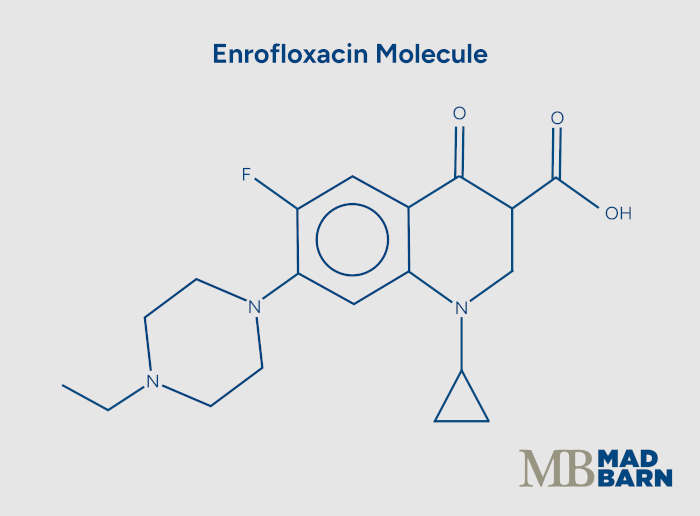
Enrofloxacin is a synthetic antibiotic developed for veterinary use and commonly sold under the brand name Baytril®. It belongs to the fluoroquinolone class of antibiotics and is available in oral and injectable formulations. [1]
Enrofloxacin is bactericidal, meaning it kills target bacteria rather than only slowing their growth. Its antibacterial effect is concentration-dependent, so it works best when drug levels rise well above the minimum inhibitory concentration (MIC). [1] The MIC is the lowest drug concentration needed to inhibit the target bacteria in laboratory testing.
Enrofloxacin may also continue suppressing bacterial growth for a time after drug concentrations fall, helping maintain its effect between doses. [1]
Enrofloxacin is a prescription-only medication and may only be legally obtained and administered under the direction of a licensed veterinarian. Antibiotic resistance is a serious concern in veterinary medicine.
Giving antibiotics without veterinary oversight is not safe and can contribute to resistant bacteria, making future infections harder to treat in the same horse and across the wider horse population. Resistant bacteria can also affect other animals and, in some cases, people, which is why antibiotics should only be used when prescribed by a veterinarian and when they are likely to be effective.
Available Forms
Enrofloxacin is not available as an equine-labeled product, but veterinarians may prescribe several veterinary formulations for horses on an extra-label basis. The most appropriate form depends on the infection being treated, the route of administration, product availability, and how reliably the horse can receive the medication.
Extra-label use, also referred to as off-label use, means a drug is used in a way that differs from the approved product label. This may include use in a different species, for a different condition, by a different route and other ways that differ from what the label describes.
Extra-label prescribing is permitted in veterinary medicine because approved treatment options are limited for many species and conditions. In these cases, a veterinarian may determine that a drug is medically necessary when an appropriately labeled option is not available or is unlikely to be effective.
Enrofloxacin may be supplied for equine use as:
- Injectable solutions or suspensions
- Oral suspensions
- Tablets
- Compounded oral gels or other preparations
Common veterinary brand and trade names of enrofloxacin include:
- Baytril®
- Baytril® 100
- Baytril® Taste Tabs®
- Enroquin® Flavored Tablets
- EnroMed 100
- Enroflox 100
- Zobuxa
- Quellaxcin 100
Product names, concentrations, approved species, and available formulations vary by country and manufacturer. Baytril® tablets are labeled for dogs and cats, while Baytril® 100 injectable solution is labeled for cattle and swine in some jurisdictions. [1]
Veterinary products are available in several concentrations. Injectable cattle formulations are sometimes administered intravenously or orally to horses under veterinary direction. Small-animal tablets may also be prescribed. Unflavored tablets may be absorbed more reliably than cattle injectable products given by mouth. [1]
Compounded products may be prepared when a commercial formulation is not practical. However, the quality, concentration, stability, and absorption of compounded preparations may not be equivalent to those of an approved commercial product. [1][2]
What's your top priority with your horse's health?

What's your top priority with your horse's health?
Drug Class: Fluoroquinolone Antibiotics
Fluoroquinolones are synthetic antibiotics modified with a fluorine atom to improve their potency and ability to enter bacterial cells. Enrofloxacin is the fluoroquinolone most commonly used in veterinary medicine. [1]
Other drugs in this class include:
- Ciprofloxacin
- Marbofloxacin
- Orbifloxacin
- Danofloxacin
- Difloxacin
- Norfloxacin
- Pradofloxacin
There is no fluoroquinolone product approved specifically for horses, although some are used extra-label under veterinary supervision. Ciprofloxacin should not be substituted for enrofloxacin in horses because it is poorly absorbed orally and has been associated with severe colitis and other serious complications. [1][3]
Fluoroquinolones are most effective against many aerobic gram-negative bacteria. They may also work against some intracellular bacteria, but their activity against Streptococcus and Enterococcus species is unreliable. They are generally ineffective against anaerobic bacteria. [1]
Mechanism of Action
To reproduce, bacteria must copy and organize their DNA. Two enzymes, DNA gyrase and topoisomerase IV, help manage this process.
Enrofloxacin blocks these enzymes, preventing bacterial DNA from being copied and repaired properly. This disruption prevents bacterial reproduction and leads to cell death. [1]
Enrofloxacin works best when drug levels at the infection site rise well above the MIC of the target bacteria. Total drug exposure over 24 hours also helps predict treatment success and supports once-daily dosing in many horses. [1]
Uses in Horses
Enrofloxacin is used off-label in horses at the discretion of a licensed veterinarian. As with other antibiotics, the prescribing veterinarian uses a combination of diagnostics and bacterial culture and susceptibility testing to determine which antibiotics are most likely to be effective for a given infection.
Enrofloxacin may be used in adult horses for susceptible bacterial infections involving multiple systems, including:
- Respiratory
- Urinary
- Bones
- Joints
- Soft tissues
- Gastrointestinal
- Reproductive
It distributes widely and can reach urine, synovial fluid, peritoneal fluid, cerebrospinal fluid, and endometrial (uterine) tissue. [4][3]
The drug may be appropriate for gram-negative bacterial infections associated with conditions such as: [1][3]
- Pneumonia
- Osteomyelitis
- Septic arthritis
- Urinary tract infections
- Internal abscesses
- Other infections caused by organisms such as Mycoplasma, Neorickettsia, or Anaplasma species
It’s important to note that a diagnosis of any of the above conditions does not indicate that enrofloxacin or any other particular antibiotic is the best choice for treatment. Veterinarians use bacterial culture and susceptibility testing, local resistance patterns, and the horse’s medical history to direct treatment.
Giving antibiotics without veterinary oversight can lead to worsening infection and increase the risk of antibiotic resistance for the broader equine population.
Enrofloxacin may also be combined with a beta-lactam antibiotic, such as penicillin or amoxicillin, when broader antimicrobial coverage is needed. [1][3] Enrofloxacin is not usually suitable as the sole initial treatment for common streptococcal pneumonia in horses. [5]
Although enrofloxacin given orally or intravenously can reach the uterus, the injectable formulation should not be infused directly into the reproductive tract. Intrauterine administration has caused severe inflammation, tissue damage, and lasting scarring of the uterine lining in mares. [6]
Antibiotic Spectrum
Enrofloxacin is most active against aerobic gram-negative bacteria, including many Enterobacteriaceae and organisms such as Escherichia coli, Klebsiella, Proteus, and Pseudomonas aeruginosa. It also has activity against some Staphylococcus species and certain intracellular bacteria. [2][3][7]
Its activity against Streptococcus and Enterococcus species is limited or unpredictable, and it is generally ineffective against anaerobic bacteria. Culture and susceptibility testing are important to confirm that the target bacteria are likely to respond. [2][3][7]
Fluoroquinolone resistance is increasing, and resistance to one drug in this class may affect others. Enrofloxacin should only be used under veterinary direction when the infection and available test results justify its use.
Antibiotic resistance is a growing concern in veterinary medicine. Using antibiotics without veterinary guidance or when they are not needed can make infections harder to treat across the broader population of horses and livestock, which highlights the importance of veterinary oversight for all antibiotic treatments.
Administration Routes
Because enrofloxacin use in horses is extra-label, the dose, route, frequency, and treatment duration must be determined by the prescribing veterinarian. These decisions depend on the infection, bacterial susceptibility, formulation, and individual horse.
Intravenous doses should be administered slowly. Rapid intravenous injection has caused transient ataxia (incoordination) and other neurologic signs. Intramuscular administration is not recommended because it can cause pain, inflammation, and severe local tissue injury. [2]
Oral administration of injectable enrofloxacin can irritate the mouth. Coating the medication, preparing an appropriate gel, and rinsing the horse’s mouth after dosing may reduce irritation. Some oral dosing protocols also recommend withholding feed before and briefly after treatment while allowing continued access to water. [2]
Medication dosages must be determined by a licensed veterinarian based on the individual horse’s condition. Incorrect dosing can cause serious harm. Follow the prescription label exactly and never adjust a dose without veterinary direction.
It is important to complete the full course of antibiotics as prescribed, even if the horse appears to be improving. Failure to complete a full course of antibiotics can lead to relapse and contributes to antimicrobial resistance.
Storage
Commercial enrofloxacin products should be stored according to the manufacturer’s instructions and protected from conditions that could affect product stability. Storage requirements may differ by formulation, including among tablets, suspensions, injectable products, and compounded preparations.
Compounded products should have a clearly stated storage method and beyond-use date from the dispensing pharmacy. Discard products that are expired, improperly stored, contaminated, or visibly altered.
Safety Warnings & Precautions
Enrofloxacin should be reserved for infections in which its spectrum, tissue penetration, and susceptibility results justify its use. Unnecessary or poorly targeted treatment may promote fluoroquinolone-resistant bacteria.
Horses should remain well-hydrated during treatment. Quinolones may form crystals in concentrated urine, and dehydration may increase the risk of side effects. [7][2]
Monitoring
Veterinary monitoring during treatment with enrofloxacin may include:
- Clinical response to treatment
- Body temperature and signs associated with the infection
- Appetite and manure consistency
- Hydration status
- Oral mucosa when medication is given by mouth
- Injection sites
- Gait, joint comfort, and tendon or ligament pain
- Kidney and liver laboratory values when indicated
- Repeat culture or susceptibility testing for persistent infections
Failure to improve, worsening illness, or new clinical signs should prompt the veterinarian to reassess the diagnosis and treatment plan.
Antibiotic Resistance
Horse owners play an important role in preventing resistance.
Never give leftover antibiotics, share medications between horses, change the dose, skip doses, or stop treatment early unless your veterinarian directs you to do so.
Completing the prescribed treatment plan and following veterinary instructions helps protect your horse, other horses, and the long-term effectiveness of important antibiotics.
Contraindications
Contraindications are circumstances where a drug should be avoided or used with caution.
Enrofloxacin should not be used in: [1][2]
- Horses with a known hypersensitivity to quinolones
- Foals or immature growing horses when safer alternatives are available
- Infections caused solely by anaerobic bacteria
- Streptococcal infections unless susceptibility results and the overall treatment plan support its use
Fluoroquinolones can damage developing joint cartilage. Given this, enrofloxacin is generally avoided in foals, although veterinarians may occasionally consider it for serious infections when other effective options are unavailable. [1]
Use additional caution in horses with:
- Dehydration
- Kidney disease or liver disease
- A history of seizures or neurologic disease
- Existing joint, tendon, or ligament disorders
- Pregnancy
- Immature skeletal development
One study did not identify cartilage or tendon damage in foals after mares received enrofloxacin late in pregnancy. However, safety has not been established throughout gestation or over the longer term. [9] For this reason, treatment in pregnant animals is based on an individual risk-benefit assessment.
Side Effects
Early recognition of side effects is important. Promptly alert your veterinarian if a horse receiving enrofloxacin develops signs such as: [1][2][7]
- Reduced appetite
- Oral irritation or ulceration
- Diarrhea or colitis
- Injection-site inflammation
- Ataxia or other neurologic signs after rapid intravenous administration
- Cartilage or joint pain
- Tendon or ligament pain
Enrofloxacin appears to carry a relatively low risk of antibiotic-associated diarrhea compared with some other broad-spectrum antibiotics, but colitis has been reported. Any diarrhea during treatment should be taken seriously in a horse. [2]
In laboratory testing, concentrations similar to those expected with standard treatment did not disrupt normal joint cartilage activity. Much higher concentrations damaged cartilage cells, supporting concern about dose-related cartilage toxicity. [8]

Acute Toxicity (Overdose)
Excessive doses may increase the risk of neurologic, gastrointestinal, cartilage, tendon, or joint toxicity. High or prolonged doses have been associated with joint damage in adults and damage to developing cartilage in young animals. [7]
There is no specific antidote described for enrofloxacin overdose. Management is based on discontinuing exposure when appropriate, maintaining hydration, monitoring organ function, and providing supportive care.
Drug Interactions
Products that affect gastrointestinal absorption can interact with enrofloxacin, including: [2]
- Antacids
- Sucralfate
- Dairy products
Supplements containing calcium, magnesium, aluminum, iron, or zinc can reduce the absorption of oral enrofloxacin. These products should generally be given at least two hours apart from enrofloxacin. [2]
Other reported or potential interactions include: [1][2]
- Chloramphenicol: May reduce the bacteria-killing effect of fluoroquinolones.
- Nitrofurantoin: May reduce fluoroquinolone activity.
- Theophylline: Fluoroquinolones may slow its breakdown and increase blood levels.
- Cyclosporine: Blood levels or the risk of kidney damage may increase.
- Probenecid: May slow the removal of fluoroquinolones by the kidneys and prolong drug exposure.
- Flunixin: An interaction affecting drug exposure has been reported in dogs, but its importance in horses is unknown.
- Certain antibiotics: Beta-lactams or aminoglycosides may improve activity against selected bacteria, but the response is not predictable.
Regulatory Status & Legal Considerations
Enrofloxacin is approved for use in humans and several animal species, but no enrofloxacin product is approved specifically for horses. In equine practice, this means veterinarians use enrofloxacin on an extra-label basis when they determine it is appropriate for the infection being treated. [2]
Extra-label use, also called off-label use, is permitted in veterinary medicine when a licensed veterinarian prescribes the medication under an appropriate veterinarian-client-patient relationship.
The veterinarian is responsible for selecting the drug, determining the dose and route, providing administration instructions, and advising on any withdrawal or competition considerations that apply.
Status in Competition
Enrofloxacin is not listed as a banned substance or controlled medication under the FEI rules. [10] Competition rules can vary by organization, so owners and trainers should confirm the requirements for their discipline before competing a recently treated horse.
The FEI List of Detection Times does not provide an official detection time for enrofloxacin. Detection time is not the same as withdrawal time. A withdrawal time must be determined by the treating veterinarian using clinical judgment and an added safety margin to account for individual factors such as the horse’s size, metabolism, fitness, recent illness, and route of administration. [11]
Horses treated with enrofloxacin should only return to competition when the underlying infection has resolved sufficiently and they are clinically fit to compete. Medication decisions close to competition should not compromise the horse’s welfare or mask signs of illness or injury that could worsen with exercise. [11]
Frequently Asked Questions
Here are some frequently asked questions about enrofloxacin use in horses:
Baytril® is a brand name for enrofloxacin, a fluoroquinolone antibiotic developed for veterinary use. Baytril® products are not labeled specifically for horses, but veterinarians may prescribe them on an extra-label basis. The formulation and concentration can vary, so owners should use only the product prescribed for their horse.
Enrofloxacin is used in horses to treat selected bacterial infections that are susceptible to the drug. Potential uses include certain infections of the lungs, urinary tract, bones, joints, soft tissues, abdomen, and reproductive tract. It is generally reserved for infections that are unlikely to respond to more commonly used antibiotics.
Enrofloxacin treats many aerobic gram-negative bacteria, including susceptible strains of E. coli, Klebsiella, Proteus, and Pseudomonas aeruginosa. It may also work against some Staphylococcus species and certain intracellular bacteria. Its activity against Streptococcus and Enterococcus is unreliable, and it generally does not work well against anaerobic bacteria.
Enrofloxacin can treat some cases of bacterial pneumonia in horses when the infection is caused by a susceptible organism. It may be useful against certain gram-negative respiratory pathogens, but it is not usually an appropriate sole initial treatment for common streptococcal pneumonia. A veterinarian may recommend culture and susceptibility testing or combine enrofloxacin with another antibiotic when broader coverage is needed.
Bacterial culture is recommended before using enrofloxacin because the drug does not reliably treat every organism that causes infections in horses. Culture identifies the bacteria involved, while susceptibility testing helps determine whether enrofloxacin is likely to be effective. Targeted treatment also reduces unnecessary fluoroquinolone use and the risk of antibiotic resistance.
Enrofloxacin is not FDA-approved specifically for use in horses, and no equine-labeled formulation is currently available. Veterinarians may prescribe it extra-label when its use is medically justified. Because the dose, route, and suitability can vary, enrofloxacin should only be administered under veterinary direction.
Enrofloxacin may be given to horses orally or by slow intravenous injection, depending on the prescribed formulation and treatment plan. Commercial tablets, injectable products used orally, oral suspensions, and compounded preparations may be considered. Intramuscular administration is not recommended because it can cause pain, inflammation, and severe tissue injury.
Injectable enrofloxacin is sometimes prescribed orally to horses under veterinary direction. However, it can irritate the mouth, and absorption may be less reliable than with some unflavored tablet formulations. A veterinarian may recommend an appropriate gel or coating method and rinsing the horse's mouth after administration to reduce irritation.
The correct enrofloxacin dose for a horse is determined by the prescribing veterinarian. The decision depends on the infection, bacterial susceptibility, formulation, route of administration, and the individual horse's health. Owners should follow the prescription exactly and should not change the dose, frequency, or treatment duration without veterinary guidance.
Side effects of enrofloxacin in horses may include reduced appetite, oral irritation or ulceration, diarrhea, colitis, and injection-site inflammation. Rapid intravenous administration can cause temporary incoordination or other neurologic signs. Excessive doses or prolonged treatment may increase the risk of cartilage, joint, tendon, or ligament injury.
A veterinarian should be contacted promptly if a horse receiving enrofloxacin develops diarrhea, colic, reduced appetite, oral ulcers, weakness, incoordination, sudden lameness, joint swelling, or tendon pain. Severe diarrhea, collapse, seizures, marked incoordination, or rapidly worsening signs require urgent veterinary care. These signs may indicate an adverse reaction, progression of the infection, or a need to change treatment.
Enrofloxacin is generally avoided in foals and immature growing horses because fluoroquinolones can damage developing joint cartilage. A veterinarian may occasionally consider it for a serious infection when other effective and safer options are unavailable. The potential benefit must be weighed carefully against the risk of cartilage and joint injury.
The safety of enrofloxacin has not been established throughout pregnancy or over the longer term. One study did not find cartilage or tendon damage in foals whose mares received the drug late in pregnancy, but this does not confirm safety during every stage of gestation. Treatment of a pregnant mare should be based on an individual veterinary risk-benefit assessment.
Medications and supplements can interact with oral enrofloxacin or affect its absorption. Antacids, sucralfate, dairy products, and products containing calcium, magnesium, aluminum, iron, or zinc should generally be separated from enrofloxacin by at least two hours. The veterinarian should also review drugs such as chloramphenicol, nitrofurantoin, theophylline, cyclosporine, probenecid, and flunixin before treatment begins.
Hydration is important for a horse receiving enrofloxacin because quinolone drugs may form crystals in concentrated urine. Dehydration may increase the risk of adverse effects and deserves particular attention in horses with kidney or liver disease. Owners should monitor water intake and follow their veterinarian's instructions for maintaining hydration during treatment.
A horse that receives too much enrofloxacin should be evaluated promptly by a veterinarian. Excessive exposure may increase the risk of gastrointestinal, neurologic, cartilage, joint, or tendon toxicity. There is no specific antidote, so management may involve stopping further exposure when directed, maintaining hydration, monitoring organ function, and providing supportive care.
Enrofloxacin should be reserved for selected infections because unnecessary use can promote fluoroquinolone-resistant bacteria. Resistance may make the current infection harder to treat and can limit future antibiotic options. Its use is most appropriate when the suspected organism, infection site, and susceptibility results support the choice.
Horses receiving enrofloxacin should return to competition only after the underlying infection has resolved sufficiently and they are clinically fit to compete. Enrofloxacin is not listed as a banned substance or controlled medication under current FEI rules, but requirements may differ among competition organizations. Medication should never be used to hide illness or injury that could worsen with exercise.
A withdrawal time for enrofloxacin in a competition horse must be determined by the treating veterinarian. The FEI does not publish an official detection time for enrofloxacin, and a detection time is not the same as a withdrawal time. The veterinarian must consider the horse, formulation, route of administration, treatment history, and applicable competition rules while allowing an appropriate safety margin.
Summary
Enrofloxacin is a broad-spectrum fluoroquinolone antibiotic used in adult horses for selected bacterial infections. Because there are no equine-labeled formulations and resistance is an increasing concern, it should only be used under veterinary direction when the target bacteria are likely to be susceptible.
- Enrofloxacin is most effective against many aerobic gram-negative bacteria and some Staphylococcus species
- Potential uses include susceptible infections of the urinary and respiratory tracts, joints, bones, soft tissues, and internal organs
- Culture and susceptibility testing help confirm whether enrofloxacin is an appropriate antibiotic choice
- Enrofloxacin is generally avoided in foals because it can damage developing joint cartilage
- Possible side effects include reduced appetite, oral irritation, diarrhea, colitis, injection-site reactions, and neurologic signs
References
- Cole. C. et al. Eds. Equine Pharmacology. Wiley-Blackwell. 2015.
- Budde. J. A. and McCluskey. D. M. Plumb's Veterinary Drug Handbook. Wiley-Blackwell. 2023.
- Diaz-Campos. D. et al. Eds. OSU VMC Antimicrobial Use Guidelines. The Ohio State University College of Veterinary Medicine. 2018.
- Giguère. S. et al. Pharmacokinetics of Enrofloxacin in Adult Horses and Concentration of the Drug in Serum, Body Fluids, and Endometrial Tissues after Repeated Intragastrically Administered Doses. American Journal of Veterinary Research. 1996.
- Davis. E. et al. Enrofloxacin Use in a Long-Distance Transport Model of Equine Respiratory Disease. Veterinary Therapeutics: Research in Applied Veterinary Medicine. 2006.
- Rodriguez. J. S. et al. Consequences of Intrauterine Enrofloxacin Infusion on Mare Endometrium. Journal of Equine Veterinary Science. 2012.
- Mercer. M. A. Quinolones, Including Fluoroquinolones, for Use in Animals. Merck Veterinary Manual. 2025.
- Beluche. L. A. et al. In Vitro Dose-Dependent Effects of Enrofloxacin on Equine Articular Cartilage. American Journal of Veterinary Research. 1999.
- Ellerbrock. R. E. et al. Administration of Enrofloxacin during Late Pregnancy Failed to Induce Lesions in the Resulting Newborn Foals. Equine Veterinary Journal. 2020.
- 2026 Equine Prohibited Substances List. Fédération Équestre Internationale. 2026.
- FEI List of Detection Times. Fédération Équestre Internationale. 2024.