English

Meloxicam is a non-steroidal anti-inflammatory drug (NSAID) used under veterinary direction to help manage pain and inflammation in horses.
Horse owners may encounter meloxicam as part of a treatment plan for musculoskeletal discomfort, post-surgical pain, or other situations where controlling inflammation can support comfort and recovery.
Like other NSAIDs, meloxicam can help reduce pain-related signs, but it is not risk-free. Potential concerns include effects on the digestive tract, kidneys, and blood clotting, particularly in horses that are dehydrated, medically fragile, or receiving other medications.
Keep reading to learn how meloxicam works in horses, when veterinarians may prescribe it, what side effects to watch for, and what owners should know about safe use, drug interactions, and competition regulations.
Meloxicam for Horses
Meloxicam is a non-steroidal anti-inflammatory drug (NSAID) used to help manage pain and inflammation in horses. Like other NSAIDs, meloxicam works by reducing chemical messengers involved in inflammation and pain.
It is slightly COX-2 selective, meaning it acts more on the inflammatory pathway than on the COX-1 pathway involved in stomach protection and blood clotting. However, meloxicam still affects both pathways, so gut and kidney risks are not eliminated. [2]
In parts of Europe and Australia, oral and injectable meloxicam products are approved for horses. In Canada and the United States, meloxicam use in horses is extra-label (off-label), so a veterinarian must prescribe it on a case-by-case basis. [1]
Veterinarians may prescribe meloxicam to reduce pain and swelling associated with muscle, joint, or soft-tissue problems. In some countries, it is also used to address discomfort related to colic.
In horses, it may be given by mouth or by injection, depending on the product and clinical situation. [1][3]
Meloxicam is not an antibiotic, steroid, or sedative. It does not treat infection or replace rest, hoof care, surgery, or other therapies when those are needed. Its role is to help control inflammatory pain as part of a veterinary care plan.

Available Forms
Meloxicam comes in several veterinary forms. Product availability and approved uses vary by country.
Common forms include: [1][2][3]
- Oral liquid suspension for horses, such as Metacam 15 mg/mL oral suspension for horses in countries where this product is approved
- Injectable solutions given into a vein in horses where labelled products exist
- Tablets, oral liquids, and injectables labelled mainly for dogs and cats, which may be considered for off-label horse use only under veterinary direction
Common trade names used in equine medicine include:
- Metacam®
- Mobic®
- Vivladex®
- Meloxidolor®
- MeloxivetTM
Veterinarians may also request custom formulations from a compounding pharmacy, but these products may have lower dose availability than commercially approved products. [1]
What's your top priority with your horse's health?

What's your top priority with your horse's health?
Drug Class: Non-Steroidal Anti-Inflammatory Drugs (NSAIDs)
NSAIDs are a group of drugs used to reduce inflammation, pain, and fever. In horses, commonly discussed NSAIDs include phenylbutazone (“bute”), flunixin meglumine (Banamine®), firocoxib (Equioxx®), and meloxicam.
Each type of NSAID works in related ways but they differ in how strongly they affect the body’s inflammation and protective pathways, how long they last, and what they are approved to treat. [2][4]
No single NSAID is best for every horse or every problem. Choice depends on the condition, the horse’s medical history, other medications, how the drug is given, and rules for competition or other relevant regulations.
Mechanism of Action
Like other NSAIDs, meloxicam works by blocking cyclooxygenase (COX) enzymes. These enzymes help make prostaglandins, which are chemical messengers that contribute to pain, fever, and inflammation. [2]
Lowering prostaglandin production can ease discomfort, but the same messengers also serve key functions in the body, including: [2]
- Helping protect the stomach lining
- Supporting kidney blood flow in some situations
- Playing a role in blood clotting
This is why the potential benefits of using NSAIDs must be considered alongside the potential risks of interfering with these systems. [2]
Meloxicam is slightly COX-2 selective, which means it has greater action on COX-2 than COX-1 enzymes. COX-2 enzyme pathways are more closely linked to inflammation compared to COX-1, which are more closely linked to stomach protection and clotting.
This selectivity may lower the risk of some side effects compared with older NSAIDs that are non-selective, but it does not remove gut, kidney, or other NSAID risks. [2][4]
Uses in Horses
In the European Union and Australia, meloxicam products for horses have been approved to relieve inflammation and pain from short-term or long-term muscle, joint, and related soft-tissue problems. Some injectable European products are also labelled for pain linked to colic in certain settings. [1][3]
In Canada and the United States, there is currently no meloxicam product labelled for horses. Given this, use in horses is extra-label, also called off-label. Extra-label use means a veterinarian prescribes a medication in a way not specifically described on the approved product label, such as for a different species, condition, dose, or route of administration. [1]
Off-label use is permitted under veterinary prescribing rules when no approved horse alternative is available. In these cases, veterinarians rely on published research, clinical experience, and established treatment plans to decide whether meloxicam is appropriate and how the horse should be monitored. [1]
Research and clinical findings support meloxicam in several pain settings in horses, including: [4][5][6][7][8][9][10]
- Muscle, joint, and soft-tissue pain: Field and clinical studies of oral meloxicam have reported improvements in lameness-related signs in horses.
- Abdominal pain: A review of NSAID use for abdominal pain in horses included meloxicam, which indicated potential use cases under certain conditions.
- Pain after surgery: Meloxicam has been studied after procedures such as castration and small intestinal surgery. Results differ between studies. Some work suggests flunixin meglumine may control internal, or organ-related, pain better after certain surgeries, while other studies report similar overall pain relief from meloxicam and flunixin in research models of inflammation.
- Inflammation-related pain: Research studies have compared meloxicam and flunixin meglumine for pain-related behaviors and signs of inflammation in horses.
Meloxicam does not replace finding and treating the underlying problem. Your veterinarian will decide whether an NSAID is appropriate, which drug fits best, and what else your horse needs, such as rest, imaging, surgery, or other treatments.
Administration Routes
Depending on the product and clinical need, meloxicam may be given: [1][3]
- By mouth: Oral liquids are commonly used for ongoing muscle and joint pain when labelled or prescribed.
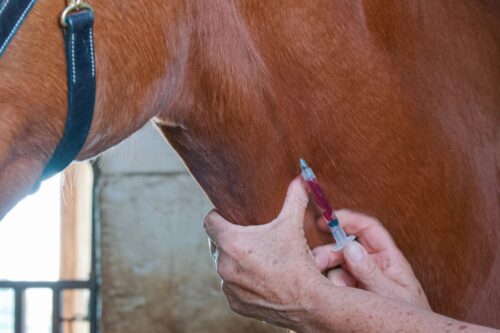
- Into a vein (intravenous): Injectable products, when available and prescribed, are given by a veterinarian or under veterinary direction.
Since meloxicam is used off-label in North America, standard dosages have not been determined.
Storage
Store meloxicam according to the instructions on the product label or those provided by your veterinarian or pharmacist. Storage requirements can vary between products, so always follow the directions for the specific medication your horse was prescribed.
In general, meloxicam should be kept in its original container with the lid tightly closed. Store it away from direct light and in a secure location where children and animals cannot reach it.
Some liquid products have specific temperature requirements or must be used within a certain period after opening. Check the label or ask your veterinarian or pharmacist if you are unsure. Do not use meloxicam after the expiry date. [2]
Safety Warnings & Precautions
To reduce the risk of adverse reactions, NSAIDs should be used at the lowest effective dosage for the minimum possible duration required.
Horses with existing kidney or gut disease and horses receiving other drugs that affect the stomach, kidneys, or clotting require extra caution when prescribing or administering NSAIDs. [2] Report any history of ulcers, kidney disease, or prior NSAID reactions before treatment starts.
Monitoring
During treatment with meloxicam, the prescribing veterinarian may recommend the following types of monitoring:
- Appetite, manure output and quality, attitude, and water intake
- Bloodwork to check kidney and liver values before or during longer courses
- Rechecking lameness or comfort to confirm response to treatment
Monitoring plans vary with how long the drug is prescribed for, the horse’s age and health status, and use of other medications. The goal is to confirm that meloxicam is providing meaningful comfort without creating avoidable risk.
Contraindications
Contraindications are circumstances where a drug should be avoided or used only with caution.
Meloxicam should generally be avoided, or used only with extreme caution under veterinary supervision, in horses with: [2][3]
- Known allergy or sensitivity to meloxicam or other NSAIDs
- Active stomach or gut ulcers or bleeding, or a history of serious gut injury from NSAIDs
- Significant kidney, liver, or heart disease, especially when the horse is dehydrated or has low blood pressure
- Bleeding disorders or situations where reduced clotting is a major concern
- Use of other NSAIDs, corticosteroids, or other medications that raise gastrointestinal or kidney risk, unless a veterinarian has specifically planned and monitored that combination
European product information for Metacam® also advises caution in horses used for breeding, and during pregnancy or lactation, because safety has not been fully established for all of these situations. Treat pregnant, nursing, and breeding horses only under direct veterinary guidance. [3]
Foals and dehydrated, older, or critically ill horses may be at higher risk for NSAID side effects. [2]
Side Effects
As with other NSAIDs, the most important side effects involve the gut and kidneys. These risks are part of the broader safety concerns discussed with NSAID use in horses.
Possible side effects include: [11][2]
- Reduced appetite, dullness, or colic-like discomfort
- Diarrhea or soft manure
- Mouth ulcers or other signs of digestive tract irritation
- Changes that can signal kidney stress, such as low urine output
- Swelling or soreness at the injection site with injectable products
- Rarely, allergic reactions
One research study found that a high dose of meloxicam made the stomach lining more permeable, or “leaky.” One horse in the study developed right dorsal colitis and related complications. That finding supports careful dosing and monitoring rather than assuming meloxicam is free of gut risk. [11]
Contact your veterinarian if your horse shows reduced appetite, colic signs, diarrhea, black or bloody manure, unusual dullness, swelling, hives, or any sudden change while on meloxicam.
Acute Toxicity (Overdose)
An overdose or giving more than one NSAID can raise the risk of serious gut injury, kidney damage, and other complications. [2][11]
Follow these steps if you suspect your horse received too much meloxicam, ate another horse’s medication, or was given more than one NSAID by mistake:
- Move the horse to a quiet stall
- Do not give additional NSAIDs, corticosteroids, or home remedies unless your veterinarian directs you to
- Contact your veterinarian right away, or an emergency clinic if your regular veterinarian is unavailable
In cases of suspected overdose, veterinary assessment is still required even if the horse seems fine. Early intervention provides the best chance of a positive outcome.
Drug Interactions
Important interaction concerns with meloxicam and other NSAIDs include: [2]
- Other NSAIDs: May increase the risk of gut and kidney side effects
- Corticosteroids: May increase the risk of gut ulcers when combined with NSAIDs
- Blood thinners or other drugs that affect clotting: May increase bleeding risk
- Certain antibiotics: May add kidney risk in vulnerable horses
- Other drugs that bind to blood proteins: May compete with each other in the bloodstream
Do not start, stop, or combine pain medications without veterinary advice. This includes combining prescription drugs with over-the-counter products or supplements that your veterinarian has not reviewed.

Regulatory Status & Legal Considerations
Meloxicam is a prescription medication approved for veterinary use.
Prescribing rules depend on country and product: [1][3]
- European Union and Australia: Horse-labelled meloxicam products, including oral Metacam®, are approved for specific pain and inflammation uses.
- Canada and the United States: Meloxicam use in horses is typically extra-label because an oral product has not been approved for equine use in these jurisdictions
Meloxicam is not an over-the-counter medication for horses. Only use products dispensed or prescribed for your horse, and follow the prescription label exactly.
Status in Competition
Under the FEI Equine Prohibited Substances List, meloxicam is classified as a Controlled Medication. Controlled Medications may be used for legitimate treatment, but horses must be free of the substance at the time of competition according to FEI rules. [12]
The FEI Detection Times reference lists a detection time of 72 hours (3 days) for the oral and intravenous meloxicam protocols described in that document, including a published oral Metacam® regimen.
Detection time is not the same as withdrawal time. Detection time is a laboratory guide based on a specific dose, route, and study conditions. Withdrawal time is set by the treating veterinarian and should include a safety margin for the individual horse, product, dose, and test sensitivity. [13]
Always check the current FEI Prohibited Substances List and your sport’s rules before competing. National federations and other organizations may apply different policies.
Frequently Asked Questions
Here are some frequently asked questions about meloxicam use in horses:
Meloxicam is used in horses to help control pain and inflammation, especially from muscle, joint, and soft-tissue problems. In countries where horse-labelled products are approved, oral meloxicam may be used for short-term or long-term musculoskeletal pain, and some injectable products are labelled for certain colic-related pain settings. In Canada and the United States, meloxicam use in horses is typically extra-label and must be directed by a veterinarian. [1][3]
Meloxicam is approved for horses in some countries, but not in the same way everywhere. Horse-labelled meloxicam products are available in parts of Europe and Australia for specific pain and inflammation uses. In Canada and the United States, meloxicam use in horses is generally extra-label, meaning a veterinarian must decide whether it is appropriate for the individual horse and situation. [1][3]
Meloxicam works in horses by reducing prostaglandins, which are chemical messengers involved in pain, fever, and inflammation. It does this by blocking cyclooxygenase, or COX, enzymes. Meloxicam is often described as more COX-2 preferential than some older NSAIDs, but it still affects protective pathways involved in gut health, kidney blood flow, and clotting. [2]
Meloxicam is not the same drug as bute or Banamine, but all three are NSAIDs used to manage pain and inflammation in horses. Bute is phenylbutazone, Banamine is a common trade name for flunixin meglumine, and meloxicam is a different NSAID with its own approval status, dosing considerations, and safety profile. No NSAID is best for every horse or every condition. The choice depends on the horse's problem, health history, other medications, route of administration, and competition rules. [2][4]
Meloxicam may be given to horses by mouth or by intravenous injection, depending on the product and the veterinarian's treatment plan. Oral liquid products are commonly discussed for musculoskeletal pain where labelled or prescribed. Injectable products, where available and appropriate, are given into a vein by a veterinarian or under veterinary direction. Injectable meloxicam should not be given by an unapproved route. [1][3]
Horse owners should not give meloxicam without a veterinarian's direction. Meloxicam is a prescription medication, and in North America its use in horses is typically extra-label. A veterinarian needs to determine whether an NSAID is appropriate, which product to use, dosage, how long treatment should continue, and how the horse should be monitored. Giving meloxicam without guidance can increase the risk of gut, kidney, or drug interaction problems.
Side effects of meloxicam in horses can include reduced appetite, dullness, colic-like discomfort, diarrhea or soft manure, digestive tract irritation, mouth ulcers, kidney-related problems, injection-site swelling, and rare allergic reactions. These risks are similar to other NSAID risks because prostaglandins also help protect the stomach and support kidney blood flow in vulnerable situations. High-dose research use has been linked with increased gastric permeability and, in one horse, severe large-colon inflammation. Contact your veterinarian if your horse develops appetite changes, diarrhea, colic signs, black or bloody manure, hives, swelling, or sudden dullness while receiving meloxicam. [2][11]
Meloxicam can contribute to digestive tract irritation in horses, including ulcer risk or colic-like signs, especially when used incorrectly or in higher-risk horses. Although meloxicam is often described as more COX-2 preferential than some older NSAIDs, it is not free of gut risk. Horses with active ulcers, serious gut disease, dehydration, or prior NSAID-related gut injury need especially careful veterinary oversight. [2][3][11]
Meloxicam can affect a horse's kidneys, especially when the horse is dehydrated, has low blood pressure, is critically ill, or already has kidney disease. NSAIDs can interfere with prostaglandins that help maintain kidney blood flow in vulnerable situations. Your veterinarian may recommend bloodwork before or during longer courses to monitor kidney and liver values. Horses on meloxicam should have access to clean water unless a veterinarian has restricted water for a specific medical reason. [2]
Horses should generally not take meloxicam, or should only receive it with extreme veterinary caution, if they have a known sensitivity to meloxicam or other NSAIDs, active gut ulcers or bleeding, significant kidney, liver, or heart disease, or bleeding disorders. Extra care is also needed for dehydrated horses, foals, older horses, critically ill horses, and horses receiving medications that raise gut or kidney risk. Pregnant, nursing, and breeding horses should only receive meloxicam under direct veterinary guidance because safety is not fully established for all of these situations. [2][3]
Meloxicam should not be combined with bute, Banamine, other NSAIDs, or corticosteroids unless a veterinarian has specifically planned and monitored that combination. Combining NSAIDs can raise the risk of gut injury and kidney problems. Combining NSAIDs with corticosteroids can also increase ulcer risk. Tell your veterinarian about every medication and supplement your horse receives before starting meloxicam. [2]
Meloxicam can be used long-term in some horses when a veterinarian determines that the benefits outweigh the risks. Longer NSAID courses require more careful monitoring because gut and kidney side effects become more important over time. Your veterinarian may reassess comfort, appetite, manure, hydration, kidney values, liver values, and whether the medication is still needed. Long-term use should not continue automatically without veterinary review. [3][5]
If your horse gets too much meloxicam, stop giving additional NSAIDs and contact your veterinarian or an emergency clinic right away. An overdose, accidental access to another horse's medication, or giving more than one NSAID can increase the risk of serious gut injury, kidney damage, and other complications. Early veterinary assessment matters even if the horse still looks normal. Do not give corticosteroids, other pain medications, or home remedies unless your veterinarian directs you to do so. [2][11]
Meloxicam may make a sore horse move more comfortably by reducing pain and inflammation, but it is not a stimulant or performance enhancer in that sense. Using any NSAID to mask pain so a horse can train or compete while unsound raises welfare concerns. Treatment decisions should focus on diagnosing and managing the underlying problem, not just improving movement temporarily. Competition horses also need to follow medication rules for their sport. [4][12]
Meloxicam is not simply allowed at competition under FEI rules because it is classified as a Controlled Medication. Controlled Medications can be used for legitimate veterinary treatment, but the horse must be free of the substance at the time of competition under the applicable rules. The FEI Detection Times list updated 16 December 2024 includes a 72-hour detection time for specified oral and intravenous meloxicam protocols, but detection time is not the same as withdrawal time. Your veterinarian should set an appropriate withdrawal time with a safety margin for the individual horse, product, dose, and competition rules. [12][13]
Summary
Meloxicam is a prescription NSAID used under veterinary direction to help manage pain and inflammation in horses. Although it may be useful in selected cases, it still carries important gut, kidney, clotting, interaction, and competition risks.
- Meloxicam may be prescribed for muscle, joint, soft-tissue, abdominal, or post-surgical pain depending on the horse's condition and local product approvals
- In Canada and the United States, meloxicam use in horses is extra-label, so dosing and monitoring must be determined by a veterinarian
- Horses with ulcers, kidney disease, dehydration, bleeding disorders, or concurrent NSAID or corticosteroid use require extra caution
- Owners should watch for reduced appetite, diarrhea, colic signs, low urine output, swelling, hives, or sudden changes during treatment
- Meloxicam is controlled in competition, and withdrawal timing should be set by the treating veterinarian based on the horse and protocol used
References
- Vivancos. M. et al. Pharmacokinetics and Bioequivalence of 2 Meloxicam Oral Dosage Formulations in Healthy Adult Horses. Canadian Veterinary Journal. 2015.
- Budde. J. A. et al. Eds. Plumb's Veterinary Drug Handbook. 10th edition. DEducational Concepts, LLC, dba VetMedux, Tulsa, OK. 2023.
- Metacam 15 Mg/Ml Oral Suspension for Horses. NoAH Compendium. 2024.
- Citarella. G. et al. Analgesic Efficacy of Non-Steroidal Anti-Inflammatory Drug Therapy in Horses with Abdominal Pain: A Systematic Review. Animals. 2023. View Summary
- Friton. G. M. et al. Investigation of the Clinical Efficacy, Safety and Palatability of Meloxicam (Metacam®) Treatment in Horses with Musculosceletal Disorders. Pferdeheilkunde. 2006.
- Lemonnier. L. C. et al. Comparison of Flunixin Meglumine, Meloxicam and Ketoprofen on Mild Visceral Post-Operative Pain in Horses. Animals. 2022. View Summary
- Naylor. R. J. et al. Comparison of Flunixin Meglumine and Meloxicam for Post Operative Management of Horses with Strangulating Small Intestinal Lesions. Equine Veterinary Journal. 2014. View Summary
- Urayama. S. et al. Oral Administration of Meloxicam Suppresses Low-Dose Endotoxin Challenge–Induced Pain in Thoroughbred Horses. Journal of Equine Veterinary Science. 2019. View Summary
- Urayama. S. et al. Oral Administration of Meloxicam and Flunixin Meglumine Have Similar Analgesic Effects After Lipopolysaccharide-Induced Inflammatory Response in Thoroughbred Horses. Journal of Equine Veterinary Science. 2023. View Summary
- Gobbi. F. P. et al. Effects of Flunixin Meglumine, Firocoxib, and Meloxicam in Equines After Castration. Journal of Equine Veterinary Science. 2020. View Summary
- D'Arcy-Moskwa. E. et al. Effects of Meloxicam and Phenylbutazone on Equine Gastric Mucosal Permeability. Journal of Veterinary Internal Medicine. 2012. View Summary
- 2026 Equine Prohibited Substances List. 2026.
- FEI List of Detection Times 2024. 2024.