English








Catastrophic limb injuries are among the most serious emergencies a horse can experience. These injuries involve severe damage to bones, joints, or supporting soft tissues, resulting in an inability to bear weight safely on the affected limb.
Unlike minor strains, sprains, or uncomplicated fractures, catastrophic limb injuries compromise the structural stability of the limb to such a degree that normal movement becomes extremely painful or mechanically impossible. [1][2]
While often associated with high-performance sports, catastrophic injuries can affect horses of all disciplines, including pleasure riding horses, trail horses, or pasture companions. Most horses cannot recover in a way that allows a comfortable, pain-free life, making euthanasia the most humane option in most cases.
Understanding how and why these injuries occur is critical for owners, trainers, and veterinarians to make informed decisions, focus on prevention, and prioritize horse welfare.
Catastrophic Limb Injuries in Horses
A catastrophic limb injury occurs when the bones, joints, or supporting soft tissues of a leg fail, leaving the horse unable to bear weight.
These injuries can involve major fractures of weight-bearing bones, collapse or dislocation of joints due to ligament failure, or severe ruptures of tendons and other connective tissues. [1][3]
Unlike minor strains or small fractures, catastrophic injuries damage the structural stability of the limb, causing significant pain and making safe movement impossible.
Why Horses are Vulnerable to Limb Failure
Horses are especially prone to catastrophic limb injuries because of their anatomy and weight distribution. About 60% of a horse’s body weight is carried on the front legs, which explains why most catastrophic injuries affect the forelimbs. [2]
The risk is highest in the lower part of the horse’s leg, below the knee or hock, where there is very little muscle or soft tissue to absorb impact. This leaves bones, tendons, and ligaments, particularly the cannon bone and sesamoid bones, poorly protected and more likely to fail under stress. [2]
Repetitive work, high-speed exercise, or even a single misstep can overwhelm a horse’s limbs, leading to sudden and severe breakdown. Once a limb is damaged, horses cannot safely shift their weight to other legs, which further reduces the chance of recovery.
Understanding the risk factors for life-threatening injuries helps owners and trainers recognize risk factors, manage their horse’s workload more carefully, and focus on prevention before a life-threatening injury occurs.
What's your top priority with your horse's health?

Enter your email to receive your store credit
Types of Catastrophic Limb Injuries
Catastrophic limb injuries can affect different parts of a horse’s leg, including bones, joints, and soft tissues. Each type has unique causes, complications, and outcomes.
Understanding different types of limb injuries is essential for recognizing injuries early and managing them effectively. [1][2]
Major Fractures
One of the most common forms of catastrophic limb injury is a major bone fracture. These injuries are catastrophic because they result in immediate mechanical failure of the limb.
In horses, fractures involving major weight-bearing bones cause severe instability, disruption of surrounding soft tissues, and intense pain that cannot be adequately controlled.
Catastrophic fractures affect the horse’s primary weight-bearing bones, including:
- Cannon
- Radius
- Ulna
- Humerus
- Tibia
- Femur
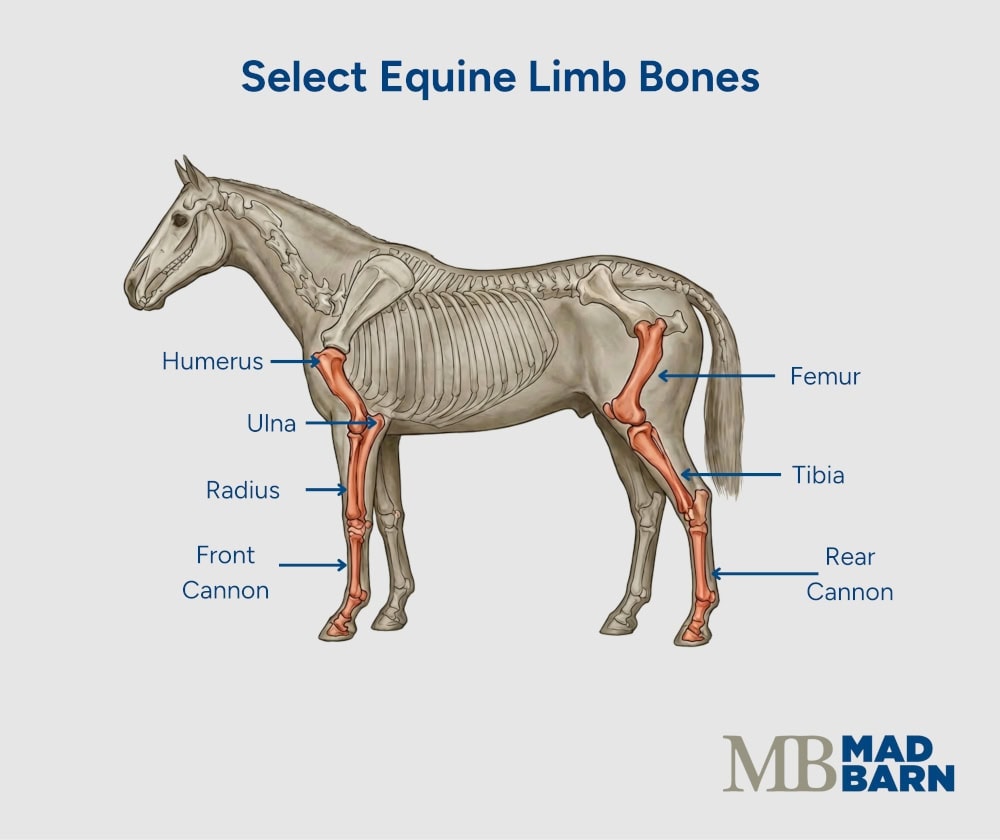
Causes of severe limb injuries in horses may include: [2][4]
- High-speed trauma
- Repetitive stress over time
- Accumulated microdamage in the bone
Slab fractures of the knee (carpal) or hock (tarsal) bones often destabilize joints, while proximal sesamoid bone fractures (PSBFs) and fetlock breakdowns can lead to immediate loss of limb function, and are common in racehorses.
Surgical repair of these injuries is often insufficient to restore a pain-free, functional outcome. [2][5][6]
Catastrophic Joint Injuries
Catastrophic joint injuries occur when the ligaments and tendons that stabilize a joint fail, allowing bones to shift or collapse out of the joint space. Examples include dislocation (luxation) or severe partial dislocation (subluxation) of the fetlock, knee, or hock. [3][7]
These injuries may occur alongside fractures, leaving the horse’s joint unstable and preventing weight-bearing. Because joint function relies on both bone and soft tissue integrity, failure of either can render the limb nonfunctional.
Severe Soft Tissue Failures
Soft tissue includes tendons, ligaments, and other connective tissues that hold the leg together and support weight. While mild strains are common, catastrophic soft tissue injuries are much worse.
Severe soft tissue injuries include: [8]
- Complete rupture of the suspensory ligament (sometimes with a sesamoid fracture)
- Complete tear or detachment of the flexor tendons
When these support structures fail, the leg cannot hold the horse’s weight even if the bones are intact, making it impossible for the horse to walk safely.
Less Common Catastrophic Injuries
While catastrophic injuries most often involve the lower limbs, some severe injuries occur higher in the body or affect joint integrity in ways that make stabilization extremely difficult.
These injuries are less common but are still considered catastrophic due to the horse’s size, weight-bearing demands, and limited ability to compensate safely.
Other serious but less frequent injuries include:
- Pelvic fracture
- Shoulder blade (scapula) fracture
- Collapse of joint surfaces
- Unstable fractures of the pastern bones
Even if surgery is possible, these injuries are dangerous because the horse cannot safely shift weight, and complications like supporting limb laminitis can occur quickly. [9]
Signs of Catastrophic Limb Injuries
Catastrophic limb injuries in horses are usually immediately apparent and commonly result from severe trauma, including falls or blunt force impacts such as kicks.
Common signs of catastrophic limb injuries the require immediate veterinary attention include: [9]
- Refusal to bear weight
- Severe lameness
- Obvious deformity, swelling, or heat in the limb
- Inability to stand
These signs can be a result of: [9]
- Complete or splintered fractures of major load-bearing bones
- Joint collapse or luxation with loss of ligament support
- Soft tissue rupture preventing weight-bearing
- Distal limb involvement, where blood supply and healing capacity are limited
There is also a high risk of secondary complications, such as laminitis in the opposite limb. [9]
Recognizing these injuries and understanding their severity is critical for horse owners, trainers, and veterinarians. Prevention, early detection of stress-related changes, and careful management of workload are the most effective strategies to reduce the risk of these life-threatening events.
Top Risk Factors for Catastrophic Limb Injuries
Catastrophic limb injuries usually result from a combination of stress, trauma, and conformation. [3][8][10][11][12][13]
Below are the most common risk factors for owners and trainers to consider so they can take steps to reduce the likelihood of these life-threatening events.
1) High-Speed & High-Impact Activities
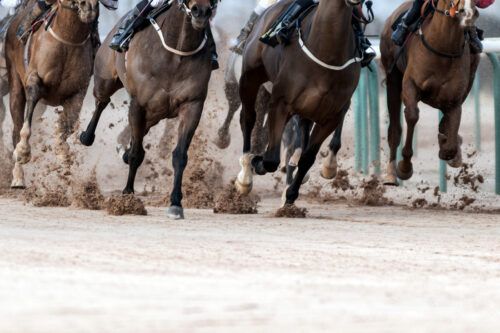
Horses involved in racing, jumping, barrel racing, and other high-speed sports are at greater risk of catastrophic limb injuries compared to those in lower impact work like Western pleasure or trail riding. High speed and impact activities put extreme force on the horse’s limbs over a very short period of time.
Even a single misstep, slip, or collision can trigger a catastrophic fracture, joint failure, or what is commonly referred to as a “breakdown” in racehorses.
These breakdowns are sudden, severe injuries that often end a horse’s racing career and, in many cases, require immediate euthanasia to prevent suffering. [1][14]
2) Repetitive Stress
Repeated work, whether from training, competition, or long-term repetitive exercise, can create tiny, often invisible cracks in bones or wear in soft tissues.
Normally, the horse’s body repairs this microdamage, but if the workload exceeds the body’s repair capacity, it can accumulate, eventually leading to sudden catastrophic failure, even during routine movement.
Incorporating cross-training, varied footing, and scheduled recovery days helps distribute physical stress across different tissues and gives the musculoskeletal system time to adapt and repair, reducing the risk of cumulative damage.
3) Conformation & Anatomical Predisposition
Certain limb conformations can increase stress on specific bones, joints, or tendons. Horses with long, sloping pasterns, uneven limb alignment, or narrow chests and weak hindquarters may be more prone to stress injuries that can escalate to catastrophic breakdowns over time. [15]
Matching a horse’s workload, discipline, and level of competition to their individual build and physical abilities helps limit excessive strain on vulnerable structures and supports long-term soundness.
4) Surface & Footing Issues
The type and condition of footing surfaces play a major role in preventing catastrophic limb injuries.
Hard, compacted, or uneven arena footing increases concussive forces on bones and joints, while overly deep or inconsistent surfaces can strain tendons and ligaments. Slippery or poorly maintained surfaces can also lead to missteps, slips, and acute trauma. [16][17][18]
Regular inspection and routine maintenance help identify developing hazards, such as compaction, moisture imbalance, or surface degradation, before they contribute to injury risk.
5) Age
Both very young and older horses can be at higher risk of serious injury. Young horses may have immature bones and soft tissues, while older horses may have a history of injuries, accumulated wear and microdamage.
Sudden increases in training intensity, inadequate rest between sessions, or insufficient conditioning can make limbs more vulnerable to catastrophic failure.
Training, recovery, and nutritional needs change with age, and programs designed for a horse’s life stage help support tissue strength and resilience.
6) Previous Trauma
Direct trauma such as a fall, collision with a fence, kick from another horse, or being cast in a stall can cause catastrophic fractures or soft tissue ruptures, even in otherwise healthy limbs.
Well-maintained fencing, stall design, and turnout areas help limit avoidable sources of traumatic injury.
How Catastrophic Limb Injuries Are Diagnosed
In many cases, catastrophic limb injuries in horses are immediately apparent and so severe that humane euthanasia is the only viable option.
When circumstances allow for diagnostic evaluation, assessment may include physical examination, palpation, and imaging such as X-rays or ultrasound to characterize the extent of damage.
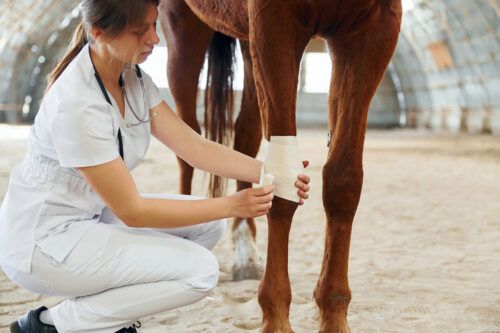
Advanced imaging, including CT or MRI, may be used in select cases to better define complex injuries. Temporary stabilization with splints or bandages and pain management may be employed to prevent further damage while decisions are being made.
Some owners may also pursue necropsy (autopsy) after euthanizing to better understand the cause of the injury and gain closure.

Treatment Options
Catastrophic limb injuries are among the most difficult conditions to manage, and in most cases, horses do not make a full recovery. Even with advanced veterinary care, restoring full function is often impossible due to the horse’s anatomy and the severe damage associated with catastrophic limb injury.
Surgical repair such as internal fixation or joint stabilization is rarely curative. Healing is slow, the distal limb has limited blood supply, and full weight-bearing may never be restored. Many horses cannot tolerate post-operative restrictions, and complications like infection or re-injury are likely.
Conservative management, including stall rest, casts or splints, and pain control, can provide temporary comfort but rarely restores function. Because horses cannot safely redistribute weight and supporting-limb laminitis develops quickly, humane euthanasia is often the most compassionate choice.
Expected Outcome & Prognosis
The prognosis for catastrophic limb injuries in horses is almost always poor. These injuries severely damage bones, joints, or soft tissues, preventing safe weight-bearing.
Even with advanced veterinary care, surgical repair is rarely curative. Healing is slow, and many horses cannot tolerate the restrictions needed for recovery. For most horses, humane euthanasia is the most compassionate option to prevent prolonged suffering.
Preventing Catastrophic Limb Injuries
While not all catastrophic limb injuries are preventable, many are influenced by management, training practices, and early detection of risk factors.
Prevention focuses on reducing cumulative stress, identifying subclinical injury before failure occurs, and creating conditions that support long-term limb health. [11]
Early Detection of Stress-Related Injury
The risk of catastrophic limb injuries often develops over time with few outward signs. Stress fractures and soft tissue fatigue may progress silently until sudden failure occurs.
Subtle performance changes that owners should investigate promptly include: [2]
- Shortened stride
- Reluctance to work
- Post-exercise heat and swelling in the limbs or joints
Work with your veterinarian if your horse is showing early signs of stress injuries. Early intervention provides the best chance of avoiding a career-ending injury.
Biomechanical Factors
The way a horse moves, especially at high speed, plays a big role in whether they are at risk of serious injury. Numerous factors influence biomechanics, including hoof balance, conformation, footing, and overall fitness.
Fitness
Proper conditioning is critical to limb health. Bones, tendons, and ligaments strengthen gradually when workload increases are introduced in a controlled, progressive manner. The risk of injury rises when intensity, speed, or duration is increased faster than tissues can adapt, allowing microscopic damage to accumulate. [19][20]
Effective prevention strategies include keeping increases in workload gradual, scheduling rest periods, and avoiding sudden changes in training demands or surfaces.
Bone strength and soft tissue resilience depend on adequate nutrition. Deficiencies or imbalances can impair tissue repair and reduce the limb’s ability to withstand repeated stress. A balanced diet supports bone density, connective tissue health, and recovery from exercise. [21][22][23]
If your horse’s workload is changing, consider consulting with an expert equine nutritionist who can make an individualized plan tailored to your horse’s age, discipline, and health status.
Footing & Surface Management
Training and turnout surfaces play a major role in limb health. Hard or compacted footing increases concussive force, while deep or inconsistent footing can strain tendons and ligaments. Uneven or slippery ground increases the risk of missteps, falls, and acute trauma. [16][24][25]
Risk increases when horses are asked to work at the same level of intensity across different surfaces without sufficient training or conditioning. Gradual habituation to different terrain allows bones and soft tissues time to adapt, reducing the chance of overload and injury.
Farriery
Balanced hooves are essential for even force distribution through the horse’s limb. Poor balance or inappropriate shoeing can concentrate stress on specific structures, increasing the likelihood of injury over time.
Regular farrier care tailored to the horse’s discipline, workload, footing and conformation is a key preventive measure.
Conformation
A horse’s conformation influences how force travels through their limbs. Some conformations are more vulnerable to stress-related injuries than others.
In addition, a horse’s conformation evolves throughout their lifetime. Young horses have immature bones, while older horses often carry cumulative wear and microdamage. [26][27]
Recognizing these individual risk factors allows for adjustments in workload, conditioning speed, and intensity to prevent injuries.
Environmental & Management Safety
Not all catastrophic limb injuries occur during exercise. Falls, collisions, casting in a stall, or kicks from other horses can result in severe fractures or soft tissue rupture.
You can reduce risk through:
- Safe fencing and well-maintained stalls
- Appropriate turnout groupings
- Slip-resistant footing in barns and high-traffic areas
Even with excellent management, catastrophic limb injuries can still occur. Quick recognition, prompt veterinary assessment, and welfare-centered decision-making are essential to minimize suffering and ensure the horse’s best interests remain the priority.
Frequently Asked Questions
Here are some frequently asked questions about catastrophic limb injuries in horses:
A catastrophic limb injury occurs when a horse's bones, joints, or tendons fail, making the leg unable to support weight. These injuries often involve major fractures, joint collapse, or severe soft tissue damage.
Treatment options for equine catastrophic injuries are extremely limited. Surgery or conservative care may stabilize the limb temporarily, but full recovery is rare, and complications like laminitis in the opposite leg are common. Euthanasia is often the most humane choice.
Horses are prone to life-limiting limb injuries because they carry large body weight on relatively slender legs, with minimal muscle below the knee and hock. Repetitive stress, high-speed movement, trauma, and certain conformations make their bones, joints, and tendons more susceptible to sudden failure.
The prognosis for catastrophic injuries in horses is generally poor. Even with advanced veterinary care, most horses cannot regain safe, pain-free weight-bearing. Humane euthanasia is usually recommended to prevent prolonged suffering.
Summary
Catastrophic limb injuries involve fractures, joint collapse, or tendon and ligament rupture, making weight-bearing impossible and often requiring euthanasia.
- Horses are prone to this type of injury due to heavy bodies on slender legs, minimal lower limb muscle, and limited shock absorption
- Common injuries include major bone fractures, joint luxations, and complete soft tissue ruptures; less frequent injuries affect the pelvis, shoulder, or pastern
- Risk factors include high-speed activity, repetitive stress, poor conformation, hard or uneven surfaces, inadequate conditioning, and trauma such as falls or being cast in a stall
- Diagnosis is usually obvious with severe lameness, swelling, deformity, and inability to bear weight, confirmed by imaging
- Treatment rarely restores function, so prevention through conditioning, footing, hoof care, nutrition, and safe management is critical
References
- Spargo. K. E. et al. Catastrophic Musculoskeletal Injuries in Thoroughbred Racehorses on Racetracks in Gauteng, South Africa. Journal of the South African Veterinary Association. 2019.
- Barroeta. C. et al. Risk Factors for Catastrophic Limb Injury Incurred during Racing for Venezuela's Thoroughbred Racehorses 2000-2010. Intern J Appl Res Vet Med. 2019.
- Diab. S. S. et al. Diagnostic Approach to Catastrophic Musculoskeletal Injuries in Racehorses. Journal of Veterinary Diagnostic Investigation. 2017.
- Bowers. K. et al. A Review of Equine Tibial Fractures. Equine Veterinary Journal. 2023.
- Schnabel. L. V. and Redding. W. R. Diagnosis and Management of Proximal Sesamoid Bone Fractures in the Horse. Equine Veterinary Education. 2018.
- Brokken. M. T. Fractures of the Proximal Sesamoid Bones in Horses - Musculoskeletal System. Merck Veterinary Manual. 2025.
- Guitart. A. S. Disorders of the Hip in Horses. Merck Veterinary Manual. 2025.
- Welsh. C. E. et al. Estimates of Genetic Parameters of Distal Limb Fracture and Superficial Digital Flexor Tendon Injury in UK Thoroughbred Racehorses. The Veterinary Journal. 2014.
- van Eps. A. et al. Supporting Limb Laminitis. The Veterinary Clinics of North America. Equine Practice. 2021.
- Bimson. N. H. et al. Catastrophic Musculoskeletal Injuries in Thoroughbred Racehorses in Uruguay, 2011-2017. Journal of Equine Veterinary Science. 2022.
- Catastrophic Injuries in Racehorses. JD Wheat Veterinary Orthopedic Laboratory. 2015.
- Bailey. C. J. et al. Risk Factors Associated with Musculoskeletal Injuries in Australian Thoroughbred Racehorses. Preventive Veterinary Medicine. 1997.
- Boden. L. A. et al. Risk of Fatality and Causes of Death of Thoroughbred Horses Associated with Racing in Victoria, Australia: 1989-2004. Equine Veterinary Journal. 2006.
- Okumura. K. H. Preventative Diagnosis of Breakdown. MIT Undergraduate Thesis. 1978.
- Anderson. T. M. et al. The Role of Conformation in Musculoskeletal Problems in the Racing Thoroughbred. Equine Veterinary Journal. 2004.
- Peterson. M. et al. Effects of Racing Surface and Turn Radius on Fatal Limb Fractures in Thoroughbred Racehorses. Sustainability. 2021.
- Rohlf. C. M. et al. Arena Surface Vertical Impact Forces Vary with Surface Compaction. The Veterinary Journal. 2023.
- Parkes. R. S. V. and Witte. T. H. The Foot–Surface Interaction and Its Impact on Musculoskeletal Adaptation and Injury Risk in the Horse. Equine Veterinary Journal. 2015.
- Frippiat. T. and Votion. D.-M. Warm-Up Strategies and Effects on Performance in Racing Horses and Sport Horses Competing in Olympic Disciplines. Animals. 2024.
- Gibbs. P. G. et al. Scientific Principles for Conditioning Race and Performance Horses. The Professional Animal Scientist. 1995.
- Sarah L. R. Nutritional Diseases of Horses and Other Equids - Management and Nutrition. Merck Veterinary Manual. 2024.
- Hintz. H. F. and Kallfelz. F. A. Some Nutritional Problems of Horses. Equine Veterinary Journal. 1981.
- Ellis. A. D. The Potential Impact of Nutrition on Bone Growth in Horses. Brill. 2005.
- Legg. K. A. et al. Turf Track Surface Interaction with Speed and Musculoskeletal Injury Risk in Thoroughbred Racehorses. Equine Veterinary Journal. 2025.
- Symons. J. E. et al. Race Surface Model Development in a Musculoskeletal Modelling Environment. Procedia Engineering. 2014.
- Relationship of Foot Conformation and Force Applied to the Navicular Bone of Sound Horses at the Trot. Equine Veterinary Journal. 2004.
- Horse Conformation: Structure, Soundness, And Performance. Simon and Schuster. 2023.