English

Di-tri-octahedral smectite (DTO smectite) is a naturally occurring clay mineral sometimes used in horses to support healthy intestinal function. As an adsorbent, smectite can bind certain substances in the gut lumen, including water and some compounds produced during digestive upset.
In practice, DTO smectite supplements are used as a supportive measure when a horse has loose manure or non-specific gastrointestinal disturbance, under veterinary guidance.
It does not address the underlying cause of diarrhea, colitis, or systemic illness, and it should not be viewed as a substitute for diagnosis, fluid therapy, or targeted medical care when those are needed.
The evidence base for smectites is mixed. Some data comes from laboratory models and human medicine, while controlled clinical trials in horses are more limited. Understanding what is known, what is uncertain, and where smectite fits within a broader gut-support plan helps owners make safer, more informed decisions.
Di-tri-octahedral Smectite for Horses
DTO smectite is a naturally occurring clay used in dietary supplements that acts locally within the gastrointestinal tract. It is not absorbed into the bloodstream and functions as a gastrointestinal adsorbent rather than a systemic drug.
Some commercial products for horses contain DTO smectite, including products marketed under the trade name Bio-Sponge®. Regardless of brand, the ingredient’s effects depend on how it is processed, how it is used, and what other factors are contributing to the horse’s digestive signs.
In horses, diarrhea and gastrointestinal upset can have many causes, including:
- Dietary change
- Stress
- Infection
- Inflammatory disease
- Parasites
- Side effects of medication
- Sand exposure
Given this, smectite should be used only as a supportive tool rather than a standalone solution. If your horse shows persisting or worsening signs of digestive disturbance, contact your veterinarian for assessment.
Available Forms
DTO smectite for horses is commonly available as an oral powder or paste. Paste may be administered by syringe, and powders are typically top-dressed on feed. Selection often depends on practicality, the horse’s appetite, and whether the horse is accepting feed.
It is marketed under the trade names:
- Bio-Sponge®
- Hestevard Smectizorb
- Full Bucket BioClay Plus
Even though DTO smectite is not a drug, it is usually only available upon request from your veterinarian. Some pharmacies may carry over the counter options.
What's your top priority with your horse's health?

Enter your email to receive your store credit
Smectites as a Class
Smectites are a group of clay minerals used as gastrointestinal adsorbents in both human and veterinary contexts. [1] They are phyllosilicates that form layered sheet structures, with aluminum and silicon as major components. [2]
The layered structure and surface charge contribute to their ability to bind certain compounds in the gastrointestinal tract. [2]
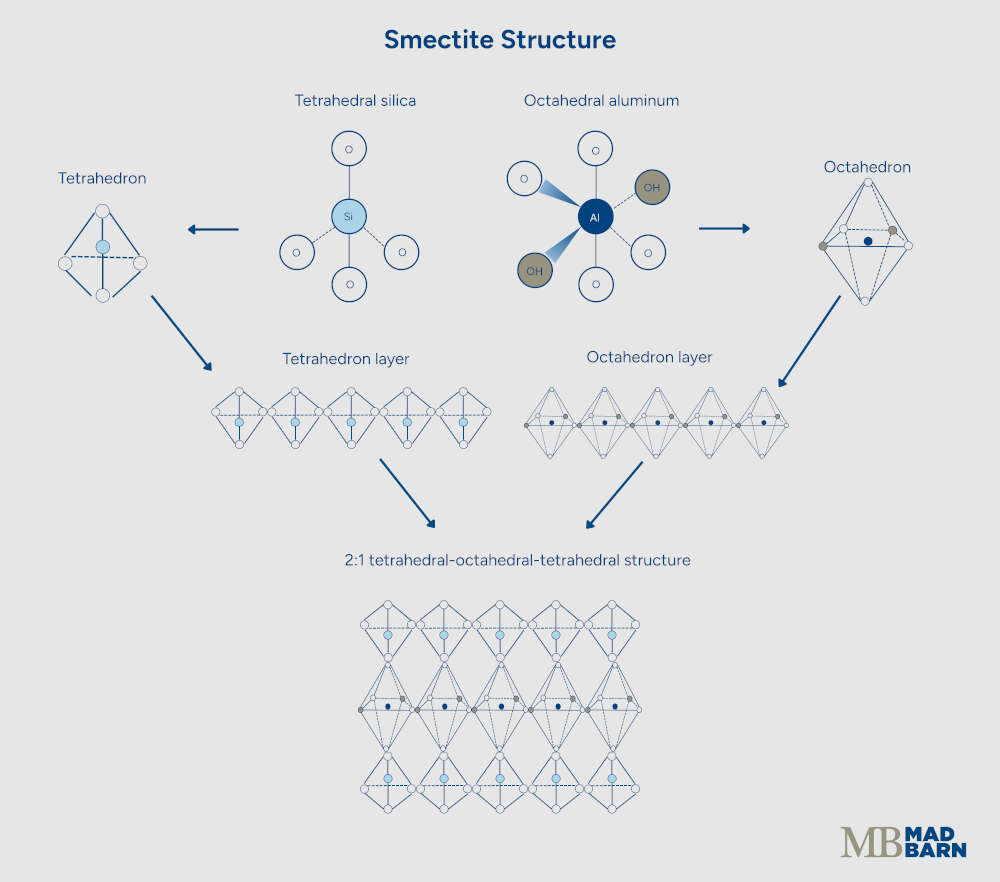
Smectites are commonly classified as dioctahedral or trioctahedral based on how cations are arranged within the clay sheets. [2] DTO smectite contains both types of smectite.
Examples of smectites used in medicine include: [1][3][4]
- Bentonite
- Diosmectite
- DTO smectite
In human medicine, smectites are most often discussed as supportive agents for acute diarrhea, with some trials showing modest reductions in duration and stool frequency. [1][5]
Results vary by population and product. Data from other species (e.g., pigs, poultry, rodents) suggest potential gut-lumen binding effects, but findings do not always translate directly to horses. [6][7][8]
How Smectite May Work
Smectite is highly adsorbent, meaning it can attach compounds to its surface rather than incorporating them into its internal structure (absorbent). The smectite itself does not cross the intestinal lumen into the bloodstream, which is a key reason it is a supportive aid rather than a systemic drug.
Several mechanisms have been proposed for how smectites may alleviate diarrhea, including mucus interaction, toxin adsorption, and effects on fluid movement in the gut. [1]
However, it is important to note that much of this mechanistic discussion is based on laboratory and non-equine studies, and the degree to which each mechanism occurs in horses under field conditions is not fully established.
A conservative interpretation is that smectite’s primary role is as a gut-lumen adsorbent that may help bind certain compounds present during digestive upset.
Limitations of the Evidence
Smectite is widely used, but there are important limitations to what can be concluded from the research, including:
- Limited controlled equine trials: Much of the data supporting smectites comes from in vitro studies, human medicine, or other species.
- Variable composition: Smectites are minerals, and their binding activity can vary depending on source, processing, and formulation.
- Supportive, not curative: Smectite may only provide symptomatic relief; it does not address the underlying cause of diarrhea
These limitations are not a reason to avoid smectite in all cases, but they are a reason to treat claims about its effects conservatively, using it as part of a broader plan under veterinary guidance.
When DTO Smectite May Be Considered
DTO smectite is most commonly used as an aid in supporting healthy intestinal function when a horse has loose manure or non-specific gastrointestinal upset. [9]
In practice, it may be discussed as one supportive option during periods such as:
- Diet changes or feed transitions
- Travel or stress
- Recovery periods where manure consistency is being monitored
- Situations where a veterinarian has recommended an intestinal adsorbent as part of a broader plan
Toxin Binding Effects
Some laboratory work suggests DTO smectite can adsorb certain bacterial toxins, including exotoxins produced by Clostridium perfringens, under controlled conditions. [10]
This is biologically plausible given smectite’s adsorptive properties, but in vitro binding does not automatically predict clinical outcomes in horses.
In clinical cases where clostridial disease is suspected or confirmed, treatment decisions should be directed by a veterinarian and typically involve supportive care and targeted therapy beyond the use of an adsorbent.
Administration
DTO smectite is administered orally as a paste or powder. [9] Practical considerations include whether the horse is eating normally and whether syringe administration is safe and feasible.
Dosing Considerations
Because DTO smectite products are not regulated as pharmaceutical drugs, dosing guidance may vary by manufacturer and veterinary preference. Follow the product label and your veterinarian’s directions.
If a horse’s manure quality is not improving, or if clinical signs are worsening, veterinary reassessment is indicated rather than extending supplementation indefinitely.
Storage
Store DTO smectite products in a sealed container in a cool, dry area out of reach of children and animals. [13]
Safety, Precautions, & Monitoring
DTO smectite is generally considered well-tolerated when used short-term under veterinary guidance, largely because it acts locally in the gut. [13] However, well-tolerated does not mean risk-free, especially with repeated or long-term use.
Potential drawbacks of smectite use include:
- Changes in manure consistency: Stool may become firmer, and constipation is possible in some situations, particularly if water intake is inadequate.
- Masking progression: If a horse is deteriorating (fever, lethargy, pain), reliance on a binder can delay necessary treatment.
- Adsorption of nutrients and medications: Binding is not selective, and spacing intake away from other products is important.
What to Monitor
Horses receiving smectite during digestive upset should be monitored closely for:
- Manure consistency and frequency
- Hydration status
- Appetite
- Attitude and comfort
- Signs of abdominal pain
Seek veterinary attention promptly if you observe:
- Persistent or worsening diarrhea
- Fever
- Colic signs such as pawing, looking at the flank, or rolling
- Reduced water intake
- Reduced manure output
Foals require especially rapid intervention if they have any of the listed signs because dehydration and electrolyte imbalance can develop quickly.
Considerations for Mineral Absorption & Diet Formulation
One of the most important limitations of smectites is that adsorption is not selective. In addition to binding undesirable compounds, smectites may also bind dietary minerals and reduce their availability in the intestine.
Human and laboratory literature suggests smectites can interfere with absorption of some minerals, including iron, copper, and zinc. [11]
In horses, this is most relevant when smectite is used repeatedly or long-term, or when the diet is already marginal in trace minerals.
Practical strategies to reduce risk include:
- Use short-term when possible, unless a veterinarian recommends otherwise
- Separate smectite from concentrated minerals (and from oral medications) by several hours
- Ensure the base diet is balanced for trace minerals, especially zinc and copper
Consider reviewing the horse’s diet with a qualified nutritionist if long-term gut issues are recurring.
Smectite does not appear to substantially affect digestion of crude protein, fat, or fiber in horses in the limited studies available, but mineral interactions remain a key formulation concern. [12]

Interactions With Medications
There is limited direct research on smectite interactions with veterinary medications. Human work suggests smectite may alter absorption of some drugs depending on their chemical properties. [14] For this reason, veterinarians commonly recommend spacing smectite and oral medications by several hours.
Examples of oral medications where spacing is often advised include: [14]
- Cimetidine
- Doxycycline
- Rifampin
- Trimethoprim
Regulatory Status and Product Claims
DTO smectite products are generally regulated as supplements rather than pharmaceutical drugs. In the United States, supplements are not evaluated by the FDA for efficacy in the way approved drugs are.
In Canada, some smectite products are licensed as Veterinary Health Products (VHPs), which allow limited claims such as being administered as an aid in supporting healthy intestinal function in horses.
Regulatory status differs from drug approval, and it does not replace the need for veterinary diagnosis when a horse is ill.
Status in Competition
DTO smectite is not listed as a prohibited substance by the Fédération Equestre Internationale in the referenced material. [15]
Rules can change, and national federations may have additional requirements, so confirm current regulations before use in a competition horse.
Frequently Asked Questions
Here are some frequently asked questions about di-tri-octahedral smectite (DTO smectite) in horses:
Di-tri-octahedral smectite (DTO smectite) is a naturally occurring clay mineral used as a gastrointestinal adsorbent in horses. It acts locally within the intestinal lumen and is not absorbed into the bloodstream. Products containing DTO smectite, including those marketed under the trade name Bio-Sponge®, are generally regulated as supplements rather than pharmaceutical drugs.
DTO smectite is most often used as a supportive aid when a horse has loose manure or non-specific gastrointestinal upset. It may be included as part of a broader management plan during diet changes, stress, travel, or veterinary-directed care. It does not diagnose, prevent, or treat the underlying cause of diarrhea or systemic illness.
DTO smectite works through adsorption, meaning substances bind to its surface. In the gut lumen, it can bind water and certain compounds present during digestive upset. Much of the mechanistic research comes from laboratory or non-equine studies, and clinical effects in horses may vary.
Laboratory studies suggest DTO smectite can adsorb some bacterial toxins under controlled conditions. However, in vitro binding does not automatically translate to clinical outcomes in horses. Suspected infectious or toxin-related diarrhea requires veterinary evaluation and targeted therapy.
Response time depends on the cause and severity of gastrointestinal signs. Some horses may show improvement in manure consistency within one to two days, while others require further diagnostics and treatment. Persistent, worsening, or systemic signs require veterinary assessment.
DTO smectite is typically used short-term during episodes of digestive upset. Prolonged or repeated use should be discussed with a veterinarian, particularly if diarrhea is recurring or if the horse's overall health status is changing.
DTO smectite is generally considered well tolerated when used short-term under veterinary guidance because it acts locally in the gut. However, it may alter manure consistency and can interfere with absorption of other substances. Horses with fever, colic, dehydration, lethargy, or persistent diarrhea should be evaluated by a veterinarian before use.
Yes. Because adsorption is not selective, DTO smectite may reduce intestinal absorption of certain oral medications or trace minerals if administered at the same time. Spacing administration by several hours is commonly recommended.
DTO smectite products are typically marketed as dietary supplements rather than pharmaceutical drugs. Because they are not classified as drugs, they do not undergo the FDA drug approval process used to evaluate medications for safety and efficacy. As supplements, these products cannot be labeled to diagnose, treat, cure, or prevent disease and are instead intended to support normal digestive function.
Products containing DTO smectite are marketed as dietary supplements and are not intended to diagnose, treat, cure, or prevent disease. While they may help support intestinal function, they do not address the underlying cause of diarrhea. Infectious, inflammatory, parasitic, or systemic conditions require veterinary diagnosis and appropriate medical care.
Summary
Di-tri-octahedral (DTO) smectite, sometimes marketed as Bio-Sponge®, is a natural clay used in horses to help manage diarrhea by binding toxins, bacteria, and excess fluid in the gastrointestinal tract.
- DTO smectite works locally in the horse's gut to adsorb toxins, water, and inflammatory mediators
- Commonly used for acute and chronic diarrhea in foals and adult horses as supportive care
- May reduce fluid loss and help improve manure consistency during gastrointestinal upset
- Should be administered according to veterinary recommendations, especially when other oral medications are being given
References
- Dupont. C. and Vernisse. B. Anti-Diarrheal Effects of Diosmectite in the Treatment of Acute Diarrhea in Children. Paediatric Drugs. 2009.
- Odom. I. E. Smectite Clay Minerals: Properties and Uses. Philosophical Transactions of the Royal Society of London, Series A: Mathematical and Physical Sciences. 1984.
- MOOSAVI. M. Bentonite Clay as a Natural Remedy: A Brief Review. Iranian Journal of Public Health. 2017.
- Neelley. K. and Herthel. D. Preventing and Treating Colitis with DTO Smectite. Journal of Equine Veterinary Science. 2000.
- Das. R. R. et al. Efficacy and Safety of Diosmectite in Acute Childhood Diarrhoea: A Meta-Analysis. Archives of Disease in Childhood. BMJ Publishing Group Ltd. 2015.
- Hu. C. et al. Zinc Oxide–Montmorillonite Hybrid Influences Diarrhea, Intestinal Mucosal Integrity, and Digestive Enzyme Activity in Weaned Pigs. Biological Trace Element Research. 2012.
- Zha. P. et al. Zinc-Loaded Montmorillonite Alleviates Avian Pathogenic Escherichia Coli -Induced Intestinal Barrier Damage in Broiler Chickens. Journal of Animal Science. 2025.
- Breitrück. A. et al. Smectite as a Preventive Oral Treatment to Reduce Clinical Symptoms of DSS Induced Colitis in Balb/c Mice. International Journal of Molecular Sciences. 2021.
- Bio-Sponge® – Proven by Years of Research. Platinum Performance.
- Lawler. J. B. et al. Adsorptive Effects of Di-Tri-Octahedral Smectite on Clostridium Perfringens Alpha, Beta, and Beta-2 Exotoxins and Equine Colostral Antibodies. American Journal of Veterinary Research. 2008. View Summary
- Damato. A. et al. Comprehensive Review on the Interactions of Clay Minerals With Animal Physiology and Production. Frontiers in Veterinary Science. Frontiers. 2022.
- Gerstner. K. and Liesegang. A. Effect of a Montmorillonite-Bentonite-Based Product on Faecal Parameters of Horses. Journal of Animal Physiology and Animal Nutrition. 2018. View Summary
- Bio-Sponge® Safety Data Sheet. Platinum Performance.
- Albengres. E. et al. Interactions between Smectite, a Mucus Stabilizer, and Acidic and Basic Drugs. European Journal of Clinical Pharmacology. 1985.
- 2026 Prohibited Substances List. FEI. 2026.