English


Gastroscopy, also referred to as gastric endoscopy, is a valuable diagnostic tool that allows veterinarians to directly visualize the inside of a horse’s upper digestive tract. This minimally invasive procedure uses a specialized flexible camera, called a gastroscope, to identify abnormalities that cannot be detected through physical examination or routine laboratory tests.
Most commonly, gastroscopy is performed to diagnose Equine Gastric Ulcer Syndrome (EGUS), a prevalent condition in performance horses, pleasure horses, and even foals. It can also reveal other gastric issues such as inflammation, gastric impactions, parasites, tumors, or delayed stomach emptying.
Gastroscopy not only provides a clear picture of a horse’s gastric health but also guides targeted treatment plans and helps monitor recovery. For owners, it offers peace of mind and a tangible understanding of their horse’s condition. Keep reading to explore reasons why gastroscopy is recommended, how the procedure is performed, and what the results may reveal.
Gastroscopy for Horses
Gastroscopy is the process of passing an endoscope, a long tube with a camera at the end, into the horse’s stomach for evaluation. Veterinarians most commonly use this procedure to diagnose gastric ulcers; however, it may be performed when diagnosing other conditions affecting the esophagus, stomach, or proximal small intestine.
Many equine gastrointestinal problems share vague and nonspecific symptoms, such as:
- Poor performance
- Intermittent colic
- Weight loss
- Reduced appetite
- Changes in behavior
Given this, gastroscopy is often essential for reaching a definitive diagnosis. Without direct visualization, treatment may be ineffective and result in prolonged discomfort for the horse.
Clinical Uses of Gastroscopes in Horses
Common reasons for performing a gastroscopy on a horse include: [1]
- Gastric ulcers
- Colic cases, particularly gastric impactions
- Horses having difficulty swallowing (dysphagia)
- Choke
- Chronic weight loss
- Suspicion of stomach tumors, such as squamous cell carcinoma
Veterinarians also use gastroscopy for long-term monitoring of gastric health and response to treatment. This is particularly important for conditions like gastric ulcers, which have a high rate of recurrence after treatment concludes.
What's your top priority with your horse's health?

Enter your email to receive your store credit
Equipment for an Equine Gastroscopy
The main piece of equipment required for gastroscopy is an endoscope, a long tube with a camera on the end that transmits video to an eyepiece or screen. [1] Most endoscopes used for equine medicine are 2.5 – 3 meters (8 – 10 ft) long.
The endoscope has several features that help veterinarians retrieve a diagnostic image. A powerful light source helps illuminate the tissue surfaces and ensure a clear visual. At the end of the scope there is a mechanism that allows the veterinarian to rotate the tube tip in different directions to aim the camera. This allows for thorough evaluation of all tissue surfaces and helps the veterinarian guide the endoscope into the correct location for assessment. [1]
The endoscope tube also has a channel that allows the veterinarian to infuse water or air into the inspection area. [1] Adding water through this channel can help clean the surface of the camera by flushing away debris. Air can help inflate the stomach, ensuring there are no folds or crevices that are inaccessible to the camera lens. [2] It can also push away any tissue blocking the view of the camera.
A second channel within the tube allows for more specialized procedures. Common uses for this channel during gastroscopy include: [1][3]
- Passing biopsy forceps: These small forceps can remove a small section of tissue to use for further testing.
- Flushing with water: Adding pressurized water to this channel allows the veterinarian to clean the tissue surface.
- Suction: Attaching a suction pump can help remove excess fluid from the stomach or remove air once the examination is finished.
Finally, a gastroscopy must be performed in a safe area with adequate room for the horse, the handlers, and the veterinarian to move. Placing the horse in stocks is common practice to ensure personnel safety. Many practitioners may also apply a twitch to the horse’s nose to distract them from the procedure. [1]
Gastroscopy Procedure
The procedure begins by sedating the horse and leaving them undisturbed until the sedation is in full effect. Typically the horse is sedated in the location where the veterinarian performs the procedure. [1]
Three people are necessary for an equine gastroscopy procedure: one to restrain the horse, one to pass the endoscope through the horse’s nostril, and the veterinarian who drives the endoscope. [1] In most cases, the two handlers are experienced veterinary technicians.
Once the horse is sedated, the handler may apply a twitch or other form of restraint. The person passing the endoscope lubricates the tip of the endoscope, then passes it into one of the horse’s nostrils. [1] The initial goal is to have the endoscope enter the horse’s esophagus. Injecting a small amount of air or water encourages the horse to swallow, easing the passage of the endoscope into the esophagus. [1][2]

“Gastroscopy is the only way to confirm gastric ulcers in horses. The procedure is quick, safe, and gives us a clear view of the stomach mucosa that guides the best treatment plan.”
— Dr. Jennifer Skaggs, DVMEquine Veterinarian
The veterinarian confirms that the endoscope tip is within the esophagus before proceeding. The passer then advances the endoscope further, while the veterinarian injects a small amount of air to make passing the endoscope easier. [1] Once the endoscope reaches the esophageal sphincter, a band of muscle immediately before the stomach, the veterinarian uses the maneuverability of the endoscope to guide the tip through the sphincter and into the stomach.
With the tip in the stomach, the veterinarian adds air to insufflate (inflate) the stomach and eliminate any crevices or folds that may obscure their view. [1] If necessary, the veterinarian can use water to flush the stomach surface to remove any debris. The veterinarian systematically examines the stomach lining, ensuring they view all surfaces. [1]
In many cases, the veterinarian continues their inspection by examining the duodenum, the first portion of the small intestine. This requires maneuvering the endoscope tip through the pyloric sphincter, between the stomach and small intestine, which requires coordination between the veterinarian and the passer.
After completing their examination, the passer withdraws the endoscope tip until it is back within the stomach. The veterinarian then suctions the air to deflate the stomach. After deflation, the passer slowly removes the endoscope, allowing the veterinarian time to evaluate the esophagus as the endoscope withdraws. [1]
With the procedure complete, the veterinary team wakes the horse up from sedation and ensures they are comfortable.

Interpreting Gastroscopy Results
Interpreting the results of a gastroscopy in horses requires careful evaluation of the stomach lining, as well as an understanding of how findings relate to the horse’s clinical signs. As the veterinarian examines the tissue linings, they make note of any abnormalities. Any erosions, hemorrhages, or areas of thickening are documented, often with images or video, to aid in diagnosis and monitoring over time.
Findings may include: [3]
- Gastric ulcers
- Parasites, particularly bot fly larvae
- Compacted feed material indicating gastric impaction
- Tumors
- Duodenal ulceration or irritation
The most common use for gastroscopy is identifying and diagnosing squamous gastric ulcers. Veterinarians grade ulcers on a scale, indicating the severity of disease present: [4]
- Grade 0: There are no defects in the lining or areas of proliferation
- Grade 1: The lining is intact, but there are some areas of tissue proliferation
- Grade 2: There are single or multiple small ulcers present
- Grade 3: Large single or extensive ulcerative lesions
- Grade 4: Extensive damage with areas of deep ulceration
Once abnormalities are identified, the veterinarian can recommend targeted therapies, such as acid suppression medications for ulcers, dietary adjustments, or management changes. Follow-up gastroscopy may be advised after treatment to confirm healing, as visual resolution is the most reliable indicator of treatment success.
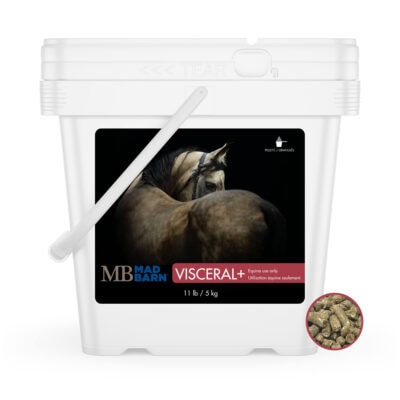
If your horse is transitioning off ulcer medication, your veterinarian may recommend adding Mad Barn’s Visceral+ to your feeding program. This supplement is formulated to support gastric and hindgut health and help maintain a healthy immune system, making it suitable for horses that may benefit from ongoing nutritional support for the stomach lining and digestive function.
Further diagnostic work may be necessary if unusual lesions are found. For example, if a mass or tumor is identified, the veterinarian can take a biopsy (sample) of the tissue during the endoscopic procedure. The biopsy is sent to a diagnostic laboratory where specialists evaluate the tissue under a microscope to determine whether it is a tumor, inflammation, or other disease process.
Preparing Your Horse for Gastroscopy
Most veterinarians recommend withholding feed for 12 – 24 hours prior to gastroscopy. They may also recommend withholding water 4 hours prior to the procedure. This helps reduce the amount of feed and fluid present in the stomach so the veterinarian can evaluate all aspects of the tissue lining.
Work with your veterinarian to determine a suitable schedule depending on their preferences and your horse. If you are unable to withhold feed due to your farm layout, you may need to bring your horse to the hospital the day before the procedure so they can be fasted appropriately.
If restricting feed at home, your veterinarian may recommend using a solid-bottom muzzle to ensure the horse does not eat anything. They may also recommend removing all bedding from the stall to prevent consumption. Hungry horses may eat straw, shavings, sawdust, or manure if left unmuzzled. [5] If your horse is on any medications, ask your veterinarian whether they should be stopped prior to the fasting period.
During the water restriction period, ensure your horse does not have access to water buckets, troughs, or automatic waterers. If feasible, restrict their access to standing water sources, such as puddles, sloughs, or ponds. Thirst may encourage the horse to drink from water sources they may otherwise avoid for hygienic reasons.
After the procedure, your horse must wake up from sedation before they are allowed to eat. Plan for at least one hour after the procedure before your horse has their first meal. [5] If they are not given adequate time to wake up, they make choke due to poor coordination of their swallowing muscles.
Complications of Gastroscopy in Horses
Horses can experience complications with gastroscopy. The most common complication is irritation of the tissues lining the nasal cavity, esophagus, stomach, and duodenum. [1] This irritation typically resolves on its own with no further intervention necessary. [6]
Nosebleeds from inadvertent damage to the ethmoid conchae, highly vascularized tissues within the nasal cavity, are also relatively common. [1] Most horses recover from these nosebleeds uneventfully. [6] Rarely, blood loss may be severe enough to require a blood transfusion. [6]
Most serious complications include colic, esophageal rupture, and gastric rupture. Colic after gastroscopy is usually attributed to the air used to inflate the stomach, which may cause discomfort if not properly removed. Around 3% of horses colic after gastroscopy, with most of those cases requiring only pain medication or handwalking to resolve. [7]
However, there have been cases of volvulus (twisting) of the small intestine following gastroscopy, which typically requires surgical intervention to treat. [6]
Esophageal and gastric ruptures have not been reported in horses, but have been reported in humans undergoing a similar procedure. [6] Esophageal ruptures are possible if there is pre-existing damage to the esophageal tissue, resulting in tearing when the endoscope moves past. Gastric ruptures could occur if the stomach is overinflated during the procedure. [6]
Frequently Asked Questions
Here are some frequently asked questions about gastric endoscopy in horses:
Gastroscopy is most often performed on horses to diagnose Equine Gastric Ulcer Syndrome (EGUS) but can also detect inflammation, impactions, parasites, tumors, or other abnormalities that may cause digestive issues.
Common signs that lead to a veterinarian recommending gastroscopy include poor performance, weight loss, reduced appetite, intermittent colic, girthiness, behavioral changes, or a dull coat.
Gastroscopy is not painful for horses. The horse is sedated, and while the procedure may feel unusual, it is not painful. The fasting period prior to the procedure is stressful for the horse, and owners must take proactive steps to prevent them from taking in unhygienic feed or water during this time.
The gastroscopy examination itself usually takes 15–30 minutes, though additional time is needed for sedation, preparation, and recovery.
To prepare for gastroscopy, your horse will typically need to fast for 12–24 hours before the procedure and have water withheld for several hours to ensure the stomach is empty for clear visualization.
Summary
Gastroscopy involves passing a camera into the horse's stomach to evaluate the tissue lining.
- Gastroscopy helps diagnose conditions of the stomach, such as gastric ulcers
- A gastroscope typically takes between 15 – 30 minutes and provides results in real time
- The procedure is safe, with only rare severe complications, and is not painful for the horse
- Plan to fast your horse for 12 – 24 hours prior to the procedure
References
- Costa. L. R. R. and Paradis. M. R. Manual of Clinical Procedures in the Horse. Wiley Blackwell, Hoboken. 2018.
- Lock. T. Equine Gastroscopy: A Complete Perspective. Veterinary Practice. 2009.
- Slovis. N. M. Atlas of Equine Endoscopy. Mosby, St. Louis, Mo. 2004.
- Wise. J. C. et al. Interobserver and Intraobserver Reliability for 2 Grading Systems for Gastric Ulcer Syndrome in Horses. Journal of Veterinary Internal Medicine. 2021.
- Gastroscopy Preparation. Total Equine Veterinary Associates.
- Rubio-Martinez. L. M. and Hendrickson. D. A. Complications in Equine Surgery. Wiley Blackwell, Hoboken. 2021.
- Spanton. J. A. et al. A Clinical Audit of the Prevalence of Colic in the 48 Hours after Gastroscopy in 436 Horses. Equine Veterinary Education. 2020.