English



Horses, mules, and donkeys are three distinct members of the equine family. They share some physical and behavioral traits, but each species has unique characteristics, temperaments, and roles in human society. Whether you’re a horse owner, equestrian enthusiast, or just curious about these incredible animals, understanding their differences can help you appreciate their individuality.
For thousands of years, horses, donkeys, and their hybrid offspring, the mule, have played an important role in human history. They have been used in agriculture, transportation, commerce, and even featured in mythology. [1][2][3]
In many industrialized nations, the use of working donkeys and mules has declined. [1][2][4] However, it is estimated that 44 to 50 million donkeys and mules are still in use around the world today. [2][3][4][5]
From their physical traits and behavioral tendencies to their specialized uses in work and recreation, each of these equine species offers something unique. Read on to learn more about the key differences between horses, mules, and donkeys, including their anatomy, care needs, and modern uses to help you gain deeper insight into these remarkable animals.
Comparing Horses vs Mules vs Donkeys
Horses, mules, and donkeys all belong to the equid family, but they differ significantly in anatomy, temperament, and care needs.
These differences are the result of each species’ evolutionary history, the roles they have played alongside humans, and traits developed through selective breeding.
- Horses were domesticated for speed, strength, and social cooperation, making them ideal for riding, sport, and draft work
- Donkeys evolved in harsher, arid environments, developing endurance, efficient digestion, and a strong survival instinct
- Mules, as hybrids, combine traits from both parents, offering the strength and athleticism of the horse with the hardiness and sure-footedness of the donkey
Understanding these key differences can help owners choose the right equine for their needs and provide appropriate care and management.
The Horse
The horse (Equus ferus caballus) is descended from wild equids that roamed the grasslands and open plains, evolving to rely on speed and herd cooperation for survival. Selective domestication over thousands of years shaped the horse into a versatile animal valued for riding, sport, and heavy work. [1][2]
Over time, selective breeding has produced a wide variety of horse breeds, each suited to different purposes. From miniature ponies and refined Arabians to athletic Thoroughbred racehorses and powerful draft horses used for agricultural work, these breeds reflect how humans have shaped the horse to meet diverse needs.
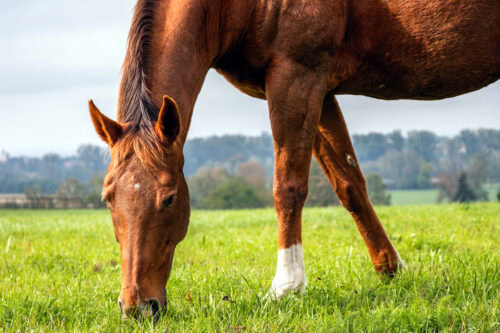
Horses evolved with a broad muzzle and less selective grazing strategy, allowing them to efficiently consume large amounts of grasses in open pastures. Their digestive system is adapted for a high-fiber diet and near-constant grazing, making them less suited to sparse or low-quality forage compared to donkeys. [3]
Unlike donkeys, horses are primarily grazers rather than browsers and rely on social herd behavior for protection. This evolutionary background gives horses a strong flight response when startled, making them more reactive and prone to spooking compared to donkeys and mules. [4]
Horses are also more sensitive to weather extremes and require greater management of their energy and nutrient intake, especially when used for performance or intensive work.
The Donkey
The donkey is descended from the African wild ass, an animal that is well adapted to mountainous, semi-arid or arid deserts with limited access to food and intermittent access to water. [1][2][3][4]
To make the most of the sparse food found in its habitat, the donkey evolved a narrow muzzle and prehensile lips as an adaptation to its selective feeding strategy. This morphology allows donkeys to search for high-quality plants among less desirable roughage when foraging. [4]
Donkeys adjust their feeding strategy depending on what is available in their environment, alternating between grazing and browsing. Grazing involves eating grasses and other low-growing plants, while browsing refers to picking leaves, twigs, fruits, and buds from shrubs or trees. [4][6][7]
Donkeys can adapt to a wide range of habitats, but they have preferences like any animal. When given the choice, they often seek shelter during cold, windy, or rainy weather. [4]
Unlike wild horses, which relied on open grasslands to escape predators, wild donkeys lived in rocky, rugged terrain where fleeing was less effective. This environment favored a stronger fight response as a survival strategy. [8]
The Mule
Donkeys and horses can interbreed, producing hybrid offspring known as mules or, less commonly, hinnies. Mules result from breeding a male donkey with a female horse, while hinnies come from the reverse cross. These hybrids are infertile due to their mismatched chromosome count; donkeys have 62 chromosomes, and horses have 64. [1][9]
Mules inherit traits from both parent species, making them uniquely suited for work in challenging environments. From the donkey, they gain sure-footedness, endurance, and resilience, which allows them to thrive in mountainous or rocky terrain. [10]
From the horse, they often inherit greater size, strength, and smoother gaits, making them more comfortable for riding and capable of carrying heavier loads than donkeys. [10]
In terms of behavior, mules are valued for their intelligence, caution, and strong sense of self-preservation. Their careful nature can sometimes be mistaken for stubbornness, but this deliberate approach to assessing situations makes them more reliable and less likely to panic under pressure compared to horses. [10]
This combination of physical and behavioral traits has made the mule a trusted working animal in many parts of the world. [5]
Similarities Between Donkeys, Horses & Mules
Donkeys, mules, and horses share a common evolutionary ancestor, which gives them several biological and behavioral similarities. All three belong to the equid family (Equidae) and are herbivorous hindgut fermenters with similar digestive anatomy.
Their gastrointestinal tracts are adapted to process fibrous forage through microbial fermentation in the cecum and large intestine, which makes a forage-based diet essential for maintaining gut health. [11]
As prey animals, donkeys, mules, and horses share strong social instincts. They are herd-oriented, highly observant of their surroundings, and communicate primarily through body language, facial expressions, and vocalizations.
Social interaction and companionship are important for their mental well-being, and long periods of isolation can cause stress and lead to stereotypic behaviors.
All three species also require regular movement for proper hoof health, joint mobility, and digestive function. Access to turnout, enrichment, and opportunities to forage throughout the day are fundamental to their physical and mental health.
Feeding Behavior & Nutritional Needs
Donkeys, mules, and horses have similar nutritional needs and feeding behaviors. For example, all three species require a high-fiber diet, plenty of water, and adequate vitamins and minerals to maintain optimal health. Forage should form the foundation of their diet to maintain healthy gut function.
However, there are important species-specific differences in metabolism that owners should keep in mind when feeding different equids together.
Trickle Feeding
All three species of equids are natural trickle feeders. Donkeys, mules, and horses spend a significant amount of their day foraging for food. [3]
Their single, small stomach is designed for a steady intake of forage throughout the day rather than two or three large meals. Continuous, slow eating supports gut motility, lowers the risk of gastric ulcers, and reflects their natural grazing and browsing behaviors in the wild. [12]
Ideally, donkeys, mules, and horses in domestic settings should be fed using methods that mimic trickle feeding in the wild. To replicate this pattern in domestic settings:
- Offer free-choice forage in a hay net or slow feeder, or feed small, frequent portions throughout the day
- For donkeys and mules, provide low-energy straw alone or mixed with hay, depending on energy requirements
Straw is high in fiber and generally low in sugar, making it much lower in calories than most grass hays. Healthy, easy keeper donkeys can thrive on straw as their primary forage, while those with higher energy needs benefit from a mix of straw and low‑sugar hay. [3]
Trickle feeding helps protect equines from gastric ulcers by keeping feed in the stomach as much as possible. Continuous chewing stimulates saliva production, which naturally buffers stomach acid, providing further protection against ulcers. [3]
Hindgut Fermentation
Donkeys, mules, and horses are hindgut fermenters. This means most of their digestion takes place in the cecum and large intestine, rather than in the stomach or small intestine.
In these sections of the GI tract, billions of microbes break down fibrous carbohydrates such as cellulose and hemicellulose, converting them into volatile fatty acids that provide a major source of energy. [3]
The equid stomach and small intestine are designed to handle only small amounts of starch and protein at a time. Feeding large quantities of grain or other high-starch feeds can overwhelm the hindgut, disrupt microbial balance, and increase the risk of digestive issues such as colic or gastric ulcers. [13][14][15]
This digestive system makes continuous access to high-fiber forage essential for maintaining hindgut health and energy production in donkeys, mules, and horses.
Vitamins & Minerals
Vitamin and mineral requirements for equines are primarily based on research in horses. Controlled feeding studies and population data have established the amounts needed to maintain health, support growth and reproduction, and prevent deficiencies.
These values are published in the Nutrient Requirements of Horses by the National Research Council (NRC) and are widely used by nutritionists to formulate balanced diets.
The specific requirements for donkeys and mules have not been studied to the same extent. [3][5] There are no official guidelines for their daily vitamin and mineral intake, so exact requirements remain unknown. [5]
In practice, horse-based recommendations are used as a reference when formulating diets for donkeys and mules. [3] Adjustments are made according to body condition, forage quality, and the donkey’s greater efficiency at utilizing nutrients from fibrous feeds.
Behavior
Donkeys, mules, and horses each have distinct behavioral traits, but they also share many similarities rooted in their social and prey-species nature. All three are highly observant, responsive to their environment, and use body language and vocalizations to communicate.
Like other prey animals, they are naturally vigilant, have strong flight instincts when threatened, and depend heavily on visual and auditory cues to detect danger.
They exhibit a strong preference for consistency in their environment and may display elevated stress responses when exposed to novel or unpredictable stimuli.
Donkeys and mules, however, tend to be more cautious and deliberate compared to horses, who are often more reactive and flight-prone. Understanding these behavioral nuances is essential for safe and effective handling, training, and management. [4]
Socialization
As herd animals, donkeys, mules, and horses all have strong social needs and rely on companionship for mental well-being. They are highly social and form close bonds with herd mates, who they rely on for safety. [16][17]
In all three species, isolation can lead to stress and the development of behavioral problems. [15][16]
Ideally, these animals should be housed with at least one compatible companion, and care should be taken to ensure social interactions are positive, especially when managing mixed-species groups.
Donkeys are particularly sensitive animals and form deep, lasting bonds with their companions. Abruptly separating bonded donkeys can cause significant stress, leading to behavioral changes such as vocalizing, pacing, loss of appetite, or even depression. [17]
When management changes require separating bonded animals, this should be done gradually and with care, allowing the donkey time to adjust. Providing social companionship is not just a welfare consideration — it is essential to the donkey’s emotional well-being. [17]
What's your top priority with your horse's health?

Enter your email to receive your store credit
Differences Between Donkeys, Horses & Mules
While they share many traits, donkeys, horses, and mules differ significantly in metabolism, temperament, and environmental adaptations. Donkeys and mules are generally more efficient at digesting fibrous forage and are better suited to sparse, arid conditions than horses.
Although they share ancestry, donkeys and horses evolved in distinct environments, leading to differences in physiology, behavior, and care requirements. These evolutionary paths influenced their temperaments and nutritional needs.
As hybrids, mules inherit characteristics from both species, combining the hardiness of the donkey with the size and athleticism of the horse.
Digestion & Metabolism
Mules and donkeys have more efficient digestive systems and a slower metabolism compared to horses.
The donkey descends from the wild ass, adapted to arid, semi-arid, and often mountainous environments, while the horse evolved on grassy plains. [3] These very different habitats drove distinct feeding adaptations and nutritional requirements.
Donkeys evolved to survive on sparse, low-quality forage by eating a broader range of plant types than horses, including: [12]
- Grasses: fibrous, bladed plants that dominate horse diets
- Browse: woody shrubs, trees, and broadleaf plants
- Forbs: flowering herbaceous plants
The donkey’s digestive system is optimized for feed efficiency, extracting maximum nutrients from poor-quality forage. They have a longer mean retention time than horses, keeping feed in the digestive tract longer for increased fermentation and nutrient absorption. [12]
These adaptations make donkeys easy keepers. Feeding them the same energy density per kg of body weight as a horse significantly increases their risk of obesity and related metabolic disorders. [18]
The key nutritional difference is that donkeys require less energy and protein than horses or mules. [3][5][18] Horses thrive on moderate- to high-quality forage, but donkeys need high-fiber, low-nutrient forage to maintain metabolic health. [12] Feeding straw is ideal, as it closely mimics their native diet. [3][11][15]
The ideal donkey diet should typically contain less than 50% medium- or high-quality forage, though individual needs may vary based on body condition and activity level. Most donkeys can maintain good condition with straw as their sole forage source, as it is naturally low in calories and protein. [11]
Donkeys should generally not have grain-based feeds because these can contribute to serious health problems, including: [3]
Hydration
Donkeys and horses have similar daily water requirements, although donkeys and mules are more tolerant of limited water availability than horses. [3] Despite this adaptation, all equids require constant access to clean, fresh water. [3]
Donkeys and mules can withstand longer periods without water, but this does not mean they should, as prolonged water restriction can increase the risk of colic and dehydration-related complications. [3] On average, donkeys consume 5 to 10% of their body weight in water each day, with intake increasing during pregnancy, lactation, heavy work, or in hot, dry climates. [3]
As desert-adapted animals, donkeys rehydrate rapidly and often drink large amounts at once when water becomes available. They also tend to maintain a normal appetite even when dehydrated, which can delay recognition of dehydration and increase the risk of colic. [3]
Mules, as hybrids, may or may not show the same feeding and drinking behaviors as donkeys when dehydrated. Monitoring water intake and remaining vigilant for signs of dehydration is essential to prevent secondary health complications in both donkeys and mules.
Turnout
Donkeys and mules require a different approach to turnout management than horses because of their lower energy requirements and tendency to gain weight easily. Pasture grazing benefits all equines by encouraging natural movement, providing mental stimulation, allowing social interaction, and supporting overall health.
However, fresh pasture is often high in sugars and calories, which can exceed the energy needs of donkeys and mules. This can lead to obesity or metabolic issues if access is not controlled. [12]
To allow regular turnout while minimizing the risk of weight gain, the following strategies are recommended: [12]
- Use strip grazing to limit access to large areas of grass at one time
- Turn out donkeys during times when pasture sugar levels are lower, such as early morning or overnight
- Allow grazing after the grass has matured and gone to seed, when sugar levels are typically reduced
- Restrict turnout time on lush pastures or use a grazing muzzle
- Provide turnout in dry lots or paddocks with no grass to allow movement without extra calories
As hybrids, mules are often easy keepers like donkeys and benefit from similar management strategies. Limited access to rich pasture, high-fiber forages such as straw, and controlled calorie intake are important for maintaining a healthy weight in both species. [12]
Gestation & Mortality
The gestation length in donkeys is highly variable, typically ranging from 11 to 14 months, whereas the average gestation in horses is shorter, ranging from 10 to 12 months, averaging 11 months (340 days). [20][21]
This extended gestation in donkeys may be linked to their evolutionary adaptation to harsh environments, where slower fetal development may improve survival rates in challenging conditions.
Mules, being sterile hybrids of donkeys and horses, are incapable of reproduction and therefore have no defined gestation period.
Donkeys and mules are generally longer-lived than horses, reflecting their slower metabolism and greater resilience to environmental stress. Many individuals reach 30 years of age, and some live well into their 40s under proper care. [22]
Horses typically have a lifespan of 25 to 30 years, with fewer individuals exceeding 35 years.
Health Risks in Donkeys & Mules
Donkeys and mules are susceptible to many of the same diseases commonly seen in horses because of their similar anatomy and physiology. Examples of common diseases include colic, equine asthma, internal parasites, and more.
These species share the same basic hoof structure, making them prone to similar hoof problems, including laminitis, abscesses, and bruises.
Donkeys and mules also share the same risks for dental issues as horses, but their continuously growing teeth and longer lifespan make them particularly prone to age-related dental disease. [3][23]
Furthermore, they share risk factors for metabolic diseases when overfed or improperly managed. These include insulin resistance, laminitis, and obesity. [1][3][12][18][19]
They are also at risk of many transmissible diseases that horses are commonly vaccinated against, including:
- Rabies
- Tetanus
- Mosquito-borne illnesses
- Equine Herpesvirus
- Equine Influenza
- Equine Infectious Anemia
However, donkeys and mules are at a greater risk than horses for certain conditions, most notably hyperlipemia, a life-threatening disorder caused by the rapid breakdown of body fat and a dangerous rise in blood triglycerides. [3] Recognizing both the shared and unique health risks of each species is essential for providing appropriate care and management.
Hyperlipemia
Hyperlipemia is a serious metabolic disorder that occurs when the body mobilizes fat stores too quickly, releasing large amounts of triglycerides (fat) into the bloodstream. This can overwhelm the liver and other organs, leading to organ failure if not treated promptly. The condition is seen in ponies and other equids but is particularly common in donkeys and mules. [3]
Donkeys and mules are at higher risk because they are naturally efficient at storing fat and using it as an energy reserve. Stress, sudden feed restriction, or illness can trigger rapid fat mobilization, especially in overweight or pregnant animals. [3]
Hyperlipemia is a veterinary emergency that can progress rapidly into a life-threatening situation without immediate treatment.
Signs that require urgent veterinary attention include: [24][25]
- Lethargy or dullness
- Loss of appetite
- Weakness, muscle tremors, or an unsteady gait
- Signs of colic
- Diarrhea
- Rapid weight loss
Common risk factors include: [3]
- Obesity or excessive body fat
- Stress from transportation, handling changes, or social disruption
- Underlying illness or pain
- Pregnancy or lactation, which increase energy demands
Dental Disease
Donkeys and mules often live longer than horses, with some reaching 40 years of age, making dental disease a common issue, especially in older animals. Dental problems can lead to digestive issues, weight loss and poor nutrition later in life. [3]
However, some donkeys and mules can be difficult to handle, and are not always the most compliant patients for the veterinarian. This makes some owners reluctant to pursue regular dental care. Working with a veterinarian to develop a management plan is essential to ensure preventive care is not overlooked.
Symptoms of dental disease in donkeys and mules include: [3][23]
- Gradual weight loss
- Lethargy
- Difficulty chewing or dropping food
- Bad breath
- Drooling
- Reluctance to eat or drink
Dental pain or difficulty chewing can reduce feed intake and lead to unwillingness to eat, increasing the risk of serious secondary conditions such as hyperlipemia. [3]
Preventing dental disease requires consistent dental care throughout the donkey’s life. Donkeys with existing dental issues often need alternative feeds that are easier to chew and digest, such as short-chopped forage products. [3]
Pituitary Pars Intermedia Dysfunction
Pituitary pars intermedia dysfunction (PPID), also known as equine Cushing’s disease, is a hormonal disorder caused by degeneration of nerves that normally regulate the pituitary gland. This leads to excessive production of certain hormones, disrupting the body’s metabolic and immune functions. [18]
Although some research suggests PPID may be less common in donkeys than in horses, it remains an important health concern for both donkeys and mules, particularly in older animals. [18]
Symptoms of PPID include: [18]
- Chronic laminitis
- Long hair and delayed shedding
- Abnormal fat distribution
- Muscle wasting
- Fertility problems
- Increased rates of other infections
- Lethargy
These signs often develop gradually and may be mistaken for normal aging, making early veterinary diagnosis essential.
Treatment for PPID in donkeys focuses on medications that regulate pituitary hormone production, combined with dietary adjustments to support metabolic health. Lifelong management and regular veterinary monitoring are crucial, as untreated PPID increases the risk of serious complications such as laminitis and secondary infections. [18]
Asinine Metabolic Disease (AMD)
Asinine Metabolic Disease (AMD), the equivalent of Equine Metabolic Syndrome in horses, ponies, and mules, is a metabolic disorder characterized by insulin resistance, which significantly increases the risk of laminitis. [19] AMD is most commonly seen in overweight donkeys and mules and is strongly associated with inappropriate diet and limited exercise.
Typical signs include obesity, with body condition scores of 4 or 5 on the Donkey Sanctuary Body Condition Scale, and persistently elevated insulin concentrations. Hoof changes are also common and may include divergent growth rings, flattening or hemorrhage of the sole, distortion of the hoof capsule, concavity of the hoof wall, and thickening of the tissues near the coronary band. [19][24]
The primary treatment for AMD focuses on controlled weight loss through diet and exercise. Nutritional management aims to reduce body fat and improve insulin sensitivity by limiting hydrolyzable carbohydrates (starch and sugar) while providing appropriate high-fiber, low-energy forage.
Long-term management is essential to prevent recurrence and reduce laminitis risk. [19][24]
Laminitis
Laminitis is a painful and potentially life-threatening condition caused by inflammation and damage within the laminae, the tissues that secure the hoof wall to the underlying bone. It is strongly linked to insulin dysregulation and other hormonal imbalances. [19]
Mechanical overload from excessive work or heavy weight bearing can also trigger laminitis, a form that is seen more frequently in donkeys and mules than in horses. [19]
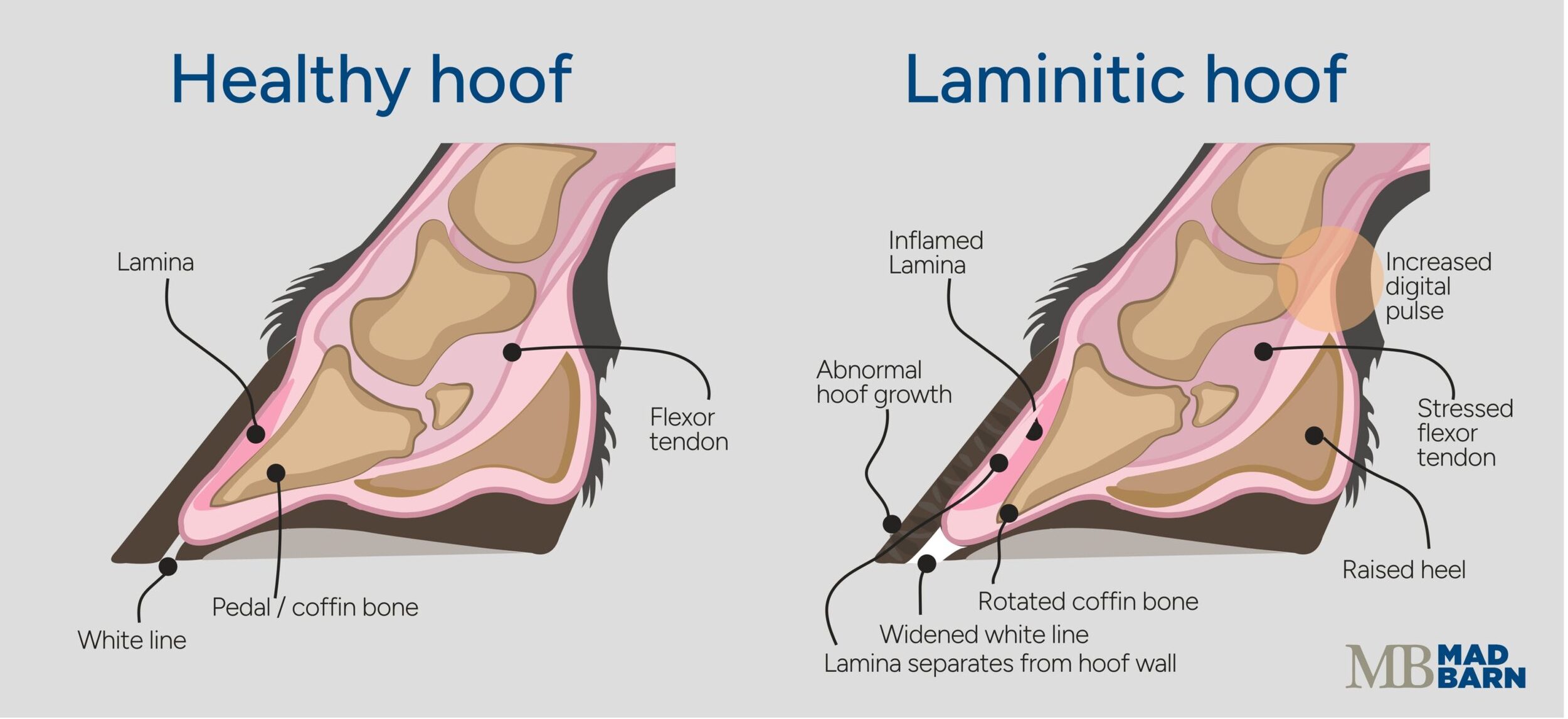 Illustration: Dr. Ana Mesa, PhD
 Symptoms of laminitis in donkeys, mules and horses include: [19]
- Reluctance to walk or move
- Shifting weight between feet
- Abnormal or “rocked-back” posture
- Strong or increased digital pulse
- Pain or sensitivity when the hoof is handled
Risk factors for laminitis include: [18][19]
- Insulin dysregulation
- Cushing’s disease (PPID)
- Metabolic Syndrome
- High sugar or starch intake
- Obesity
- Overworking or heavy weight bearing on hard ground (road founder)
Treatment for laminitis in donkeys focuses on: [3][19]
- Strict dietary control, including removal from pasture and feeding low-energy forage such as short-chopped hay
- Anti-inflammatory medication
- Rest and restricted movement
- Pain management
- Cooling of the hooves
- Treating underlying metabolic or mechanical causes

Roles & Uses of Donkeys & Mules
Donkeys and mules continue to play important roles in the modern era. [1] In many agrarian economies in the developing world, they are still widely used as working animals, providing affordable and reliable labor for communities with limited access to mechanized equipment. [5]
In some Western communities, such as the Amish, mules remain part of traditional agricultural practices due to their strength, endurance, and steady temperament.
Today, donkeys and mules are employed for a variety of tasks, including: [1][3][5]
- Pack transport over rugged terrain
- Pulling carts and wagons
- Farm tillage and fieldwork
- Drawing and hauling water
- Powering simple milling operations
Mules, in particular, are valued for their carrying capacity and endurance. A healthy mule can carry a live weight such as a rider of up to 352 lb (160 kg) and a dead weight such as packed gear equal to about 20% of its body weight. This makes them ideal for transporting people and equipment through challenging terrain. [10]
Specialized & Modern Uses
Donkeys serve many roles beyond traditional farm work. In countries such as China and Italy, donkeys are also raised for their milk, which is used in cosmetics. [3][4][5] Donkey milk is also used as a breast and cow milk substitute for newborn humans who are allergic to certain proteins. [4][5]
They are also used as medical donors, with their serum and heart valves utilized in medical testing and surgical procedures. [4]
Donkeys are also employed in some unexpected jobs, including: [5]
- Silviculture: the management of forests and tree growth
- Onotherapy: a form of physical therapy for humans based on riding donkeys
- Tourism: to provide a fun, reliable ride through tough terrain like the Grand Canyon
They are also increasingly involved in animal-assisted therapy, where interactions with animals are used to promote emotional well-being and recovery in healthcare settings. [3][4][5]
However, in the industrialized world, donkeys are primarily admired for their companionship. They are used for breeding and showing, and kept as pets. [3][5]
Managing Mules & Donkeys
The different evolutionary paths of horses and donkeys shaped key behavioral adaptations. Horses evolved as flight animals, escaping danger by running across open plains, whereas donkeys evolved to assess threats and stand their ground. [8]
Mules combine traits of both species, generally showing a stoic, cautious nature like donkeys but reacting more like horses in certain situations, depending on the individual animal’s temperament. [26]
Donkeys are often misjudged when compared to horses. When expected to respond like a horse, they can appear stubborn or less intelligent, but this is a misconception. [1][3] Donkeys respond more subtly and cautiously, and with consistent, gentle handling, they form strong, trusting bonds with humans. [1]
Donkeys are hardy and long-lived when managed properly. Many live well into their 30s and remain capable of work for much of their lives. [1]
Social management is important, as donkeys may compete aggressively for food when resources seem scarce. [7] Donkeys kept with horses or ponies should be fed separately to prevent conflict. [3]
Their natural impulse to browse can also lead to destructive behavior if forage is limited. Providing access to safe woody plants, branches, or brambles satisfies this instinct and helps prevent damage to fencing or other structures.
Body Condition Scoring Donkeys & Mules
Maintaining a healthy weight is essential for proper care and management of donkeys and mules. [3] Like horses, several body condition scoring systems have been developed specifically for donkeys.
The Edinburgh scale is similar to the Henneke scale, scoring donkeys across multiple body regions on a scale of 1 to 9. [27] Another system focuses only on neck morphology, scoring the neck from 0 to 4. [28]
The most practical and widely recommended system is the Donkey Sanctuary scale, which uses a 1-to-5 scoring system and is considered a key resource for owners. [29]
According to The Donkey Sanctuary system, donkeys are scored as follows: [29]
- Very thin (Score 1): Visible and easily felt bones in the neck, shoulders, back, withers, ribs, and hips. The shoulders meet the neck sharply, the belly is tucked, hindquarters have minimal muscle, and there may be a cavity under the tail.
- Thin (Score 2): Moderately underweight. Some muscle covers the neck bones, and ribs, withers, back, and hips are easily felt through the skin. The neck and shoulders have a slight step, with poor midline and hindquarter muscle development.
- Ideal (Score 3): Even muscle development with bones felt under a light layer of fat. The neck blends smoothly into the shoulders, the belly is firm with a flat outline, and hindquarters are rounded and well-toned.
- Overweight (Score 4): Thick fat layer covering bones, only felt under pressure. The neck is thick and cresty, the belly rounded, with a slight midline crease and evenly distributed fat over the hindquarters.
- Obese (Score 5): Bones buried under uneven fat deposits, felt only with firm pressure. The neck is thick, cresty, and may fall to one side. The withers are broad, the belly pendulous, and there is a deep midline crease with bulging fat pads. The hindquarters have uneven bulging fat, sometimes overhanging the tail head.
Both the Edinburgh scale and The Donkey Sanctuary scale can also be used to score mules. Mule owners unsure of accuracy can use both systems and compare results to confirm body condition.
Veterinary & Farrier Care
Like horses, donkeys and mules require regular hoof care and routine veterinary maintenance to stay healthy. Hooves should be trimmed by a qualified farrier every six to ten weeks, and feet should be picked and checked daily to prevent infections or injuries.
Routine veterinary care for donkeys and mules follows the same basic principles used for horses and includes: [3]
- Regular dental exams and floatation to prevent sharp points and chewing difficulties
- Vaccinations against common transmissible diseases such as tetanus and rabies
- Strategic deworming based on fecal egg counts and veterinary advice
Donkeys and mules metabolize certain drugs differently than horses and may require higher doses or alternative medications to achieve the same effect. [18] Consultation with a veterinarian familiar with donkeys and mules is essential before administering medications.
Donkeys and mules are naturally stoic and often show subtle signs of pain or discomfort, making it harder to detect illness early. [7] Owners should watch carefully for changes in behavior, appetite, or energy levels.
Lethargy, dullness, or reduced appetite should always be treated as an emergency in donkeys, as these can indicate serious conditions such as hyperlipemia, which can progress rapidly and is life-threatening without prompt treatment. [3]
Frequently Asked Questions
Horses were bred for agricultural work, sport, and social cooperation, while donkeys evolved for survival in harsh, arid environments. Mules combine traits from both, offering the strength of a horse and the endurance and sure-footedness of a donkey.
Yes, donkeys and horses can interbreed, resulting in a mule (male donkey and female horse) or a hinny (female donkey and male horse). However, these offspring are usually infertile due to differing chromosome counts. [1][9]
Donkeys and mules are generally easier keepers than horses due to their slower metabolism and ability to thrive on fibrous, low-energy forage. Horses require higher-quality forage and closer energy management, especially for athletic work.
Donkeys evolved in arid, rocky regions, making them more resilient and self-reliant compared to horses. Unlike horses, donkeys tend to stand their ground instead of fleeing when threatened. [8]
Yes. Donkeys and mules often live 30–40 years, whereas horses typically live 25–30 years. Their slower metabolism and hardy constitutions contribute to their longevity.
Horses are preferred for speed, performance, and sport, mules are ideal for carrying loads or riding in rugged terrain, and donkeys are best suited for light work, pack transport, and companionship.
All three equids are prone to laminitis, colic, and dental issues, but donkeys and mules have higher risks of hyperlipemia and obesity. Horses, on the other hand, are more prone to gastric ulcers and stress-related conditions.
Yes, but management differs for these species of equines. Donkeys and mules may compete aggressively for food, so feeding them separately from horses is recommended to prevent conflict.
Summary
Horses, mules, and donkeys are all members of the
Equidae
family, but their unique evolutionary paths have shaped differences in care, temperament, and use.
- Horses are reactive flight animals, donkeys are cautious and stoic, and mules balance traits from both species, making them intelligent and reliable under pressure
- Donkeys and mules are easy keepers, thriving on high-fiber, low-energy forage, while most horses require higher-quality diets to support their athletic performance
- Donkeys and mules live longer on average and are prone to metabolic disorders like hyperlipemia, while horses are more susceptible to gastric ulcers and stress-related conditions
- Horses excel in sport, riding, and draft work; mules are valued for endurance, strength, and sure-footedness in rugged terrain; donkeys are hardy companions and working animals, especially in arid climates
References
- Burden. F. and Thiemann. A. Donkeys Are Different. Journal of Equine Veterinary Science. 2015.
- Smith. D. G. and Burden. F. A. Practical Donkey and Mule Nutrition. Equine Applied and Clinical Nutrition. Elsevier. 2013.
- Burden. F. A. and Bell. N. Donkey Nutrition and Malnutrition. Veterinary Clinics of North America: Equine Practice. 2019. View Summary
- De Santis. M. et al. Donkey Behaviour and Cognition: A Literature Review. Applied Animal Behaviour Science. 2021.
- Norris. S. L. et al. Global Donkey and Mule Populations: Figures and Trends. PLOS ONE. Public Library of Science. 2021.
- Martin-Rosset. W. Donkey Nutrition and Feeding: Nutrient Requirements and Recommended Allowances—A Review and Prospect. Journal of Equine Veterinary Science. 2018.
- Aganga. A. A. and Tsopito. C. M. A Note on the Feeding Behaviour of Domestic Donkeys: A Botswana Case Study. Applied Animal Behaviour Science. 1998.
- Orth. E. K. et al. Development of a Donkey Grimace Scale to Recognize Pain in Donkeys (Equus Asinus) Post Castration. Animals. 2020.
- What Is a Mule?. American Donkey and Mule Society. 2008.
- Hauer. J. The Natural Superiority of Mules: A Celebration of One of the Most Intelligent. Sure-Footed. and Misunderstood Animals in the World. Second Edition. Skyhorse Publishing. Inc. New York. 2014.
- Donkey's Unique Nutritional Needs. Cornell Cooperative Extension.
- Reed. S. M. et al. Equine Internal Medicine. 3rd ed. Saunders Elsevier. St. Louis. Mo. 2010.
- Goff. J. P. Digestion Absorption and Metabolism. Dukes' Physiology of Domestic Animals. 13th ed. Wiley-Blackwell. 2015.
- Janssens. G. P. J. Equine Digestion. Proceedings of the First European Nutrition & Health Congress. Antwerp Zoo. Belgium. 2002.
- Izraely. H. et al. FACTORS DETERMINING THE DIGESTIVE EFFICIENCY OF THE DOMESTICATED DONKEY (EQUUS ASINUS ASINUS). Quarterly Journal of Experimental Physiology. 1989. View Summary
- Mills. D. S. and McDonnell. S. M. The Domestic Horse: The Origins. Development and Management of Its Behaviour. Cambridge University Press. 2005.
- Pair Bonding in Donkeys. The Donkey Sanctuary. 2023.
- Gehlen. H. et al. Pituitary Pars Intermedia Dysfunction and Metabolic Syndrome in Donkeys. Animals. 2020. View Summary
- Laminitis. Royal Veterinary College. 2024.
- Reproduction and neonatology: breeding. foaling and foal disorders. The Donkey Sanctuary. 2019.
- Tibary. A. Pregnancy. Merck Animal Health USA. 2021.
- Cosgrove. N. How Long Do Donkeys Live? Average Lifespan. Data & Care. Pangovet. 2025.
- Donkey Dental Care. The Donkey Sanctuary. 2021.
- Mendoza. F. et al. Metabolic and Endocrine Insights in Donkeys. Animals (Basel). 2024.
- Recognizing a Medical Emergency in Horses. Ponies. Mules. and Donkeys. University of Missouri Veterinary Health Center. 2022.
- Mules and Hinnies. The Donkey Sanctuary. 2014.
- Pearson. A. Body Condition Score of Donkeys. University of Edinburgh. 2005.
- Mendoza. F. J. et al. Energy-Related Parameters and Their Association with Age. Gender. and Morphometric Measurements in Healthy Donkeys. The Veterinary Journal. 2015.
- Donkey Body Condition Score Chart. The Donkey Sanctuary. 2018.