English


In March 2024, a dietary evaluation was conducted for Mikey, a 5-year-old Appendix gelding from Alberta, Canada, weighing approximately 1,000 lbs (454 kg).
His owner’s main concerns were improving Mikey’s topline condition and increasing his energy during rides.
Presentation Prior to Diet Intervention
Mikey was reported to be at a normal body weight and engaged in moderate exercise. However, his owner expressed concerns about his topline development, noting that he lacked energy during exercise. Their goal was to boost Mikey’s energy levels to support improved performance.
The following images show Mikey prior to dietary adjustments:
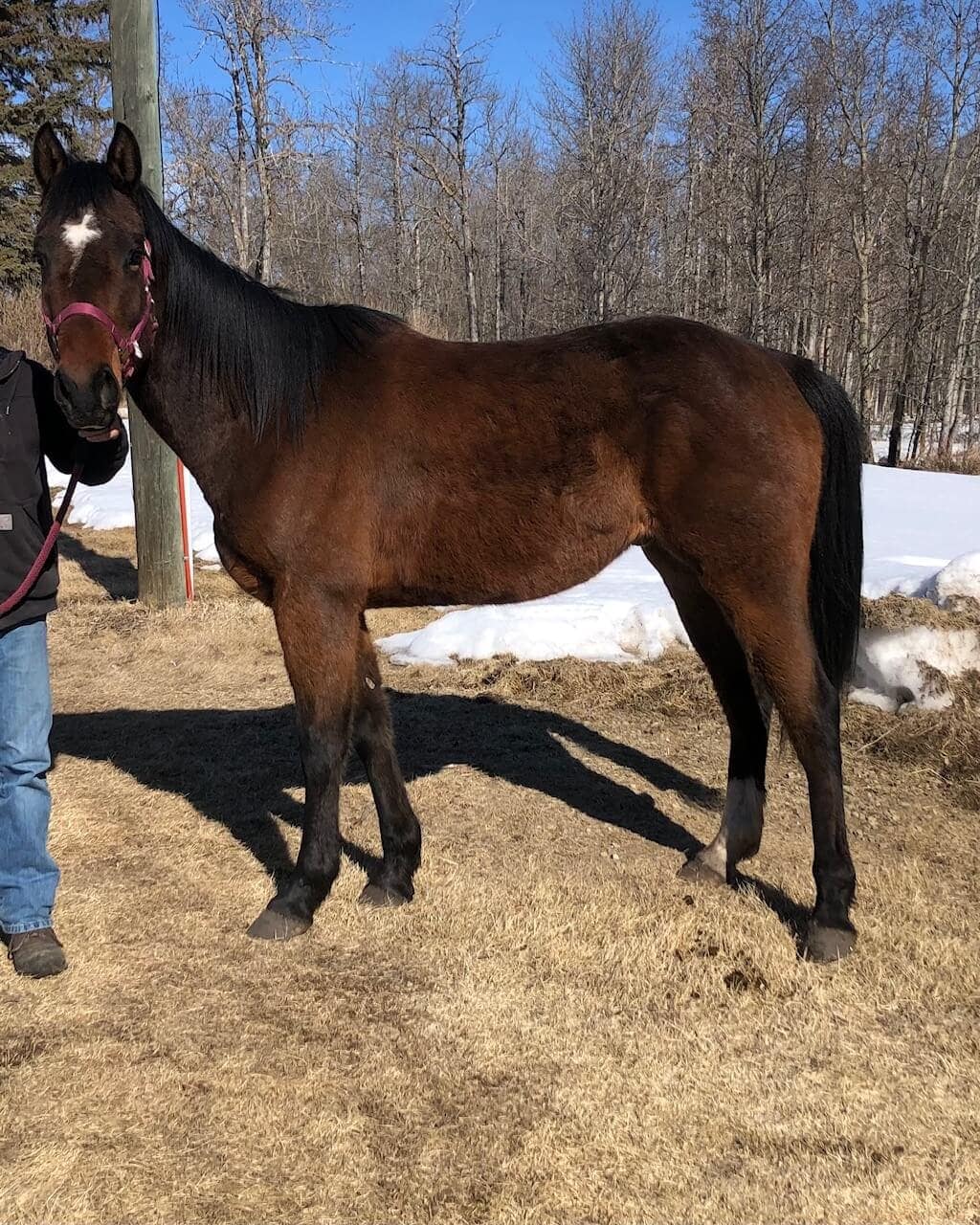 Mikey, March 2024
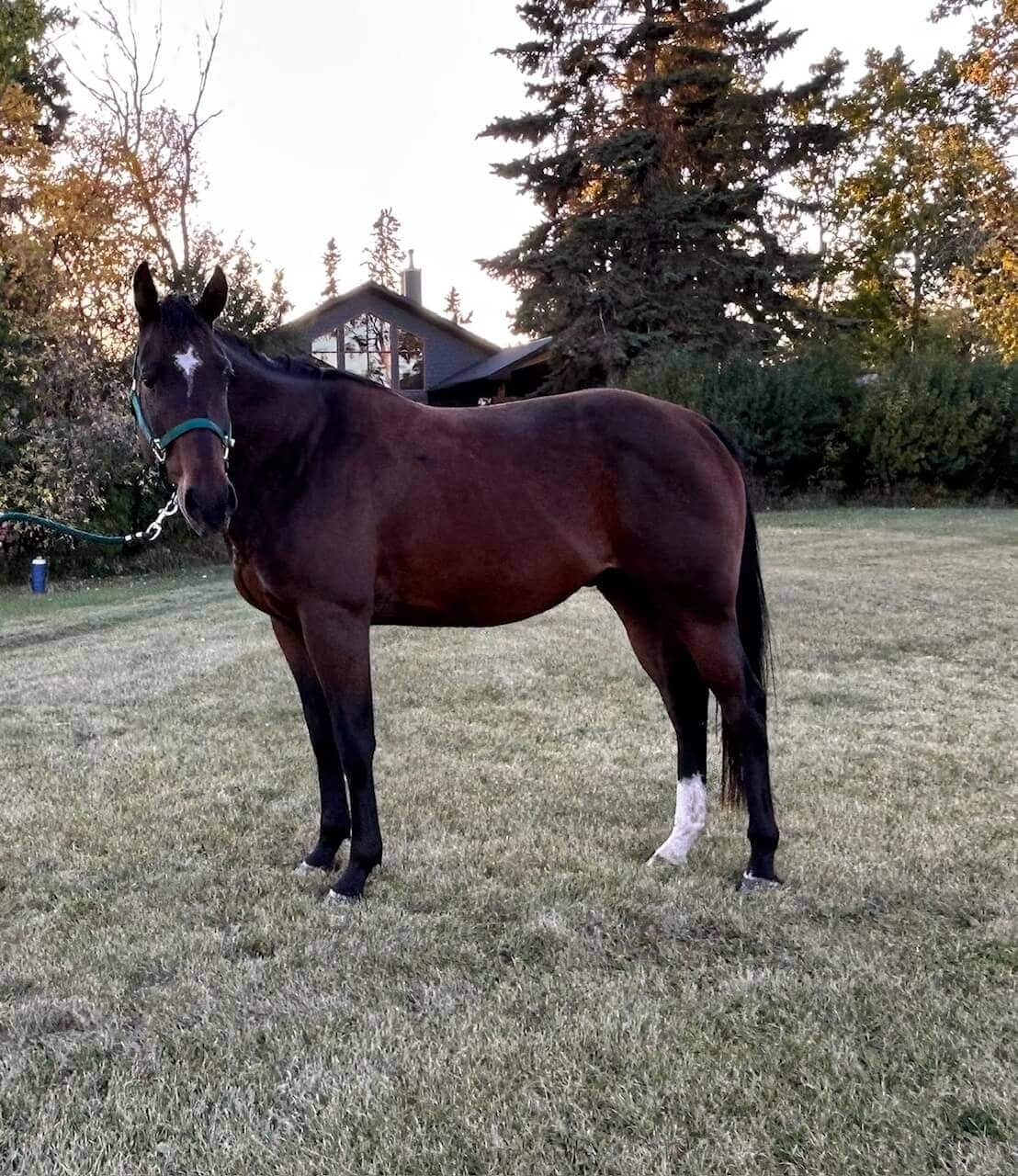 Mikey, March 2024
Horse History
Mikey’s owner acquired him in April 2023, and he was turned out daily throughout the summer.
During the fall and winter when grass was not plentiful enough to maintain his body condition, he was offered approximately 20 lb (9 kg) of hay per day. During extremely cold periods, when energy demands increased, he was provided with free-choice hay.
Forage analyses were unavailable, so nutrient intake was estimated based on average-quality grass hay in Alberta, Canada.
Mikey was described as participating in a moderate dressage training program. His owner noted that he lacked energy during training and aimed to adjust his diet to improve his energy levels.
Topline Health
Mikey’s owner noted a lack of topline development, despite Mikey having good body condition and receiving a protein supplement.
When owners notice their horses struggling to maintain muscle mass and topline, increasing protein and calorie content in the diet often come to mind first.
While both are important, muscle health also depends on adequate intake of numerous vitamins and minerals to support maintenance, repair, antioxidant protection and overall function of muscle tissue.
Key nutrients involved in muscle development and maintenance include: [1][2][3][4][5]
- Microminerals: including zinc, copper, manganese, and selenium, which serve as cofactors for proteins involved in muscle regeneration, protein metabolism, and antioxidant protection.
- Antioxidants: particularly Vitamin E, which protects muscle cells from oxidative damage during strenuous exercise.
- Electrolytes: including calcium and magnesium, are essential for muscle contraction and relaxation.
Exercise is another important component of supporting muscle health. Regular activity alongside targeted topline exercises can help to engage the topline muscles and improve core strength.
Initial Diet
At the time of the nutrition consultation, Mikey’s daily ration consisted of:
- Approximately 20 lb (9 kg) of rationed hay (average-quality grass hay)
- 200 grams of beet pulp
- 200 grams of flaxseed meal
- 200 grams of soybean meal
Based on average nutrient profiles for forage, Mikey’s current diet was likely meeting his energy and protein requirements for moderate exercise. The estimated non-structural carbohydrate (NSC; sugar and starch) content of the diet was calculated at approximately 8.8%, which is considered appropriate for horses requiring controlled starch intake.
However, this diet was likely deficient in key vitamins and minerals important for muscle development and overall health. While forages and forage-based commodities can be an important source of some key nutrients, they often fall short in meeting all baseline vitamin and mineral requirements, such as sodium, zinc, copper, and vitamin E.
What's your top priority with your horse's health?

Enter your email to receive your store credit
Intervention
During the consultation, an optimized diet plan was developed to meet Mikey’s nutrient requirements, support topline development, and address concerns regarding his energy levels.
Table 1. Summary of Diet Intervention
| Horse Issue | Intervention |
|---|---|
| Topline Muscle Loss | |
| Energy Level |
|
Feeding a forage-based diet is ideal for supporting digestive health; however, forage and unfortified feeds alone do not provide all of a horse’s vitamin and mineral requirements.
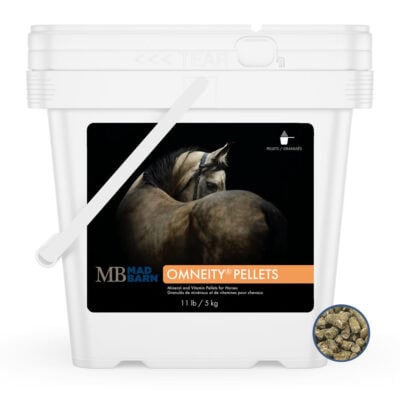
Adding a complete vitamin and mineral supplement helps meet requirements and fill gaps in the diet. Mad Barn’s Omneity® Pellets were added as a concentrated source of vitamins and minerals to meet all of Mikey’s requirements and balance his diet.
Omneity® also supplies the limiting amino acids lysine, threonine, and methionine, which are critical for muscle protein synthesis. Providing adequate amounts of these amino acids helped support Mikey’s overall muscle development and topline.
Balancing the Diet
Diet adjustments focused on improving Mikey’s topline development. Since he maintained a healthy weight and met his protein and energy requirements, the goal was to balance his diet without significantly increasing calories.
Omneity® provided essential vitamins and minerals without excess energy. A conservative amount of oats was also added to slightly increase calorie intake and support better performance and improved responsiveness to cues.
Updated Diet
After the consultation, Mikey’s updated daily diet consisted of:
- Approximately 20 lb (9 kg) of rationed hay
- 700 grams of oats
- 200 grams of beet pulp
- 200 grams of flaxseed meal
- 200 grams of soybean meal
- 200 grams (2 scoops) of Omneity® Pellets
- 30 grams (2 tablespoons) of salt
Overall, the updated diet met Mikey’s vitamin and mineral requirements, increased his energy intake by approximately 3%, and increased starch intake to 11% of the total diet.

Outcome
The dietary adjustments led to a significant improvement in topline health and overall muscling. By the middle of April, his owner reported that Mikey was doing well on his new diet.
The following photo shows the differences in his condition two months after implementing the diet changes:
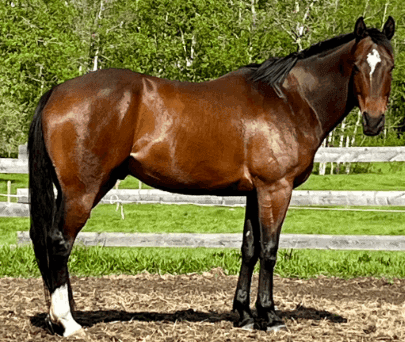 Mikey, May 2024
Discussion
Topline issues can occur when horses lack sufficient vitamins and minerals in their diet, as these nutrients support critical processes like muscle protein synthesis, tissue maintenance and repair, and protection from oxidative damage.
Adding Omneity® met Mikey’s nutritional needs, including zinc, copper, selenium, and vitamin E. Omneity also provided amino acids, biotin and other essential nutrients to support muscle function, hoof health, skin and coat quality, energy metabolism and more.
Because Mikey was maintaining normal body condition but was slow to respond to cues during exercise, slightly increasing calorie intake with easily digestible starch helped boost his energy level and performance.
In May 2024, approximately two months after dietary adjustments, his owner reported notable improvements in Mikey’s topline and overall muscle development.
References
- Latham. C. M. et al., Complexed Trace Mineral Supplementation Alters Antioxidant Activities and Expression in Response to Trailer Stress in Yearling Horses in Training. Scientific reports. Nature Publishing Group UK London. 2021. View Summary
- Chung. E. et al., Potential Roles of Vitamin E in Age-Related Changes in Skeletal Muscle Health. Nutrition Research. Elsevier. 2018.
- Berchtold. M. W. et al., Calcium Ion in Skeletal Muscle: Its Crucial Role for Muscle Function, Plasticity, and Disease. Physiological Reviews. 2000.
- Carvil. P. and Cronin. J., Magnesium and Implications on Muscle Function. Strength & Conditioning Journal. LWW. 2010.
- Hernández-Camacho. J. D. et al., Zinc at the Crossroads of Exercise and Proteostasis. Redox Biology. 2020.